Category: Top News

  • UKVIA Warns Against Vape Taxes

    UKVIA Warns Against Vape Taxes

    Photo: VPZ

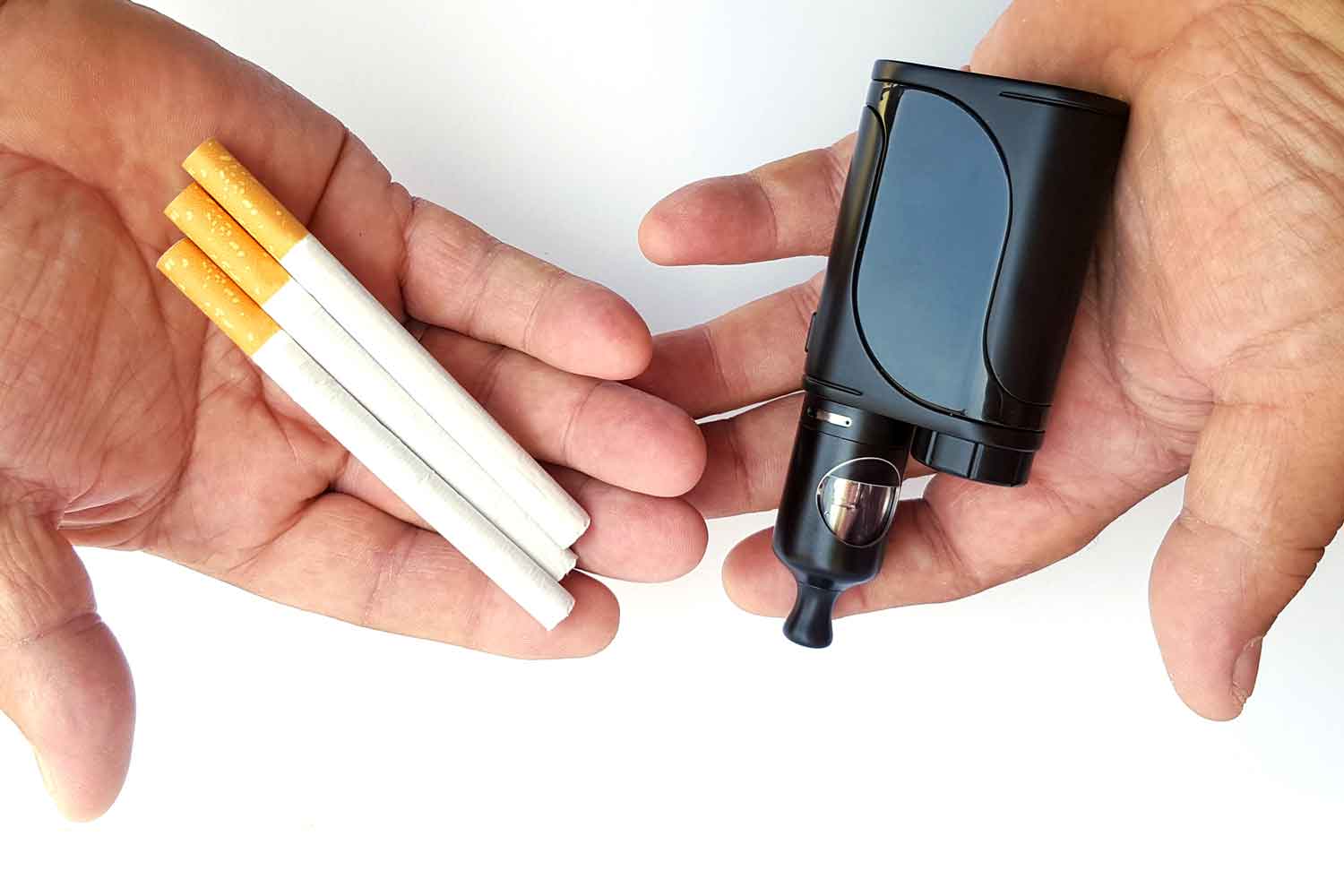
    The U.K. Vaping Industry Association (UKVIA) has warned that the Conservative Party’s proposal to tax vapes based on nicotine strength, predicted to increase the cost of some products upward of 300 percent, threatens to undo the work that the category has already done in saving millions of smokers’ lives.

    In its submission to the government’s vaping duty consultation, the association argues that by making higher strength vaping more expensive, the proposed tax regime will place an unfair financial burden on nicotine-dependent smokers who are trying to quit. The UKVIA points to the fact that smokers are already significantly overestimating the risks of vaping compared to smoking and that a measure that discourages the use of sufficient nicotine to facilitate a quit attempt is likely to have the effect of decreasing the rate of successful quit attempts.

    The association also argues in its submission that as smokers are disproportionally from lower socioeconomic backgrounds, the effect of introducing an excise duty for nicotine-containing vapes, the most appealing form of e-cigarette for smokers, will be dramatic and potentially fatal.

    This conclusion is supported by HM Revenue and Customs (HMRC) Research Report Number 740, Understanding the Vaping Market, which found that less affluent adults were “more likely than average” to report being current vapers and revealed that 32 percent of current vapers are motivated to use these products over cigarettes due to cost savings. The same HMRC report also highlighted that the doubling of the prices of vaping could result in 62 percent of current users reducing how much they vape.

    The UKVIA is calling for the proposed taxation of vapes to be based on e-liquid quantity and not based on nicotine strength. It believes a specific sales tax on all vaping products and nicotine levels at the rate of £1 ($1.25) per 10 mL would be far more effective in achieving the duty’s stated objectives.

    Smokers who smoke more or are more nicotine reliant need higher concentrations of nicotine, at least initially, according to the UKVIA. The association feels they should not be deterred from quitting by having to pay an extra premium to buy the higher concentration nicotine e-liquids that they need.

    While a tax on vapes may be inevitable, it does need to be effective and not counterproductive.

    “While a tax on vapes may be inevitable, it does need to be effective and not counterproductive,” said UKVIA Director General John Dunne in a statement. “In recent years, millions of smokers have managed to quit through using vaping products, and discouraging others from making the switch would have disastrous, and in many cases fatal, consequences.

    “The industry therefore urges the government not to unfairly discriminate against nicotine-containing vapes, which are the most popular devices for a reason. It would be far more valuable for the government to instigate a vape licensing scheme, for which we have long been calling; such a scheme would deter rogue retailers, protect our children and help a heavily under-funded Trading Standards to police retailers by raising £50 million a year from the industry.”

  • Death Sentence for Former STMA Leader

    Death Sentence for Former STMA Leader

    Image: Wit

    The Intermediate People’s Court of Dalian has sentenced He Zehua, former deputy chief of China’s State Tobacco Monopoly Administration, to death for taking bribes, reports Xinhua.

    The sentence comes with a two-year reprieve, after which the penalty could be commuted to life imprisonment with no possibility of parole or further commutation.

    He was also deprived of his political rights for life, all of his personal property was confiscated, and his illegal gains were turned over to the state treasury. 

    The court found that between 1998 and 2023, He took undue advantage of his various positions, including those as a senior official at local tobacco monopoly agencies, as well as the State Tobacco Monopoly Administration deputy chief, to illegally assist his connections in business operations, project contracting and personnel promotion and recruitment

    In return, He accepted more than RMB943 million ($132.6 million) in money and gifts.

    In its ruling, the court considered the large amounts of money involved and He’s cooperation with the investigators and in returning the illegal gains, which have been recovered in full.

    Several STMA leaders are under investigation for corruption. Earlier this month, authorities arrested former STMA head Ling Chengxing and announced a probe into the activities of STMA Deputy Head Xu Ying.

  • A Case for Consensus

    A Case for Consensus

    Photo: pavelkant

    A global alignment on health policy is necessary to make a smokeless world a reality.

    By James Murphy

    With renewed attention on smoking and vaping regulation around the world, now is the time for action that will realize global smoke-free ambitions and ensure cigarettes become a thing of the past.

    Achieving this vision requires a global consensus on the most effective approach to create sustained and lasting changes to consumer behavior—tobacco harm reduction (THR).

    THR is one the greatest public health opportunities today, representing a pathway for hundreds of millions of smokers who would not otherwise quit to transition from combustible tobacco products to smokeless alternatives.

    Countries that have recognized the opportunity THR presents, and which have adopted supportive policies, have seen striking success in reducing their smoking rates. The U.S., U.K. and Japan are all currently witnessing their lowest smoking rates on record while Sweden is on track to declare themselves smoke-free this year—defined as having less than 5 percent daily smokers in the population—16 years ahead of the 2040 EU target.

    These remarkable transformations have been driven by widespread THR acceptance from policymakers, regulators, health officials and consumers in these markets, enabling and encouraging smokers to migrate from combustible tobacco products such as cigarettes to vapor, oral nicotine pouches, snus and heated-tobacco or herbal products.

    The widespread accessibility of smokeless products is essential for the success of THR. However, at present, this is being hamstrung by many countries limiting access to these alternative tobacco and nicotine products. For example, 60 percent of the world’s population live in just 15 countries. Of these, only about 40 percent permit the sale of smokeless products, leaving millions who would otherwise continue to smoke without the option to switch to such alternatives.

    In order to fully realize the public health potential of THR and significantly reduce the more than 8 million deaths attributed to smoking cigarettes each year, regulators around the world should embrace evidence-based science to drive positive public health outcomes. This means implementing a supportive regulatory framework that encourages adult smokers who would otherwise continue to smoke to switch while also protecting consumers with stringent safety standards and preventing underage use.

    In addition, the global success of THR depends on governments and regulators correcting persistent misperceptions of smokeless products compared to cigarettes.

    A University College London-led study published earlier this year highlighted that most smokers in England wrongly believe vaping is at “least as harmful as smoking,” with 57 percent of respondents saying they thought vaping was “equally” or “more harmful.” This echoes trends reported in the U.S., with research showing that perceptions of e-cigarettes as more harmful than cigarettes doubled year on year between 2018 and 2020. Not only are these misperceptions flawed, but they also have significant implications for public health by actively discouraging smokers who would otherwise continue to smoke from making the switch to smokeless products.

    Greater efforts are needed to counter these misperceptions—something that BAT is trying to tackle. As the world’s largest vapor company and a leader in smokeless products, BAT is committed to producing innovative products backed by world-class science and industry-leading product safety and quality standards. BAT’s THR approach is based on the growing body of research and weight of evidence approach that substantiates its belief of the reduced-risk profile of these products compared to cigarettes, which have been accepted by many international public health bodies. BAT publishes its science research to increase understanding of THR and raise awareness with stakeholders.

    Indeed, the industry developing and producing these products has a critical role to play. But to achieve the conditions required to make a success of THR, an inclusive, open and honest dialogue with all stakeholders is required. That includes policymakers, regulators and the healthcare and medical communities. Unfortunately, this is not yet the case, with the industry all too often excluded.

    We have an opportunity to usher in a new smokeless world, grounded in scientific research and a firm commitment to public health. The solutions are available today. All that is required is for the relevant stakeholders to actively work together to prioritize THR and the well-being of millions of people worldwide.

  • Nicotine Alternatives Under Scrutiny

    Nicotine Alternatives Under Scrutiny

    Photo: Alexey Stiop

    Nicotine alternatives, such as 6-methyl nicotine, may be more potent and addictive than nicotine itself, reports Reuters, citing U.S. Food and Drug Administration scientists and independent researchers.

    Traditional nicotine found in many vapes and pouches is extracted from tobacco leaves; 6-methyl nicotine, in contrast, is made in a laboratory.

    While chemically similar to nicotine, the synthetic substances are not subject to U.S. tobacco and vaping regulations, allowing manufacturers to sell vapes with nicotine analogues without seeking FDA authorization.

    Tobacco and vape companies have criticized that the FDA product authorization process is costly and time-consuming. Only a handful of applications have been approved.

    In response to questions from Reuters, the FDA said it was reviewing the available data on nicotine alternatives to inform potential actions.

    Three academic researchers told the news agency that current studies of 6-methyl nicotine are too limited to draw definite conclusions on the health impact or to what degree it is addictive.

    The limitations of existing research, the researchers said, included that some papers were industry funded while others focused on the short-term impact on animals or cells and were insufficient to understand 6-methyl nicotine’s effects on human bodies.

    The FDA has yet to approve any flavored vape using traditional nicotine for sale in the United States, saying companies have not been able to show that the health benefits they offer to smokers outweigh the known risks to young people, who may be more attracted by the flavors.

    The Spree Bar vaporizer, which uses a 6-methyl nicotine solution branded as “Metatine,” notes on its website that Metatine “may have a toxicity profile similar to nicotine.”

    Sven Jordt, a professor at Duke University who has authored papers on products like Spree Bar, said 6-methyl nicotine could me more addictive and toxic than its traditional cousin.

    “Do we want to have such a chemical as a recreational product, available to anyone?” he asked. “That’s really questionable.”

  • BAT Threatens to Pull Out of Pakistan

    BAT Threatens to Pull Out of Pakistan

    Photo: Rawf8

    British American Tobacco may pull out of Pakistan if the government further increases cigarette taxes, a company representative warned during meetings with Prime Minister Shehbaz Sharif and the Special Investment Facilitation Council national coordinator General Sarfraz Hussain.

    According to BAT, existing taxation has already caused its sales in Pakistan to slump by 38 percent and increased the size of the illicit market to 58 percent of nationwide cigarette sales. In the previous budget, the government significantly increased taxes on tobacco, which instead of curbing smoking resulted in shifting smokers from tax-paid expensive brands to cheaper illicit brands, the company noted.

    “The past couple of years’ developments on fiscal policies have raised questions about the sustainability of the company’s operations in Pakistan,” Michael Dijanosic, BAT’s regional director for Asia Pacific, Middle East and Africa, was quoted as saying by The Express Tribune.

    If there is a repeat of last year’s tax increase, there is no reason the company should not exit Pakistan, he said.

    The past couple of years’ developments on fiscal policies have raised questions about the sustainability of the company’s operations in Pakistan.

    The regional director said that the federal excise duty increased by 73 percent in real terms, making it unviable to do business. He also said that despite a 73 percent inflation-adjusted increase in taxes, the government’s revenues grew only 8 percent in real terms due to the slump in sales.

    Any further increase in federal excise duty rates in the budget would bring the company’s factories to a standstill, the BAT official warned.

    According to Dijanosic, the formal tobacco sector paid nearly PKR700 billion ($2.51 billion) in taxes to the government during the past five years. PTC has also invested in a global business center in Lahore and plans to expand operations if the government reviews its taxation policies.

    PTC has been exporting cigarettes to numerous markets since 2019 and has so far earned $156 million for the country. For the next fiscal year, the company is targeting $60 million in exports, but one-third of the order is at stake due to the Ministry of Health’s reluctance to amend the Statutory Regulatory Order, which prohibits the sale of cigarettes in packs of 10 sticks, for export orders.

    In March, the prime minister awarded the second-highest taxpayer award to PTC in all categories of taxes.

  • Smoking Down, Vaping Up Among Minors

    Smoking Down, Vaping Up Among Minors

    Photo: Taco Tuinstra

    Smoking is down but vaping is up among Indonesian minors, reports The Jakarta Globe, citing a recent health survey.

    According to the Indonesian Health Survey (SKI), the prevalence of smoking among 10-18-year-olds decreased to 7.4 percent in 2023, down from 9.1 percent recorded in the 2018 Basic Health Research.

    However, the figure is still higher than the 7.2 percent prevalence in 2013 and the 5.4 percent target set in the 2015-2019 National Medium-Term Development Plan, noted Eva Susanti, director of non-communicable disease prevention and control at the Health Ministry during a World No Tobacco Day media briefing in Jakarta on May 29.

    Minors’ use of e-cigarettes, meanwhile, increased from 0.06 percent in 2018 to 0.13 percent in 2023.

    The Health Ministry is intensifying efforts to prevent children from smoking or vaping. This includes banning the consumption of tobacco and e-cigarettes by children and pregnant women, prohibiting tobacco advertising on social media, and outlawing the sale of single cigarettes.

  • Hong Kong Crackdown Nets $72 Million in Illegal Smokes

    Hong Kong Crackdown Nets $72 Million in Illegal Smokes

    Credit: Timothy S. Donahue

    Hong Kong customs officers seized untaxed cigarettes worth HK563 million ($72.1 million) during a nearly three-month illegal trade crackdown, coinciding with a tobacco tax increase in February.

    Assistant Commissioner Barry Lai Chi-wing said officers clamped down on the post-pandemic trend of smuggling the contraband into the city in small portions from February 19 to May 14 in an operation code-named “Tempest.”

    Part of the operation also took place after Financial Secretary Paul Chan Mo-po announced in this year’s budget that the tobacco tax would be raised by 80 HK cents per stick with immediate effect, according to media reports.

    The increase raised the average cost of a pack of 20 cigarettes by HK$16 to more than HK$90. A pack costs HK$19 to HK$38 on the black market.

    During the operation, 4,347 people, aged 15 to 89, were arrested. Officers confiscated 139 million sticks of suspected illicit cigarettes, 105kg of cigars, and around 1,525kg of manufactured tobacco products, which had a market value of HK625 million. The tax take would have been about HK454 million.

  • Philippines: New Vape Rules in June

    Philippines: New Vape Rules in June

    Credit: Adobe Photo

    The new Vape Law in the Philippines will take effect on June 1. The new rules also apply to all next-generation tobacco products, including heat-not-burn and e-cigarettes. The Department of Trade and Industry (DTI) will require all vape products to be registered with the agency on that date, an official said on Tuesday.

    At a forum organized by the Bantay Konsumer, Kalsada, Kuryente (BK3) in Makati, DTI Undersecretary Amanda Nograles said the “importation and manufacturing of vaporized nicotine and non-nicotine products and novel tobacco products must now undergo the DTI certification process.”

    This means that products must have the Philippine Standard (PS) mark and Import Commodity Clearance (ICC) sticker first before they can be sold on the market.

    Nograles said at least 3 companies have already applied for registration, and they urge others to begin the process since the registration may take some time. She clarified that there will be a 6-month transition period to allow all firms to comply.

    “We will allow them to sell all the existing inventory. On January 5, 2025, we will do market clearing. There should be no vape products without a PS license and ICC [sticker],” Nograles said, adding that the agency will continue to monitor shops to ensure that no minors will be allowed to buy vape products. They will also check if the vape has marijuana oil.

  • Filtrona Opens Upgraded Innovation Center

    Filtrona Opens Upgraded Innovation Center

    From left to right: Joyce Ng, global HR director; Hugo Azinheira, global director, innovation and ESG; Robert Pye, CEO, and Kow Lay Moi, global operations director. (Photo: Filtrona)

    Filtrona inaugured its expanded Filtrona Innovation Centre (FIC) in Surabaya, Indonesia, on May 29.

    The 2,242 square meter FIC houses an R&D facility and accredited scientific services labs that provide independent tobacco analytical testing services. The upgraded facility features a new exhibition area, co-working space and a heated tobacco product (HTP) testing lab that has tripled its capacity to meet growing demand. Filtrona also invested in a new HTP testing machine and a puff-by-puff aerosol analysis machine.

    The expansion of the facility follows Filtrona’s recent launch of its new Boreas range of HTP filters.

    The R&D facility includes a production area for manufacturing filter samples, a smoke test room, and a filter library with more than 11,000 filter designs produced from the 1950s to the present day.

    “With innovation at the heart of Filtrona, the FIC is a key node in our global operations and is instrumental in the design, testing and manufacture of specialty filter solutions for our customers,” said Filtrona CEP Robert Pye in a statement.

     “We will continue to invest in innovation and R&D to better serve our customers in product development and diversification, supported by our advanced knowledge on filtration, innovative designs, cutting-edge solutions for next-generation products, and alternative sustainable materials”.

    The FIC is part of Filtrona’s global network of innovation centers in Asia and Europe. Filtrona’s presence in Indonesia dates to 1976, when it established a site in Medan, North Sumatra. It moved to its current site in Surabaya in 1987.

  • CAPHRA Urges End to Vape Disinformation

    CAPHRA Urges End to Vape Disinformation

    Vapor Voice archives

    The Coalition of Asia Pacific Tobacco Harm Reduction Advocates (CAPHRA) states that as it celebrates World Vape Day on May 30, 2024, the organization is urging global leaders to recognize the life-saving potential of safer nicotine products and to expose the ongoing disinformation campaign led by the World Health Organization (WHO). 

    “Despite overwhelming scientific evidence supporting the reduced risk of vaping compared to combustible tobacco products, the WHO continues to ignore the facts and mislead the public,” said Nancy Loucas, executive coordinator of CAPHRA. “These products, including e-cigarettes, snus, and heated tobacco products (HTPs), offer a viable alternative for millions of smokers seeking to reduce their health risks.

    “The GSTHR reports have shown that these alternatives are not only effective in reducing harm but also play a significant role in public health by providing accessible and acceptable options for smokers worldwide.”

    CAPHRA has criticized the WHO’s exclusionary tactics, particularly at the 10th Session of the Conference of the Parties (COP10). By excluding consumer groups and harm reduction advocates, the WHO has demonstrated a blatant disregard for the voices of those directly impacted by tobacco use, according to an emailed press release.

    “One of the most egregious aspects of the WHO’s stance is its use of children as pawns to propagate the false narrative that vaping is not a tobacco harm reduction product,” said Loucas. “This disinformation campaign not only undermines the credibility of harm reduction efforts but also jeopardizes the health of millions of adult smokers who could benefit from switching to safer alternatives.”

    CAPHRA is calling on all vaping industry stakeholders, including policymakers, public health officials, and the media, to recognize the truth about tobacco harm reduction. The release states that it is time to challenge the disinformation spread by the WHO and advocate for evidence-based policies that prioritize the health and well-being of smokers worldwide.

    “It’s time for the WHO and FCTC to listen to consumers and integrate harm reduction into their policies. Only then can we tackle both the public health crisis of smoking and the escalating illicit tobacco trade,” said Loucas. “The WHO’s stance not only ignores the evidence supporting these strategies but also undermines the global fight against the tobacco epidemic.”