Category: Top News

  • Celebrating Two Decades of Excellence

    Celebrating Two Decades of Excellence

    Odiri Erewa-Meggison

    Odiri Erewa-Meggison reflects on the significance of BAT’s Ibadan factory in Nigeria as it celebrates its 20th anniversary.

    Contributed

    This year, BAT celebrates the 20th anniversary of its Ibadan factory in Nigeria. To mark the occasion, Precise Platform, a PR agency, interviewed Odiri Erewa-Meggison, external affairs director of BAT West and Central Africa.

    Precise Platform: Please tell us about the significance of celebrating 20 years of manufacturing excellence for your organization.

    Odiri Erewa-Meggison: Celebrating 20 years of manufacturing excellence holds immense significance for BAT West and Central Africa on several fronts. Firstly, it marks a significant milestone in our journey, showcasing two decades of dedication, innovation and resilience in the manufacturing industry within the region. This achievement underscores our commitment to quality, responsible and sustainable business practices in all aspects of our operations.

    [We are] celebrating our two decades of quality output, impacts and milestones despite the economic challenges and regulatory changes that have made a lot of foreign companies quit their investments in the country. We are able to adapt to the market dynamics and impact on our operating environment with over 350,000 job opportunities and boost the economy of the nation through our export operation.

    From the excellent productions in our Ibadan factory, we export to 11 West and Central Africa countries and recently to the USA, with $110 million annual foreign exchange from export, among other socioeconomic impacts. These achievements, which are worth celebrating, speak volumes of our strong contributions and the vital roles British American Tobacco has played in driving economic growth with social progress in our operating environment and also provide an opportunity for us to express gratitude to our employees, partners and stakeholders, whose unwavering support and dedication have been instrumental in our success. Their commitment and passion have been integral to our journey toward manufacturing excellence.

    In essence, celebrating 20 years of manufacturing excellence is not just about looking back at past achievements but also about looking forward with optimism and determination toward a future of continued success and positive impact as BAT Nigeria is here for the long haul.

    How has BAT Nigeria’s Ibadan factory evolved and grown its manufacturing capabilities while achieving sustainability milestones over the past two decades?

    British American Tobacco Nigeria has undergone substantial evolution and growth in terms of its manufacturing capabilities, reflecting its commitment to meeting the dynamic needs of the market and its stakeholders. BAT Nigeria has continually invested in upgrading its manufacturing facilities with cutting-edge technologies. These advancements have enhanced production efficiency and quality control measures, enabling the company to stay competitive in the manufacturing industry.

    Also, BAT Nigeria places a strong emphasis on maintaining high-quality standards across its manufacturing operations. The company adheres to stringent quality control protocols and certifications to ensure that our operations meet or exceed both regulatory requirements and consumer expectations for safety.

    We have also integrated sustainability practices into our manufacturing processes, aiming to minimize environmental impact and promote social responsibility. In order to reduce our carbon footprint, in 2022, we transitioned from diesel[-powered] to gas-powered generation, and in 2023, we installed our 1.4-megawatt solar plant in our manufacturing facility, which was recently launched by the executive governor of Oyo State, Seyi Makinde, during our 20th anniversary celebration. We also installed a wastewater treatment plant with a 30,000-cubic-meter storage capacity to recycle and reuse all wastewater. This earned us the Alliance for Water Stewardship (AWS) certificate. These initiatives encompass our evolution and efforts to reduce energy consumption, minimize waste generation [and] support local communities, to promote responsible business practices within the manufacturing sector.

    The success of BAT Nigeria’s manufacturing operations, particularly at the Ibadan factory, can be attributed to several key strategies and initiatives that have been instrumental in achieving milestones, beginning with our investment in the state-of-the-art manufacturing facility and sustainable technologies that enable efficient resource utilization and minimize environmental impact. These strategies have led to 100 percent waste recycling and transitioning from diesel to gas operation at our Ibadan facility.

    BAT fosters a culture of continuous improvement, where employees are encouraged to identify opportunities for optimization and innovation across all aspects of manufacturing operations. We also work closely with our suppliers and partners to promote responsible sourcing practices and ensure the integrity of our supply chain. This proactive approach enables the implementation of cost-saving measures, quality enhancements and sustainability initiatives.

    Another factor that has contributed to the success we are celebrating is our large investments in human capital training and development programs to equip employees with the skills and knowledge necessary to excel in their roles and contribute to manufacturing excellence. This includes technical training on operating equipment, safety protocols and environmental stewardship practices.

    How does BAT Nigeria guarantee the highest quality standards in its manufacturing processes while simultaneously prioritizing sustainability and environmental considerations, as outlined by the AWS and the International Renewable Energy Certificates (IREC)?

    We implement rigorous quality control measures at every stage of the manufacturing process, from sourcing raw materials to packaging finished products. This includes comprehensive testing, inspections and audits to ensure that our products meet or exceed regulatory requirements and consumer expectations for safety, consistency and quality.

    By adhering to internationally recognized certifications and standards for quality management, environmental management, and occupational health and safety, we foster a culture of continuous improvement, where employees are empowered to identify opportunities for enhancing quality, efficiency and sustainability in manufacturing operations. This includes implementing lean manufacturing principles, conducting root cause analyses and investing in training and development to drive continuous improvement initiatives.

    By prioritizing quality, sustainability and environmental considerations in our manufacturing practices, we not only meet regulatory requirements and consumer expectations but also contribute to the long-term viability and resilience of our business and the well-being of the communities and environments in which we operate.

    BAT Nigeria prioritizes maintaining the highest quality standards in its manufacturing processes while adhering to sustainability and environmental principles outlined by the Alliance for Water Stewardship and the International Renewable Energy Certificates.

    Our dedication to sustainability extends beyond energy efficiency and waste reduction. We prioritize responsible water management practices, evident in our state-of-the-art wastewater treatment plant. This impressive facility boasts a 30,000-cubic-meter storage capacity, allowing us to capture and treat all effluent wastewater generated during production. This commitment to water stewardship ensures no untreated wastewater is released into the environment.

    More importantly, we don’t simply treat the wastewater; we reuse it. In 2023 alone, we successfully recycled a significant amount—17,388 cubic meters of treated wastewater. This recycled water is likely used for noncritical processes within the factory, reducing our dependence on freshwater resources.

    This approach exemplifies our commitment to minimizing our environmental impact and operating responsibly. By effectively managing our wastewater, we not only conserve precious freshwater resources but also demonstrate our alignment with the principles set forth by the AWS certification that we hold.

    The IREC compliance translates to our using energy-efficient machinery and exploring renewable energy sources in line with the recently commissioned 1.4 MW solar plant. This reduces the factory’s dependence on fossil fuels and lowers our carbon footprint.

    This multifaceted approach allows BAT Nigeria to be a leader in manufacturing excellence. We believe this commitment to quality, sustainability and responsibility sets us apart and contributes to a brighter future.

    As BAT Nigeria celebrates two decades of manufacturing excellence in a multi-category industry, how will you leverage your achievements to further enhance and sustain your competitive advantage? Additionally, how does your annual environmental, social and governance (ESG) forum contribute to this strategy, fostering collaboration and innovation for a sustainable future?

    As we celebrate 20 years of manufacturing excellence, we are committed to further enhancing and sustaining our organization’s competitive advantage in the industry through strategic initiatives and forward-thinking plans. Here are some of our key plans:

    We will continue to invest in cutting-edge technologies beyond what we have achieved so far and innovation to optimize our manufacturing processes, improve efficiency and enhance product quality.

    We will reinforce our commitment to sustainability and environmental stewardship by implementing additional initiatives to minimize our environmental footprint, reduce waste generation and promote responsible sourcing practices. With a steadfast commitment to sustainability, we will sustain our recycling cigarette butts initiative and annually hold our private sector ESG forum to continually drive our advocacy for a sustainable environment in alignment with the sustainable development goals.

    By implementing these plans and initiatives, we aim to further enhance and sustain our organization’s competitive advantage in the industry, ensuring continued success and growth for the next 20 years and beyond.

    Our annual ESG forum plays a critical role in these strategies by fostering collaboration and innovation for a sustainable future. The forum brings together industry stakeholders, experts and thought leaders. This allows BAT Nigeria to share its own sustainability journey and learnings while also gaining valuable insights from others.

    Added to this, by facilitating open discussions on key ESG challenges and solutions, the forum fosters collaboration across the industry. This can lead to the development of innovative approaches to tackling environmental and social issues.

    The ESG forum allows BAT Nigeria to stay abreast of emerging trends and best practices in sustainability. This ensures we can continuously adapt and improve our strategies to maintain a competitive edge in a future increasingly focused on ESG performance.

    Is there any message or reflection you would like to share with the employees, stakeholders and customers who have been a part of this 20-year journey of manufacturing excellence?

    I would like to extend my appreciation to all our employees and stakeholders, who have been integral to our 20-year journey of manufacturing excellence. The BAT Nigeria team’s unwavering support, dedication and commitment have been instrumental to our success and achievements over the years.

    As we reflect on this milestone, we are reminded of the collective efforts, resilience and passion that have propelled us forward, even in the face of challenges and uncertainties. Together, we have overcome obstacles, embraced opportunities, and [we] continuously strive for excellence in everything we do.

    As we embark on the next phase of our journey, we remain committed to upholding the highest standards of excellence and sustainability in all aspects of our operations. Together, we will continue to innovate, collaborate and lead the way toward a future of continued success and positive impact.

    Thank you for being a part of our 20-year journey of manufacturing excellence. Here’s to many more years of partnership, growth and shared achievements ahead.

  • Zimbabwe Aims for $60 Billion Tobacco Industry

    Zimbabwe Aims for $60 Billion Tobacco Industry

    Zimbabwe plans to create a $60 billion tobacco industry by 2028, according to The Herald.

    The government is currently working to increase processing and value addition of tobacco from 2 percent to more than 30 percent to boost earnings.

    Zimbabwe currently earns about $1 billion from its annual tobacco exports, which is 6 percent of the global market.

    “In terms of the value transformation strategy, we must tap into the value of our tobacco,” said Obert Jiri, permanent secretary for Lands, Agriculture, Fisheries, Water and Rural Development, noting that the tobacco produced is worth over $60 billion when fully processed across the value chain.

    “We understand that most of our tobacco is exported, and the strategy is to tap into that value chain. We are happy that some are doing cigars, some little value addition in terms of cigarette production. The strategy we have as a government is really to ensure that we encourage investments in proper value addition so that we don’t export our raw materials.”

    According to Kutsaga CEO Frank Magama, the board is breeding tobacco seeds for international markets. “We have trials that are happening in Italy, Brazil, China, and our varieties are also grown in China. The direction that we take from the government, in terms of breeding, is that we must make sure that we have quality products. We excel in tobacco, so our products are now found in the region where we are able to earn foreign currency for the country,” he said.

    The Kutsaga Tobacco Research Board recently introduced climate-smart tobacco varieties, enabling farmers to continuously have good harvests despite climate change and new pathogens.

    Zimbabwe’s plans are part of the government’s ambitious Tobacco Value Chain Transformation plan.

  • Kaival Revenues and Profits Up

    Kaival Revenues and Profits Up

    Photo: David

    Kaival Brands Innovations Group reported revenues of $3.2 million for the first quarter of fiscal year 2024 compared with $2.5 million in the same period of the prior fiscal year. Gross profit was approximately $1.2 million in the quarter, up from $500,000 gross profit for the first quarter of fiscal year 2023. The increases in revenues and gross profit was due primarily to a decrease in credits being issued to customers, according to the company.

    Nirajkumar Patel, who was recently appointed CEO at Kaival, assured investors that despite recent challenges, the company remains focused on preserving and improving shareholder value.

    “We have experienced a number of stalled starts related to the FDA’s [U.S. Food and Drug Administration] denial of Bidi Vapor’s premarket tobacco product application for Bidi Vapor’s ‘Classic’ tobacco-flavored Bidi Stick ENDS [electronic nicotine-delivery system] device, and we are navigating a number of transitions,” Patel said in a statement.

    Patel also noted the company is appealing the FDA decision on Bidi Stick.

    “However, we continue to believe there is tremendous value related to our international business as well as new, potential opportunities to monetize the extensive and valuable inhalation patent portfolio that we acquired from GoFire in May of last year.”

    According to Patel, the purchase of the portfolio marks the beginning of Kaival’s diversification efforts and move away from reliance on revenues from Bidi Sticks. “Our efforts to explore profitability of this portfolio are underway, and we are incredibly energized by the interest and revenue opportunities we believe could be available to us through this portfolio,” said Patel.

  • Harare to Hosts First WT Africa Conference

    Harare to Hosts First WT Africa Conference

    Zimbabwe will host Africa’s first World Tobacco Africa Conference and Expo May 15–16, reports The Sunday Mail. The conference is set to host over 2,000 senior tobacco professionals from across Africa.

    The conference is organized by Quartz Business Events and held in partnership with the Tobacco Industry and Marketing Board (TIMB).

    The event’s theme is “From Seed to Success: A New Era for African Leaf Tobacco.” The conference will serve as a platform for industry leaders to share knowledge, address challenges and discover innovative solutions to ensure the continued prosperity of the African tobacco industry, according to The Sunday Mail.

    “Zimbabwe has been afforded the opportunity to host the first-ever World Tobacco Africa Expo, and this will be an opportune time for the country to showcase a new business platform for the African leaf tobacco industry,” said Tapiwa Chimedza, TIMB head of business development. “As the host country, we will create a platform for discussion on a new era for African leaf tobacco.”

    “At least 2,000 senior and key professionals will take part in the program, which is a huge resource to tap from,” he said.

    “Hosting such a global event here in Harare brings with it more opportunities for our country,” he added.

    “The enthusiasm and the wealth of ideas shared with associations, merchants and growing groups alike have solidified our conviction that the inaugural World Tobacco Africa Conference is poised for great success,” said Tony Crinion, Quartz Business Events managing director, after a tour of local manufacturers and industry stakeholders in Harare.

    Zimbabwe is Africa’s largest tobacco producer, followed by Zambia, Tanzania, Malawi and Mozambique.

    For more information about the WT Africa conference, click here.

  • Plxsur Revenues Surpass $1 Billion

    Plxsur Revenues Surpass $1 Billion

    By Timothy S. Donahue

    That didn’t take very long. The global vaping company Plxsur reached its goal of reaching $1 billion in consolidated revenues from its partners in just two years. The company has now successfully partnered with 12 of the world’s leading vaping companies to form what may be the largest and fastest-growing group of independent vaping companies in the world. According to Nigel Hardy, CEO and founder of Plxsur, the company accomplished this with a focus on compliance, governance and reporting, with responsibility at its core.

    “We believe having a portfolio of multiple brands is crucial for building a successful reduced-risk product (RRP) business at scale. Our retail sales across the group reflect the impact of Plxsur, which supports adult smokers who have switched to vaping,” explains Hardy. “We have sold products to about 4 million consumers, with retail sales by value of units sold at $1.835 billion. Additionally, our three North Star owned brands, Salt, Allo, and Flavour Beast, are expected to generate retail sales of more than $400 million in 2024.”

    Plxsur also has 10 e-liquid manufacturing facilities in six different markets. With that comes the quality management systems to ensure the quality of the raw materials that are coming in and what’s going out. It’s not only about quality control (QC), but also about quality assurance. All e-liquids are manufactured in a minimum ISO 9001-certified facility. Plxsur’s QC program ensures that all products manufactured and distributed meet or exceed all regulatory and legislative requirements in the markets where the products are produced.

    ISO 9001 is an international standard specifying quality management system requirements. Organizations use it to demonstrate their ability to consistently provide products and services that meet customer and regulatory requirements. Plxsur only produces its brands of e-liquids. The company does not do third-party manufacturing because the company’s focus is on its products.

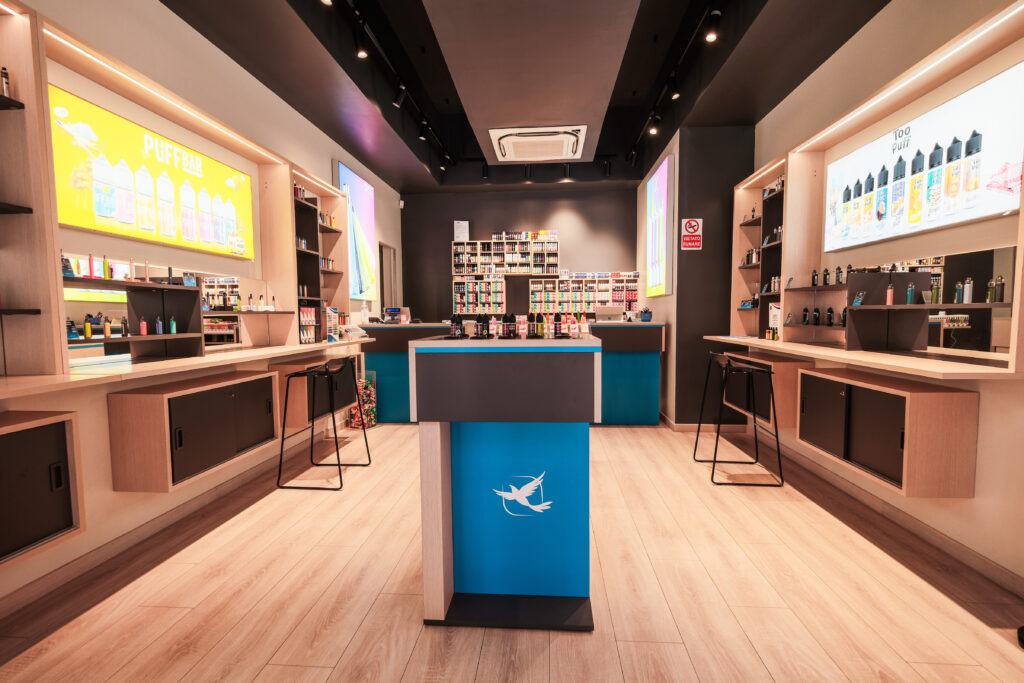
    Plxsur leadership says its partners have a combined market share representing an estimated 10 percent of the global $19.34 billion vaping market. Hardy said the company is targeting a 20 percent market share in the next five years. The companies include Hale Vaping (Ireland), UEG Holland (Netherlands), DampShop (Belgium), Pro Vape (Latvia), Puff Store (Italy), Nobacco (Greece), Ritchy Group (Czech Republic), Vape Empire (Malaysia), Pacific Smoke (Canada) and CK Complex (Poland).

    “The past two years have seen a huge amount of financial and operational progress for Plxsur, and we have grown to become the world’s largest and fastest-growing group of independent vaping companies with consolidated revenues of over $1 billion,” said Hardy.

    In 2021, Plxsur was founded by David Newns, Charlie Yates, and Nigel Hardy. The three entrepreneurs shared a vision for the vaping industry and discussed how they could work together to achieve their goals. They believed the key to success was respecting and supporting entrepreneurship while empowering local management teams. They planned to create a global network of independent vaping companies that were both the largest and the most responsible in the industry.

    Plxsur, under Hardy’s leadership, believes in improving the businesses it brings on board by focusing on three key aspects of business strategy: governance, compliance, and reporting. Compliance involves adhering to various rules and regulations in the countries and communities where Plxsur businesses operate. This includes regulatory, communication, and marketing compliance, as well as legal compliance related to finance and jurisdiction.

    “We’re at a very important and exciting stage in our journey. The companies in that group are not only the best at what they do in their respective markets, but importantly, they share our values.

    “They put the consumers first, think big, and take responsibility seriously. All our companies want to make a real difference in the lives of adult smokers by contributing to a smokeless society. We now have a presence in Europe, Asia, and North America, covering the full vaping value chain from manufacturing, wholesale, distribution, and direct-to-consumer, both online and through our global network of over 800 specialist vaping stores.”

    In 2023, group revenues increased 40 percent on the previous year to more than $1 billion, with an adjusted EBITDA of over $200 million. The outlook for the global vaping market is strong, and last year, Plxsur commissioned an independent research report that Hardy said is the “most comprehensive consumer study conducted on vaping to date”, using data from an online panel of over 30,000 consumers in six of Plxsur’s markets.

    “The opportunity available for RRP across our 12 markets is significant, and I am pleased that our Global Vaping Market Snapshot vindicates the belief that not only will this sector continue to grow at pace, but that vaping is quickly becoming the most popular form of RRP in the market, with adult smokers who switch to vaping likely to remain loyal by navigating the regulatory framework,” he explained. “Our team has established a center of excellence leading a program of capability development to ensure management teams at a local level of the skills to deliver sustained value growth.”

    Plxsur and its partners continue raising the bar as a responsible vaping group. All its companies have now committed to the six Plxsur standards (product compliance, manufacturing safety, responsible marketing, youth access, child protection and third-party product compliance) that address the biggest issues the vaping industry faces today. The company has also supported local teams across the group and guided companies in engaging with governments on policy development, particularly around preventing youth access.

    “We’re focused on migrating consumers from disposable vapes to rechargeable pod and open systems. This is a key priority for Plxsur and our companies are already delivering huge results. In Q3 of 2023, I’m delighted that our Italian business, Puff, successfully migrated many of their consumers to pod and open devices through its launch as an exclusive distributor of new-to-market pods and e-liquids,” said Hardy.  “To keep the momentum going, our portfolio companies have exciting plans to expand their range of pod systems in the first half of this year.”

    Unlike traditional business acquisitions, Hardy explained that the company’s partners are not selected based on their financial worth. Plxsur is highly selective in its choice of partners, and financial size is not the only factor determining whether a company is suitable to join the Plxsur team. Hardy cited the example of Pro Vape, a company headquartered in Riga, Latvia, which started its business in late 2016 and met all the necessary criteria to become a Plxsur partner.

    “The Baltic market is not particularly a huge market for vaping. What Pro Vape has is a significant presence in Europe,” said Hardy. “Only 40 percent of their business is domestic, and 60 percent is across the rest of Europe.”

    Plxsur has specific criteria that businesses must meet before partnering with them. Firstly, the company must be a leader in its channel, whether it is business-to-business or business-to-consumer, or a leading player in its market. Currently, all of Plxsur’s partners meet this benchmark. Secondly, having a healthy balance of company-owned brands within the portfolio is essential, with Plxsur aiming for at least 50 percent of its revenues to be driven by such brands. Thirdly, the most crucial criterion is people.

    “Our ability to retain our unique entrepreneurial spirit while growing at a rapid pace has been pivotal to our success over the past two years,” said Hardy. “We remain committed to achieving long-term value for all stakeholders, with responsibility at the core of everything we do. Supported by several tailwinds, including evolving market dynamics and customer preferences, we remain confident in Plxsur’s medium-term prospects and our ability to continue our trajectory to promote responsibility in the sector, achieve our target of over $15 billion in revenues by 2033.”

    To achieve the lofty goal, Hardy said Plxsur is well placed to capitalize on the growing trend of vaping across the globe, unlock future value, and play a leading role in shaping the sector’s future on a platform of responsibility. He said Plxsur excels at creating a distinctive, innovative business leadership environment while growing at a pace pivotal to the company’s success over the past two years.

    “We continue to see increasing regulation around vaping, particularly disposables, flavors, and marketing,” said Hardy. “At Plxsur, we see regulation as a force for good and encourage appropriate regulation and enforcement to tackle illicit and irresponsible trading behaviors. Last year, we submitted Plxsur’s response to the UK government’s open consultation on creating a smoke-free generation, and we continue to engage with regulators worldwide.

    “This engagement with responsibility at the core of everything we do places Plxsur in a prime position to continue to grow, lead the industry, and shape the future of vaping.”

  • Shisha Ban Overturned

    Shisha Ban Overturned

    Image: mehaniq41

    Kenya’s ban on shisha is unlawful, a Mombasa court ruled, reports The Star.  

    In overturning the measure, Shanzu Law Courts Senior Principal Magistrate Joe Mkutu noted that Kenya’s health cabinet secretary had failed to submit the regulations to Parliament for approval as stipulated in a 2018 High Court directive.

    As a result of the ruling, the magistrate ordered the immediate release of 48 individuals arrested and charged for selling and smoking shisha in January 2024.

    Since December 2023, the National Authority for the Campaign Against Alcohol and Drug Abuse arrested more than 60 people in separate club raids in Nairobi and Mombasa.

    The operations have also resulted in the confiscation of a substantial quantity of shisha paraphernalia, including shisha bongs and charcoal pipes.

    Shisha smoking was outlawed in 2017. The ban covered the use, import, manufacture, sale, promotion and distribution of the product based on health concerns.

  • PTC Disputes Tax Underpayment Charge

    PTC Disputes Tax Underpayment Charge

    Image: alexlmx

    Pakistan Tobacco Co. (PTC) is disputing allegations that legitimate tobacco companies are shortchanging the country’s tax collector, reports the Associated Press of Pakistan.

    Earlier this year, an Islamabad-based think tank presented figures showing that Pakistan’s national exchequer collected PKR567 billion ($20.4 billion) less from the tobacco industry than it was entitled to.

    “It is important to note that this figure is incorrect, misleading and detached from ground realities,” PTC wrote in a press release. “The only loss incurred to the government of Pakistan by the tobacco industry is because of tax evasion of illicit manufacturers as the legitimate industry pays all applicable duties and taxes.”

    Contrary to the report’s suggestion, the legitimate tobacco industry has significantly contributed to the national exchequer, paying PKR148 billion in fiscal year 2021-2022 and PKR173 billion in 2022-2023, according to PTC.

    The company highlighted that the government recently recognized PTC as one of Pakistan’s top tax-paying entities. It emphasized importance of a level playing field for the legitimate sector, which is currently undermined by the illicit sector.

  • Job Ads Suggest IQOS Debut in Austin

    Job Ads Suggest IQOS Debut in Austin

    Image: Alexander

    The resolution of an IP dispute with BAT has removed a major hurdle to selling the product in the U.S. 

    Philip Morris International is preparing to launch its IQOS heated-tobacco device in Austin, Texas, USA, reports U.S. News. The city will be a testing ground for PMI’s re-entry into the United States after the company resolved an intellectual property dispute with British American Tobacco that had prompted the International Trade Commission to ban imports of IQOS in the United States.

    PMI previously announced that it planned to launch IQOS in four cities in two U.S. states beginning with one city in the second quarter before a larger rollout in 2025. The company did not, however, release details.

    According to U.S. News, LinkedIn job advertisements suggest that PMI is planning to launch the product in Austin. The advertisements were posted this month and include positions such as field sales representatives, territory managers and retail sales advisors.


    The U.S. would be a significant market for IQOS. Euromonitor estimates that total U.S. nicotine sales excluding nicotine-replacement therapies were $143.6 billion in 2022. Cigarettes accounted for the majority of sales, but Euromonitor predicts that their value will drop by 30 percent by 2027 and the value of smoking alternatives such as e-cigarettes and nicotine pouches, will increase by 36 percent in the same period.


    Investors are waiting to see if PMI can create a heated-tobacco market in the U.S., where vaping is dominant.

    According to Brett Cooper, managing partner and analyst at equity research firm Consumer Edge, Texas offers an interesting trial market due to broad demographics. He noted that diverse cities like Austin, Houston and Dallas provide access to a wide range of consumer groups.


    U.S. Centers for Disease Control and Prevention data shows that tobacco taxes in Texas are relatively low, with the excise tax rate on a pack of cigarettes standing at $1.41 in September 2023.

    In January, Texas introduced new e-cigarette laws, banning products that resemble food or that include symbols or celebrities targeted at minors or that depict cartoon-like fictional characters.

    PMI believes IQOS can capture a 10 percent share of the U.S. tobacco and heated-tobacco unit volume by 2030.


  • Tobacco Stakeholders Debate Forestry in Brazil

    Tobacco Stakeholders Debate Forestry in Brazil

    Photo: Taco Tuinstra

    Stakeholders highlighted tobacco industry initiatives to preserve Brazil’s native forests and achieve energy self-sufficiency at the Expoagro Afubra 2024 fair in Rio Pardo, Rio Grande do Sul, Brazil, on March 22.

    SindiTabaco technical advisor Fernanda Viana Bender presented a number of projects designed to promote forest sustainability in tobacco farming in partnership with the Federal University of Santa Maria (UFSM).

    The program aims to cultivate trees to meet tobacco farmers’ fuel requirements while preserving native forests. At 22 demonstration units in Rio Grande do Sul, the UFSM research team, led by Jorge Antonio de Farias, is testing the management of fast-growing trees.

    While the programs provide stakeholders with valuable knowledge, Bender says there is still much to learn. “We need to develop a way of thinking that forest production is a tobacco farmer’s business,” she was quoted as saying on SindiTabaco’s website. “Without wood, there is no tobacco curing. However, beyond the demand by the sector, farmers could also get organized to diversify with forest production, thus earning extra income,” she argued.

    Farias identified a number of challenges to achieving those goals. “As the farmers possess small farms, land availability is one of the problems that make it difficult to plant trees, and the same holds true for the transport logistics of the production,” he observed.

    “At the same time, we witness a sector extremely concerned with the supply of wood of legal origin while the farmers strongly demand wood. The solution goes through the creation of cooperatives or associations capable of articulating this market, and the tobacco sector could be a protagonist in this process. The forest component should become an integral part, when it comes to establishing a rural property, as an alternative source of income,” said Farias.

  • Zimbabwe: Auction Prices Hit Record High

    Zimbabwe: Auction Prices Hit Record High

    Photo: Taco Tuinstra

    Tobacco prices on Zimbabwe’s auction floors hit a record high of $5.05 per kilogram, the highest price in 10 years. The previous high was $4.99 per kilogram.

    The increase comes primarily from “freed-funded” tobacco, which is grown by individual farmers and accounts for 7 percent of the total crop, according to The Herald.

    The remainder of the tobacco crop is funded under contract schemes that are mainly sponsored by foreign companies.

    Auction prices have increased 26 percent year-over-year while contract prices have increased 13 percent, according to the Tobacco Industry and Marketing Board. The auction floor price increase has reignited calls for an increase in local financing for tobacco growing.

    “The continued reliance on contract farming after two decades suggests there might be deeper issues with the model itself,” said Tobias Musara, a Harare-based development economist. “Ideally, a few seasons of participation should equip the farmers for self-sufficiency. This dependence on contract financing needs to be addressed to ensure long-term benefits for our local farmers.”

    Contract farming began around 2004, a few years after the government confiscated commercial farms and distributed the land among smallholder growers.