Blog

  • War on Tobacco or Assault on National Power?: Editorial

    War on Tobacco or Assault on National Power?: Editorial

    “In Brussels, they talk of ‘regulatory simplification,’ yet in international forums, they negotiate new layers of global bureaucracy, from tobacco to digital health and climate governance,” wrote analyst Javier Villamor in an article for The European Conservative. “But beyond the sanitary or environmental narrative, the plan represents a new attempt by Brussels to concentrate fiscal and regulatory powers at the expense of the Member States.”

    Villamor argues that as the European Union sidles up to the World Health Organization with its upcoming tobacco control conference (COP11), the actual purpose is to transfer regulatory power from national governments to international agencies without democratic oversight, as Brussels plans to automatically incorporate WHO-aligned measures into EU law.

    “What appears to be a technical step is, in reality, the transfer of Europe’s regulatory sovereignty to an international agency with no democratic legitimacy,” Villamor wrote. “Brussels not only intends to sign commitments on behalf of the Member States but also to incorporate them automatically into EU law through the forthcoming revision of the Tobacco Products Directive.

    “In practice, this would mean that decisions taken in Geneva offices could become binding bans in Madrid, Rome, or Warsaw—without parliamentary debate or national impact assessment.”

    As Brussels considers restrictions, bans, and taxes on virtually every product containing tobacco or nicotine, framing it all as a public health and environmental initiative, the plan includes fiscal measures under the Tobacco Excise Directive (TED) and Tobacco Excise Duty on Raw Tobacco (TEDOR), enabling the EU to directly collect up to 15% of national excise revenues and impose duty hikes of up to 900% on certain products. Observers, Villamor says, warn that such moves centralize authority, undermine the principle of subsidiarity, and risk harming over 80,000 European tobacco producers and small retailers, while benefiting third countries like Morocco and China.

    “The so-called ‘anti-tobacco crusade’ becomes a vehicle for recentralizing authority and financing the EU’s bureaucratic machinery under the guise of public health,” Villamor wrote. “The mechanism is well known: Brussels funds these organizations, they in turn demand that EU law be aligned with the WHO, and the Commission presents their demands as a ‘civil society consensus.’ A closed feedback loop of influence, where citizens pay to lose sovereignty.

    “Paradoxically, the countries with the best results in reducing smoking, such as Sweden, which has cut its rate to 5% thanks to regulated alternatives like snus and nicotine pouches, would be penalized for adopting effective national policies outside the WHO’s dogma.”

  • Farmers, Economy in Jeopardy as Tobacco Remains Unsold in Malawi

    Farmers, Economy in Jeopardy as Tobacco Remains Unsold in Malawi

    More than 4 million kg of tobacco remain unsold at Mzuzu Floors in Malawi despite the Tobacco Commission (TC) extending the marketing season, a setback that farmers warn could push them into financial ruin. The unsold leaf, worth an estimated K17.2 billion ($9.8 million), represents both a personal crisis for farmers and a blow to Malawi’s economy, which depends on tobacco for over 50% of its foreign exchange earnings.

    Farmers say many took out loans expecting to repay them through sales, but with buyers pulling back and prices falling, they are now trapped in debt. “We can’t pay workers or send our children to school,” said Chitipa farmer Hazwell Chikakuda, whose buyers canceled contracts mid-season. “Buyers backed out, and I’ve been selling the remaining leaf at throwaway prices. We feel abandoned.”

    TC spokesperson Telephorous Chigwenembe confirmed large volumes of unsold leaf remain both on and off the market, citing an oversupply as the main challenge. Tama Farmers Trust CEO Nixon Lita added that demand has slowed as stocks pile up. While Malawi sold 218.9 million kg of tobacco this season, worth $539.4 million (up from $396 million last year) the glut now threatens foreign exchange inflows and economic stability.

    Economists warn that without intervention or diversification, the country risks deepening its dependence on the volatile crop. As one analyst put it, “Unsold tobacco means unpaid loans, empty pockets, and a weaker economy.”

  • Juul Secures Permanent IP Injunction in UK

    Juul Secures Permanent IP Injunction in UK

    Juul Labs won a permanent intellectual property injunction in the UK High Court, converting temporary measures from 2019 into lasting legal protection. The ruling bars four Chinese companies — Greensun Technology, Ouch, Gaish, and Airsmo Tech — from infringing on Juul’s trademarks, product designs, and patents.

    The court said the defendants ignored proceedings and prior orders, failing to respond to Juul or provide required witness statements. The decision mandates the destruction of existing infringing products and publication of the ruling on the companies’ websites.

    Juul said the injunction is a key milestone in its global IP enforcement efforts, ensuring its products and designs remain protected in the UK market and reinforcing its rights against unauthorized competitors.

  • PMI Gets Approval to Produce Nicotine Pouches in Bangladesh

    PMI Gets Approval to Produce Nicotine Pouches in Bangladesh

    Philip Morris received approval from the Bangladesh government to open a factory in Narayanganj to produce nicotine pouches. The project, granted by the Bangladesh Economic Zones Authority (Beza), involves an initial investment of $5.8 million with a planned annual production of 536.3 million units, with operations required to start within a year.

    The news sparked opposition from anti-tobacco campaigners who are calling for the revocation of the approval. However, Beza described the pouches as “anti-nicotine” products and noted there is no explicit ban on their production or export, despite a government import ban on e-cigarettes and other electronic nicotine delivery systems.

    Authorities are reviewing environmental and regulatory compliance, with Philip Morris Bangladesh seeking clearance from the Department of Environment.

  • Altria Reports Q3 Results, Narrows 2025 Guidance

    Altria Reports Q3 Results, Narrows 2025 Guidance

    Altria Group, Inc. reported third-quarter 2025 net revenues of $6.1 billion, down 3% year-on-year, while adjusted diluted EPS rose 3.6% to $1.45. The company reaffirmed its resilience in core tobacco and smoke-free products and announced an expansion of its share repurchase program from $1 billion to $2 billion, set to run through 2026.

    CEO Billy Gifford highlighted “exciting progress” across Altria’s portfolio, including the U.S. launch of on! PLUS nicotine pouches, regulatory submissions for Ploom heated tobacco, and a strategic collaboration with KT&G to pursue international and non-nicotine growth opportunities. The company also marked its 60th dividend increase in 56 years, underscoring its continued focus on shareholder returns.

    Altria narrowed its full-year 2025 adjusted EPS guidance to a range of $5.37–$5.45, representing 3.5%–5.0% growth from 2024. Management said it expects performance to moderate in Q4 as it laps prior share reductions and continues to invest in its smoke-free strategy amid a dynamic regulatory environment.

  • JT Reports Strong Q3 2025 Results, Raises Full-Year Forecasts

    JT Reports Strong Q3 2025 Results, Raises Full-Year Forecasts

    Japan Tobacco Inc. (JT) reported robust growth for the first nine months of 2025, with revenue up 13.2% to ¥2.63 trillion ($17.1 billion) and adjusted operating profit at constant FX up 27.2% to ¥849 billion ($5.5 billion), driven by solid pricing and higher tobacco volumes. The company also completed the transfer of its pharmaceutical business to Shionogi & Co., Ltd. and its subsidiary TORII PHARMACEUTICAL, marking a strategic shift to focus on its core tobacco operations.

    At the end of September 2025, total assets stood at ¥8.2 trillion ($53.2 billion), down ¥175.7 billion ($1.1 billion) year-to-date, mainly due to lower cash holdings, while equity increased to ¥4.17 trillion ($27.1 billion) on higher retained earnings. Operating cash flow remained strong at ¥287 billion ($1.9 billion), supported by steady contributions from the tobacco business, despite payments related to the Canadian litigation settlement.

    Reflecting strong performance, JT raised its full-year forecasts across all metrics, projecting a 13.1% rise in revenue and a 24.3% increase in adjusted operating profit at constant FX. CEO Masamichi Terabatake credited growth in the Ploom heated tobacco segment, with Ploom AURA and EVO premium sticks boosting Japan’s HTS market share to 15.5%. JT also announced a revised annual dividend of ¥234 ($1.52) per share, up ¥26 ($0.17), in line with record-high earnings and its shareholder return policy.

  • Nicokick Introduces Nicotine Pouch Advent Calendar

    Nicokick Introduces Nicotine Pouch Advent Calendar

    Nicokick.com announced the launch of its first-ever nicotine pouch advent calendar, a limited-edition release for adults aged 21 and over. Available beginning November 12, the calendar features 24 days of nicotine pouch samples from top and emerging brands, retailing for $69.99 exclusively on Nicokick.com. Designed to let adult consumers explore a variety of brands, strengths, and flavors, the collection includes Zone, Rogue, Zyn, FRE, Sesh, and Nic-S, among others, with pouch strengths ranging from 3 mg to 9 mg.

    “We created the advent calendar as a transparent, seasonal way for adults to explore the variety of nicotine pouch brands available on Nicokick.com,” said James Lees, vice president of retention. The company says the launch aligns with its goal of helping adult tobacco users discover smoke-free alternatives in an engaging, educational format.

  • Pyxus International to Report Q2 FY2026 Results November 12

    Pyxus International to Report Q2 FY2026 Results November 12

    Pyxus International, Inc. said it will release its second-quarter fiscal 2026 financial results November 12, before market open. The company will host an earnings call and webcast at 9 a.m. EST to discuss the results.

    Those interested can call +1 (646) 769-9200 or (800) 330-6710 with conference ID 2153372, or access the live webcast via Pyxus’ investor relations webpage. A press release and Q2 presentation will be available prior to the call. An archived recording will be posted shortly after the call.

  • Voopoo Launches High-Powered, Stylish Vinci S

    Voopoo Launches High-Powered, Stylish Vinci S

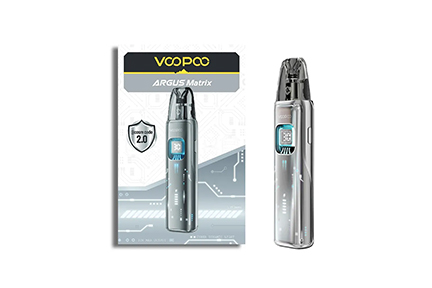
    Voopoo introduced the Vinci S, “combining cutting-edge performance with striking design.” The device features a 2000 mAh battery offering up to three days of intensive use, iCOSM Code 2.0 technology for rich flavor and leak resistance, and step-less airflow adjustment with smart power matching up to 40W.

    Available in 4.5 mL or 2 mL cartridges, the Vinci S is lightweight (69 g) and portable, with top-side filling, LED battery indicator, and enhanced leak-proof design. “Its luminous palette aesthetic and premium textures make it both a functional device and a style statement,” the company said.

  • JTI UK Launches Strongest Nordic Spirit Nicotine Pouch Yet

    JTI UK Launches Strongest Nordic Spirit Nicotine Pouch Yet

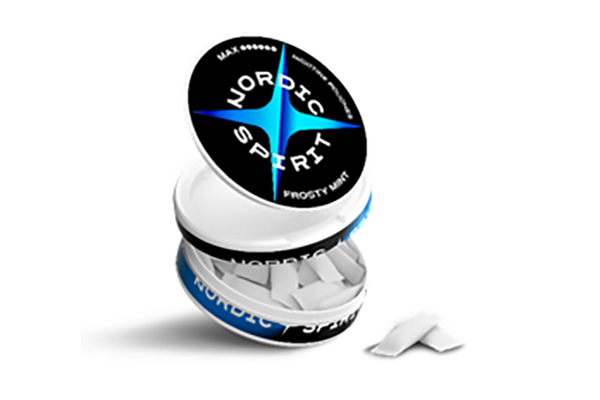
    JTI UK announced the launch of its most potent nicotine pouch to date, Nordic Spirit Frosty Mint Max (17mg), which is now available via JTI360 and key multiple grocers, with wider rollout to independent and symbol retailers from November 3. Priced at £6.50 RRP, JTI said it is targeting the fast-growing “max strength” segment, which now accounts for 16% of nicotine pouch sales in the Independents & Symbols channel.

    The new variant debuts Nordic Spirit’s refreshed branding, featuring darker tones and bold design cues to emphasize strength. With the UK nicotine pouch market valued at £15.9 million per month, JTI says the product will help retailers meet rising demand for high-strength options.