Blog

  • Clive Bates: WHO Using Tobacco’s History to Poison Good Science

    Clive Bates: WHO Using Tobacco’s History to Poison Good Science

    In a forceful keynote at the Global Tobacco and Nicotine Forum (GTNF) in Brussels, Clive Bates, Director of Counterfactual, called for a fundamental reset in global tobacco control policy, arguing that current frameworks such as the WHO Framework Convention on Tobacco Control (FCTC) have failed to adapt to innovation and evidence.

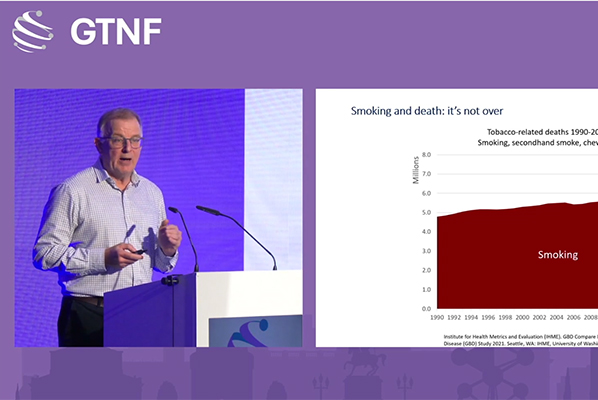
    “Prevalence is falling, but the global population is rising,” Bates said. “That means the total number of smokers is still going up — and so are the 7.5 million deaths each year caused by smoking.” He emphasized that quitting smoking at any age provides significant health benefits, but argued that international tobacco control remains stuck in the past. “The mission hasn’t changed — stop people from smoking — but the methods are outdated. We have new tools, and ignoring them is indefensible.”

    Bates described alternative nicotine products such as vaping, heated tobacco, and smokeless options as “the disruption the FCTC never anticipated.” He pointed to Sweden’s success as proof of concept: “Sweden has higher nicotine use than Germany but lower cancer rates. That’s what harm reduction looks like.” Yet, he criticized the European Union for maintaining its ban on snus — the very product that helped Sweden virtually eliminate smoking. “What if, instead of banning snus, we promoted it?” he asked. “Why are we still doing things that contradict our stated public health goals?”

    Turning his critique toward the WHO, Bates condemned the organization’s stance that there is “no evidence” reduced-risk products are safer than cigarettes. “That’s shocking,” he said. “Harm reduction is being dismissed as a tobacco industry ploy, using the industry’s reputation to poison good science.”

    He argued that the FCTC has institutionalized a “toxic” anti-industry bias that blocks collaboration and progress. “If the tobacco industry likes it, it must be bad — that’s the logic codified into policy. There’s no room for alignment with that attitude,” he said. Bates noted that several major companies have already shifted dramatically — “PMI now earns 41% of its revenue from smoke-free products” — yet the global framework continues to punish rather than encourage transformation.

    “The WHO gave an award to a man in India for banning reduced-harm products in a country with 100 million smokers,” Bates said. “That’s not leadership — that’s negligence.”

    He concluded with a clear call to action: “If you want better outcomes, get the smoking rate down as fast as possible. The demand for nicotine won’t disappear, but we can make it vastly safer — and we can do it without coercion. Let consumers make informed choices. That’s how we save lives.”

  • Taxes Increasing Gap Between Regulatory Intentions and Market Realities

    Taxes Increasing Gap Between Regulatory Intentions and Market Realities

    At the Global Tobacco and Nicotine Forum (GTNF) in Brussels, a panel moderated by Tim Phillips, Managing Director of Tamarind Intelligence, explored how taxation and tariffs are shaping the future of nicotine products in a rapidly evolving market. Speakers included Christa Pelsers (BAT), Stefano Santi (Philip Morris International), and Maria Angelova (Socotab Frana SA).

    In “It’s All About Tax — The Complex World of Excise and Tariffs,” Phillips opened by stressing that “the next few years are going to be vitally important,” as novel products—from vapes to nicotine pouches—continue to disrupt markets. “We’re seeing massive problems around illicit trade and tax collection,” he said, noting that in some countries, “more than half of the market may already be illicit.” The result, he warned, is a growing gap between regulatory intentions and market realities.

    Pelsers highlighted the speed of innovation and the challenges it creates for regulators. “For years, there was no innovation in tobacco, and now we have an explosion of new products—governments are still trying to catch up,” she said. Pelsers argued that taxation must be based on science, not politics, and criticized the European Commission’s fragmented approach: “The Commission is proposing that every member state can adjust its own rates. That makes things even more complex. We need harmonization to ensure fairness and functionality in the single market.”

    She also warned of geopolitical shifts impacting trade. “With U.S. tariffs, China is redirecting exports elsewhere. The EU’s response has been slow. The next few years will reshape who we trust as trading partners,” she said. “And if tax rates are set too high, it will be detrimental to innovation.”

    Santi emphasized that excise tax policy should not only collect revenue but also guide consumers toward less harmful products. “Ten years ago, my job was complexity five; now it’s fifty,” he said. “We need to balance taxation in a way that shifts the market without driving consumers to the black market.” He endorsed differentiated tax levels for different product types, saying, “If you raise taxes too fast, consumers will find cheaper, often illicit alternatives.”

    Santi called for leveraging member state experience to modernize EU tax policy and harmonize definitions. “The directive is a good start, but it’s lagging behind. Treating all products the same is a recipe for failure. Europe needs to protect its economic and manufacturing footprint.”

    Angelova added a perspective from the leaf tobacco sector, calling taxation “one of the quiet architects of humanity.” She warned that poorly designed taxes could devastate rural livelihoods. “Tobacco is an agricultural product that supports families. Nowhere else in the world is raw tobacco subject to excise tax,” she said. “Making local tobacco less affordable than imported tobacco doesn’t help anyone.”

    Angelova stressed the importance of practical implementation: “It’s not just about what we tax—it’s about how. Details make the difference. Track and trace systems are vital to ensure transparency and prevent unfair competition.”

    She concluded by urging policymakers to proceed with caution: “We’re trying to solve too many problems at once. We need to start addressing them one by one. Europe still has many families who rely on tobacco farming. Consumers won’t forget how we handle this.”

    The panel collectively underscored that while excise and tariff reforms are inevitable, their success will depend on nuance, balance, and genuine collaboration with industry to avoid unintended economic and public health consequences.

  • Harm Reduction is a Race Where Everyone Can Win

    Harm Reduction is a Race Where Everyone Can Win

    Deborah Binks-Moore, Chief Corporate Affairs Officer at Imperial Brands, delivered an optimistic yet pragmatic keynote at GTNF, urging governments, regulators, and industry leaders to work together to accelerate global harm reduction. Binks-Moore described the moment as an “inflection point” in the global effort to reduce smoking, noting that next-generation products have moved from niche to mainstream in only a few years.

    “Just a few years ago, next-generation products were a small part of the market. Now they are becoming mainstream,” she said. “Our journey to reduce smoking must place the consumer at the heart of everything we do.”

    She celebrated the rapid progress made by the industry but cautioned that success brings new challenges.

    “Our very success is now creating fresh challenges, which will require fresh thinking,” she said. Drawing parallels with other sectors in transition—such as energy—she encouraged policymakers to heed lessons from those industries: transformation succeeds only when science, regulation, and innovation align.

    “Tobacco harm reduction has the potential to prevent the premature deaths of many millions of lives over the long term,” she said. “This means we need an equally long-term approach to policymaking. We need people from different political traditions to work together. We need regulators to collaborate with responsible industry players. And we need central governments to partner closely with local administrations.”

    She called on policymakers in Brussels, WHO delegates, and regulators worldwide to develop “enforceable, sustainable frameworks” built on facts, science, and shared principles.

    Binks-Moore urged all stakeholders—policymakers, scientists, and business leaders alike—to begin with the individual consumer. “We need to understand and respect them for who they are, not who we wish them to be,” she said. “If we follow these principles, harm reduction is a race where everyone can win.”

  • GTNF 2025 Panel: The Complex Picture of Harm Reduction

    GTNF 2025 Panel: The Complex Picture of Harm Reduction

    At the opening session of the 2025 Global Tobacco and Nicotine Forum (GTNF) in Brussels, panelists explored how consumer behavior, regulatory inertia, and scientific innovation intersect in the global harm reduction debate. “Consumers, Combustion, Nicotine – The Complex Picture of Harm Reduction,” brought together Nick Kadysh (CEO, PharmaAla Biotech), Atheer Al Bin Ali (Chief Legal Officer, Badael), Dr. Carolyn Beaumont (Clinician and Tobacco Harm Reduction Educator), Håkan Engqvist (Founder and Chief Science Officer, Emplicure), and Dr. David Utley (President and CEO, Pivot Health Technologies).

    Utley argued that harm reduction must return to its core mission: helping smokers quit. “Expecting a smoker to become smoke-free on their own is like expecting a cancer patient to cure themselves,” he said. Utley, a surgeon-turned-entrepreneur, urged policymakers to focus on the consumer experience, not ideology. “Consumers are smarter than doctors. Smokers have tried to quit twenty times — they’re not hopeless, they’re underserved.” He noted that the stigma around nicotine use is largely because the products come from tobacco companies: “If pharma had made them, this wouldn’t even be controversial.”

    Beaumont echoed the importance of reframing harm reduction in clinical terms. “Doctors are trusted by the community — it should be a no-brainer to have them on board,” she said. Beaumont called Australia’s prescription-only vape model a “monumental failure,” emphasizing that education from credible medical sources is key. “It’s not just a preference for a better product; it’s a preference for a better, healthier life.”

    Kadysh highlighted the public health challenge of dual use, calling it “the bane of our existence.” He stressed that sales data alone can’t explain consumer behavior. “We look at numbers and assume what products people like — but that doesn’t tell the full story.” From his vantage point in biotech, Kadysh said the pharmaceutical sector is only beginning to embrace harm reduction discussions. “It’s still a charged political stance, but the science is catching up.”

    Al Bin Ali brought an international perspective, pointing to Saudi Arabia’s growing interest in harm reduction. “This is a great opportunity if regulators would just have the proper conversations,” he said. “The controversy isn’t about philosophy; it’s about data — where it comes from, and whether it’s reliable.” He emphasized the global implications of evidence-driven policymaking, noting that “one country’s shift can influence many nations.”

    Engqvist underscored the role of science and investment in shaping the harm reduction landscape. “Sweden comes in from a base of science,” he said. “That scientific foundation creates a significant opportunity for innovation and investment.”

    Across the session, a shared message emerged: harm reduction should be guided by science, supported by clinicians, and driven by consumer realities — not paralyzed by politics or ideology. As Utley summed up, “The consumer will win — because the consumer always does.”

  • Cigarette-Smuggling Balloons Shut Down Lithuanian Airport

    Cigarette-Smuggling Balloons Shut Down Lithuanian Airport

    Balloons carrying thousands of packs of illicit cigarettes shut down the Vilnius Airport in Lithuania when they floated into the country’s airspace.

    According to the National Crisis Management Centre (NCMC), 25 meteorological balloons were detected entering the country from Belarus, and two ended up directly over the airport.

    The “airspace violations” follow a number of drone incursions suspected of being linked to Russia disrupting air traffic, according to the BBC. Russia has denied any involvement.

    “Balloons with contraband cargo—cigarettes from Belarus—are nothing new in Lithuania, Latvia, and Poland,” said a NCMC spokesperson. This year, 544 balloons have been recorded entering Lithuania from Belarus, according to the spokesperson. Last year, 966 balloons were recorded.

    “Meteorological balloons are a rudimentary tool used by smugglers—they are cheaper than drones for transporting cigarettes from Belarus,” the spokesperson said. “Our services’ aim is to seize the largest possible quantities of contraband and to detain organizers and perpetrators so that this activity is unprofitable and does not pose a risk to civil aviation.”

  • Guam Introduces Bill to Regulate Vapes

    Guam Introduces Bill to Regulate Vapes

    A new bill has been introduced in Guam to regulate vapor products, reports The Guam Daily Post. The bill, Bill 3-38, is known as the Electronic Nicotine Delivery Systems Excise Tax of 2025. It would establish a licensing and tax structure for vaping devices and electronic cigarette products.

    The bill is “not about penalizing adults who make personal choices,” according to bill author Joe San Agustin, but it is about “protecting our young people, promoting public health, and ensuring that a profitable enterprise in Guam contributes equitably to the island’s well-being.”

    The bill would create strict age restrictions and random inspections as well as penalties for retailers caught selling electronic nicotine-delivery systems (ENDS) to minors. It would also establish a clear licensing structure for wholesalers and retailers.

    “While it is unclear what is ideal for the government of Guam, Bill 3-38 COR takes that first step toward addressing ENDS products as a separate group,” said Maria Lizama, director of the Department of Revenue and Taxation. “And we hope that better practices will eventually emerge.”

    If the bill passes, the department plans to develop internal systems to classify and report ENDS products distinctly from other products. “I’m not saying it’s going to be easy….We will simply have to comply,” said Lizama.

    The department is still discussing how the tax will be classified. “It’s a complex issue,” said Lizama. “Our initial thoughts were to just do an across-the-board, whether it’s the refillable part of it, whether it’s the one-time use, whether it’s the heating element, (or)…other gadgets,” she added. “We believe that’s probably the easiest for now, and then as we continue along, we also believe a better plan to tax will emerge.”

    Governor Lou Leon Guerrero suggested taxation at the wholesale level, but that was met with concerns of monopolization.

    “The biggest problem is wholesalers wanting to control the product.  There’s only one wholesaler on the island that actually sells vape products,” said Senator Telo Taitague.

    Easy youth access prompted the call for specific retailers selling ENDS products. “We’re having a lot of issues with kids getting their hands on it and going into a gas station. (It’s) as easy as that. It’s easy to pickpocket from the counter,” Taitague said. “But when you’re in one of these stores [ENDS retailers], they’ve got cameras everywhere. You can’t even step in there unless you’re 18 years old.”

    “It certainly would make things easier for our team,” Lizama said of specific ENDS retailers. “It will also perhaps provide greater control.”

  • Imperial on Track for Full-Year Guidance

    Imperial on Track for Full-Year Guidance

    Imperial Brands has issued a pre-close trading update for full-year 2025, according to a press release. This is the fifth and final year of the company’s 2021 strategy and its FY25 performance provides a strong foundation looking ahead to the next phase of the company’s strategy to 2030, according to a press release.

    At constant currency, Imperial is on track to deliver low single-digit tobacco and NGP net revenue growth for FY25, with group adjusted operating profit growth at a similar rate to last year, in line with guidance. NGP losses are expected to be broadly flat year on year.

    Adjusted operating cash conversion remains strong, and the company expects its full-year leverage to continue to be at the lower end of its 2.0 to 2.5 range for adjusted net debt to EBITDA.

    Taking dividends and buyback together, Imperial expects its capital returns to shareholders will exceed £2.7 billion in the coming fiscal year, representing around 11% of its current market capitalization. Over the past five years from FY21 to FY25, Imperial has delivered a cumulative c. £10 billion of capital returns to shareholders.

    Annual results for the year ended 30 September 2025 will be announced on 18 November 2025.

  • Luersman Joins Imperial Board

    Luersman Joins Imperial Board

    Abbe Luersman will join the Imperial Brands’ board as a nonexecutive director, effective January 12, 2026, according to a press release.

    Luersman, who is chief human resources officer of Walgreens Inc., has had a career as an HR leader in global listed businesses including Otis Worldwide Corporation, Koninklijke Ahold Delhaize NV, Unilever, and Whirlpool Corporation. She is also a nonexecutive director and remuneration committee chair at Just Eat Takeaway NV and co-chair of the Gartner CHRO Global Leadership Board.

    Thérèse Esperdy, chair of Imperial Brands, said, “On behalf of the board, I am delighted to welcome Abbe to Imperial. Abbe has a proven track record in organizational design, integration and cultural change—both as a chief people officer and a nonexecutive director. She has transferred her skills across different sectors, including consumer goods, retail, manufacturing, and industrial technology. Abbe brings deep and wide-ranging experience in transformation programs, an area of strategic importance for Imperial Brands. The board will benefit greatly from her insights and experience, and we look forward to working with her.”

    Luersman will become a member of the Remuneration and the People, Governance and Sustainability Committees upon joining the board.

  • WHO Facing Crises of Relevance, Former Director Says

    WHO Facing Crises of Relevance, Former Director Says

    Dr. Tikki Pang, a professor and former Director of Research Policy and Cooperation at the World Health Organization (WHO), delivered a compelling keynote at the Global Tobacco and Nicotine Forum (GTNF) in Brussels, urging the global public health community to “find a detour” around entrenched opposition to tobacco harm reduction (THR). Drawing a vivid analogy, Pang said the WHO’s position acts like a “landslide blocking the road” to progress, creating ripple effects that influence policy, weaken public trust, and stigmatize innovation. Attempts to change this stance, he said, have proven “frustrating and futile.”

    “‘Tobacco control’ has become the complete elimination of tobacco in society,” Pang said. “It’s become pretty much ideological at this point. It has become evidence-selective, perhaps evidence-blind.

    “We need to overcome this perception that the industry is the cause of the problem and not part of the solution.’

    Pang described the journey toward a THR-friendly world as “a long road with many obstacles,” and warned that the EU’s recent alignment with anti-THR policies could have “global repercussions.” Instead, he called for a “circuit breaker” — independent, multi-stakeholder platforms that operate outside the WHO’s Conference of the Parties (COP) framework. These coalitions should unite industry, consumers, investors, media, and advocates to advance harm reduction directly, he said.

    Pang emphasized the crucial role of media and advocacy in countering misinformation, noting that journalists can either “spread misconceptions or become powerful allies.” He also suggested situating THR within the broader context of non-communicable disease (NCD) prevention.

    Reflecting on his 13 years at the WHO, Pang acknowledged its achievements in supporting underserved populations but said the organization now faces “a crisis of relevance and confidence.” He concluded that while the WHO’s mission explicitly includes improving global health — including for smokers seeking better alternatives — progress will depend on using science-driven innovation and rational policy to achieve that goal.

    “Science has given us the tools to reduce harm from tobacco,” Pang said. “Reason dictates that we should use them.”

  • Examining the U.S. Regulatory Landscape

    Examining the U.S. Regulatory Landscape

    At the Global Tobacco and Nicotine Forum (GTNF) in Brussels, industry leaders examined the shifting regulatory climate in the United States, where overlapping state and federal actions continue to shape — and complicate — the tobacco and nicotine marketplace. The session was moderated by Paige Magness, Senior Vice President of Regulatory Affairs at Altria Client Services, with insights from Beth Oliva, a partner at Fox Rothschild, Laura Leigh Oyler, the Vice President of Regulatory at Haypp Group, Valerie Briggs Solomon, the Vice President of Scientific and Public Health Affairs at Reynolds American, and Dr. Jessica Zdinak, the founder and Chief Research Officer at Applied Research and Analysis Company (ARAC).

    Magness opened the panel, noting that “a change was inevitable” with the new U.S. administration, citing an encouraging shift toward addressing illicit markets. She commended the Tobacco Control Act’s intention but said, “It’s FDA’s implementation where things fall apart.”

    Oyler highlighted the fragmented nature of the U.S. system: “Sometimes it’s hard to remember the U.S. isn’t one big monolith — it’s 50 states that can directly conflict with the federal government.” She stressed that effective youth prevention starts with adult behavior, adding, “The biggest predictor of youth use is whether their parents use. Help the kids by helping their parents make better decisions.”

    Oliva described a growing disconnect between FDA oversight and state-level actions, noting California’s comprehensive flavor ban. “The FDA is the barrier to entry, the states are barriers to the shelf,” she said. “Today they are combining in ways never meant to happen.” Oliva argued that the FDA’s shifting authorization process and policy reversals have destabilized the marketplace, pushing consumers toward illicit products. “Unless we see a lot more authorizations for nicotine products, we’re going to see what happened with e-cigarettes all over again,” she warned. She urged the FDA to “partner with those tracking the data” and to “stop manipulating the industry and consumers in the process.”

    Zdinak focused on the disconnect between regulation, consumer understanding, and behavioral science. “Congress is making laws without understanding the people they govern,” she said, pointing to misinformation about relative risk. She argued that variety and flavor choice drive switching and, therefore, public health gains. “If CTP can’t communicate quickly, the market will move ahead without them,” she cautioned, predicting “another wild west” scenario similar to what happened with the e-cigarette category.

    Solomon criticized the FDA’s tendency to exaggerate youth-use trends while ignoring adult harm reduction. “FDA is calling things an epidemic that aren’t,” she said. “Scaring children away might be good, but scaring adults away from better options is counterproductive.” She underscored the importance of credible communication through trusted messengers: “[The nicotine industry is] not always trusted, so we have to equip those who are. Science will lead the way — if we let it.”

    Overall, the panel agreed that while the U.S. has one of the world’s most comprehensive regulatory systems, its complexity and inconsistency risk stifling innovation and harming public health goals. The consensus was that greater collaboration, transparency, and scientific grounding are urgently needed to make the regulatory system work for both consumers and harm reduction.