
Blog

  • Altria and KT&G Partner in Pursuit of Modern Nicotine Growth

    Altria and KT&G Partner in Pursuit of Modern Nicotine Growth

    Altria Group, Inc. and KT&G Corporation announced they have signed a non-binding global collaboration memorandum of understanding (MOU) “to pursue joint growth opportunities in modern oral nicotine, non-nicotine wellness products, and operational efficiency in traditional tobacco.” The partnership builds on Altria’s long-term goal of expanding into adjacent international categories beyond cigarettes, first outlined in 2023.

    The companies said their complementary strengths would accelerate innovation and market expansion. As an initial step, an Altria subsidiary will acquire an ownership interest in Sweden-based Another Snus Factory (ASF), concurrent with KT&G’s purchase of the company, giving both parties a foothold in the LOOP nicotine pouch brand. They also plan to evaluate ways to expand Altria’s on! and on! PLUS oral nicotine products to select markets.

    Beyond nicotine, the collaboration extends into the U.S. wellness and energy space through Altria and KT&G’s Korea Ginseng Corporation, which will jointly explore new product opportunities. The two firms will also work to improve operational efficiency in traditional tobacco businesses, with the aim of strengthening competitiveness and creating transferable capabilities for future international smoke-free ventures.
  • Pakistan’s Tobacco Farmers Say Delayed Quotas Spark $23M Loss

    Pakistan’s Tobacco Farmers Say Delayed Quotas Spark $23M Loss

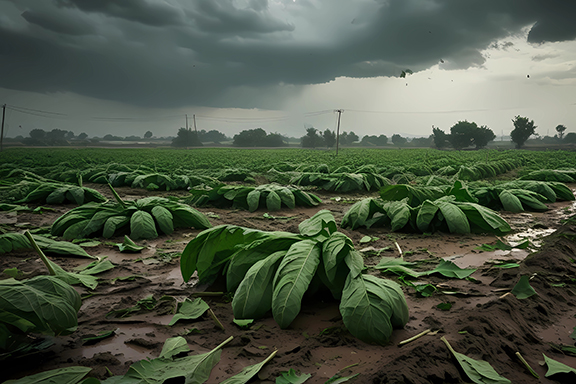
    Tobacco growers in Pakistan claim delayed quota announcements and reduced allocations have triggered overproduction, a price crash, and losses exceeding Rs6.56 billion ($23 million). According to the Dawn, the government normally sets quotas by October, but this year’s lower quota was delayed until December, forcing farmers to sell surplus tobacco at the minimum indicative price (MIP) of Rs548 ($1.92) per kg—far below the market average of Rs720 ($2.52). Growers accuse multinational and local companies of exploiting the situation by purchasing surplus cheaply.

    According to the Dawn, industry figures warn that farmers are being squeezed between rising production costs and falling incomes, with many unable to recover expenses. According to the Tobacco Growers Association, companies have failed to meet quota commitments, while export figures tell a different story—Virginia tobacco exports jumped 129% to 48 million kilograms in 2024-25, even as domestic quotas were cut, the newspaper said. Farmers claim losses of up to Rs3 million ($10,500) per hectare under current pricing.

    The downturn threatens broader economic impacts, including reduced government revenue, falling exports, and job losses in tobacco-producing regions. Growers also point to climate-related crop damage this year, for which they have received no compensation. The National Assembly’s standing committee on tobacco is set to meet in Islamabad on September 23 to discuss possible relief measures, though farmers remain skeptical about immediate action.

  • Cuba Boosts Logistical Support for Tobacco Growers

    Cuba Boosts Logistical Support for Tobacco Growers

    Cuba’s state-owned tobacco group, Tabacuba, intensified its support for local growers ahead of the 2025 harvest, deploying new logistics and equipment to improve efficiency and reduce reliance on intermediaries. The group added five new Howo fuel trucks to the six existing vehicles, along with 12 tractors and trailers, aimed at ensuring direct delivery of diesel and materials to farms and facilitating transport from the port of Mariel. Marino Murillo, president of Tabacuba, said these measures are expected to benefit around 7,000 growers, while the first Freely Convertible Currency supply store for tobacco producers was also inaugurated, offering a range of agricultural and hardware products.

    Additional programs include technical support for the cultivation of covered tobacco in Sancti Spíritus, targeting high-quality export crops for about 20 producers. The initiative provides growers with guidance across all stages of production, from seed planting to curing. Previous investments this year included six Mercedes-Benz vehicles for growers, highlighting Tabacuba’s strategy of combining logistical support with incentives to stabilize and encourage tobacco output amid concerns over declining production and its impact on export revenues.

  • Bangladesh Pushes for Tobacco-Free Generation

    Bangladesh Pushes for Tobacco-Free Generation

    Tobacco industry stakeholders are closely monitoring calls from Bangladeshi experts and advocacy groups to amend the country’s tobacco control law with the stated goal of creating a “tobacco-free generation.” While public health advocates link tobacco use to rising rates of non-communicable diseases and urge stricter restrictions, the industry cautions that sweeping amendments could have wide-ranging economic and social impacts. Bangladesh’s tobacco sector supports millions of livelihoods, from farmers to small retailers, and contributes significantly to government revenue through taxes and export earnings. Industry representatives stress that any legal reforms must balance health objectives with the realities of employment, trade, and fiscal stability.

    From the industry’s perspective, an outright tightening of laws—such as bans on e-cigarettes and vaping—risks pushing consumers toward illicit markets, undermining both health and tax collection goals. The sector emphasizes the importance of pragmatic regulation, transparency, and meaningful dialogue between policymakers, public health groups, and industry stakeholders.

  • ITGA Meeting Focuses on Sustainability, Eyes COP11

    ITGA Meeting Focuses on Sustainability, Eyes COP11

    The International Tobacco Growers’ Association (ITGA) held its Annual General Meeting (AGM) last week, with discussions covering market trends, regulation, and sustainability. Growers expressed concern over oversupply pressures and shrinking profitability, while new analysis from Euromonitor International suggested global leaf tobacco demand will remain stable in the medium term. ITGA stressed that advocacy must start with farmers’ lived experiences, which provide credibility and balance in regulatory debates.

    Looking ahead to COP11, ITGA warned of insufficient agricultural expertise in global policymaking and vowed to press for more inclusive dialogue. The AGM also reaffirmed its commitment to securing a living income for farmers, with ITGA President José Aranda cautioning that ignoring this issue could threaten entire markets.

  • STG Global Finance Files Interim Report, Valentin Officially Departs

    STG Global Finance Files Interim Report, Valentin Officially Departs

    Today (September 22), STG Global Finance B.V. held its general meeting, approving the annual accounts for STG Global Finance B.V. for the financial year 2024. Furthermore, Mette Valentin, senior vice president for legal and public affairs, officially resigned from the management board. Valentin announced her retirement in June after 30 years with STG.

  • Tobacco Tax Hikes No Longer Boosting Revenue, Says Dutch Officials

    Tobacco Tax Hikes No Longer Boosting Revenue, Says Dutch Officials

    The Dutch government’s tobacco tax hikes have stopped generating extra revenue due to cross-border cigarette purchases and declining smoking rates, according to a Ministry of Finance report. A 5-cent tax increase per pack was once projected to add €7 million annually, but that figure is now revised to zero. “At the current level of tobacco excise, further increases are expected to trigger strong behavioral changes that will fully offset any extra revenue,” the report stated.

    Finance officials expect tobacco tax receipts to hold steady at €2.5 billion in both 2025 and 2026, with the current excise duty set at €7.81 per pack and no further hikes planned. Customs data showed that 45% of cigarette packs lacked a Dutch excise stamp last year, up from 15% in 2021, illustrating the scale of cross-border buying. Most were legally purchased abroad, where prices are lower, but over 10% were counterfeit.

    Health officials say the hikes are curbing smoking, as the National Institute for Public Health and the Environment estimates 7% of smokers quit after the most recent increase, while 22% cut back.

  • Philippine Health Group Warns Against Tobacco Industry ‘Greenwashing’

    Philippine Health Group Warns Against Tobacco Industry ‘Greenwashing’

    On International Coastal Cleanup Day (September 20), advocacy group HealthJustice Philippines urged the government to reject “greenwashing” efforts by the tobacco industry and to end all forms of engagement with it, citing its harm to both health and the environment. The group suggested studies show 4.5 trillion cigarette butts are discarded annually globally, making them the world’s most abundant form of plastic waste.

    HealthJustice president Mary Ann Mendoza accused the industry of using corporate social responsibility projects, such as donations, tree-planting, and cleanup drives, to create a “false image” of environmental advocacy despite tobacco’s damaging impact. “These cannot be regarded as genuine acts of social responsibility, as tobacco products are inherently harmful and provide no societal benefit,” she said, also drawing parallels with ultra-processed food companies.

  • Indonesia Looking to Crack Down on Illegal Cigarette Trade

    Indonesia Looking to Crack Down on Illegal Cigarette Trade

    Indonesia’s Finance Minister Purbaya Yudhi Sadewa pledged a crackdown on the country’s illegal cigarette trade, warning that anyone involved—including officials inside Customs or the Finance Ministry—will face consequences. Speaking at a budget briefing in Jakarta today (September 22), he vowed to conduct random checks on distribution channels and ordered e-commerce platforms to block illicit product listings, adding: “Spread the word: wherever illegal cigarettes are being sold, I will come.”

    The announcement comes as Indonesia enforces new 2025 tobacco excise rules. While excise tax rates remain unchanged, the government raised minimum retail prices across categories to deter smuggling and under-the-counter sales. Excise duties range from Rp 1,231 ($0.08) per stick for premium machine-made kretek to Rp 223 ($0.013) per stick for lower-tier hand-rolled kretek, with e-cigarettes taxed up to Rp 6,776 ($4.07) per milliliter. Despite these measures, around 22 billion sticks of illicit cigarettes were sold in 2023, costing the state Rp 15 trillion ($940 million) in lost revenue.

  • Haypp Calls for Boycott on Champagne, France, After Pouch Ban

    Haypp Calls for Boycott on Champagne, France, After Pouch Ban

    Global nicotine pouch retailer Haypp is urging its customers to boycott champagne and avoid traveling to France as a holiday destination in response to the nation’s decision to impose a total ban on nicotine pouches and other oral nicotine products beginning in March 2026. While describing the campaign as “tongue-in-cheek,” Haypp’s head of legal and external affairs Markus Lindblad said France is removing safer alternatives for its roughly 23% smoking population, while allowing cancer-causing chewing tobacco to remain on the market.

    The ban, announced by the French government on September 5, will cover pouches, gums, and liquids unless classified as medicinal products or medical devices. Critics, including Sweden, Italy, and Greece, have warned that the move is disproportionate and undermines smoking reduction efforts. Lindblad is one of those critics, arguing the new law will criminalize possession as well as sale, meaning both residents and tourists could face fines or imprisonment for carrying nicotine pouches in France. U.K. holiday travelers and other visitors, he said, risk prosecution if caught with the products.

    Haypp also warned that prohibition could fuel black markets, driving nicotine pouch demand underground into unregulated channels, raising further health risks.