Blog

  • Zimbabwe Exports Up

    Zimbabwe Exports Up

    Photo: Taco Tuinstra

    Zimbabwe earned nearly 3.5 times as much from tobacco exports in January than it did in the same month of 2023, reports The Herald.

    The country exported leaf worth $274.7 million last month, compared with $80.9 million a year ago. The golden leaf raked in just over $1.2 billion from the more than 233 million kilograms exported in 2023.

    According to the Tobacco Industry and Marketing Board, exporters shipped 37.8 million kg to date this year, with the bulk of leaf going to China, which has so far imported 30.2 million kg valued at $248.8 million. The average price was $8.24 per kg.

    African countries imported the second largest amount of Zimbabwean tobacco at 3.2 million kg worth $9.3 million at an average price of $2.89 per kg.

    European Union countries imported 1.3 million kg of tobacco from Zimbabwe valued at $2.6 million at an average price of $2.09 a kg.

    For next season, Zimbabwe’s tobacco growers have thus far planted 113,101 hectares, compared to 117,645 ha in the same period last year.

    The decrease in tobacco planting is largely attributed to the delayed start of the rainy season.

  • China Tobacco Manager Pleads Guilty to Corruption

    China Tobacco Manager Pleads Guilty to Corruption

    Image: waldemarus

    A former deputy manager of China Tobacco Yunnan Industrial Co. pleaded guilty on Jan. 25 to taking more than CNY354 million ($50 million) in bribes, reports China Daily.

    Prosecutors accused Gu Bo of taking advantage of his positions from 1999 to 2018 to assist others in their business activities in return for illegal payments.

    Gu was placed under disciplinary review and supervisory investigation in January 2023. He is the fourth China Tobacco Yunnan Industrial official to be investigated for corruption since last year.

    In 2023, authorities probed the activities of Zhang Shuichang, Zhu Shaoming and Wu Yi.

  • Kiwi Ministers Asked to Disclose Tobacco Links

    Kiwi Ministers Asked to Disclose Tobacco Links

    Photo: slexp880

    Health activists have asked New Zealand’s government ministers do disclose any links to the tobacco industry, noting that the politicians’ rhetoric is strikingly similar to the industry’s key talking points, reports the New Zealand Herald.

    The call comes follows the dramatic reversal of New Zealand’s generational tobacco ban legislation by the country’s recently installed coalition government. Last week, said Associate Health Minister Casey Costello drew fire for suggesting a temporary halt to tobacco tax increases in consideration of smokers’ socioeconomic backgrounds—an argument that has also been raised by tobacco allies on occasion.

    In a briefing published Jan. 31 by the Public Health Communications Center, three University of Otago public health academics highlight links between government members of parliament and the industry and similarities between their public statements.

    The paper points out that the government is a signatory to the World Health Organization’s Framework Convention on Tobacco Control, which requires member states to engage with tobacco companies only for regulatory purposes, while recording and disclosing any interactions.

    Janet Hoek, the co-director of smoke-free research group Aspire2025, stressed she and her colleagues were not accusing ministers of a conflict of interest. “Our call is simply for full transparency,” she was quoted as saying.

    According to Hoek, there is little popular support for the government’s repeal of the smoke-free legislation, which would have reduced the number of retailers selling tobacco, reduced nicotine levels in cigarettes and banned sales to anyone born after 2009.

    The paper lists the government’s past and current links to the industry, including two former NZ First staffers, David Broome and Apirana Dawson, who had gone on to work at tobacco giant Philip Morris International.

    Under questioning in Parliament on Jan 30, Prime Minister Christopher Luxon said he was not aware of any ministers receiving donations from anyone associated with the tobacco industry. He added he expected all ministers would comply with their obligations to report potential conflicts.

  • Setting It Fre

    Setting It Fre

    Image: Turning Point Brands

    Turning Point Brands prepares to roll out its FRE nicotine pouch nationally in the U.S. this year.

    By Timothy S. Donahue

    It’s looking like a FRE market in 2024. Turning Point Brands (TPB) is expected to release its 2023 financial results in late February. While the Louisville, Kentucky, USA-based nicotine product conglomerate remains one of the best stock bets in the tobacco sector, its 2024 goals are taking a more “modern” approach. TPB is getting ready to go full force with its premium modern oral nicotine product and is expecting that this year more consumers will trade in their combustible sticks for its FRE white pouch nicotine product.

    Graham Purdy, president and CEO of TPB, said during an earnings call that the company is excited about FRE’s U.S. national rollout in 2024. The product will compete in a billion-dollar-plus market that continues to grow rapidly. The company spent much of 2023 shoring up FRE’s supply chain to ensure consistent product quality, according to leadership.

    “[We have been] analyzing consumer feedback and testing online [and] select in-store marketing and merchandising programs to ensure a successful national rollout. Given our progress to date, we are now focusing on prudently ramping up our sales and distribution efforts to achieve steady growth over time,” said Purdy. “Our early learnings and performance in test markets have given us more confidence to now leverage our sales and distribution expertise to profitably expand FRE’s profile in-store count similar to what we achieved with Stoker’s Moist Snuff over time.”

    While confident about FRE’s prospects, Purdy expects market share gains to be “small and incremental.” “I think Q4 is sort of the time of the year where we [start] expanding out the foundation. I think our expectation for the product is to look similar to Stoker’s over time as we compete against the large players in the category,” Purdy explained. “It’s really a store output focus on the product, similar to some of the past practices we’ve had with other categories, specifically Stoker’s …. We focus on the stores that have the highest volume.”

    TPB reported a 5.6 percent drop in sales for the third quarter, ending Sept. 30, as it faces stiff challenges in a tight market. The company, known for its Zig-Zag and Stoker’s brands, reported a decline in consolidated net sales to $101.7 million, which is believed to be due to the current economic challenges faced by the consumer goods sector.

    Zig-Zag, a stalwart in TPB’s portfolio, suffered a 10.2 percent sales decrease compared to the same quarter last year. However, sales in the Stoker’s segment, TPB’s smokeless tobacco division, which includes FRE, rose by 10.1 percent. This illustrates modern nicotine’s growing popularity among consumers seeking traditional tobacco alternatives.

    It isn’t surprising that TPB is embracing FRE’s potential. The global modern oral market is booming. In a recent report, Polaris Market Research valued the worldwide nicotine pouches market at an estimated $1.6 billion in 2022 and projected the segment’s revenue to reach more than $26.8 billion by 2032.

    Summer Frein, chief revenue officer at TPB, said FRE has been well received in the marketplace and that consumer engagement has been encouraging. “We continue to focus on maximizing the value of our brands, executing against the plan we’ve established and growing our business with both our retail and end consumers,” she said. “We continue to focus on maximizing [the] value of our world-class brands and extensive distribution capabilities.”

    Asked during the conference call whether the company would go after stores with higher volumes and potentially higher price points, Frein said the company considers FRE a premium brand that can hold its own against bigger brands.

    “We have a strong belief in our point of difference … which is higher nicotine strength options available for our consumers, which we continue to see resonate both in-store and there’s been a strong response online, and [we] plan to profitably compete in the segment against those big brands,” she said.

    Purdy added that despite this year’s challenges, which included navigating wholesale inventory reductions at Zig-Zag Canada, and continuing with some additional difficult comparisons, he feels good about 2024. “Particularly our progress in the [alternative] channel and FRE,” he said. “We remain focused on demonstrating further progress for the balance of the year and into 2024.”

    TPB is also going to continue expanding into the alternatives markets, such as cannabis products. Purdy said that as additional states greenlight medical and recreational cannabis, his company will focus on providing a better shopping experience for consumers. In addition to more legal dispensaries and manufacturing and processing facilities, other retail outlets like head shops are drafting off this trend, he explained. “Our alternative B2B business saw Zig-Zag sales accelerate, growing over 40 percent during the quarter,” he said. “We also continue to be proactive in optimizing our capital structure.”

    Frein said the company’s future isn’t based exclusively on next-generation nicotine products. Online sales are also growing. While it may be making progress on its multiyear roadmap to establish FRE and continue Zig-Zag as lifestyle brands, it’s particularly focused on the cannabis market with Zig-Zag. After all, Zig-Zag continues to increase its brand awareness, and TPB’s leadership wants to build on Zig-Zag being well-known in the alternative market segment.

    The company is also focusing firmly on FRE being a premium product and continuing to boost its growing online sales segment. Frein said the nicotine market can be challenging and often takes a company in multiple directions simultaneously.

    “In our B2B alternative segment, we had a strong quarter with increased sales of Zig-Zag papers and cones. We also saw a double-digit rise in both the number of customers and orders on our alternative platform, with an increase in average order size. We made significant progress across the business this past quarter as we saw growth in every subcategory with the alt channel, which includes head shops, smoke shops, dispensaries, including … distributors, cultivators and manufacturers and processors,” Frein emphasized. “Additionally, we are seeing increased engagement across our digital platforms. The total online traffic sessions on our dedicated B2C site are up 33 percent [compared] to a year ago.”

  • Russian Scientists Create Reduced-Nicotine Tobacco

    Russian Scientists Create Reduced-Nicotine Tobacco

    Image: Elyena Grigorova

    Scientists from Russia’s Institute of Cytology and Genetics have created a reduced-nicotine content tobacco.

    “Tobacco synthesis genes are associated with key life processes of the plant,” said Sofya Gerasimova, senior researcher at the Institute of Cytology and Genetics at the Siberian Branch of the Russian Academy of Sciences. “We modified tobacco into a plant with an inherited reduced-nicotine content.”

    The two “most promising methods” for reducing the nicotine content were patented, according to nsk.kp. The scientists believe modified tobacco could serve as a food source for insects and that it will have a positive effect on the human body. 

  • FDA Warns More Sellers of Flavored Vapes

    FDA Warns More Sellers of Flavored Vapes

    The U.S. Food and Drug Administration has again issued warning letters to several small business owners for selling flavored disposable vaping products.

    The regulatory agency issued letters to 14 online businesses for selling unauthorized e-cigarette products. The warning letters cite the sale of disposable e-cigarette products marketed under brand names, including Elf Bar/EB Design, Lava Plus, Funky Republic/Funky Lands, Lost Mary, Cali Bars, Cali Plus, and Kangvape.

    “These warning letters were informed by FDA’s ongoing monitoring of multiple surveillance systems to identify products that are popular among youth or have youth appeal, an agency press release states. “Findings from the 2023 National Youth Tobacco Survey found that more than 50 percent of youth who use e-cigarettes reported using the disposable e-cigarette brand Elf Bar; in 2023, the manufacturer of Elf Bar began marketing the product under the name EB Design.”

    In addition, the brands Lava Plus, Funky Republic/Funky Lands, Kangvape, Cali, and Breeze were identified as popular or youth-appealing by the agency following a review of retail sales data and emerging internal data from a survey among youth, according to the agency.

    Retailers receiving warning letters sold or distributed e-cigarette products in the United States that lack marketing authorization from the FDA violate the Federal Food, Drug, and Cosmetic Act.

    Warning letter recipients are given 15 working days to respond with the steps they will take to correct the violation and to prevent future violations. Failure to promptly correct the violations can result in additional FDA actions such as an injunction, seizure, and/or civil money penalties.

    As of Jan. 30, 2024, FDA issued more than 440 warning letters and 88 CMPs to retailers for the sale of illegal e-cigarettes, including through a series of nationwide inspection efforts of brick-and-mortar retailers, according to the release.

    Earlier this week, the FDA issued complaints for civil money penalties (CMPs) against 21 brick-and-mortar retailers for selling unauthorized Esco Bars e-cigarettes.

    In a press release, the agency stated that it had previously issued each retailer a warning letter for their sale of unauthorized tobacco products. However, follow-up inspections revealed that the retailers had failed to correct the violations.

    The agency now seeks the maximum penalty of $20,678 from each retailer.

  • FDA Appeals Premium Cigar Ruling

    FDA Appeals Premium Cigar Ruling

    Photo: poco_bw

    The U.S. Food and Drug Administration on Jan. 31 appealed an August 2023 court ruling vacating the agency’s decision to regulate premium cigars, reports Halfwheel.

    The court ruling stemmed from a lawsuit filed by the Cigar Association of America, the Cigar Rights of America and the Premium Cigar Association (PCA).

    In 2022, Judge Amit Mehta issued an opinion examining the rulemaking record and detailing the FDA’s failure to address evidence in the record showing that premium cigars have different usage patterns, with different resulting health effects, than other cigars. Mehta later ruled that the FDA’s mishandling of significant questions that the FDA itself asked in its proposed rule merited vacating it, as the FDA never made a nonarbitrary decision to regulate premium cigars.

    In its appeal, the FDA urges the court to elevate deference to the agency’s “scientific judgment” over its duty of explanation under the Administrative Procedure Act. The FDA also argues that Mehta should have sent the flawed rule back to the agency to fix it while allowing the FDA to continue regulating premium cigar retailers and manufacturers under the arbitrary rule in the meantime.

    In a statement, the PCA said it would be responding to the FDA’s arguments and defending Mehta’s opinion in a forthcoming filing with the D.C. Circuit Court. A hearing before three judges of the appellate court is likely to follow.

  • Murray Garnick to Retire From Altria

    Murray Garnick to Retire From Altria

    Photo: Altria Group

    Murray R. Garnick, executive vice president and general counsel of Altria Group, will retire on April 1. Garnick’s career spanned nearly 40 years in support of Altria and its family of companies. He joined Altria Client Services in 2008 as senior vice president and associate general counsel after more than two decades representing Altria and its subsidiaries in litigation matters as a partner at the law firm of Arnold and Porter.

    “Under Murray’s guidance, we have successfully managed significant litigation challenges and established Altria as a leading advocate for tobacco harm reduction policies in the U.S.,” said Altria CEO Billy Gifford in a statement. “In addition to Murray’s significant individual contributions, his passion for developing world-class legal and regulatory talent has contributed tremendously to Altria’s success. I am grateful for his many contributions, and I wish him the best in retirement.”

    Robert (Bob) A. McCarter will become Altria’s executive vice president and general counsel effective April 1, 2024. Currently, McCarter serves as senior vice president and associate general counsel for Altria Client Services, where he supervises the management of tobacco, health and other litigation. McCarter joined Altria in 2015 following 18 years in private practice representing Altria and its subsidiaries in litigation matters.

  • Pax Labs Sues ALD Over Patents

    Pax Labs Sues ALD Over Patents

    Photo: utah51

    Pax Labs has filed a lawsuit against the vape brand Stiiizy and its manufacturer ALD Group for allegedly infringing four vape pen patents, reports Bloomberg Law.

    Stiiizy and Hong Kong-based ALD make vaporizing devices, including a cartridge and battery, that utilize methods similar to Pax Labs’ patents, according to separate complaints filed in the U.S. District Court for the Central District of California.

    Pax Labs said the companies infringed U.S. Patents 11,369,756, 11,369,757, 11,766,527 and 11,759,580, which deal with methods for leak-resistant vaporizer cartridges and apparatuses.

  • Inscrutable Islands

    Inscrutable Islands

    Photos: Taco Tuinstra

    Home to an infinite number of tobacco varieties, Indonesia is among the world’s most diverse leaf origins.

    By Taco Tuinstra

    Forget Zimbabwe. Forget Brazil. If you want to understand Indonesian leaf tobacco, you may gain more insights by studying at the Hogwarts School of Witchcraft and Wizardry, the fictional magical boarding school in J.K. Rowling’s Harry Potter series, where nothing is what it seems. At least, that was the advice one aspiring leaf trader received upon arrival in the archipelago. His mentor was joking, of course, but the analogy isn’t entirely frivolous: The baffling Indonesian market is not the easiest place to start your career in leaf tobacco. Unraveling its mysteries takes time and dedication.

    In 2022, Indonesia’s growers harvested 225.58 million kg of leaf, according to the Ministry of Agriculture, but it’s not the volume that is likely to confound the trainee. Rather, it’s the seemingly endless variety of tobaccos. Whereas the novice in Zimbabwe or Brazil will be learning about one or two internationally recognized tobacco types, his counterpart in Indonesia will have to memorize a bewildering list of local names and regional variations, many of them unique to the island nation.

    Indonesia is home to a seemingly unlimited number of tobaccos. AOI’s team alone procures 17 different tobacco varieties across Java, Madura and Lombok.

    “You may have one seed variety that’s cured, grown and handled under very similar practices—but if it’s from a different area, it will have a different name,” explains Michael Green, country manager at Alliance One International (AOI), which procures 17 different tobacco varieties across Java, Madura and Lombok. Likewise, a seed planted on one side of a mountain will yield a very different tobacco than its identical counterpart sown on the other side.

    That may have something to do with Indonesia’s size and topographical variety. Sprawling across three time zones and at least 17,000 islands, the country boasts majestic highlands, lush rainforests and barren volcanic landscapes, among other features. Projected onto a map of the United States, Indonesia’s extremities would extend 1,000 km from the mainland into the Pacific Ocean and the Atlantic Ocean, respectively.

    Yet leaf tobacco production is concentrated in a relatively small region of this vast nation: Flue-cured Virginia on the islands of Lombok and Bali, burley in the Lumajang regency of East Java and dark fire-cured tobaccos in Central Java’s Klaten and Boyalali regencies. In addition, there are countless sun-cured varieties, which are typically named after the region where they are grown. Prominent sun-cured tobaccos include Jatim and Kasturi. Many of these are used to manufacture Indonesian clove cigarettes (kretek), although Kasturi is also exported to the European Union and the United States, where it is used in chewing tobaccos.

    Indonesia projected on map of the United States

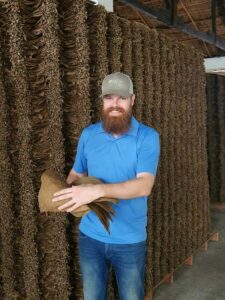
    Among foreign tobacco buyers, Indonesia has historically been known for the dark air-cured tobaccos cultivated in East Java. With a volume of 8 million kg in a good year, the largest of these is Besuki Na Oogst (NO), which means “late harvest” in Dutch, the language of Indonesia’s former colonial rulers. Besuki NO is widely employed in machine-made cigars as well as in the bobbins used in the manufacturing of such cigars.

    In addition, there is Besuki Tembakau Bawah Naungan (TBN), or “tobacco under sheet,” in Bahasa Indonesia, the country’s lingua franca. This plant was developed in the 1970s and 1980s and is grown under shade for cigar wrappers. The reduced exposure to direct sunlight results in thinner and more elastic leaves, which not only facilitates handling but also contributes to a smoother smoking experience. Shade-grown tobaccos are typically more uniform in appearance than sun-grown varieties, with fewer blemishes and imperfections—and thus highly valued by premium cigar manufacturers. A crossbreed of the Besuki and Connecticut styles, TBN is among the world’s most expensive wrappers on the market today.

    Indonesian dark air-cured tobaccos also include Vorstenlanden and Sumatra. Interestingly, the famous Sumatra cigar wrappers that were originally derived from seeds native to the eponymous Indonesian island are now cultivated primarily in Central America.

    Indonesia’s largest tobacco product by far, however, is Rajangan cut rag, which accounts for up to 70 percent of the country’s total leaf production volume. Rajangan is widely deployed in kretek production, with individual varieties named after the region where they are produced. Unlike the cut rag produced elsewhere, Rajangan tobaccos are cut while they are still green and then dried in direct sunlight on mats. Ranging in color from lemon to brown, this product may remind some Western visitors of the straw used to decorate Easter baskets.

    Shadegrown tobaccos are typically more uniform tin appearance than sun-grown varieties, with fewer blemishes and imperfections–and thus highly valued by cigar manufacturers.

    Multiple Players

    Contrary to the situation in many other leaf origins, where growers cultivate tobacco primarily for exports, at least 70 percent of the tobacco planted in Indonesia is smoked locally. With an annual consumption of nearly 300 billion sticks, according to TMA, Indonesia is not only one of the world’s largest cigarette markets, but it is also a unique place in terms of taste preferences, with kreteks outselling white cigarettes by a factor of 10. Despite the efforts of some multinationals to steer Indonesian smokers toward “international” cigarettes, the transition from dark tobaccos to blond tobaccos that occurred in southern Europe and elsewhere never took place in the archipelago.

    Numerous leaf merchants, serving both domestic and foreign customers, operate throughout the archipelago. Aside from AOI, whose footprint stretches from Central Java to Lombok and includes a processing factory in Mojokerto, there are well-known players such as Universal (known as Universal Tempu Rejo locally), Premium Tobacco and Hail & Cotton, which goes by the name Mayangsari in Indonesia. In addition, the country has multiple home-grown players, including Sadhana and Mangli Djaya Raya (MDR).

    Sadhana was established by former Sampoerna executives after the 2004 sale of their company to Philip Morris International. The leaf dealer exclusively supplies Sampoerna, which has evolved into the cigarette market leader since becoming part of the multinational. MDR is a privately owned Indonesian operator, established in 1960 and acquired in 2007 by Njoto Permadi. Today, the business is run by his son, Christian A. Njoto Njoo. MDR is the only company with a redrying facility in Jember, the heart of Indonesia’s dark air-cured tobacco business in East Java. Since 2009, MDR has also had a dedicated cigar business, manufacturing products for both the domestic market and the international market.

    Steeped in Tradition

    Tobacco cultivation is a massive, labor-intensive business in Indonesia, involving as many as half a million growers. Averaging between 0.25 ha and 0.5 ha, plots tend to be small and scattered. Farmers either grow under contract with one of the leaf merchants or sell their produce on the open market through middlemen. Contract growing provides buyers with a high degree of oversight of the production process. By providing their farmers with the appropriate crop protection agents (CPAs), personal protective equipment, inputs and knowledge of good agricultural practices, the leaf merchants ensure that tobacco meets both their own standards and those of their customers, which sometimes exceed those set by the Indonesian government. For example, some CPAs still permitted in Indonesia are no longer accepted by many international cigarette manufacturers.

    Jasper Kuitems

    Farmers who grow tobacco under contract benefit not only from greater yields, better quality and consistent prices but also from the certainty that they will sell their crop. Contracting also helps growers cope with adverse events such as crop failures and natural disasters. For example, after the Mount Raung volcano erupted in 2015 and covered much of the region’s tobacco in ash, Mayangsari had to take on the additional expense of washing tobacco—but it kept buying. Farmers selling in the free market, by contrast, were stuck with their ash-covered crops because many middlemen decided to take a break that year. “We support our contracted growers in both good times and bad times,” says Jasper Kuitems, leaf manager for Mayangsari.

    Despite the advantages of working with growers directly, most buyers also purchase leaf on the open market. Not only is contract growing an expensive and big logistical undertaking, but it also represents competition for the middlemen, who represent a powerful constituency in Indonesia. Buying through both channels allows merchants to supplement their contracted volumes and helps maintain social harmony in their communities.

    Tobacco is a notoriously demanding crop, requiring more human interventions throughout the growing cycle than, say, corn or rice. Nonetheless, it remains a solid cash crop for both contract growers and free-market farmers in Indonesia, as evidenced by the fact that landlords charge tobacco growers higher rents than producers of other crops. “If done correctly, tobacco offers an attractive return on investment,” says Green. Of course, everything depends on supply and demand. When prices are poor, farmers may look at alternative crops; in good times, they may plant extra tobacco.

    Demand has been strong in recent years, particularly for Indonesia’s dark air-cured tobaccos. According to Martijn Schaap, acting country manager for Universal Tempu Rejo, this is partly a result of two consecutive poor Besuki NO harvests and partly due to cigar makers’ reduced inventories in the wake of the Covid-19 pandemic. The growing popularity of cigar smoking in China has, too, boosted demand for Indonesian dark air-cured leaf.

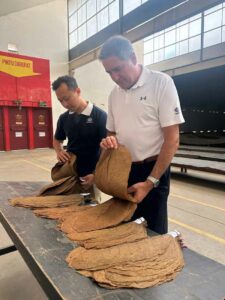
    No machine can mimic the fine motor skills required to sort, open and stack the delicate cigar tobaccos.

    Post-Harvest

    The Indonesian tobacco industry’s contribution to employment is not limited to the field. A significant share of kretek cigarettes continues to be constructed by hand, and the government favors manual production with lower tax rates. Its policies have helped reverse a long-term trend toward mechanized manufacturing, and handmade products now account for nearly one-third of the market, according to Sampoerna, which in November 2022 announced a major investment in new factories for hand-rolled cigarettes.

    The leaf merchants, too, employ large numbers of workers post-harvest, particularly in the dark air-cured segment. After the leaf is delivered to the buyer, it is separated based on quality, moisture, length and color, among other parameters. Unlike in Latin America, where the bundles go directly into the fermentation rack, Indonesian companies open the leaves one by one—a painstaking process involving hundreds of women, who are said to be more patient and dexterous than their male counterparts.

    Martijn Schaap (right)

    After opening, the leaves are stacked into fermentation piles that can reach up to several meters in height and weigh up to 12 tons. During fermentation, which can last several months, enzymes and microorganisms break down organic compounds within the tobacco leaves, triggering various biochemical changes. The combination of temperature, humidity and pressure causes the leaves to obtain the desired color, flavor and aroma. To achieve uniform fermentation, the piles must be regularly “turned”—restacked from the ground up to ensure an even distribution of moisture and temperature, along with proper aeration. Timely restacking is crucial because if the temperature in a bale rises too high, it will turn the tobacco black and cause it to fall apart.

    The labor-intensive nature of their operations causes tobacco processors’ payrolls to swell significantly during the season. While Indonesian wages are low by international standards, they have been rising rapidly. In 2023, the minimum wage in the Jember area jumped by 8.5 percent compared with an overall inflation rate of 3.08 percent nationwide. The industry expects another hefty minimum wage increase, of approximately 10 percent, in 2024.

    The rising cost of labor presents a challenge for the cigar leaf companies because few of their activities lend themselves to mechanization. Tobacco farm plots tend to be too small and too dispersed to effectively deploy farm equipment, and no machine can mimic the fine motor skills required to sort, open and stack the delicate tobacco leaves yet. Universal did recently purchase a new seeding machine, however. Due to more accurate seed placement and other improvements, the new device offers significantly higher germination rates than the company’s existing seeder.

    The rise in labor cost presents a challenge for the cigar leaf tobacco merchants because few of their operations lend themselves to mechanization.

    Taking Responsibility

    Like their counterparts elsewhere, leaf dealers in Indonesia are investing heavily in environmental, social and governance (ESG) projects. AOI, for example, has been fitting its contracted farmers’ curing barns with new gasifying systems that burn biomass rather than wood. Not only does this reduce pressure on Indonesia’s forest cover, but it is also more efficient because biomass has a higher calorific value than wood. On a cost-per-kilo basis, it’s about 30 percent cheaper than using wood, according to Green.

    This year, AOI and its processing joint venture partner ITS have planted 5,000 trees in cooperation with a local organization, Trees4Trees. The project aims to plant 60,000 trees by 2030. In addition, AOI installed four deep water wells and tanks, assisting almost 300 families on Madura Island. The company intends to expand the project into other AOI regions where water scarcity is common through the dryer months.

    The company has also engaged professional storytellers to educate the communities where it sources tobacco about the importance of health and safety, fair treatment and avoiding child labor. To date, the program has reached almost 20,000 participants. AOI aims to maintain an audience of more than 5,000 participants annually. In Jember, meanwhile, the tobacco sector is building playgrounds and supporting schools to keep children out of the fields.

    The industry has also invested in waste management, which represents a considerable problem in Indonesia, where 40 percent of the country’s 142 million urban residents still lack basic waste collection services. In the Jember region, Universal has helped set up facilities that purchase waste from local communities, reducing litter and offering villagers an additional source of income. The money generated by the waste depots helps pay for the playgrounds, among other projects. Universal also sponsors initiatives that help people in the communities where it operates set up small businesses. The goal, says Schaap, is to make the projects self-sustainable so that they will endure and grow to serve the community as a whole.

    Mayangsari recently made a remarkable contribution to tackling the waste problem. A regional superstition that burning disposable diapers brings bad luck to the baby prompted many mothers in the Jember area to dispose of used nappies in rivers, where they would leach chemicals, spread bacteria and cause blockages in waterways, including irrigation canals. By supplying more than 2,000 young mothers in its growing communities with reusable diapers, Mayangsari not only helped decrease diaper waste by more than 300 tons but also reduced the occurrence of diaper rashes, urinary tract infections and, importantly, household expenses. According to Kuitems, the money saved by not having to buy disposable diapers for six months is equivalent to 150 kg of rice, enough to feed two adults for an entire year.

    A Tilted Playing Field

    While the leaf dealers’ investments in ESG make them good corporate citizens, the business case is not always straightforward. According to the merchants featured in this article, it can be challenging to communicate and recover the added value provided by such projects. Whereas programs in the coffee and cacao business allow suppliers to charge a premium for responsibly sourced products through certification labels, there is no equivalent in the tobacco business. “A smoker cannot tell the difference between a responsibly sourced cigar and another product from its packaging,” says Kuitems.

    Another challenge is that not everyone plays by the rules. Leaf dealers that pay minimum wages, forgo harmful crop protection agents and provide their growers with personal protective equipment must compete with players who don’t (and thus enjoy lower operating costs).

    This means that responsible companies must work twice as hard as their less conscientious counterparts. “It forces us to operate as cleverly and efficiently as possible,” says Kuitems. While acknowledging the challenges, the merchants who contributed to this piece said they remain firmly committed to their standards—not only because their blue-chip customers insist on it but also because it is the right thing to do. The extra work, they noted, comes with the territory. It’s just one of the ways in which the complex Indonesian leaf tobacco market will keep the traders on their toes.