Tag: AOI

  • Sustainability Key to Building Resilient and Responsible Supply Chain

    Sustainability Key to Building Resilient and Responsible Supply Chain

    Industry leaders at the Global Tobacco & Nicotine Forum (GTNF) in Brussels agreed that sustainability, collaboration, and data-driven transparency are critical to strengthening supply chains and meeting global ESG goals. Moderated by Christopher Fleury, Senior Vice President of Regulatory Affairs Research at Ipsos, the panel “Supply Chain from a Global ESG Perspective” brought together voices from across the value chain, including Waqas Khan, CEO of Clew Pouches; Miranda Kinney, Senior Vice President and Global Head of Corporate Affairs & Impact at Pyxus; Tadas Lisauskas, President and Co-founder of Greenbutts; and Diane Raverdy-Lambert, Chief Scientist and Director of Regulatory Affairs at SWM International.

    Fleury opened the discussion by noting that while there is “consensus that government, industry, and consumers themselves have an important role to play,” public trust in government remains “very low.”

    For Khan, sustainability is both a business imperative and a moral one. “We’re defining sustainability not just for present customers but for the future,” he said. “Consumers care about sustainability, investors care about it—this is something you have to care about now.” Khan emphasized collaboration and purpose within the industry: “People share a vision and want to see us succeed because it helps the industry and impacts the future.”

    Kinney grounded the conversation in agriculture. “Every product we have that is tobacco-derived comes from a tiny seed that was planted and cared for by a farmer,” she said. “However you define sustainability, everything is important to building a sustainable business.” She urged companies to consider both environmental and social impacts, asking: “If the crop was taken away today, would the farmer and community be able to survive?”

    Lisauskas cautioned that ESG-driven regulation must come with enforcement. “Regulation without enforcement is just a suggestion,” he warned. “You can solve one problem and create another. We have to ensure regulations actually help the environment and the industry.”

    Raverdy-Lambert stressed the importance of science and measurable standards. “We need evidence-based standards so decision-makers can act on hard data,” she said. “One cannot do without the other—understanding impact across the supply chain, from production to end of life, is essential.”

    Together, the panelists agreed that while challenges persist, aligning sustainability goals with innovation, regulation, and shared accountability is key to building a resilient and responsible global supply chain.

  • EU TPD Panel: Coherence or Patchwork

    EU TPD Panel: Coherence or Patchwork

    At the Global Tobacco and Nicotine Forum (GTNF) in Brussels, industry and policy experts debated whether the EU Tobacco Products Directive (TPD) will promote coherence or wlll result in a regulatory patchwork across member states. The session featured Michiel Reerink of Alliance One International, Nathalie Darge of Tobacco Europe, and environmental risk analyst David Zaruk (“The Risk Monger”).

    Reerink noted that the EU’s regulatory approach has often leaned toward prohibition, arguing that “the EU’s solution was to ban the product.” He said the first TPD brought together older directives but created optional provisions that evolved into regulatory barriers. He emphasized that consistent, science-based regulation would benefit all stakeholders.

    Darge highlighted structural challenges within the European Commission’s previous consulants, citing a lack of neutrality and potential conflicts of interest. She outlined the expected timeline for the next revision, TPD3, with an initial report and proposal anticipated before 2029, followed by member state consultations and a final version possibly by 2030. Darge stressed that policymakers want a stronger voice in shaping the outcome.

    Zaruk warned that the EU’s growing use of the “precautionary principle” as a risk-management tool risks stifling innovation and redefining the very scope of tobacco regulation — “the EU is defining nicotine as tobacco now,” he said. He also criticized the inconsistency of political leadership, arguing that motivated commissioners can drive major policy shifts, while others avoid engagement.

    Panelists agreed that while political volatility, tax pressures, and public sentiment make tobacco an easy target for revenue generation, meaningful progress depends on coherent, evidence-based regulation that balances health goals with economic and consumer realities.

    The GTNF is the world’s leading annual conference discussing the future of the tobacco and nicotine industries. It is the global exchange for views and ideas between public health experts, government representatives, the industry, and investors.

  • AOI Kenya Loses $183M Tax Case

    AOI Kenya Loses $183M Tax Case

    Alliance One Tobacco Kenya Limited (AOTKL) was ordered to pay the Kenya Revenue Authority (KRA) Sh23.7 billion ($182.8 million) after the High Court dismissed its appeal following a protracted tax dispute, ruling the company’s leaf processing amounted to “manufacturing,” and therefore was subject to excise duties, according to Daily Nation Africa. The ruling comes after years of wrangling over corporate income tax, excise duty, and value-added tax liabilities, with KRA alleging under-declarations and misclassification of tobacco products. According to filings, the revenue body argued that AOTKL reported discrepancies between sales declared for corporate tax versus VAT returns, while also disputing how the company classified stemmed tobacco and semi-processed products.

    “Our operations in Kenya ceased nearly 10 years ago; however, an excise tax matter with the Kenya Revenue Authority remains ongoing in the courts,” said Miranda Kinney, a spokesperson from AOI. “While we respect the judicial process, we strongly disagree with the position taken by the High Court and are pursuing all appropriate avenues of appeal. We remain committed to meeting our regulatory and tax obligations while maintaining transparent, responsible business practices. Given this is an ongoing legal matter, we cannot provide further comment at this time.” 

    According to Kenya Law Reporting, the case was brought before the Tax Appeals Tribunal, which in September 2024 issued a mixed ruling, partly upholding KRA’s claims. AOTKL’s transfer pricing practices also came under scrutiny, with KRA challenging documentation around full-cost mark-up adjustments with related parties. Ultimately, despite some partial relief from the Tribunal, the company has been ordered to settle the liability, making it one of the largest tax recoveries in Kenya’s tobacco sector.

  • Tanzania Tobacco Farmers Near Tree-Planting Target

    Tanzania Tobacco Farmers Near Tree-Planting Target

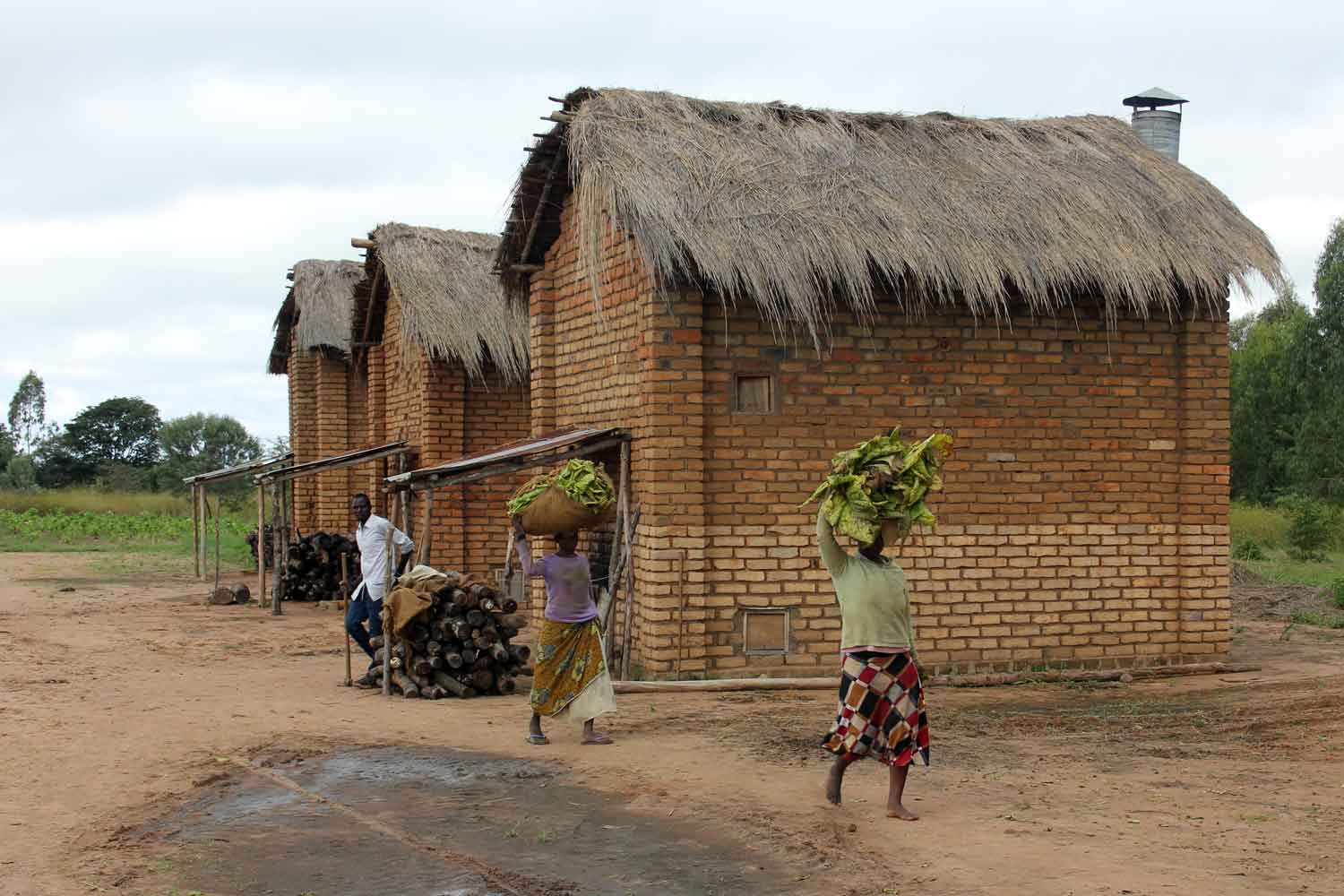
    Tanzania’s tobacco farmers have achieved 97.3% of their three-year tree-planting goal, planting 145 million trees out of the 150 million targeted since 2022, the Tanzania Tobacco Board (TTB) said. TTB Director General Stanley Mnozya said the initiative combats deforestation caused by tobacco curing with firewood, with each farmer required to plant at least 500 trees per hectare. Companies including Japan Tobacco International and Alliance One have supported the effort, contributing 20 million trees.

    The government has also allocated 4 billion shillings ($1.6 million) for modern drying facilities and introduced tobacco seed varieties that can be dried with solar or electricity instead of wood. This season, tobacco output rose to 183 million kilograms worth 1.3 trillion shillings ($520 million), up from 117 million kilograms last season. Tanzania exports up to 97% of its crop annually.

  • Pyxus Reports Sluggish Q1, But Reaffirms Full-Year Guidance

    Pyxus Reports Sluggish Q1, But Reaffirms Full-Year Guidance

    Pyxus International announced fiscal Q1 2026 results, reporting revenue of $508.8 million, down from $634.9 million a year earlier, primarily due to accelerated shipments into Q4 FY2025. Despite the decline, CEO Pieter Sikkel said results were in line with expectations and aligned with the company’s “normalized cycle” of buying early and selling later in the fiscal year.

    Operating income was $21 million, down from $40.5 million Y-Y, while net loss reached $15.8 million versus a $4.6 million profit last year. Adjusted EBITDA dropped to $29.5 million, reflecting lower sales volumes but was supported by strong global demand and improved pricing.

    The company noted a tobacco inventory of $1.1 billion, reflecting larger crop availability in Africa and South America. Uncommitted inventory remained low at 2.4% of processed stock, signaling sustained demand.

    Despite the early numbers, Pyxus reaffirmed its FY2026 guidance of $2.3–$2.5 billion in revenue and $205–$235 million in adjusted EBITDA.