Tag: FCTC

  • Thailand Looks to Overhaul Tobacco Law Against E-Cigarette Surge

    Thailand Looks to Overhaul Tobacco Law Against E-Cigarette Surge

    Thailand’s Cabinet ordered an urgent amendment to the Tobacco Products Control Act B.E. 2560 (2017) to address “the rapid spread of e-cigarette use, particularly among young people.” Official data show the number of Thai e-cigarette users aged 15 and above has surged from 78,000 in 2021 to more than 400,000 in 2024.

    Deputy government spokesperson Airin Phanrit said the Cabinet endorsed recommendations from the National Human Rights Commission, assigning the Ministry of Public Health to lead the drafting process. The overhaul aims to regulate the production, import, sale, advertising, and use of e-cigarettes and other emerging nicotine products—both online and offline.

    Authorities plan a public awareness campaign on vaping risks, stricter controls to prevent youth marketing, and stronger implementation of WHO FCTC Article 5.3 to limit tobacco industry influence. A full report on the proposed reforms is expected within 30 days.

  • WHO Secretariat Accuses Tobacco Industry of Interference

    WHO Secretariat Accuses Tobacco Industry of Interference

    The Secretariat of the WHO Framework Convention on Tobacco Control (FCTC) accused the tobacco industry of ramping up efforts to interfere with international tobacco control policymaking in advance of the Conference of the Parties (COP11) beginning November 17 in Geneva, according to the Albanian Daily News (ADN). Andrew Black, acting head of the WHO FCTC Secretariat, condemned what he described as deliberate attempts to weaken global health measures.

    “With strategies varying from lobbying to outright attempts to manipulate delegations, the tobacco industry’s tactics are a cause for serious concern,” Black was quoted by the ADN. “This is not just lobbying; it is a deliberate strategy to try to derail consensus and weaken measures to further the treaty’s implementation. Tobacco industry interference is one of the biggest constraints and barriers to the implementation of the Convention. The Secretariat strongly urges Parties, civil society, and other stakeholders working to support tobacco control to remain vigilant against the industry’s tactics and misinformation.”

    The COP11 session will bring together representatives from across the globe to discuss new policies to curb nicotine addiction, protect human health, and address environmental harms linked to tobacco.

  • TPA Brief Criticizes WHO Tobacco Treaty for Ignoring Evidence

    TPA Brief Criticizes WHO Tobacco Treaty for Ignoring Evidence

    The Taxpayers Protection Alliance (TPA) released a new policy brief today (October 20), “FCTC: The Wrong Lessons Learned,” by Roger Bate, a fellow at the International Center for Law and Economics, criticizing the World Health Organization’s Framework Convention on Tobacco Control (FCTC) for drifting from its original mission of evidence-based policy. The paper argues that the treaty’s decision-making process has become obscured, ideological, and resistant to scientific debate—particularly around harm reduction products such as e-cigarettes and oral nicotine.

    “The FCTC has evolved into a closed process—hostile to scientific dissent, opaque in its deliberations, and resistant to consumer-driven innovation in tobacco harm reduction (THR),” the paper begins. “This paper argues that the FCTC has become a cautionary model for global public-health governance. Unless checked, this model risks entrenching an authoritarian and anti-scientific impulse across public health. The THR community must lead the counter-narrative—to reform tobacco control and safeguard the integrity of evidence-based policymaking.”

    Bate contends that the FCTC’s approach “demonizes safer alternatives despite real-world success,” preventing adult smokers from accessing less harmful products that could help them quit. He warns that the treaty’s governance flaws mirror broader problems in global health governance, including pandemic response. “A treaty built to reduce smoking deaths should evaluate tools by outcomes, not ideology,” he said.

    The brief calls for reforms, including open sessions at FCTC Conferences of the Parties (COPs), equal conflict-of-interest scrutiny, independent comparisons of cessation tools, proportionate youth protections, and fiscal accountability. TPA fellow Martin Cullip urged the WHO to “reassess the evidence on reduced-risk nicotine products” and improve transparency, warning that the FCTC’s current direction “has become an obstacle to global public health progress.”

  • Clive Bates: WHO Using Tobacco’s History to Poison Good Science

    Clive Bates: WHO Using Tobacco’s History to Poison Good Science

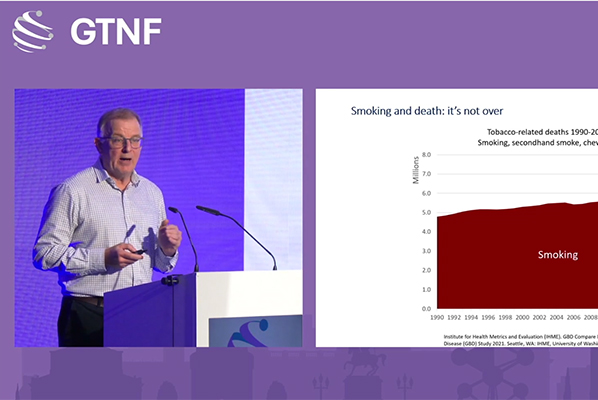
    In a forceful keynote at the Global Tobacco and Nicotine Forum (GTNF) in Brussels, Clive Bates, Director of Counterfactual, called for a fundamental reset in global tobacco control policy, arguing that current frameworks such as the WHO Framework Convention on Tobacco Control (FCTC) have failed to adapt to innovation and evidence.

    “Prevalence is falling, but the global population is rising,” Bates said. “That means the total number of smokers is still going up — and so are the 7.5 million deaths each year caused by smoking.” He emphasized that quitting smoking at any age provides significant health benefits, but argued that international tobacco control remains stuck in the past. “The mission hasn’t changed — stop people from smoking — but the methods are outdated. We have new tools, and ignoring them is indefensible.”

    Bates described alternative nicotine products such as vaping, heated tobacco, and smokeless options as “the disruption the FCTC never anticipated.” He pointed to Sweden’s success as proof of concept: “Sweden has higher nicotine use than Germany but lower cancer rates. That’s what harm reduction looks like.” Yet, he criticized the European Union for maintaining its ban on snus — the very product that helped Sweden virtually eliminate smoking. “What if, instead of banning snus, we promoted it?” he asked. “Why are we still doing things that contradict our stated public health goals?”

    Turning his critique toward the WHO, Bates condemned the organization’s stance that there is “no evidence” reduced-risk products are safer than cigarettes. “That’s shocking,” he said. “Harm reduction is being dismissed as a tobacco industry ploy, using the industry’s reputation to poison good science.”

    He argued that the FCTC has institutionalized a “toxic” anti-industry bias that blocks collaboration and progress. “If the tobacco industry likes it, it must be bad — that’s the logic codified into policy. There’s no room for alignment with that attitude,” he said. Bates noted that several major companies have already shifted dramatically — “PMI now earns 41% of its revenue from smoke-free products” — yet the global framework continues to punish rather than encourage transformation.

    “The WHO gave an award to a man in India for banning reduced-harm products in a country with 100 million smokers,” Bates said. “That’s not leadership — that’s negligence.”

    He concluded with a clear call to action: “If you want better outcomes, get the smoking rate down as fast as possible. The demand for nicotine won’t disappear, but we can make it vastly safer — and we can do it without coercion. Let consumers make informed choices. That’s how we save lives.”

  • What Role Does the FCTC Play in Today’s Regulatory Environment?

    What Role Does the FCTC Play in Today’s Regulatory Environment?

    At the Global Tobacco and Nicotine Forum (GTNF) in Brussels, an expert panel explored the growing disconnect between the World Health Organization’s Framework Convention on Tobacco Control (FCTC) and real-world tobacco harm reduction (THR) progress. The session featured Dr. Derek Yach, global health advocate and former WHO executive; Peter Beckett, Co-Founder of Clearing the Air; Dr. Tikki Pang, a professor and former WHO Director of Research Policy and Cooperation; and Dr. Christopher Snowdon, Head of Lifestyle Economics at the Institute of Economic Affairs.

    Yach opened the discussion by criticizing the gap between FCTC policymaking and on-the-ground data. He noted that smoking rates are falling faster in countries embracing harm reduction — such as the U.S., U.K., Japan, South Korea, and New Zealand — than under traditional tobacco control strategies. “If it can happen in Pakistan, it can happen in all of Southeast Asia,” he said. “And if it happens in Southeast Asia, we could be seeing oral cancer in the rearview mirror.” Yach emphasized the need for collaborative public–private partnerships to ensure product safety and credibility, while urging policymakers to move beyond what he called the “distraction” of youth-related arguments that ignore the millions of adult smokers seeking alternatives.

    “It’s not that youth use isn’t important, but putting all the attention on kids doesn’t help for 50 years,” he said. “What about their parents? We could be adding years to their lives right now. [Anti-THR people] just use the youth as a way to divide the argument. We need to shift to the data and take the kid issue off the table.”

    Beckett took a blunt tone, arguing that the FCTC framework is obsolete, exclusive, and lacking transparency. He said the WHO’s current approach alienates the public and damages its credibility, calling the situation “chaotic,” which makes it easier for harm-reduction advocates to push back on. Beckett urged reform-minded countries — especially WHO funders — to “recognize the world as it is” and resist “bullying by overpaid foundations with an agenda,” and accused prohibitionist groups of crossing the line.

    “Ten years ago, they were disingenuous; now they’re straight-up lying,” he said. “I keep hearing the same damn thing. ‘We need to engage with science, we need to be nice to the other side.’ I’m calling bullshit on that. It doesn’t work. There is no amount of science that will do the job. If there was, they’d let me in the bloody room when they have these conversations. We have to recognize this and say enough, and call for a tearing down of the framework in its entirety, because it’s not salvageable.”

    Pang reiterated that many developing countries adopt WHO guidance without generating or analyzing their own data. “They take the easy way out,” he said, “because they lack the capacity to build evidence locally.” Pang pointed to emerging “pockets of positive thinking” among countries that are now re-evaluating WHO recommendations and embracing THR. He called for greater industry unity — across state-owned, multinational, and startup sectors — and stronger alignment with consumer voices. “Consumers are also voters,” he reminded the audience, “and together they can influence policy.”

    Snowdon warned of troubling developments within the WHO, citing “endgame” proposals that reject harm reduction as an industry “con.” He described this as a “quasi-religious mission to destroy all tobacco,” resistant to evidence and reason. Snowdon noted that while grassroots THR advocacy exists, it ironically remains underfunded and overshadowed by well-resourced opposition.

    “We are greatly out-financed. The industry can contribute, but then we get ostracized,” he said. “We have a genuine grassroots movement, but these people have lives to live. They can’t be doing it all the time. Meanwhile, the other side has unlimited resources. The media could be helpful, but they don’t want to risk it.”

    Across the panel, a consensus emerged: the WHO’s FCTC framework risks irrelevance unless it adapts to include harm reduction. Participants agreed that the future of global health policy must be driven by data, innovation, and collaboration rather than ideology.

    The GTNF is the world’s leading annual conference discussing the future of the tobacco and nicotine industries. It is the global exchange for views and ideas between public health experts, government representatives, the industry, and investors.

  • CAPHRA Slams WHO Over Barriers to COP11 Participation

    CAPHRA Slams WHO Over Barriers to COP11 Participation

    The Coalition of Asia Pacific Tobacco Harm Reduction Advocates (CAPHRA) criticized the World Health Organization’s Framework Convention on Tobacco Control (WHO FCTC) for imposing what it calls “insane” registration requirements for the upcoming COP11 in Geneva. Executive Coordinator Nancy Loucas said the late opening of registration, coupled with onerous demands for personal documentation, a letter of intent, a full CV, and a declaration of zero tobacco funding, is deliberately designed to exclude consumer advocacy groups and harm reduction voices. Despite the FCTC being in place for two decades, not a single consumer group has ever been granted observer status, while only 26 NGOs have been approved overall, far fewer than in comparable UN forums such as climate negotiations.

    CAPHRA said the WHO’s restrictive interpretation of Article 5.3 has been weaponized to silence stakeholders, including people who smoke or use safer nicotine products. Proceedings remain closed to the media and the public, with no live streaming or meaningful transparency, a practice Loucas calls fundamentally undemocratic. CAPHRA is urging reform to allow full and fair participation, stressing that genuine tobacco harm reduction requires including the very consumers most affected by global policy decisions.

  • WHO Report Links Tobacco Use to Child Stunting

    WHO Report Links Tobacco Use to Child Stunting

    The World Health Organization (WHO) published a new report warning that tobacco use plays a significant role in child stunting, a condition that affects nearly 150 million children worldwide, particularly in Africa and Asia. Stunting increases the risk of disease, delayed development, and early death. The document, the 11th in WHO’s tobacco knowledge summary series, is aimed at health professionals, policymakers, and public health advocates.

    WHO said that maternal smoking during pregnancy is strongly linked to preterm birth, low birth weight, and restricted fetal growth, all major predictors of stunting by age 2. Children exposed to second-hand smoke are also at higher risk, it said, with evidence showing that the harm intensifies with the level of exposure. By contrast, quitting smoking during pregnancy improves growth outcomes, reducing the risk of stunting.

    The organization is urging governments to strengthen tobacco control policies in line with the WHO Framework Convention on Tobacco Control (FCTC) and MPOWER measures. WHO stressed that reducing tobacco exposure is critical to improving survival, growth, and development, and to achieving global health goals.

  • Indonesia Moves to Classify Tobacco as a Strategic Commodity

    Indonesia Moves to Classify Tobacco as a Strategic Commodity

    Indonesia’s House of Representatives (DPR) is drafting a bill to include tobacco among eight strategic plantation commodities, aiming to safeguard the sector and protect farmer livelihoods. The move comes amid falling tobacco absorption and growing farmer concerns. Lawmaker Sofyan Dedy Ardyanto, who represents Temanggung, Central Java, said the bill has been shaped with input from the Indonesian Tobacco Farmers Association (APTI) and local governments.

    Despite declining demand, Indonesia remains one of the world’s largest cigarette markets, with the industry supporting more than 5 million workers and contributing significantly to state revenue through excise taxes.

    Ardyanto cautioned that the country’s ratification of the FCTC has weakened the sector. “The industry is still viable, but our regulations treat it like a dying sector,” he said.

  • CAPHRA Challenges WHO’s Tobacco Control Approach

    CAPHRA Challenges WHO’s Tobacco Control Approach

    A new Shadow Report from the Coalition of Asia Pacific Tobacco Harm Reduction Advocates (CAPHRA) criticizes the World Health Organization’s (WHO) global tobacco control strategy for neglecting harm reduction — a key component of the WHO’s own Framework Convention on Tobacco Control (FCTC). CAPHRA’s report argues that countries strictly following WHO’s MPOWER measures, like Thailand and India, have seen only limited declines in smoking, while nations adopting harm reduction tools, such as vaping, have achieved greater success. It cites the UK, Japan, New Zealand, and Canada as leading examples.

    With over 1 billion smokers worldwide, CAPHRA calls for “practical, science-based solutions” to replace abstinence-only approaches. The group also condemns the exclusion of harm reduction advocates from policy discussions under FCTC Article 5.3.

    “This is a call to action,” the report states. “We must replace moralistic dogma with practical solutions. It is time to make smoking — the deadliest form of tobacco use — public enemy No. 1, and to deploy harm reduction as a frontline strategy.”

  • Global Experts Warn WHO’s Anti-Harm Reduction Stance Undermines Goals

    Global Experts Warn WHO’s Anti-Harm Reduction Stance Undermines Goals

    A panel of global tobacco harm reduction experts convened this week to criticize the World Health Organization (WHO) and the Framework Convention on Tobacco Control (FCTC) Secretariat for undermining the goals of World No Tobacco Day. The group expressed frustration over the WHO’s refusal to support harm-reduction tools, such as vaping and nicotine pouches, despite growing evidence of their effectiveness in helping smokers quit.

    “The WHO dismisses adult smokers and vapers, even though adults bear the vast majority of tobacco-related harm,” said Martin Cullip, International Fellow at the Taxpayers Protection Alliance. “It’s odd to see the organization celebrate bans on products that aren’t even made from tobacco.”

    Participants from Australia, South Africa, and the United Kingdom argued that the WHO’s prohibitionist approach is counterproductive, exacerbating smoking-related deaths and fueling black markets.

    “Australia has a massive black market and 66 people die daily from smoking-related disease,” said Pippa Starr, founder of A.L.I.V.E. (Australia, Let’s Improve Vaping Education). “These outcomes are tied to WHO-endorsed policies. Rather than reward failed approaches, the WHO should be focused on saving lives.”

    Panelists emphasized the contradiction in the WHO’s mission: while claiming to reduce tobacco deaths, it continues to oppose safer alternatives proven to help smokers quit.

    “WHO policies are scripted and disconnected,” said Kurt Yeo, co-founder of South Africa’s Vaping Saved My Life (VSML). “We need a full range of tools to achieve a smoke-free future. Prohibition has failed in countries like Mexico, India, and Singapore. The WHO isn’t facing the real issues.”

    The group urged the WHO and FCTC to embrace innovation, listen to consumers, and support harm reduction as a legitimate path to ending the global smoking epidemic.

    “Harm reduction works,” Reem Ibrahim, communications manager at the UK’s Institute of Economic Affairs, said. “These products help people quit. But the WHO’s strategy blocks access and ultimately harms public health.”