Tag: GTNF

  • FDA Names Koplow as Tobacco Center Director

    FDA Names Koplow as Tobacco Center Director

    The U.S. Food and Drug Administration has selected Bret Koplow, Ph.D., J.D., as director of the Center for Tobacco Products, giving the center a permanent leader with more than a decade of legal, policy, and regulatory experience at the agency. Koplow has served at FDA since 2011, including as senior counselor to the FDA commissioner, where he focused on regulatory, policy, and operational matters involving tobacco products. He had been serving as CTP’s acting director before the appointment.

    According to the Department of Health and Human Services, Koplow will lead CTP around two priorities: promoting innovation and access to less harmful alternatives for adults who smoke while taking action to protect youth and minors from tobacco and nicotine. His appointment was part of four senior FDA leadership selections announced by HHS, including Jared Seehafer as the agency’s first deputy commissioner for technology and artificial intelligence, Michael Davis as director of the Center for Drug Evaluation and Research and Karim Mikhail as director of the Center for Biologics Evaluation and Research.

    HHS Secretary Robert F. Kennedy Jr. said the appointments are intended to advance reforms and strengthen FDA’s leadership in medical innovation. Acting FDA Commissioner Kyle Diamantas said the selections “signal the direction we are heading” as the agency seeks to build its workforce and infrastructure and accelerate innovation across its centers.

  • Supply Chain Resilience will Depend on Regulatory Readiness: GTNF26

    Supply Chain Resilience will Depend on Regulatory Readiness: GTNF26

    Suppliers to the nicotine industry will increasingly need to anticipate regulatory changes rather than react to them, according to speakers at GTNF 2026’s panel on global supply-chain challenges and opportunities. Moderated by Laura Leigh Oyler, vice president of regulatory affairs at Haypp Group, the panel emphasized that regulation—not supply disruptions alone—will remain one of the biggest risks facing suppliers as new nicotine products and requirements continue to emerge.

    Ross Kirsh, CEO and founder of Dymapak, said companies will need flexible supply chains and contingency plans rather than attempts to predict every potential disruption. Brands that wait until a regulatory change becomes a rule risk scrambling for solutions and facing delays of months or more. Kirsh also argued that standards should focus on performance rather than prescribe specific products or technologies, allowing innovation to determine the most effective and economical solutions.

    Rahul Mathew, director of sales for next-generation products at Leaf N Beyond, said regulatory changes will continue to influence supply and suppliers will need to build expertise to help customers navigate them. He argued that supply-chain planning should become part of product development itself, with companies preparing for multiple possible outcomes rather than trying to predict a single one. Mathew also pointed to sustainability, scale and science as key considerations as the industry evolves. He said traditional customer-supplier relationships will remain important, but the supply chain will become less efficient unless both sides improve communication and better understand each other’s needs.

    Przemysław Pitura, global head of procurement at Chemnovatic, stressed the importance of knowing the supply chain in detail and maintaining the ability to trace products back through every stage of production. He said suppliers should be involved before a product is finalized because making changes later can be difficult and expensive. Pitura also emphasized the value of developing alternative supply sources before they are needed, saying the best time to build an alternative is when there is no immediate need for one. He noted that changing requirements will continue to create challenges, but companies with experienced people and strong supplier relationships can turn that uncertainty into an advantage.

  • BAT Releases 352-Page Omni Update at GTNF 2026

    BAT Releases 352-Page Omni Update at GTNF 2026

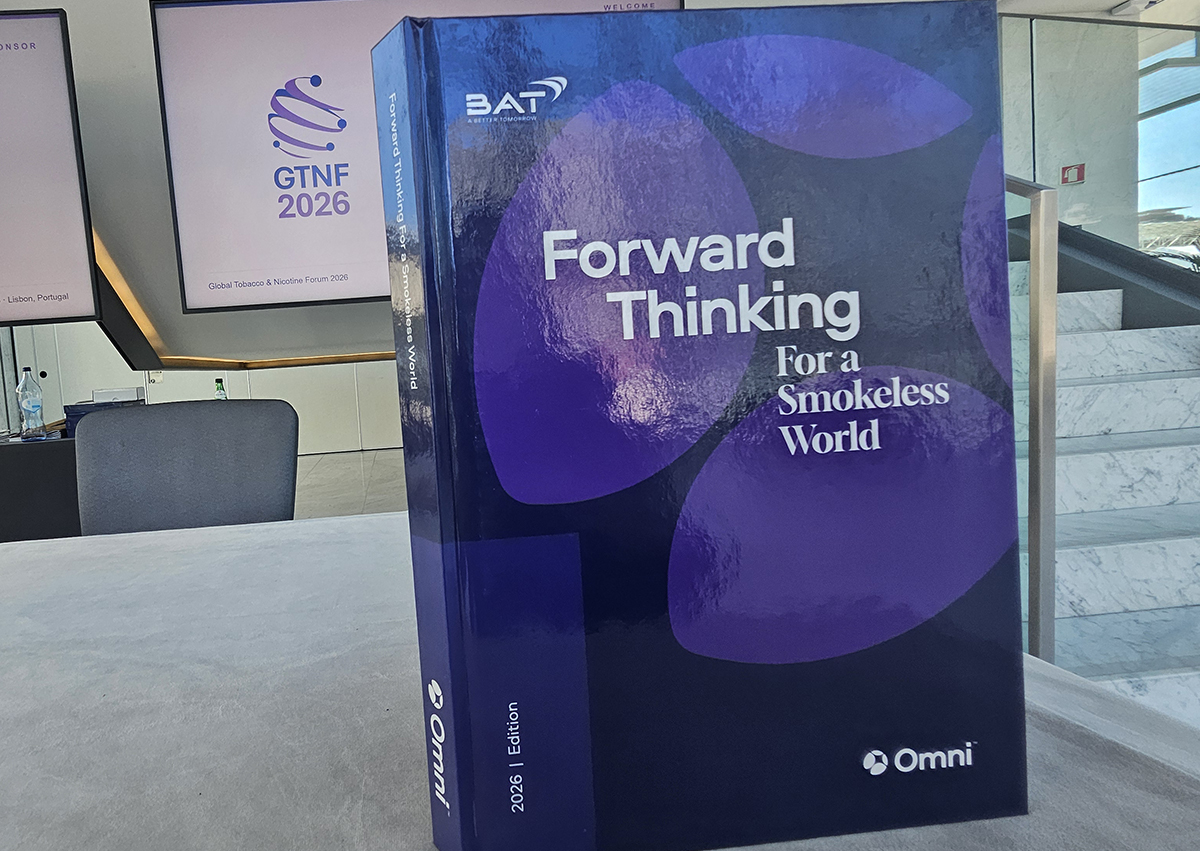
    British American Tobacco released a printed 352-page update to its Omni platform, a compendium of scientific research, evidence, and case studies supporting the company’s approach to tobacco harm reduction. Chief Corporate Officer Kingsley Wheaton announced the release at GTNF 2026 in Lisbon, describing Omni as a resource intended to advance discussion among scientists, public health authorities, regulators, policymakers, and investors.

    “Omni is our platform for gathering evidence based around tobacco harm reduction,” Wheaton said. “What we are launching today is a significant update to it, bringing in the latest case studies, the most current scientific research, and the real-world evidence from markets where smoke-free products are already reaching adult smokers at scale.”

    The updated Omni is organized across 10 chapters covering what BAT describes as the key questions facing the company, the science supporting its smokeless products, and the global tobacco harm reduction evidence base developed over the past decade.

    Wheaton said the platform is intended to be more than a conventional corporate publication. “It’s almost easier to say what Omni isn’t instead of what it is,” he said. “It isn’t a book, a report, or a website, although it can look like all three. It’s a manifesto and a mandate. A manifesto to change and a mandate for action, as we worked toward becoming a predominantly smoke-free business.”

    He said the objective is to encourage scrutiny and discussion rather than present a finished position. “The purpose of Omni is not to tell you what to think. It’s to ignite the conversation with stakeholders, a resource built to be scrutinized, challenged, and built upon. Not a closed document but rather an open one. Because if we’re asking regulators and scientists and public health authorities to engage with the evidence on harm reduction, the very least we owe them is to make that evidence physical, current, and rigorous.”

    BAT says Omni is intended to support its broader A Better Tomorrow strategy and its goal of building a “Smokeless World,” in which smokers who would otherwise continue smoking migrate to smokeless alternatives. The company says the resource is designed to allow readers to move between sections according to their interests while examining BAT’s progress, the scientific evidence surrounding smokeless products, and the wider tobacco harm reduction evidence base.

  • GTNF 2026 Opens with Focus on Harm Reduction, Innovation, Regulation

    GTNF 2026 Opens with Focus on Harm Reduction, Innovation, Regulation

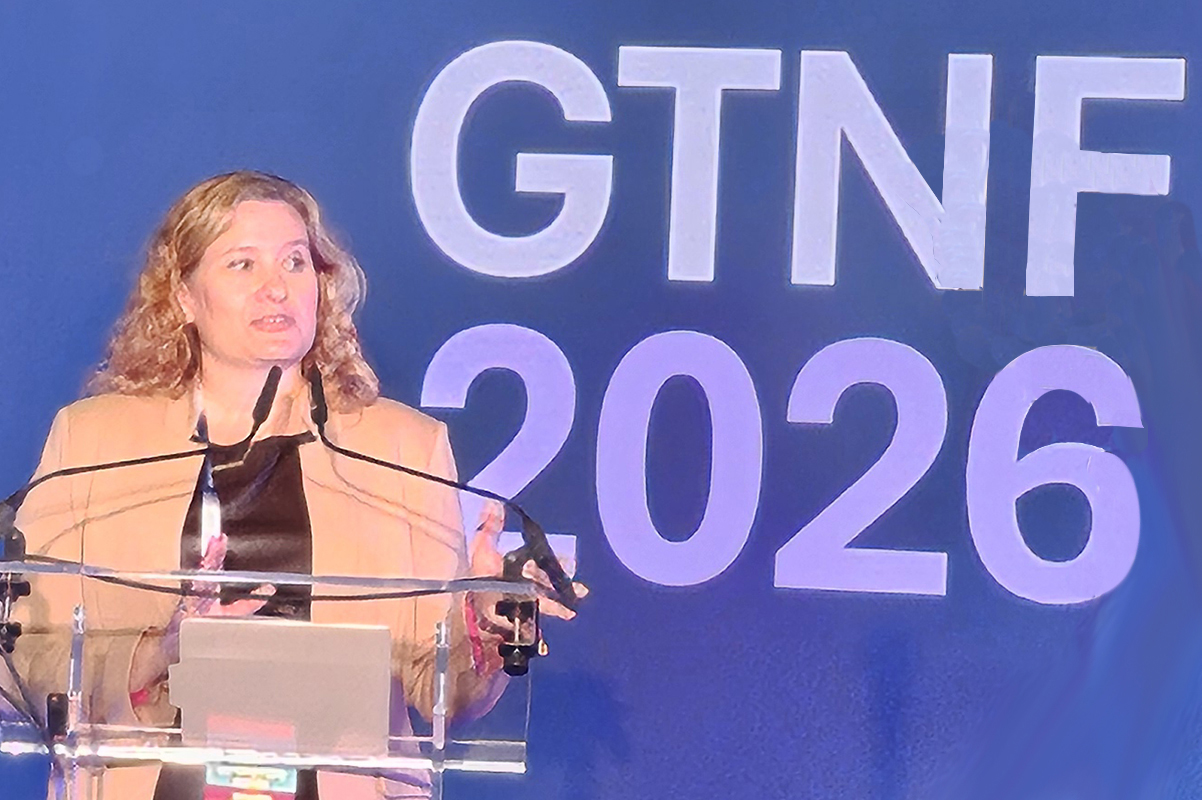
    The Global Tobacco & Nicotine Forum 2026 opened today (Sept. 9) in Lisbon, bringing together industry executives, regulators, public health experts, academics, advocates, investors, and other stakeholders for three days of discussions on the future of tobacco and nicotine. Opening the forum, Beth Oliva, chair of the Nicotine Resource Consortium and GTNF conference chair, said the event has evolved since its launch in Rio de Janeiro in 2008 from a conference into an “idea incubator, connection and networking engine” and an “open and participatory think tank.”

    Oliva said the challenges facing the sector are too large and interconnected for any one group to address alone, emphasizing the importance of bringing different stakeholders together for dialogue. This year’s agenda covers tobacco harm reduction, regulation, innovation, sustainability, global trade, supply chains, illicit trade, and the needs of adults who smoke, with more than 20 new speakers joining the program.

    “The true theme of GTNF is ‘move from conversation to action,’” Oliva said, urging participants to turn the ideas and connections developed during the forum into practical approaches going forward. She said the forum’s mission of “honest dialogue” and finding common ground in evidence “has never been more important or critical to people who smoke.”

  • GTNF 2026 Being Held Sept. 9–11 in Portugal

    GTNF 2026 Being Held Sept. 9–11 in Portugal

    The Nicotine Resource Consortium, organizer of the Global Tobacco and Nicotine Forum (GTNF), announced updated details for GTNF 2026, which will take place September 9–11 in Lisbon, Portugal. The event will be hosted at the Myriad Cristal Center, bringing together global stakeholders from across the tobacco and nicotine ecosystem.

    “We are excited about the potential of this year’s GTNF,” said NRC president and CEO Christopher Greer. “We have some outstanding content announcements upcoming, and now we have a great venue and city that matches what will take place during conference sessions and enhances the networking experience for all our delegates.”

    The revised dates reflect efforts to accommodate an increasingly crowded global events calendar, while the selection of Lisbon—long regarded as a historic crossroads of global trade—underscores GTNF’s role as a meeting point for international dialogue. For 2026, the conference will introduce a revamped program structure built around core thematic modules designed to explore key issues in greater depth and sequence, responding directly to feedback from past attendees and industry stakeholders.

    The GTNF 2026 agenda will focus on major topics shaping the sector, including global supply chains and trade dynamics, innovation in science and product development, environmental sustainability, harm reduction, and illicit trade. Sessions will feature a mix of panels, in-depth discussions, and fireside chats aimed at fostering debate, presenting diverse viewpoints, and generating actionable insights. The program will also include leadership addresses from prominent voices across industry, policy, and research communities.

    Registration for GTNF 2026 is now open, with organizers encouraging early participation as the forum continues to serve as a key platform for advancing dialogue on the future of the global tobacco and nicotine landscape.

  • Correcting Nicotine Misperceptions Takes Coordinated Action

    Correcting Nicotine Misperceptions Takes Coordinated Action

    At the Global Tobacco & Nicotine Forum (GTNF) in Brussels, experts from science, medicine, and industry agreed that misinformation about nicotine remains one of the greatest obstacles to tobacco harm reduction, and that changing those perceptions will require more than data alone. Moderator Dr. Mohamadi Sarkar, Fellow in Scientific Strategy and Analysis at Altria Client Services, opened the discussion by urging a focus on solutions rather than problems. He pointed to persistent misconceptions that distort both public and professional understanding. “According to analyses from the National Institutes of Health’s PATH study, 94% of smokers think e-vapor products are as harmful or more harmful than cigarettes,” he said. “And 63% believe nicotine causes cancer, despite evidence showing otherwise.” Sarkar noted that even among doctors, misinformation is widespread, with 80% of U.S. physicians believing nicotine is directly responsible for smoke-related diseases. His team’s modeling suggests that as many as 800,000 premature deaths could be prevented over the next 50 years if these misperceptions were corrected. “If doctors don’t have accurate information, how can they educate their patients?” he asked. For Sarkar, the path forward depends on credible voices, evidence-based messaging, and a “groundswell” of informed advocates within healthcare and beyond. “To change intentions, you first have to change attitudes and beliefs,” he said.

    Dr. Jasjit Ahluwalia, Professor of Behavioral and Social Sciences and Medicine at Brown University, lamented that scientific research rarely informs public policy in a meaningful way. “You’d think research would inform policy, but it doesn’t,” he said. “People don’t listen to scientists or regulators; they listen to their own physicians. It doesn’t matter how good or bad they are.” Ahluwalia believes that changing physician behavior could be the key to improving patient understanding. He suggested borrowing tactics from behavioral economics and academic detailing to equip doctors with accurate, accessible information about lower-risk products. He also stressed the importance of engaging the media, which he described as “unbelievably powerful” but largely absent from the current dialogue. “The media could change public understanding overnight,” he said. “We’re not taking advantage of that.”

    From the perspective of Dr. Pritika Kumar, Director of Scientific Engagement at Philip Morris International, the problem begins within the healthcare community itself. PMI surveys found that two-thirds of healthcare professionals were unsure what nicotine is or believed it to be carcinogenic, and only one in five felt confident discussing alternative products. “They operate in a system that has not kept up with the science,” she said. “Physicians don’t know what products are authorized, and they’re competing with time constraints and mixed messages that put all nicotine in one bucket.” Kumar called for a shift in tone from blame to collaboration. “If we don’t talk to them, we lose a powerful opportunity,” she said. “They told us that if the FDA provided clear guidelines, they would be happy to share that information with patients, but they’re not going to read a policy paper. They need practical guidance at the point of care.” She also warned that the proliferation of illicit and unauthorized products complicates physicians’ willingness to recommend alternatives. “Illicit trade is not just an enforcement issue,” she said. “It’s a public health issue.”

    Italian researcher Dr. Riccardo Polosa, founder of the Center of Excellence for the Acceleration of Harm Reduction, reflected on a decade spent countering myths about vapor products. “In 2012, we were debunking claims about antifreeze and heavy metals,” he recalled. “I’m afraid we haven’t made much progress.” To improve communication, Polosa proposed what he calls the “3M framework”—message, messenger, and moment. “We need evidence-based messages, credible messengers, and the right moment to reach people,” he said. He outlined three target groups: healthcare professionals, who must be empowered to discuss harm reduction; researchers, who need better tools for peer review and interpretation; and the public, who must be reached directly through social media and community influencers. His team has even trained an AI-based system to assist in scientific peer review. “Researchers keep repeating the same mistakes,” he said. “Better peer review will mean better science and fewer misperceptions.”

    For Dr. Christopher Russell, Director of Russell Burnett Research and Consultancy, the issue is one of legitimacy and communication. “It’s an awkward position for a doctor to talk about a product that hasn’t been approved,” he said. “A lot of people would feel better about getting their nicotine from a doctor rather than a gas station.” Russell argued that regulatory authorization can give both doctors and consumers greater confidence in alternative products. He also believes that packaging and labeling should be used to communicate accurate information about reduced risk. “The best time to reach an adult smoker with information is at the point of purchase,” he said. “Consumers deserve access to facts that help them make safer choices.” Russell cautioned against directly engaging with misinformation online, noting that “when we reply to false information, algorithms actually push it in front of more people.” Instead, he urged amplifying credible voices and increasing exposure to accurate messages.

    Dr. Carrie Wade, Global Regulatory Science Liaison at BAT, emphasized that the concept of the continuum of risk remains poorly understood, even among professionals. “How can we expect the public to understand it when the message hasn’t even reached all our colleagues?” she asked. Wade argued that the industry spends too much time reacting to misinformation and not enough time being proactive. BAT’s internal research reflects the same challenge: while most employees recognize that non-combustible products are less harmful, a significant minority still do not. For Wade, this underscores how deeply misconceptions about nicotine are embedded and how urgently the message must be reframed.

    Across the panel, there was broad agreement that correcting nicotine misperceptions will take coordinated action across science, medicine, regulation, and media. The facts about nicotine, they said, are clear, but unless they are delivered by trusted voices, at the right moments, and in the right way, those facts will continue to be lost amid noise and misunderstanding. “Science alone doesn’t change behavior,” Sarkar concluded. “People do. And that means every one of us has to be an ambassador for harm reduction.”

  • Nicotine Prohibition ‘Profoundly Immoral,’ Andrews Says in GTNF Closing

    Nicotine Prohibition ‘Profoundly Immoral,’ Andrews Says in GTNF Closing

    In a forceful closing keynote at the Global Tobacco & Nicotine Forum (GTNF), Tim Andrews, Director of Consumer Issues at Americans for Tax Reform and the Tholos Foundation, called global bans on vaping and other reduced-risk nicotine products “profoundly immoral,” arguing that prohibition is fueling crime, costing governments billions, and depriving smokers of lifesaving alternatives.

    “What we have is the greatest medical breakthrough since penicillin,” Andrews said. “It has the potential to save millions of lives—and yet, these products are being made illegal.”

    Andrews described his frustration in engaging with policymakers. “I’ve talked to so many politicians. I present the science, the evidence—and the next day, they go and vote against it,” he said. “But when you start talking about the cost to their state budgets, that’s when they start listening.”

    Citing examples from around the world, Andrews said prohibition consistently drives consumers to illicit markets. “In Brazil, e-cigarettes were banned in 2009. Adult smoking rates have gone up. When legal products don’t exist, people either go to the black market or go back to smoking cigarettes,” he explained. “In Germany, 1.4 million people use despite a ban. In Mexico, usage has increased by 400%. Prohibition doesn’t work—it never has.”

    He argued that criminal organizations have been the biggest beneficiaries of restrictive nicotine policies. “Cartels have been enriched by prohibition,” he said. “We speak often about the human cost of lives lost to smoking, but now we’re seeing people murdered, and money flowing to sex traffickers and drug cartels. That’s the true cost of bad policy.”

    Andrews highlighted new research from a coalition of think tanks showing the economic toll of nicotine bans, including lost tax revenue and enforcement costs. “We launched a campaign with a dozen think tanks around the world,” he said. “Our evidence-based report on the costs of prohibition—on lost revenue and the growth of criminal gangs—has already been downloaded by 50,000 people in Germany alone. When we say prohibition doesn’t work, it’s a fact.”

    The data, Andrews said, also show that “about 80% of people say they will go to the black market or return to smoking if safer alternatives are banned—and that’s probably a low estimate.”

    Describing Australia’s recent crackdown as “profoundly immoral,” he said, “It breaks my heart that we are ground zero. But once you start taking what politicians care about—the bottom dollar—they start listening.”

    Andrews closed with a call to action: “Hundreds of millions of lives can be saved if we get this policy straight. We owe it to future generations. If we can’t convince politicians to do what’s right for human lives, then we must convince them with the economic reality. Either way, prohibition must end.”

  • Track and Trace Adds Value Across Supply Chain

    Track and Trace Adds Value Across Supply Chain

    At a special session of the Global Tobacco & Nicotine Forum (GTNF), industry and technology experts agreed that robust track-and-trace systems are becoming essential for both compliance and consumer protection, as governments tighten oversight and illicit trade continues to rise. Moderated by Christopher B. Greer, CEO of the Nicotine Resource Consortium, the discussion — “Solutions for Track and Trace” — brought together Nick Daly, Senior Solutions Consultant at Systech International, and Maria Levanova, Product Manager of Connected Logistics at Honeywell.

    Greer opened the session by framing the issue within the broader concept of responsible innovation. “Track and trace — we know it’s coming,” he said. “Governments are demanding it, but it’s not just about compliance. Done right, it adds value for manufacturers across the entire supply chain.”

    Daly described the growing threat of counterfeit products, calling it “a real epidemic.” “Counterfeiters can invest $1,000 and see a return of $500,000,” he noted. “I don’t usually throw that number out there because it sounds unbelievable, but it’s true — and it’s why regulation is changing dramatically around the globe.”

    Daly explained that while Europe has developed a relatively consistent model, “each country still does things differently.” He highlighted Russia’s complex system, which “tracks every single movement of a product” and even charges companies for participation.

    “Harm reduction starts with the manufacturer,” Daly said. “If you’re not doing anything about falsified products, your brand reputation is what gets smeared.” He emphasized that effective traceability doesn’t require a full technological overhaul — “it just has to be affordable and accurate.”

    Among the innovations he cited were microscopic barcodes and AI-driven inspection systems capable of identifying counterfeit goods at any point in the supply chain. “AI can scan your packaging, learn it in a couple of hours, and then go into stores and detect which products on the shelf aren’t legitimate,” he explained. “If a parent finds a vaping device in a child’s hands, a proper track-and-trace system should tell you exactly which seller it came from.”

    He urged manufacturers to partner with technology providers experienced in the rapidly evolving regulatory environment. “Regulations don’t just ‘dot the i’s and walk away’ — they change every year,” Daly said. “Your partner should be the one keeping up.”

    Levanova echoed the importance of adaptability and data intelligence. “In seven years, being compliant isn’t enough — you have to use the data your system generates,” she said. Honeywell’s connected logistics tools, she explained, can map the entire product journey, from manufacturing to disposal.

    “Modern systems can not only show what happened in your supply chain but prevent issues from happening,” Levanova said. “AI gives you visibility into where something was compromised, provides insights into specific markets, and helps you stay compliant while optimizing your operations.”

    She emphasized that track-and-trace must evolve alongside business needs. “Machine learning lets us fix problems on the fly, resend messages, and ensure continuous compliance,” she said. “This is about turning data into foresight — and keeping your business one step ahead of both regulation and risk.”

    Together, the panelists underscored that effective track-and-trace systems are no longer optional — they are central to building trust, maintaining safety, and protecting legitimate manufacturers in a globalized, fast-changing market.

  • Sustainability Key to Building Resilient and Responsible Supply Chain

    Sustainability Key to Building Resilient and Responsible Supply Chain

    Industry leaders at the Global Tobacco & Nicotine Forum (GTNF) in Brussels agreed that sustainability, collaboration, and data-driven transparency are critical to strengthening supply chains and meeting global ESG goals. Moderated by Christopher Fleury, Senior Vice President of Regulatory Affairs Research at Ipsos, the panel “Supply Chain from a Global ESG Perspective” brought together voices from across the value chain, including Waqas Khan, CEO of Clew Pouches; Miranda Kinney, Senior Vice President and Global Head of Corporate Affairs & Impact at Pyxus; Tadas Lisauskas, President and Co-founder of Greenbutts; and Diane Raverdy-Lambert, Chief Scientist and Director of Regulatory Affairs at SWM International.

    Fleury opened the discussion by noting that while there is “consensus that government, industry, and consumers themselves have an important role to play,” public trust in government remains “very low.”

    For Khan, sustainability is both a business imperative and a moral one. “We’re defining sustainability not just for present customers but for the future,” he said. “Consumers care about sustainability, investors care about it—this is something you have to care about now.” Khan emphasized collaboration and purpose within the industry: “People share a vision and want to see us succeed because it helps the industry and impacts the future.”

    Kinney grounded the conversation in agriculture. “Every product we have that is tobacco-derived comes from a tiny seed that was planted and cared for by a farmer,” she said. “However you define sustainability, everything is important to building a sustainable business.” She urged companies to consider both environmental and social impacts, asking: “If the crop was taken away today, would the farmer and community be able to survive?”

    Lisauskas cautioned that ESG-driven regulation must come with enforcement. “Regulation without enforcement is just a suggestion,” he warned. “You can solve one problem and create another. We have to ensure regulations actually help the environment and the industry.”

    Raverdy-Lambert stressed the importance of science and measurable standards. “We need evidence-based standards so decision-makers can act on hard data,” she said. “One cannot do without the other—understanding impact across the supply chain, from production to end of life, is essential.”

    Together, the panelists agreed that while challenges persist, aligning sustainability goals with innovation, regulation, and shared accountability is key to building a resilient and responsible global supply chain.

  • PMI Head Calls for Partnership and Action at GTNF 2025

    PMI Head Calls for Partnership and Action at GTNF 2025

    Erin Warren, Head of Regulatory and Public Policy at Philip Morris International (PMI US), delivered a powerful keynote at GTNF Brussels, urging urgent reform to accelerate tobacco harm reduction, opening with stark numbers.

    “Cigarette smoking remains the leading cause of preventable death in the United States, taking more than 480,000 lives every year,” she said. “That’s 1,300 people every single day. Globally, the toll exceeds 8 million deaths annually.” She emphasized that behind these statistics are real people: “A mother, a father, a friend, a colleague—each hoping for better options but often finding barriers instead.”

    Central to her message was the “continuum of risk.” Praising the FDA’s pilot program to expedite nicotine pouch applications, she said: “For the first time in a long time, the FDA explicitly acknowledged the continuum of risk. This is the difference between paralysis and progress. While nicotine is addictive, it is not the primary cause of smoking-related disease. Smoke is. Combustion is.

    “Sweden’s long-standing availability of snus has driven smoking rates down to 5.3%, near the smoke-free benchmark. In contrast, Belgium’s ban on nicotine pouches removed regulated, safer alternatives but left the most dangerous products on the market. Smoking rates rose from 19% in 2017 to 21% in 2023.”

    She also addressed widespread misconceptions among healthcare providers: “A recent survey found that 47% of U.S. doctors mistakenly believe nicotine is carcinogenic, and another 19% are unsure. This misinformation traps millions in a cycle of smoking.”

    To move from paralysis to progress, Warren outlined five reforms: elevate public education, increase regulatory transparency, embrace innovation and harm reduction, clear the FDA backlog of nearly half a million stalled applications, and ensure independent oversight. “Regulatory delays create a vacuum filled by illicit products—undermining public health and consumer safety,” she said.

    “Every delay, every unclear decision, every piece of misinformation prolongs the moment when someone might finally step away from cigarettes. When that mother switches, she not only improves her own health—she shows her children that positive change is possible.”

    Closing with a call for partnership and action, Warren urged stakeholders to act decisively.

    “We are not asking regulators to lower standards,” Warren said. “We are asking for standards that are clear, consistent, and anchored in science. The FDA pilot is a promising sign—but it’s just a signpost, not a destination. Let’s build a future where adults have better choices, doctors have better information, and public health has better outcomes.”