Tag: GTNF

  • Taxes Increasing Gap Between Regulatory Intentions and Market Realities

    Taxes Increasing Gap Between Regulatory Intentions and Market Realities

    At the Global Tobacco and Nicotine Forum (GTNF) in Brussels, a panel moderated by Tim Phillips, Managing Director of Tamarind Intelligence, explored how taxation and tariffs are shaping the future of nicotine products in a rapidly evolving market. Speakers included Christa Pelsers (BAT), Stefano Santi (Philip Morris International), and Maria Angelova (Socotab Frana SA).

    In “It’s All About Tax — The Complex World of Excise and Tariffs,” Phillips opened by stressing that “the next few years are going to be vitally important,” as novel products—from vapes to nicotine pouches—continue to disrupt markets. “We’re seeing massive problems around illicit trade and tax collection,” he said, noting that in some countries, “more than half of the market may already be illicit.” The result, he warned, is a growing gap between regulatory intentions and market realities.

    Pelsers highlighted the speed of innovation and the challenges it creates for regulators. “For years, there was no innovation in tobacco, and now we have an explosion of new products—governments are still trying to catch up,” she said. Pelsers argued that taxation must be based on science, not politics, and criticized the European Commission’s fragmented approach: “The Commission is proposing that every member state can adjust its own rates. That makes things even more complex. We need harmonization to ensure fairness and functionality in the single market.”

    She also warned of geopolitical shifts impacting trade. “With U.S. tariffs, China is redirecting exports elsewhere. The EU’s response has been slow. The next few years will reshape who we trust as trading partners,” she said. “And if tax rates are set too high, it will be detrimental to innovation.”

    Santi emphasized that excise tax policy should not only collect revenue but also guide consumers toward less harmful products. “Ten years ago, my job was complexity five; now it’s fifty,” he said. “We need to balance taxation in a way that shifts the market without driving consumers to the black market.” He endorsed differentiated tax levels for different product types, saying, “If you raise taxes too fast, consumers will find cheaper, often illicit alternatives.”

    Santi called for leveraging member state experience to modernize EU tax policy and harmonize definitions. “The directive is a good start, but it’s lagging behind. Treating all products the same is a recipe for failure. Europe needs to protect its economic and manufacturing footprint.”

    Angelova added a perspective from the leaf tobacco sector, calling taxation “one of the quiet architects of humanity.” She warned that poorly designed taxes could devastate rural livelihoods. “Tobacco is an agricultural product that supports families. Nowhere else in the world is raw tobacco subject to excise tax,” she said. “Making local tobacco less affordable than imported tobacco doesn’t help anyone.”

    Angelova stressed the importance of practical implementation: “It’s not just about what we tax—it’s about how. Details make the difference. Track and trace systems are vital to ensure transparency and prevent unfair competition.”

    She concluded by urging policymakers to proceed with caution: “We’re trying to solve too many problems at once. We need to start addressing them one by one. Europe still has many families who rely on tobacco farming. Consumers won’t forget how we handle this.”

    The panel collectively underscored that while excise and tariff reforms are inevitable, their success will depend on nuance, balance, and genuine collaboration with industry to avoid unintended economic and public health consequences.

  • WHO Facing Crises of Relevance, Former Director Says

    WHO Facing Crises of Relevance, Former Director Says

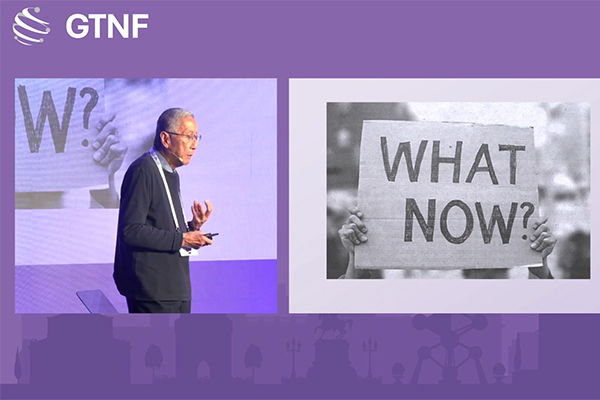
    Dr. Tikki Pang, a professor and former Director of Research Policy and Cooperation at the World Health Organization (WHO), delivered a compelling keynote at the Global Tobacco and Nicotine Forum (GTNF) in Brussels, urging the global public health community to “find a detour” around entrenched opposition to tobacco harm reduction (THR). Drawing a vivid analogy, Pang said the WHO’s position acts like a “landslide blocking the road” to progress, creating ripple effects that influence policy, weaken public trust, and stigmatize innovation. Attempts to change this stance, he said, have proven “frustrating and futile.”

    “‘Tobacco control’ has become the complete elimination of tobacco in society,” Pang said. “It’s become pretty much ideological at this point. It has become evidence-selective, perhaps evidence-blind.

    “We need to overcome this perception that the industry is the cause of the problem and not part of the solution.’

    Pang described the journey toward a THR-friendly world as “a long road with many obstacles,” and warned that the EU’s recent alignment with anti-THR policies could have “global repercussions.” Instead, he called for a “circuit breaker” — independent, multi-stakeholder platforms that operate outside the WHO’s Conference of the Parties (COP) framework. These coalitions should unite industry, consumers, investors, media, and advocates to advance harm reduction directly, he said.

    Pang emphasized the crucial role of media and advocacy in countering misinformation, noting that journalists can either “spread misconceptions or become powerful allies.” He also suggested situating THR within the broader context of non-communicable disease (NCD) prevention.

    Reflecting on his 13 years at the WHO, Pang acknowledged its achievements in supporting underserved populations but said the organization now faces “a crisis of relevance and confidence.” He concluded that while the WHO’s mission explicitly includes improving global health — including for smokers seeking better alternatives — progress will depend on using science-driven innovation and rational policy to achieve that goal.

    “Science has given us the tools to reduce harm from tobacco,” Pang said. “Reason dictates that we should use them.”

  • BAT’s Wheaton Calls for Policymakers to Embrace Harm Reduction at GTNF Opening

    BAT’s Wheaton Calls for Policymakers to Embrace Harm Reduction at GTNF Opening

    Brussels, October 6, 2025 — Kingsley Wheaton, Chief Corporate Officer of BAT, opened the Global Tobacco and Nicotine Forum (GTNF) with a call for policymakers to embrace harm reduction and real-world evidence as the basis for future regulation.

    “Right now, we stand at a crossroads,” Wheaton said. “One where the choices we make — as individuals, as companies, and as an industry — will shape the future of public health, policy, and perception.”

    Speaking under the GTNF’s theme, “Real World Evidence: The Race to Reduce Harm,” Wheaton argued that Sweden’s near smoke-free status demonstrates the effectiveness of tobacco harm reduction. He credited awareness campaigns, consumer access to smokeless products, and progressive regulation for driving smoking rates to among Europe’s lowest.

    “Sweden is on the verge of achieving something extraordinary: a smoking rate of just 5.3%—less than a quarter of the EU average,” he said. “This isn’t just a number. It’s a public health milestone. And it’s a powerful validation of a strategy that many dismissed: harm reduction.

    “Despite decades of global anti-smoking campaigns, 1 billion people still smoke. At BAT, we believe quitting is the best choice any smoker can make. But for those who won’t quit, offering scientifically substantiated, reduced-risk alternatives is essential. Sweden proves this approach works.”

    In his remarks, Wheaton touted the success of BAT’s Omni program, the company’s global platform and manifesto for tobacco harm reduction launched in 2024. He said Omni is both a movement and a communications framework through which BAT promotes its vision of a “Smokeless World,” aiming to make smokeless products mainstream and push for regulatory environments that support harm reduction.

    “With Omni, we’re launching a platform for science, dialogue, and collaboration to accelerate progress toward a smokeless world,” Wheaton said. “This transformation took belief—belief that we could be part of the solution. And today, I’m proud to say: we were right to believe in it.

    Wheaton also criticized prohibitionist policies, pointing to Australia’s illicit market as evidence of unintended consequences when safer alternatives are restricted. He urged EU policymakers to adopt proportionate, risk-based regulation that recognizes harm reduction as part of tobacco control.

    “How can policymakers not see what’s right in front of their eyes?” Wheaton said. “When safer alternatives are blocked, the void is filled by danger, not progress. It’s time to rethink, recalibrate, and reclaim the narrative. So perhaps it’s time to ask: What if the most effective way to end smoking isn’t to fight nicotine, but to reimagine it? What if the companies that once sold cigarettes can now lead the charge to make them obsolete?

    “The WHO continues to ignore and sideline harm reduction, clinging to outdated dogma while real-world evidence piles up. This is not just intransigence, it’s negligence. It’s time for policymakers to stop pretending this evidence doesn’t exist. Seventy percent of policy experts still believe nicotine is the primary cause of smoking-related diseases, like cancer. That’s not just inaccurate, it’s dangerous. If we’re serious about closing the Tobacco Harm Reduction deficit, we must engage directly with regulators, health authorities, and policy experts to ensure that safer alternatives are not just available, but understood, accepted, and encouraged.”

    The GTNF is the world’s leading annual conference discussing the future of the tobacco and nicotine industries. It is the global exchange for views and ideas between public health experts, government representatives, the industry, and investors.

  • What Role Does the FCTC Play in Today’s Regulatory Environment?

    What Role Does the FCTC Play in Today’s Regulatory Environment?

    At the Global Tobacco and Nicotine Forum (GTNF) in Brussels, an expert panel explored the growing disconnect between the World Health Organization’s Framework Convention on Tobacco Control (FCTC) and real-world tobacco harm reduction (THR) progress. The session featured Dr. Derek Yach, global health advocate and former WHO executive; Peter Beckett, Co-Founder of Clearing the Air; Dr. Tikki Pang, a professor and former WHO Director of Research Policy and Cooperation; and Dr. Christopher Snowdon, Head of Lifestyle Economics at the Institute of Economic Affairs.

    Yach opened the discussion by criticizing the gap between FCTC policymaking and on-the-ground data. He noted that smoking rates are falling faster in countries embracing harm reduction — such as the U.S., U.K., Japan, South Korea, and New Zealand — than under traditional tobacco control strategies. “If it can happen in Pakistan, it can happen in all of Southeast Asia,” he said. “And if it happens in Southeast Asia, we could be seeing oral cancer in the rearview mirror.” Yach emphasized the need for collaborative public–private partnerships to ensure product safety and credibility, while urging policymakers to move beyond what he called the “distraction” of youth-related arguments that ignore the millions of adult smokers seeking alternatives.

    “It’s not that youth use isn’t important, but putting all the attention on kids doesn’t help for 50 years,” he said. “What about their parents? We could be adding years to their lives right now. [Anti-THR people] just use the youth as a way to divide the argument. We need to shift to the data and take the kid issue off the table.”

    Beckett took a blunt tone, arguing that the FCTC framework is obsolete, exclusive, and lacking transparency. He said the WHO’s current approach alienates the public and damages its credibility, calling the situation “chaotic,” which makes it easier for harm-reduction advocates to push back on. Beckett urged reform-minded countries — especially WHO funders — to “recognize the world as it is” and resist “bullying by overpaid foundations with an agenda,” and accused prohibitionist groups of crossing the line.

    “Ten years ago, they were disingenuous; now they’re straight-up lying,” he said. “I keep hearing the same damn thing. ‘We need to engage with science, we need to be nice to the other side.’ I’m calling bullshit on that. It doesn’t work. There is no amount of science that will do the job. If there was, they’d let me in the bloody room when they have these conversations. We have to recognize this and say enough, and call for a tearing down of the framework in its entirety, because it’s not salvageable.”

    Pang reiterated that many developing countries adopt WHO guidance without generating or analyzing their own data. “They take the easy way out,” he said, “because they lack the capacity to build evidence locally.” Pang pointed to emerging “pockets of positive thinking” among countries that are now re-evaluating WHO recommendations and embracing THR. He called for greater industry unity — across state-owned, multinational, and startup sectors — and stronger alignment with consumer voices. “Consumers are also voters,” he reminded the audience, “and together they can influence policy.”

    Snowdon warned of troubling developments within the WHO, citing “endgame” proposals that reject harm reduction as an industry “con.” He described this as a “quasi-religious mission to destroy all tobacco,” resistant to evidence and reason. Snowdon noted that while grassroots THR advocacy exists, it ironically remains underfunded and overshadowed by well-resourced opposition.

    “We are greatly out-financed. The industry can contribute, but then we get ostracized,” he said. “We have a genuine grassroots movement, but these people have lives to live. They can’t be doing it all the time. Meanwhile, the other side has unlimited resources. The media could be helpful, but they don’t want to risk it.”

    Across the panel, a consensus emerged: the WHO’s FCTC framework risks irrelevance unless it adapts to include harm reduction. Participants agreed that the future of global health policy must be driven by data, innovation, and collaboration rather than ideology.

    The GTNF is the world’s leading annual conference discussing the future of the tobacco and nicotine industries. It is the global exchange for views and ideas between public health experts, government representatives, the industry, and investors.

  • BAT Outlines Five-Step Vapor Rules Plan

    BAT Outlines Five-Step Vapor Rules Plan

    BAT has released a blueprint for how regulators and governments could better regulate vapor products and help smokers switch to less risky products.

    During DTNF 2023, held from Sept 18-20 in Seoul, BAT’s global head of business communications, Jonathan Atwood, told attendees how BAT’s five-step plan for regulation could support achieving the right balance between harm reduction and the unintended consequences of access, including underage use.

    Speaking on behalf of Kingsley Wheaton, BAT’s chief strategy & growth officer, Atwood said that reckless players in the market need to be penalized when they do not abide by the rules. He said the five suggestions are the areas that regulators should explore and establish “smart regulation” that is right for their market.

    “First, on-device technology and functionality: vapor products should be accessible only to adults. Both underage prevention and restriction is crucial. On-device technology, when applied and enforced across entire markets, could help in this regard.

    “Second, more recognition is needed that flavors are an important driver of adoption for smokers seeking alternatives. However, flavors in vapor products should not particularly appeal to anyone underage.

    “Third is at the manufacturing and import level: ensuring that non-compliant products cannot reach the market in the first place.

    “Fourth, where no restrictions exist already, regulators may want to look at who should be able to sell vapor products and where. Reasonable safeguards at the point-of-sale would help ensure these products are sold only to adult consumers. Solutions such as retail licensing and facial recognition technologies should be seriously considered.

    “Lastly, enforcement and penalties: governments must wield their power and ensure consumers are purchasing legitimate products. Such measures should be rigorously enforced and those who fail to comply should face meaningful sanctions.”

    Atwood said BAT was calling upon governments, regulators, and industry peers to rally towards a sustainable and progressive environment in which vaping products are sold and marketed responsibly.