
New South Wales (Australia) will recruit 30 additional full-time tobacco inspectors to strengthen the state’s Centre for Regulation & Enforcement, expanding the statewide compliance team to 78 staff as authorities intensify efforts against illicit tobacco and vaping products. Since tougher enforcement laws took effect in November 2025, NSW Health and police have closed 66 retailers, including five Sydney Inner West tobacconists last week, while January inspections seized approximately 560,000 cigarettes, 98 kilograms of illicit tobacco, and more than 6,000 illegal vaping products valued at about A$830,000 ($589,000). The government is advancing further legislative measures, including landlord liability provisions and penalties exceeding A$1.5 million ($1.1 million) and seven years’ imprisonment for commercial-scale illicit tobacco offences, as officials warn high federal excise taxes continue to drive demand for illegal products and fuel evolving retail tactics such as QR code and social media-based sales.
Tag: illicit
-

Aussies Stop $700M in Illegal Nicotine Products at Border in Q2
Australian authorities intercepted illicit tobacco and vaping products representing an estimated AUD 1 billion ($700 million) in evaded duties during the second quarter of the 2025–26 financial year, according to the Australian Border Force (ABF). The agency seized more than 467 tons of illegal cigarettes and loose-leaf tobacco through intensified offshore and domestic enforcement operations, alongside growing vape-related detections. Major seizures included 14.4 million cigarettes from China, 2.5 tons of molasses tobacco concealed in cargo, 52,800 vapes hidden in a shipment from Kuala Lumpur, and 5.4 million cigarettes in a falsely declared container from Poland.
-

China Cracking Down on Smuggled NK Cigarettes as Demand Grows
China has intensified enforcement against the smuggling of North Korean cigarettes, handing prison sentences and fines to traffickers and expanding investigations to target the entire illicit supply chain, but demand for the products among Chinese consumers remains strong, according to sources cited by Daily NK. Recent cases in Dandong saw smugglers sentenced to two years in prison and fined 200,000 yuan ($41,000), as authorities increased pressure on storage and retail networks, discouraging merchants from handling North Korean tobacco even when legally imported. Despite the crackdown, North Korean cigarette manufacturers are expanding product ranges—introducing slim formats, varied tar levels, and competitively priced offerings—to sustain demand in China, with observers suggesting that continued consumer appetite is likely to keep illicit distribution active despite tighter controls.
-

PM India Fighting Illicit Trade with Intelligence
Illicit cigarettes are not a new problem in India, but they are one that continues to grow, Navaneel Kar, managing director of Philip Morris India, told Statesman News Service. According to Euromonitor International, India is now the fourth-largest market for illegal cigarette consumption in the world after China, Brazil, and Pakistan. To get an idea of how big the problem is, Kar said PM India carried out a large intelligence-gathering exercise in 2025 that covered more than 3,000 shops across 10 states. By also engaging with more than 50 government stakeholders, the goal was not just observation but building reliable intelligence that could, in turn, support enforcement agencies and policy discussions.
Public reports indicate enforcement agencies seized smuggled cigarettes worth about ₹600 crore ($7 billion) in FY25, with data from the Directorate of Revenue Intelligence showing the North-East as the largest hub for seizures, followed by Maharashtra–Goa, Tamil Nadu, and West Bengal.
PM India said it is supporting the government’s rollout of a Track & Trace system for tobacco products, drawing on global experience from markets where digital tagging of cigarette packs is used to improve supply-chain visibility and curb illegal trade. The company also “supported capacity-building efforts for over 145 officers from customs and tax departments,” according to Stateman News Service.
-
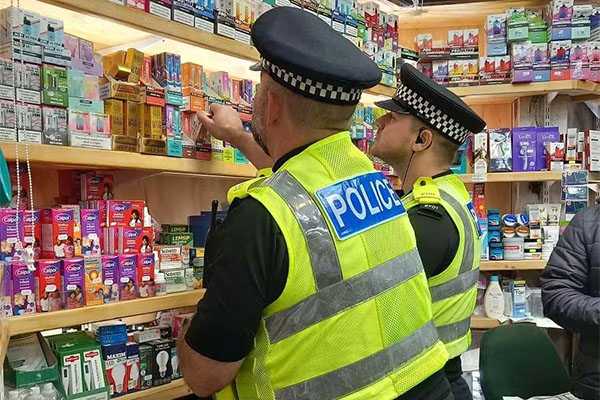
14 Newcastle Shops Closed for Illicit Tobacco
Authorities in Newcastle, England, have issued three-month closure notices to 14 West End shops since beginning a crackdown on illicit tobacco sales in December. The latest bust on Jan. 20 seized 4,350 illegal cigarettes (£74,000) and 370 pouches of rolling tobacco (£16,650). Three tobacco-sniffing dogs—Bran, Cooper, and Griff—have been integral to the operations, finding contraband hidden in chairs, stock boxes, and behind a fake wall, as well as discovering a “tab tube” that was used to move goods to the shop from an upstairs flat.
-

Employee-Owned Transition for U.S. Cannabis Operator
Chicago Atlantic announced it acted as joint lead arranger and administrative agent on a senior secured credit facility for S1 Enterprises—the parent company of vertically integrated cannabis operator Illicit—with operations in Missouri and New Jersey. Proceeds will finance the sale of 100% of the company’s equity to an Employee Stock Ownership Plan, making Illicit a 100% employee-owned S Corporation and creating a long-term ownership pathway for more than 500 employees. The ESOP structure is expected to enhance cash flow through tax-exempt status and support continued growth, investment, and employee benefits across the company’s operations.
-

Indonesia Considers Special Tax for Illegal Cigarettes
Indonesia’s government proposed introducing a special excise tariff for illegal cigarettes as a way to curb illicit trade and boost state revenue, but the plan has sparked concern among industry players over potential market distortions and policy uncertainty. Finance Minister Purbaya Yudhi Sadewa said details are still being finalized, explaining the measure would mainly target small-scale local cigarette producers, while foreign illicit products would continue to face strict enforcement. He estimated that formalizing illegal production could generate trillions of rupiah in additional revenue, though discussions on fiscal impacts are ongoing and will require approval from the House of Representatives, a process that could take time, according to The Jakarta Post.
-
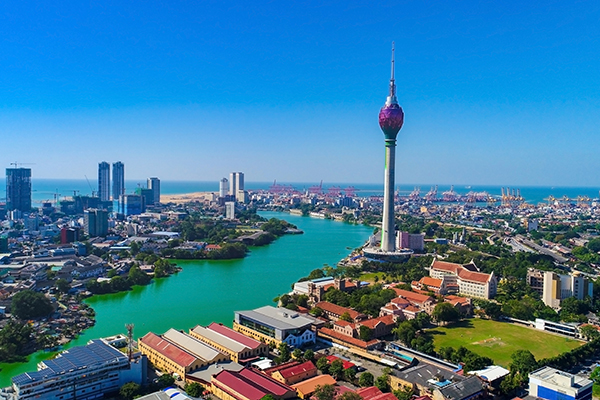
Sri Lanka Cracking Down on Beedi to Boost Tax Revenue
Sri Lanka’s Excise Department warned that anyone transporting beedi leaves (i.e. cheap, flake tobacco) without official transport permits will face immediate legal action, as authorities move to tighten enforcement against illegal production. Deputy Minister of Economic Development U. D. Nishantha Jayaweera said enforcement has been lax in the past, but new instructions have been issued to strengthen controls. While current tax revenue from domestically produced beedi stands at around 1–1.5 billion rupees ($3.4 million to $4.8 million), he said proper tax collection could raise this figure to nearly 15 billion rupees ($48 million). The government plans to introduce new measures to boost revenue and curb the untaxed, illegal manufacture of beedi.
-

Australian Officials Seize $1.1M in Illegal Tobacco Products
Two men in Australia have been charged following the seizure of more than A$1.6 million ($1.1 million) worth of illegal tobacco and vaping products during a joint law enforcement operation in Sydney’s southwest district.
Police executed a search warrant at a Riverwood warehouse January 19, seizing 40,000 branded cigarettes, more than 600 kg of molasses tobacco, loose-leaf tobacco, nicotine pouches, vapes, and other assorted cigarettes, along with mobile phones and electronic devices. A 44-year-old man was arrested at the premises and charged with possessing a commercial quantity of vaping goods, while a 26-year-old man was arrested nearby and charged with dealing with the proceeds of crime and possession of a prohibited weapon after police allegedly found cash and an electronic stun device in his vehicle.
-

Indonesia Busts Lab Filling Vapes with Narcotics
Indonesia’s National Narcotics Agency (BNN) detained two Malaysian men suspected of producing e-cigarette liquids containing etomidate, an intravenous anesthetic drug, at an apartment in South Jakarta. The arrests were made after investigators identified the location as an illegal laboratory used to process the drug for use in vape products.
BNN Director General of Enforcement Aldrin Hutabarat said intelligence showed one suspect entered Jakarta carrying around 3,000 empty vape cartridges before heading to the apartment. During the raid, authorities found the two men actively mixing etomidate liquid for filling into cartridges and seized the drug, vape components, cash, and mobile phones. One suspect reportedly admitted being paid Rp 6.4 million ($377) to travel to Indonesia.