Tag: news

  • PMTA Filed for Njoy ACE 2.0 With Age Check

    PMTA Filed for Njoy ACE 2.0 With Age Check

    Njoy, a subsidiary of Altria, submitted a supplemental premarket tobacco product application (PMTA) to the U.S. Food and Drug Administration for the commercialization and marketing of its ACE 2.0 device.

    The new device includes access restriction technology designed to prevent underage use. This is achieved through Bluetooth connectivity, which authenticates the user before unlocking the device. The company has also re-submitted PMTAs for blueberry- and watermelon-flavored pod products, which are exclusively compatible with the Njoy ACE 2.0 device.

    “Altria’s Vision is to responsibly lead the transition of adult smokers to a smoke-free future. We’re excited to build on our existing FDA-authorized products,” said Njoy President and CEO Shannon Leistra in a statement. “Njoy ACE 2.0 includes critical technology features to prevent underage access to flavored Njoy products while also responsibly providing flavored options for adult smokers and vapers.”

    The Njoy ACE is the only pod-based vaping product currently with marketing authorization from the FDA. In the first quarter of 2024, Njoy announced it had broadened distribution to over 80,000 stores and expects to expand to approximately 100,000 stores by year-end.

    Njoy also continued the roll-out of the brand’s first retail trade program, which is designed to help achieve optimal retail visibility and product fixture space.

    “Given the widespread illicit flavored e-vapor marketplace, this product offers the FDA a sound solution for balancing the known risk to youth with an opportunity to offer adults legal, regulated choices,” said Paige Magness, senior vice president of regulatory affairs of Altria Client Services. “We hope the FDA prioritizes the review and authorization of this application given its interest in device access restriction technologies to reduce youth access.”

    The Njoy had previously received marketing denial orders for its blueberry (2.4% and 5% nicotine strengths) and watermelon (2.4% and 5% nicotine strengths) pods.

    Njoy believes its latest applications sufficiently address the FDA’s concerns regarding underage use by incorporating device age and identity-based access restriction and demonstrating that these restrictions are effective at preventing underage access in virtually all cases. Currently, the FDA has not authorized the marketing of any non-tobacco-flavored vaping product.

  • Flonq Releases Ultra and Max Pro Systems

    Flonq Releases Ultra and Max Pro Systems

    Flonq, a leading vaping system manufacturer, has released its latest innovations, the Flonq Ultra and Flonq Max Pro. The two devices, with advanced features and stylish designs, “promise to upgrade the vaping experience,” according to a press release.

    Ultra and Max Pro feature an LED display for real-time monitoring of battery and liquid consumption. Both products also have a “boost” mode for enhanced performance that delivers “impressive vapor production and flavor intensity.”

    Despite the large 18ml e-liquid capacity, which provides up to 20.000 puffs, both devices maintain a compact and ergonomic design. 

    “Unlike many vaping brands that simply enlarge their devices when increasing e-liquid tank capacity, we prioritize convenience and comfort for users,” states Marlen Nazarov, Flonq’s founder and CEO. “Our goal is to provide vapers with a combination of performance and style, offering a truly premium vaping experience.”

    Flonq continues to offer refined flavors and memorable designs across its product range, according to the release. “We craft our devices, featuring minimalistic and sophisticated design”, explains Vladimir Parygin, the company’s head of Design. “At the same time, we ensure that each device possesses its own personality.”

    While both devices feature powerful dual mesh coils, each utilizes a different coil type. In Max Pro, the coils are positioned one above the other, while in Ultra, both mesh coils form a single cylinder, created by right and left sections. This coil difference impacts the flavor experience. Max Pro offers intense and bold flavors, while Ultra delivers refined and firm flavors.

    “Another significant aspect that sets us apart from our competitors is the time and effort we dedicate to creating unique designs. We don’t rely on established configurations in the vaping market, and provide compelling storytelling and inspiration behind each device,” stated Nazarov.

    The Flonq Max Pro is inspired by the urban environment: big city life, cars, and modern architecture. The device boasts a glossy texture across its entire body and is offered in a variety of vibrant colors. Max Pro appeals to those who appreciate unconventional aesthetics.

    For Flonq Ultra, the design team drew inspiration from a maritime theme, luxury boats and yachts. “The device embodies elegance and is crafted from soft-touch matte material,” the release states.

    “While often overlooked, we consider every detail in our vapes: from the texture of the materials and portability to the shape of the mouthpieces, ensuring both visual appeal and functionality, of course,” stated Parygin. 

  • White House Asked to Reclassify Marijuana

    White House Asked to Reclassify Marijuana

    Vapor Voice Archives

    The U.S. Drug Enforcement Administration plans to reclassify marijuana as a less dangerous drug, which could have far-reaching implications for American drug policy.

    The proposed measure, which is yet to be reviewed by the White House Office of Management and Budget, aims to acknowledge the medical benefits of using cannabis and recognize the fact that it is less prone to abuse in comparison to some of the most dangerous drugs in the country and reclassify cannabis as a Schedule III drug.

    However, it does not seek to legalize marijuana for recreational purposes.

    Five people familiar with the matter who spoke on the condition of anonymity to discuss the sensitive regulatory review confirmed the agency’s move to the AP on Tuesday. The move clears the last significant regulatory hurdle before the agency’s biggest policy change in more than 50 years can take effect.

    According to the DEA, the following are examples of Schedule I drugs: 

    • Heroin 
    • Lysergic acid diethylamide (LSD) 
    • Cannabis 
    • Methamphetamine 
    • Methaqualone (Quaalude) 
    • Peyote 

    According to the National Institute for Health, California became the first State to make it illegal to possess cannabis. In the 1930s, the then U.S. Federal Bureau of Narcotics warned of the increasing abuse of cannabis, and by 1937, 23 States had criminalized possession.

    By 1970, the Controlled Substances Act passed, and the Federal government categorized marijuana as a Schedule I substance.

    The planned DEA rule change followed an August 2023 recommendation from the Department of Health and Human Services (HHS) that DEA reschedule marijuana from Schedule I to Schedule III. Any change to the status of marijuana via the DEA rulemaking process would not take effect immediately.

  • FDA Warns 14 Sellers of Illegal Flavored Vapes

    FDA Warns 14 Sellers of Illegal Flavored Vapes

    The U.S. Food and Drug Administration announced on May 1 that it had sent warning letters to 14 online retailers. The reason for the warning letters was that these retailers were selling unauthorized e-cigarette products.

    The warning letters specifically mentioned the sale of disposable e-cigarette products marketed under various brand names such as Elf Bar/EB Design, Esco Bars, Funky Republic, Hyde, Kang, Cali Bars, and Lost Mary, according to press release.

    The retailers receiving these warning letters sold or distributed e-cigarette products in the United States that lack authorization from FDA, in violation of the Federal Food, Drug, and Cosmetic Act.

    Warning letter recipients are given 15 working days to respond with the steps they will take to address the violation(s) cited in the warning letter and to prevent future violations. Failure to promptly address the violations can result in additional FDA actions such as an injunction, seizure, and/or civil money penalties.

    The agency announced on April 30 that the U.S. Marshals Service seized more than 45,000 unauthorized e-cigarette products valued at more than $700,000 in California.

    The seized products were mostly flavored, disposable e-cigarette products, including brands such as Puff Bar/Puff, Elf Bar/EB Design, Esco Bar, Kuz, Smok and Pixi.

  • Florida Passes First Disposables Registry

    Florida Passes First Disposables Registry

    Credit: Ajax9

    Florida’s governor, Ron DeSantis, has signed legislation intended to crack down on the sale of unauthorized vapes that the state deems attractive to children.

    The new law (HB 1007), however, only targets disposable vaping products not authorized by the U.S. Food and Drug Administration. The rules will be enforced beginning Oct. 1.

    Unlike other state registry lists, Florida is the first state in the nation to include a carve-out for refillable pod systems and open-system vaping products, as well as bottled e-liquids.

    Florida Smoke Free Association president and vape shop owner Nick Orlando was the driving force behind getting the open system exemption.

    In its original form, the bill would have prohibited sales of any vape products that had not yet received FDA approval, according to media reports.

    The law now directs the state’s Department of Legal Affairs to develop and maintain a directory listing all single-use nicotine vapes it deems attractive to minors. The department must make the list publicly available on Jan. 1, 2025, and regularly update it.

    Once a product is added to the list, retailers and wholesalers in Florida have 60 days to sell or remove it from their inventory. Any products left in circulation will be subject to seizure and destruction.

    Beginning March 1, 2025, manufacturers that sell prohibited products in the state will face a $1,000 daily fine for each such product until it’s removed from the market. This stricture will also apply to retailers, wholesalers and distributors that ship products into Florida.

    Any person who sells a nicotine product, including vapes, to someone under 21 for a third or subsequent time will face a third-degree felony charge, punishable by up to $5,000 in fines and five years in prison.

  • Civil Money Penalties for 22 Elfbar Sellers

    Civil Money Penalties for 22 Elfbar Sellers

    Credit: Jeff McCollough

    The U.S. Food and Drug Administration today announced the issuance of complaints for civil money penalties (CMPs) against 20 brick-and-mortar retailers and two online retailers for selling unauthorized e-cigarettes, including Elf Bar, a popular youth-appealing brand.

    The regulatory agency previously issued warning letters to these retailers for selling unauthorized tobacco products. However, according to an FDA release, follow-up inspections revealed that the retailers had failed to correct the violations.

    Accordingly, the agency is now seeking a CMP of approximately $20,000 from each retailer.

    The approximately $20,000 CMP sought from each retailer is consistent with similar CMPs sought against retailers for the sale of unauthorized Elf Bar products over the last few months, including in Sept., Nov., Dec. and Feb.

    The retailers can pay the penalty, enter into a settlement agreement, request an extension to respond, or request a hearing. Retailers that do not take action within 30 days after receiving a complaint risk a default order imposing the full penalty amount.

  • Brazil Agency Upholds Vaping Sales Ban

    Brazil Agency Upholds Vaping Sales Ban

    Image: VlaDee/pavlofox

    The board of directors for the Brazilian Health Surveillance Agency (Anvisa) voted unanimously on April 19 to maintain a ban on the sale of e-cigarettes and other vaping products, reports Brazil Reports.

    Manufacturing, selling, importing and advertising vapes has been banned in the country since 2009, but e-cigarettes remain widely available in small shops and online stores across Brazil.

    According the Brazilian Institute of Geography and Statistics, 16.8 percent of students aged 13 to 17 said they had tried vaping at least once in their lives. An estimate 4 million Brazilians vape, according to Covitel, which carries out health-related surveys.

    Anvisa’s vote follows a public consultation on the measure. Anvisa justified its position based on the rise in underage vaping in countries that permit e-cigarettes, the addictive properties of nicotine and the lack of long-term studies on the effects of vaping on health, along with the potential impact of allowing vaping on Brazil’s overall tobacco control policies, which have been praised internationally.

    In July 2019, Brazil became the second country to fully implement all measures set out by the World Health Organization  with the aim of reducing tobacco consumption and protecting people from chronic non-communicable diseases.

    In voting to uphold the ban, Anvisa President Antônio Barra Torres cited a December 2023 World Health Organization publication recommending government prohibited electronic cigarettes based on current evidence.  

    The Brazilian Tobacco Industry Association, ABIFUMO, said that banning vapes is “ignoring the learnings of more than 80 countries that have already authorized their sale with clear rules for control, restriction of points of sale and taxation of manufacturers.”

    Philip Morris Brasil said that “maintaining the ban on vapes is out of step with the uncontrolled growth of the illicit market, proven to be accessible to around 4 million Brazilians who use a product daily without any control of quality.”

    Meanwhile, the Senate is debating a bill that would authorize the production, import, export and consumption of e-cigarettes in Brazil. The proposal is still in its early stages and does not have a date for voting.


  • Vape Shops Challenge Kentucky Registry Bill

    Vape Shops Challenge Kentucky Registry Bill

    Credit: Adobe

    Several vape businesses, as well as the Kentucky Hemp Association and Kentucky Vaping Retailers Association, are suing the state government over House Bill 11, which will restrict vape sales starting in 2025.

    Among other policy changes, HB 11 will bar businesses from selling vapes that are either not authorized by the U.S. Food and Drug Administration or are not currently under review by the regulatory agency.

    During public debates, various arguments for and against HB 11 were made before the Legislature passed the law in late March.

    But the vape shops’ lawsuit, filed last week in Franklin Circuit Court, challenges the legislation on constitutional grounds, according to media reports.

    The lawsuit zeroes in on HB 11’s reliance on defining a “vapor product” in a way that includes devices that feature “vaporized nicotine or other substances.”

    The shops’ petition says this definition encompasses not only nicotine vapes but also hemp-derived vaping products they currently sell. And it says the definition is broad enough to apply to medical cannabis vaping products that will become legal in Kentucky next year.

    The lawsuit argues this makes the new law unconstitutional for two reasons.

    First, it claims HB 11 violates a provision in the Kentucky Constitution that says the Legislature can’t pass a law that relates to more than one subject, and that subject must be specified in its title.

    The plaintiffs say HB 11 is titled an “act relating to nicotine products” but actually affects non-nicotine products as well. They argue this effectively violates the constitutional rule.

    Second, the lawsuit says hemp-derived vapes generally aren’t regulated by the FDA, which makes it impossible for businesses to comply with HB 11’s requirement that they only sell vapes that have received or are seeking FDA approval.

    The suit argues this violates a due process clause in the U.S. Constitution and makes HB 11 an “arbitrary” law, which is prohibited by the Kentucky Constitution.

  • Uzbekistan Plans to Ban Heated Tobacco, Vapes

    Uzbekistan Plans to Ban Heated Tobacco, Vapes

    Tashkent TV Tower Aerial Shot During Sunset in Uzbekistan (Credit: Lukas)

    The Ministry of Health in Uzbekistan has proposed a ban on the circulation of electronic nicotine delivery systems (ENDS) products, e-liquids and heated tobacco products, Trend reports.

    This is shown in the draft law published on Uzbekistan’s portal to discuss draft normative legal acts.

    According to the law, the circulation of ENDS products on the “territory of the country is prohibited.”

    The Ministry of Health also proposes to introduce administrative and criminal liability for violation of this ban—a fine in the amount of $1,000 to five years of imprisonment.

    According to data from Uzbekistan’s Statistics Agency, the production volume of tobacco products in the country reached 2.1 billion pieces from January through February 2024.

    From January through February 2024, the country’s exports of tobacco products reached $7.8 million, while imports amounted to $10.5 million during the same period.

  • Plxsur Revenues Surpass $1 Billion

    Plxsur Revenues Surpass $1 Billion

    By Timothy S. Donahue

    That didn’t take very long. The global vaping company Plxsur reached its goal of reaching $1 billion in consolidated revenues from its partners in just two years. The company has now successfully partnered with 12 of the world’s leading vaping companies to form what may be the largest and fastest-growing group of independent vaping companies in the world. According to Nigel Hardy, CEO and founder of Plxsur, the company accomplished this with a focus on compliance, governance and reporting, with responsibility at its core.

    “We believe having a portfolio of multiple brands is crucial for building a successful reduced-risk product (RRP) business at scale. Our retail sales across the group reflect the impact of Plxsur, which supports adult smokers who have switched to vaping,” explains Hardy. “We have sold products to about 4 million consumers, with retail sales by value of units sold at $1.835 billion. Additionally, our three North Star owned brands, Salt, Allo, and Flavour Beast, are expected to generate retail sales of more than $400 million in 2024.”

    Plxsur also has 10 e-liquid manufacturing facilities in six different markets. With that comes the quality management systems to ensure the quality of the raw materials that are coming in and what’s going out. It’s not only about quality control (QC), but also about quality assurance. All e-liquids are manufactured in a minimum ISO 9001-certified facility. Plxsur’s QC program ensures that all products manufactured and distributed meet or exceed all regulatory and legislative requirements in the markets where the products are produced.

    ISO 9001 is an international standard specifying quality management system requirements. Organizations use it to demonstrate their ability to consistently provide products and services that meet customer and regulatory requirements. Plxsur only produces its brands of e-liquids. The company does not do third-party manufacturing because the company’s focus is on its products.

    Plxsur leadership says its partners have a combined market share representing an estimated 10 percent of the global $19.34 billion vaping market. Hardy said the company is targeting a 20 percent market share in the next five years. The companies include Hale Vaping (Ireland), UEG Holland (Netherlands), DampShop (Belgium), Pro Vape (Latvia), Puff Store (Italy), Nobacco (Greece), Ritchy Group (Czech Republic), Vape Empire (Malaysia), Pacific Smoke (Canada) and CK Complex (Poland).

    “The past two years have seen a huge amount of financial and operational progress for Plxsur, and we have grown to become the world’s largest and fastest-growing group of independent vaping companies with consolidated revenues of over $1 billion,” said Hardy.

    In 2021, Plxsur was founded by David Newns, Charlie Yates, and Nigel Hardy. The three entrepreneurs shared a vision for the vaping industry and discussed how they could work together to achieve their goals. They believed the key to success was respecting and supporting entrepreneurship while empowering local management teams. They planned to create a global network of independent vaping companies that were both the largest and the most responsible in the industry.

    Plxsur, under Hardy’s leadership, believes in improving the businesses it brings on board by focusing on three key aspects of business strategy: governance, compliance, and reporting. Compliance involves adhering to various rules and regulations in the countries and communities where Plxsur businesses operate. This includes regulatory, communication, and marketing compliance, as well as legal compliance related to finance and jurisdiction.

    “We’re at a very important and exciting stage in our journey. The companies in that group are not only the best at what they do in their respective markets, but importantly, they share our values.

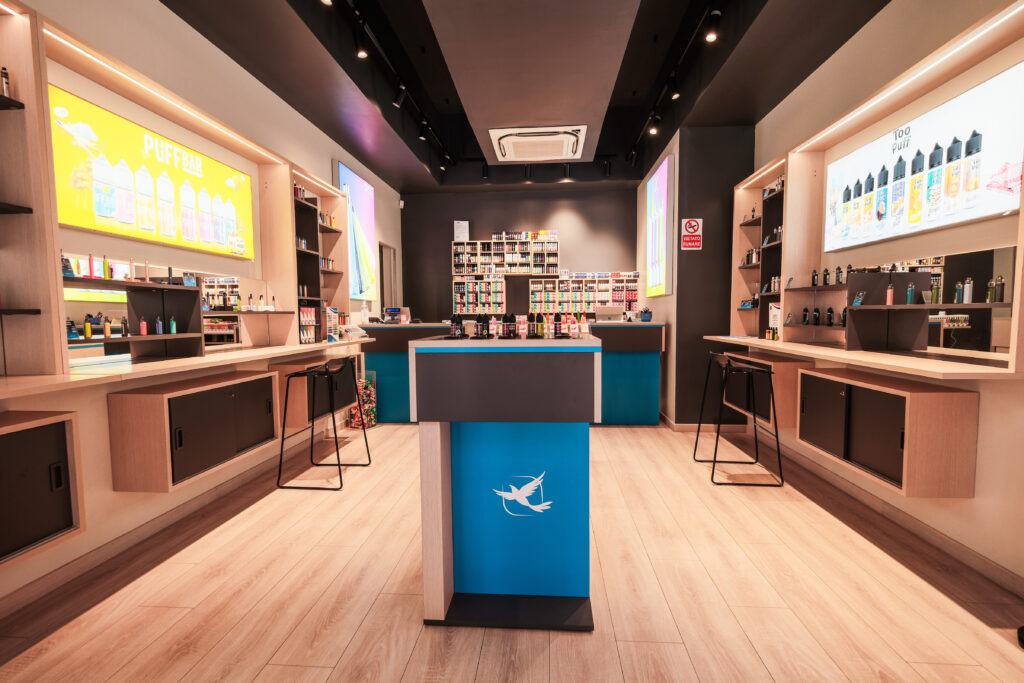
    “They put the consumers first, think big, and take responsibility seriously. All our companies want to make a real difference in the lives of adult smokers by contributing to a smokeless society. We now have a presence in Europe, Asia, and North America, covering the full vaping value chain from manufacturing, wholesale, distribution, and direct-to-consumer, both online and through our global network of over 800 specialist vaping stores.”
    In 2023, group revenues increased 40 percent on the previous year to more than $1 billion, with an adjusted EBITDA of over $200 million. The outlook for the global vaping market is strong, and last year, Plxsur commissioned an independent research report that Hardy said is the “most comprehensive consumer study conducted on vaping to date”, using data from an online panel of over 30,000 consumers in six of Plxsur’s markets.

    “The opportunity available for RRP across our 12 markets is significant, and I am pleased that our Global Vaping Market Snapshot vindicates the belief that not only will this sector continue to grow at pace, but that vaping is quickly becoming the most popular form of RRP in the market, with adult smokers who switch to vaping likely to remain loyal by navigating the regulatory framework,” he explained. “Our team has established a center of excellence leading a program of capability development to ensure management teams at a local level of the skills to deliver sustained value growth.”

    Plxsur and its partners continue raising the bar as a responsible vaping group. All its companies have now committed to the six Plxsur standards (product compliance, manufacturing safety, responsible marketing, youth access, child protection and third-party product compliance) that address the biggest issues the vaping industry faces today. The company has also supported local teams across the group and guided companies in engaging with governments on policy development, particularly around preventing youth access.

    “We’re focused on migrating consumers from disposable vapes to rechargeable pod and open systems. This is a key priority for Plxsur and our companies are already delivering huge results. In Q3 of 2023, I’m delighted that our Italian business, Puff, successfully migrated many of their consumers to pod and open devices through its launch as an exclusive distributor of new-to-market pods and e-liquids,” said Hardy.  “To keep the momentum going, our portfolio companies have exciting plans to expand their range of pod systems in the first half of this year.”

    Unlike traditional business acquisitions, Hardy explained that the company’s partners are not selected based on their financial worth. Plxsur is highly selective in its choice of partners, and financial size is not the only factor determining whether a company is suitable to join the Plxsur team. Hardy cited the example of Pro Vape, a company headquartered in Riga, Latvia, which started its business in late 2016 and met all the necessary criteria to become a Plxsur partner.

    “The Baltic market is not particularly a huge market for vaping. What Pro Vape has is a significant presence in Europe,” said Hardy. “Only 40 percent of their business is domestic, and 60 percent is across the rest of Europe.”

    Plxsur has specific criteria that businesses must meet before partnering with them. Firstly, the company must be a leader in its channel, whether it is business-to-business or business-to-consumer, or a leading player in its market. Currently, all of Plxsur’s partners meet this benchmark. Secondly, having a healthy balance of company-owned brands within the portfolio is essential, with Plxsur aiming for at least 50 percent of its revenues to be driven by such brands. Thirdly, the most crucial criterion is people.

    “Our ability to retain our unique entrepreneurial spirit while growing at a rapid pace has been pivotal to our success over the past two years,” said Hardy. “We remain committed to achieving long-term value for all stakeholders, with responsibility at the core of everything we do. Supported by several tailwinds, including evolving market dynamics and customer preferences, we remain confident in Plxsur’s medium-term prospects and our ability to continue our trajectory to promote responsibility in the sector, achieve our target of over $15 billion in revenues by 2033.”

    To achieve the lofty goal, Hardy said Plxsur is well placed to capitalize on the growing trend of vaping across the globe, unlock future value, and play a leading role in shaping the sector’s future on a platform of responsibility. He said Plxsur excels at creating a distinctive, innovative business leadership environment while growing at a pace pivotal to the company’s success over the past two years.

    “We continue to see increasing regulation around vaping, particularly disposables, flavors, and marketing,” said Hardy. “At Plxsur, we see regulation as a force for good and encourage appropriate regulation and enforcement to tackle illicit and irresponsible trading behaviors. Last year, we submitted Plxsur’s response to the UK government’s open consultation on creating a smoke-free generation, and we continue to engage with regulators worldwide.

    “This engagement with responsibility at the core of everything we do places Plxsur in a prime position to continue to grow, lead the industry, and shape the future of vaping.”