Tag: Philip Morris

  • Survey: Two-Thirds of U.S. Healthcare Practitioners are Mistaken About Nicotine

    Survey: Two-Thirds of U.S. Healthcare Practitioners are Mistaken About Nicotine

    A new survey, funded by Philip Morris International’s U.S. affiliates (PMI U.S.), has found that 47% of U.S. healthcare practitioners—rising to 59% among medical professionals who indicate that half or more of their patients smoke cigarettes—mistakenly believe nicotine is a carcinogen, despite scientific consensus that the harms of smoking primarily stem not from nicotine but from the burning of tobacco. Another 19% are unsure. Practitioners surveyed generally agree that smoke-free products—such as nicotine pouches and other noncombustible alternatives— are addictive and not risk free but still pose less risk than cigarettes. However, the survey results also show that misconceptions about nicotine persist and are obstructing progress on tobacco harm reduction.

    Povaddo LLC fielded the survey among 1,565 medical professionals, including physicians, nurses, and mental health practitioners, across the United States between March 10 and April 5, 2025. The survey results highlighted that:

    Despite decades of research as part of tobacco control efforts, misconceptions about nicotine are pervasive among healthcare professionals and others. The survey findings demonstrate an urgent need for healthcare regulators to provide unbiased, scientifically substantiated information about nicotine and nicotine products to the healthcare community. Many clinicians report uncertainty about which products are FDA-authorized and point to a lack of up-to-date information as barriers to more frequent and informed patient guidance regarding authorized smoke-free products. This is critical at a time when an estimated 480,000 Americans die each year from smoking-related illnesses.

    “Healthcare professionals are at the heart of patient care and need reliable, science-based information to help their patients make informed choices,” said Stacey Kennedy, CEO of PMI U.S. “These findings reinforce the urgent need for transparent, evidence-driven communication from the FDA and other health authorities about the full spectrum of tobacco and nicotine products. We encourage the agency to provide timely, scientifically validated guidance to healthcare practitioners on FDA-authorized smoke-free alternatives. Ensuring clinicians have access to accurate information is essential to help adults 21+ who smoke make better choices and improve public health.”

    This need for clear, science-based information is especially urgent given the survey’s findings about persistent misconceptions within the medical community that may result in incomplete or inaccurate information being shared with patients.

    “One of the most striking findings from this research is the prevalence of misinformation about nicotine—even among otherwise well-informed healthcare professionals,” said Matt Holman, vice president of U.S. scientific engagement and regulatory strategy at PMI U.S. and former director of the Office of Science at the FDA. “Addressing these misconceptions with robust, evidence-based communication from authorities like the FDA is crucial to helping providers guide their patients and support harm reduction.”

    PMI has invested more than $14 billion globally in innovative smoke-free products and remains committed to giving adults 21+ access to FDA-authorized better alternatives.

    Read the full findings of the Tobacco Harm Reduction: U.S. Medical Professionals Survey (2025) at https://www.pmi.com/us/medical-professionals-see-greater-role-for-FDA.

    Access PMI’s science at www.pmiscience.com and fact sheet on nicotine here.

  • Reno Reporters Stumble into Counterfeit Zyn

    Reno Reporters Stumble into Counterfeit Zyn

    News 4-Fox 11 in Reno, Nevada, is reporting its investigation that found counterfeit Zyn products for sale at a local convenience store that looked identical to the legitimate brand. Last October, an employee of the station bought three cans of “Zyn,” which he said tasted different than usual. The cans were sent to McKinney Specialty Labs in Virginia for testing.

    “They really are misbranded and illegally on the market,” Dr. Roxana Weil, chief regulatory science officer at McKinney, said. The tested product only contained 4.5mg of nicotine, contrary to the 6mg advertised, and additionally contained six methyl nicotine, an additive that should not have been in there. The lab only tested for nicotine, so it’s unclear what else could be in the counterfeit product.

    Dr. Willie McKinney, CEO of McKinney, said, “It was a little bit of a surprise to see six methyl nicotine simply because it’s manufactured. It’s man-made.”

    Representatives from Philip Morris International, the makers of Zyn, and the store owner believe the counterfeit products likely came from a distributor.

    “Our findings are that these are produced from overseas,” said Brian Weinhaus, director for illicit trade at PMI. “They are not produced in the United States.”

  • Baltimore Sues PMI for “Peddling Zyn to Kids”

    Baltimore Sues PMI for “Peddling Zyn to Kids”

    The City of Baltimore filed a lawsuit against Philip Morris yesterday (May 7) in the city’s Circuit Court for violating Baltimore’s Consumer Protection Ordinance through deceptive marketing practices to “peddle Zyn oral nicotine pouches to minors.” The city said PMI used “Big Tobacco’s well-developed playbook” to deceptively market flavored Zyn nicotine pouch products and hook a new generation of nicotine users.”

    “The purpose of creating a flavored tobacco product is clear — it is meant to capture children and adolescents,” the city’s complaint says.

    The complaint cites recent research that nearly 2% of middle and high school students report using nicotine pouches, and a separate survey where more than two-thirds of underage respondents reported Zyn as their favorite brand of tobacco pouches.

    In response, officials from PMI said, Although we have not yet been served with the complaint and are not in a position to comment, we can assure you that the interests of PMI and its affiliates will be vigorously defended.”

    This is not the first time the city has targeted nicotine-related products with a lawsuit alleging deceptive marketing. Baltimore sued Juul Labs Inc. in 2020, accusing the electronic cigarette maker of promoting to minors. In September, the city reached an $8 million settlement with the California-based company.

  • PMI Exec Sees Strong Potential for Smoke-Free Products in Philippines

    PMI Exec Sees Strong Potential for Smoke-Free Products in Philippines

    A top executive of Philip Morris International (PMI) expressed optimism about the growth of smoke-free alternatives in the Philippines, saying the company sees strong potential despite being in the early stages of its market rollout.

    “In the Philippines, we are still at the very early stages, but we have a lot of confidence in smoke-free products,” said Stefano Volpetti, president of the smoke-free products category and chief consumer officer at PMI.

     Volpetti said progress in Metro Manila is already showing promise, drawing parallels with the company’s initial launches in other countries. He said PMI is committed to making smoke-free alternatives accessible to Filipino smokers, particularly through education and proper explanation of the products.

    “If you think about it, when we started in Italy and in Japan, we started from Milan and Nagoya,” Volpetti said. “We are starting the same journey in the Philippines, starting from Metro Manila. It is clear that when those smoke-free alternatives are well explained to Filipino smokers, there is clearly attraction to move from traditional cigarettes.

    “But we are very confident, because this is a journey that we have done in more than 90 countries around the world. We know the recipe of this journey and the progress in Metro Manila is very powerful.”

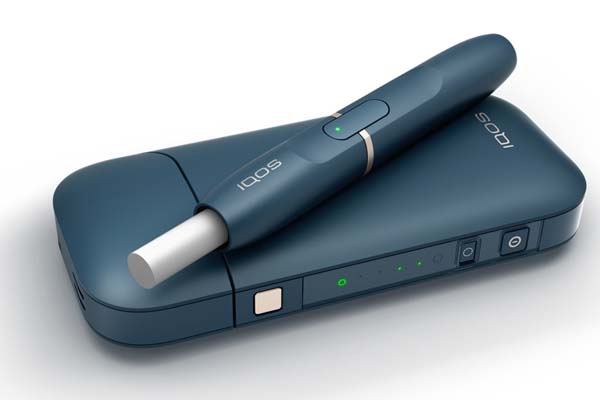
    At present, PMI’s smoke-free offerings in the Philippines include IQOS devices, HEETS and TEREA sticks, the more affordable BONDS device, BLENDS consumables and the ZYN oral nicotine product. When asked about the affordability of smoke-free products for Filipinos, Volpetti acknowledged the economic barriers but said PMI is working to provide more options.

    “In general, we have two important aspects of this journey,” he said. “The first aspect is to be sure that smokers understand the benefits of smoke-free alternatives. Because if you don’t understand the benefits, if the benefits are not explained to you, it is very difficult to be able to appreciate that. 

    “We are able to design the consumables in a way that is more in tune with the experience of different consumers around the world. [What the consumers around] the world wants in terms of taste, flavor, in terms of pleasure, but also in terms of the budget they are ready to pay. In the coming future, you will see a portfolio that is more balanced between the premium segment and the medium segment. Our mission is to provide choices across all consumer categories.”

  • IQOS System Commercially Available in Texas

    IQOS System Commercially Available in Texas

    Today, PMI U.S. announced its FDA-authorized IQOS system is now commercially available to residents in the Greater Austin, Texas, area online at www.IQOS.com/us, at select pop-up stores, and other 21+ venues. IQOS is available in more than 70 markets globally since launching in Japan 10 years ago. The launch in Texas marks the first in a series of introductions in markets across the U.S.

    “We’ve seen the impact that a diverse range of smoke-free alternatives—like IQOS and ZYN—can have in helping adults 21+ move away from cigarettes,” said Stacey Kennedy, PMI U.S. CEO. ”We are committed to raising awareness and educating both consumers and public health leaders about the progress being made in harm reduction with our smoke-free products.”

    The news that Austinite’s can now purchase IQOS onlinefollows the March announcement that a permanent IQOS store opened downtown. Since October 2024, more than 5,000 Austin residents signed up to “Be the First” to experience IQOS.

  • PMI Hosting Annual Meeting Webcast May 7

    PMI Hosting Annual Meeting Webcast May 7

    Philip Morris International Inc. announced it will host a live audio webcast of its 2025 Annual Meeting of Shareholders on Wednesday, May 7, 2025, at 9 a.m. EST. The meeting will be in a virtual format and can be accessed at www.virtualshareholdermeeting.com/PM2025. Presentation slides, script, and an archived recording of the webcast will be available at the same link. The recording will be available for one year from the date of the meeting.

    During the meeting, André Calantzopoulos, Chairman of the Board, and Jacek Olczak, Chief Executive Officer, will address shareholders and answer questions. Only shareholders of record with a valid 16-digit control number will be allowed to ask a question or make a comment.

    The audio webcast may also be accessed on mobile devices by downloading PMI’s free Investor Relations App at www.pmi.com/irapp.

  • PMI CEO Calls for Common-Sense Regulations

    PMI CEO Calls for Common-Sense Regulations

    Jacek Olczak, Chief Executive Officer of Philip Morris International Inc., outlined the need for common-sense regulations in the consumer goods sector while addressing global leaders at Semafor’s annual World Economy Summit in Washington, D.C., on April 25, 2025. Olczak emphasized the sector’s potential for innovation-led growth despite the volatile economic environment. He stressed, however, that without appropriate regulation and policy frameworks to enable scientific evaluation and consumer access, promising breakthroughs—such as innovations in wellness, food, and personal care products—could become missed opportunities.

    “Disparities in nicotine regulation are creating a global divide with profound health and economic impacts,” Olczak said. “Some countries that have prohibited smoke-free products are seeing higher smoking rates persist, while many of those whose policies encourage smokers to make better choices are advancing away from cigarettes more quickly. As a result, we are already starting to see nations where smoking has significantly declined while others unnecessarily continue to experience smoking rates of 20%, 30% or higher.”

    According to PMI, more than 190 million smokers in more than 20 markets—nearly 20% of smokers globally—have no legal access to smoke-free products, while cigarettes—the most harmful way to consume nicotine—are available on the market. This stagnation persists despite the introduction of advertising bans, high excise taxes, plain packaging, and a complete flavor ban on cigarettes.

    “Innovation needs to be accessible and impactful,” Olczak said. “At PMI, we have invested heavily, innovated continually, and transformed our business model to replace cigarettes with better, smoke-free alternatives, which as of Q1 2025 represent 42% of our global net revenues—up from zero a decade ago. It is imperative that countries worldwide adopt policy frameworks that keep pace with these innovations to deliver on the promise of progress.”

  • PMI Halts U.S. Cigar Sale

    PMI Halts U.S. Cigar Sale

    Bloomberg reported that yesterday Philip Morris International Inc. called off the sale of its $1 billion US cigar business, citing the “current environment” in the latest deal to go awry amid market turmoil.

    PMI said following a thorough review and after taking into account the current environment, it will not shed the cigar unit it acquired as part of its $16 billion purchase of rival Swedish Match. It has previously said it wanted to dispose of US cigars as it continues to pin its future on a shift toward smoke-free alternatives to traditional tobacco products.

    The company said strong sales of Zyn nicotine pouches — also acquired from Swedish Match — were driving performance as it boosted adjusted earnings per share guidance this year to as much as $7.49, compared with a previous targeted high of $7.17.

    The smoke-free business includes Zyn and IQOS heated tobacco sticks and accounted for 42% of the first-quarter total net revenue. Philip Morris wants to generate more than two-thirds of its sales from alternative products by 2030.

  • PMI Surpasses Estimates for Fourth Straight Quarter

    PMI Surpasses Estimates for Fourth Straight Quarter

    Today (April 23), Philip Morris International announced first-quarter earnings of $1.69 per share, beating the Zacks Consensus Estimate of $1.61 per share. This is a 12.7% increase, and compares to earnings of $1.50 per share a year ago. These figures are adjusted for non-recurring items, and mark the fourth straight quarter the company has surpassed consensus EPS estimates.

    PMI posted revenue of $9.3 billion for the quarter ended March 2025, surpassing the Zacks Consensus Estimate by 3.97%.

    “We achieved exceptionally strong performance in the first quarter, with continued volume growth supporting an excellent top-line performance and very strong margin expansion,” said Jacek Olczak, Chief Executive Officer. “Our smoke-free business goes from strength to strength, delivering organic growth of over 20% in net revenues and over 33% in gross profit.

    “We remain confident in our ability to deliver superior results, despite an uncertain and volatile global economic environment, and now forecast double-digit adjusted diluted EPS growth in dollar terms for the full year.”

    PMI’s smoke-free business saw a 14.4% increase in shipment volumes, and now accounts for 42% of its total net revenues and 44% of its total gross profit.

  • Federal Judge Allows Zyn Lawsuit to Progress

    Federal Judge Allows Zyn Lawsuit to Progress

    A federal judge in Florida allowed key claims to move forward in two consumer class action lawsuits against Philip Morris and its subsidiary, Swedish Match, over allegations that their Zyn nicotine pouches cause ongoing health issues and are deceptively marketed, especially to young people.

    In March, U.S. District Judge William P. Dimitrouleas partially granted the defendants’ motion to dismiss, tossing a single claim of fraudulent concealment for lacking sufficient detail and a clear connection between the alleged misrepresentation and the plaintiffs’ injuries. However, the claims were reportedly dismissed without prejudice, giving the plaintiffs an opportunity to amend their complaints. The court upheld the bulk of the plaintiffs’ claims, including those for design defects, failure to warn, and negligence. The judge also rejected Philip Morris’ efforts to dismiss the lawsuits for lack of jurisdiction, finding that the companies’ business activities in Florida, including marketing and selling Zyn, provided sufficient basis for the federal court to hear the case.

    Plaintiffs in the Zyn lawsuits allege Philip Morris and Swedish Match falsely maintain Zyn is a smokeless nicotine replacement therapy from cigarettes or e-cigarettes, despite the nicotine concentration levels in Zyn exceeding the levels found in nicotine replacement therapies. Philip Morris said it is reviewing the ruling and intends to “vigorously defend” itself against the remaining claims.