Philip Morris Egypt announced updated prices for its cigarette and heated tobacco products effective today (Feb. 2), saying some products increased compared with July 2025 prices, while others remained unchanged. Merit is now priced at EGP 111 ($2.33) per pack, Marlboro at EGP 102 ($2.14), L&M and TEREA at EGP 82 ($1.72), and HEETS holding at EGP 69 ($1.45). Philip Morris Egypt said the prices can be verified through QR codes on packaging and urged retailers to comply with the official list, marking the company’s first price adjustment of 2026.
Tag: Philip Morris
-

PMI to Host Q4 and FY25 Webcast February 6
Philip Morris International said it will host a live audio webcast on February 6 at 9 a.m. ET to discuss its fourth-quarter and full-year 2025 financial results, which are scheduled to be released two hours prior. The listen-only webcast will be hosted by Group CEO Jacek Olczak and CFO Emmanuel Babeau and will include a presentation of results followed by a Q&A session with investors. A recording, slides, and transcript will be available after the event for one year, and the webcast can also be accessed through PMI’s Investor Relations mobile app.
-

PM Exec Urges Malaysia to Follow Japan’s Lead
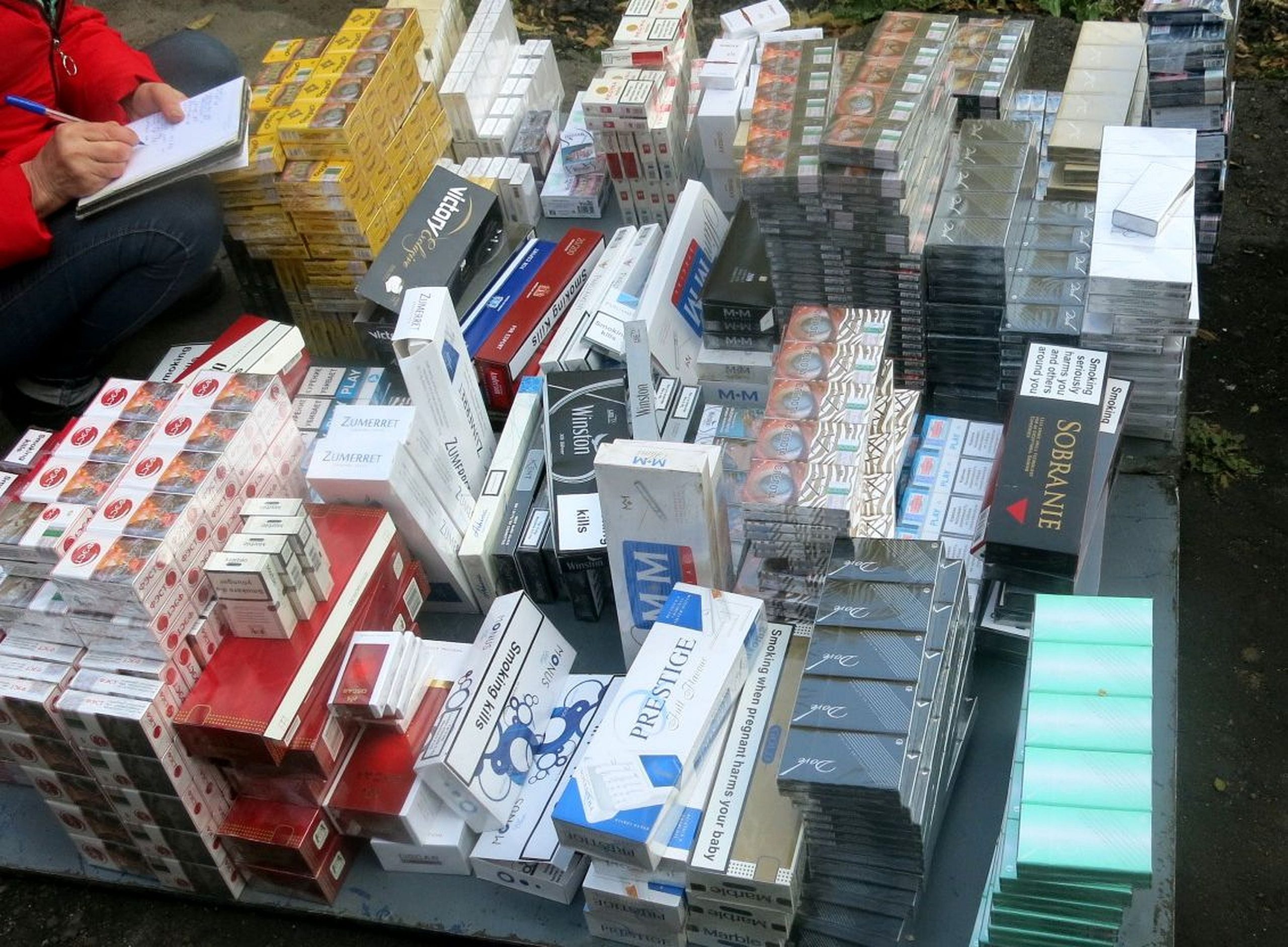
A Philip Morris executive is urging Malaysia to adopt a harm-reduction approach to nicotine policy rather than banning vapes and e-cigarettes, citing Japan as a model. Naeem Shahab Khan, managing director of Philip Morris Malaysia and Singapore, called Japan’s framework a “pragmatic harm-reduction pathway,” noting the country legally allows heated tobacco products and applies product-specific tax rates. He said Japanese data show cigarette sales fell by about 52% from 2011 to 2023 as smokers shifted to alternatives, arguing that adult nicotine users should have “an equal opportunity to know what is less risky.” Khan warned that “unrealistic” bans could fuel illicit markets, adding that illegal cigarettes already account for about 55% of Malaysia’s sales.
-

PMI Positive After FDA’s Zyn Hearing
Philip Morris International (PMI) believes it moved a step closer to securing permission to market its Zyn nicotine pouches as a reduced-risk alternative to cigarettes in the United States, following a full-day public hearing convened by the U.S. Food and Drug Administration (FDA) yesterday (January 22). At the meeting, PMI scientists presented evidence to the FDA’s Tobacco Products Scientific Advisory Committee (TPSAC) in support of a Modified Risk Tobacco Product (MRTP) application that would allow the company to tell adult smokers that switching completely to Zyn lowers the risk of major smoking-related diseases. FDA briefing materials and staff presentations suggested regulators are leaning toward approving the proposed claim, with the agency stating that “the evidence suggests the proposed modified risk claim is scientifically accurate.”
“The FDA’s Center for Tobacco Product’s mission is to make smoking-related disease and death a part of America’s past,” said Keagan Lenihan, Chief External Affairs Officer for PMI U.S. “Smoke-free products, like Zyn, play a critical role in helping CTP achieve this mission and provide adults who smoke with important information to guide their choices and a real opportunity to change.”
The proposed language would allow PMI to say that using Zyn instead of cigarettes reduces the risk of mouth cancer, heart disease, lung cancer, stroke, emphysema, and chronic bronchitis. FDA scientists said the “totality of the evidence” shows Zyn contains substantially lower levels of harmful chemicals than cigarettes, and that consumer research suggests the claim increases awareness of reduced risks without misleading users into believing the product is risk-free. The agency also noted that youth nicotine pouch use remains relatively low, at 2.4% of U.S. high school students in 2024, and that exposure to the proposed claim did not increase young adults’ intentions to use Zyn. PMI executives argued that clearer communication of relative risk could help smokers move away from combustible products, drawing comparisons to Swedish snus, which received an MRTP designation in 2019 and has been linked to Sweden’s low smoking rates.
However, members of the independent TPSAC panel raised concerns about gaps in long-term data and whether reduced-risk marketing would meaningfully accelerate smoking cessation in the U.S. Public health advocates also warned about the potential appeal of flavored pouches, discreet use, and social-media promotion to underage users. While panelists generally agreed that Zyn is far less harmful than cigarettes, they questioned whether the evidence shows that marketing claims will drive widespread switching. The FDA is not bound by the panel’s non-binding recommendations and has not set a deadline for its final decision, which will determine whether PMI can formally promote Zyn as a reduced-risk product to adult smokers.
“While the relatively expedited timeline for this MRTP review is encouraging, the fact that the TPSAC did not vote on a recommendation makes me question the reason for these meetings moving forward,” said Laura Leigh Oyler, VP of Regulatory Affairs for Haypp Group, whose subsidiaries sell nicotine pouches online. “The science, and the many public speakers who supported the authorization were clear: Americans deserve honest messaging around these products and their impacts on harm reduction.”
-

PMI Releases White Paper on Human Cognition in the AI Age
Philip Morris International Inc. released a white paper titled “Human Cognition: The Next Frontier?”, inviting leaders from business, policy, and academia to engage in a global conversation on the role of human cognition as AI transforms work, society, and the economy. The paper argues that skills like critical thinking, creativity, and adaptability will become the “superskills” of the future, essential for organizations navigating an era of human/machine collaboration. As AI increasingly automates routine and cognitive tasks, PMI emphasized that nurturing human cognition is critical for resilience, innovation, and decision-making.
“Technology helps us move faster—but real progress depends on people,” said Moira Gilchrist, PMI’s Chief Global Communications Officer. “Change isn’t just about scientific and technological advances; it’s about vision, ambition, and how people apply innovations.” The paper identifies key cognitive risks posed by AI, including cognitive atrophy from over-reliance on AI for ideation and analysis, attention erosion due to digital distractions, an emerging cognitive divide, and trust challenges from synthetic media and deepfakes. PMI highlights the importance of protecting and strengthening human cognition to ensure society benefits from AI rather than being overwhelmed by it.
PMI said the white paper underscores its commitment to continuous learning, workforce development, and dialogue on the societal implications of AI, as it aims to become predominantly smoke-free by 2030.
-

Korea Health Insurance Loses Appeal Against Tobacco Cos.
South Korea’s National Health Insurance Service (NHIS) lost its appeal seeking compensation from major tobacco companies after the Seoul High Court upheld a lower court ruling in favor of KT&G, Philip Morris Korea, and British American Tobacco Korea today (January 15). The court agreed that NHIS lacked legal standing to claim damages, ruling that insurance payouts made to smokers with cancer merely fulfilled statutory obligations and did not constitute a legally protected interest that could support a compensation claim.
The lawsuit, originally filed in 2014, sought 55.3 billion won ($37.6 million) to recover health insurance costs for smoking-related lung and laryngeal cancer patients, arguing tobacco firms should be held liable for the financial burden imposed on the public health system. Both the lower and appellate courts rejected claims that cigarettes were defectively designed or misleadingly marketed, and found that smoking was not the sole cause of cancer. While acknowledging the growing medical costs linked to smoking—estimated at 3.8 trillion won ($2.6 billion) annually by 2023—the appellate court ordered NHIS to bear appeal costs. NHIS said it plans to take the case to the Supreme Court, framing the issue as one of public health accountability and constitutional social rights.
-

IQOS Curious X Debuts at Zamna
Philip Morris International (PMI) launched its global collaboration between IQOS and the Zamna music festival last week, according to Marvin magazine, with its IQOS Curious X platform debuting at Zamna 2026 in Tulum, Mexico. The engagement platform featured a dedicated IQOS experience zone aimed at adult smokers and adult nicotine users, aligning music and immersive environments with PMI’s smoke-free positioning.
Leonardo de Alencar, director of smoke-free products at Philip Morris Mexico, said festivals such as Zamna provide a space to engage adult audiences and support the transition away from cigarettes, while Zamna executives described the partnership as part of a broader push for creative and cultural innovation. Zamna originated in Tulum, and this year will host additional music festivals in Egypt, Malta, and Türkiye.
PMI said IQOS now has more than 34 million adult users globally, including over 140,000 in Mexico.
-

Digital Connectivity, Collaboration Helping PMI Evolve in Saudi Arabia
Philip Morris International (PMI) says rapid shifts in consumer behavior are reshaping the tobacco and nicotine market in Saudi Arabia, driven by greater digital connectivity, global exposure, and rising expectations around transparency and product experience. In an interview with the Saudi Gazette, Christian Akiki, managing director of Philip Morris Saudi Arabia Trading, said Saudi consumers are increasingly informed, vocal, and open to alternatives, pushing brands to better understand local preferences while maintaining clear and authentic communication. This evolution, he said, has supported growing interest in smoke-free products such as heated tobacco devices, nicotine pouches, and e-cigarettes, which have become more established in the Kingdom over the past decade.
Akiki said PMI’s smoke-free strategy in Saudi Arabia relies heavily on cooperation with regulators, particularly the Saudi Food and Drug Authority, emphasizing that progress depends on science-based dialogue and aligned oversight. He pointed to the earlier launch of nicotine pouches by Badael, a Public Investment Fund company, as evidence of regulatory openness to alternative products. PMI also highlighted the importance of local talent and market-specific strategies, noting that approaches successful in other countries do not automatically translate to Saudi Arabia. According to Akiki, Saudi Arabia’s advanced digital infrastructure and Vision 2030 agenda provide a favorable environment for innovation, positioning the market as a potential benchmark for science-driven tobacco harm reduction initiatives globally.
-

IQOS Opens Flagship Boutique in Philippines
PMFTC, the Philippine affiliate of Philip Morris International, opened a new IQOS Boutique in Glorietta, marking its latest flagship retail space in the country. The boutique, which opened on December 19, is designed as a multi-sensory environment showcasing IQOS smoke-free technology for legal-aged nicotine users.
PMFTC said the Glorietta location reflects its continued focus on smoke-free alternatives and premium retail experiences, featuring interactive elements such as scent and personalization zones, limited-time engraving services, and curated launch activities. Company executives said the boutique aims to provide adult smokers with a dedicated space to learn about and engage with smoke-free options as part of PMI’s broader smoke-free vision in the Philippines.