Tag: pmi

  • Appeals Court Vacates 93A Defense Verdict in Philip Morris Case

    Appeals Court Vacates 93A Defense Verdict in Philip Morris Case

    The Massachusetts Appeals Court ruled that a jury does not need to find liability on underlying tort claims to hold a tobacco company accountable under Chapter 93A, the state’s consumer protection statute. The decision comes in the case of Peter Agnitti, who sued Philip Morris USA over the death of his wife, alleging negligence, fraud, misrepresentation, breach of warranty, and Chapter 93A violations.

    At trial, the Superior Court instructed jurors that a 93A violation could only be found if they also found Philip Morris liable for fraud or misrepresentation. The jury returned a defense verdict on all counts. On appeal, the court found that the instruction improperly conflated 93A liability with fraud, noting that a 93A claim based on deceptive acts does not require proof of reliance or intent to deceive. The panel also clarified that the plaintiff’s pre-charge objections preserved the issue for appeal under Rule 51(b).

    The court emphasized that Chapter 93A is a standalone statutory cause of action, intended to protect consumers independently of other tort claims. Citing evidence that Philip Morris misrepresented the risks of smoking and marketed “light” and “low-tar” cigarettes as safer alternatives despite knowing otherwise, the Appeals Court vacated the 93A judgment and allowed the claim to proceed.

    Legal experts say the ruling reinforces that 93A claims are sui generis and provides guidance on preserving jury instruction objections at trial.

  • PMI Donates Drones to Help Lithuania Fight Smuggling

    PMI Donates Drones to Help Lithuania Fight Smuggling

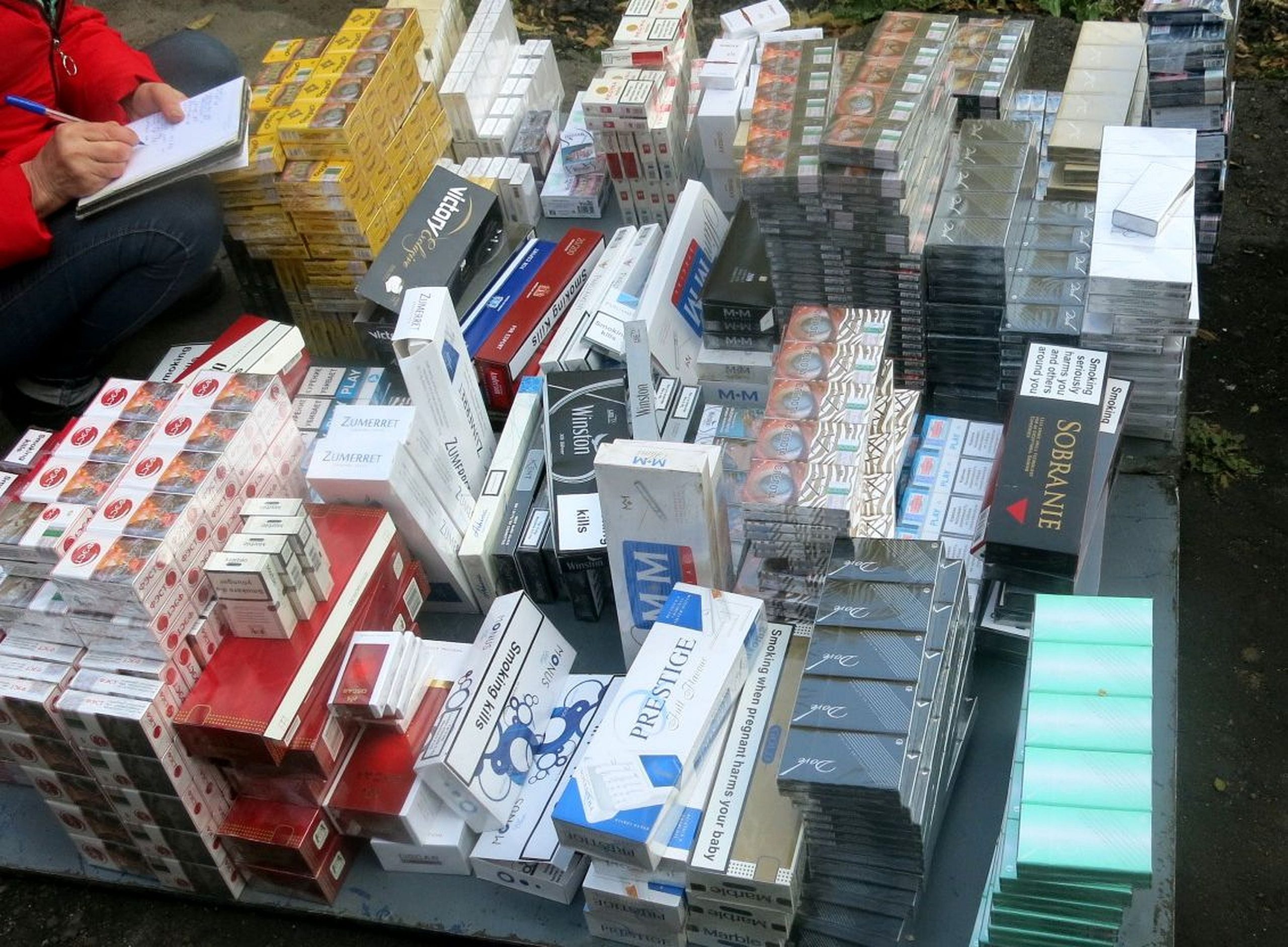
    Philip Morris International donated seven drone systems to Lithuania to support efforts to combat cigarette smuggling, particularly illicit shipments transported by balloons from neighboring Belarus. The drones, equipped with high-resolution cameras and thermal imaging, will be operated by the Lithuanian Riflemen’s Union to monitor landing sites and track individuals collecting contraband, enhancing surveillance capabilities rather than direct interception. The move comes as Lithuanian authorities intensify enforcement against a persistent illicit tobacco trade that also involves road transport, with officials noting the challenge remains ongoing despite seizures and arrests.

  • PMI Director: Ukraine’s Flavor Ban ‘Largely Ineffective’

    PMI Director: Ukraine’s Flavor Ban ‘Largely Ineffective’

    The ban on flavoring and aromatic additives in electronic cigarettes in Ukraine, introduced by the Verkhovna Rada in July 2024, has proven largely ineffective due to a lack of enforcement, according to Mykhailo Polyakov, Deputy General Director for Corporate Relations at Philip Morris Ukraine. Speaking at the “Dialogues with NV” event on European integration, Polyakov said illegal vape shops remain widespread, with nine out of 10 shopping centers in Kyiv hosting such outlets. Despite the law formally prohibiting flavored e-cigarettes, no regulatory or law enforcement bodies are actively ensuring compliance, rendering the ban largely symbolic.

    Polyakov also highlighted broader issues in the tobacco sector, pointing out that while parliament has adopted legislative measures intended to curb the illegal market — such as tax posts, video surveillance, minimum price regulations, and production tracking — these measures are often circumvented. Illegal operations exploit gaps in monitoring, opening workshops outside regulated areas, and mislabeling products to avoid taxes or minimum price rules. He expressed hope that international partners, including the IMF, will help strengthen enforcement and ensure that legitimate companies can operate fairly while illegal operators are held accountable.

  • FDA Releases Raw NYTS Data Without Comment

    FDA Releases Raw NYTS Data Without Comment

    Last week, the U.S. Food and Drug Administration released the raw data from the 2025 National Youth Tobacco Survey (NYTS), an annual, school-based survey that collects data on tobacco use among students in grades 6 through 12 across the country. Unlike previous years, the FDA released the data without comment, leaving industry members to interpret it independently.

    The survey tracks students’ tobacco behaviors, attitudes, and exposure to pro- and anti-tobacco messaging, providing nationally representative data. First conducted in 1999, it has guided youth tobacco policy and was jointly run by the U.S. Food and Drug Administration and Centers for Disease Control and Prevention since 2012, before moving fully under FDA oversight in 2025. 

    “Youth use of tobacco and nicotine has been the FDA’s sole focus in its policy and decision making for so many years, with adult education programs centered on the risk continuum of these products seemingly still far off,” said Laura Leigh Oyler, VP of Regulatory Affairs at Nicokick.com. “It’s been a big question throughout the industry as to why they’ve chosen to release this data with no fanfare, and with no guidance on how to interpret it. The FDA has essentially left the industry and other stakeholders to analyze and determine the use rates on their own.”

    Altria Client Services released a “high-level” summary of the data, finding overall tobacco usage by middle and high school students declined for the third straight year, dropping to 7.5%, the lowest rate since the study became annual in 2011, and down from the all-time high of 23.3% in 2019.

    Cigarette usage remained steady at 1.4%, while all other categories dropped from 2024, with e-cigarettes going from 5.9% to 5.2%, pouches from 1.8% to 1.7%, smokeless tobacco going from 1.2% to 0.6%, and heated tobacco products going from 0.8% to 0.7%.

    “With the continued low youth use rates, we think this is something worth celebrating,” Oyler said. “The data shows that targeted public‑health interventions, combined with thoughtful regulation like raising the legal age for nicotine purchases, can make a meaningful difference.”

    “The law is clear: tobacco and nicotine products are strictly for adults 21 and older,” said Matthew T. Sheaff, director of U.S. regulatory communications for Philip Morris International. “At PMI U.S., we are committed to guarding against underage access to our products, while continuing to provide adults 21 and older with better alternatives to smoking and traditional tobacco.

    “For example, we direct our marketing to adult nicotine consumers and do not pay social media influencers to endorse our products in the U.S. This is a shared responsibility—regulators, policymakers, retailers, and manufacturers all have an important role to play.”

    With the news generally positive in terms of youth usage, Oyler suggested emphasis be given to adults 55 and older, whose smoking rates have remained mostly steady, dropping from 18.7% in 2016 to 16.7% in 2023.

    “If anything, this data raises questions less about youth access and more about what we can do to educate adults on the differences between nicotine and tobacco products, and how they can reduce their risk,” Oyler said. “This is the population most at risk of smoking-related disease. This is the population with the most to gain from moving away from cigarettes. And this is the population that has been historically underserved by cessation efforts and innovation.

    “To drive the next major improvement in public health, we must accelerate support for adults who smoke and ensure that they have access to better alternatives, and ultimately, better outcomes.”

  • PMI Declares $1.47 Quarterly Dividend

    PMI Declares $1.47 Quarterly Dividend

    The Board of Directors of Philip Morris International Inc. today (March 5) declared a regular quarterly dividend of $1.47 per common share, payable on April 13, to shareholders of record as of March 19. The ex-dividend date is March 19. For more details, visit www.pmi.com/dividend.

  • Health Groups Call for F1 to Cut Ties with Pouch Sponsors

    Health Groups Call for F1 to Cut Ties with Pouch Sponsors

    Campaign for Tobacco Free Kids said that 160 public health and advocacy groups from 57 countries have urged Formula One to extend its ban on tobacco sponsorships to include nicotine pouches, warning that current team partnerships with Philip Morris International and British American Tobacco, promoting Zyn and Velo through Ferrari and McLaren, make branding visible to millions of young fans. In a letter to F1 CEO Stefano Domenicali, the groups said the sponsorships undermine the sport’s youth-focused expansion efforts and expose minors to addictive nicotine products, citing data that a significant share of F1’s social media audience is under 25. Separate letters were also sent to The Walt Disney Company, The Lego Group, and Mattel, calling on them to support a comprehensive prohibition on all tobacco-related sponsorships in the sport.

  • PMJ Launches First IQOS Capsule

    PMJ Launches First IQOS Capsule

    Philip Morris Japan launched its first capsule-equipped cigarette stick, the “Sentia Purple Capsule,” for the IQOS ILUMA heated tobacco series on March 2. Initially available at IQOS stores nationwide, the rollout at convenience stores and other tobacco retailers begins April 6, with the Nagoya IQOS store relocating on March 7.

    The capsule product features blueberry-flavored capsules with invigorating menthol, allowing users to release a burst of menthol and blueberry aroma by crushing the capsule. The product’s purple color reflects the blueberry inspiration. This addition brings the SENTIA lineup to 18 brands, including regular, menthol, flavored, and capsule variants.

    The price is 530 yen ($3.34) per 20-stick pack, rising to 570 yen ($3.59) from April 1. Daniel Sevsick, Philip Morris Japan’s portfolio marketing director, highlighted that this is SENTIA’s first menthol capsule product.

  • Zimbabwe Hopes PMI Return Stabilizes Tobacco Market

    Zimbabwe Hopes PMI Return Stabilizes Tobacco Market

    Philip Morris International is set to re-establish its presence in Zimbabwe nearly two decades after exiting the market, with a high-level delegation led by Chief Corporate Affairs Officer Christos Harpantidis scheduled to visit Harare this week following talks between Foreign Affairs Minister Amon Murwira and PMI executives at the World Economic Forum in Davos. Discussions are expected to focus on value addition, local manufacturing, sustainability and ESG standards, aligning with the Government’s Tobacco Value Chain Transformation Plan to grow the sector into a $5 billion industry as planted hectarage for 2025/26 rises 42%.

    Industry observers say PMI’s return could help offset reduced purchases from China Tobacco International Group, which plans to cut Zimbabwe orders by up to 15%, potentially stabilizing demand for the country’s 120,000 smallholder farmers. While some analysts caution about global anti-smoking trends, others view the move as renewed investor confidence and a boost to diversification, especially as PMI signals interest in integrating Zimbabwe more deeply into its global supply chain.

  • PMI Talks Smoke-Free Progress at CAGNY

    PMI Talks Smoke-Free Progress at CAGNY

    Today (Feb. 18), Philip Morris International outlined its long-term strategy at the Consumer Analyst Group of New York Conference, emphasizing its accelerated shift toward smoke-free products. CEO Jacek Olczak and CFO Emmanuel Babeau said more than 40% of current net revenues now come from smoke-free alternatives and reiterated its goal of reaching two-thirds of total revenue from these products by 2030. For 2026–2028, PMI projects 6%–8% organic revenue growth, 8%–10% operating income growth and 9%–11% adjusted EPS growth, driven by high single-digit to low-teen smoke-free volume increases, strong pricing power and margin expansion. Smoke-free products generated $17 billion in revenue and 180 billion units in volume, delivering more than double the revenue and gross profit per unit compared with combustibles, while operating cash flow is expected to reach about $45 billion over the period.

    “Somebody very recently interested in this category of smoke-free products, told me, ‘Jacek, your problem is not that there is too little science about this product. Your problem is that there is too much politics about these products,’” Olczak said. “Because the science is very indisputable what these products offer versus a cigarette. It just takes a while until it really starts penetrating and open the last, if I may say, closed minds in the world.”

    Operationally, PMI has smoke-free products available in 106 markets, exceeding the company’s 2025 target, with three of four regions deriving over half of their revenue from smoke-free categories. PMI highlighted early success in Taiwan, where IQOS captured a 6% share in Taipei within three months of launch, and said growth in smoke-free volumes is expected to offset combustible declines. The company is also engaging regulators to expand market access and address illicit trade in the e-vapor segment, while targeting a net debt-to-EBITDA ratio near 2x by end-2026 and increasing dividend growth toward a 75% payout ratio of net profit.

  • PMI launches IQOS Iluma i One in the UK

    PMI launches IQOS Iluma i One in the UK

    Philip Morris Limited (UK) launched the Iluma I One, the latest addition to its IQOS Iluma heat-not-burn device range, which now includes the Iluma I, Iluma Prime, and Iluma I One. The I One uses the bladeless Smartcore Induction System to deliver tobacco flavor with 95% fewer harmful chemicals than cigarettes and features a touchscreen, autostart, and Flex Puff technology for a personalized experience. The device works with TEREA tobacco sticks, including the new Pearls range, supporting PML’s strategy to provide adult smokers with satisfying, smoke-free alternatives and advance its “smoke-free future” mission in the UK.