North Carolina State House of Representatives Chamber (Credit: J Zehnder)
A new bill in North Carolina, if passed, would require the state to certify vaping and other next-generation tobacco products for sale.
The Senate Judiciary Committee approved the proposal Wednesday. It was slipped into HB 900, which deals with Wake County leadership academies and their ability to maintain state designations. The House passed it without objection.
To become law, the bill would need to pass the Senate and then the House before the end of the session. Senate leaders have said they plan to complete their work by the end of the month, local media reports.
The chambers, both controlled by Republicans, have been unable to come to an agreement on budget modifications for the fiscal year that begins July 1.
A North Carolina lawmaker wrongly told other lawmakers during debate that the U.S. Food and Drug Administration regulates the products, but the regulatory agency does not have the ability to check which products are being sold.
The bill would fine retailers who sell products that aren’t on the registry for initial violations. The legislation could also suspend or revoke the establishment’s license.
Vaping industry representatives warned lawmakers that the bill will cost people jobs and money.
PMTA registry laws are already being enforced in Alabama, Louisiana and Oklahoma. Wisconsin passed a registry law in December and will become effective July 1, 2025.
Utah also passed a registry bill that included a flavor ban that will become active on Jan. 1, 2025, and Florida has a unique registry that also begins Jan. 1, 2025.
The new Vape Law in the Philippines will take effect on June 1. The new rules also apply to all next-generation tobacco products, including heat-not-burn and e-cigarettes. The Department of Trade and Industry (DTI) will require all vape products to be registered with the agency on that date, an official said on Tuesday.
At a forum organized by the Bantay Konsumer, Kalsada, Kuryente (BK3) in Makati, DTI Undersecretary Amanda Nograles said the “importation and manufacturing of vaporized nicotine and non-nicotine products and novel tobacco products must now undergo the DTI certification process.”
This means that products must have the Philippine Standard (PS) mark and Import Commodity Clearance (ICC) sticker first before they can be sold on the market.
Nograles said at least 3 companies have already applied for registration, and they urge others to begin the process since the registration may take some time. She clarified that there will be a 6-month transition period to allow all firms to comply.
“We will allow them to sell all the existing inventory. On January 5, 2025, we will do market clearing. There should be no vape products without a PS license and ICC [sticker],” Nograles said, adding that the agency will continue to monitor shops to ensure that no minors will be allowed to buy vape products. They will also check if the vape has marijuana oil.
Njoy, a subsidiary of Altria, submitted a supplemental premarket tobacco product application (PMTA) to the U.S. Food and Drug Administration for the commercialization and marketing of its ACE 2.0 device.
The new device includes access restriction technology designed to prevent underage use. This is achieved through Bluetooth connectivity, which authenticates the user before unlocking the device. The company has also re-submitted PMTAs for blueberry- and watermelon-flavored pod products, which are exclusively compatible with the Njoy ACE 2.0 device.
“Altria’s Vision is to responsibly lead the transition of adult smokers to a smoke-free future. We’re excited to build on our existing FDA-authorized products,” said Njoy President and CEO Shannon Leistra in a statement. “Njoy ACE 2.0 includes critical technology features to prevent underage access to flavored Njoy products while also responsibly providing flavored options for adult smokers and vapers.”
The Njoy ACE is the only pod-based vaping product currently with marketing authorization from the FDA. In the first quarter of 2024, Njoy announced it had broadened distribution to over 80,000 stores and expects to expand to approximately 100,000 stores by year-end.
Njoy also continued the roll-out of the brand’s first retail trade program, which is designed to help achieve optimal retail visibility and product fixture space.
“Given the widespread illicit flavored e-vapor marketplace, this product offers the FDA a sound solution for balancing the known risk to youth with an opportunity to offer adults legal, regulated choices,” said Paige Magness, senior vice president of regulatory affairs of Altria Client Services. “We hope the FDA prioritizes the review and authorization of this application given its interest in device access restriction technologies to reduce youth access.”
The Njoy had previously received marketing denial orders for its blueberry (2.4% and 5% nicotine strengths) and watermelon (2.4% and 5% nicotine strengths) pods.
Njoy believes its latest applications sufficiently address the FDA’s concerns regarding underage use by incorporating device age and identity-based access restriction and demonstrating that these restrictions are effective at preventing underage access in virtually all cases. Currently, the FDA has not authorized the marketing of any non-tobacco-flavored vaping product.
The U.S. Drug Enforcement Administration plans to reclassify marijuana as a less dangerous drug, which could have far-reaching implications for American drug policy.
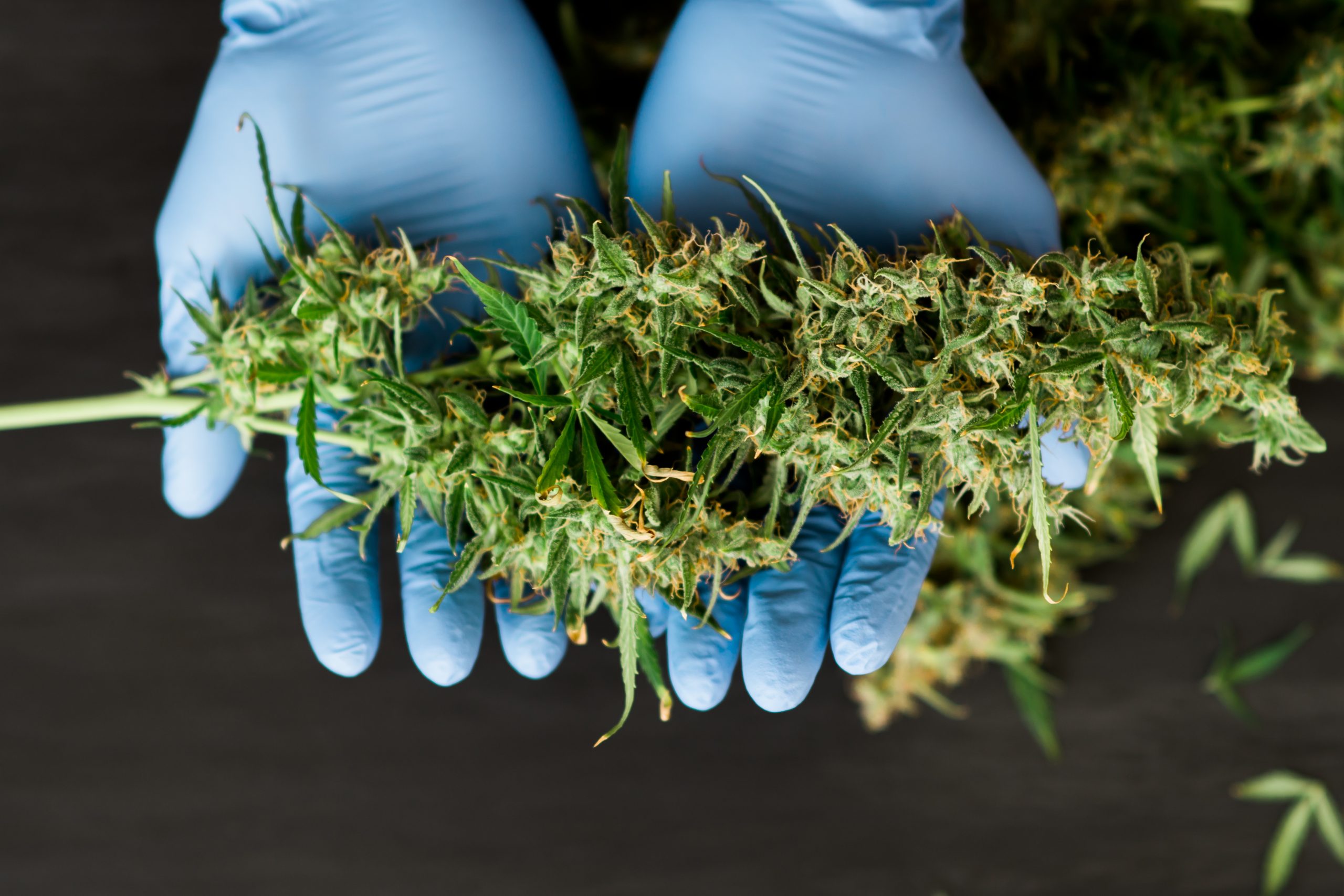
The proposed measure, which is yet to be reviewed by the White House Office of Management and Budget, aims to acknowledge the medical benefits of using cannabis and recognize the fact that it is less prone to abuse in comparison to some of the most dangerous drugs in the country and reclassify cannabis as a Schedule III drug.
However, it does not seek to legalize marijuana for recreational purposes.
Five people familiar with the matter who spoke on the condition of anonymity to discuss the sensitive regulatory review confirmed the agency’s move to the AP on Tuesday. The move clears the last significant regulatory hurdle before the agency’s biggest policy change in more than 50 years can take effect.
According to the DEA, the following are examples of Schedule I drugs:
Heroin
Lysergic acid diethylamide (LSD)
Cannabis
Methamphetamine
Methaqualone (Quaalude)
Peyote
According to the National Institute for Health, California became the first State to make it illegal to possess cannabis. In the 1930s, the then U.S. Federal Bureau of Narcotics warned of the increasing abuse of cannabis, and by 1937, 23 States had criminalized possession.
By 1970, the Controlled Substances Act passed, and the Federal government categorized marijuana as a Schedule I substance.
The planned DEA rule change followed an August 2023 recommendation from the Department of Health and Human Services (HHS) that DEA reschedule marijuana from Schedule I to Schedule III. Any change to the status of marijuana via the DEA rulemaking process would not take effect immediately.
The U.S. Food and Drug Administration announced on May 1 that it had sent warning letters to 14 online retailers. The reason for the warning letters was that these retailers were selling unauthorized e-cigarette products.
The warning letters specifically mentioned the sale of disposable e-cigarette products marketed under various brand names such as Elf Bar/EB Design, Esco Bars, Funky Republic, Hyde, Kang, Cali Bars, and Lost Mary, according to press release.
The retailers receiving these warning letters sold or distributed e-cigarette products in the United States that lack authorization from FDA, in violation of the Federal Food, Drug, and Cosmetic Act.
Warning letter recipients are given 15 working days to respond with the steps they will take to address the violation(s) cited in the warning letter and to prevent future violations. Failure to promptly address the violations can result in additional FDA actions such as an injunction, seizure, and/or civil money penalties.
The agency announced on April 30 that the U.S. Marshals Service seized more than 45,000 unauthorized e-cigarette products valued at more than $700,000 in California.
The seized products were mostly flavored, disposable e-cigarette products, including brands such as Puff Bar/Puff, Elf Bar/EB Design, Esco Bar, Kuz, Smok and Pixi.
Florida’s governor, Ron DeSantis, has signed legislation intended to crack down on the sale of unauthorized vapes that the state deems attractive to children.
The new law (HB 1007), however, only targets disposable vaping products not authorized by the U.S. Food and Drug Administration. The rules will be enforced beginning Oct. 1.
Unlike other state registry lists, Florida is the first state in the nation to include a carve-out for refillable pod systems and open-system vaping products, as well as bottled e-liquids.
Florida Smoke Free Association president and vape shop owner Nick Orlando was the driving force behind getting the open system exemption.
In its original form, the bill would have prohibited sales of any vape products that had not yet received FDA approval, according to media reports.
The law now directs the state’s Department of Legal Affairs to develop and maintain a directory listing all single-use nicotine vapes it deems attractive to minors. The department must make the list publicly available on Jan. 1, 2025, and regularly update it.
Once a product is added to the list, retailers and wholesalers in Florida have 60 days to sell or remove it from their inventory. Any products left in circulation will be subject to seizure and destruction.
Beginning March 1, 2025, manufacturers that sell prohibited products in the state will face a $1,000 daily fine for each such product until it’s removed from the market. This stricture will also apply to retailers, wholesalers and distributors that ship products into Florida.
Any person who sells a nicotine product, including vapes, to someone under 21 for a third or subsequent time will face a third-degree felony charge, punishable by up to $5,000 in fines and five years in prison.
The U.S. Food and Drug Administration today announced the issuance of complaints for civil money penalties (CMPs) against 20 brick-and-mortar retailers and two online retailers for selling unauthorized e-cigarettes, including Elf Bar, a popular youth-appealing brand.
The regulatory agency previously issued warning letters to these retailers for selling unauthorized tobacco products. However, according to an FDA release, follow-up inspections revealed that the retailers had failed to correct the violations.
Accordingly, the agency is now seeking a CMP of approximately $20,000 from each retailer.
The approximately $20,000 CMP sought from each retailer is consistent with similar CMPs sought against retailers for the sale of unauthorized Elf Bar products over the last few months, including in Sept., Nov., Dec. and Feb.
The retailers can pay the penalty, enter into a settlement agreement, request an extension to respond, or request a hearing. Retailers that do not take action within 30 days after receiving a complaint risk a default order imposing the full penalty amount.
The board of directors for the Brazilian Health Surveillance Agency (Anvisa) voted unanimously on April 19 to maintain a ban on the sale of e-cigarettes and other vaping products, reports Brazil Reports.
Manufacturing, selling, importing and advertising vapes has been banned in the country since 2009, but e-cigarettes remain widely available in small shops and online stores across Brazil.
According the Brazilian Institute of Geography and Statistics, 16.8 percent of students aged 13 to 17 said they had tried vaping at least once in their lives. An estimate 4 million Brazilians vape, according to Covitel, which carries out health-related surveys.
Anvisa’s vote follows a public consultation on the measure. Anvisa justified its position based on the rise in underage vaping in countries that permit e-cigarettes, the addictive properties of nicotine and the lack of long-term studies on the effects of vaping on health, along with the potential impact of allowing vaping on Brazil’s overall tobacco control policies, which have been praised internationally.
In July 2019, Brazil became the second country to fully implement all measures set out by the World Health Organization with the aim of reducing tobacco consumption and protecting people from chronic non-communicable diseases.
The Brazilian Tobacco Industry Association, ABIFUMO, said that banning vapes is “ignoring the learnings of more than 80 countries that have already authorized their sale with clear rules for control, restriction of points of sale and taxation of manufacturers.”
Philip Morris Brasil said that “maintaining the ban on vapes is out of step with the uncontrolled growth of the illicit market, proven to be accessible to around 4 million Brazilians who use a product daily without any control of quality.”
Meanwhile, the Senate is debating a bill that would authorize the production, import, export and consumption of e-cigarettes in Brazil. The proposal is still in its early stages and does not have a date for voting.
The CTP’s inability to apply its enforcement priorities often leaves state regulators and businesses baffled.
By Rich Hill
The recent onslaught of vapor registry bills in the United States is creating a lot of anxiety. Proposed registries have brought tension to public hearings and drama on social media. Unfortunately, like most current domestic issues, neither side appears to appreciate the perspective of the other. While only a handful of states have enacted product registries, many legislatures have considered and/or are considering such legislation. Understanding what these registries do, why they are promoted and their consequences is essential for all sides of this debate.
Rationale for Developing Vapor Product Registries
At present, the U.S. Food and Drug Administration’s Center for Tobacco Products (CTP) has granted marketing authorization for only a handful of tobacco-flavored vapor products and insists that all other vapor products are illegal. That said, the CTP has communicated its enforcement priorities related to deemed products numerous times. More specifically, the CTP has indicated its intention to prioritize enforcement efforts concerning certain deemed tobacco products (1) not covered by timely filed premarket tobacco product applications (PMTAs), (2) that have been the subject of marketing denial orders or those covered by PMTAs subject to negative determinations, including those rejected on procedural grounds (i.e., refuse-to-accept or refuse-to-file letters), and (3) that raise youth-use concerns.
Unfortunately, the CTP’s inability to apply these enforcement priorities consistently to the ever-changing and large number of unscrupulous manufacturers often leaves state regulators and businesses baffled about which products are at increased risk of enforcement action.
In short, this circumstance, with thousands of products remaining the subject of pending PMTAs that fall outside of the scope of the CTP’s enforcement priorities being sold alongside thousands of noncompliant flavored disposable vapor products, many of which fall within the scope of the FDA’s enforcement priorities, creates confusion in the marketplace and for state product regulators. Given the shortfalls in enforcement against vapor products that are not the subject of still-pending PMTAs, state tobacco regulators need a mechanism by which to determine which products should and should not be sold in their states—hence the value of vapor product registries.
Rich Hill
How Do Vapor Product Registry Bills Work?
Vapor product registry bills establish registries requiring companies to submit evidence demonstrating that products that have FDA marketing granted orders are the subject of pending PMTAs filed by specified dates related to PMTA deadlines or are the subject of administrative or judicial reviews. For example, registration in Louisiana requires manufacturers to attest to the marketing granted or still-pending PMTA status of each product and pay a registration fee. Then these products will be placed on a public-facing registry.
Positive Aspects of Product Registry Bills
Regardless of one’s position on registry bills, the legislation at least has the potential to create positive change. By way of example, registry bills can:
Provide objective criteria. Vapor product registries can theoretically provide objective criteria upon which wholesalers and retailers can rely in making purchasing decisions. While there will be fewer products available, these products may be purchased without the threat of state regulatory enforcement.
Supplement CTP enforcement resources. The CTP has limited enforcement resources. While flavored disposable vapor products have been a high enforcement priority for the center, these products still proliferate the retail space. Vapor registries could aid in making up for the CTP’s enforcement limitations.
Target youth-friendly products. The 2023 National Youth Tobacco Survey reported that certain flavored disposable vapor products make up the majority of products used by youth. Registries may help in clearing the market of these products that lack pending PMTAs and are the most popular among youth.
Generate Revenue. Of course, registries also provide another revenue stream for state governments. With registration fees for each product, the amounts are not insignificant.
Consequences of Vapor Product Registries
All legislation and policy decisions invariably come with costs. Vapor product registries are no different. Some examples include:
Inhibit harm reduction efforts. Vapor products are harm reduction tools that benefit adult cigarette smokers seeking to quit or reduce their combustible cigarette use. Prohibiting access to such products prohibits access to the tools necessary to reduce combustible cigarette-related mortality and morbidity.
May not slow bad actors. Bad actors will continue to be bad actors. If a company violates the rules now, there is little reason to believe that a vapor product registry will prevent such actions.
Burden state resources. States are continuing to be required to do more without increased resources. In many instances, state tobacco regulatory enforcement agencies may simply lack the resources to effectively enforce registry requirements.
Innovation outpaces regulation. As the industry has observed before, evolution in the space moves more quickly than the regulatory arms can keep up. Innovative products falling outside of the scope of existing regulatory structures undoubtedly will winnow the effectiveness of product registries in the future. Indeed, most recently, innovations such as nicotine analog products are not covered by most registry bills.
Prohibitive scope can be too broad. In several instances, products not within the scope of the problem are swept into the “solution.” In a number of cases, modern oral nicotine products—products that sit at the lowest levels of the continuum of risk—are included in these product registry bills, which continues to undercut harm reduction efforts.
Final Thoughts
The problems that created the need for product registry legislation will continue. Until federal regulators embrace a harm reduction agenda and provide adult smokers, who will not or cannot quit, the products that have been demonstrated to assist their transition away from combustible cigarettes, the marketplace, whether legitimate or not, will respond by making them available. Vapor product registries, in and of themselves, will not solve the problems in isolation. The policies driving the need for such registries, ineffectual prohibitionist policies, need attention as well. Until the collective vapor product space, including manufacturers, retailers and consumers, aggressively advocates for policy change, new laws and regulations further limiting the ability to serve adult consumers are likely to evolve.
Richard Hill is senior director of E-Alternative Solutions.
Several vape businesses, as well as the Kentucky Hemp Association and Kentucky Vaping Retailers Association, are suing the state government over House Bill 11, which will restrict vape sales starting in 2025.
Among other policy changes, HB 11 will bar businesses from selling vapes that are either not authorized by the U.S. Food and Drug Administration or are not currently under review by the regulatory agency.
During public debates, various arguments for and against HB 11 were made before the Legislature passed the law in late March.
But the vape shops’ lawsuit, filed last week in Franklin Circuit Court, challenges the legislation on constitutional grounds, according to media reports.
The lawsuit zeroes in on HB 11’s reliance on defining a “vapor product” in a way that includes devices that feature “vaporized nicotine or other substances.”
The shops’ petition says this definition encompasses not only nicotine vapes but also hemp-derived vaping products they currently sell. And it says the definition is broad enough to apply to medical cannabis vaping products that will become legal in Kentucky next year.
The lawsuit argues this makes the new law unconstitutional for two reasons.
First, it claims HB 11 violates a provision in the Kentucky Constitution that says the Legislature can’t pass a law that relates to more than one subject, and that subject must be specified in its title.
The plaintiffs say HB 11 is titled an “act relating to nicotine products” but actually affects non-nicotine products as well. They argue this effectively violates the constitutional rule.
Second, the lawsuit says hemp-derived vapes generally aren’t regulated by the FDA, which makes it impossible for businesses to comply with HB 11’s requirement that they only sell vapes that have received or are seeking FDA approval.
The suit argues this violates a due process clause in the U.S. Constitution and makes HB 11 an “arbitrary” law, which is prohibited by the Kentucky Constitution.