Tag: regulation

  • U.K. to Introduce Generational Ban

    U.K. to Introduce Generational Ban

    The UK government is set to introduce a bill in parliament aimed at phasing out smoking among young people by prohibiting nicotine sales for future generations.

    The Tobacco and Vapes Bill, if passed unamended, will be one of the world’s toughest anti-tobacco laws and prevent children turning 15 this year or younger from ever being able to be legally sold nicotine products.

    The government said smoking itself would not be criminalized. Therefore, anyone who can legally buy tobacco now will not be prevented from doing so in the future, according to Reuters.

    “If we want to build a better future for our children, we need to tackle the single biggest entirely preventable cause of ill-health, disability, and death: smoking,” Conservative Prime Minister Rishi Sunak said in a statement.

    Critics say the move is “unconservative,” and former prime minister Liz Truss is one of several members of the governing party who have said they will vote against the legislation.

    Despite the opposition, the legislation is expected to pass with the opposition Labour Party suggesting it would support the measure.

    Last month, a similar law introduced by New Zealand banning tobacco sales to those born after Jan. 1, 2009 was repealed by the country’s new coalition government.

  • Flava Pulled From Philippine Shelves

    Flava Pulled From Philippine Shelves

    Flava brand vaping products have been pulled from store shelves in the Philippines amid allegations of illegal marketing to minors and tax evasion, the Department of Trade and Industry has said.

    The DTI’s Fair Trade Enforcement Bureau (FTEB) on March 15 ordered Flava Corporation, Lilac’s Vape Shop, and social media influencer Lilac Sison Tayaban, CEO of Flava, to refrain from manufacturing, importing, selling, packaging and distributing imported Flava vapes, according to media reports.

    Once the Sampaloc, Manila-based business receives the preliminary order issued by DTI-FTEB, all of Flava’s commercial activities must immediately stop.

    Flava was the respondent to formal charges alleging violations of Republic Act No. 11900, or the Vaporized Nicotine and Non-Nicotine Products Regulation Act, filed before the DTI-FTEB on March 14.

    In turn, the DTI-FTEB gave the preliminary order to confiscate Flava products that violate RA 11900, to prevent the disposition or tampering of evidence and the continuation of the acts being complained of.

    The DTI is the lead implementing and enforcement agency of RA 11900, the landmark law aimed at protecting minors from vaping. The House Ways and Means Committee earlier estimated as much as P728 million ($1.3 million) in foregone tax revenues from the alleged technical smuggling of P1.4 billion worth of illicit Flava devices last year.

    After laboratory testing, The House panel discovered that Flava had not declared the vapes it imported from China. Flava allegedly mislabeled its ingredient as freebase nicotine, which has a lower excise tax than nicotine salt — the nicotine used in Flava products.

    Also, the House committee discovered Flava’s aggressive marketing of its flavored vapes to minors, most especially on social media—a violation of RA 11900. Last week, Bureau of Internal Revenue commissioner Romeo Lumagui Jr. disclosed that the taxman seized 1,029 master boxes of Flava vapes from a warehouse in San Pablo City, Laguna, with tax deficiencies totaling P75.7 million.

    The BIR raid conducted together with the Laguna provincial field unit of the Philippine National Police’s Criminal Investigation and Detection Group (PNP-CIDG) also led to the arrest of two individuals manning the warehouse.

    As such, the BIR will file criminal tax evasion charges against Flava.

    “This successful raid of a vape warehouse containing 102,900 bottles of Flava vape products will be one of many. The BIR supports the whole of the government’s approach to eradicating illicit vape products. We have warned you as early as 2022. Our raids are successful. We won the criminal cases. You already have pending warrants of arrest. Register and pay your proper taxes, or suffer the consequences,” Lumagui said.

    Meanwhile, Consumer Protection Group spokesperson, Trade Assistant Secretary Amanda Nograles said they will check the report of the Philippine Drug Enforcement Agency that marijuana-laced electronic cigarettes or vapes are now proliferating in the market.

    “That report alarms us, especially when these will be sold to minors. Since the information was just new, then we will get additional information. But the DTI will continue to confiscate vape products with flavor descriptors and have cartoon characters that are appealing to minors, and products that use influencers,” Nograles said in a radio interview.

    She said if the DTI encountered or confiscated vapes with marijuana oil, then they would refer it to the PDEA.

    On Thursday PDEA operatives seized cannabis oil and ‘kush’, and assorted vaping devices, with an estimated total value of P842,000 in simultaneous raids in Taguig City.

  • Lawmakers Send Flavor Ban to Vermont Senate

    Lawmakers Send Flavor Ban to Vermont Senate

    Vermont lawmakers Friday approved a ban on flavored vaping and other flavored tobacco products.

    S.18 would end retail sales of all flavored e-cigarettes, e-liquids, and oral nicotine pouches. The bill would also end the sale of all menthol-flavored tobacco products, including cigarettes, cigars, pipe tobacco, and smokeless tobacco, by January 1st, 2026.

    The legislation, which has been debated for at least six years, faced a fierce lobbying campaign from retailers who said it would put many out of business. Some lawmakers have also balked at the loss of millions in tax revenue, according to media reports.

    But supporters say the adverse health impacts on young people who get hooked on the products are just too great. Lawmakers spoke on the House floor Thursday about the extensive testimony from medical professionals, educators, parents, and members of the BIPOC community in support of the bill.

    The bill will now return to the Senate, which passed a different version of the bill last year. The governor has not yet indicated if he will sign it.

  • Colorado Flavor Ban Bill Dies

    Colorado Flavor Ban Bill Dies

    Tobacco Reporter Archives

    It happened again. For the second time in the last three sessions, a bill to regulate flavored nicotine products has died in Colorado’s General Assembly.

    The proposal would have allowed a board of county commissioners to ban flavored tobacco and nicotine products. The House Business Affairs & Labor Committee defeated it on a 6-5 vote, according to Colorado Public Radio.

    Several lawmakers on the committee voting against the bill cited concerns about its impacts on local businesses, echoing testimony from several vape shop owners who said it would have hurt sales if a county banned flavored vaping and other tobacco products.

    “We have a long history of choosing to listen to the tobacco lobby,” said bill sponsor Rep. Elizabeth Velasco, as she appealed to her colleagues before the vote. “I hope that today we can really think about the children and make sure that we do the right thing to make sure that our children don’t have access to these products that have been targeted for them.”

    The measure had already passed a Senate committee and the full Senate. As has been seen in prior years, the bill drew intense lobbying, with 141 lobbyists from both sides signing up to voice support, opposition, or neutrality, according to the state’s lobbyist disclosure website.

    Tobacco companies like PMI, RJ Reynolds America, and Altria, represented by the lobbying company Brownstein Hyatt Farber Schreck, and industry groups, including the Vapor Technology Association, hired lobbyists in opposition to the legislation.

    All the traditional anti-nicotine groups such as Bloomberg, Tobacco-Free Kids Action Fund and Kaiser Permanente also hired lobbyists in support.

    In 2022, a bill to ban flavored tobacco statewide failed after Gov. Jared Polis said the issue should be handled at the local level.

  • Ispire Technology Adds Partners

    Ispire Technology Adds Partners

    Image: kamiphotos

    Ispire Technology Inc. has partnered with Touchpoint World Wide Inc. dba Berify, a platform specializing in linking physical products to the digital world, digital engagement and brand protection, and Chemular International Inc., a multidisciplinary regulatory consulting firm, to form a joint venture.

    The joint venture will look to expedite innovation in the e-cigarette technology space, including the development of secure, user-friendly solutions for age verification and age-gating nicotine vapor devices.

    Leveraging Berify’s multi-patented technology, Chemular’s regulatory consulting and premarket tobacco product application (PMTA) knowhow and Ispire’s hardware expertise, the joint venture will introduce an industry-standard age verification solution for vapor devices as well as the submission of PMTAs that incorporate technologies across the U.S. e-cigarette market, such as: next-generation e-cigarette hardware with a user-friendly point-of-use age verification and geo fencing capability that eliminates use of hardware in certain designated areas such as schools and sensitive areas; e-cigarettes with end-to-end a range of dynamic features such as authentication, direct-to-consumer engagements and exclusive offerings built on the foundations of blockchain technology; and a real-time biometric identity platform for user access controls, creating added security and reliability that deters counterfeiting.

    “By combining our collective expertise in hardware, blockchain and regulatory consulting, we aim to set a new standard for age verification, security and overall quality in the e-cigarette space,” said Ispire Technology Co-CEO Michael Wang in a statement. “Our hope is that this JV [joint venture] will be a large step forward in innovative device control, safety, counterfeit prevention and enhanced user experiences that increase overall market and consumer satisfaction.”

    “The U.S. market is ripe for technological disruption that addresses age verification, safety and counterfeit issues,” said Berify founder and CEO Dan Kang. “Our mission is also to create smart products that generate a new level of consumer satisfaction. We plan to achieve this by leveraging our blockchain authentication, tokenized rewards and creating true decentralization while keeping companies in control of their products and data.”

    Kevin Burd, CEO of Chemular, added, “Our commitment is not only to create next-gen vapor devices but also to elevate market education. This venture includes additional partnerships that will bring together biometric identity and access control, ensure the solution is embedded into vapor devices during manufacturing and provide safety, security and privacy for consumers. It is also a testament to our dedication to positively shaping the future of vape hardware innovation.”

  • FDA Denies Marketing of Flavored Blu Products

    FDA Denies Marketing of Flavored Blu Products

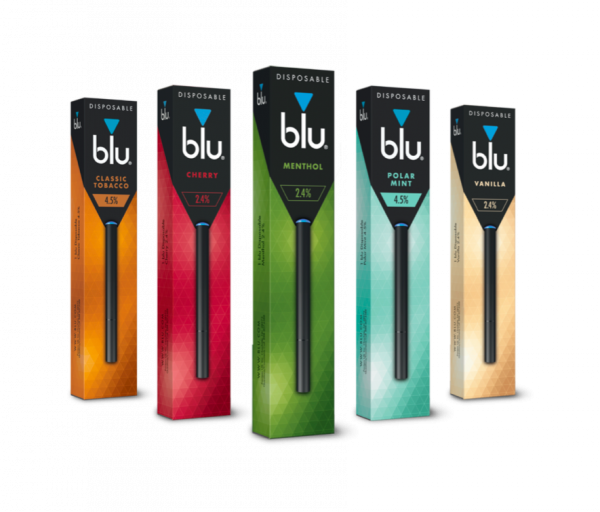
    The U.S. Food and Drug Administration issued marketing denial orders (MDOs) to Fontem U.S. for four Blu disposable products and one MyBlu e-cigarette product.

    The denied products include a closed menthol e-liquid and several flavored disposable e-cigarettes. As a result, the company may not legally market or distribute these products in the United States. However, the company may submit new applications for the products that are subject to these MDOs.

    The products that received MDOs are Blu Disposable Menthol 2.4 percent; Blu Disposable Vanilla 2.4 percent; Blu Disposable Polar Mint 2.4 percent; Blu Disposable Cherry 2.4 percent; and MyBlu Menthol 1.2 percent.

    After reviewing the company’s premarket tobacco product applications, the FDA determined that the applications lacked sufficient evidence to demonstrate that permitting marketing of the products would be appropriate for the protection of the public health, which is the standard legally required by the 2009 Family Smoking Prevention and Tobacco Control Act. 

    More specifically, the FDA said the application lacked sufficient evidence regarding harmful and potentially harmful ingredients in the aerosol for one product and battery safety for several products. Additionally, the applicant did not present sufficient data demonstrating that the new products have a potential to benefit adult smokers, in terms of complete switching or significant cigarette use reduction, that would outweigh the risk to youth, according to the agency.

  • FDA Warns More Sellers of Flavored Vapes

    FDA Warns More Sellers of Flavored Vapes

    The U.S. Food and Drug Administration has again issued warning letters to several small business owners for selling flavored disposable vaping products.

    The regulatory agency issued letters to 14 online businesses for selling unauthorized e-cigarette products. The warning letters cite the sale of disposable e-cigarette products marketed under brand names, including Elf Bar/EB Design, Lava Plus, Funky Republic/Funky Lands, Lost Mary, Cali Bars, Cali Plus, and Kangvape.

    “These warning letters were informed by FDA’s ongoing monitoring of multiple surveillance systems to identify products that are popular among youth or have youth appeal, an agency press release states. “Findings from the 2023 National Youth Tobacco Survey found that more than 50 percent of youth who use e-cigarettes reported using the disposable e-cigarette brand Elf Bar; in 2023, the manufacturer of Elf Bar began marketing the product under the name EB Design.”

    In addition, the brands Lava Plus, Funky Republic/Funky Lands, Kangvape, Cali, and Breeze were identified as popular or youth-appealing by the agency following a review of retail sales data and emerging internal data from a survey among youth, according to the agency.

    Retailers receiving warning letters sold or distributed e-cigarette products in the United States that lack marketing authorization from the FDA violate the Federal Food, Drug, and Cosmetic Act.

    Warning letter recipients are given 15 working days to respond with the steps they will take to correct the violation and to prevent future violations. Failure to promptly correct the violations can result in additional FDA actions such as an injunction, seizure, and/or civil money penalties.

    As of Jan. 30, 2024, FDA issued more than 440 warning letters and 88 CMPs to retailers for the sale of illegal e-cigarettes, including through a series of nationwide inspection efforts of brick-and-mortar retailers, according to the release.

    Earlier this week, the FDA issued complaints for civil money penalties (CMPs) against 21 brick-and-mortar retailers for selling unauthorized Esco Bars e-cigarettes.

    In a press release, the agency stated that it had previously issued each retailer a warning letter for their sale of unauthorized tobacco products. However, follow-up inspections revealed that the retailers had failed to correct the violations.

    The agency now seeks the maximum penalty of $20,678 from each retailer.

  • Civil Money Penalties for 21 Vape Shops

    Civil Money Penalties for 21 Vape Shops

    The U.S. Food and Drug Administration has issued complaints for civil money penalties (CMPs) against 21 brick-and-mortar retailers for selling unauthorized Esco Bars e-cigarettes.

    In a press release, the agency stated that it had previously issued each retailer a warning letter for their sale of unauthorized tobacco products. However, follow-up inspections revealed that the retailers had failed to correct the violations.

    The agency now seeks the maximum penalty of $20,678 from each retailer.

    The complaints announced today represent the first set of CMPs FDA has filed for the sale of unauthorized Esco Bars e-cigarettes. “These retailers were duly warned of what could happen if they continued selling these unauthorized e-cigarettes,” said Brian King, director of the FDA’s Center for Tobacco Products (CTP). “They should have acted responsibly to correct the violations, but they chose not to do so and now must face the consequences of that decision. FDA won’t sit back and tolerate inaction to comply with the law.”

    Currently, $20,678 is the maximum civil money penalty amount FDA can seek for a single violation from each retailer, consistent with similar CMPs sought against retailers for the sale of unauthorized Elf Bar products in Sept., Nov., and Dec. of 2023.

    The retailers can pay the penalty, enter into a settlement agreement based on mitigation factors, request an extension of time to file an answer to the complaint, or file an answer and request a hearing. Retailers that do not take action within 30 days after receiving a complaint risk a default order imposing the full penalty amount, according to the release.

    “Today’s CMP actions are just the latest in the continued, comprehensive push by FDA to take action across the supply chain to remove unauthorized e-cigarettes, particularly those that are popular among youth, from the marketplace,” the release states. “As of Jan. 30, 2024, FDA has issued more than 440 warning letters and 88 CMPs to retailers, including brick and mortar and online retailers, for selling unauthorized tobacco products.

    “In addition to actions involving retailers, FDA has issued more than 660 warning letters to firms for illegally manufacturing and/or distributing unauthorized new tobacco products, including e-cigarettes.

    “The agency has also filed civil money penalty complaints against 48 e-cigarette firms for manufacturing unauthorized products and sought injunctions in coordination with the U.S. Department of Justice against seven manufacturers of unauthorized e-cigarette products.”

  • Bidi Vapor Appeals MDO of Tobacco Bidi Stick

    Bidi Vapor Appeals MDO of Tobacco Bidi Stick

    Bidi Vapor will appeal the U.S. Food and Drug Administration’s January 2024 decision to deny the company’s premarket tobacco product application (PMTA) for Bidi Vapor’s “Classic” tobacco-flavored Bidi Stick electronic nicotine-delivery system.

    Bidi Vapor has asked the U.S. Court of Appeals for the 11th Circuit to review the marketing denial order (MDO), which Bidi Vapor believes violates the Administrative Procedure Act. Bidi Vapor will also be seeking a stay of the MDO pending the outcome of the litigation.

    “Bidi Vapor disagrees with the FDA’s decision and is taking immediate action accordingly,” said Bidi Vapor founder and CEO Niraj Patel in a statement. “In the meantime, it is important to note that the decision only affects the ‘Classic’ or tobacco-flavored Bidi Stick. The remaining ten Bidi Stick flavors are still under FDA scientific review and remain in distribution in the United States through Kaival Brands, subject to the FDA’s enforcement discretion.”

    With its recent legal challenge, Bidi Vapor hopes to build on its record of successfully contesting adverse FDA decisions. In August 2022, the 11th Circuit set aside the original MDOs issued for its 10 nontobacco-flavored products. That ruling put the 10 PMTAs back into scientific review and allowed those flavors to remain available for sale pursuant to the FDA’s compliance policy for deemed tobacco products. During this evaluation period, the 10 nontobacco-flavored products are still under FDA enforcement discretion.

  • VTA: MDOs Continue ‘De-Facto’ Flavor Ban

    VTA: MDOs Continue ‘De-Facto’ Flavor Ban

    Tony Abboud
    Tony Abboud, director of the Vapor Technology Association.

    When the U.S. Food and Drug Administration’s Center for Tobacco Products (CTP) issued marketing denial orders (MDOs) for Suorin and Blu PLUS+ e-cigarette products, Tony Abboud, executive director of the Vapor Technology Association (VTA), said the decision was just the latest installment of the FDA and CTP’s efforts to implement its de-facto ban on e-cigarettes in the U.S.

    “The constant refrain from CTP is that e-cigarette manufacturers are not providing ‘sufficient scientific evidence’ in their PMTAs, yet CTP refused to answer the Reagan-Udall Foundation’s most fundamental criticism of CTP’s entire regulatory process: that CTP has not clearly articulated what is required to prove what is appropriate for the protection of the public health (APPH) or how it is interpreting what is APPH,” Abboud stated in a release.

    He stated that the FDA has failed to objectively define the APPH standard while simultaneously using it to deny marketing authorization to critical smoking cessation and harm-reduction products, which is a “gross overreach” for any governmental institution whose mandate is to follow the science.

    “Courts have found that the process has become ‘arbitrary and capricious’ in practice, with CTP leadership choosing on a case-by-case basis how the standard ought to be defined,” he stated. “Meanwhile, companies are simply trying to do the right thing by complying with and adhering to the PMTA process set forth by the FDA.”

    Abboud stated that the actions of the FDA and CTP do nothing to protect public health or help Americans who smoke. “VTA once again calls on CTP to reverse course on its misguided actions and restore scientific integrity to its regulatory and decision-making process. Enough is enough,” he wrote.