Tag: science

  • Jason Carignan Joins Chemular

    Jason Carignan Joins Chemular

    Jason Carignan has joined Chemular, an FDA regulatory consultancy group, as its chief commercial officer.

    Carignan will lead the company’s revenue generation initiatives, strategic partnerships, and intellectual property monetization strategies across its diverse portfolio of business units, according to a press release.

    “Carignan brings a wealth of experience and expertise to Chemular, having held various leadership positions in the tobacco and nicotine industry. He most recently served as president of Phillips & King and the Total Product Expo (TPE), both part of the Kretek International Inc. family of companies,” the release states. “Prior to that, he served as president of DRYFT Sciences, overseeing the successful development of the DRYFT line of nicotine pouches before selling the company to British American Tobacco in late-2020.”

    With an impressive track record of driving growth and creating strategic alliances, Carignan is well-positioned to play a pivotal role in expanding Chemular’s market presence and further establishing the company as a leader in FDA regulatory matters.

    Kevin Burd, CEO of Chemular. said he is thrilled to welcome Carignan to the Chemular team. “His deep industry knowledge and proven leadership in revenue generation and partnership strategies will be instrumental in driving our growth and expanding our client base,” said Burd. “We believe Jason’s appointment will advance our mission of providing comprehensive regulatory solutions to our clients and partners.”

    Carignan will work closely with Chemular’s executive team to develop and execute business development strategies, identify new revenue opportunities, and forge strategic partnerships that enhance the company’s market position, according to the release.

    Carignan said he was excited to join the Chemular team.

    “Chemular has established itself as a trusted and innovative partner for clients navigating the complex landscape of FDA regulations,” Carignan said. “I look forward to leveraging my experience and expertise to drive revenue growth, establish impactful partnerships, and contribute to Chemular’s continued success.”

  • CTP Hires Health Equity Advisor

    CTP Hires Health Equity Advisor

    The U.S. Food and Drug Administration Center for Tobacco Products (CTP) has hired Charlene Le Fauve as its first senior advisor for health equity.

    “Dr. Le Fauve is a behavioral scientist and addiction researcher with 25 years of federal work experience related to health equity and health disparities research,” the CTP wrote on its website. “She has dedicated her career to advancing health equity and the health of underserved and underrepresented populations through research and research workforce development.”

    Most recently, Le Fauve served as the senior advisor to the chief officer for scientific workforce diversity at the National Institutes of Health (NIH). In this role, she educated national audiences about NIH’s role in scientific workforce diversity and health equity research.

    Prior to her NIH role, Le Fauve held various leadership roles, such as the deputy director of disparities research and global mental health at the National Institutes of Mental Health and the senior policy coordinator and lead for the Center for Medicare and Medicaid Services Team at the Department of Health and Human Services.

    “Diversity, Equity, Inclusion, and Accessibility are core values of CTP, and efforts are underway to ensure that the full scope of the Center’s work is reflective of these principles. In this new position, which is the first of its kind for any Center at FDA, Dr. Le Fauve will work with all of CTP’s Offices to ensure health equity is integrated into the Center’s programmatic plans and priorities,” the CTP said.

    “She also will serve as CTP’s primary representative in a variety of activities that promote and facilitate the reduction of tobacco-related health disparities, including during external meetings, conferences, and presentations.”

  • FEELM Max Disposable Launched at UK Expo

    FEELM Max Disposable Launched at UK Expo

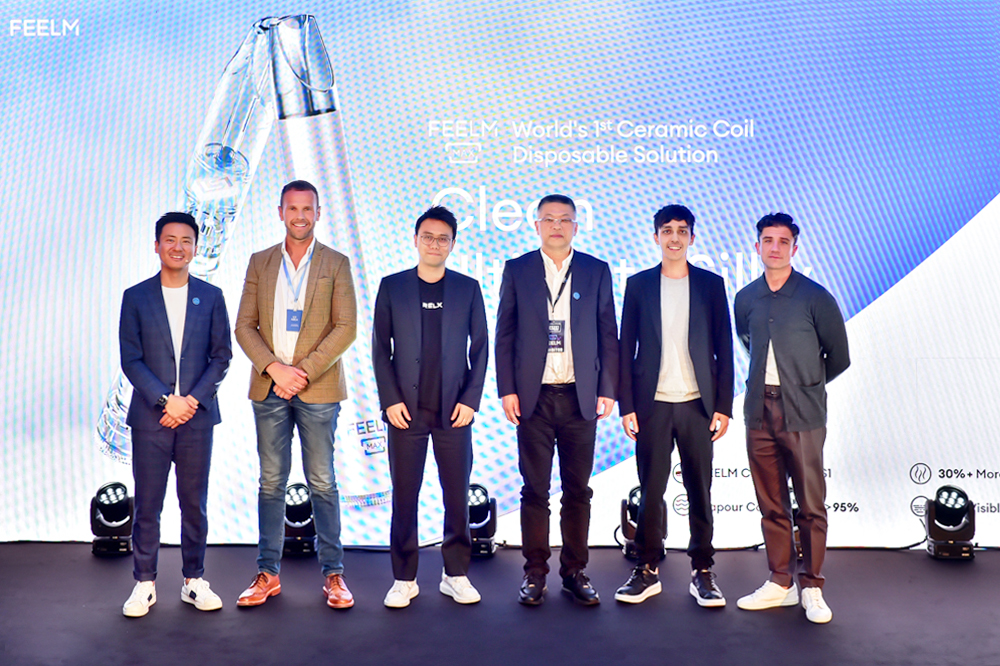
    The innovative new disposable vaping system FEELM Max was launched during the UK Vaper Expo in Birmingham on May 13.

    The FEELM Max is now available in the UK and EU markets. The event was attended by many top-level e-cigarette industry representatives and FEELM clients, including BAT, RELX International, Totally Wicked and KIWI.

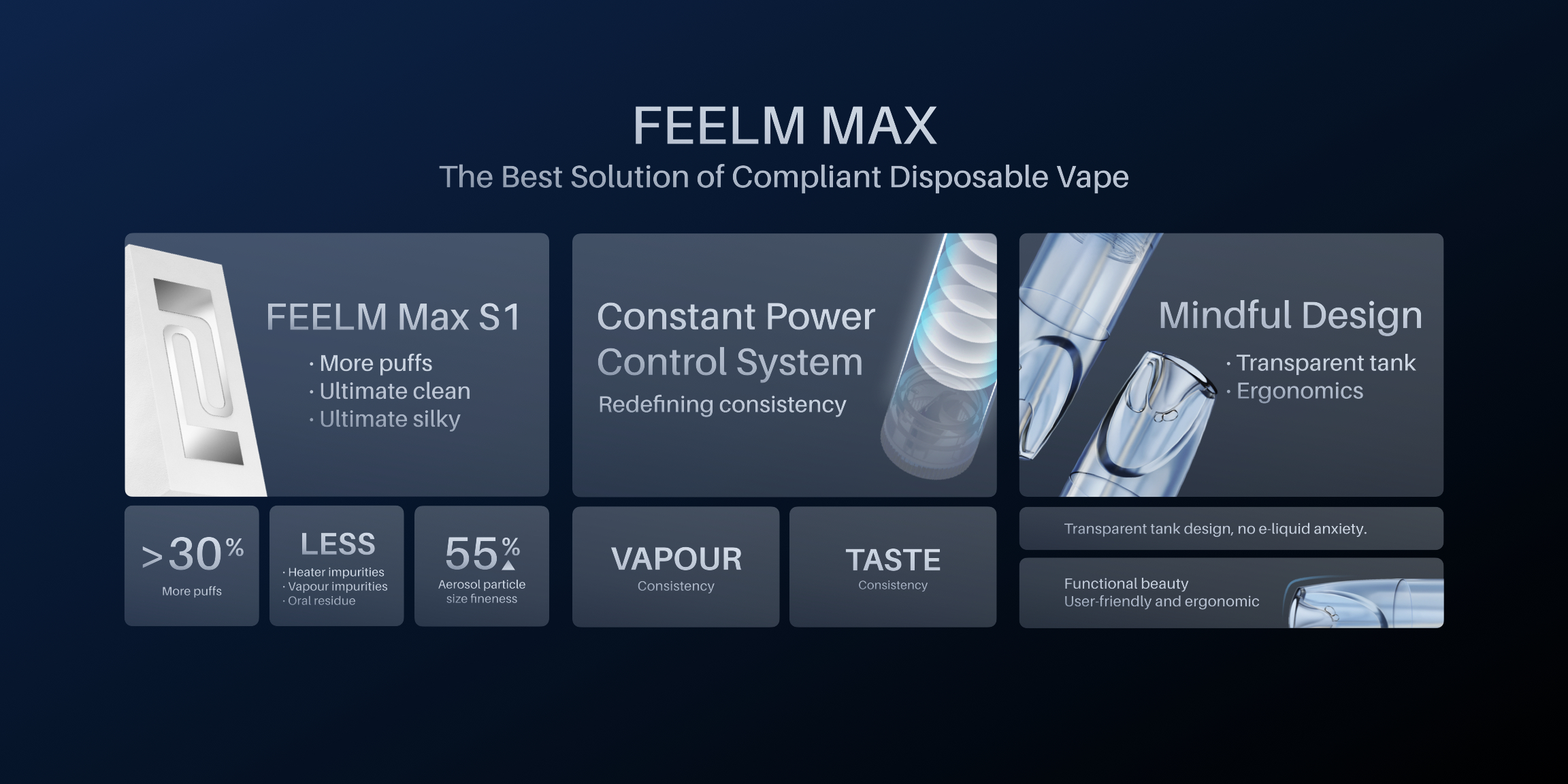
    A subsidiary of Smoore Technology, the world’s largest vaping company, SMOORE, FEELM unveiled the advanced FEELM Max solution that the company says brings three major breakthroughs to vaping, including the advanced heating technology of the Ceramic Coil S1, a constant power control system and “mindful design,” according to a press release.

    The FEELM Max uses the new Ceramic Coil S1, which is designed to deliver “a superior vaping experience” and offers an increased puff count that sets a new benchmark in the market.

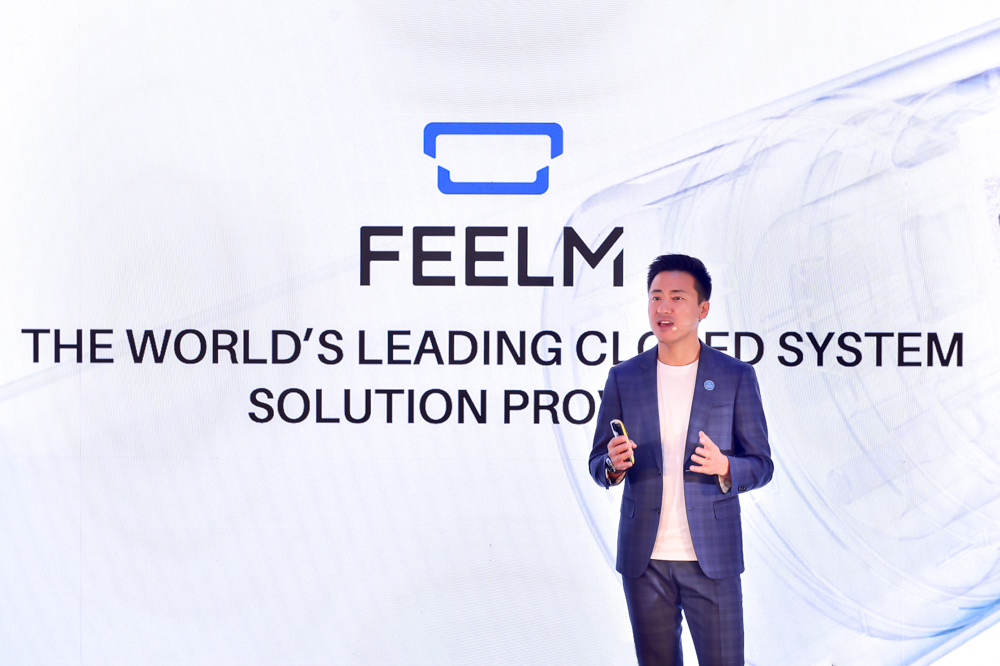
    Johnny Zhang, assistant president at FEELM

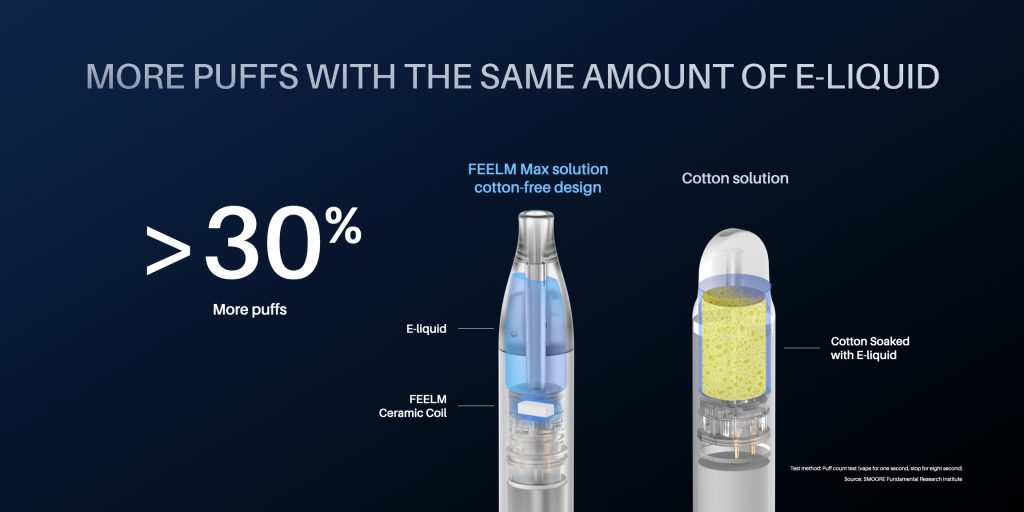
    “Benefitting from its cotton-free design and the resulting improvement of e-liquid utilization, the FEELM Max is able to boost puff count by more than 30 percent compared to cotton coil disposable solutions, providing 800 more puffs and setting a new benchmark for 2ml (e-liquid volumes),” said Johnny Zhang, assistant president at FEELM. “This innovation allows products using the FEELM Ceramic Coil S1 to offer increased puff counts while remaining totally compliant with all local regulations.”

    Additionally, the new S1 coil decreases the number of impurities created in the heating process by 78 percent, resulting “in fresher breath and no unpleasant aftertaste.”

    The new system also has several technological innovations. The FEELM Max solution uses a constant power energy management system for stable vaping. This technology improves taste consistency by 35 percent, which further enhances the user experience, according to the release.

    FEELM Max products have a transparent e-liquid tank for both aesthetics and user convenience that allows consumers to easily see how much e-liquid is left in the device.

    The first industrial whole-chain recycling program was also introduced by FEELM during the UK event. Collaborating with RELX International in the UK, FEELM has “taken the responsibility for implementing a scheme that will facilitate vape recycling to a fuller extent, thereby minimizing the environmental impact.”

    Bing Du, the CEO and founder of RELX International stated at the event: “Thanks to the groundbreaking technology of FEELM Max, and driven by our legendary partnership with FEELM, RELX International is on course to revolutionize the vaping experience across the globe.”

    The company’s commitment to making recycling more accessible demonstrates its dedication to environmental sustainability, according to the release. As the initiative gains traction, it could serve as a model for other industries looking to implement eco-friendly practices and engage adult customers in sustainability efforts.

    FEELM intends to continue pushing the boundaries of what’s possible in vaping technology, while keeping its commitment to sustainability and compliance at the heart of its operations, according to the release. “The company’s mission to shape a better vaping industry, not only for today but for generations to come, remains stronger than ever,” Zhang said.

  • Nicotine E-Liquid Taken Off Poisons List

    Nicotine E-Liquid Taken Off Poisons List

    Malaysia’s government has removed e-liquid containing nicotine used in e-cigarettes and other vaping products from the country’s Poisons List of controlled substances. The move enables taxation on e-liquids.

    Media reports claim the removal effectively legalizes e-cigarettes with nicotine without any regulations in place, as the current Control of Tobacco Products Regulations 2004 under the Food Act 1983 only cover conventional cigarettes and other tobacco products.

    The Control of Tobacco Product and Smoking Bill 2022 – which seeks to regulate both tobacco and vape products, besides a ban on these products for anyone born from 2007 – has yet to be tabled in the current 15th Parliament, reports Code Blue.

    Health Minister Zaliha Mustafa gazetted an order Friday to exempt nicotine “preparation of a kind used for smoking through electronic cigarette and electric vaporizing device, in the form of liquid or gel” from the Poisons List under the Poisons Act 1952 – overriding the Poisons Board that unanimously rejected the proposal last Wednesday.

    The Excise Duties (Amendment) Order 2023 – which subjects e-liquid or gel containing nicotine to excise duty of 40 sen ($0.004 cents) per milliliter – gazetted by Finance Minister Anwar Ibrahim, who is also the prime minister, was dated last March 29, the same day as the Poisons Board meeting.

    The tax on e-liquids with nicotine went into effect on April 1.

    CodeBlue reported that the Poisons Board, an independent body formed under the Poisons Act, wholly objected to the government’s proposal to exclude nicotine-containing e-liquid from the Poisons List on the basis that the harm of allowing e-cigarettes to be sold to anyone, including children, outweighed the benefit of tax revenue from such products containing nicotine, a highly addictive substance.

  • CTP Hires New Office of Science Director

    CTP Hires New Office of Science Director

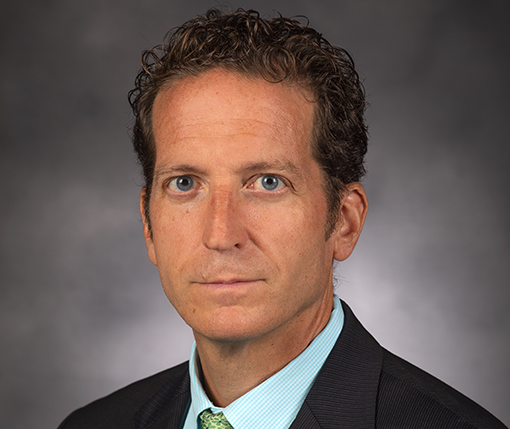
    Matthew Farrelly (Credit: RTI International)

    The new director of the U.S. Food and Drug Administration’s tobacco science division is Matthew Farrelly, former chief scientist and director of the Center for Health Analytics, Media, and Policy for RTI International.

    In an announcement, the FDA’s Center of Tobacco Products (CTP) stated that Farrelly’s extensive work in the field of tobacco and nicotine science for more than 25 years, and being recognized internationally as an expert with proven leadership and organizational management skills will help him succeed as the director of the CTP’s Office of Science.

    “He has led or been involved with numerous scientific endeavors related to tobacco control policies and regulatory approaches, including those related to graphic health warning labels, excise taxes, smoke-free policies, quitlines, state tobacco control programs, retail advertising, and flavored tobacco products,” the release states. “He has also extensively researched the influence of mass reach health campaigns, including FDA’s The Real Cost.”

    Farrelly also has authored or co-authored over 120 articles in peer-reviewed scientific literature, according to the release. He earned his Ph.D. in Economics from the University of Maryland at College Park.

    Farrelly joins the CTP as the agency faces a series of major tobacco-related decisions, including a potential ban on menthol cigarettes, lowering nicotine levels, and the next step in its ongoing attempt to regulate Juul and other electronic cigarettes.

    Farrelly will replace Matt Holman, who left the position last year to join Philip Morris International. Holman was hired in 2017 and took over for David Ashley.

  • CTP Director: Nicotine Salts Show Potential

    CTP Director: Nicotine Salts Show Potential

    Brian King (Photo: FDA)

    During an exclusive interview with the Associated Press, the director of the U.S. Food and Drug Administration’s Center for Tobacco Products (CTP), Brian King, said the FDA is well on its way in setting a foundation for substantial reductions in combustible tobacco smoking with the product standards such as a menthol ban and flavor bans for e-cigarettes and cigars.

    When asked about several surveys that have shown many adults think e-cigarettes are as dangerous as traditional cigarettes, King said he was fully aware of the misperceptions surrounding vaping products those misperceptions aren’t consistent with the known science.

    “We do know that e-cigarettes — as a general class — have markedly less risk than a combustible cigarette product,” King said. “That said, I think it’s very critical that we inform any communication campaigns using science and evidence. It has to be very carefully thought out to ensure that we’re maximizing impact and avoiding unintended consequences.”

    King also said he believes “there’s a lot of really important science and innovations” that have occurred in the vaping industry in recent years, adding that the most notable is nicotine salts in e-liquids.

    “We know that when you smoke a tobacco product, it’s a very efficient way to deliver nicotine across the blood-brain barrier. So it’s been very difficult to rival that efficiency in another product,” said King. “But in the case of nicotine salts you have the potential to more efficiently deliver nicotine which could hold some public health promise in terms of giving smokers enough nicotine that they would transition completely.

    “But you also have to consider the opposite side of the coin, which is the inherent risks of initiation among youth. So I do worry about that … there’s a lot happening and I think that it could be promise or peril. But I think it’s important that the science drives that.”