Tag: vaping

  • Abboud: FDA Expected to Use Discretion

    Abboud: FDA Expected to Use Discretion

    By Tony Abboud

    Under the new law governing synthetic nicotine products signed on March 15, 2022, Congress imposed a short 60-day deadline for companies to file premarket tobacco product applications (PMTAs) and declared that if such applications were not approved within 120 days (the Act) they would be “in violation of” the Federal Food Drug & Cosmetic Act’s (FDCA) PMTA requirement.  

    Since no authorizations have been granted as of today, the question is will FDA use its enforcement discretion to continue reviewing PMTAs, or will it precipitously declare that all synthetic nicotine products must be removed from the market after July 13, 2022?

    There is no question that the FDA should use its enforcement discretion. In a series of direct engagements with FDA since the Act’s passage, the Vapor Technology Association (VTA) has provided a complete set of scientific and policy justifications for synthetic nicotine products, and specific recommendations on how FDA should use its enforcement discretion – just as it has in the past – to allow synthetic nicotine products to remain on the market during the PMTA review process.

    However, some have suggested that Congress mandated all products be removed from the market this week if they are not approved by FDA. But a close review of the Act reveals that the opposite is true: Congress did not require synthetic nicotine products with pending PMTAs to be removed from the market after July 13.

    In interpreting laws, a court will first look to the plain language of the Act and, only if there is an ambiguity, will it look to Congressional intent to resolve such a question. Here, both support the FDA’s continued use of enforcement discretion for pending PMTAs.

    The Plain Language Supports Enforcement Discretion

    There are four relevant sections of the Act. First, under Section (d)(2)(A), Congress expressly stated that “as a condition to market” all manufacturers wishing to continue selling their products must file a PMTA no later than May 14, 2022.

    Tony Abboud
    Tony Abboud

    Second, under Section (d)(2)(B), Congress expressly stated that companies which filed PMTAs “may continue to market” their products during what the Act calls a “transition period.” 

    Third, under Section (d)(2)(C), Congress expressly required that if a company did not file a PMTA for its synthetic products by May 14, 2022, that company is “not eligible for continued marketing.” In each of these sections, Congress expressly uses some variation of the term “market” to articulate its direction on what may (not) be marketed and when.

    However, in the operative Section (d)(3), which addresses what happens after July 13, 2022, Congress makes no statement regarding marketing at all. Instead, it states that products with pending PMTAs not yet approved would be “in violation of…section 910” of the FDCA (21 USC 387g).

    When presented with this question, a court likely would rule that because Congress did not expressly state that pending applicants are “not eligible for continued marketing” or that they “may not market” after July 13, as it clearly said in the immediately preceding sections, Congress did not require the removal of products with pending PMTAs.

    This places synthetic nicotine products with pending PMTAs in precisely the same position as all other products with pending PMTAs which, for years, FDA has made clear are “illegal” (i.e., in violation of section 910) but are allowed to remain on the market at FDA’s enforcement discretion.

    Congressional Intent Supports Enforcement Discretion

    Even if a court finds that Section (d)(3) is ambiguous, there is nothing in Congressional intent that would lead to the conclusion that Congress intended for products with pending PMTAs to be removed from the market.

    First, Congress could have banned synthetic nicotine products, if that is what it intended, but it did not do so. To the contrary, Congress expressly authorized manufacturers to bring new products to market after the Act’s passage. Thus, it would be folly to suggest that Congress intended all synthetic nicotine products be removed from the market without PMTA review.

    Second, Congressional intent is generally divined by on the record statements made in committee hearings and in floor debate (not from press releases or media statements). But there is little to nothing which a court could rely on [with] this question because the provision was quietly slipped into the Ukraine-omnibus spending bill with no relevant hearing or floor debate.

    Third, Congress was fully aware that FDA could not review PMTAs within 180 days (as required under the FDCA). In fact, the FDA told a court it will not be finished reviewing tobacco derived PMTAs until June of 2023.  Thus, no one could suggest that there ever was any reasonable expectation or intent that the FDA would rule on synthetic nicotine PMTAs in 60 days.

    Hence, the only reasonable conclusion that can be drawn from the plain language and Congressional intent is that Congress did not require removal of products with pending PMTAs but, rather, expected the FDA to continue to use its discretion in enforcing its PMTA regulation after July 13.

    Congress did, however, expressly state that products for which no PMTA was timely filed have no continuing ability to market, authorizing the FDA to take immediate action. VTA has repeatedly communicated to the FDA the need for it to aggressively remove all tobacco products from the market for which no PMTA has been filed and to publish a list of all products covered by a synthetic nicotine PMTA so that retailers know which products can be sold.

    A Careful and Complete Evaluation of Synthetic Nicotine PMTAs is Required

    We live in a world that remains captive to [combustible] cigarettes. Congress won’t ban them and Congress has prevented the FDA from doing so. While electronic nicotine-delivery system (ENDS) products offer a technological solution to delivering nicotine in a substantially less harmful way, synthetic nicotine now represents the first technological innovation in nicotine itself. 

    Synthetic nicotine uniquely offers consumers the cleanest and purest form of nicotine with numerous benefits, i.e., the absence of heavy metals, nitrosamines, and pesticides. Synthetic nicotine uniquely offers consumers the opportunity to break free from the last remaining vestige of the tobacco plant.

    Synthetic nicotine uniquely offers the FDA unprecedented product constituent clarity, replicability, and traceability down to the batch level. Not only does synthetic nicotine offer companies the opportunity to change the dynamics regarding total reliance on tobacco-derived nicotine for all tobacco and pharmaceutical nicotine products, but it also provides companies the ability to address their ESG [sustainability] goals and take a significant step to ameliorate the adverse environmental impacts of tobacco. 

    Our message to the FDA has been constructive and clear: it is critical to the adult smoker that FDA takes aggressive steps to create an orderly and regulated marketplace with a diversity of desirable nicotine alternatives.

    Given recent history with tobacco derived PMTAs, the best way for FDA to realize that objective now is to avoid the blanket denial mistakes of the past which have mired the agency in protracted litigation. Such litigation will only delay the time until we achieve an orderly and regulated marketplace. 

    Instead, we have asked the FDA to work companies which timely filed synthetic nicotine PMTAs – the good actors – through the PMTA scientific process and provide them the requisite time and guidance to fulfill FDA’s requirements.

    At the same time, we have asked the FDA to aggressively enforce against the non-compliant companies that have refused participate in the PMTA process – the bad actors – by interdicting such products at the border and removing such products from the market Congress has clearly required.

    In the end, it is incumbent on the new FDA leadership to use its power to create an orderly marketplace by embracing scientific innovations, stimulating additional financial investment, accelerating authorizations of pending tobacco-derived PMTAs, and ensuring that synthetic nicotine products which now contain the cleanest and purest form of nicotine that science has created are available to adult smokers.

    Tony Abboud serves as president for Strategic Government Solutions, and executive director of the Vapor Technology Association.

  • ZoVoo Launches New Products in Special Event

    ZoVoo Launches New Products in Special Event

    During a recent product launch broadcast live worldwide on June 29, ZoVoo released four new products, its Gene Tree special edition ceramic core technology, and ZoVoo shared information on its peak performance in the electronic atomization field.

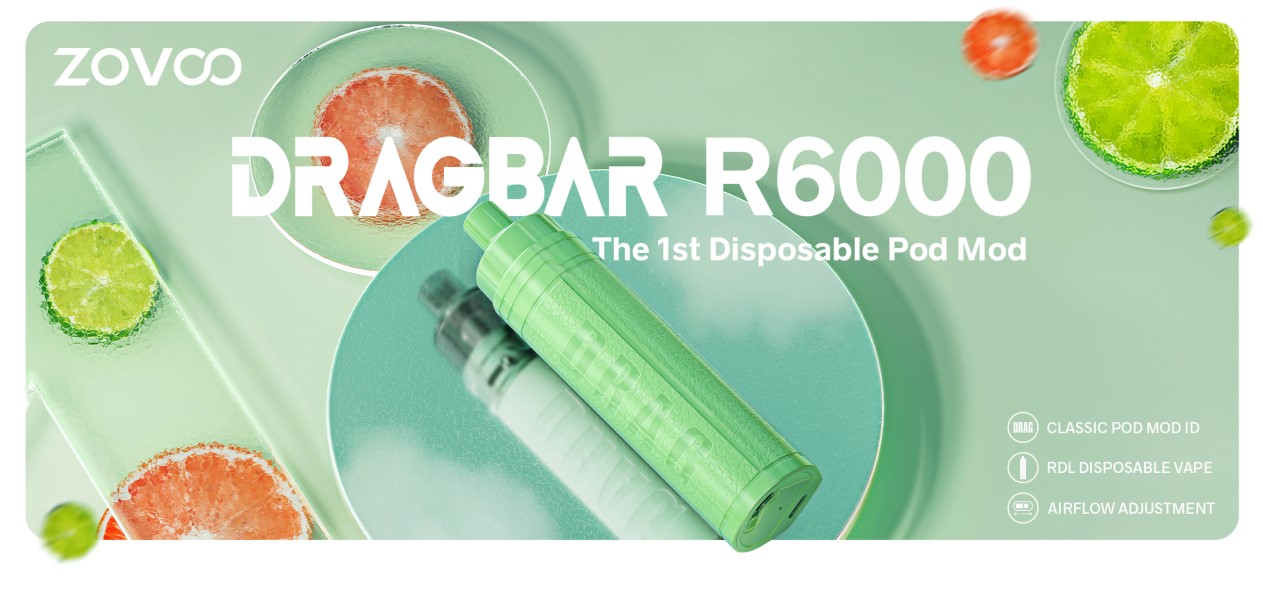
    The first disposable product in the DRAG family, the new DRAGBAR R6000 is ZoVoo’s pod-style disposable. It has a classic leather texture design and its new airflow adjustment function, according to a press release.

    ZoVoo also launched its lightest and thinnest ceramic core disposable product, the DRAGBAR Z700 GT, which “adopts the latest upgraded ceramic core technology, and reconstructs a new thin and light experience,” according to a release.

    The new core is the latest nano-microcrystalline ceramic core independently developed by ZoVoo, GENE TREE Special Edition is the first “powder free” ceramic core with proprietary patented technology in the industry, according to the release.

    Also launched, DRAGBAR F8000, with max 8000 puffs, adopts the infinite airflow adjustment system, and matches with high-performance of a mesh coil. Also, the new VINCIBAR F2500 adopts Kevlar texture, integrates light and shadow aesthetics, elegant and comfortable. With max 2500 puffs, 15 flavors and mesh coil design.

  • Juul: FDA ‘Overlooked’ Aerosol Data

    Juul: FDA ‘Overlooked’ Aerosol Data

    The U.S. Food and Drug Administration overlooked a key part of Juul’s premarket tobacco product application (PMTA) when the agency ordered Juul Labs’ products off the U.S. market, according to court documents.

    In court filings Tuesday, Juul said the agency overlooked more than 6,000 pages of data that the company had submitted to the FDA on the aerosols that users inhale, according to the Wall Street Journal.

    Juul also said the agency failed to consider the totality of Juul’s evidence, which the company said established that the public-health benefits of Juul products significantly outweighed the potential risks.

    “FDA’s order acknowledged that ‘exposure to carcinogens and other toxicants present in cigarette smoke were greatly reduced with exclusive use’ of Juul products compared with combustible cigarettes,” Juul Labs stated in court documents.

    A federal appeals court last week granted Juul Labs a temporary stay of the FDA’s marketing denial order that requires the vaping company to pull its e-cigarettes off the U.S. market.

    “The purpose of this administrative stay is to give the court sufficient opportunity to consider petitioner’s forthcoming emergency motion for stay pending court review and should not be construed in any way as a ruling on the merits of that motion,” the court wrote.

    The FDA has until July 7 to respond to Juul’s motion and Juul Labs has until July 12 to reply to the FDA response if submitted.

  • Marketing Approvals for NJOY ‘Daily’ Vapes

    Marketing Approvals for NJOY ‘Daily’ Vapes

    Photo: NJOY

    The U.S. Food and Drug Administration has approved the premarket tobacco product applications (PMTA) for NJOY’s Daily Rich Tobacco 4.5% and NJOY Daily Extra Rich Tobacco 6%.

    “It should be noted that our determination that the marketing of these products is APPH [appropriate for the protection of public health] is based in part on the submitted microbial stability data,” the agency wrote in its marketing granted order (MGO).

    The designation does not mean the products are safe and they are not “FDA approved,” the agency said, but the MGOs allows the NJOY to legally market the authorized products in the United States.

    While approving NJOY’s Daily Rich Tobacco 4.5% and NJOY Daily Extra Rich Tobacco 6%, the FDA denied authorization for multiple other Daily e-cigarette products. These are presumed for products with nontobacco flavors. Any of those products that remain on the market must be removed or risk FDA enforcement, the agency said. Applications for two menthol-flavored Daily products remain under FDA review.

    Additionally, the authorization imposes marketing restrictions on the company to greatly reduce the potential for youth exposure to advertising for these products. The FDA said it will closely monitor how these products are marketed and will act as necessary if the company fails to comply with any applicable statutory or regulatory requirements, or if there is a notable increase in the number of non-smokers—including youth—using these products.

    On April 26, the FDA authorized four NJOY Ace products through the PMTA pathway.

  • Marketing Orders for Vuse Vibe and Vuse Ciro

    Marketing Orders for Vuse Vibe and Vuse Ciro

    The U.S. Food and Drug Administration on May 12 gave R.J. Reynolds Vapor Co. (RJRVC) permission to continue marketing the original-flavor varieties of its Vuse Vibe and Vuse Ciro products. In October 2021, the FDA authorized the marketing of Vuse Solo original flavor.

    “These authorizations represent the broadest portfolio of market authorizations provided to any company in the U.S for premarket tobacco product applications (PMTA),” said David O’Reilly, director of scientific research at RJRVC’s parent company, BAT, in a statement. “Continued focus on science and innovation has supported the robust submissions, which have enabled FDA to evaluate and authorize the marketing of these products.

    “We are proud of the work undertaken by the team to achieve this significant regulatory milestone and are confident in the quality of our applications.”

    While approving the original-flavor varieties, the FDA denied RJRVC’s applications for the marketing of Vuse-branded products with other flavors. Those flavored vapor products are not currently marketed or sold in the U.S., according to BAT. The company says it is reviewing the FDA’s decision on those applications to determine next steps.

    RJRVC’s application to market menthol-flavored Vuse products remains under FDA review and those products can remain on market pending a decision from the agency.

  • Study Shows Vaping Alters Mouth Microbes

    Study Shows Vaping Alters Mouth Microbes

    Photo: Tobacco Reporter archive

    Researchers at New York University led by Deepak Saxena and Xin Li conducted a study to compare oral microbiomes of smokers and vapers, according to the National Institutes of Health.

    During the study, 27 smokers, 28 e-cigarette users and 29 nonsmokers were examined over six months. All participants had at least mild gum disease at the beginning of the study, and none had their teeth cleaned during the study period.

    Researchers compared the types of bacteria found where the gums meet the teeth at the beginning and end of the six-month study. They also compared markers of inflammation and immune cell activity.

    The number of unique bacterial species living in and around the gums increased for all participants during the study. This can be a sign of gum disease getting worse.

    The specific types of microbes found in the oral microbiomes differed substantially between the three groups. There was a core set of species common among the groups, but each also had unique features. They were so distinct that a machine-learning program could use the oral microbiome to predict which group people were in with 74 percent accuracy.

    However, the program was least accurate at picking out e-cigarette users. The patterns of their oral microbes shared characteristics with both smokers and nonsmokers, with slightly more similarities to smokers. Unique traits among e-cigarette users included enrichment with Fusobacterium and Bacteroidales species, both of which are linked to gum disease.

    “We are now beginning to understand how e-cigarettes and the chemicals they contain are changing the oral microbiome and disrupting the balance of bacteria,” Saxena says.

  • Imperial Launches Vaping Campaign

    Imperial Launches Vaping Campaign

    Photo: Tobacco Reporter archive

    Imperial Tobacco Canada has launched a campaign called Let’s Clear the Smoke with the goal of educating Canadian adults on the facts about vapor products and the role these products can play in reducing risks compared to cigarettes, according to BAT.

    Let’s Clear the Smoke provides information about the latest in vapor product science and aims to allow Canadian adults to take a more informed view when considering their stance on vaping products and other less risky alternatives to smoking.

    This campaign is driven by a combination of mass out of home media placements and digital ads to drive awareness and website traffic. The campaign lasts for 10 weeks and will be the first of a range of initiatives to drive the acceptance of tobacco harm reduction in Canada.

    “There is a lack of understanding out there about vapor products, especially when it comes to the positive role they can play in tobacco harm reduction,” said Ralf Wittenberg, president and CEO of Imperial Tobacco Canada. “I think this misunderstanding is due to the fact that the vast majority of people don’t have access to accurate, credible and independent information.

    “The purpose of this campaign is to educate Canadian adults on the facts about vapor products by providing access to credible, factual and independent information.”

  • Australia Urged to Include Vaping in Smoking Strategy

    Australia Urged to Include Vaping in Smoking Strategy

    Photo: Zerophoto | Adobe Stock

    Australia is lagging well behind many other countries in the Asia-Pacific region when it comes to successfully tackling smoking through vaping, says the Coalition of Asia Pacific Tobacco Harm Reduction Advocates (CAPHRA).  

    The CAPHRA’s observation comes as Australia’s Department of Health seeks feedback on its Draft National Smoking Strategy 2022–2030, with public submissions closing on March 24.

    “We encourage vapers and supporters of a progressive tobacco harm reduction (THR) approach to have their say. Australians desperate to quit smoking and those keen to stay off deadly cigarettes need all the help they can get,” says Nancy Loucas, executive coordinator of the CAPHRA.

    On Oct. 1, 2021, Australia’s Therapeutic Goods Administration expanded its prescription-only model with customs clamping down at the border on personal imports of nicotine vaping liquids from overseas websites.

    Not only does Australia’s draft strategy ignore the potential of safer nicotine products, it also lacks ambition, according to Loucas. The strategy aims for a smoking rate of 10 percent or less by 2025 while New Zealand is pursuing a 5 percent smoke-free goal and looks on target to achieve it. “Instead of banning vaping, New Zealand has regulated it, making it tough for minors to access but available to all adults keen to keep off the cancer sticks. New Zealand is seeing its overall smoking rate tumble, yet the Australian government fails to accept that the most effective smoking cessation tool available is staring it in the face,” says Loucas.

    “Australia is well down the world rankings when it comes to adopting effective THR policies and is light-years behind the U.S. and U.K. Subsequently, Australia’s overall smoking rate has fallen very little over the past decade, and without reasonable access to vaping, Australia will struggle to even achieve its 10 percent smoking goal,” says Loucas. 

  • South Africa Proposes New Vaping Tax

    South Africa Proposes New Vaping Tax

    Photo: Adrian | Adobe Stock

    The South African government will propose a new tax on vaping products to take effect in 2023, according to Vaping360.

    The move follows the government’s announcement last year that it intended to tax e-liquids.

    South African Finance Minister Enoch Godongwana outlined the new tax proposal as part of a package of new and increased excise taxes on tobacco, alcohol and high-sugar products. The vaping tax will appear in the 2022 Taxation Laws Amendment Bill, though it could be changed by Parliament before the bill is finalized. It is expected to be in place by Jan. 1, 2023, according to Godongwana.

    The new tax would apply to all e-liquid products, regardless of whether they include nicotine, and it would be “at least” ZAR2.90 ($0.19) per mL, essentially doubling the price of retail e-liquid. The taxation rate is supposed to be equivalent to 40 percent of the most popular brand’s retail price.

    South Africa currently has no specific governance on vaping products but is working to regulate the products under its tobacco laws.

  • Study Claims Patches Better Than Vapes

    Study Claims Patches Better Than Vapes

    Credit: kues1

    A new study claims that those using e-cigarettes to quit smoking found them to be less helpful than more traditional smoking cessations aids such as patches and gum.

    The study, published Monday in the journal BMJ, analyzed the latest 2017 to 2019 data from the Population Assessment of Tobacco and Health (PATH) Study, which follows tobacco use among Americans over time.

    “This is the first time we found e-cigarettes to be less popular than FDA-approved pharmaceutical aids, such as medications or the use of patches, gum, or lozenges,” said John Pierce, the director for population sciences at the Moores Cancer Center at the University of California, San Diego, according to CNN.

    A three-month randomized trial in the United Kingdom, published in 2019, found e-cigarettes, along with behavioral interventions, did help smokers quit tobacco cigarettes. In guidance published in late 2021, the UK National Institute for Health and Care Excellence decided to recommend that smokers use e-cigarettes to help them quit.

    Another recent study, published in JAMA Network Open, found adult smokers with no plans to quit are more likely to stop smoking if they switch to daily vaping, according to new research led by Roswell Park Comprehensive Cancer Center.

    The Roswell Park study also used data collected from 2014 to 2019 as part of the PATH study.