


Year: 2023
-

Manila Urged to Deprioritize Tobacco in Smuggling Fight

Photo: JoyImage A consumer group is urging the government of the Philippines to focus on food rather than tobacco in its anti-smuggling efforts, reports the Inquirer.
“Given the rising prices of pantry basics like onions, the government is correct in taking steps to curb agriculture smuggling, but for some reason, some of our legislators would rather waste time picking on the tobacco industry,” said Simoun Salinas, spokesperson of Malayang Konsumer.
“The issue here is food security. Food for the Filipinos should be the priority.”
Senate Bill 1812 aims to amend Republic Act 10845—the Anti-Agricultural Smuggling Act of 2016—to include unprocessed and processed tobacco products in the same category as rice, sugar, vegetables, meat and other essential food products entitled to protection against smuggling. Under the act, large-scale smuggling of these products is considered “economic sabotage.”
“Why give special treatment to tobacco products and why now?” asked Salinas. “Why prioritize tobacco and cigarettes when in fact they are vices that are harmful to our health especially to our children.”
An explanatory note of the proposed bill stated that the “ultimate goal is safeguarding our farmers, consumers and the agricultural sector and attaining the goal of food security for the country.”
Under the act, the penalty for economic sabotage and large-scale agricultural smuggling is a maximum of 20 years’ imprisonment and a fine that is twice the fair value of the smuggled product.
-

New York Clergy Oppose Menthol Ban

Photo: New Africa Several clergy members from New York State have signed a letter opposing Governor Kathy Hochul’s proposed ban on flavored tobacco products, reports Spectrum News 1. The clergy members cite civil rights and criminal justice concerns that banning menthol cigarettes in New York would implicate.
“It is unjust to expect communities of color to choose between greater public health protections and basic civil rights,” they wrote in the letter. “We do not accept the premise that we must choose between the two, that these interests are mutually exclusive or that this debate is zero-sum. A working group consisting of social justice advocates and law enforcement leaders, along with other organizations, is the best solution available to bridge the current divide.”
Hochul’s proposal would also raise the per-pack tax on cigarettes by $1 to $5.35.
Clergy believe banning flavored tobacco would lead to unfair outcomes for people of color.
“Our collective primary interest is protecting the public, specifically communities of color, from abuse at the hands of both corporate influences and law enforcement,” they wrote. “We share the same belief as others that we can have a robust and productive debate that prioritizes both public health and criminal justice concerns.”
“To that end, we are requesting that any proposed ban on menthol cigarettes be withdrawn at this time and a working group convened with the set mission to offer recommendations for new legislation,” they wrote. “That working group must take into account all of our collective concerns and address the need for greater public health protections that do not compromise our constitutional and civil rights.”
-

CTP Hires New Office of Science Director
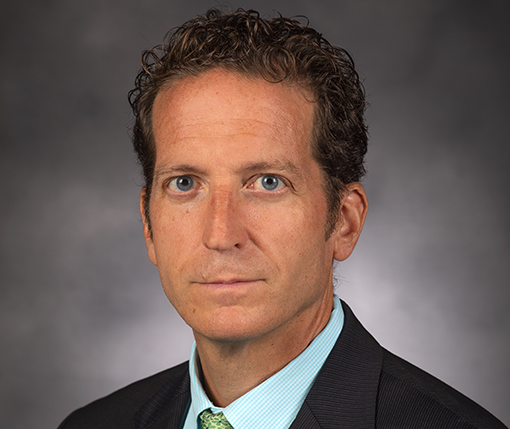
Matthew Farrelly (Credit: RTI International) The new director of the U.S. Food and Drug Administration’s tobacco science division is Matthew Farrelly, former chief scientist and director of the Center for Health Analytics, Media, and Policy for RTI International.
In an announcement, the FDA’s Center of Tobacco Products (CTP) stated that Farrelly’s extensive work in the field of tobacco and nicotine science for more than 25 years, and being recognized internationally as an expert with proven leadership and organizational management skills will help him succeed as the director of the CTP’s Office of Science.
“He has led or been involved with numerous scientific endeavors related to tobacco control policies and regulatory approaches, including those related to graphic health warning labels, excise taxes, smoke-free policies, quitlines, state tobacco control programs, retail advertising, and flavored tobacco products,” the release states. “He has also extensively researched the influence of mass reach health campaigns, including FDA’s The Real Cost.”
Farrelly also has authored or co-authored over 120 articles in peer-reviewed scientific literature, according to the release. He earned his Ph.D. in Economics from the University of Maryland at College Park.
Farrelly joins the CTP as the agency faces a series of major tobacco-related decisions, including a potential ban on menthol cigarettes, lowering nicotine levels, and the next step in its ongoing attempt to regulate Juul and other electronic cigarettes.
Farrelly will replace Matt Holman, who left the position last year to join Philip Morris International. Holman was hired in 2017 and took over for David Ashley.
-

Generational Tobacco Ban Tabled in California

Photo: Oleksii A California lawmaker has introduced a bill that would ban people born after Jan. 1, 2007, from buying tobacco products, reports Cigar Afficionado.
The proposed legislation is similar to laws passed in New Zealand and considered elsewhere, including Hong Kong and Malaysia. With 38 million people, however, California has a larger population than any of these jurisdictions.
Introduced Feb. 24 by assembly member Damon Connolly, Assembly Bill 935 would make it illegal for anyone in California who is presently 16 years old or younger to ever buy a tobacco product in that state. Vendors caught selling would risk fines of up to $6,000 and a loss of their tobacco license.
The minimum age to buy cigars and other tobacco products in California is presently 21, as it has been in every U.S. state since the law was changed in 2019.
The Premium Cigar Association called on stakeholders to oppose the bill.
“We are deeply concerned about AB 935 and any legislation that seeks to restrict the rights of premium cigar smokers,” said Joshua Habursky, deputy executive director of the Premium Cigar Association. “These proposals are not based on scientific evidence, but rather on a political agenda that seeks to demonize adult cigar smokers and restrict their freedom to enjoy a legal product. Clearly it is no longer a hidden agenda of the anti-tobacco groups to support full prohibition.”
-

Reynolds Calls for End to Disposables

Photo: RAI Reynolds American has asked the U.S. Food and Drug Administration to stop the sale and manufacturing of disposable e-cigarettes, according to CStoreDecisions. The company has called out Puff Bar and Elf Bar, specifically, due to the increased use of the products by youth.
Reynolds American submitted a citizen petition to the FDA.
“A new enforcement policy, one that is specifically directed at these disposables that are on the market illegally, is needed to better protect public health,” Reynolds American stated.
The petition requests tougher enforcement against disposables through increased retail inspections and by seizing disposable products at the U.S. border.
Anti-smoking activists criticized Reynolds’ citizens’ petition. “It is shameless hypocrisy for tobacco giant Reynolds American to pretend that it cares about kids and ask the FDA to crack down on disposable e-cigarettes when Reynolds itself sells the second most popular e-cigarette brand among kids, Vuse,” said Matthew Meyers, president of the Campaign for Tobacco-Free Kids, in a statement.
“Is Reynolds trying to eliminate its competition for the youth market?” asked Meyers, adding that Vuse is marketed in “youth-oriented ways.”
-

Wild Brands Launches STEP Cigs
Image: Global Tobacco Wild Brands has launched STEP cigarettes, a novel nontobacco cigarette incorporating a layered tobacco-style flavor system, according to a company press release.
STEP products will be available in full flavor and green (menthol) variants with the goal to replace unaffordable traditional cigarettes in the U.S. market.
STEP stands for Satisfaction Taste Experience and Price.
“Based on a proprietary formulation of active herbals and botanicals, STEP cigarettes [are] the first perfectly blended cigarette substitute to come to market that truly feels and tastes like a traditional full flavor or menthol product,” said Zain Meghani, president of Wild Brands. “We believe STEP will have enormous appeal with wholesalers, retailers and, more importantly, with adult price-conscious consumers.”
Meghani adds, “STEP was created to be a Satisfying Tasteful Experience at a fair Price and is aimed at adult consumers seeking a substitute to overpriced regular cigarettes. Despite having no tobacco, nicotine or hemp in the blend, our early consumer feedback with the STEP full flavor and green (menthol) packs indicates we have found the right feel, taste and satisfaction that adult smokers would expect from a traditional cigarette.”
Mike Walters, vice president of sales at Global Tobacco, the exclusive distributor of STEP, said, “This is an exciting new product for the market as it is free of all federal cigarette excise taxes, many state cigarette excise taxes as well as the tobacco Master Settlement Agreement payments and [U.S. Food and Drug Administration] tobacco user fee payments.”
-

Vector Group Reports Fourth-Quarter and Full-Year Results

Image: Tobacco Reporter archive Vector Group reported record annual tobacco segment revenues in 2022, fueled by continued strong volume.
In the fourth quarter, consolidated revenues were $363.8 million, up 16 percent, or $50.1 million, compared to the prior year period. Tobacco segment revenues were $363.8 million, up 18.6 percent, or $57.2 million, compared to the prior year period. Tobacco segment wholesale and retail market share increased to 5.5 percent and 5.8 percent from 4.4 percent and 4.4 percent, respectively, in the prior year period. Reported operating income was $89.3 million, up $20.7 million compared to the prior year period. Tobacco segment operating income was $93 million, up 11 percent, or $9.2 million, compared to the prior year period, primarily attributable to the transition of the Montego brand strategy from volume-based to income-based.
For the full year, record consolidated revenues were $1.44 billion, up 18 percent, or $220.3 million, compared to the prior year. Tobacco segment revenues were $1.43 billion, up 18.5 percent, or $222.6 million, compared to the prior year. Tobacco segment wholesale and retail market share increased to 5.4 percent and 5.5 percent from 4.1 percent and 4.2 percent, respectively, in the prior year. Reported operating income was $339 million, up $18.6 million compared to the prior year. Tobacco segment operating income was $347 million, down 3.7 percent, or $13.3 million, compared to the prior year, primarily attributable to the investment in Montego’s significant volume and market share growth.
“Vector Group delivered record revenues in 2022 by capitalizing on opportunities to substantially increase our market share, thus driving value for stockholders,” said Howard M. Lorber, president and CEO of Vector Group. “The 11 percent increase in our tobacco segment’s operating income in the fourth quarter reflects the recent and ongoing transition of our Montego brand strategy from volume-based to income-based. In 2023, we will continue to focus on optimizing long-term profit by effectively managing our volume, pricing and market share.”
-

Alex Norcia Leaves Filter
Image: Charnchai saeheng | Adobe Stock Tobacco harm reduction (THR) reporter Alex Norcia is leaving Filter magazine “and [departing] from journalism,” he wrote.
Norcia has written for Filter for the past two years, and he wrote for Vice before that.
“I will remain involved in THR,” Norcia wrote. He broke the story about the U.S. Food and Drug Administration’s “Fatal Flaw” standard as well as dug into synthetic nicotine before the topic caught fire.
“Reflecting on the events I’ve reported for the better part of four years leaves me with a sense of just how fast the news moves. But it can get, unfortunately, repetitive,” he wrote about his experiences. He cited cyclical news like flavor bans that have spread across states and the impacts of such laws. He noted his favorite moments as well, detailing a well-rounded career in THR reporting.
“Now, like everybody else, I’ll be waiting to see if the FDA bans menthol combustibles or lowers the nicotine levels in cigarettes or ever authorizes a flavored nicotine vaping product (even menthol),” he wrote. “Or whether, on the world stage, more countries will follow pathways like the United Kingdom, Sweden or Japan—or, conversely, prohibition-oriented responses like India, Taiwan and Mexico.
“I don’t know the answers to these questions. Like other observers in this rapidly evolving field, I’ve never been able to predict the future. But I’ll still be doing what I can to address the present.”
-

Pyxus Announces Third-Quarter Results
Image: Tobacco Reporter archive Pyxus International announced results for its fiscal quarter ended Dec. 31, 2022.
Sales and other operating revenues increased $226.7 million, or 52.9 percent, to $655.6 million for the three months ended Dec. 31, 2022.
Operating income increased $11.4 million to $41.6 million for the three months ended Dec. 31, 2022.
Net loss attributable to Pyxus International improved by $27.8 million to $2.3 million for the three months ended Dec. 31, 2022.
“We are excited to share our third-quarter results,” said Pieter Sikkel, president and CEO of Pyxus. “Our improved operating profit illustrates the company’s strong global performance in spite of a dynamic and complicated crop year that was exacerbated by La Nina and inflationary pressures. Our results evidence the progress the company made year-over-year in several ways and would not have been possible without the dedication and contributions of our employees.
“We successfully utilized our global footprint to navigate the current tobacco supply shortage and meet our buying targets overall for fiscal 2023. Combined with continuing normalization of shipping schedules in North and South America and increased volume from Asia, the company delivered an increase of more than 50 percent in sales and other operating revenues year-over-year. This increase and higher utilization of the company’s securitization programs resulted in cash flow from operations in the third quarter increasing by more than $100 million year-over-year. Some of these funds were strategically utilized to fully repay the outstanding indebtedness under the company’s ABL Credit Facility and provides the company with increased financial flexibility as we approach the next buying cycle.
“We anticipate the third quarter to be our largest sales quarter of the fiscal year due to more normalized shipping schedules. Based on our expectations for continued improvement year-over-year, we have revised our expected fiscal 2023 sales to be between $1.85 billion and $2 billion and our adjusted EBITDA expectations to be between $140 million and $155 million.”