Month: September 2024

  • Momentous Ruling

    Momentous Ruling

    Credit: JHVE Photo

    The end of Chevron deference could have ripple effects across the nicotine industry.

    By Timothy S. Donahue

    U.S. courts will no longer need to “humbly respect” how government agencies interpret the law. The end of Chevron deference means unelected officials will no longer have the leeway to subjectively decide what Congress intends when it passes regulatory legislation.

    The court’s ruling in Loper Bright Enterprises v. Raimondo and the related case Relentless v. Department of Commerce will likely have far-reaching impacts on nearly every action government agencies take. For the nicotine industry, it could change how courts view the U.S. Food and Drug Administration’s premarket tobacco product application (PMTA) process. It could also impact the agency’s efforts to regulate menthol and lower the levels of allowable nicotine in combustible cigarettes.

    “For far too long, unelected bureaucrats at the FDA have been making up the law to suit their ulterior agenda and … the Supreme Court has thankfully put a stop to it once and for all,” said Allison Boughner, vice president of the American Vapor Manufacturers Association, in a statement. “No longer will it be good enough for [prohibitionists] in Congress to write vague, Crayola language and then connive behind closed doors with FDA to impose arbitrary policies on the American public that could never withstand the light of day. [This] ruling is a stirring rebuke of FDA and, we hope, with more soon to follow in pending cases.”

    In declaring the doctrine’s demise, Chief Justice John Roberts wrote that agencies “have no special competence” in resolving statutory ambiguities—but courts do.

    “Chevron is overruled,” wrote Justice Roberts in the Loper Bright decision. “Courts must exercise their independent judgment in deciding whether an agency has acted within its statutory authority, as the APA [Administrative Procedure Act] requires. Careful attention to the judgment of the Executive Branch may help inform that inquiry.

    “And when a particular statute delegates authority to an agency consistent with constitutional limits, courts must respect the delegation while ensuring that the agency acts within it. But courts need not and under the APA may not defer to an agency interpretation of the law simply because a statute is ambiguous.”

    Agustin E. Rodriguez, a partner with Troutman Pepper, explained that “under the doctrine of Chevron deference, courts would defer to a federal agency’s interpretation of an ambiguous statute if the agency was charged with administering the statute in question and its interpretation was reasonable. However, the end of Chevron deference may alter that traditional thinking.”

    Bryan Haynes, also a partner at Troutman Pepper, added, “The Supreme Court’s decision overruling Chevron in the Loper Bright Enterprises v. Raimondo case could affect federal courts’ overall outlook on agency interpretations, possibly making courts hesitant to defer to agencies as a general practice.”

    The decision could potentially result in alterations to the FDA’s methods of regulating vaping products. The Supreme Court of the United States (SCOTUS) has agreed to hear its first-ever vaping case, Wages and White Lion Investments v. U.S. FDA, which is compelling because deferring to Chevron has been the standard for lower courts when deciding regulatory cases brought by manufacturers of nicotine products (the end of Chevron deference isn’t likely to directly impact the White Lion case, according to its attorneys).

    Robert Burton, an expert with more than 11 years of experience in the U.S. vaping industry and current group scientific and regulatory director for the U.K.-based vaping company Plxsur, said another general concern is that now, federal agencies may have to put more resources into the additional legal challenges that they will likely face and divert staff away from review/approval processes.

    “Agencies, such as FDA, may also have to look to improve their primary knowledge in those ‘gray areas’ to be able to demonstrate they actually have the knowledge and expertise rather than it being ‘assumed’ or deferred by judges based upon Chevron,” Burton explained. “I also can’t see anything changing soon; if anything, this will create a further backlog of court cases and delays in regulatory decisions based upon the potential for an agency to be challenged legally.”

    How it started

    The Chevron doctrine, based on the 1984 decision in Chevron v. Natural Resources Defense Council, held that courts should defer to the interpretations of “expert” federal agencies regarding ambiguous laws they are required to implement, as long as the agency interpretations are reasonable.

    In many cases, what would be considered “reasonable” was also left to government agencies to decide because nonelected bureaucrats were often considered “experts” even though they had little to no experience in the industries they were regulating.

    For 40 years, unelected officials were given latitude to decide on their own what Congress had intended when it wrote unclear laws—even if there were other sufficient interpretations that the courts could have considered. According to the New York Times, Chevron deference was applied in 70 Supreme Court decisions and 17,000 lower-court rulings during those years.

    The plea to overturn the Chevron doctrine came to the court in two cases challenging a rule issued by the National Marine Fisheries Service (NMFS) that requires the herring industry to bear the costs of observers on fishing boats. Applying Chevron, both the U.S. Court of Appeals for the District of Columbia Circuit and the U.S. Court of Appeals for the 1st Circuit upheld the rule, finding it to be a reasonable interpretation of federal law.

    The fishing companies brought their case to the Supreme Court, seeking the justices’ input on both the rule in question and the overruling of the Chevron doctrine. Roman Martinez, speaking on behalf of a group of fishing vessels, informed the justices that the Chevron doctrine undermines the courts’ responsibility to interpret the law and violates the federal law that governs administrative agencies, which calls for courts to independently review legal questions.

    Under the Chevron doctrine, he observed, even if all nine Supreme Court justices agree that the fishing vessels’ interpretation of federal fishing law is better than the NMFS’ interpretation, they would still be required to defer to the agency’s interpretation as long as it was reasonable. Such a result, Martinez concluded, is “not consistent with the rule of law.”

    Chris Howard, executive vice president of external affairs and new product compliance for Swisher, parent to the vaping company E-Alternative Solutions, welcomed the ruling, saying that federal agencies have had too much power for decades.

    “That ended with the Supreme Court’s decision overturning the longstanding Chevron doctrine,” said Howard. “The decision marks a significant shift in the judicial landscape, correcting the balance of power between federal agencies and the judiciary. It fundamentally alters how courts rule on agency statutory interpretation. As the majority states, courts will no longer be restrained by the need to provide deference.

    “Instead, ‘Courts must exercise their independent judgment in deciding whether an agency has acted within its statutory authority, as the APA requires.’ This transformation will likely lead to significantly less regulatory flexibility and increased judicial scrutiny. The implications of this decision will resonate across industries, including the tobacco industry, influencing regulatory practices and shaping the future of administrative law. Regulatory overreach will become the exception as opposed to the norm and enable courts to fulfill their duty to interpret the law.”
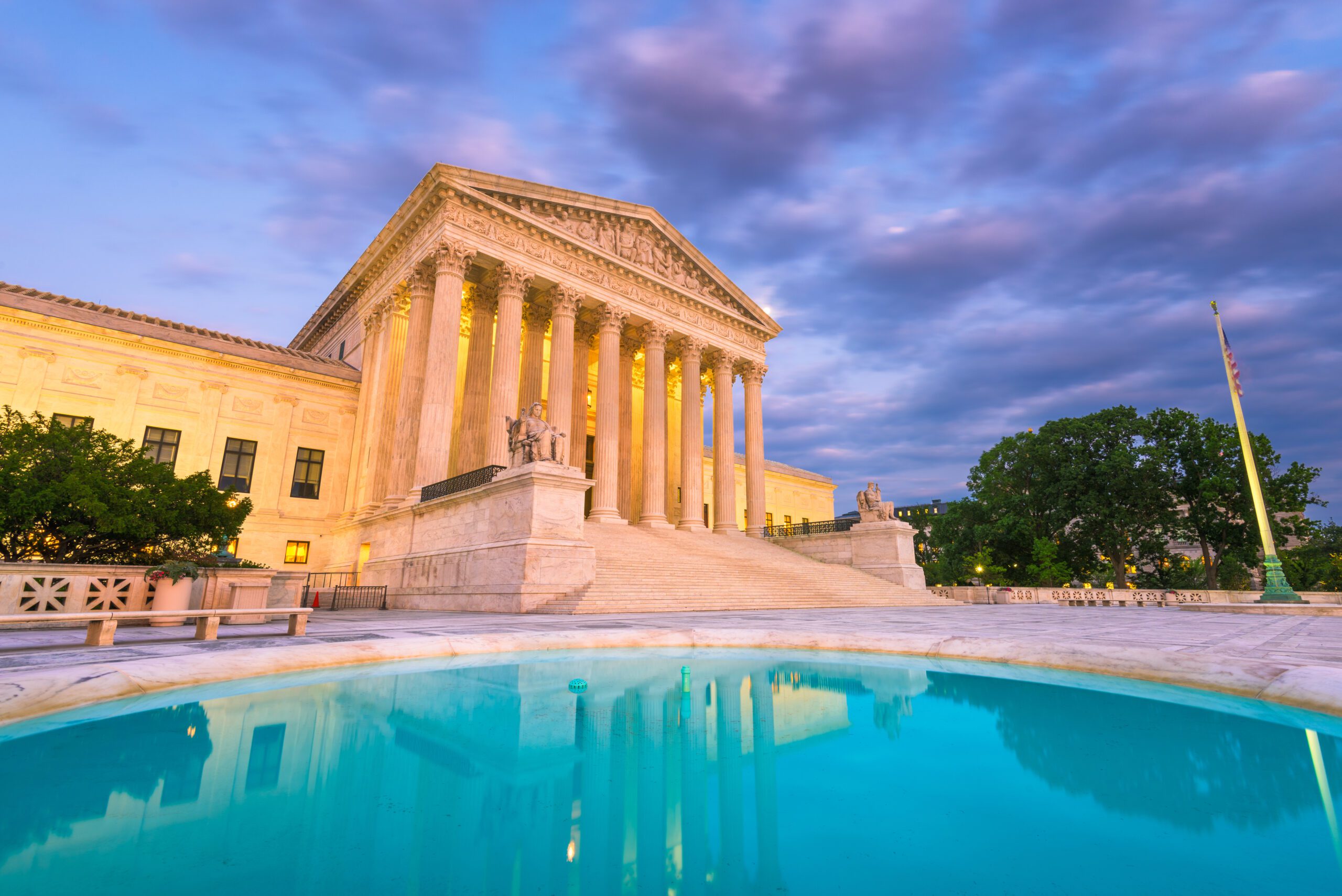
    Credit: Sean Pavone Photo

    Immediate uproar

    The end of Chevron deference is extremely far-reaching, with other industries, such as healthcare, likely to review previous decisions that have gone against them. Justice Elena Kagan, in her dissent, asserted that government regulators are best positioned to tackle highly technical subjects.

    “This court has long understood Chevron deference to reflect what Congress would want, and so to be rooted in a presumption of legislative intent,” Kagan wrote. “Congress knows that it does not—in fact cannot—write perfectly complete regulatory statutes. It knows that those statutes will inevitably contain ambiguities that some other actor will have to resolve and gaps that some other actor will have to fill.

    “Today, the court flips the script: It is now ‘the courts (rather than the agency)’ that will wield power when Congress has left an area of interpretive discretion. A rule of judicial humility gives way to a rule of judicial hubris. In recent years, this court has too often taken for itself decision-making authority Congress assigned to agencies. The court has substituted its own judgment on workplace health for that of the Occupational Safety and Health Administration, its own judgment on climate change for that of the Environmental Protection Agency and its own judgment on student loans for that of the Department of Education.

    “In one fell swoop, the majority today gives itself exclusive power over every open issue—no matter how expertise-driven or policy-laden—involving the meaning of regulatory law. As if it did not have enough on its plate, the majority turns itself into the country’s administrative czar. It defends that move as one (suddenly) required by the (nearly 80-year-old) Administrative Procedure Act. But the act makes no such demand. Today’s decision is not one Congress directed. It is entirely the majority’s choice. And the majority cannot destroy one doctrine of judicial humility without making a laughingstock of a second.”

    Several national healthcare groups made a joint statement expressing that Chevron deference protected the legal stability of public health programs such as Medicare and Medicaid. The groups claim that Chevron ensured that laws passed by Congress were interpreted and implemented by expert federal agencies such as the Centers for Medicare and Medicaid Services.

    “As our amicus brief noted, large health programs such as Medicaid and Medicare, as well as issues related to the Food, Drug and Cosmetic Act, are extremely complex, so it is key that decisions about how to interpret and implement relevant laws are made by experts at government agencies,” the statement reads. “Yet [this] majority opinion explicitly ends the use of this sensible doctrine.

    “As leading organizations that work on behalf of people across the country who face serious, acute and chronic illnesses and many people who lack access to quality and affordable healthcare, we will continue to work to ensure that healthcare laws are implemented in ways that benefit public health.”

    In its response to the Chevron ruling, the Public Health Law Center at the Mitchell Hamline School of Law stated that the Loper Bright ruling will “undoubtedly impact” the field of administrative law and implicate regulations that, in addition to promoting public health and safety, have served to protect consumers, workers, civil rights and the environment.

    “Legal experts differ on the degree to which Loper Bright may wreak havoc on the federal administrative state; however, the forceful dissent written by Justice Kagan in this case and its companion case, Relentless v. Department of Commerce, should not be ignored. The dissent expressed grave concern that these decisions ‘will … cause a massive shock to the legal system, cast doubt on many settled constructions of statutes and threaten the interests of many parties who have relied on them for years.’

    “In the absence of Chevron deference, the tobacco industry will doubtless feel emboldened to dispute any regulatory actions taken on its products. This includes e-cigarette manufacturers who will be eager for courts to undo FDA-issued premarket tobacco product application denial orders for many thousands of vape products.”

    The Biden administration called the Chevron decision “yet another deeply troubling decision that takes our country backward,” adding that President Biden’s legal team would work with federal agencies to do “everything we can to continue to deploy the extraordinary expertise of the federal workforce.”

    Reshma Ramachandran, a health policy expert and assistant professor at the Yale School of Medicine, said, “This term has been disastrous for public health in many ways.”

    In the vaping industry, however, Tony Abboud, executive director of the Vapor Technology Association (VTA), said that the decision clearly bolsters what the VTA has been saying for years: the FDA and, specifically, the Center for Tobacco Products overstepped their authority when they chose to implement a de facto ban on flavored e-cigarettes in their deeply flawed implementation of the PMTA process.

    “To be clear, it is [the] FDA’s responsibility under the law to create a regulation that clearly addresses the statutory standard of what is ‘appropriate for the protection of public health’ since the Tobacco Control Act is ambiguous on how that determination should be made. However, there is no question that the FDA violated the Administrative Procedure Act by implementing what the 5th Circuit Court of Appeals called ‘a de facto ban on flavored e-cigarettes’ through its shifty implementation of the PMTA regulation by imposing new requirements on products after applications were already filed, ultimately ensuring their application’s demise.

    “The Supreme Court’s decision elevates the importance of the Reagan-Udall Foundation’s findings after being convened at the request of the FDA commissioner, which specifically and clearly criticized the FDA’s Center for Tobacco Products for failing to inform companies what must be provided under the regulation to demonstrate APPH [appropriate for the protection of the public health] and, as importantly, for failing to inform the public on how FDA is applying this standard.”

    Beyond nicotine

    The cannabis industry also will likely be impacted by the Chevron ruling. Asheville, NC-based attorney Rod Kight, a global resource and expert in cannabis law, said that the recent ruling by the SCOTUS that Chevron deference is dead is welcome news to the cannabis industry. With respect to the hemp sector, the death of Chevron means that unofficial positions taken about various cannabinoids and processes to produce hemp products by both the U.S. Drug Enforcement Agency (DEA) and the FDA on their respective websites and in letters to stakeholders do not hold any weight, at least not with the courts.

    “In practical terms, this means that judges may not defer to federal agency positions and interpretations and, instead, must weigh their positions relative to the strength of the legal positions and interpretations put forth by the hemp industry,” explains Kight. “For instance, with respect to tetrahydrocannabinolic acid (THCA), the DEA has stated in two letters during the past year that ‘cannabis-derived THCA does not meet the definition of hemp under the CSA because upon conversion for identification purposes as required by Congress, it is equivalent to delta-9 THC.’

    “As I have discussed in several blog posts and interviews, this is partially incorrect and is not exactly what ‘Congress required.’ Rather, Congress requires a post-decarboxylation test for hemp production (i.e., cultivation) but not for harvested hemp or hemp products.”

    In the past, this type of unofficial guidance may have warranted a court’s deference to the DEA, even if an opposing position by a hemp industry participant was stronger and more well articulated. However, Kight said that, in the post-Chevron world, the DEA’s position will not hold any more weight with the court than a counter-position by an opposing litigant.

    “The same thing applies to any number of other issues, from vapes to synthetic cannabinoids,” said Kight. “Hopefully, this exciting legal development will curb the appetite for DEA and FDA to take strong positions that are often unwarranted while helping the hemp industry to carve out favorable judicial rulings based on the best and most well-articulated positions.”

    Abboud said the SCOTUS’ decision in Loper exposes the FDA’s improper regulation of flavored e-cigarettes. While the vaping cases that have gone before the SCOTUS were not explicitly decided on Chevron deference, it is hard to believe that the court will not look skeptically on the FDA’s prior “regulatory shenanigans and post-hoc justifications” laid bare by the 5th Circuit Court of Appeals in the White Lion case.

    “However, unlike the complete overturning of Chevron, it is likely that the court would issue a more limited ruling in the vape cases before it. That said, the real power of Loper is that it provides a template for new litigation against the FDA that is not limited to individual application decisions,” said Abboud. “This new regulatory challenge would reveal the full story of FDA’s tortured and disingenuous implementation of the ambiguous PMTA statutory provisions to ban flavored vaping products and possibly, as a result, spell the demise of the PMTA regulation.

    “VTA is once again calling for the FDA to immediately suspend any further denials based on its existing process and instead create a clear and streamlined tobacco product standard that will allow independent companies of all sizes to get less harmful nicotine alternatives on the market as it is required to do under the law.”

  • Irish Minister Proposes Vape Flavor Ban

    Irish Minister Proposes Vape Flavor Ban

    Irish Health Minister Stephen Donnelly proposed bans on nontobacco vape flavors and advertising in nonspecialized shops, reports The Irish Times. He tabled the suggestions as Ireland’s cabinet approved restrictions on disposable vapes on Sept. 9.

    Donnelly said the proposals are aimed at protecting children. He believes companies are “very cynically” targeting children. The proposed legislation, he said, would see just one flavor, tobacco, being sold.

    “We live in a country where around 13 percent of people between the ages of 12 and 17 have vaped in the last 30 days,” said Taoiseach Simon Harris, who described vaping as “the revenge of the tobacco industry.”

    Minister of State for Public Health Colm Burke said the regulations are necessary because “many people who used vaping products subsequently moved on to smoking.”

  • Joel Sherman Passes Away

    Joel Sherman Passes Away

    Photo: New Africa

    Joel J. Sherman, former president and CEO of Nat Sherman, passed away Sept. 9 in New Jersey surrounded by his family.

    Born on August 2, 1939, Joel Sherman spent decades shaping and elevating the family business, leaving behind a lasting legacy in the world of premium cigars and fine tobacco.

    At the age of 10, Joel Sherman worked in the original Nat Sherman store on Broadway in New York City. Nat Sherman later relocated to 42nd Street near Grand Central Terminal, where it became a symbol of sophistication and high-quality cigars.

    In 1990, after the passing of his father, Nat Sherman, Joel Sherman returned to lead the family business. Under his leadership, Nat Sherman expanded into a prestigious name in the premium cigar world, developing its own lines of cigars and cigarettes.

    In 2017, Nat Sherman was acquired by Altria Group. Although the iconic Nat Sherman store closed in 2020, the cigar blends live on under the Ferio Tego brand, now led by Michael Herklots, who previously served as the vice president of Nat Sherman International and was a longtime associate to Joel Sherman and his family.

    “Mr. Sherman was an industry icon,” Herklots told the Premium Cigar Association. “He was beloved by everyone who knew him and certainly those who had the good fortune of working for him. His moral and ethical compass was always guiding the business and above all, he led with love.”

    Throughout his career, Joel Sherman received many industry honors and awards, including TMA’s “Giant of the Industry” award in 2014. He served as director of Tobacco Reporter’s parent organization, the Tobacco Merchants Association, and was an active participant in, and board member of, several other industry associations. 

  • Dutch MPs Alarmed About Dwindling Tax Take

    Dutch MPs Alarmed About Dwindling Tax Take

    Photo: mdbildes

    Dutch lawmakers are growing concerned about dwindling tax receipts as legal tobacco consumption plummets in the wake of higher tobacco duties, reports DutchNews.

    In April, the price of cigarettes increased to more than €11 ($12.14) per pack, a figure that includes €7.80 in taxes.

    According to the finance ministry, tobacco sales fell 40 percent in June and 30 percent in July and August, causing the government to miss its revenue targets.

    “The government’s forecast of a €400 million increase in taxes threatens to become a loss of €100 million,” tobacco retail group NSO said.

    Figures from the regional statistics office suggest some 35 percent of tobacco products consumed in the Netherlands are not bought there. Government research last year showed 25 percent of discarded cigarettes packs originated abroad.

    Research by the public health institute RIVM also indicates that smokers buy around 10 percent of their tobacco abroad, either importing it themselves or asking others to do so.

    Members of the pro-countryside party BBB called on the finance minister to confirm whether the tax figures are accurate. “If that is the case, we have to reverse the tax increase,” said Member of Parliament Henk Vermeer.

    In July, customs officials seized 6 million cigarettes and 4.5 tons of rolling tobacco at Rotterdam port. If seized product had been sold officially, it would have generated €3.9 million in tax income, officials said.

  • Brand Ranking Released

    Brand Ranking Released

    Photo: PMI

    Marlboro remains the world’s most valuable tobacco brand, but smokeless alternatives are gaining ground.

    Contributed

    The total value of the world’s top 10 most valuable tobacco brands has decreased by 6 percent, with eight out of 10 brands experiencing a decline in brand value this year, according to the latest ranking by Brand Finance, a leading brand valuation consultancy. The ranking reveals a significant shift in the industry toward smokeless alternatives, driven by changing consumer preferences and increasing regulatory pressures. Despite these changes, traditional combustible tobacco brands remain the most valuable, supported by loyal customer bases and effective pricing strategies.

    IQOS (brand value up 8 percent to $3.5 billion) is the fastest-growing tobacco brand, driven by rising revenue from smoke-free products. Philip Morris International reported smoke-free products reached nearly 40 percent of total net revenues in the fourth quarter of 2023. This was driven by the continued growth of IQOS, which has now surpassed Marlboro in net revenues, solidifying its position as the leading premium nicotine brand less than 10 years after its launch.

    Despite a 6 percent drop in brand value to $32.6 billion, Marlboro retains its position as the world’s most valuable tobacco brand for the 10th consecutive year. It leads the sector by a significant margin, with a brand value more than five times that of L&M, which holds the second spot.

    Altria Group, which owns Marlboro in the United States, and PMI, which owns the brand elsewhere, have both faced declining revenue from combustible products. Altria has struggled with lower shipment volumes and increased promotional investments, including a recent $0.17 per pack price increase on Marlboro and other brands in the U.S. Similarly, PMI has reported a drop in revenue from combustible tobacco. Nevertheless, Marlboro retains its top position due to its loyal customer base and strong promotional strategies.

    L&M (brand value $6.2 billion) has climbed to second in the ranking, despite recording a 2 percent decline in brand value. It has overtaken Pall Mall, which now sits in third following a 9 percent loss in brand value to $5.9 billion. L&M’s brand value has taken a hit as shipment volumes have declined. L&M is the sector’s strongest brand with a Brand Strength Index score of 77 out of 100.

    Richard Haigh

    “While Marlboro continues to lead as the most valuable tobacco brand for the 10th consecutive year, the industry is undergoing significant transformation,” said Richard Haigh, global managing director at Brand Finance.

    “The rise of smokeless alternatives like IQOS highlights shifting consumer preferences and changing market dynamics. Earlier this year, BAT’s announcement of a $31.5 billion impairment on the value of some of its U.S. cigarette brands marked the first significant write-down in a major market.

    “Acknowledging the reality that the market for traditional cigarettes is shrinking and taking action should be seen both as a bold and an important step in addressing an existential problem for the company. With eight out of the top 10 brands experiencing declines in value, tobacco giants must be brave in admitting market shifts and strategically planning their next moves to sustain global dominance and relevance.”

    Chesterfield (brand value $3.1 billion) has maintained its brand value year-on-year and advanced one position to seventh place. The brand has seen a rise in shipment volume, with an 8 percent increase in the fourth quarter of 2022 and a 14 percent increase for the full year, which has contributed to its stable brand value this year.

    The latest rankings highlight the dominance of U.S. tobacco brands, which make up a remarkable 92 percent of the total brand value in the ranking, totaling $61 billion. Only two brands in the ranking are from outside the U.S., the U.K.’s Rothmans (brand value down 8 percent to $2.9 billion) and Indonesia’s Sampoerna (brand value down 12 percent to $2.7 billion).

  • Vapes Major Culprit in Aviation Battery Incidents

    Vapes Major Culprit in Aviation Battery Incidents

    Image generated with Adobe Firefly

    The rate of “battery thermal Runaway incidents”—instances of lithium-ion batteries overheating on passenger planes—hit a five-year peak last year, with e-cigarettes being the biggest culprit, according to a report from UL Standards & Engagement (ULSE), a nonprofit organization focused on safety standards.

    The data comes from ULSE’s Thermal Runaway Incident Program (TRIP), a voluntary lithium-ion battery incident reporting system. TRIP comprises 35 passenger and cargo airline participants. The program was designed with the aviation industry to better understand the extent of thermal runaway incidents caused by lithium-ion batteries onboard aircraft and how to prepare for, or ideally prevent, future incidents.

    “Passengers are often unaware that many devices they bring on board are powered by lithium-ion batteries, let alone the risks they carry, and it’s much harder to solve a problem that they do not know exists,” said David Wroth, director of technology and systems at ULSE and the leader of TRIP, in a statement. “Thermal runaway incidents on board aircraft are largely preventable but admittedly more difficult to contend with at 40,000 feet. TRIP provides a unique opportunity for the aviation industry to come together to find strategies to mitigate the risk of these incidents.” 

    As technology evolves and more products rely on rechargeable power, lithium-ion batteries are getting more powerful and in some cases larger, further complicating the thermal runaway threat. Damaged, substandard, or counterfeit batteries run the greatest risk of going into thermal runway, presenting serious consequences in flight.

    Key takeaways from the report include:

    • Incidents are at the highest point in five years of data collection, rising 28 percent from 2019-2023. There are an average of two thermal runaway incidents reported in the TRIP database each week. While on the rise, with approximately 180,000 flights in U.S. airspace per week, it is still highly unlikely to experience a thermal runaway incident.
    • The average passenger brings four rechargeable devices on board. Most common items include smartphones (82 percent), laptops (41 percent), wireless headphones (39 percent), and tablets (36 percent). E-cigarettes were responsible for the most incidents in 2023, with 35 percent of reported incidents attributed to vaping devices on passenger flights, followed by power banks, representing another 16 percent of incidents.
    • Most incidents happen on the aircraft with devices that are stored near the passenger’s seat. Almost nine out of 10 (87 percent) incidents are reported on the aircraft, with the remaining 13 percent occurring when baggage and personal items are on the move. On the aircraft, thermal runaway incidents occur in or around the passenger’s seat nearly 60 percent of the time.
    • The vast majority of incidents are addressed before reaching the fire or explosion stage of thermal runaway. Most (85 percent) incidents in 2023 were addressed when batteries showed warning signs such as overheating and smoking prior to entering full thermal runaway. While only 15 percent of incidents resulted in fire or explosion, the speed in which thermal runaway can develop means that the events in the majority could have been more serious had the issue not been addressed quickly.
    • Rechargeable devices are being packed in checked luggage. The devices that were most cited in thermal runaway incidents in 2023 were also the two most frequently put in checked luggage, according to passengers surveyed. More than a quarter (27 percent) of travelers reported checking portable chargers, and another 27 percent said they checked e-cigarettes. Devices that enter thermal runaway in checked baggage cannot be accessed by crew while in flight, and fires may not be detected as quickly in the cargo hold as they would be in the cabin.

    “Our research highlights several trouble spots that need to be addressed, from passengers missing warnings about lithium-ion batteries to packing rechargeable devices out of reach,” said Lesley Rohrbaugh, head of insights and policy analysis for ULSE. “But we also see clear opportunities to reduce the risk and that’s where we’re focused.” 

    Through additional passenger and cabin crew focus groups and interviews conducted by ULSE and data from TRIP, strategies to reduce these risks include passenger education, cabin crew training, and standards for aircraft baggage handling.

  • Mixed Feelings at PMTA Anniversary

    Mixed Feelings at PMTA Anniversary

    Photo: stokkete

    Representatives of the U.S. vapor industry expressed mixed feelings at the four-year anniversary of the filing of the first premarket tobacco product applications (PMTAs).

    Since the Sept. 9, 2020, deadline, the Food and Drug Administration’s Center for Tobacco Products (CTP) has received applications for 26 million novel tobacco products, mostly electronic cigarettes or e-cigarettes.

    However, despite its acknowledgement that e-cigarettes overall are less harmful and less toxic than combustible cigarettes, the agency has rejected more than 99 percent of PMTAs for these products.

    At the same time, the FDA has authorized 6,670 new combustible tobacco products to be sold in the U.S., including 3,232 new cigars, 1,291 new pipe tobacco products,1,073 new hookah tobacco products and 973 new cigarettes.

    According to the Vapor Technology Association (VTA), current CTP Director Brian King has authorized only four vaping devices for as alternatives to cigarettes, compared with 1,270 combustible products.

    Director King has justified his refusal to authorize flavored e-cigarettes that are widely used by American adults with the need to protect youth. Yet the most recent National Youth Tobacco Survey revealed that the youth vaping rate—the share of users who say they’ve used an e-cigarettes at least once in the past 30 days—has declined to 5.9 percent, the lowest level in more than a decade.

    “Since Sep. 9, 2020, 1.93 million Americans have died from smoking cigarettes (480,000 each year), and approximately 64 million Americans suffered from smoking-related disease (16 million each year), according to the CDC, at a cost of hundreds of billions of dollars to the U.S. health care system and gross domestic product,” the VTA wrote in a statement.

    “In this time, the FDA has only allowed the purveyors of these deadly combustible products to strengthen their grip on the market. Meanwhile, more and more Americans die from smoking, making this anything but a happy anniversary.”

  • Vape Industry Anxious for Triton Hearing

    Vape Industry Anxious for Triton Hearing

    Credit: Flysnow

    The U.S. vaping industry is anxiously awaiting a decision from the highest court in the land.

    By Timothy S. Donahue

    The Supreme Court of the United States (SCOTUS) is poised to address a crucial case for the vaping industry that challenges the U.S. Food and Drug Administration’s decision to block the marketing of flavored e-cigarette products. The FDA is contesting a lower court ruling that favored two vaping companies, which argue that the FDA unjustly rejected over a million premarket tobacco product applications (PMTAs) to sell flavors other than tobacco or menthol.

    Under the agency’s PMTA pathway, companies must demonstrate that the marketing of a product would be appropriate for the protection of public health (APPH). When the FDA makes decisions about vaping products, it must take into consideration the risks and benefits to the entire population, not just users of the products.

    The case, Wages and White Lion Investments v. U.S. FDA, is compelling because a major factor in predicting how SCOTUS will rule in the first vaping case to be heard by the high court, and potentially at least three others, is that in the wake of another SCOTUS ruling, courts no longer need to defer to agency interpretation of the law simply because a statute is ambiguous (see “Principle Response,” page 22).

    Gregory Conley, an experienced industry attorney and director of legislative and external affairs at the American Vapor Manufacturers Association, said that the overturning of the Chevron deference could have a profound impact on the vaping and broader nicotine industries by reducing the deference courts previously granted to regulatory agencies like the FDA.

    “Judges will now critically evaluate the FDA’s regulatory processes and interpretations of ambiguous statutes rather than assuming the agency knows best,” Conley said. “In simpler terms, for the first time since its creation, the FDA’s Center for Tobacco Products will have to follow the law as written.”

    Vape companies secured a legal victory when the 5th U.S. Circuit Court of Appeals sided with Wages and White Lion (doing business as Triton Distribution) and Vapetasia when it overturned the orders denying the marketing of the companies’ flavored products. In its decision, the 5th Circuit condemned the FDA’s imposed requisites as “unfair,” noting that the agency “unexpectedly demanded” that the companies present studies demonstrating that flavored products would contribute to smoking cessation.

    In January, the en banc panel of the 5th Circuit voted 9-5 to grant the petitions for review. The judges ruled that the FDA had been “arbitrary and capricious,” in violation of a federal law called the Administrative Procedure Act (APA), by denying the applications without considering the companies’ plans to prevent underage access and use.

    “Over several years, the [FDA] sent manufacturers of flavored e-cigarette products on a wild goose chase. First, the agency gave manufacturers detailed instructions for what information federal regulators needed to approve e-cigarette products. Just as importantly, FDA gave manufacturers specific instructions on what regulators did not need,” Circuit Judge Andrew S. Oldham wrote in the majority opinion. “The agency said manufacturers’ marketing plans would be ‘critical’ to the success of their applications.

    “And the agency promulgated hundreds of pages of guidance documents, hosted public meetings and posted formal presentations to its website—all with the (false) promise that a flavored-product manufacturer could, at least in theory, satisfy FDA’s instructions. The regulated manufacturers dutifully spent untold millions conforming their behavior and their applications to FDA’s say-so.

    “Then, months after receiving hundreds of thousands of applications predicated on its instructions, FDA turned around, pretended it never gave anyone any instructions about anything, imposed new testing requirements without any notice, and denied all 1 million flavored e-cigarette applications for failing to predict the agency’s volte-face. Worse, after telling manufacturers that their marketing plans were ‘critical’ to their applications, FDA candidly admitted that it did not read a single word of the 1 million plans.”

    The case began when the FDA rejected 55,000 applications to market flavored e-cigarettes in August 2021, including Triton’s, and said applicants would likely need to conduct long-term studies establishing their products’ benefits to win approval. The Office of the Solicitor General asked the Supreme Court to review whether the 5th Circuit’s decision relied upon “legal theories that have been rejected by other courts of appeals that have reviewed materially similar FDA denial orders.”

    The regulatory agency’s “legal theories” in Triton are based on administrative fairness and regulatory consistency, not Chevron deference. In most vaping industry lawsuits, appeals courts have supported the FDA, and manufacturers have sought appeals. In the Triton Distribution case, however, the FDA had to petition the court to review the 5th Circuit’s decision, which was based more on APA violations. SCOTUS is scheduled to hear the case sometime during its new session, which begins in October.

    Conley explained that, while the end of Chevron signals a new openness by the Supreme Court to scrutinize federal agencies, the 5th Circuit’s opinion focused on matters of statutory interpretation, including procedural conduct and the FDA’s sudden imposition of new standards without proper notification.

    “With or without Chevron deference, we believe that the ‘switcheroo’ pulled by the FDA was arbitrary, capricious and not in line with the Administrative Procedures Act,” said Conley. “This stance aligns with the court’s broader view that agencies should not have unchecked power to interpret and enforce ambiguous statutes without clear congressional authorization.”

    Much of the lower court’s opinion is based on APA violations. The APA process for creating federal regulations has (typically) three main phases: initiating rulemaking actions, developing proposed rules and developing final rules. In practice, however, this process is often complex, requiring regulatory analysis, internal and interagency reviews, and opportunities for public comments.

    At its most basic level, the APA requires that an agency create a draft proposed rule, review/approve it, publish a notice of proposed rulemaking in the Federal Register and open a public comment period of at least 30 days. In a footnote to the Triton decision, the court characterized the FDA’s denial of all PMTAs for nontobacco-flavored e-cigarettes as a “de facto flavor ban” that circumvented the APA’s required notice-and-comment rulemaking process:

    “(5) FDA’s categorical ban has other statutory problems. For example, the TCA states that FDA must follow notice-and-comment procedures before adopting a ‘tobacco product standard.’ See 21 U.S.C. § 387g(c)–(d). And Congress specifically called a ban on tobacco flavors a ‘tobacco product standard.’

    “See id. § 387g(a)(1)(A) (referring to tobacco flavors, ‘including strawberry, grape, orange, clove, cinnamon, pineapple, vanilla, coconut, licorice, cocoa, chocolate, cherry or coffee, that is a characterizing flavor of the tobacco product or tobacco smoke’); see also id. § 387g(a)(2) (cross-referencing notice-and-comment obligation to revise flavor standards). FDA unquestionably failed to follow § 387g’s notice-and-comment obligations before imposing its de facto ban on flavored e-cigarettes.”

    Attorneys from the U.S. Department of Justice told the justices that the 5th Circuit’s ruling “has far-reaching consequences for public health and threatens to undermine the TCA’s central objective of ‘ensuring that another generation of Americans does not become addicted’” to nicotine products.

    In court papers, Solicitor General Elizabeth Prelogar told SCOTUS justices that the FDA has never adopted a categorical ban on flavored e-cigarette products. “Rather, it has recognized that, because such products pose a ‘known and substantial risk to youth,’ applicants bear a particularly high burden of proving a potential for benefit to adult smokers that could justify the risk,” she wrote.

    Robert Burton, a longtime player in the U.S. vaping industry and current group scientific and regulatory director for the U.K.-based vaping company Plxsur, said that concerning the Triton case, decisions will now need to carry a significant weight of evidence on both sides.

     “Without the Chevron precedent, it may come down to a judgment based upon who knows the market and consumer best and who understands ‘best’ what is in the interest of public health, but based upon facts and data rather than a gray area deferral,” said Burton.

    Attorney Eric Heyer, who is representing Triton, expressed intense anticipation for the Supreme Court’s hearing of the case. He strongly criticized the FDA for imposing “surprise, after-the-fact … study requirements” and failing to adhere to the guidelines the agency itself had developed.

    It is unclear whether SCOTUS will hear the three other vaping-related cases, which are also before it (Magellan Technology Inc. v. Food and Drug Administration; Lotus Vaping Technologies LLC v. Food and Drug Administration; and Logic Technology Development LLC v. Food and Drug Administration). In these cases, vaping manufacturers seek a review of their losses in FDA-issued marketing denial order appeals handed down by various other circuit courts.

    Yolonda Richardson, president and CEO of the Campaign for Tobacco-Free Kids, has urged the high court to overturn the appeals court order, emphasizing that if allowed to stand, it could significantly harm public health, particularly that of children. Vaping companies have asserted that their products can mitigate the harm caused by smoking combustible cigarettes.

    When the Triton decision was announced, Tony Abboud, executive director of the Vapor Technology Association, welcomed the decision as a “blistering indictment” of the FDA’s Center for Tobacco Products for its “intentional misleading” of the U.S. e-cigarette industry.

    “The court was so stupefied by the FDA’s bad-faith efforts to reject all flavored e-cigarette products [that] it cited Shakespeare to illustrate the full extent of the FDA’s disingenuity, particularly after the court explained that the plaintiffs in that case provided scientific evidence that e-cigarettes ‘save lives,’” Abboud said. “The court also emphasized the dramatic and abrupt ‘FDA flip-flop,’ which led to the implementation of what the court called a ‘de facto ban’ on flavored e-cigarette products in the U.S.

    “This was in addition to the voluminous jurisprudence cited by the court laying bare just how egregious the behavior of the FDA administrative state has been toward e-cigarette products and the consumers that use them. As the court stated, ‘No principle is more important when considering how the unelected administrators of the fourth branch of government treat the American people.’”

  • Illicit Market Remains a Concern: KPMG

    Illicit Market Remains a Concern: KPMG

    Photo: Europol

    European smokers bought more than 35 billion illicit cigarettes in 2023, accounting for 8.3 percent of total EU cigarette consumption, according to a KPMG study commissioned by Philip Morris Products.

    Counterfeit cigarettes remain one of the main sources of illicit tobacco consumption in the region, with 12.7 billion (36 percent) cigarettes consumed, as criminal networks increasingly target higher-taxed and higher-priced markets. Overall, governments in the EU lost an estimated €11.6 billion (12.82 billion) in tax revenue, up from €11.3 billion in 2022. France is still leading the ranking as the country with the largest illicit consumption in all of Europe, with 16.8 billion illicit cigarettes and an estimated €7.3 billion in tax revenues lost.

    “We are witnessing an evolution of organized crime groups in Europe, as they are increasingly locating production facilities nearer Western European countries,” said PMI Senior Vice President of External Affairs Christos Harpantidis in a statement.

    “We consider this phenomenon to be a direct consequence of failed policy approaches that have not done enough to curb illicit trade and reduce smoking prevalence, and it is putting consumers, governments, legitimate businesses, and society alike at risk.”

    We consider this phenomenon to be a direct consequence of failed policy approaches that have not done enough to curb illicit trade and reduce smoking prevalence, and it is putting consumers, governments, legitimate businesses, and society alike at risk.

    Interviews with law enforcement agencies included in the KPMG report shed light onto transnational organized crime’s professionalization of their role in the supply chain of illicit cigarettes. According to information from law enforcement agencies, publicly available media articles, and PMI estimates, criminals have expanded the setup of illegal cigarette factories; in 2023 alone, law enforcement data shows that at least 113 clandestine cigarette manufacturing sites in 22 European countries were disrupted by regional and local authorities.

    The steady increase of counterfeit cigarette consumption for the fourth consecutive year across Europe—mainly driven by the U.K. and Ukraine—is now coupled with the rise of all other illicit trade categories, including illicit whites and contraband. Combined with the continued recovery of cross-border legal volumes, after Covid-related travel restrictions ended in 2022, total non-domestic consumption across the 38 European countries in the study has also reached its highest level ever (15.5 percent), equal to more than one cigarette out of six.

    Despite this scenario, KPMG revealed that in 26 European countries illicit consumption share was less than 10 percent of total consumption. Of these, 16 markets had an illicit consumption share of less than 5 percent. And in 25 of the 38 European countries included in the study, the share of illicit cigarette consumption was either stable or declining, compared to 2022.

    We need to continue working together with law enforcement agencies and governments to ensure that illicit trade does not become an even larger problem across the EU.

    “It’s truly encouraging to see a decrease in illicit consumption in countries like Italy, Poland, Romania, and Spain. We need to continue working together with law enforcement agencies and governments to ensure that illicit trade does not become an even larger problem across the EU,” stated Massimo Andolina, president, Europe region, PMI.

    For the first time since its publication in 2006, the KPMG annual research study has broadened its scope and incorporated all Balkan countries. Now, the research covers 38 countries: the 27 EU member states, as well as Albania, Bosnia and Herzegovina, Kosovo, Moldova, Montenegro, North Macedonia, Norway, Serbia, Switzerland, Ukraine, and the U.K.

    The Balkan region has shown lower presence of illicit cigarettes compared to some of the Western European countries, such as France or the U.K. Ukraine, on the other hand, remains the country with the second highest volume of illicit cigarettes consumed, at 8.4 billion.

  • Cigarette Alternatives Gain Ground in Europe

    Cigarette Alternatives Gain Ground in Europe

    Photo: Tobacco Reporter archive

    Cigarette sales declined across Western Europe in 2023, but increased slightly at a regional level due to the strong growth in Turkey, where illicit trade was falling and the smoking population was growing, according to a new report published by Research and Markets.

    Sales of next-generation products continue to grow in Western Europe, with even an upcoming ban on disposable vapes in the U.K., their biggest regional market, not expected to significantly impact this trend, with Italy remaining the leading market for heated tobacco products regionally.

    Rising prices, due to the global inflationary environment and ongoing tax hikes, increasing health awareness and competition from next-generation products is resulting in declining unit volume sales of cigarettes across most of Western Europe, with little likelihood of this changing over the forecast period.

    Although slower than in the two previous years, closed-system single-use vaping products were still recording growth in the U.K. in 2023. However, with concerns about the throwaway nature of disposable vapes as well as their attraction to underage smokers, the U.K. government announced a ban on these products from early 2025, which force industry players to shift their focus toward open and other closed vaping products.

    The nicotine pouches category is expected to see strong growth over the forecast period. Sweden will continue to be the leading country market in Western Europe, but Finland is expected to take over from Denmark as the second biggest in the region over 2023-2028. This is due to the Finnish authorities deregulating the sale of these products in mid-2023.

    Heated tobacco products will be accounting for just over half of overall smokeless tobacco, e-vapor products and heated tobacco sales at the end of the forecast period, having recorded further growth in the coming years. Philip Morris International continues to drive the development of the category, rolling out its new IQOS Iluma devices and Terea sticks across the region, with the other tobacco giants also present with devices like Ploom (Japan Tobacco International), Glo (British American Tobacco) or Pulze (Imperial Brands).