Month: September 2024

  • Poland Sets Export Record

    Poland Sets Export Record

    Photo: JTI

    At the end of 2023, the net value of Polish tobacco exports (exports minus imports) reached $3.97 billion, the highest since recordkeeping began, according to the Ministry of Economic Development and Technology.

    Poland was the world’s largest importer and second-largest exporter of tobacco and tobacco substitutes in 2023. China and Germany exported tobacco worth $9.18 billion and $3.39 billion, respectively, that year.

    In terms of value, the main destinations of Polish tobacco products were Germany ($2.56 billion), Spain ($677 million) and Italy ($550 million).

    Poland’s largest non-EU customers included the United Kingdom, Saudi Arabia and Algeria in 2023.

    In terms of production, the country ranked only 31st last year, with an output of 22 million kg. By the end of 2023, there were about 3,500 tobacco growers registered in Poland.

    Poland’s rise to prominence in the global tobacco trade was driven in part by entry into the European Union on May 1, 2004, after which many international tobacco companies invested in the country. EU membership has enabled Poland to better integrate into European supply chains, and local manufacturing has become more competitively priced.

    In 2023, Polish exports of tobacco products continued to grow, although the growth rate leveled off due to stricter regulations, rising production costs and changing consumer preferences. For example, domestic consumption has decreased significantly. Today, approximately 24 percent of Poles smoke, down from a peak of 40 percent in previous decades.

  • Frustration Voiced at FDA Hearing

    Frustration Voiced at FDA Hearing

    Photo courtesy of Plus PR

    U.S. lawmakers and advocacy groups expressed concern about the Food and Drug Administration’s regulation of smoke-free products during a Sept. 10 House of Representatives’ Energy and Commerce Subcommittee hearing.

    Health Subcommittee Chair Brett Guthrie criticized FDA delays and what he viewed as a lack of transparency. “Manufacturers filing premarket tobacco product applications [PMTAs] with the goal of meeting the standard of an ‘appropriate [for the] protection of public health’ still have no clear guidance and are waiting for hundreds of days for outreach on their applications,” he said.

    “More importantly, these products pending at FDA could present an opportunity to improve public health by providing less harmful alternatives to traditional cigarettes. This lack of transparency has consequences.”

    Full Committee Chair Cathy McMorris Rodgers highlighted the massive backlog of product applications at the FDA’s Center for Tobacco Products (CTP). “Out of the over 26 million applications for electronic nicotine-delivery systems, or ENDS products, the center has authorized fewer than 50 products,” he said.

    “However, according to recent market data, those products only account for about 10 percent of sales, showing how behind the FDA is in keeping up with demand.”

    Representative Richard Hudson blamed the CTP for the increase in illegal products on the U.S. market from abroad. “Millions of illegal products are on the market targeting our youth while some legitimate companies have been waiting for years for review or [to] even hear a word from FDA about their application,” he said.

    “The illicit market has been enabled by the Center for Tobacco Products’ lack of action … the fact is, the inefficiency of CTP has driven an illicit market that has been filled by China.”

    In a separate statement, Philip Morris said the hearing put a bright bipartisan spotlight on the fact that the agency is neglecting millions of adult smokers by failing to authorize scientifically substantiated, smoke-free nicotine products that are better alternatives to combustible cigarettes.

    “More than 26 million premarket tobacco product applications have been submitted to the FDA for review, but the agency has authorized only several dozens of those applications, and none within the 180-day deadline set by Congress,” said PMI Director for Regulatory Communications Matthew Sheaff.

    “FDA’s goal to strike ‘an appropriate balance between regulation and encouraging development of innovative tobacco products that may be less dangerous than cigarettes’ is far from the reality of its actions. It is our hope the FDA will fully embrace the tobacco harm reduction principles enshrined in the Tobacco Control Act and more importantly provide the millions of adult smokers in the United States access to better alternatives to combustible cigarettes.”

    The Taxpayers Protection Alliance (TPA) criticized the FDA’s authorization process and noted the low rate of youth e-cigarette use. “The PMTA costs to manufacturers are astronomical while the regulatory requirements are obscure at best,” Lindsey Stroud wrote on the TPA’s website.

    “To date, the FDA has only authorized 56 products under the PMTA pathway. Given the current low rate of youth e-cigarette use and the high number of adults using novel tobacco products, there is a pressing need for the FDA to adapt its authorization strategies to better serve adults seeking to quit smoking through these alternatives. Lawmakers are urged to advocate for this necessary shift in FDA policy.”

    Americans For Tax Reform (ATR) called on the FDA to educate the public about the continuum of risk for nicotine products. “The agency’s failures to educate the public about the continuum of risk in nicotine products—despite their own internal documents demanding the need to do so—has meant that 75 percent of Americans inaccurately believe vaping is equal to or worse than smoking,” Tim Andrews wrote on ATR’s website.

    “The fact that the agency’s leadership continues to ignore its own comprehensive plan for tobacco and nicotine, where harm reduction is supposed to play a central role in the FDA’s tobacco control plan, is a downright scandal.”

  • FDA Halts Packaging Enforcement for 15 Months

    FDA Halts Packaging Enforcement for 15 Months

    Credit: Bilitster

    The U.S. Food and Drug Administration has provided guidance on the “Tobacco Products; Required Warnings for Cigarette Packages and Advertisements” final rule that established new required health warnings for cigarette packages and advertisements.

    Specifically, the FDA has issued guidance to the tobacco industry that describes the agency’s enforcement policy for the final rule. The final rule was issued in March 2020 and was challenged in the U.S. District Court for the Eastern District of Texas. In December 2022, the District Court struck down the rule.

    The government appealed the decision and in May of 2024, the U.S. Court of Appeals for the 5th Circuit reversed the District Court’s decision. This reinstated the final rule, causing the rule to now be in effect. The plaintiffs’ petition for a review by the Supreme Court review is pending.

    “The new guidance for the agency’s enforcement policy states that the FDA intends to exercise enforcement discretion and generally not enforce requirements of the final rule for 15 months, or until December 12, 2025,” an FDA release states. “With respect to products manufactured before December 12, 2025, the FDA also intends to exercise enforcement discretion and generally not enforce the rule’s requirements for these products for an additional 30-day period, or until January 12, 2026.”

    The pause aligns with the 15-month compliance period originally contemplated by the Family Smoking Prevention and Tobacco Control Act.

    The FDA chose 15 months to provide an orderly transition period; this aligns with the 15-month compliance period originally contemplated by the Family Smoking Prevention and Tobacco Control Act, before that timing was disrupted by litigation.

    The final rule also requires the industry to submit a plan and obtain FDA approval for the random and equal display and distribution of required warnings on cigarette packages and the quarterly rotation of required warnings in cigarette advertisements.

    The agency’s guidance recommends that entities that do not already have approved cigarette health warning plans submit such plans as soon as possible, but in any event, within five months or by February 10, 2025. Entities that previously submitted cigarette plans to the FDA do not need to resubmit their plans unless they wish to make changes.

    The public can provide comment on the guidance in the docket at regulations.gov. 

  • DKiss Menthol Flavoring to Exhibit at Intertabac

    DKiss Menthol Flavoring to Exhibit at Intertabac

    Menthol cigarettes and menthol-flavored heated tobacco sticks are strictly banned in multiple countries, including Canada, Ethiopia, the European Union, Moldova, Turkey, the United Kingdom, and specific regions of the United States like California, the District of Columbia, and Massachusetts.

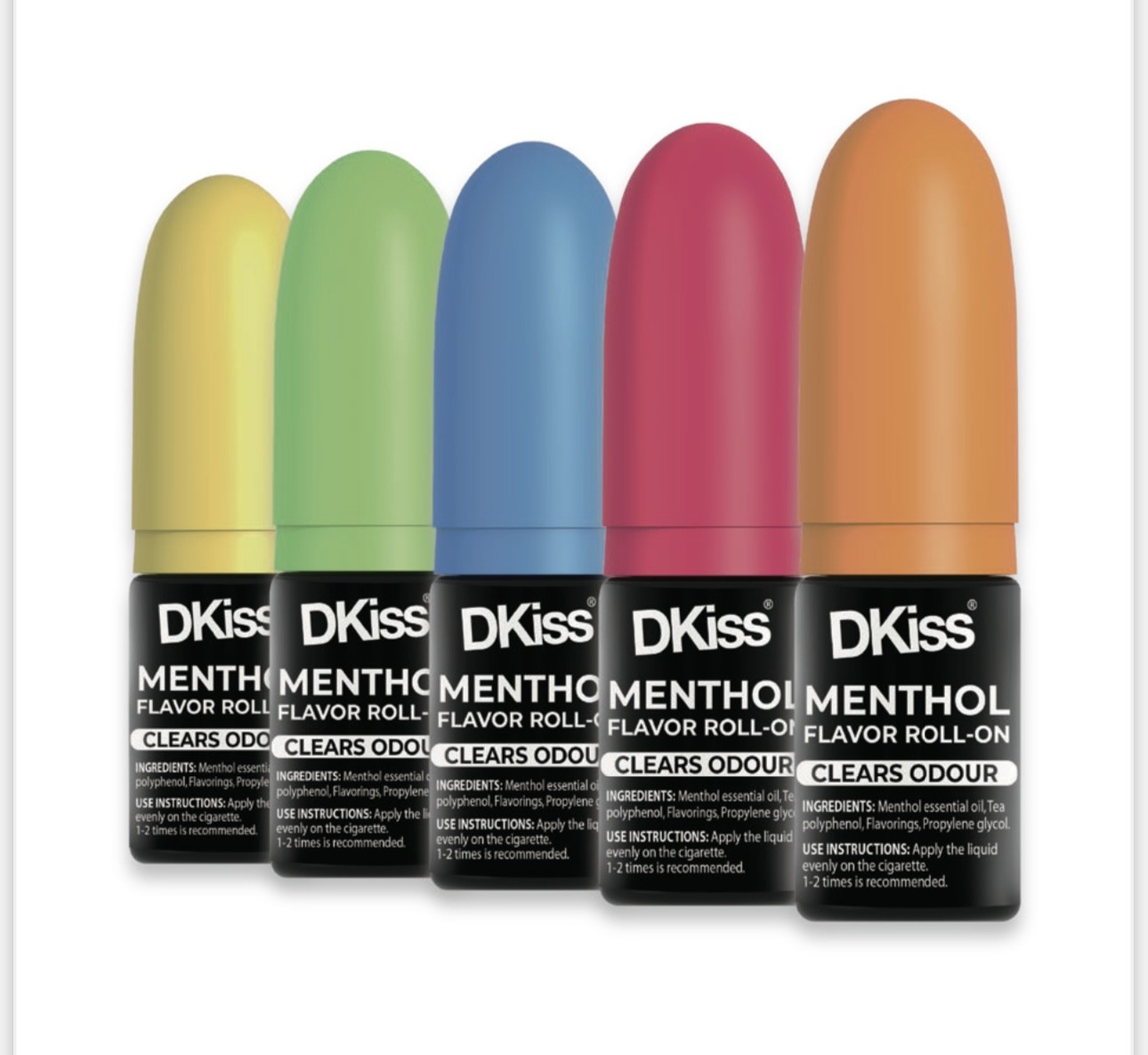
    In an effort to satisfy menthol consumers, Dekang Biotech Co. Ltd., an established player in the vaping industry, developed the DKiss menthol flavor roll-on. According to the company, the innovative product is set to transform the smoking experience in several ways.

    “It is the easiest way to flavor cigarettes. The DKiss Menthol Flavor Roll-On is distinguished by its innovative roll-on design, ensuring a clean and convenient application process while allowing users to adjust the intensity based on their preferences,” a Dekang representative said.

    The DKiss menthol flavor roll-on can be used with both traditional cigarettes and heated tobacco sticks for heat-not-burn nicotine delivery systems. It caters to a diverse audience by providing a wide variety of flavor options, including flavors specifically designed for individuals sensitive to cigarette odors.

    DKiss menthol roll-on allows smokers to flavor their own cigarettes. In addition to menthol, the Dkiss line offers several other mixed flavors derived from plant extracts, such as loquat and ginseng, blended with menthol. This helps remove the bad breath caused by smoking. It brings the most satisfying fragrance to add a new dimension to your inhalation experience, according to Dekang.

    “This product effectively eradicates cigarette odors and bad breath caused by smoking, serving as a discreet solution for smokers,” the representative said. “Mint enthusiasts will appreciate the refreshing mint flavor variant, which cleverly balances the taste of the cigarette and the unpleasant smell it creates, making it an ideal choice for menthol cigarette lovers.”

    Dekang will showcase its DKiss menthol roll-on brand and its other innovative product lines during the Intertabac industry trade show (booths 5.D14 and 1B.A28), which will be held in Dortmund, Germany, from Sept. 19 – 21, 2024.

  • New Canadian Rules Trigger Pouch Shortage

    New Canadian Rules Trigger Pouch Shortage

    Photo: rawpixel.com

    Canada’s new restriction on nicotine pouch sales have left many users scrambling to find the product, reports Western Standard.

    On Aug. 28, the federal government prohibited the sale of nicotine pouches in convenience stores and banned flavors. Modern oral products can now only be legally sold behind the counter in pharmacies.

    In the immediate wake of the ban, some consumers reported difficulty finding the nicotine pouches, as many Canadian pharmacies do not have them in stock yet, and some do not plan to carry the products.

    Health Canada licensed Imperial Tobacco Canada’s (ITCAN) Zonnic nicotine pouches last year, but officials now say they have become too easy for young people to obtain.

    Tobacco harm reduction proponents say the recent measure has made pouches harder to find for adults who use them to stop smoking. Earlier this year, ITCAN launched a public awareness campaign about its Zonnic nicotine pouches. The company said it aimed to dispel myths and prove accurate, science-based information about nicotine-replacement therapies and Zonnic’s potential role in reducing smoking in Canada.

  • Brand Protection Market to Double

    Brand Protection Market to Double

    Photo: Tobacco Reporter archive

    The global authentication and brand protection market will reach $6.68 billion by 2030 from $3.34 billion in 2022, reflecting a compound annual growth rate (CAGR) of 9 percent, according to a new report from The Insight Partners.

    The anticipated growth is driven by the emergence of new counterfeit and product-forging mechanisms, which has increased demand for stronger brand security measures.

    In addition, the rise of omnichannel retailing systems benefits the authentication and brand protection market. These retailing systems feature efficient product allocation, better inventory management and real-time inventory visibility.

    North America dominated the authentication and brand protection market in 2022 and is anticipated to have significant growth in the forecasted period. The report’s authors expect the Asia-Pacific market to grow at the fastest CAGR during the projected period.

    The authentication and brand protection market is segmented into overt, covert, forensics and digital. In 2022, the covert segment held a larger share of the global authentication and brand protection market. Covert authentication and brand protection is a safety marker that is invisible to the naked eye, often printed on primary and secondary packaging with security inks. Additional forensic safety layers are also embedded in the materials and can be confirmed by more extensive lab analysis. This extra security layer proves to be very difficult for the counterfeiter but is easily verified by field inspectors.

    Based on technology, the market is segmented into security printing and tamper-proof labels, security inks and coatings, OVDs and holograms, unique codes, bar codes, RFID, authentication ICs, and others. The bar codes segment held the largest share in the authentication and brand protection market in 2022. In addition, the authentication ICs segment is expected to register the highest CAGR during 2022–2030. Authentication ICs are typically mounted on a printed circuit board. They don’t have any contactless capabilities yet, but they are developing. Inclusion of contactless will add to the growth potential of this market as it will allow the use of authentication ICs in more (nonelectronic) applications and products and form factors such as tags and stickers.

  • Malta to Make Industry Pay for Litter Cleanup

    Malta to Make Industry Pay for Litter Cleanup

    Photo: lienkie

    The government of Malta is working to make tobacco companies responsible for the cost of disposing cigarette butts, in line with the European Union’s Single-Use Plastics (SUP) Directive, reports Malta Today.

    Cigarette butts account for 22 percent of waste collected from European beaches. A survey conducted by the environment ministry in 2021 found that 11 percent of smokers admit to throwing cigarette butts on the floor.

    Nearly all filters in circulation today are made of plastic fibers that won’t break down organically. Studies show that it may take up to 10 years for a cigarette butt to decompose.

    Malta’s draft legal notice introduces a framework compelling tobacco producers to cover the costs associated with clean-up efforts, waste receptacles and public awareness campaigns. The industry will also be required to fund the waste management of their products through a producer responsibility organization (PRO). Until a PRO is set up, Malta’s Environment and Resources Authority will allocate the costs according to tobacco companies’ market shares.

  • R Street Urges Tobacco Policy Revamp

    R Street Urges Tobacco Policy Revamp

    Jeffrey Smith

    The R Street Institute, a U.S. think tank promoting free markets and limited government, has published the first of three papers on tobacco issues and policy. Authored by Resident Senior Fellow Jeffrey Smith, the first installment addresses the health risks of smoking through the lens of preserving individual liberty.

    According to the R Street Institute, new reduced-risk products, such as e-cigarettes, oral nicotine and heat-not-burn products, offer smokers an unprecedented opportunity to reduce their health risks by transitioning to less harmful methods of nicotine consumption.

    However, the U.S. regulatory environment makes it nearly impossible for such products to enter the market. In addition, consumers must contend with considerable volumes of misinformation. As a result, too many Americans continue to die and suffer from smoking-related diseases.

    The R Street Institute urges industry stakeholders, regulatory bodies and public health experts to work together—instead of in opposition—to reduce smoking-related death rates and provide smokers with safer options.

  • Republic Launches Plastic-Free Tips

    Republic Launches Plastic-Free Tips

    Image: Republic Technologies

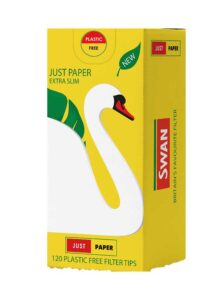
    Republic Technologies has launched Just Paper plastic-free filter tips in the United Kingdom, reports Talking Retail.

    According to Republic Technologies, Just Paper filters provide consumers with an experience that is similar to that of traditional cellulose acetate filters but with a lower environmental impact.

    “The Just Paper range represents a breakthrough in the development of filter tips with a significantly reduced impact on the environment,” said Gavin Anderson, sales and marketing director at Republic Technologies (U.K.).

    “We know that there’s more to do on this journey, but innovation of this kind is a major step for the brand and category. We’re confident that it will attract new shoppers to Swan, strengthening its position as the brand of choice for retailers and roll-your-own shoppers.”

  • CoEHAR to Open Branch in Indonesia

    CoEHAR to Open Branch in Indonesia

    Photo: CoEhar

    The Center of Excellence for the acceleration of Harm Reduction (CoEHAR) at the University of Catania, Italy, signed a letter of intent with the Universitas Padjadjaran to create a new CoEHAR branch in Indonesia. The branch will serve as a regional center for research, outreach and education on smoking harm reduction in the Asia-Pacific region.

    According to statistics from the World Health Organization and other groups, Indonesia had nearly 80 million smokers aged 15 and older in 2022. This places the country third in the world in terms of the number of tobacco users. Conventional cigarette smoking remains the second-highest risk factor in Indonesia.

    “The research conducted by the CoEHAR team at the University of Catania is changing the world, contributing to the revolution of policies aimed at protecting public health in many countries,” said CoEHAR founder Riccardo Polosa in a statement. “Supporting the CoEHAR efforts in Indonesia is a great source of pride for us but also a promise of further commitment to change the fate of a country plagued by unhealthy habits and lifestyles.”

    “Low[-income] and middle-income countries in the Asian region represent a different and multifaceted field of investigation and activity,” said CoEHAR Director Giovanni Li Volti. “Our goal is to enhance research activities by developing joint projects that can fully utilize both the human and technological resources of all the universities and institutions involved, which will contribute to change and the exchange of knowledge and skills.”

    Previously, the universities had already agreed to promote joint research, mobility and training in the field of smoking harm reduction.