Blog

  • Macau Plans 10-Metre Smoke-Free Zones and Sweeping Vape Ban

    Macau Plans 10-Metre Smoke-Free Zones and Sweeping Vape Ban

    Macau is set to expand its outdoor non-smoking areas by introducing a mandatory 10-metre smoke-free buffer zone around the entrances of all hospitals, health centres, nurseries, crèches, and educational facilities, including primary and secondary schools. The measure is part of a newly concluded amendment bill to the Regime of Tobacco Prevention and Control. The Executive Council has finished discussing the draft, which will now be forwarded to the Legislative Assembly for legislative review. Under the proposed framework, the Chief Executive will also be empowered to designate specific high-traffic areas as non-smoking zones via executive order, restricting smoking strictly to designated spots within those locations.

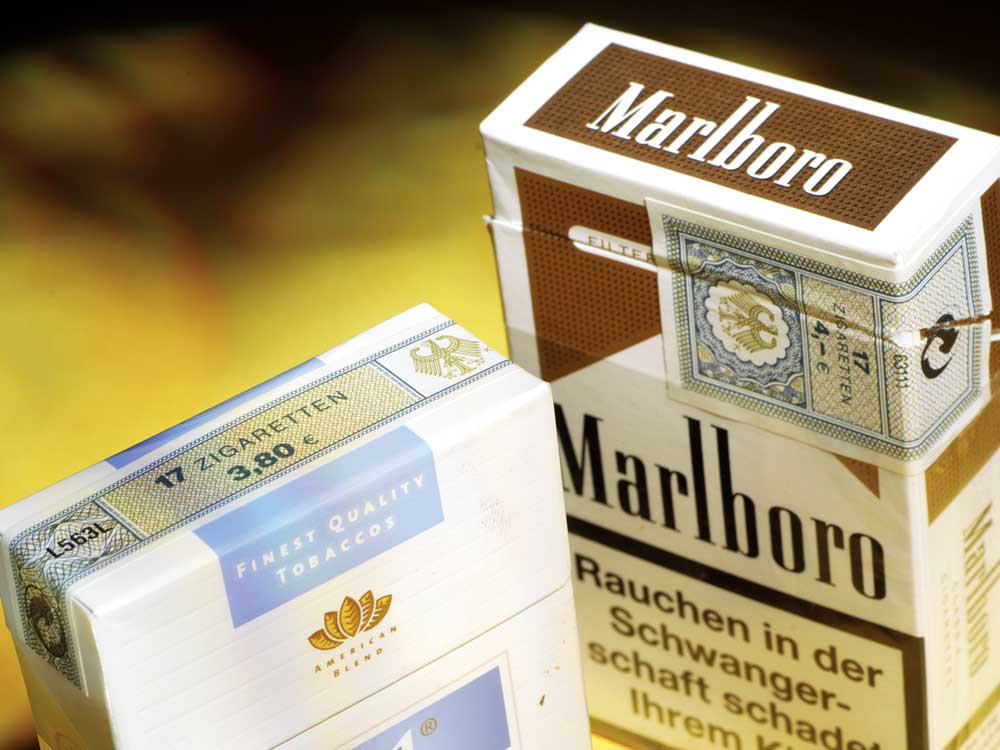
    The amendment substantially tightens restrictions on alternative tobacco products. It proposes a comprehensive ban on the manufacture, distribution, sale, import, export, and transport — both into and out of the city — of nicotine pouches, herbal cigarettes, and waterpipes (shisha), along with their components and accessories. The draft also outlaws the consumption or possession of e-cigarettes and their parts across all indoor public spaces, designated smoking areas, and collective outdoor spaces, subject to a six-month transitional period. Cheang Seng Ip, Acting Director of the Health Bureau, clarified that once the legislation takes effect, vaping will be prohibited everywhere in Macau except inside private homes, with violators facing fines and immediate confiscation of their devices. The bill further targets traditional smoking through packaging and enforcement measures. It introduces plain, standardized packaging for tobacco products, requiring graphic health warnings to cover 85 percent of the two largest surfaces on standard cigarette packets; for cigars and cigarillos, warnings must span at least 70 percent of one primary surface and 100 percent of the other. The tobacco industry will be granted an 18-month transitional period to adapt to the new packaging rules. To modernize enforcement, the amendment also authorizes tobacco control inspectors to be equipped with and use body-worn cameras while on duty.

  • Malawi Tobacco Commission Faults Farmers for Poor Handling, Rejections

    Malawi Tobacco Commission Faults Farmers for Poor Handling, Rejections

    Malawi’s Tobacco Commission has issued a stern warning to tobacco farmers over poor handling practices that it says are damaging the country’s leaf quality, depressing prices, and driving up rejection rates at auction floors. Speaking in Lilongwe at an engagement meeting with the Media Network on Tobacco, TC Public Relations Officer Telephorus Chigwenembe condemned practices such as mixing tobacco grades, adding water to bales to inflate weight, and manipulating leaf quality — conduct he said violates the Tobacco Industry Act of 2019 and is eroding market confidence in Malawi’s tobacco. He stressed that the industry can only stay globally competitive if farmers improve grading, curing, and professionalism, and he urged growers to prioritize quality over quantity.

    The warnings come amid mounting farmer complaints about low prices and rising rejections. Governance and economic commentator Dr. Ben Dzolowere offered pointed criticism of growers, arguing that many of the losses are self-inflicted through poor grading and careless handling. He accused some farmers of mixing green leaf with ripe leaf, blending dust with stalk, and concealing mold with wet spots to deceive buyers and graders, and condemned collusion between some graders and classifiers aimed at unfairly securing better grades. His central message was that while farmers cannot control global prices, they fully control the grade they bring to market, and that “bad grade guarantees a bad price.”

    Dzolowere argued that clean, well-cured, properly graded tobacco gives farmers stronger bargaining power and attracts buyer competition, while damp, mixed, poorly graded leaf invites lower offers from buyers who are driven by profitability and export standards rather than sympathy. Industry experts cited in the article agreed that without improvements in grading, curing, and handling, Malawi will continue to face high rejection rates and lower earnings despite strong production volumes. The Tobacco Commission says it has intensified awareness campaigns on proper tobacco preparation, maintaining that better quality is the fastest route to better prices and restored confidence in the sector.

  • New York Taxes Nicotine Pouches at 75% Under Enacted Budget

    New York Taxes Nicotine Pouches at 75% Under Enacted Budget

    Nicotine pouches in New York will now be taxed like other tobacco products such as cigars, following Governor Kathy Hochul’s signing of the state’s $268 billion budget into law on Thursday. The enacted budget brings alternative nicotine products under the state’s existing 75 percent wholesale tobacco tax. Beginning in fiscal year 2028, the levy is expected to channel an additional $50 million in annual tobacco tax revenues into the Health Care Reform Act fund. The tax differs in structure from the one applied to cigarettes, which are taxed at $5.35 per pack in New York.

    The change treats pouches such as Zyn and On! the same as conventional tobacco products despite their containing no tobacco leaf. State Budget Director Blake Washington has characterized nicotine pouches as a “public health concern,” describing cigarettes and pouches as “a distinction without a difference.” Tobacco control advocates have similarly argued that taxing all nicotine products broadly discourages addiction and protects youth, and Hochul has made youth nicotine access a prominent part of her public health agenda.

    In response, PMI U.S., the American arm of Philip Morris International, issued an unattributed statement saying the company was disappointed not only by the 75 percent wholesale tax but by what it called the state’s disregard for a more fiscally responsible alternative that would have raised more revenue with fewer unintended consequences for small businesses. The statement argued the tax moves in the wrong direction on affordability and public health, contending it will raise costs and discourage adult smokers from switching to better alternatives, thereby keeping more people on cigarettes. It further warned that the tax would fuel illicit trade by shifting demand to unregulated markets lacking safeguards and age verification, which it said would undermine the governor’s stated goal of preventing youth access.

  • Harm Reduction Advocates Slam WHO’s First Nicotine Pouch Report

    Harm Reduction Advocates Slam WHO’s First Nicotine Pouch Report

    The World Health Organization’s first-ever report dedicated to nicotine pouches, a 152-page document titled “Exposing marketing tactics and strategies driving the global growth of nicotine pouches,” which was released May 15 ahead of World No Tobacco Day, has drawn sharp criticism from scientists and tobacco harm reduction advocates, according to Filter. The report warns of the products’ rapid global expansion and aggressive marketing toward young people, with the WHO’s Dr. Vinayak Prasad noting that regulation is struggling to keep pace. Critics’ central objection is that the report omits the role pouches can play in harm reduction.

    The article emphasizes that nicotine pouches contain no tobacco, are used between gum and lip without combustion, and sit at the lowest end of the risk continuum, described by some research as roughly 100 times safer than smoking. With about 1.3 billion tobacco users worldwide and over 7 million associated deaths annually, advocates argue a large population could benefit from switching. Nancy Loucas of CAPHRA contended the report pushes a “prohibitionist narrative” and appears to override the WHO’s own Framework Convention on Tobacco Control, whose Article 1(d) explicitly includes harm reduction within tobacco control. British expert Clive Bates argued the report focuses on nicotine delivery rather than disease risk and called it “fundamentally misleading,” accusing it of spotlighting outlier products like candy branding and super-strength variants to provoke outrage.

    The piece points to Sweden, where easy access to snus and pouches has helped achieve the world’s lowest smoking rate at 3.7 percent, and to South Asia as regions where pouches hold harm-reduction potential. It also cites Canada’s 2024 pouch restrictions, which limited flavors, confined sales to pharmacies, and curbed advertising, as a cautionary case, with pharmacist Todderick Prochnau noting that the clampdown fueled an illicit market with higher-nicotine, non-age-gated products while potentially keeping some adults on cigarettes. Critics objected in particular to the WHO’s recommendations for flavor bans, high taxes, and nicotine-content caps, arguing higher-strength pouches can be key to keeping heavy smokers off cigarettes.

  • Study Finds Herbal Cigarettes May Match or Exceed Tobacco’s Harms

    Study Finds Herbal Cigarettes May Match or Exceed Tobacco’s Harms

    A new study from researchers at IIT Bombay and the University of Illinois Urbana-Champaign challenges the assumption that “tobacco-free” and “nicotine-free” cigarettes are safer to smoke, finding that herbal cigarettes can produce smoke and particulate pollution comparable to, and in some cases worse than, conventional tobacco cigarettes. The researchers tested six products, two tobacco and four herbal, examining particle size, chemical composition, and the smoke’s potential to trigger cellular damage. Their core argument is that the danger lies in combustion itself: burning plant material releases fine particles and reactive chemicals regardless of whether tobacco or nicotine is present.

    Several findings stood out. The herbal cigarettes produced roughly 20 percent more sub-500nm particles than the tobacco cigarettes, and such ultrafine particles can penetrate deeper into the lungs and potentially the bloodstream. The herbal products generated organic and elemental carbon at levels similar to or higher than tobacco cigarettes, undercutting the notion of “cleaner” herbal smoke. On oxidative potential (the capacity of particles to drive harmful reactions linked to inflammation, heart disease, and cancer) herbal cigarettes measured 24 units per microgram per minute versus 18 for tobacco. The wrapper also mattered: leaf-wrapped cigarettes produced more particles and higher oxidative potential than paper-wrapped ones, making leaf-wrapped herbal variants the most hazardous samples tested.

    The study, published in the Journal of Hazardous Materials, also highlights a regulatory gap. Because herbal cigarettes often contain neither tobacco nor nicotine, they can fall outside the regulatory frameworks of the U.S. FDA and India’s tobacco control law, allowing them to carry wellness and health-related claims — such as aiding sleep, easing anxiety, or relieving coughs — that would face tougher scrutiny on conventional products. Researchers including Professor Sameer Patel, Professor Vishal Verma, Dr. Alok Kumar Thakur, and Dr. P.S. Ganesh Subramanian warned that this could mislead both smokers seeking a substitute and non-smokers drawn in by a “natural” image, concluding that tobacco-free does not mean smoke-free or risk-free.

  • Imperial Brands, Japan Tobacco Gain Share in Italy as UK Volumes Slide

    Imperial Brands, Japan Tobacco Gain Share in Italy as UK Volumes Slide

    Cigarette and cigar volumes fell sharply in two key European markets during the four weeks ending in mid-May, according to Nielsen data cited by Bank of America, declining 14.3 percent in the UK and 5.9 percent in Italy. The figures point to continued contraction in combustible volumes overall, while individual manufacturers diverged considerably between the two markets, with Italy emerging as a relative bright spot for some players.

    Imperial Brands saw UK cigarette and cigar volumes fall 13.8 percent over the period, a market that represents roughly 6 percent of its tobacco and next-generation product revenue. In Italy, however, Imperial posted volume growth of 22.8 percent and gained about 150 basis points of market share. Japan Tobacco followed a similar pattern, with UK volumes down 13.9 percent but a 15-basis-point share gain in Italy and a 5.5 percent volume decline there.

    British American Tobacco and Philip Morris International fared less well on share. BAT’s UK volumes fell 20.3 percent, costing it roughly 50 basis points of share, while its Italian volumes dropped 7.3 percent for a loss of about 30 basis points; Bank of America estimates Italy and the UK together account for around 3 percent of BAT’s 2025 adjusted EBIT including new categories. PMI’s UK volumes declined 16.1 percent and its Italian cigarette volumes fell 8.1 percent, with share losses of roughly 20 and 100 basis points respectively, though the report notes that Nielsen’s EU data does not capture PMI’s heated tobacco products.

  • Brazil Readies Crackdown on Crime in Betting, Tobacco Sectors

    Brazil Readies Crackdown on Crime in Betting, Tobacco Sectors

    Brazil’s government is in the final stages of preparing operations targeting organized crime in the online betting and tobacco sectors, a senior government official with direct knowledge of the matter told Reuters. The move reflects a broader strategy to choke off criminal organizations financially, and the source said the plan would not change despite the United States’ decision to designate Brazil’s two largest gangs as terrorist organizations.

    According to the source, criminal groups are believed to be involved in cigarette smuggling and the illegal sale of tobacco products, as well as in infiltrating unlicensed betting platforms that continue to operate despite the sector’s regulation in Brazil. In both areas, small financial institutions, including fintechs, are allegedly being used to launder money.

    The official, who spoke on condition of anonymity because the discussions are not public, said the operations could be launched at any moment but that an exact timing could not yet be determined, given the need to coordinate with police authorities, prosecutors, and the judiciary.

  • Former HHS Secretary Urges FDA to Reach the “Forgotten Smoker”

    Former HHS Secretary Urges FDA to Reach the “Forgotten Smoker”

    In an opinion piece, Dr. Tom Price — a physician, former member of Congress, and former Secretary of Health and Human Services who spoke at ATNF 2025 — argues that roughly 25 million American adults who still smoke have been left out of the public health conversation, even as Washington increasingly treats smoking as a solved problem. Writing from a clinical perspective and citing the loss of his father to smoking-related disease, Price frames continued smoking as one of the nation’s most persistent health challenges. His central reference point is “The Forgotten Smoker,” a new white paper from Philip Morris International U.S. that urges policymakers to confront stalled progress among those still at greatest risk.

    Price builds his case on the principle that the greatest harm from tobacco comes from combustion, noting that the FDA itself recognizes a continuum of risk with cigarettes at the most dangerous end and smoke-free alternatives generally posing lower risk than continued smoking. He argues that for adults who do not quit nicotine entirely, moving away from cigarettes can be a meaningful health intervention, but that this message is not reaching the people who need it, in part because clinicians often feel unprepared to discuss it accurately.

    To illustrate the communication gap, the article cites a PMI U.S.-commissioned survey of 1,565 U.S. healthcare practitioners, fielded by Povaddo, in which 47 percent mistakenly believed nicotine is a carcinogen and another 19 percent were unsure. The same survey found that 69 percent wanted the FDA to share clinical evidence on the harm-reduction role of smoke-free products, 68 percent wanted guidance on counseling patients, and 95 percent said they would share FDA-provided information with patients. The white paper research also found widespread public misperception, with 52 percent of Americans incorrectly believing nicotine causes cancer and 73 percent believing all tobacco and nicotine products are equally harmful.

    Price’s recommended path is straightforward: the FDA should equip clinicians with plain-language guidance developed with input from practicing physicians, explaining what the agency has authorized and how to have evidence-based conversations with adult smokers. He urges the agency to state plainly that smoke, not nicotine, drives the greatest risk, to make authorization decisions understandable to non-experts, and to communicate directly with populations overrepresented among continuing smokers, including older Americans and veterans.

  • Charlotte’s Web Closes BAT Transaction, Adds $10 Million Equity Injection

    Charlotte’s Web Holdings has completed a two-part transaction with BT DE Investments, a subsidiary of British American Tobacco, that converts existing debt to equity and brings in fresh capital. The company first amended and converted in full the convertible debenture it had issued to BAT on November 14, 2022, which carried a principal of CAD75,341,080 (USD54.7 million). Together with CAD14,223,321 (USD10.3 million) in accrued interest, the total converted amount of CAD89,564,401 (USD65 million) was settled through the issuance of 95,281,277 common shares at a conversion price of CAD0.94 per share.

    Concurrently, BAT subscribed to a non-brokered private placement of 14,662,765 additional common shares at the same CAD0.94 price, generating gross proceeds of USD10 million (CAD13.8 million). The company said the net cash will support its participation in the anticipated CMMI Medicare pilot program and other medical-channel initiatives, a pathway intended to let eligible Medicare beneficiaries access CBD products through physician consultation, subject to program requirements and regulatory approvals. The transaction remains subject to final approval from the Toronto Stock Exchange.

    CEO Bill Morachnick framed the deal as a strengthening of the company’s balance sheet and capital position, describing increased financial flexibility and a streamlined capital structure that better positions Charlotte’s Web to execute its growth strategy and expand access. Charlotte’s Web, a Certified B Corporation headquartered in Louisville, Colorado, is a botanical wellness company focused on hemp extract products, including full-spectrum and broad-spectrum CBD as well as other cannabinoid offerings. Its shares trade on the TSX under “CWEB” and on the OTCQX under “CWBHF.”

  • Alaska Vape Tax Heads to Governor’s Desk

    Four years after Governor Dunleavy vetoed a similar measure, the Alaska Legislature passed Senate Bill 24, imposing the state’s first tax on electronic cigarettes and related products. The bill passed the House 24-16 and cleared the Senate on a 15-5 concurrence vote on May 20, the final day of the legislative session. The legislation was the third such bill championed by retiring Senate President Gary Stevens, R-Kodiak, who framed it as a measure to counter the tobacco industry’s efforts to attract young users as traditional cigarette consumption declines.

    If signed into law, the bill would impose a 25% tax on retail e-cigarette products and prohibit purchases by anyone under 21, matching the legal age for traditional tobacco. The state’s tobacco tax had not been updated since 2006, before e-cigarettes were widely marketed, and while many Alaska municipalities had since updated their tax systems to include vaping products, the state had not. The State Department of Revenue estimates the new tax would generate between $1.36 million and $3 million annually.

    A notable structural difference from the 2022 version that Dunleavy vetoed, which proposed a 45% wholesale tax, is the shift to a retail-level tax. The change reflects the varying types of e-cigarette products: while some are sold as complete units, others are assembled by retailers from liquids and components, making it very difficult to track down all suppliers for a wholesale-level tax. During the legislative process, an amendment was also added to include synthetic nicotine products within the scope of the tax program.

    The most controversial amendment to the bill allows indoor smoking at designated cigar bars, added during House floor debate. While anti-tobacco organizations had advocated for the bill, they said the cigar amendment undermines smokefree environment protections, with the American Heart Association, the American Cancer Society Cancer Action Network, and the American Lung Association issuing a joint statement that there is no safe level of exposure to secondhand smoke.

    The bill now awaits action by Governor Dunleavy, whose office declined to comment on whether he intends to sign, veto, or allow it to become law without his signature. The Alaska legislation arrives as the Trump administration moves in the opposite direction at the federal level: the FDA on May 5 authorized the use of four types of flavored vapes, including mango and blueberry, and the federal government continues to impose no excise tax on e-cigarette products.