

Maldives Customs Service data show that 48,881,100 cigarettes were imported between January and July 2026, following a sharp decline in cigarette imports after the government raised import duties. Imports fell from more than 338 million cigarettes annually to 76.2 million between 2021 and 2025, when more than MVR 1 billion ($65 million) in duties was collected. The import duty was increased to MVR 8 ($0.52) per cigarette in November 2024 as part of efforts to encourage tobacco cessation, but the government subsequently reversed the increase, reducing the duty to MVR 4 ($0.26) from July 2026.
Blog
-
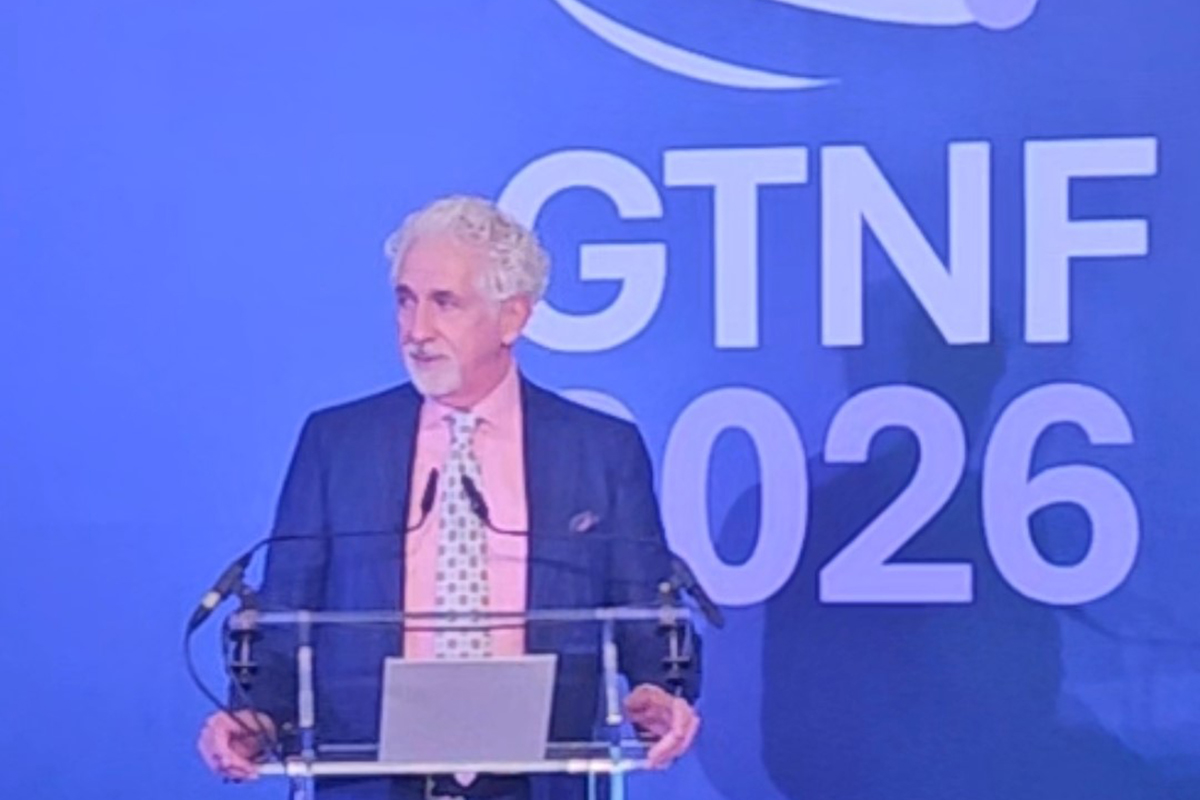
FDA’s Koplow Closes ‘Stimulating’ GTNF 2026
In a keynote address at GTNF 2026 in Lisbon, Dr. Bret Koplow, director of the FDA CTP, said:
I’m here today after having countless talks about the importance of addressing the misperceptions surrounding tobacco harm reduction. And about how we are going to address these issues, including with healthcare providers, so a lot of what we’ve heard here has really resonated.
There’s something particularly fitting about being in Lisbon to discuss the future of tobacco and nicotine. As some of you probably know, centuries ago, Lisbon served as one of the great crossroads of trade, and it was here that Jean Nicot, the French ambassador, obtained tobacco seeds from Portugal in the 16th century and sent them back to Paris, eventually lending his name to the substance that is the very center of our work. Nicotine. Since then, humanity’s understanding of what nicotine and tobacco do to the human body has profoundly changed. With that deepened understanding, we have a responsibility to be good stewards of public health through tobacco product regulation, enforcement, and education, to help people make informed choices about their health and to protect the youth of our nations.
Beth (Oliva) made reference to my background, and I draw on it often in my current role. I’ve sat across from young people whose choices around substances had already begun to shape difficult trajectories that were hard for them to shift. I understand in very direct ways how powerful early exposure to nicotine can be and why the stakes of getting regulation right are not just abstract. I want to spend a few minutes providing perspective about the distinct regulatory context under which we operate in the U.S.
The United States has a dedicated statute governing tobacco product regulation. It’s the Family Smoking Prevention and Tobacco Control Act, which was passed in 2009. It was only 17 years ago that this Act established the Center for Tobacco Products, defined our authority, and created the framework in which we operate. Additionally, it’s only been since 2016 that we’ve had the authority to regulate e-cigarettes and nicotine pouches. Because we’re steeped in this daily, it may seem like we’ve been at this for a long time, but this framework is actually quite new. To a significant extent, differences in tobacco regulation between the U.S. and some other countries is at least in part attributable to the statutory framework that both authorizes and binds our regulatory work. At the same time, the statute gives us a Congressionally defined public health standard against which every new product must be evaluated. This is neither a commercial standard nor simply a safety threshold, but a population-level public health determination. Every authorization we issue requires data that shows the marketing of the product is appropriate for the protection of public health. This standard takes into account a tobacco product’s risks and benefits. It considers people who use higher-risk category tobacco products like cigarettes and their likelihood of obtaining health benefits from switching to this new product. It also considers the risks to vulnerable groups, particularly youth. The standard shapes everything we do in regulating new tobacco products like e-cigarettes and nicotine pouch products, and it’s one of the most consequential features of the U.S. regulatory framework.
The FDA Center for Tobacco Products has a mandate. We regulate cigarettes, smokeless tobacco, cigars, e-cigarettes, nicotine pouches, heated tobacco products, snus, and other products that fall under our definition of a tobacco product, which generally includes any product that contains nicotine from any source that is intended for human consumption, as well as its parts, components, and accessories. Our responsibilities include pre-market compliance, enforcement, public education, rulemaking, and research. But within this broad mandate, I want to be direct about where I believe we can have the most meaningful impact on public health.
There are three things we are currently prioritizing. 1. Preventing youth initiation, especially with combusted products, which are the most harmful and often establish lifelong addiction. Almost 90% of adult daily smokers started smoking by the age of 18, and about 1,500 youth under the age of 18 every day smoke their first cigarette. 2. Helping people in the United States who still smoke cigarettes stop, or switch to products with significantly lower health risks.3. Ensuring people in a position to make those choices, both consumers and the clinicians who advise them, have accurate information about the relative risks of different categories of tobacco products. These three objectives are interconnected. And getting all three right simultaneously is harder than it might seem.
The premarket pathway for new tobacco products has only been operational for a handful of years. The first e-cigarette products were authorized as appropriate for public health less than five years ago. So, in some important respects, we are still finding our footing. In 2018 and 2019, we faced a crisis. We saw an extraordinary, rapid spike in e-cigarette use in young people. Youth use of e-cigarettes doubled in the span of two years, reaching as high as 10.5% of middle school students and 27.5 % of high school students in 2019. It was alarming, unprecedented, and it has left a mark. Around the same time, we also investigated an outbreak of EVALI, and e-cigarette or vaping use associated with lung injury. Even though that was later discovered to be primarily associated with Vitamin E acetate, an additive of illicit THC vaping products, it drastically changed the public’s perception of e-cigarettes. The public health and medical communities’ response when it came to youth was understandable: sound the alarm, restrict access, push back hard. And many of those responses were appropriate at the time, especially given the unknowns around these products then. But, one of the lasting effects of that period, one we’re still contending with, is a widespread and deeply held misperception about what e-cigarettes are and what risks they pose for adults who smoke. Preventing youth use of tobacco products will always remain a priority; however, we must also consider how we can help adults who smoke to reduce the risks of chronic disease and premature death. Today in the U.S., a significant share of adults who smoke and a significant share of physicians believe e-cigarettes are at least as harmful as combusted cigarettes, or that the evidence is too uncertain to conclude otherwise. I know much of this information isn’t new to this sophisticated audience, but I thought it was important to mention it today and say that CTP now endorses these views.
(Audience applauded)
Survey data show that the percentage of adults who correctly understand that FDA-authorized e-cigarettes are generally less harmful than cigarettes actually declined from about 51% in 2012 to under 17% in 2022. That is a striking reversal and a concerning departure from scientific evidence. This matters enormously.
We can review applications, we can authorize products, we can enforce against illegal products. But if the adults who could benefit most from switching don’t believe there is a meaningful difference, or if their doctors won’t recommend switching to FDA-authorized products, we lose much of the public health value of the regulatory work that is so much a focus of our time and effort. Complete cessation of all tobacco use remains the healthiest outcome. That’s our baseline, and it’s unambiguous. But for many adults who try to quit repeatedly and failed repeatedly, completely switching to a lower-risk, FDA-authorized tobacco product could meaningfully reduce their exposure to the toxic and cancer-causing chemicals that make combusted cigarettes so deadly. It’s not a commercial claim; it’s a scientific one. And it’s the harm-reduction basis on which we often issue marketing authorizations.
This brings me to what I think is one of the most important distinctions in our tobacco regulatory landscape: The difference between FDA-authorized products and unauthorized ones. Just last month, a special communication published in the Journal of the American Medical Association by the harm reduction work group of the Society for Research on Nicotine and Tobacco recommends that U.S. clinicians discuss FDA-authorized e-cigarettes as a cessation tool for adults who smoke. That kind of guidance from a peer-reviewed clinical publication is significant. It reflects a growing recognition in the scientific and medical communities that the distinction between authorized and unauthorized products is real and that it matters for public health. Why does it matter? Because we don’t know what’s in unauthorized products. We don’t know how they’re manufactured, what levels of harmful constituents they deliver, or whether they would provide any meaningful benefit to someone trying to switch from cigarettes. The burden of demonstrating that a product meets our public health standard rests with the applicant. And the vast majority of applications we’ve received have not met that burden. To date, we’ve authorized over 100 tobacco products through the Pre-Market Tobacco Product Application review pathway, including e-cigarettes, nicotine pouches, heated tobacco products, and snus, thus extending across nearly all non-combustible categories. Each of these authorizations was only issued after rigorous, multi-disciplinary, scientific review across a wide range of scientific disciplines. The applications for each demonstrated that adult users of high-risk tobacco products could be expected to benefit by completely switching to the new product and that such benefits are offset any identified risk to users and to the general population as a whole. That’s what it means to be FDA authorized. Users of higher-risk tobacco products, who might benefit from switching to one of these authorized products, may not be able to distinguish them from the unauthorized products on the market, too frequently sitting beside them on the same store shelves. We know that cigarette smokers who try and fail to quit using a nicotine replacement therapy, like a nicotine patch or nicotine gum, often conclude such products are ineffective and forego further attempts. I worry about those who may try switching to an unauthorized tobacco product that lacks a meaningful benefit and similarly will wrongly conclude that the entire category offers them no benefit. The opportunity cost of that failed switch is real. Once someone concludes that the category offers them nothing, they may not try again.
No discussion of the U.S. tobacco landscape is complete without addressing flavors. In the wake of 2019, flavors and e-cigarettes became a deeply contested terrain in our country. And with good reason. We know that non-tobacco flavors can be appealing to youth. We know they played a major role in the 2019 youth use surge. And the FDA remains vigilant about that, but we also hear from adults who smoke that they’re drawn to flavors as well. The FDA considers how much the use of a flavored e-cigarette can promote complete switching among the adults who smoke, provided that information is included in that product’s application. That opportunity for risk-reduction is a potential benefit the FDA weighs in its decision-making. In fact, we’ve authorized the marketing of multiple menthol-flavored e-cigarettes partly based on such a claim. Just a few months ago, we authorized the first e-cigarette products in non-tobacco, non-menthol flavors. These products incorporate device access restriction technology, including ID verification, smartphone pairing, and periodic biometric check-ins. These measures effectively limit use to verified adults, 21 and older. The calculus changes where youth access risk is meaningfully mitigated by robust technology. And the approach that the technology that was used in the product that we authorized, that’s just the first. I expect there to be other approaches, some that may not rely on smartphone apps. I know a lot of older smokers in particular may not—my father had a to his last day, had a flip phone still—so your smartphone app isn’t going to work for everyone. It’ll be fingerprint readers that can be programmed at the point of sale by the retailer for the individual user. There may be a whole bunch of different approaches. I am genuinely, genuinely excited about what this could ultimately mean. When combined with existing marketing and point-of-sale restrictions, device access restrictions can provide a novel and robust layer of protection, restricting use to only adults, 21 and older, and that’s the age limit in the United States. And where these flavors that may pose risks to youth are meaningfully mitigated via effective access restrictions, an expanded range of e-cigarette flavors might be more readily made available to adults who smoke, and who want to completely switch from combusted cigarettes. It’s not a silver bullet. But it is a potentially meaningful new tool. And we certainly want to encourage technology and innovation that may similarly work; I want to stress that this is not the only way a company can demonstrate that a non-tobacco flavored e-cigarette meets the public health standard. It remains the case that a non-tobacco flavored e-cigarette may be authorized where the application demonstrates its benefit in helping adults quit smoking outweighs its potential risks.
We don’t have a flavor ban. I know that a lot of people think that we do. There is an additional hurdle in order to be able to demonstrate that the benefits offset the risk to youth. Flavors by themselves are not a problem. We don’t have a concern about flavors. We have a concern about protecting youth. So, one of the things that I think is potentially so exciting about device access restrictions is it takes that out of the equation. I want to be clear, though, that the potential for these new products will not be realized while the U.S. market remains flooded with unauthorized, flavored e-cigarettes. Unauthorized products, many of them flavored, many of them illegally imported into the United States, sit on shelves next to the small number of rigorously reviewed and authorized products. Consumers can’t often tell the difference. Retailers sometimes don’t bother to verify, and the public health benefit of our authorizations is diluted every day these unauthorized products remain on the market. And I know when somebody goes into, often a gas station or convenience store, and they’re looking for a nicotine pouch, let’s say, or an e-cigarette, there’s nothing on the package that tells them which ones are legal for sale and which ones are not; which have been reviewed by the FDA and which ones have not. And so, the consumers are really at a loss and unable to make informed decisions. And we’re talking about various ideas, about helping make better-informed consumers so that the decisions that they make are better.
This is where I want to be direct with this audience because so many of you are in or adjacent to Industry. The unauthorized market is not just a regulatory compliance problem. It’s also a public health problem, and for companies that invested in doing things legally, it’s a competitive fairness problem. Over the past two fiscal years, the FDA and our partners at U.S. Customs and Border Protection have seized millions of unauthorized e-cigarettes worth hundreds of millions of dollars before they entered the country. We’ve dramatically increased import refusals from roughly 100 in fiscal year 2023 to over 9,000 in fiscal year 2025. And that progress is real. It’s not a solution. But it doesn’t mean that trying to mitigate some of this isn’t useful. We know the scale of what enters the U.S. market through unauthorized channels remains significant. We see on the horizon opportunities to do more, with better data sharing, stronger coordination with other federal law enforcement partners, and potentially new regulatory tools. I said earlier that one of our three core priorities is ensuring that consumers and clinicians have accurate information about relative risk. I want to return to that because it’s an area where we have a lot more work ahead. CTP has a webpage that’s dedicated to tobacco harm-reduction education. And we are actively studying the impact of harm-reduction messaging on intended and unintended audiences. We’re looking carefully at expanding our communication on this topic to key audiences while avoiding inadvertently undermining prevention messages to youth. And we’re monitoring the impact of our recent product authorizations on both consumer behavior and public perception. The recent JAMA guidance, the Journal of the American Medical Association guidance that I mentioned earlier, is really encouraging, and if you haven’t read it, I encourage you to do so. I’ve been sending it to a lot of people. When leading scientific societies begin recommending that clinicians discuss FDA-authorized e-cigarettes as part of a harm-reduction conversation, it signals a shift in how the medical community is beginning to engage on this topic. We want to support that shift carefully with evidence and in ways that keep youth protection front and center.
Let me close with this. I’m aware that this international forum draws participants from around the globe. That’s why I traveled to you even after the first two planes I sat on were cancelled for mechanical reasons. The regulatory approach we take in the United States is only one way to go about it. As someone who came into this role with a lot of background in tobacco law, I have a genuine curiosity about how other parts of the world are navigating these crucial questions. And I find conversations like the ones that are happening here genuinely valuable.
This conference has been so stimulating, and so helpful to me personally. I really haven’t been exposed as much as I really probably should have been to how things are being done outside the United States. And the conference has just been so well planned. The agenda has hit every important issue, and one thing that I especially appreciated was that each of you who spoke backed up what you were saying with data. These were not pol-antics. These were scientific data for them, and that’s so crucial for us at CTP. So, thank you to all of the speakers because this was really just wonderfully helpful to us.
The U.S. framework is certainly distinctive. We have a statutory structure that requires us to weigh the public health implications of every product authorization. That structure has led us to develop and deploy rigorous science to confront hard trade-offs and to build institutional capacity that just didn’t exist at all 15 years ago in the United States. We’re still building it. And we’re doing so in a domestic environment that is shaped by a spike in youth use that left a deep weariness about the entire category of e-cigarettes. Awareness, we’re now working to address with evidence, with compassion for adults who use a higher-risk category of tobacco product, who could benefit from switching. Not with alarm.
Many of you in this room represent companies that have invested in or want to invest in developing products that can genuinely benefit public health. Many of these companies may be playing by the rules, submitting applications with real scientific data. Perhaps your products affected youth access restrictions. These companies are partners in the mission that we share. For us, the mission is not about creating profits, though, of course, the pursuit of profits can help drive Innovation—it’s to reduce the harm tobacco has caused for centuries. We have more tools to do that now than we ever did before. We’re continuing to use them to move our strategic priorities forward to advance public health by reducing tobacco-related harm.
Thank you all for welcoming me here.
-

Is Science Impacting Policy or Policy Impacting Science? GTNF 2026
At GTNF 2026 in Lisbon, a panel examining the science behind the European Union’s proposed TPD3 legislation questioned whether policymakers are adequately considering the available evidence on tobacco harm reduction. Moderator Sud Patwardhan said decisions may be made on information that has been submitted but not necessarily analyzed, while Peter Beckett of Three Six One said science alone may not determine regulatory outcomes, with political pressure likely to remain influential. Imperial Brands’ Libby Clarke argued that regulation should reflect the best available science and said recent EU reports gave too little consideration to relative risk and harm reduction. Nathalie Darge of Tobacco Europe said stakeholders should remain engaged with the regulatory process, while Konstantinos Farsalinos of the Universities of Patras and West Attica said scientists have raised concerns that evidence supporting harm reduction and flexible regulation is being overlooked.
Clarke said real-world evidence and the cumulative weight of research should be considered rather than focusing primarily on absolute risk, pointing to countries that have taken what she described as pragmatic approaches to tobacco harm reduction and seen declines in smoking. Farsalinos said the EU’s call for evidence generated what he described as an unprecedented volume of feedback supporting harm reduction and flexible regulation, but that senior health officials have opposed those views. He called for the results to be published and for additional data to be generated and communicated.
-

Don’t Be Afraid to Fail: GTNF 2026
Innovation in the nicotine sector is increasingly being shaped by regulation, consumer needs and the ability of companies to test, fail, and iterate, speakers said during the “Supporting Industry” panel at GTNF 2026 in Lisbon.
Sarah Marking, co-founder and chief strategy officer of Sanova, said product-development methods need to be sensitive and that companies should be comfortable with failure as long as they learn from it. The objective, she said, is to fail at the right stage of the development process rather than after a product reaches the market. Alexander Holthuizen, head of sales at The Snus Brothers Distribution, similarly said prototyping demonstrates that a product can be made once, while manufacturing must demonstrate that it can be produced consistently at scale. He described the ability to fail and iterate as central to product innovation.
Regulation is also playing a larger role in determining innovation, according to Tim Phillips, managing director of Tamarind Intelligence. He said regulation can create challenges but can also build consumer confidence and become a competitive advantage. Dean Cirotta, president of EAS Consulting Group, said proposed FDA rules could expand the definition of a manufacturer to include companies elsewhere in the supply chain, making early involvement in the regulatory process increasingly important. Chris Allen, CEO and co-founder of Broughton, said companies need to understand customer needs, product characteristics, nicotine dosing and applicable regulatory guidance. Sairah Salim-Sartoni, managing director of Salim-Sartoni Associates, said innovation requires a combination of consumer demand and regulatory pressure, with consumers ultimately determining whether products succeed. She also cited a UK finding that 56% of people believe nicotine is harmful and said cultural familiarity and consumer understanding remain important factors in adoption. Speakers also pointed to nicotine pouches as an area of continued potential, while Phillips identified artificial intelligence and the growing volume of sector data as both a major challenge and an opportunity for innovation.
-

Up-and-Coming Nicotine Innovators
Emerging nicotine companies said regulatory barriers, consumer education and the infrastructure surrounding products are increasingly shaping innovation at GTNF 2026 in Lisbon. Anna Franzén, chief regulatory, clinical and quality officer at Emplicure Consumer AB, said consumer diversity is important and that companies need greater cross-functional cooperation. Ronan Barry, chief legal and corporate affairs officer at AIR, said the share of nicotine consumers using combustible cigarettes has fallen from roughly 90%-95% a decade ago to about half today. He said innovation still needs to match the results of traditional smoking while providing safer alternatives, but argued that regulatory requirements and compliance costs can give illicit operators an advantage.
Fredrik Laurell, CEO of Nicoccino, said the industry has a responsibility to consumers who prefer nicotine to provide quality, safer products. He said overly restrictive regulations can create barriers for legitimate businesses while criminals face fewer obstacles, and called for greater cooperation between industry and regulators. Martin Miller, chief commercial officer at IKE, said innovation has shifted from the product itself to the infrastructure connecting consumers, products and regulation. He said manufacturers need to build regulatory considerations into products from the beginning rather than retrofit them later.
Ryan Selby, managing director of Emerald Innovations, said nicotine adoption depends on more than the substance itself, with rituals and established consumer behaviors also influencing product use. He said heavily regulated markets limit opportunities to test new products and argued that companies need room to innovate while maintaining appropriate regulation. Selby also said limited consumer awareness remains a challenge, arguing that decades of public messaging about the risks of smoking have also contributed to misconceptions about nicotine. He said larger tobacco companies can play an important role in bringing new products to global markets.
-

Innovation Requires Regulatory Viability: GTNF 2026
Innovation in tobacco and nicotine products is advancing rapidly, but companies must account for regulation, product standards and consumer needs alongside science and technology, speakers said at GTNF 2026 in Lisbon. In her keynote, Eve Wang, executive director at Smoore International, said the industry has moved from introducing new products into a growth phase, while noting the speed at which products can move from concept to commercialization in China. She compared the development process to a Chinese saying: “The journey is half complete when you are 90% of the way there. The last mile is always the hardest.”
During the subsequent Innovation 360 panel, moderated by Wang, Clio Boura, head of science operations at British American Tobacco, said innovation needs to work closely with science and an enabling regulatory framework that establishes clear quality and safety requirements. She also pointed to portability, convenience, digital technology and sustainability as factors likely to shape products over the next five years. Greg Conley, senior regulatory counsel at ITG Brands, said, “Regulatory viability has to be part of viability from day 1,” arguing that product standards could give companies clearer targets for meeting regulatory requirements. He said the industry’s priority should be the ability to “innovate repeatedly, to keep moving things forward.”
Yu Kang, head of research institute at Hangsen International, said rapid evolution is central to the e-cigarette industry but that innovation must include consumer protection and supply-chain oversight. He called for more efficient premarket review, collection of product standards across markets and closer cooperation among regulators and innovators, supported by scientific data demonstrating safety and compliance. Kang also emphasized the need to continually collect consumer feedback to develop products that meet quality expectations while supporting harm reduction.
-

Illicit Market Threatens Harm Reduction Progress
The growing illicit nicotine market is creating risks for brand protection, consumer safety and tobacco harm reduction, speakers said at GTNF 2026 in Lisbon during the “Playing Defense – Brand Protection and its Impact on Harm Reduction and Consumers” panel. Following a keynote address, Lillian Ortega, founder and chief regulatory strategist at WOW Solutions, moderated the panel and said the U.S. unauthorized vape market is already significant and warned that “you can’t enforce your way out of it.” Ortega said an estimated 70% of the U.S. vape market is unauthorized, although the figure does not capture online sales and some vape shops, and argued that regulatory delays and gaps in FDA oversight can leave demand to illicit suppliers. She called for timely and predictable product authorization, better tracking of products entering the U.S. and greater information sharing throughout the supply chain.
Michael Horowitz, managing counsel at RAI Services Company, said an entrenched illegal market is difficult to reverse, particularly when consumers may not realize they are purchasing unauthorized products. He also pointed to fragmented enforcement and the difficulty of distinguishing unauthorized products from products that are genuinely illicit.
Abel Vecino, head of illicit trade prevention for Southwest Europe at Philip Morris International, said brand protection is also about protecting consumers as they move away from combustible products. He said criminal organizations are scaling production, moving closer to consumer markets and exploiting enforcement gaps, while adapting to demand for lower-priced products. Vecino called for greater cooperation with law enforcement and proactive partnerships before problems emerge.
Stevan Vranes, global head of corporate affairs at Imperial Brands, said illicit products are increasingly visible in local communities and legitimate retail channels, while distinguishing legal from illegal products has become more difficult in newer nicotine categories. He said illicit cigarette factories across Europe can now produce up to 1 million cigarettes an hour and that illicit sales are increasingly moving online. Vranes called for a holistic approach, including greater pressure on social media and stronger action against online sales, while acknowledging that authorities cannot physically inspect every container entering global ports.
-

GTNF Keynote Challenges Tobacco Control’s Approach
Benjamin Dessart, head of external affairs at Universal Corporation, used his GTNF 2026 keynote in Lisbon to compare the regulatory approaches of the U.N. Framework Convention on Climate Change (UNFCCC) and the WHO Framework Convention on Tobacco Control (FCTC), arguing that transparency, stakeholder participation and due process produce stronger policymaking. Dessart said climate policy has embraced collaboration with industry, while an increasingly restrictive interpretation of FCTC Article 5.3 has limited participation by tobacco-industry stakeholders. He contrasted the UNFCCC’s Article 6, which calls for public participation in addressing climate change, with FCTC Article 5.3, which requires parties to protect tobacco-control policies from commercial and other vested interests of the tobacco industry.
Dessart said the difference has become increasingly visible at the respective Conferences of the Parties, noting that climate COPs provide greater public access and increasingly engage industry, while tobacco COPs have tightened observer and media access. He presented a regression analysis of 48 European countries comparing FCTC implementation levels with changes in tobacco use from 2000 to 2025. According to his presentation, the analysis produced an R-squared of 0.02 and a p-value of 0.32, indicating no statistically significant relationship between the level of FCTC implementation and reductions in tobacco use.
Dessart pointed to the U.S., which is not a party to the FCTC, as an example of a country that engages stakeholders and has adopted a harm reduction approach. He said U.S. tobacco use declined 23.4% between 2000 and 2025, compared with declines of 25.9% in the United Kingdom, 26.7% in Austria, 30% in Sweden and 33% in Norway. He concluded by calling on industry, farmers, retailers and consumers to participate when governments seek input and said industry must be “a trusted partner” by being transparent, consistent and intellectually honest.
-

Climate Policy and Sustainability Take Center Stage at GTNF 2026
GTNF 2026’s “Innovative Responses to Climate Change & Global Climate Policy” panel examined how the nicotine industry is responding to environmental pressures through sustainability strategies, regulation, and industry-government cooperation. Moderator Ben Dessart, vice president of external affairs at Universal Corporation, opened by stressing the need for industry to “be part of the conversation.”
Nicole Austin, director of sustainability engagement and strategic partnerships at Philip Morris International, said sustainability must be integrated across business decisions rather than treated as a separate initiative. She identified combustible products as the company’s largest negative environmental impact and smoke-free products as its largest positive contribution, with PMI’s strategy focused on making cigarettes obsolete by addressing both supply and demand. Austin said, “Reacting is much more expensive than predicting,” emphasizing long-term planning to mitigate risk.
Aylèn Van Isseldyk, founder and director of THR, Ethics and Sustainability, focused on the environmental challenges posed by disposable vaping products. She said the industry cannot allow advances in nicotine delivery to create a new source of environmental harm and argued for proportional policies that consider both human and environmental health while protecting vulnerable populations. Miranda Kinney, senior vice president and global head of corporate affairs and impact at Pyxus, emphasized the need for industry and governments to work together and said environmental efforts should begin with farmers rather than at the manufacturing stage. She said educating farmers about why environmental practices matter can change how they handle materials such as plastic. Tadas Lisauskas, president and co-founder of Greenbutts, said regulation and compliance will be key to driving adoption of biodegradable products, arguing that large companies need regulatory certainty to justify allocating budgets to solutions that consumers may not yet demand.
-

FDA Names Koplow as Tobacco Center Director
The U.S. Food and Drug Administration has selected Bret Koplow, Ph.D., J.D., as director of the Center for Tobacco Products, giving the center a permanent leader with more than a decade of legal, policy, and regulatory experience at the agency. Koplow has served at FDA since 2011, including as senior counselor to the FDA commissioner, where he focused on regulatory, policy, and operational matters involving tobacco products. He had been serving as CTP’s acting director before the appointment.
According to the Department of Health and Human Services, Koplow will lead CTP around two priorities: promoting innovation and access to less harmful alternatives for adults who smoke while taking action to protect youth and minors from tobacco and nicotine. His appointment was part of four senior FDA leadership selections announced by HHS, including Jared Seehafer as the agency’s first deputy commissioner for technology and artificial intelligence, Michael Davis as director of the Center for Drug Evaluation and Research and Karim Mikhail as director of the Center for Biologics Evaluation and Research.
HHS Secretary Robert F. Kennedy Jr. said the appointments are intended to advance reforms and strengthen FDA’s leadership in medical innovation. Acting FDA Commissioner Kyle Diamantas said the selections “signal the direction we are heading” as the agency seeks to build its workforce and infrastructure and accelerate innovation across its centers.