Blog

  • 5th Circ. Backs FDA’s Block on Vape Marketing

    5th Circ. Backs FDA’s Block on Vape Marketing

    The U.S. Court of Appeals for the Fifth Circuit upheld the U.S. Food and Drug Administration’s denial of marketing applications for menthol-flavored e-cigarette products submitted by two vape manufacturers, ruling that the agency reasonably concluded the products’ potential benefits for adult smokers did not outweigh the risks of youth initiation. The decision affirms the FDA’s application of the “appropriate for the protection of public health” standard required under the Premarket Tobacco Product Application (PMTA) pathway.

    The ruling, against Triton Distribution and Vapetasia LLC, reinforces the FDA’s authority to reject flavored vaping products where applicants fail to provide sufficient evidence that the products offer a net public health benefit.

  • Korea Subjects Synthetic Nicotine to Tobacco Rules

    Korea Subjects Synthetic Nicotine to Tobacco Rules

    South Korea announced that it has begun full enforcement of revised tobacco regulations that classify all nicotine-containing products—including synthetic nicotine e-cigarettes—as tobacco products. Following a two-month transition period after amendments to the Tobacco Business Act took effect in April, the Ministry of Health and Welfare and local governments launched nationwide inspections on June 24, targeting compliance in non-smoking areas and cigarette vending machine operations. Individuals caught using cigarettes, heated tobacco products, or liquid e-cigarettes in designated non-smoking areas can face fines of up to 100,000 won ($65).

    The revised law expands the legal definition of tobacco from products made from tobacco leaves to all nicotine-containing products, bringing synthetic nicotine e-cigarettes under existing restrictions on use, advertising, sales, and health warnings. Authorities are also inspecting vending machines to ensure compliance with age-verification and youth-access requirements. The regulatory changes come as e-cigarette use continues to rise in South Korea, with government data showing liquid e-cigarette use increased from 4% to 4.5% over the past year and by more than 70% over the past seven years. The government said the new framework is intended to strengthen public health protections and close regulatory gaps involving synthetic nicotine products.

  • Quitting Smoking Motivated Nearly Half of Pouch Users: Study

    Quitting Smoking Motivated Nearly Half of Pouch Users: Study

    Haypp Group, the parent company of Nicokick.com and Northerner.com, released its Nicotine Pouch and Oral Nicotine Report 2026, based on purchasing data from more than 172,000 customers and a survey of 2,245 adult nicotine pouch users. The report found that 46% of respondents said quitting smoking, vaping, or both was a reason they first tried nicotine pouches, while 88% had previously used another nicotine product before adopting pouches. The average age of a first-time online nicotine pouch purchaser was 45, and adults aged 55 to 64 represented the fastest-growing customer segment in 2025.

    The report also highlighted differences between online and physical retail channels. Among surveyed customers, 98% recalled completing age verification when purchasing online, compared with 75% for purchases made in physical stores. Respondents who reported obtaining nicotine pouches while underage most commonly cited local shops (52%), friends (23%), and supermarkets (10%), while only 5% reported obtaining them online. Haypp Group said sales through Nicokick.com and Northerner.com increased 22% in 2025 after adjusting for sales interruptions in certain states and supply constraints affecting leading brands. The company noted that the survey reflects the experiences of its own customers and is not intended to represent the broader U.S. nicotine pouch market.

  • PMI Examines Role of Science in Smoke-Free Future

    PMI Examines Role of Science in Smoke-Free Future

    Philip Morris International convened public health experts, academics, consumer advocates, and policymakers in Rabat, Morocco, for its Technovation Smoke-Free conference on June 24, which focused on tobacco harm reduction, smoke-free alternatives, and evidence-based health policy. Discussions centered on the role of science and innovation in reducing smoking-related harm, with speakers highlighting the potential of smoke-free products and the importance of regulatory frameworks, consumer information, and locally driven public health strategies across Africa.

    The event featured senior PMI executives, including communications executive Tommaso Di Giovanni and Maghreb Managing Director Taylan Süer, alongside researchers and public health experts from Morocco, Tunisia, Libya, Senegal, and France. Participants discussed nicotine-related misconceptions, consumer access to information, and health-policy sovereignty, emphasizing the need for African countries to develop public health approaches tailored to local conditions. The conference concluded with calls for greater collaboration between scientific communities and policymakers to support evidence-based decision-making and harm-reduction strategies.

  • Malawi’s Tobacco Revenue Down 31% Through Nine Weeks

    Malawi’s Tobacco Revenue Down 31% Through Nine Weeks

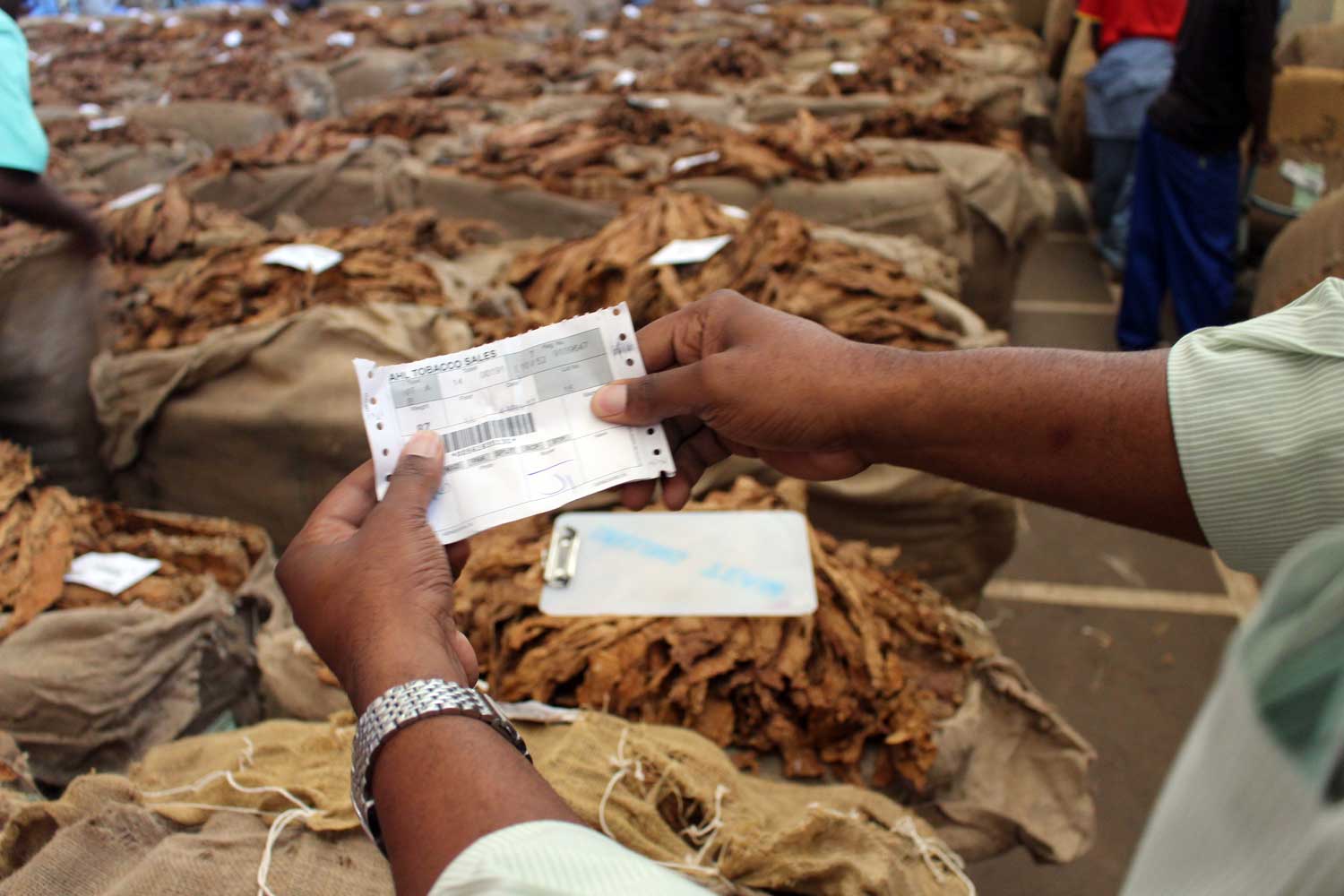
    Malawi’s 2026 tobacco marketing season generated K258.5 billion ($149 million) in sales during its first nine weeks, with farmers selling 71.8 million kg of tobacco at an average price of $2.07 per kg between April 20 and June 19, according to official market data. The performance, however, remains below 2025 levels, when 86.5 million kg were sold at an average price of $2.48 per kg, leaving a 30.7% loss in revenue from a year ago.

    Market conditions improved as the season progressed, with rejection rates at auction floors falling from more than 90% early in the season to around 60%-62% since week seven. Overall market uptake reached 96%, reflecting strong buyer demand for acceptable-quality leaf. However, auction sales accounted for just 39.4% of total transactions, underscoring the growing importance of contract farming in Malawi’s tobacco sector. While improved uptake and lower rejection rates have supported market efficiency, weaker global prices and reduced crop volumes continue to weigh on farmer revenues.

  • Philippine NTA Helping Tobacco Farmers Diversify

    Philippine NTA Helping Tobacco Farmers Diversify

    The Philippines’ National Tobacco Administration (NTA) is expanding efforts to diversify income sources for tobacco-growing communities through livelihood and entrepreneurship training programs. NTA-Isabela, in partnership with the Isabela School of Arts and Trades-TESDA, conducted food-processing training for 30 tobacco farmers and family members in Ilagan City, teaching participants how to produce value-added products such as kimchi and pichi-pichi.

    The training was carried out under the Farmers Organization and Development Program (FODP) and forms part of the government’s broader rural development agenda aimed at improving household incomes and reducing reliance on a single crop. NTA officials said the initiative is designed to help farmers develop alternative income streams, encourage small-scale enterprise creation, and strengthen economic resilience amid changing agricultural and market conditions.

  • Moldova Aligning New Smoking Bans with EU Standards

    Moldova Aligning New Smoking Bans with EU Standards

    Moldova enacted comprehensive new anti-smoking regulations effective June 24, expanding smoking and vaping restrictions as part of its effort to align tobacco-control policies with European Union standards. The legislation prohibits the use of cigarettes, heated tobacco products, e-cigarettes, and hookahs in a range of additional public spaces, including sports facilities, beaches, water parks, zoos, underground pedestrian passages, passenger boarding areas, and many common areas of residential buildings. The law also bans smoking and vaping within 10 meters of public building entrances and ventilation systems.

    The new framework introduces significantly higher penalties for individuals, businesses, and property managers who fail to comply with the rules. Individuals caught smoking in prohibited areas face fines of €89 to €115 or community service, while businesses and administrators can face fines exceeding €700 equivalent and potential suspension of operations for repeated violations. The legislation also prohibits the sale of oral nicotine pouches, including synthetic nicotine variants, and imposes penalties on retailers that sell tobacco products to minors. Moldovan health officials said the measures are intended to reduce youth nicotine use and exposure to secondhand smoke while bringing national regulations closer to EU tobacco-control standards.

  • FDA Reports Efforts Prevented 450K Youth from Vaping

    FDA Reports Efforts Prevented 450K Youth from Vaping

    The U.S. Food and Drug Administration published new information in a special issue of the American Journal of Preventive Medicine highlighting the measurable public health impact of its youth tobacco prevention efforts, particularly the “The Real Cost” campaign. According to studies featured in the issue, the campaign is estimated to have prevented roughly 444,252 U.S. youth from initiating e-cigarette use between 2023 and 2024, while also reducing an estimated $42 million in illegal e-cigarette sales that would have otherwise been consumed by minors. The findings are based on peer-reviewed research and analyses conducted by FDA scientists and external collaborators, reinforcing the campaign’s effectiveness in shaping youth behavior at scale.

    FDA officials, including leadership from the Center for Tobacco Products, emphasized that the results demonstrate how sustained, evidence-based public education can materially shift youth attitudes and reduce nicotine initiation. The special journal issue compiles 12 studies examining campaign reach, audience segmentation, behavioral impact, and cessation engagement. One analysis found that roughly three-quarters of surveyed youth reported exposure to at least one prevention ad, with especially strong reach among higher-risk groups, while another showed more than 253,000 visits driven to the SmokefreeTeen cessation platform, including over 11,000 completed quit plans.

    The FDA’s broader claim is that “The Real Cost” campaign — launched in 2014 for cigarettes and expanded in 2018 to address vaping — has become a long-running model for data-driven prevention messaging. Officials argue that its demonstrated impact on youth behavior and attitudes provides a foundation for expanding educational efforts, including potential messaging aimed at influencing adults who smoke toward cessation and harm reduction, while maintaining a continued focus on preventing youth initiation.

  • Smokeless Only Products Growing in Nicotine Market: Report

    Smokeless Only Products Growing in Nicotine Market: Report

    Smokeless nicotine products, including nicotine pouches, continued to gain share in the U.S. nicotine market, with NielsenIQ and Goldman Sachs data showing the segment up more than 8% year over year for the 52 weeks ended May 30. While cigarettes still accounted for nearly 70% of the total nicotine category, sales declined 2.4%. Cigars fell about 1%, and vapes recorded double-digit declines. Grand View Research projects U.S. nicotine pouch sales to grow at a compound annual growth rate of nearly 25% through 2033, positioning the segment as the fastest-growing area within smokeless tobacco.

    The report said market concentration remains high, with Altria Group, British American Tobacco plc, and Swedish Match accounting for more than 90% of smokeless nicotine sales.

  • Scientific Review Concludes Vaping ‘Likely’ Causes Cancer

    Scientific Review Concludes Vaping ‘Likely’ Causes Cancer

    A peer-reviewed report published in Carcinogenesis this week concluded that nicotine-based e-cigarettes are “likely” to cause lung and oral cancers, based on a synthesis of more than 100 studies covering animal experiments, chemical analyses, and human biomarker research. It said it has “reached the most unambiguous conclusion to date about the cancer risk posed by e-cigarettes: nicotine-based vapes are likely to cause cancers of the lung and oral cavity.”

    The paper was led by Adjunct Professor Bernard Stewart AM of University of New South Wales, with co-authors from several Australian institutions including the University of Queensland and University of Sydney. Rather than presenting new experimental data, the authors reinterpret existing literature to argue that converging biological and mechanistic evidence is already strong enough to support a causal cancer risk conclusion, even in the absence of long-term population mortality studies.

    However, the findings come from a synthesis paper, meaning conclusions depend heavily on which studies are included and how evidence is weighted, rather than new primary research.