Blog

  • Judge Halts Corporate Communications Decree

    Judge Halts Corporate Communications Decree

    Photo: Tobacco Reporter archive

    A court in Uruguay has issued an injunction preventing the implementation of a decree that would have allowed tobacco companies to print information on cigarette sticks and to include inserts in tobacco packs.

    Public health campaigners had criticized the decree as undermining Uruguay’s plain tobacco packaging law.

    After President Lacalle Pou issued the decree, health campaigners filed a constitutional lawsuit to reverse it. The judge ruled that the decree jeopardized children’s rights and infringed on Uruguay’s international obligations to health and human rights laws.

    Anti-smoking activists welcomed the ruling. “We applaud the tireless advocates in Uruguay who fought this measure in court and won,” wrote Matthew L. Myers, president of the Campaign for Tobacco-Free Kids, in a statement.

    “While the Lacalle Pou administration has shown an alarming willingness to cave to the interests of Big Tobacco, the public health community in Uruguay remains a steadfast guardian of the country’s renowned tobacco control laws.

    “Uruguay’s actions should serve as a reminder to advocates and governments around the world to be ever vigilant of Big Tobacco companies as they seek to undo decades of progress in driving down rates of tobacco use.”

  • FDA Rejects First Menthol Product PMTAs

    FDA Rejects First Menthol Product PMTAs

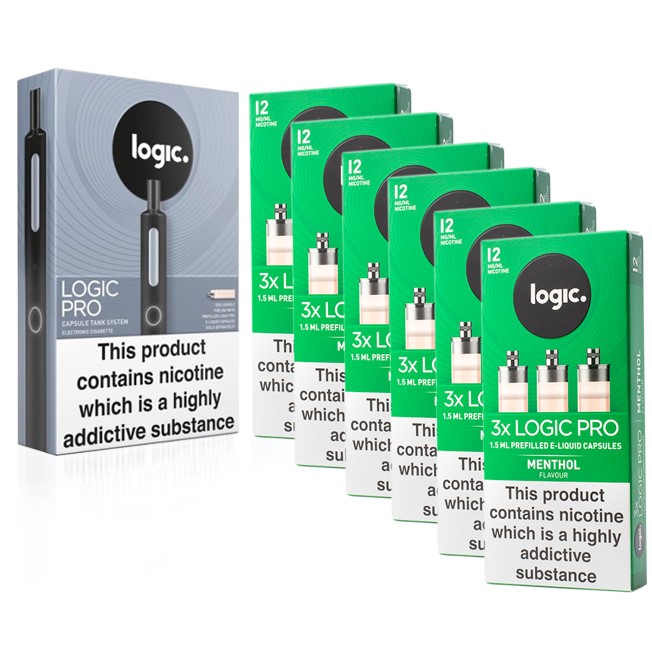
    The U.S. Food and Drug Administration has issued marketing denial orders (MDOs) for several menthol-flavored vaping products marketed by Logic Technology Development. The products include the Logic Pro Menthol e-Liquid Package and Logic Power Menthol e-Liquid Package. It’s the first time the FDA has issued MDOs for menthol products after receiving a scientific review.

    The move seems inline with the regulatory agency’s goal to ban menthol flavors from tobacco products. The FDA also isn’t expected to approve any flavored vaping product other than tobacco.

    “Ensuring new tobacco products undergo premarket evaluation is a critical part of the FDA’s work to reduce tobacco-related disease and death,” said Brian King, director of the FDA’s Center for Tobacco Products (CTP), in a release. “We remain committed to evaluating new tobacco products based on a public health standard that considers the risks and benefits of the tobacco product to the population as a whole.”

    Gregory Conley, director of legislative and external affairs for the American Vapor Manufacturers Association, told Tobacco Reporter that the latest move by the FDA to ban menthol vaping flavors is reminiscent of the agency’s “fatal flaw” review of PMTAs that resulted in millions of denials. The term “fatal flaw” was used by the FDA for PMTA submissions that didn’t have specific studies. The term has been at the center of nearly all lawsuits filed against the FDA for its handling of the PMTA process.

    “The dysfunction at the FDA knows no bounds. For the last year-plus, the FDA has sat back deferred decision making on menthol vaping products,” Conley said. “Lest anyone believe that FDA was hard at work coming up with ways to achieve balance, today they revealed that their big plan for menthol vaping products is to follow the exact same ‘fatal flaw’ review process that has led to dozens of lawsuits being filed against the agency.”

    The agency stated that after reviewing the company’s premarket tobacco product applications (PMTAs), the FDA determined that the applications “lacked sufficient evidence to demonstrate that permitting the marketing of the products would be appropriate for the protection of the public health (APPH), the applicable standard legally required by the 2009 Family Smoking Prevention and Tobacco Control Act.”

    The FDA stated that the evidence provided within Logic’s denied PMTAs did not demonstrate that menthol-flavored e-cigarettes are more effective in promoting “complete switching or significant cigarette use reduction” relative to tobacco-flavored e-cigarettes.

    Logic must now decide if it will resubmit its applications or submit new applications to address the deficiencies for the products that are subject to the MDOs. However, these acts could prove futile since the FDA states that for non-tobacco-flavored e-cigarettes, including menthol-flavored e-cigarettes, “existing evidence demonstrates a known and substantial risk” with regard to youth appeal, uptake and use.

    “The FDA conducts a rigorous, scientific review of submitted premarket tobacco product applications, evaluating the data for each product to determine if it meets the public health standard,” said King. “In this case, the applicant did not provide sufficient scientific evidence to show that the potential benefit to adult smokers outweighs the risks to youth.”

    A recently accepted manuscript of an article set for publication in Nicotine & Tobacco Research found that flavored vaping and other tobacco sales restrictions in California did not affect youth e-cigarette use.

    The MDO letter that Logic received today is not limited to the two products named above, according to the agency. In general, the FDA publicly names only products that the applicant is marketing to avoid potential disclosure of confidential commercial information.

    Any products subject to an MDO may not be offered for sale or distributed in the United States, or the FDA may take enforcement action. These products cannot be legally introduced into interstate commerce in the U.S. without risking FDA enforcement. In March, the FDA authorized several tobacco-flavored e-cigarette products from the company under the Logic Vapeleaf, Logic Power and Logic Pro brands, including devices. 

    In addition to ensuring that Logic complies with this order, the FDA intends to ensure compliance by distributors and retailers. Specifically, the FDA notes that all new tobacco products on the market without the “statutorily required premarket authorization” are marketed unlawfully and their distribution or sale is subject to enforcement action.

    Recently, the U.S. Department of Justice filed complaints for permanent injunctions in federal district courts against six e-cigarette manufacturers on behalf of the FDA. The cases represent the first time the FDA has initiated injunction proceedings to enforce the Federal Food, Drug, and Cosmetic (FD&C) Act’s premarket review requirements for new tobacco products.

    Retailers should contact Logic with any questions about products in their inventory. 

  • Essentra Sells Filters Businesses

    Essentra Sells Filters Businesses

    Photo: Essentra

    Essentra has sold its filters and packaging businesses and appointed a new CEO.

    In a statement released Oct. 3, the company said it had disposed Essentra Filter Holdings to Frank Acquisition Four, which is part of Centaury Management and owned by the investment office of the Markus family.

    The deal, which is expected to complete Jan. 31, 2023, values the filters business at approximately £262.1 million ($301 million). For the year ended Dec. 31, 2021, filters delivered adjusted operating profit of £28.2 million.

    Essentra’s packaging division was sold to the Mayr-Melnhof Group for £312 million. The sale to Mayr-Melnhof excluded Essentra’s Indian packaging business, which represents less than 1 percent of the group revenues and was purchased by BBM Bommidala.

    Paul Forman will step down as CEO on Dec. 31, 2022. He will be succeeded by Scott Fawcett, currently the managing director of Essentra’s components division. Fawcett will join the board on Jan. 1, 2023.

    The sale of the filter business follows a strategic review launched in October 2021.

    “The sale of filters marks the final step of our journey to become a pure-play components business,” said Forman. “Essentra has a bright future as a leading global manufacturer and distributor of components with a clear strategy and significant opportunities to accelerate growth and expand market share.

    “This transaction strengthens Essentra’s balance sheet and enables the group to return a meaningful portion of the proceeds to shareholders whilst maintaining the flexibility to invest in organic and inorganic growth.”

  • EU Commission OKs Swedish Match Deal

    EU Commission OKs Swedish Match Deal

    Photo: Destina

    The European Commission has approved the proposed acquisition of Swedish Match by Philip Morris International.

    In a statement on its website, the Commission noted that Swedish Match holds a de facto monopoly on distribution of tobacco and nicotine products in Sweden through its subsidiary SMD Logistics.

    The Commission’s preliminary investigation showed that SMD Logistics has a dominant position in the supply of combustible tobacco, smoke-free and related products in Sweden.

    The Commission found that the transaction could have led to foreclosure effects in Sweden, given that SMD is the only distributor of combustible tobacco, smoke-free and related products in Sweden. It did not find competition concerns in other markets in which the parties compete, including the manufacture and supply of snus in Sweden and Norway and of nicotine pouches in Sweden and Slovenia, as sufficient alternative suppliers would remain active following the transaction.

    To address the Commission’s preliminary competition concerns, PMI offered to divest Swedish Match’s logistics arm, SMD Logistics.

    The commitments consist of the structural divestiture of a stand-alone business, which fully removes the vertical links between the manufacture of tobacco and nicotine products and their distribution in Sweden. This will enable a purchaser to run the divested business as a viable competitive force in the market on a lasting basis.

    The Commission said it will closely monitor the divestment process, including the choice of a suitable purchaser for the divested business that will have to be approved by the Commission.

    Following the market test, the Commission concluded that the transaction, as modified by the commitments, would no longer raise competition concerns.

    Earlier, PMI’s proposed acquisition received a green light from authorities in the United States and Brazil.

    “We are pleased to have received all necessary regulatory approvals and believe the best and final price in our revised offer for Swedish Match provides very compelling value for the shareholders of both Swedish Match and PMI,” said PMI CEO Jacek Olczak in a statement.

    “The revised offer retains a 90 percent acceptance condition, which is critical to capture the full potential of the combination. Should the offer fail, we are well prepared to proceed autonomously to develop IQOS and the rest of our smoke-free portfolio in the U.S.”

  • Belgium to Curb Tobacco Vending Machines

    Belgium to Curb Tobacco Vending Machines

    Photo: Andrey Popov

    Belgium will prohibit tobacco vending machines in bars and restaurants but not in supermarkets, reports The Brussels Times, citing an Oct. 19 decision by the country’s Parliamentary Committee on Public Health.

    The federal government backed a bill by Federal Health Minister Frank Vandenbroucke to ban tobacco vending machines in the hospitality industry. Federal MP Els Van Hoof, who paved the way with a similar bill in 2016, stressed that the ban should make it harder for minors to access cigarettes.

    Since 2006, tobacco vending machines in Belgium can be accessed only with a special proof-of-age coin that may not be given to minors. In reality, however, the coins have been widely available, including to underage buyers.

    The ban will take effect after a yet-to-be-determined transition period to give the industry time to remove the machines.

    With its new rule, Belgium will join the Netherlands, the U.K. and France, among other countries that restrict mechanical sales of tobacco products.

  • Greenbutts to Attend COP27

    Greenbutts to Attend COP27

    Luis Sanches (Photo: Greenbutts)

    Greenbutts will be joining the official Canadian delegation at COP27, the United Nations Climate Change Conference of 2022.

    The company will bring attention to the issue of plastic pollution caused by cigarette filters and highlight its ability to assist in the transition away from cellulose acetate filters used in the global tobacco industry, a problem the U.N. describes as “the most discarded waste item worldwide.”

    “We are honored to be invited to participate in COP27 as part of the official Canadian delegation, where we intend to shed meaningful light on the global crisis of single-use plastic cigarette filters and offer an impactful solution,” said Luis Sanches, chief strategy officer of Greenbutts, in a statement.

    “Greenbutts is in a unique position to deliver a sustainable innovation that can drastically decrease the amount of harmful plastic that is discarded every day and ends up in our oceans. Our IP and technology have advanced greatly, and we believe that we can now offer this solution to the global tobacco industry for mass implementation, effectively ending the reliance on single-use plastic filters,” said Tadas Lisauskas, CEO of Greenbutts.

    Since 2010, Greenbutts has worked with R&D institutions, tobacco companies and industry experts to develop biodegradable filter technology. The company has developed and patented a “zero-plastic” filter that is 100 percent biodegradable and water dispersing.

    This year’s COP will take place in Sharm el-Sheikh, Egypt, Nov. 6–18.

  • Announcing the 2022 Golden Leaf Awards

    Announcing the 2022 Golden Leaf Awards

    Photos: Chris Ferenzi Photography

    Tobacco Reporter presents its 2022 Golden Leaf Awards.

    It’s hard to exaggerate the extent of the changes that have taken place in the nicotine business since the Golden Leaf Awards were conceived more than 15 years ago. When the program debuted in 2006, the news headlines in Tobacco Reporter were mostly about consolidation, privatization and litigation—topics associated with a controversial legacy business playing defense in an increasingly hostile environment.

    Fast-forward to 2022 and the landscape has changed completely. Many of our columns are now dedicated to tobacco harm reduction—a goal that has become feasible in the wake of the breathtaking innovations that have occurred in recent years (which are eloquently described in Tobacco Reporter’s April 2022 special innovation issue). The transformation has been so great that a reader from 2006 would likely struggle to recognize many of the devices evaluated in our new products section.

    Environmental, social and governance (ESG) topics also feature prominently in our news coverage today, reflecting a societal shift in attitudes. Corporations are not only more aware of their societal responsibilities but are also prepared to make a difference. The Golden Leaf Award’s exclusive sponsor, BMJ, for example, has developed impressive programs to reduce the amount of water and energy used in its papermaking process, to source its wood pulp sustainably and to meaningfully engage its employees (for more information, visit www.bmjpaperpack.com).

    To better reflect these changing industry dynamics, the Golden Leaf Awards will place greater emphasis on innovation and ESG initiatives going forward. Starting this year, our judges will recognize initiatives designed to deliver a brighter future not only for the manufacturers and consumers directly involved but also for society at large.

    In the 2022 edition of our awards program, we recognize three companies for various types of innovation and one company for its ESG initiatives. The winners accepted their trophies during a ceremony at the Four Seasons Hotel in Georgetown, Washington DC. We hope that you agree with our judges that the awarded products and programs hold significant potential to help deliver what one well-known multinational on the forefront of our industry’s transition describes as “a better tomorrow.”

    ALD Group has earned a Golden Leaf Award for its Green Cig, an eco-friendly disposable vaping solution.

    Driven by regulatory and competitive developments, disposable e-cigarettes have captured significant market share in recent years. In the United States alone, they now account for about a third of the vapor market, according to data from the market research firm IRI. But while disposable products offer convenience, they also raise environmental issues.

    Alert to societal concerns about mounting waste, ALD Group has developed an e-cigarette with components that are easy to detach and recycle.

    By using biodegradable plastic materials, including PLA and PBAT, for the Green Cig shell and eco-friendly paper-plastic materials for its packaging, ALD Group has managed to decrease the carbon footprint of its vaporizer by approximately 36 percent over that of similar products—without compromising on taste and flavor.

    The degradation rate of the bioplastic component reaches up to 80 percent, according to ALD Group, while battery life is prolonged by sophisticated technology that prevents dry burning.

    Recyclable parts of the Green Cig include its battery, pressure sensor, pogo pin and atomizer. To promote pod recycling, ALD Group has partnered with a third party to develop a program aimed at giving discarded pods a second life.

    Pyxus Agriculture Malawi (PAM) has earned a Golden Leaf Award for its efforts to promote responsible fuel production in Malawi.

    Deforestation is a challenge in many tobacco origins. In Malawi, the main contributors are agriculture and fuel production. About 7 percent of Malawi’s wood is used for curing tobacco or as a construction material for barns.

    In recent years, Malawi has been transitioning from wood as a fuel source to charcoal, which is easier to obtain than electricity or gas in the region. Unfortunately, the systems currently used to produce charcoal are unregulated and threaten woodlands.

    PAM is addressing this threat by utilizing existing business structures to produce charcoal responsibly. The company has 15 forest plantations across Malawi that supply firewood to tobacco farmers contracted by its Alliance One Tobacco Malawi subsidiary. After harvesting, there is often wood left that does not meet the criteria for tobacco curing. Now, PAM is using this wood to produce charcoal.

    The company’s existing track-and-trace technology allows the fuel to be traced back to the source with assurance that any lumber used in the manufacturing process will be replenished within the plantation.

    The project not only supports Malawi’s goal to transition from unsustainable wood fuel to sustainable wood fuel but also helps conserve indigenous woodlands. As of November 2021, the initiative was estimated to have saved at least 650 slow-growing indigenous trees. By 2024, PAM aims to be at a level of production that will save more than 12,100 trees per year.

    FEELM has earned a Golden Leaf Award for its FEELM Max, the world’s first ceramic coil disposable pod solution.

    Almost all disposable pods on the market contain traditional cotton coils, which can compromise flavor, generate a burnt taste and produce hazardous substances due to inaccurate temperature control.

    Using FEELM’s updated ceramic coil technology, the FEELM Max offers improved flavor consistency, more puffs and reduced harshness through smaller aerosol particles.

    Most importantly, the FEELM Max offers greater potential for harm reduction. The addition of a platinum group element to the ceramic coil’s metallic heating film improves the anti-corrosion performance and reduces the emission of heavy metals.

    A 24 karat gold coating of conductive components enhances resistance to oxidation while a ceramic substrate resistant to temperatures of over 1,000 degrees Celsius prevents burns and the creation of hazardous substances.

    The introduction of the FEELM Max fits into the company’s mission to enhance the experience for vapers around the world. Founded in 2006, FEELM’s parent company, Smoore, has grown into the world’s leading atomization technology firm, with a 22.8 percent share of the global vaping device market in 2021, according to Frost & Sullivan.

    The company operates 10 research centers, including seven in China and three in the United States, with an additional three under construction.

    Innokin and Aquios Labs have earned a Golden Leaf Award for the Lota Pod, the first and only water-based vaping solution.

    E-juice generally consists of propylene glycol (PG) and vegetable glycerin (VG) along with flavor and nicotine. When heated, PG and VG produce vapor, which allows them to be inhaled. At 189 degrees and 292 degrees Celsius, respectively, the boiling points of PG and VG are relatively high, however.

    Adding water to e-liquid brings down the boiling point and vape temperatures, thus reducing harmful substances in vapor. Water also minimizes dehydration and irritation and helps to deliver nicotine more efficiently while producing a more natural flavor.

    Until now, the low viscosity level of water made it unsuitable for use in vaping devices at any meaningful level. Aquios Labs developed a technology that can support up to 30 percent water vaping but still needed proper hardware to support its new e-liquid.

    Utilizing its extensive experience with vaping hardware, Innokin created new heating, wicking and airflow systems to unleash the potential of water-based e-liquid.

    While the vaping industry has become accustomed to major hardware innovations every 12–18 months, e-liquids have been evolving at a gentler pace. Water-based vaping arguably represents one of the most significant breakthroughs since the introduction of nicotine salts in the vaping industry.

  • China to Start Taxing E-cigarettes Nov. 1

    China to Start Taxing E-cigarettes Nov. 1

    Photo: amixstudio

    The Chinese government will start taxing e-cigarettes on Nov 1., reports Reuters.

    Producers and importers of e-cigarettes will incur a 36 percent levy while wholesale distributors must pay an 11 percent tax.

    Experts said that the annual sales revenue of domestic e-cigarette makers is about RMB20 billion ($27.36 billion), so the tax may contribute an additional RMB10 billion to the government’s annual revenue, according to The Global Times.

    China has long been the world’s largest producer of e-cigarettes, though consumption lags behind that of Western countries.

    Inspired by the overseas success of the Juul, venture-backed startups started marketing e-cigarettes to domestic consumers in 2018.

    These companies operated in a legal gray area until the State Tobacco Monopoly Administration (STMA) asserted its authority over the business. In 2021, the STMA announced that it would require e-cigarette companies to obtain a license in order to continue selling to consumers.

    Tobacco products remain a major revenue generator for Beijing, with cigarette sales generating roughly 5 percent of the central government’s tax revenue each year.

    The STMA operates under China’s Ministry of Industry and Information Technology. China Tobacco, STMA’s commercial arm, is a shareholder in China’s state-backed investment fund for the chip industry.

  • ‘Juul Discussing Bailout with Investors’

    ‘Juul Discussing Bailout with Investors’

    Photo: lovelyday12

    Juul Labs is discussing a bailout with two long-time investors to help stave off bankruptcy, reports The Wall Street Journal, citing unnamed sources.

    Hyatt Hotels heir Nick Pritzker and California investor Riaz Valani are reportedly considering putting up money to cover the vaping company’s operations and near-term legal liabilities. Valani and Pritzker were Juul’s largest shareholders before Altria Group in 2018 bought a 35 percent stake in the company for $12.8 billion, according to The Wall Street Journal sources.

    The goal of the bailout would be to help Juul stay in business and pursue a dispute with federal regulators over whether Juul products can remain on the U.S. market. Once the undisputed leader in the domestic vaping market, Juul Labs has struggled in the face of regulatory scrutiny and legal challenges over its marketing practices.

    On June 23, 2022, the Food and Drug Administration rejected Juul Labs’ premarket tobacco product application and ordered the company to remove its products from the market. Juul appealed and on July 5, the FDA stayed its marketing denial order (MDO), announcing that it would review the decision after determining “there are scientific issues unique to this application that warrant additional review.” 

    On Oct. 21, Juul Labs published the details of its MDO appeal.

    The uncertainty around the FDA ban has made it difficult for Juul to secure financing for legal settlements. Juul has been searching for an alternative that could avoid a bankruptcy filing. Earlier this month, Juul began discussions with lenders for financing that would carry the company through a potential Chapter 11 filing.

    In a statement to The Wall Street Journal, Juul said it continues to explore several strategic options to secure its business and address the impact of the FDA’s stayed order “as we fight to preserve our mission of transitioning adult smokers away from cigarettes while combating underage use.”

  • Juul Lab Publishes Details of MDO Appeal

    Juul Lab Publishes Details of MDO Appeal

    Photo: Juul Labs

    Juul Labs has published its administrative appeal of the marketing denial order (MDO) issued by the U.S. Food and Drug Administration, which explains the company’s position, based on science and evidence, that the MDO was substantively and procedurally flawed. This appeal, referred to as a 10.75 appeal, is currently under review by the FDA. 

    In its press release for the MDO, the FDA stated that Juul Labs’ premarket tobacco product applications (PMTAs) “lacked sufficient evidence regarding the toxicological profile of the products” and that some of the “study findings raised concerns due to insufficient and conflicting data.”

    Juul Labs believes that each of the deficiencies in the MDO is based on an incorrect and incomplete assessment of the data, and when the data are appropriately evaluated within the PMTAs, the FDA can properly assess the toxicological profile of Juul products and relative to other tobacco products, including combustible cigarettes. The appeal also shows that all perceived limitations could have been resolved by clarifications through the usual, iterative process that the FDA has followed for prior applications. 

    Through its 10.75 appeal, Juul Labs requests that the MDO be rescinded and its PMTAs be placed back into substantive review so that the FDA can complete a full and fair review to determine whether the Juul system is appropriate for the protection of public health. “We believe that once the FDA does a complete review of all of the science and evidence presented in the applications, without political interference, as required by law, we should receive marketing authorization for our products,” Juul Labs wrote in a press note.

    For context: In July 2020, Juul Labs submitted PMTAs to the FDA for its currently marketed products and a new device with age-verification technology. The PMTAs included over 125,000 pages of data, information and analysis from over 110 scientific studies across nonclinical (75-plus studies), clinical (14 studies) and behavioral (21 studies) research programs to support the marketing of Juul products. The company also assessed its products relative to combustible cigarettes, an FDA-authorized heated-tobacco product (IQOS) and other marketed vapor products.

    Despite this science and evidence, on June 23, 2022, the FDA issued an MDO for Juul Labs’ PMTAs. On July 5, the FDA stayed the MDO, announcing, on its own, that it would review the decision after determining “there are scientific issues unique to this application that warrant additional review.” 

    A summary of the Juul Labs responses to what the company believes are the deficiencies of the MDO is available here.