Category: Around the Industry

  • EU HTP Report Seen as Harm Reduction Obstacle

    EU HTP Report Seen as Harm Reduction Obstacle

    Heated Community Hub has voiced strong concern over the approach taken by the European Commission in its recent evaluation report on the EU tobacco regulatory framework. According to the group, the document is heavily unbalanced in its assessment of next-generation products — particularly heated tobacco — focusing almost exclusively on potential risks while failing to adequately acknowledge reduced-risk considerations or the experiences of adult consumers who have reduced or quit smoking traditional cigarettes by switching to alternatives.

    Francesco Luongo, president of Heated Community Hub, said the EU risks undermining its own “Tobacco-Free Generation” goal of reducing tobacco use to below 5% by 2040 by applying policies that could affect alternative products indiscriminately. Citing Sweden’s decline in daily smoking to 5.3% in 2024 compared with an EU average of 24%, Luongo argued that a more pragmatic approach is needed to avoid pushing former smokers back to combustible products or fueling illicit trade.

  • Hong Kong to Impose Two-Tier Penalty for Carrying Vapes

    Hong Kong to Impose Two-Tier Penalty for Carrying Vapes

    Starting April 30, Hong Kong will introduce a two-tier penalty for the possession of vaping and heated tobacco products in public under amendments to its tobacco control law. Individuals carrying small quantities — no more than five vape pods, 5 ml of e-liquid, 100 heat sticks or 100 herbal sticks — will face a fixed HK$3,000 ($390) penalty, while possession of larger amounts can lead to prosecution, with fines up to HK$50,000 ($6,500) and six months’ imprisonment. Officials said the phased approach begins with public places due to enforcement challenges in private residences, with a broader ban on possession possible later.

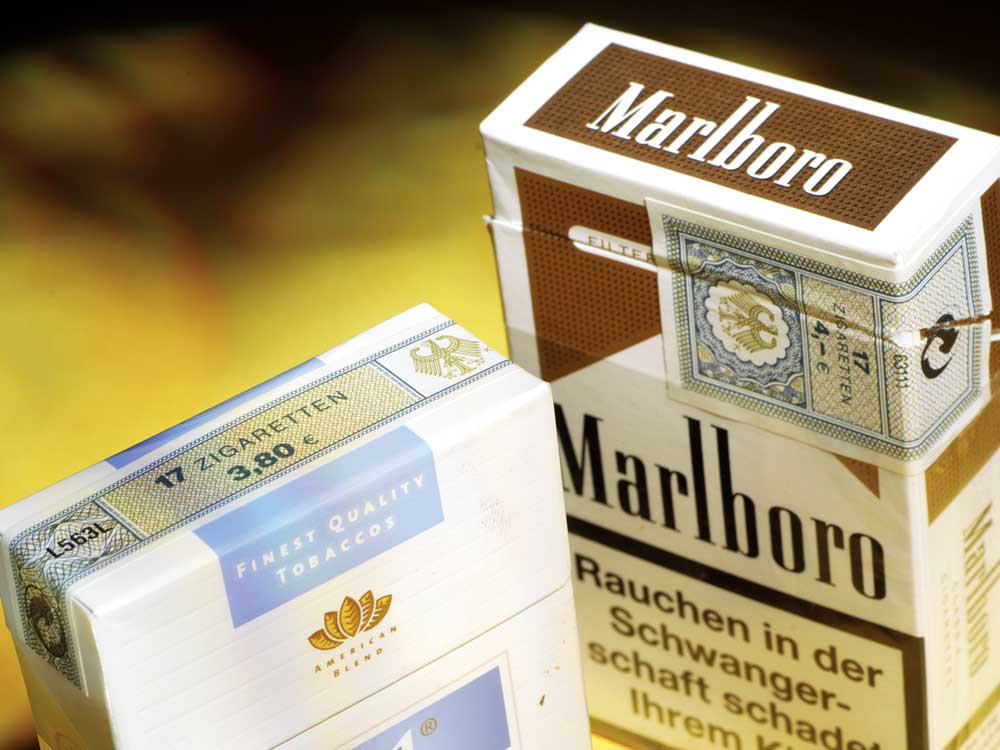
    Enforcement officers will operate in plain clothes using a risk-based approach, with powers to check identification, seize devices, and issue electronic penalty notices, including to tourists. Authorities also confirmed standardized cigarette packaging and a duty stamp system will take effect on March 1, 2027.

  • Lithuania Prosecuting Belarusian Cigarette Smugglers

    Lithuania Prosecuting Belarusian Cigarette Smugglers

    Lithuania has opened more than 30 pretrial investigations into cigarette smuggling from Belarus using balloons, with around 90 suspects identified, according to Prosecutor General Nida Grunskienė. Speaking to Žinių Radijas, she said 20 related cases have already been concluded in court, resulting in over 30 convictions. Authorities intercepted 635 balloon-borne shipments in 2025, up from 226 in 2024 and virtually none in prior years, with 83 incidents recorded so far in 2026.

    The activity has also disrupted civil aviation, with more than 300 flights affected at Vilnius Airport last year, impacting roughly 47,000 passengers and causing nearly 60 hours of closures. The State Border Guard Service of Lithuania said 35 people linked to the smuggling network have been detained this year. Lithuanian officials describe the operations, alongside the detention of Lithuanian trucks in Belarus, as “hybrid attacks” by the Belarusian government.

  • RICO Case Against Vape Companies Tossed

    RICO Case Against Vape Companies Tossed

    A judge in the U.S. District Court for the Northern District of Georgia has dismissed a civil Racketeer Influenced and Corrupt Organizations Act lawsuit brought by a Georgia woman against multiple vape manufacturers and retailers who were accused of conspiring to sell products containing illegal levels of delta-9 THC. The plaintiff alleged the companies worked together through a coordinated scheme to distribute unlawful products, but the court found the complaint did not plausibly describe racketeering activity or an organized conspiracy.

    Instead, the judge ruled that the allegations merely outlined a typical product supply chain — from manufacturer to distributor to retailer — without facts showing an agreement to commit unlawful acts. Because the complaint failed to establish the elements required under RICO, the case was dismissed.

  • New Mexico AG Sues Retailers for Youth Vape Addiction

    New Mexico AG Sues Retailers for Youth Vape Addiction

    New Mexico Attorney General Raúl Torrez filed a lawsuit against Circle K and other major retailers, alleging violations of the state’s Unfair Practices Act for marketing vapes and e-cigarettes in ways that appeal to children. The suit claims the products’ colorful packaging and sweet flavors are designed to attract minors, contributing to some of the highest youth nicotine usage rates in the country. Torrez seeks damages, including civil penalties of $5,000 per violation, following his previous $375 million win against Meta for similar violations.

    Health experts and school officials cited in the lawsuit highlight the dangers of adolescent vaping, including addiction, lung damage, increased risk-taking behavior, and mental health impacts. The Attorney General also said the presence of online “straw purchases” that funnel e-cigarettes to minors, comparing the ongoing harm to historic tobacco-related public health crises.

  • Oklahoma Cuts Cigarette Tax for HTPs

    Oklahoma Cuts Cigarette Tax for HTPs

    Oklahoma lawmakers approved legislation amending the state’s cigarette stamp tax law to extend a 50% tax exemption to cigarettes “intended to be heated rather than burned,” effectively lowering the excise burden on heated tobacco products. The measure revises definitions in existing statute to clarify that products designed to be heated still fall within the legal definition of a cigarette, but then carves out a partial exemption for those products from the stamp excise tax. The change applies within Oklahoma’s long-standing cigarette tax framework under the oversight of the Oklahoma Tax Commission.

    The law directs the Tax Commission to create rules to implement the exemption and ensure appropriate tax stamps are available for heated products before the act takes effect on November 1, 2026.

  • Bangladesh Pushed for More Realistic Tobacco Tax Policy

    Bangladesh Pushed for More Realistic Tobacco Tax Policy

    A roundtable hosted by the Policy Research Institute in Dhaka urged Bangladesh to adopt a simpler, more predictable tobacco tax framework, arguing that sharp duty and price hikes in June 2024 and January 2025 have reduced cigarette sales and weakened revenue performance. Speakers cited an Ernst & Young market assessment showing that despite repeated tax increases since FY20, revenue growth has lagged expectations as the total tax burden on tobacco has climbed to roughly 83%, among the highest globally.

    Participants said frequent price adjustments and a complex multi-tier tax structure are distorting the market, pushing consumers toward cheaper segments and widening price gaps between tiers while creating incentives for illicit trade. The group recommended a gradual shift from a value-based to a specific tax system, stronger enforcement capacity to curb illegal trade, and improved factory-level monitoring, arguing that a transparent, stable tax policy is needed to sustain revenue, support administrative efficiency, and reduce market volatility.

  • Filing Shows FDA Rescinded 229 CTP RIF Notices

    Filing Shows FDA Rescinded 229 CTP RIF Notices

    A court filing in the U.S. District Court for the District of Rhode Island shows that the U.S. Food and Drug Administration Center for Tobacco Products has fully reversed a wave of 2025 reduction-in-force (RIF) notices affecting 229 employees. In a declaration filed March 27, FDA official Melanie M. Keller detailed how the notices, issued March 31, April 1, and May 2, 2025, were rescinded in stages beginning May 1 and continuing through September 12, 2025, across multiple CTP offices, including health communication and education, compliance and enforcement, management, regulations, and public health education.

    The declaration states that on February 3, 2026, all remaining RIF notices were rescinded except for eight employees who had already moved to other CTP divisions. The final rescissions covered staff responsible for public complaints, small business assistance, IT business process support, industry outreach, and management of contracts and grants. The filing also notes that two Office of Science leaders placed on administrative leave after proposed reassignments returned to their roles by November 6, 2025, and that none of the affected employees remains on administrative leave.

    The filing is part of State of New York vs Robert F. Kennedy, Jr., lawsuit.

  • Oregon Expands Oversight of Tobacco and Inhalant Systems

    Oregon Expands Oversight of Tobacco and Inhalant Systems

    Oregon Governor Tina Kotek signed Senate Bill 1571 yesterday, expanding the state’s regulation of tobacco products and inhalant delivery systems, which include e-cigarettes, nicotine pouches, and other vapor-producing devices. The bill broadens the legal definition of these products to include any form of nicotine and replaces criminal penalties for sales to minors under 21 with a civil enforcement system managed by the Oregon Health Authority. Retailers must now comply with stricter packaging rules, including child-resistant requirements, and all sales must occur in person at licensed premises, effectively banning online or mail-order sales to Oregon consumers.

    The legislation also empowers the Oregon Health Authority to adopt rules and impose civil penalties for violations, while repealing certain prior criminal statutes related to tobacco sales. The law is designed to strengthen youth protections, improve compliance oversight, and modernize regulatory authority over new nicotine products and inhalant delivery systems. The act will take effect 91 days after the legislature adjourned on March 6th, giving retailers and the state time to implement the new enforcement framework.

  • Study Claiming Vaping ‘Likely’ Causes Cancer Faces Backlash

    Study Claiming Vaping ‘Likely’ Causes Cancer Faces Backlash

    On March 30, Oxford’s Carcinogenesis magazine published an article titled, “The carcinogenicity of e-cigarettes: a qualitative risk assessment,” where the authors concluded that nicotine-based e-cigarettes are “likely to be carcinogenic” to users, potentially contributing to oral and lung cancer risk. The authors admitted that the actual risk in humans was uncertain, but said research found DNA damage, oxidative stress, inflammation, and epigenetic changes in oral and respiratory tissues linked to exposure to vape-derived chemicals such as nicotine-derived nitrosamines, volatile organic compounds, flavoring agents, and trace metals.

    The article received immediate criticism, beginning with Peter Hajek, professor of clinical psychology and director of the Health and Lifestyle Research Unit at Queen Mary University of London, who said, “The review’s conclusions are misleading. The authors specify early on that they are not comparing vapers and smokers. This allows them to present a detection of any level of a suspect chemical, however negligible, as ‘carcinogenic.’”

    The basis of the research focused on studies published between 2017 and 2025.

    “This is largely a qualitative review drawing heavily on low-quality studies, including in vitro [study of cells] and animal experiments using unrealistic exposure scenarios,” said Dr. Marina Murphy, senior director of scientific affairs for Haypp Group. “Such studies may demonstrate biological plausibility, but plausibility alone is a weak basis for public health alarm – especially when similar mechanisms are observed with everyday exposures such as cooking fumes, cleaning aerosols, and urban air pollution.

    “Studying cells can be useful, but limited in what can be deduced from them. If I were to pour coffee on cells in a lab, they would die. Should I conclude that coffee will kill me? The answer is obviously ‘no!’”

    John Dunne, the director general of the UK Vaping Industry Association, said the misinformation in the article does a disservice to the millions of people using vapes to quit smoking.  

    “The NHS, the Royal College of Physicians, and the Office for Health Improvement and Disparities, all agree that vaping – while not risk-free – is significantly less harmful than smoking,” Dunne said. “Cancer Research UK, the world’s largest independent cancer charity, maintains there is ‘no good evidence’ that vaping causes cancer. [The report] is exactly this kind of confusion that threatens the nation’s smoke-free future.”