By Chris Howard and Rich Hill
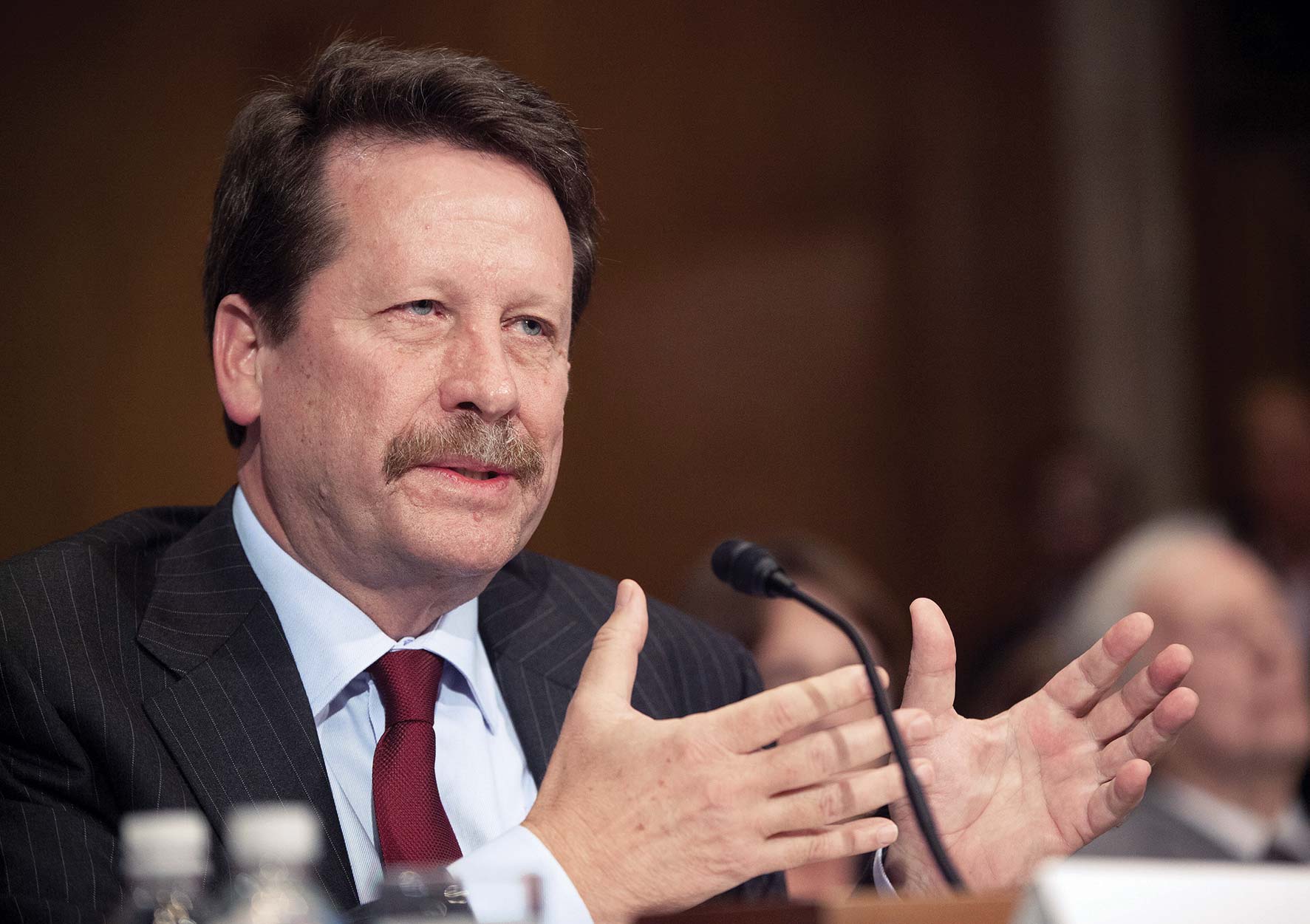
Recently, U.S. Food and Drug Administration Commissioner Robert Califf announced an external evaluation of both the Human Foods Program and the Center for Tobacco Products (CTP). The FDA press release observed that “… even greater challenges lie ahead as we determine how the agency will navigate complex policy issues and determine enforcement activities for an increasing number of novel products that could potentially have significant consequences for public health. To that end, the review will push toward ‘organizational excellence.’”
Califf is right—the CTP clearly requires assistance. The purpose of this article is to review how the CTP arrived in this untenable situation and to suggest areas of focus for the review of the CTP processes.
How Did We Get Here?
There is little doubt that the CTP is in an unenviable position. No matter which way the agency turns, it is impossible to please everyone. The anti-tobacco/vaping groups will never be satisfied until all tobacco products are gone—so realistic harm reduction propositions from the center will always be met with opposition. And when the CTP tries to develop policies with a focus on efficiency, many in the industry claim that they are “prohibitionist” and that they have no regard for harm reduction and/or the human and economic consequences of their decision-making.
Recently, several court opinions and CTP actions have significantly contributed to the challenging environment for the CTP:
- West Virginia v. EPA. While not directly related to the CTP, the West Virginia v. EPA Supreme Court decision has reopened the question as to whether discretion of regulatory agencies may become more limited in the future. The court seems poised to chip away at longstanding doctrines (or apply them more forcefully) to limit agency power and place policymaking back with the legislature.
- Cigar Association of American v. FDA. More recently, in the Cigar Association of America v. FDA case, Judge Amit Mehta of the U.S. District Court for the District of Columbia examined whether the FDA’s decision not to exempt premium cigars from the Deeming Rule was arbitrary and capricious. The court ultimately found that the FDA ignored evidence in the rulemaking record—and ruled against the agency.
- Juul v. FDA. Days later, the CTP found toxicological issues with Juul’s popular vapor products and issued marketing denial orders (MDOs) for those products. Not surprisingly, Juul immediately requested and received an emergency stay of the MDOs from the D.C. Circuit. Without missing a beat, the CTP promptly “… administratively stayed the marketing denial order. The agency [determined] that there are scientific issues unique to the Juul application that warrant additional review.” Several commentators questioned the CTP’s rationale for its decision to re-review Juul’s applications, and some have gone so far as to suggest that this quick reversal indicates a less than appropriate review of Juul’s data or worse—a lack of confidence in the CTP’s decision-making. Either way, the entire chain of events draws into question the CTP’s review process.
- Finally, the CTP is still under pressure to complete decisions on premarket tobacco product applications (PMTAs) for those companies addressed in the Maryland court decision which, according to the CTP, will not be completed until next summer. Further compounding the CTP’s problems, the center continues “processing” approximately 1,000,000 synthetic nicotine PMTAs past the congressional deadline for marketing decisions on July 13, 2022. How the center will respond to this pressure is anyone’s guess. So far, it seems like the CTP continues to move at its own pace, following the Maryland court’s order to the best of its abilities.
These external and internal factors point to one conclusion that cannot be ignored—the CTP appears to be struggling and needs something to change. With the above in mind, the following are a few areas ripe for external (and internal) review at the CTP.

Operational Changes
Operationally, the CTP seems to have the resources (personnel and budget) to successfully regulate tobacco products. That said, certain policy choices and administrative actions (both self-inflicted and externally inflicted) appear to hamper the center’s ability to effectively manage the space. Importantly, effective regulation is hamstrung by the complexity of the U.S. tobacco regulatory scheme, a lack of clear standards for product testing and approval and a too opaque product application process.
The most challenging operational issues come from the existing regulatory scheme, which is too complex for tobacco products. The Tobacco Control Act dictates the parameters/guardrails, but the CTP has latitude in how the process is implemented. The comprehensive PMTA guidance and robust final rule demand a scientific depth that goes too far. The question is: Is all of the delineated scientific data really necessary to determine that a product is appropriate for the protection of public health (APPH)?
If comparing to combustible cigarettes, it would seem that most electronic nicotine-delivery product APPH determinations could be made based on chemistry alone. Piling on bench toxicology, human factors, pharmacokinetic and behavioral studies, it’s no wonder the review process takes so long.
Standards are not clear. Without clear standards, the CTP and industry both are left constantly employing guesswork and conjecture to facilitate decision-making. While understandably there is no simple formula for APPH, clear expectations would be beneficial and efficient. By way of example, which device characteristics really need testing? What is the depth of stability testing necessary? What constitutes a sufficient PK [pharmacokinetic] study? While the initial meeting with the Office of Science is often useful to help answer questions like these, better defining product-specific standards and setting minimums would go a long way to streamlining the approval process.
Transparency is lacking. While one can review the Technical Project Lead Reviews and some of the review standards memos that the CTP places on its website, few PMTA applicants have any idea what’s going on with their applications at any given time. Other than the initial pre-PMTA meeting and the sole deficiency letter, there is little that applicants know about the status (both administratively and substantively) of their applications. While more transparency about the status of applications would be welcome, more back and forth on issues in applications would benefit everyone—particularly the CTP. In the case of Juul, reports indicate that Juul provided thousands of pages of data related to the toxicological issue that the CTP raised in the MDOs. If the now outdated additional information requests were utilized by the CTP, Juul would have pointed out this data, and at least one issue could have been resolved well short of a trip to the courthouse.
Policy Changes
It goes without saying that U.S. government policy can be fickle to say the least. Setting and maintaining long-term policy is difficult—especially in light of changing administrations every few years. Despite this, overriding policy tenants as they relate to harm reduction can, and should, form the cornerstone of tobacco regulatory policy. If harm reduction is the priority, then regulators need to prioritize pathways for reduced-harm products to enter the market, incentivize innovation and focus on providing offramps to combustible cigarette smokers seeking to quit smoking.
Harm reduction policy. During the tenure of former Commissioner Gottlieb at the FDA, many in the industry thought harm reduction would prevail and that all would recognize vapor products’ place at the opposite end of the continuum of risk from combustible cigarettes. Unfortunately, the significant uptick in youth experimentation with a few types of vapor products prodded the CTP into a tough position. Public health groups, dissatisfied with the CTP’s pace, forced the center into a corner via litigation.
Assuming the goal of the Tobacco Control Act remains to reduce smoking-related morbidity and mortality, harm reduction strategies are central to achieving that goal. Importantly, harm reduction strategies should be palatable to all stakeholders. While the CTP has several initiatives moving forward, is there a plan for initiatives dedicated to moving smokers to safer alternatives? Efforts to move smokers to less risky alternatives do nothing when those less risky alternatives cannot succeed via the PMTA pathway. Current tobacco policy is remarkably dissimilar from the variety of strategies employed for other unsafe behaviors where harm reduction is embraced as the primary alternative. In areas such as drug use and sexually transmitted diseases, our society generally accepts reduced-harm efforts, but for tobacco, collectively we are still searching for that sweet spot.
Given all the challenges that the CTP faces, working on harm reduction policies hand-in-glove with nongovernmental groups and industry probably does not seem like the best use of time. When the center was first formed, frequent scientific meetings were held on various issues (such as harmful and potentially harmful constituents). These have fallen off in recent years, likely in part due to Covid and also due to the onerous demands on the center. Prioritizing genuine and open conversations between the CTP, industry and tobacco control groups is critical to developing strong harm reduction policies. Holding scientific meetings (either through the CTP or the Tobacco Products Scientific Advisory Committee) on harm reduction plans and policies would add transparency and bring all ideas to the table.
The FDA should not let the perfect be the enemy of the good when considering reduced-harm products. At present, PMTA reviews appear to be searching for the perfect. Reviews seem to focus on the smallest details that might pose a risk while ignoring a more generalized comparison to combustible products with 70 known carcinogens (and a track record of 480,000 deaths per year). APPH does not mean no risk—it means less risk than the deadliest consumer product ever invented, the combustible cigarette. Reconsidering how APPH is adjudged would be an excellent first step in combatting morbidity and mortality attributable to smoking.
Investing in harm reduction must be incentivized. If one wants to develop a new product, the timeline is a hard stop. A year of product development, up to three years of PMTA testing (including two years of stability and time to plan, conduct and write up the studies) plus one year to three years of the CTP review before the possibility of a marketing order sounds like a pretty poor investment. The PMTA process must change to bring less risky products more rapidly to market.
Society must not forget about smokers. Youth tobacco issues are important, but the 1,300 smokers dying each day are important too. A balanced harm reduction policy—controlling youth access and exposure while moving combustible cigarette smokers to quitting tobacco altogether or moving to a less risky product is necessary.
Moving Forward
Hopefully the external review will be a fruitful exercise—one that provides robust alternatives for the CTP to consider. The review, if rightly focused, will address foundational issues that will, in the end, lead tobacco regulation to a reasonable, reduced-harm world where smokers are given hope for a future.
Chris Howard is vice president, general counsel and chief compliance officer at E-Alternative Solutions, an independent, family-owned innovator of consumer-centric brands.
Rich Hill is the compliance director and associate general counsel of E-Alternative Solutions.




 “JWEI has been a leader in this industry from the start and this milestone again reiterates our commitment to the industry and public health: ensuring our adult customers continued access to less harmful alternatives to traditional tobacco products, while setting a new standard preventing underage youth access.” said VP of JWEI Group Jason Yao.