Category: FDA

  • Reynolds Likely to Prevail in PMTA Lawsuit

    Reynolds Likely to Prevail in PMTA Lawsuit

    When the U.S. Court of Appeals for the 5th Circuit granted a stay to R.J. Reynolds Vapor Co. (RJRV) of the U.S. Food and Drug Administration’s denial of its 150,000-page premarket tobacco product application (PMTA) for its menthol Vuse products, the judges indicated that the court believes RJRV is likely to prevail on the merits when the full review is heard. 

    Tobacco harm reduction expert Clive Bates of Counterfactual said the substantive decision rests on three main arguments, as outlined by the judges granting the stay. The order states: “Specifically, RJRV demonstrates that the FDA failed to reasonably consider the company’s legitimate reliance interests concerning the need for longitudinal studies and marketing plans; failed to consider relevant evidence, inter alia, that youthful users do not like menthol-flavored e-cigarettes; and has created a de facto rule banning all nontobacco-flavored e-cigarettes without following APA notice and comment requirements.”

    The three main points argued by the court are outlined below:

    FDA changed the decision-making criteria after the application.

    1. Legitimate reliance interests

    “The FDA did not reasonably consider RJRV’s legitimate reliance interests before changing its position on the types of comparative studies and marketing plans critical to a compliant and complete PMTA.”

    Failure to consider Reynolds’ arguments adequately 

    2. Failure to consider relevant factors

    The FDA did not adequately address RJRV’s evidence that substantial health benefits would accrue to adult and youth cigarette smokers alike who switched to menthol Vuse while popularity among youth would remain low overall. For example, RJRV’s application contained studies that “switching from smoking to use of menthol Vuse Vibe substantially reduces toxicant exposure in a manner similar to smoking abstinence.” RJRV also submitted evidence of low popularity among youth relative to other flavored electronic nicotine-delivery systems (ENDS).

    Bates stated that at least one portion of the court’s argument looks troubling for Brian King, the newly appointed director of the FDA’s Center for Tobacco Products (CTP).

    “Then in July 2022, a new CTP director appeared on the scene and told OS that ‘the approach to menthol-flavored ENDS should be the same as for other flavored ENDS, i.e., the products could be found [appropriate for the protection of the public health] only if the evidence showed that the benefits of the menthol-flavored ENDS were greater than tobacco-flavored ENDS, which pose lower risk to youth.’ OS then changed its position.”

    FDA has been implementing a de facto tobacco product standard (a flavor ban) without using the rule-making process, public comment, etc. 

    3. “Tobacco product standard”

    RJRV has adduced evidence that the FDA has effectively banned all nontobacco-flavored e-cigarettes pursuant to its new and secret heightened evidentiary standard without affording affected persons any notice or the opportunity for public comment. There is no dispute that the TCA requires the FDA to abide by notice-and-comment rulemaking procedures before establishing a “tobacco product standard.” 8 21 U.S.C. § 387g(c)–(d). Similarly, it is clear that a ban on all but tobacco-flavored e-cigarettes would constitute a “tobacco product standard.” 

    Bates explains that the court justifies its assertion that the FDA is imposing a de facto standard with reference to the so-called “fatal flaw memo.” This was an expedited decision-making regime that stipulated that applications for nontobacco-flavored products must be supported with controlled trials or longitudinal studies showing a quitting or switching advantage over a tobacco flavor. Otherwise, they would be automatically denied. 

    “We conclude that the Fatal Flaw memo’s heightened evidentiary standard ‘bears all the hallmarks’ of a substantive rule. City of Arlington, 668 F.3d at 242. First, the memo is binding on its face by mandating that applications contain ‘the necessary type of studies.’ Second, it has been applied in a way that indicates it is binding; indeed, the subsequent, myriad Denial Orders refer to the same deficiencies identified as ‘fatal’ in the memo. Third, it took away the FDA reviewers’ former discretion to consider individual PMTAs solely on their merits and instead requires a cursory, box-checking review.

    “Finally, it affected the rights of literally hundreds of thousands of applicants whose PMTAs were denied. This is not a close call.”

    Bates stated that the third point the court makes is potentially “very” serious for the FDA and “not a close call,” as the court suggests. “A tobacco product standard under the TCA s.907 means that the burden is on the FDA to show that its de facto standard is appropriate for the protection of public health—e.g., considering the impact of closing down all vape shops, the likely impact on adults or youth who smoke, unintended consequences, illicit trade, etc.,” explains Bates. “It shifts the analysis from the individual applicant (PMTA) to the system-wide impact (Product Standard)—and FDA will find this difficult or impossible to meet, in my view.”

    Taking everything into account, the court weighs up its decision to grant the stay against four criteria, as Bates outlined: 

    “Our judgment is ‘guided by sound legal principles’ that ‘have been distilled into consideration of four factors: (1) whether the stay applicant has made a strong showing that he is likely to succeed on the merits; (2) whether the applicant will be irreparably injured absent a stay; (3) whether issuance of the stay will substantially injure the other parties interested in the proceeding; and (4) where the public interest lies.’”

    Bates stated that the first of these four criteria reflects the courts’ view on the merits discussed in the three above-stated substantive arguments. In the fourth: where the public interest lies, the court gives significant weight to the “highest public importance that federal agencies follow the law” and states: “In sum, ‘there is generally no public interest in the perpetuation of unlawful agency action,’ Texas v. Biden, 10 F.4th at 560. And there is no evidence that ‘Congress’s policy choice’ included an exemption from mandatory federal administrative procedures.”

    No date has been set for the court to complete its full review.

  • FDA Publishes Citizen Petition Webpage

    FDA Publishes Citizen Petition Webpage

    A new webpage was published by the U.S. Food and Drug Administration of all the tobacco products-related citizen petitions received by the agency’s Center for Tobacco Products (CTP).

    A citizen petition is a way for the FDA to give individuals, regulated industry representatives, or consumer groups to petition the agency to issue, amend, revoke a regulation, or take other administrative action. The requirements for a citizen petition are set out in the Code of Federal Regulations.

    As part of CTP’s stated commitment to increase transparency, the webpage was developed to provide the public with more easily accessible and user-friendly information about tobacco product-related citizen petitions submitted to FDA and the center’s responses.

    This webpage was one of the immediate actions toward transparency outlined by CTP Director Brian King in CTP’s Response to the Reagan-Udall Foundation’s report.

  • FDA Updates Nicotine Definition in Docs

    FDA Updates Nicotine Definition in Docs

    Image: Tobacco Reporter archive

    The U.S. Food and Drug Administration has updated its definition of “tobacco products” to include nontobacco nicotine products.

    In response to the increase of nontobacco nicotine in popular tobacco products, Congress passed a federal law that went into effect on April 14, 2022, granting the FDA authority to regulate tobacco products containing nicotine from any source, including synthetic nicotine. This new law extended the tobacco product requirements in the Federal Food, Drug and Cosmetic Act to manufacturers, importers, retailers and distributors of nontobacco nicotine products. Previously, the FDA’s tobacco product authority only extended to tobacco products that contain nicotine made or derived from tobacco.

    Under this legislation, the definition of “tobacco product” in the FDA’s regulations and guidances has been considered to be amended since April 14, 2022. The FDA has now issued two notices in the Federal Register updating the definition of “tobacco product” in its existing regulations and guidances.

    In addition, the agency has also posted the following nine revised guidances to the FDA’s website: Civil Money Penalties and No-Tobacco-Sale Orders for Tobacco Retailers (Revised); Determination of the Period Covered by a No-Tobacco-Sale Order and Compliance With an Order (Revised); Further Amendments to General Regulations of the Food and Drug Administration to Incorporate Tobacco Products (Revised); Interpretation of and Compliance Policy for Certain Label Requirement; Applicability of Certain Federal Food, Drug and Cosmetic Act Requirements to Vape Shops (Revised); Listing of Ingredients in Tobacco Products (Revised); Premarket Tobacco Product Applications for Electronic Nicotine-Delivery Systems (Revised); The Prohibition of Distributing Free Samples of Tobacco Products (Revised); FDA Deems Certain Tobacco Products Subject to FDA Authority, Sales and Distribution Restrictions, and Health Warning Requirements for Packages and Advertisements (Revised); and Demonstrating the Substantial Equivalence of a New Tobacco Product: Responses to Frequently Asked Questions (Edition 3).

  • FDA Denies Marketing Applications for Vuse Menthol

    FDA Denies Marketing Applications for Vuse Menthol

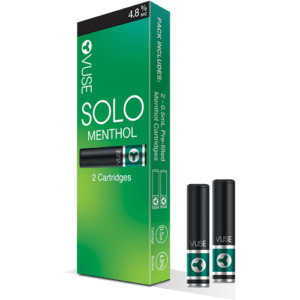
    The U.S. Food and Drug Administration issued marketing denial orders (MDOs) for two menthol e-cigarette products currently marketed by R.J. Reynolds Vapor Company under the Vuse Solo brand.

    Reynolds is expected to challenge the order.

    The currently marketed products include the Vuse Replacement Cartridge Menthol 4.8% G1 and the Vuse Replacement Cartridge Menthol 4.8% G2, according to a statement. The company may resubmit applications or submit new applications to address the deficiencies for the products that are subject to these MDOs. 

    The FDA evaluates premarket tobacco product applications (PMTAs) based on a public health standard that considers the risks and benefits of the product on the population as a whole.

    After reviewing the company’s PMTAs, the FDA determined that the applications lacked sufficient evidence to demonstrate that permitting the marketing of the products would be appropriate for the protection of the public health, which is the applicable standard legally required by the 2009 Family Smoking Prevention and Tobacco Control Act.

    Specifically, the evidence submitted by the applicant did not demonstrate that its menthol-flavored e-cigarettes provide an added benefit for adult smokers relative to tobacco-flavored e-cigarettes.

    In October last year, the FDA issued MDOs for several menthol-flavored vaping products marketed by Logic Technology Development. It was the first time the FDA issued MDOs for menthol products after receiving a scientific review.

    A few days after the order was issued, Logic obtained a court order from the U.S. Circuit Court of Appeals for the 3rd Circuit that temporarily stayed the order.

    The case continues.

  • FDA: 99 Percent of Applications Decided

    FDA: 99 Percent of Applications Decided

    Image: manonteravest | Adobe Stock

    In an update, the U.S. Food and Drug Administration said it has made determinations on more than 99 percent of the nearly 26 million deemed products for which applications were submitted. To date, the agency has authorized 23 new e-cigarette products.

    This includes determination on applications for nearly 6.7 million products received by the Sept. 9, 2020, deadline, more than 18 million products received after the Sept. 9 deadline, and applications for nearly 1 million nontobacco nicotine products submitted by May 14, 2022, in accordance with the new federal law passed in April 2022.

    Under a federal court order, manufacturers of deemed new tobacco products that were on the market as of the deeming rule’s effective date (Aug. 8, 2016) were required to submit premarket review applications by Sept. 9, 2020.

    On Feb. 21, 2023, the FDA issued a refuse-to-accept (RTA) letter to one applicant notifying the company that their premarket tobacco product applications, which are associated with approximately 17 million individual tobacco products, do not meet the acceptance requirements outlined in the FDA’s regulations. The applications were for a grouped submission of e-liquids in varying size, nicotine strength and flavor combinations, each of which was treated as an individual product application according to existing premarket review processes.

    During the acceptance phase of application review, the FDA reviews applications to ensure they meet a minimum threshold for acceptability for FDA scientific review. If required contents for acceptance are missing, the FDA refuses to accept the application. This company was issued an RTA letter because the company’s applications for these products lacked required environmental assessments. The company may submit a new application for these products at any time; however, the products may not be marketed unless the FDA reviews the applications and determines that marketing of the products is appropriate for the protection of the public health.

    The latest updates on actions taken on these applications can be viewed on the FDA’s tobacco products marketing orders page.

  • Health Advocates Urge FDA to Ban Flavors

    Health Advocates Urge FDA to Ban Flavors

    Image: chocolatefather | Adobe Stock

    Health advocates are urging the U.S. Food and Drug Administration to ban menthol cigarettes and flavored cigars, reports WGBO. The FDA issued draft measures to ban menthol in April 2022. Final regulations are expected later this year.

    “Menthol is an analgesic; it numbs the throat, so it lets the poison go down easier,” said Carol McGruder, co-chair of the African American Tobacco Control Leadership Council. “It dilates the alveoli in the lungs, the little sacs in your lungs, and so it allows the toxins to stay longer and deeper in the lungs.”

    Lincoln Mondy made a documentary called Black Lives/Black Lungs about the marketing of menthol cigarettes to Black communities, something many have pointed out as a trend in tobacco marketing.

    “We say predatory because it was indeed predatory; they went in neighborhoods like Detroit and New York and majority Black neighborhoods and gave out free cigarettes. They just handed out free cigarettes; they drove up in Newport vans and Kool vans and handed out free cigarettes,” Mondy said.

    As a result of this “predatory” marketing, 85 percent of Black smokers smoke menthol cigarettes. Some states like California passed laws banning flavors. However, McGruder says that the industry is still finding ways around such bans.

    “They’ve already introduced new products that have some chemicals in there that mimic menthol, but they’re not menthol, and they’re actually on the market right now in California, and so now we have to deal with that, and so, the industry will never stop. They are going to continue to recruit their new smokers to replace the folks who are dying,” McGruder said.

  • CTP Hires New Office of Science Director

    CTP Hires New Office of Science Director

    Matthew Farrelly (Credit: RTI International)

    The new director of the U.S. Food and Drug Administration’s tobacco science division is Matthew Farrelly, former chief scientist and director of the Center for Health Analytics, Media, and Policy for RTI International.

    In an announcement, the FDA’s Center of Tobacco Products (CTP) stated that Farrelly’s extensive work in the field of tobacco and nicotine science for more than 25 years, and being recognized internationally as an expert with proven leadership and organizational management skills will help him succeed as the director of the CTP’s Office of Science.

    “He has led or been involved with numerous scientific endeavors related to tobacco control policies and regulatory approaches, including those related to graphic health warning labels, excise taxes, smoke-free policies, quitlines, state tobacco control programs, retail advertising, and flavored tobacco products,” the release states. “He has also extensively researched the influence of mass reach health campaigns, including FDA’s The Real Cost.”

    Farrelly also has authored or co-authored over 120 articles in peer-reviewed scientific literature, according to the release. He earned his Ph.D. in Economics from the University of Maryland at College Park.

    Farrelly joins the CTP as the agency faces a series of major tobacco-related decisions, including a potential ban on menthol cigarettes, lowering nicotine levels, and the next step in its ongoing attempt to regulate Juul and other electronic cigarettes.

    Farrelly will replace Matt Holman, who left the position last year to join Philip Morris International. Holman was hired in 2017 and took over for David Ashley.

  • 22nd Century Submits CBD Drug Master File

    22nd Century Submits CBD Drug Master File

    Image: Tobacco Reporter archive

    22nd Century Group filed a U.S. drug master file (DMF) to the U.S. Food and Drug Administration for cannabidiol (CBD) API from GVB Biopharma, a 22nd Century Group company, according to a company press release.

    “GVB Biopharma is widely recognized for the quality and consistency of its Cannabinoid extracts and ingredients,” said James A. Mish, CEO of 22nd Century. “We are now leveraging these capabilities with our DMF filing to meet the increasing regulatory demands of the supplements markets.”

    Additionally, 22nd Century and GVB Biopharma have entered into an agreement with Cannabinoid API Solutions (CAS) and Transo-Pharm for global sales, marketing and distribution of GVB’s Cannabinoid APIs. Transo-Pharm is a well-established supplier and distributor of pharmaceutical APIs to a broad portfolio of branded and generic finished drug product manufacturers, including more than 75 current active, ongoing development programs.

    “The partnership with Transo-Pharm will accelerate opportunities to supply our APIs to the largest and most innovative pharmaceutical and consumer goods manufacturers in the world,” said Mish.

  • FDA Launches Online Vaping Resource Center

    FDA Launches Online Vaping Resource Center

    Image: Tobacco Reporter archive

    The U.S. Food and Drug Administration has launched the Vaping Prevention and Education Resource Center, which provides free science-based, standards-mapped materials that teachers can use to help their students understand the risks associated with vaping and nicotine addiction. The Center for Tobacco Products also developed free materials for parents and teens.

    Teachers will find lesson plans, interactive tools, infographics and videos with tobacco facts and tips about how to teach teens about the dangers of vaping.

    Parents will find fact sheets, videos and resources to help them understand and recognize vapes, talk with their children and keep the conversation going over time.

    According to the FDA, students will find real-life stories and relatable content to help them understand vaping, nicotine addiction, common myths about vapes and how to say no to vaping.

    The resource center will be continuously updated, according to the FDA.

  • Menthol and Nicotine Timelines Accelerated

    Menthol and Nicotine Timelines Accelerated

    Image: pingebat | Adobe Stock

    The Biden administration released its Unified Agenda and Regulatory Plan for fall 2022, which includes moving forward the timeline for a federal ban on menthol-flavored cigarettes, reports The Winston-Salem Journal.

    There are eight rules that address the tobacco industry, and three have “notable changes” from the spring 2022 plan, according to Jain Gaurav, a Barclays analyst. These include: Rules on a menthol ban in cigarettes and flavored cigars have moved to the “final rule stage” versus the “proposed rule stage”; rules to ban characterizing flavors in cigars have also progressed to the final rule stage; and the nicotine cap proposed standard development has been moved from May to October.

    “We continue to believe the Food and Drug Administration’s focus is going to revolve around the evaluation of premarket tobacco [product] applications of deemed products, notably e-cigarettes, in the next few months,” Gaurav said.

    “The FDA intends to publish a final (menthol) rule by August 2023. We expect a two-[year] to three-year cycle from the day FDA passes any rule to the time such rule survives the inevitable court challenges.

    “We don’t expect a menthol cigarette ban from the FDA implemented (if it were to pass) at least until 2026.”

    A cigarette menthol ban could have negative impacts on tobacco stocks with a significant U.S. presence, according to Gaurav and other tobacco industry analysts. Menthol cigarettes account for 35 percent of cigarettes sold in the U.S.

    “While there is some risk, a federal ban on menthol cigarettes could reduce smoker initiation and potentially be a catalyst that prompts a number of smokers to quit, thereby having some negative impact on cig volumes,” said Bonnie Herzog, Goldman Sachs analyst, “we continue to believe a more likely scenario is for menthol cig users to convert to nonmenthol cig products or to reduced-risk products that have a menthol variant, such as e-vapor.”

    It is expected that the FDA will face lawsuits from tobacco manufacturers and anti-smoking groups if the ban goes through because Congress exempted menthol from banned flavorings in traditional cigarettes in the federal Tobacco Control Act in 2009.

    In June, the FDA issued its proposal to reduce nicotine content in traditional cigarettes to minimal and potentially nonaddictive levels as early as May 2023.

    “We think it will take a decade or longer for the FDA to introduce nicotine caps due to the long nine-step process at the FDA, the inevitable litigation and then the one year given to retailers to get rid of the excess inventory,” Gaurav said.