Category: FDA

  • Bantam Receives PMTA Acceptance Letter

    Bantam Receives PMTA Acceptance Letter

    Image: Tobacco Reporter archive

    Bantam Vape received acceptance of its premarket tobacco product application (PMTA) submission from the U.S. Food and Drug Administration for its nontobacco nicotine e-liquids, according to a press release. Bantam’s application now moves to the next step in the PMTA process—a preliminary scientific review to confirm the application contains all required items to permit a substantive review by the FDA.

    Bantam submitted its application for its nontobacco nicotine e-liquids to the FDA on May 13, 2022, and is seeking marketing orders from the agency.

    “The receipt of this acceptance letter reflects Bantam’s efforts to provide adult consumers with high-quality, science-based e-liquids while upholding our responsibility to restrict youth access and use of these products,” said Bantam spokesperson Anthony Dillon. “Bantam remains supportive of the need for science-based regulation in the e-liquids industry and is proud of the progress of our various PMTAs. We remain confident in the quality and consistency of our products and the science behind them.”

    Prior to its nontobacco nicotine-focused submission, Bantam submitted a PMTA to the FDA in September 2020 for its tobacco-derived e-liquids. The application entered scientific review in August 2021, and, to date, remains under FDA review.

  • OSC Letter Describes FDA’s ‘Public Failure’

    OSC Letter Describes FDA’s ‘Public Failure’

    Image: David Mark | Pixabay

    The U.S. Food and Drug Administration’s Center for Tobacco Products (CTP) had relaxed its standards of review for certain tobacco products and stifled attempts by its scientists to raise concerns, according to an investigation conducted by the U.S. Office of Special Counsel (OSC). The OSC sent a letter to President Joe Biden and Congress outlining the findings.

    The investigation began after a leading CTP toxicologist-turned-whistleblower disclosed to the OSC that a 2019 memorandum issued to the CTP’s scientists revised the process for evaluating potentially harmful ingredients in substantial equivalence applications used for certain tobacco products. According to the whistleblower, the memo directed scientists to stop using objective, quantitative data to evaluate applications and to instead use an approach that was more akin to “eyeballing it,” resulting in unclear review standards and less reliable decisions, according to the CTP.

    The whistleblower also alleged that flaws in the CTP’s internal scientific dispute resolution process effectively prevented the whistleblower and several other concerned scientists from raising these issues within the agency. “This internal dispute process is intended to safeguard the integrity of CTP’s scientific evaluations, including consideration of certain tobacco products to ensure those authorized for market meet the applicable health and safety standards,” the CTP stated.   

    The OSC referred the whistleblower’s allegations for investigation. In response, the FDA convened an independent panel of scientific experts to evaluate allegations concerning the allegedly flawed tobacco application review process. The panel largely agreed with the whistleblower’s concerns, finding that the process lacked “quantifiable standards or criteria.” The expert panel made six recommendations, including a new process for resolving scientific discrepancies, which the agency largely adopted.

    In response, the whistleblower acknowledged the CTP’s progress in giving scientists discretion to consider quantitative data in reviewing potentially harmful chemical compounds in substantial equivalence applications for new tobacco products. The CTP also revamped its scientific dispute procedures and created a mandatory training program for all CTP staff involved in scientific decision-making. While supportive of these steps, the whistleblower stated that FDA scientists will still need courage to challenge a system that “discourages dissenting voices.”

    “The public depends on the FDA to vigorously implement and enforce our nation’s health and safety laws, especially when new tobacco products are being brought to market,” said Special Counsel Henry J. Kerner. “I am deeply troubled that FDA’s own scientific dispute process failed our whistleblower and fellow concerned scientists, and as a result failed the public. I commend the whistleblower for persevering in the face of these unnecessary obstacles. I also thank the FDA for taking the allegations seriously by convening an independent expert panel and for taking positive steps to repair its review process.”

  • Reagan-Udall Submits CTP Review to FDA

    Reagan-Udall Submits CTP Review to FDA

    The Reagan-Udall Foundation today submitted its recommendations to Robert Califf , commissioner of the U.S. Food and Drug Administration. The findings are what many in the industry are calling “meaningless” and “less than compelling.”

    The report concludes that vaping industry stakeholders observed a lack of “consistent implementation” of what the industry understood to be the policies of the Center for Tobacco Products (CTP), particularly with respect to tobacco harm reduction and the requirements needed to navigate the premarket tobacco product application (PMTA) process.

    The “Operational Evaluation of FDA’s Tobacco Program” was facilitated at Califf’s request. The announcement came as Califf attempted to push past several controversies that dominated his second stint running the agency, including his issuing of a marketing denial order (MDO) to e-cigarette maker Juul Labs and later having to rescind that order.

    The report did highlight several wide-ranging problems that the report states hinder its ability to regulate the industry and reduce tobacco-related disease and death. The report stated that the CTP should make “process improvements and identify and address the policy and scientific questions” that underpin its regulatory framework. The review concluded that CTP’s implementation of its program also has been affected by “changes in leadership and administrations.” In its first 13 years, CTP has operated under seven different commissioners in three different administrations, and recently hired a third CTP director, Brian King.

    “From the stakeholders’ perspective, policy shifts with broad impact on the industry occurred without notice. The Center has faced significant challenges in clearing its policies through the career and political infrastructure. It took years to establish requirements and standards governing application reviews, frustrating industry and creating problems for the Center itself when it received deficient applications,” the report states. “Issues in application reviews resulted in litigation necessitating re-review of some applications. The current environment reflects an unintended shift from what was structured by law as a pre-market authorization framework to the reality of a post-market regulatory environment, which is much more difficult to deal with given that there are few incentives for industry to come into compliance and many incentives for industry to delay the process.”

    The evaluation and resulting recommendations focused on four program areas: regulations and guidance, application review, compliance and enforcement, and communication with the public and other stakeholders, according to the review. The review and recommendations are meant to assist the agency in making changes to better carry out its regulatory responsibilities; to strengthen its relationships with stakeholders

    The report identified several fundamental issues that the center needs to address and it states that the report offers “cross-cutting as well as program-specific recommendations to help CTP operate more effectively,” according to the authors of the review.

    The key points from the report can be summarized as follows:

    • The panel observes that CTP has been forced to operate primarily in a reactive mode, moving
      from one challenge to the next, mainly provoked by the outside forces. The Center should transition to becoming a more proactive and strategic program. With more substantial engagement with stakeholders and the public, CTP should take the time now to think strategically about where it is today and where it needs to go in the next several years.
    • Although CTP has a critical mission to protect the public health from tobacco-related disease and death and is regulating products that have no inherent benefit and huge societal costs, it is a government regulatory program with a duty to run efficiently, fairly, and transparently. This responsibility to function as an effective product regulator should be captured in the Center’s mission, vision, and goals and carried out to the best of the Center’s ability.
    • The panel recognizes that to improve the effectiveness of its application review, the Center should make process improvements and identify and address the policy and scientific questions that underpin its regulatory framework.
    • CTP needs to work with other entities on strategies to clear the market of illegal tobacco products more rapidly and provide more transparency to the public on its efforts to do so. This work is challenging but essential as CTP adopts a more strategic approach. While there is much the Center can do on its own, the panel notes that enforcement of the premarket requirements in the tobacco laws, particularly to help prevent youth use of tobacco products, requires the involvement and support of agencies other than FDA. The authors encourage the agency to elevate this issue and pursue a more comprehensive approach that leverages the resources of other agencies with a declared role in tobacco control.

    “Overall, the panel is confident that many of the concerns raised in this report can be addressed by CTP’s
    talented and dedicated staff, with the support of FDA leadership,” the report states.

    Numerous comments from purported staffers of the FDA for the Reagan Udall assessment claimed the regulatory agency is in a state of disarray and being influenced by outside forces, not scientific research. One comment stated that reviewers of premarket tobacco product applications (PMTAs) in the CTP Office of Science (OS) lack the autonomy to exercise “best scientific practices” in their reviews of PMTAs. The report fails to address these issues.

    The panel was comprised of former federal public health leaders, regulatory strategists, and process improvement specialists. Lauren Silvis, served as chair of the group, which included Jane Axelrad, Keith Flanagan, Charlene Frizzera, and Alberto Gutierrez.

    “The panel provided recommendations to help the Agency’s tobacco program strengthen its operations as it works to reduce the harm associated with tobacco use,” said Lauren Silvis. “The Center for Tobacco Products has made significant progress in establishing a regulatory program for tobacco products and our recommendations are intended to help the Center develop additional tools for achieving its public health objectives.”

    Through multiple listening sessions, interviews, and an online portal, the group received and carefully reviewed input from a range of stakeholders, including FDA staff and the public, according to the report. The author’s claim the report offers “cross-cutting and program-specific recommendations” for the FDA to consider, “focusing on regulations and guidance, application review, compliance and enforcement, and communication with the public and other stakeholders.”

    The report did not address tobacco policy issues, which are outside the scope of the evaluation, according to a Reagan-Udall Foundation.

    One industry stakeholder, who asked not to be named for fear of retribution from the FDA for its brands under PMTA review by the agency, said the report’s findings were “a joke” and “completely ignorant of the real problems at the CTP.”

    Califf said Monday he will review the recommendations with the aim of outlining the agency’s next steps by February.

    Earlier this month, Reagan-Udall delivered its food report that was commissioned at the same time as the tobacco report. The food response suggests the agency’s leadership be restructured to improve its response to emergencies, including the recent shortage of baby formula

    Reagan-Udall was created by Congress to help further FDA’s mission. The non-profit receives funding from both the FDA and the industries it regulates, including drugmakers.

    The report can be found at reaganudall.org.

  • FDA Urged to Expand Menthol Ban

    FDA Urged to Expand Menthol Ban

    Image: Tobacco Reporter archive

    The U.S. Food and Drug Administration should extend the ban on menthol cigarettes to other products, like pipe tobacco and cigarette tubes, according to researchers at the Rutgers Center for Tobacco Studies and Ohio State University, reports EurekAlert!.

    “Tobacco companies have rebranded their roll-your-own cigarette tobacco as pipe tobacco to avoid taxes and rebranded flavored cigarettes as flavored cigars to skirt a federal ban,” said Andrea Villanti, deputy director of the Rutgers Center for Tobacco Studies and co-principal investigator of a study published in Tobacco Control discussing the addiction potential of menthol cigarette alternatives. “We have already seen companies advertising pipe tobacco and cigarette tubes alongside cigarettes and filtered cigars. The products we tested in our study are likely to be products that tobacco companies will promote following a ban on menthol cigarettes.”

    Research showed that mentholated pipe tobacco and tubes in a roll-your-own cigarette were the most appealing substitutes for menthol cigarettes and resulted in the highest number of indicators for future nicotine addiction. The proposed menthol ban does not include these products, however.

    “The present findings suggest that components of menthol roll-your-own products, including menthol rolling papers, cigarette tubes and pipe tobacco, should be included in the menthol cigarette and flavored cigar product standards,” said Theodore Wagener, director of the Center for Tobacco Research at the Ohio State University Comprehensive Cancer Center—Arthur G. James Cancer Hospital and Richard J. Solove Research Institute and corresponding author of the study. “Their absence from this restriction will result in a critical loophole that is already being exploited by the tobacco industry and has the potential to lessen the potential public health benefits of the proposed menthol ban.”

  • FDA Updates Reynolds MRTP

    FDA Updates Reynolds MRTP

    Courtesy: US FDA

    The U.S. Food and Drug Administration has added the redacted “September 14, 2020 Amendment: Timing to Respond to September 1, 2020, FDA Deficiency Letter” to R.J. Reynolds Tobacco Company’s modified-risk tobacco product (MRTP) applications.

    On Dec. 18, 2017, the FDA filed for substantive scientific review of six MRTP applications from R.J. Reynolds Tobacco Company for the following smokeless tobacco products: Camel Snus Frost, Camel Snus Frost Large, Camel Snus Mellow, Camel Snus Mint, Camel Snus Robust and Camel Snus Winterchill.

    On Oct. 25, 2022, R.J. Reynolds Tobacco Company requested to withdraw these applications from FDA review.

  • FDA Rejects First Menthol Product PMTAs

    FDA Rejects First Menthol Product PMTAs

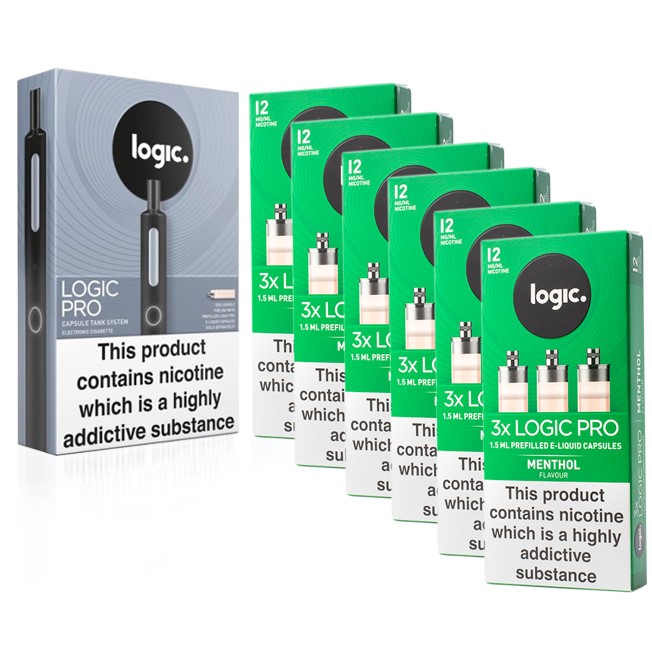
    The U.S. Food and Drug Administration has issued marketing denial orders (MDOs) for several menthol-flavored vaping products marketed by Logic Technology Development. The products include the Logic Pro Menthol e-Liquid Package and Logic Power Menthol e-Liquid Package. It’s the first time the FDA has issued MDOs for menthol products after receiving a scientific review.

    The move seems inline with the regulatory agency’s goal to ban menthol flavors from tobacco products. The FDA also isn’t expected to approve any flavored vaping product other than tobacco.

    “Ensuring new tobacco products undergo premarket evaluation is a critical part of the FDA’s work to reduce tobacco-related disease and death,” said Brian King, director of the FDA’s Center for Tobacco Products (CTP), in a release. “We remain committed to evaluating new tobacco products based on a public health standard that considers the risks and benefits of the tobacco product to the population as a whole.”

    Gregory Conley, director of legislative and external affairs for the American Vapor Manufacturers Association, told Tobacco Reporter that the latest move by the FDA to ban menthol vaping flavors is reminiscent of the agency’s “fatal flaw” review of PMTAs that resulted in millions of denials. The term “fatal flaw” was used by the FDA for PMTA submissions that didn’t have specific studies. The term has been at the center of nearly all lawsuits filed against the FDA for its handling of the PMTA process.

    “The dysfunction at the FDA knows no bounds. For the last year-plus, the FDA has sat back deferred decision making on menthol vaping products,” Conley said. “Lest anyone believe that FDA was hard at work coming up with ways to achieve balance, today they revealed that their big plan for menthol vaping products is to follow the exact same ‘fatal flaw’ review process that has led to dozens of lawsuits being filed against the agency.”

    The agency stated that after reviewing the company’s premarket tobacco product applications (PMTAs), the FDA determined that the applications “lacked sufficient evidence to demonstrate that permitting the marketing of the products would be appropriate for the protection of the public health (APPH), the applicable standard legally required by the 2009 Family Smoking Prevention and Tobacco Control Act.”

    The FDA stated that the evidence provided within Logic’s denied PMTAs did not demonstrate that menthol-flavored e-cigarettes are more effective in promoting “complete switching or significant cigarette use reduction” relative to tobacco-flavored e-cigarettes.

    Logic must now decide if it will resubmit its applications or submit new applications to address the deficiencies for the products that are subject to the MDOs. However, these acts could prove futile since the FDA states that for non-tobacco-flavored e-cigarettes, including menthol-flavored e-cigarettes, “existing evidence demonstrates a known and substantial risk” with regard to youth appeal, uptake and use.

    “The FDA conducts a rigorous, scientific review of submitted premarket tobacco product applications, evaluating the data for each product to determine if it meets the public health standard,” said King. “In this case, the applicant did not provide sufficient scientific evidence to show that the potential benefit to adult smokers outweighs the risks to youth.”

    A recently accepted manuscript of an article set for publication in Nicotine & Tobacco Research found that flavored vaping and other tobacco sales restrictions in California did not affect youth e-cigarette use.

    The MDO letter that Logic received today is not limited to the two products named above, according to the agency. In general, the FDA publicly names only products that the applicant is marketing to avoid potential disclosure of confidential commercial information.

    Any products subject to an MDO may not be offered for sale or distributed in the United States, or the FDA may take enforcement action. These products cannot be legally introduced into interstate commerce in the U.S. without risking FDA enforcement. In March, the FDA authorized several tobacco-flavored e-cigarette products from the company under the Logic Vapeleaf, Logic Power and Logic Pro brands, including devices. 

    In addition to ensuring that Logic complies with this order, the FDA intends to ensure compliance by distributors and retailers. Specifically, the FDA notes that all new tobacco products on the market without the “statutorily required premarket authorization” are marketed unlawfully and their distribution or sale is subject to enforcement action.

    Recently, the U.S. Department of Justice filed complaints for permanent injunctions in federal district courts against six e-cigarette manufacturers on behalf of the FDA. The cases represent the first time the FDA has initiated injunction proceedings to enforce the Federal Food, Drug, and Cosmetic (FD&C) Act’s premarket review requirements for new tobacco products.

    Retailers should contact Logic with any questions about products in their inventory. 

  • FDA Issues Warning to Puff Bar, MDOs to Hyde

    FDA Issues Warning to Puff Bar, MDOs to Hyde

    Credit: Puff Bar

    New data from the 2022 National Youth Tobacco Survey (NYTS) shows that 2.5 million U.S. youth use e-cigarettes, according to the published findings in the Morbidity & Mortality Weekly Report released by the U.S. Food and Drug Administration in conjunction with the Centers for Disease Control and Prevention.

    “The FDA remains deeply concerned about e-cigarette use among our nation’s youth. It’s clear that we still have a serious public health problem that threatens the years of progress we have made combatting youth tobacco product use,” said FDA Commissioner Robert M. Califf. “We cannot and will not let our guard down on this issue. The FDA remains steadfast in its commitment to using the full range of our authorities to address youth e-cigarette use head-on.”

    The study shows that about one in 10 middle school (3.3 percent) and high school (14.1 percent) students reported current e-cigarette use; current use is defined as use within the past 30 days. About 85 percent of surveyed students reported using flavored e-cigarettes while 27.6 percent reported daily use. Respondents most commonly used disposables, with Puff Bar being most common (14.5 percent) followed by Vuse (12.5 percent) and Hyde (5.5 percent). Puff Bar and Vuse were pre-specified options on the survey, but Hyde was written in by students as their preferred brand.

    Since methodology changes occurred, including in survey administration and data collection procedures due to the Covid-19 pandemic, comparisons between the 2022 NYTS and previous years is limited.

    Following the release of this data, the FDA has issued a warning letter to Puff Bar for receiving and delivering e-cigarettes in the U.S. without a marketing authorization order. The FDA has requested a response within 15 working days of receiving the letter, detailing how the company intends to address the FDA’s concerns, including the dates on which they discontinued the sale and/or distribution of these tobacco products and plans for maintaining compliance with the Federal Food, Drug and Cosmetic Act. Failure to address the violations puts the manufacturer at risk of regulatory action, such as a civil money penalty, product seizure and/or injunction.

    The Puff products subject to this warning letter are nontobacco nicotine products.

    After reviewing premarket tobacco product applications for 32 Hyde e-cigarettes, the FDA issued marketing denial orders (MDOs) for these applications submitted by Magellan Technology Inc. In conducting its scientific review, the FDA determined that the applications lacked sufficient evidence demonstrating that the products would provide a benefit to adult users that would be adequate to outweigh the risks to youth. No Hyde products have received marketing authorization orders from the FDA.

    “Congress gave the FDA authority to hold manufacturers and retailers who violate the law accountable,” said Brian King, director of the FDA’s Center for Tobacco Products. “FDA is actively working to identify violations and to swiftly seek corrective actions, particularly for products popular among youth. We will use all compliance and enforcement tools available to us, as appropriate, to protect our nation’s youth.”

  • CTP Director: Nicotine Salts Show Potential

    CTP Director: Nicotine Salts Show Potential

    Brian King (Photo: FDA)

    During an exclusive interview with the Associated Press, the director of the U.S. Food and Drug Administration’s Center for Tobacco Products (CTP), Brian King, said the FDA is well on its way in setting a foundation for substantial reductions in combustible tobacco smoking with the product standards such as a menthol ban and flavor bans for e-cigarettes and cigars.

    When asked about several surveys that have shown many adults think e-cigarettes are as dangerous as traditional cigarettes, King said he was fully aware of the misperceptions surrounding vaping products those misperceptions aren’t consistent with the known science.

    “We do know that e-cigarettes — as a general class — have markedly less risk than a combustible cigarette product,” King said. “That said, I think it’s very critical that we inform any communication campaigns using science and evidence. It has to be very carefully thought out to ensure that we’re maximizing impact and avoiding unintended consequences.”

    King also said he believes “there’s a lot of really important science and innovations” that have occurred in the vaping industry in recent years, adding that the most notable is nicotine salts in e-liquids.

    “We know that when you smoke a tobacco product, it’s a very efficient way to deliver nicotine across the blood-brain barrier. So it’s been very difficult to rival that efficiency in another product,” said King. “But in the case of nicotine salts you have the potential to more efficiently deliver nicotine which could hold some public health promise in terms of giving smokers enough nicotine that they would transition completely.

    “But you also have to consider the opposite side of the coin, which is the inherent risks of initiation among youth. So I do worry about that … there’s a lot happening and I think that it could be promise or peril. But I think it’s important that the science drives that.”

  • New Guidance on Perception/Intention Studies

    New Guidance on Perception/Intention Studies

    The U.S. Food and Drug Administration Today issued a final guidance on guidance perception and intention studies.

    The guidance, “Tobacco Products: Principles for Designing and Conducting Tobacco Product Perception and Intention Studies,” is intended to help applicants design and conduct tobacco product perception and intention (TPPI) studies that may be submitted as part of a modified risk tobacco product (MRTP) application, a premarket tobacco product application (PMTA), or a substantial equivalence report (SE Report).

    TPPI studies can be used to assess, among other things, individuals’ perceptions of tobacco products, understanding of tobacco product information (e.g., labeling, modified risk information), and intentions to use tobacco products, according to the FDA.

    These studies provide critical information during the review of product applications and this guidance provides recommendations on how to perform these studies.

    The final guidance addresses several scientific issues for applicants to consider when designing and conducting TPPI studies to support tobacco product applications:

    • Developing study aims and hypotheses
    • Designing quantitative and qualitative studies
    • Selecting and adapting measures of study constructs
    • Determining study outcomes
    • Selecting and justifying study samples
    • Analyzing study results

    The guidance document is intended to provide clarity to applicants regarding existing requirements under the law, according to FDA.

    “FDA guidance documents, including this guidance, should be viewed as recommendations for consideration, unless specific regulatory or statutory requirements are cited,” the release states.

  • An Inside Perspective to the CTP Review

    An Inside Perspective to the CTP Review

    By Chris Howard and Rich Hill

    Recently, U.S. Food and Drug Administration Commissioner Robert Califf announced an external evaluation of both the Human Foods Program and the Center for Tobacco Products (CTP). The FDA press release observed that “… even greater challenges lie ahead as we determine how the agency will navigate complex policy issues and determine enforcement activities for an increasing number of novel products that could potentially have significant consequences for public health. To that end, the review will push toward ‘organizational excellence.’”

    Califf is right—the CTP clearly requires assistance. The purpose of this article is to review how the CTP arrived in this untenable situation and to suggest areas of focus for the review of the CTP processes.

    How Did We Get Here?

    There is little doubt that the CTP is in an unenviable position. No matter which way the agency turns, it is impossible to please everyone. The anti-tobacco/vaping groups will never be satisfied until all tobacco products are gone—so realistic harm reduction propositions from the center will always be met with opposition. And when the CTP tries to develop policies with a focus on efficiency, many in the industry claim that they are “prohibitionist” and that they have no regard for harm reduction and/or the human and economic consequences of their decision-making.

    Recently, several court opinions and CTP actions have significantly contributed to the challenging environment for the CTP:

    • West Virginia v. EPA. While not directly related to the CTP, the West Virginia v. EPA Supreme Court decision has reopened the question as to whether discretion of regulatory agencies may become more limited in the future. The court seems poised to chip away at longstanding doctrines (or apply them more forcefully) to limit agency power and place policymaking back with the legislature.
    • Cigar Association of American v. FDA. More recently, in the Cigar Association of America v. FDA case, Judge Amit Mehta of the U.S. District Court for the District of Columbia examined whether the FDA’s decision not to exempt premium cigars from the Deeming Rule was arbitrary and capricious. The court ultimately found that the FDA ignored evidence in the rulemaking record—and ruled against the agency.
    • Juul v. FDA. Days later, the CTP found toxicological issues with Juul’s popular vapor products and issued marketing denial orders (MDOs) for those products. Not surprisingly, Juul immediately requested and received an emergency stay of the MDOs from the D.C. Circuit. Without missing a beat, the CTP promptly “… administratively stayed the marketing denial order. The agency [determined] that there are scientific issues unique to the Juul application that warrant additional review.” Several commentators questioned the CTP’s rationale for its decision to re-review Juul’s applications, and some have gone so far as to suggest that this quick reversal indicates a less than appropriate review of Juul’s data or worse—a lack of confidence in the CTP’s decision-making. Either way, the entire chain of events draws into question the CTP’s review process.
    • Finally, the CTP is still under pressure to complete decisions on premarket tobacco product applications (PMTAs) for those companies addressed in the Maryland court decision which, according to the CTP, will not be completed until next summer. Further compounding the CTP’s problems, the center continues “processing” approximately 1,000,000 synthetic nicotine PMTAs past the congressional deadline for marketing decisions on July 13, 2022. How the center will respond to this pressure is anyone’s guess. So far, it seems like the CTP continues to move at its own pace, following the Maryland court’s order to the best of its abilities.

    These external and internal factors point to one conclusion that cannot be ignored—the CTP appears to be struggling and needs something to change. With the above in mind, the following are a few areas ripe for external (and internal) review at the CTP.

    Credit: Fizkes

    Operational Changes

    Operationally, the CTP seems to have the resources (personnel and budget) to successfully regulate tobacco products. That said, certain policy choices and administrative actions (both self-inflicted and externally inflicted) appear to hamper the center’s ability to effectively manage the space. Importantly, effective regulation is hamstrung by the complexity of the U.S. tobacco regulatory scheme, a lack of clear standards for product testing and approval and a too opaque product application process.

    The most challenging operational issues come from the existing regulatory scheme, which is too complex for tobacco products. The Tobacco Control Act dictates the parameters/guardrails, but the CTP has latitude in how the process is implemented. The comprehensive PMTA guidance and robust final rule demand a scientific depth that goes too far. The question is: Is all of the delineated scientific data really necessary to determine that a product is appropriate for the protection of public health (APPH)?

    If comparing to combustible cigarettes, it would seem that most electronic nicotine-delivery product APPH determinations could be made based on chemistry alone. Piling on bench toxicology, human factors, pharmacokinetic and behavioral studies, it’s no wonder the review process takes so long.

    Standards are not clear. Without clear standards, the CTP and industry both are left constantly employing guesswork and conjecture to facilitate decision-making. While understandably there is no simple formula for APPH, clear expectations would be beneficial and efficient. By way of example, which device characteristics really need testing? What is the depth of stability testing necessary? What constitutes a sufficient PK [pharmacokinetic] study? While the initial meeting with the Office of Science is often useful to help answer questions like these, better defining product-specific standards and setting minimums would go a long way to streamlining the approval process.

    Transparency is lacking. While one can review the Technical Project Lead Reviews and some of the review standards memos that the CTP places on its website, few PMTA applicants have any idea what’s going on with their applications at any given time. Other than the initial pre-PMTA meeting and the sole deficiency letter, there is little that applicants know about the status (both administratively and substantively) of their applications. While more transparency about the status of applications would be welcome, more back and forth on issues in applications would benefit everyone—particularly the CTP. In the case of Juul, reports indicate that Juul provided thousands of pages of data related to the toxicological issue that the CTP raised in the MDOs. If the now outdated additional information requests were utilized by the CTP, Juul would have pointed out this data, and at least one issue could have been resolved well short of a trip to the courthouse.

    Credit: Oleg

    Policy Changes

    It goes without saying that U.S. government policy can be fickle to say the least. Setting and maintaining long-term policy is difficult—especially in light of changing administrations every few years. Despite this, overriding policy tenants as they relate to harm reduction can, and should, form the cornerstone of tobacco regulatory policy. If harm reduction is the priority, then regulators need to prioritize pathways for reduced-harm products to enter the market, incentivize innovation and focus on providing offramps to combustible cigarette smokers seeking to quit smoking.

    Harm reduction policy. During the tenure of former Commissioner Gottlieb at the FDA, many in the industry thought harm reduction would prevail and that all would recognize vapor products’ place at the opposite end of the continuum of risk from combustible cigarettes. Unfortunately, the significant uptick in youth experimentation with a few types of vapor products prodded the CTP into a tough position. Public health groups, dissatisfied with the CTP’s pace, forced the center into a corner via litigation.

    Assuming the goal of the Tobacco Control Act remains to reduce smoking-related morbidity and mortality, harm reduction strategies are central to achieving that goal. Importantly, harm reduction strategies should be palatable to all stakeholders. While the CTP has several initiatives moving forward, is there a plan for initiatives dedicated to moving smokers to safer alternatives? Efforts to move smokers to less risky alternatives do nothing when those less risky alternatives cannot succeed via the PMTA pathway. Current tobacco policy is remarkably dissimilar from the variety of strategies employed for other unsafe behaviors where harm reduction is embraced as the primary alternative. In areas such as drug use and sexually transmitted diseases, our society generally accepts reduced-harm efforts, but for tobacco, collectively we are still searching for that sweet spot.

    Given all the challenges that the CTP faces, working on harm reduction policies hand-in-glove with nongovernmental groups and industry probably does not seem like the best use of time. When the center was first formed, frequent scientific meetings were held on various issues (such as harmful and potentially harmful constituents). These have fallen off in recent years, likely in part due to Covid and also due to the onerous demands on the center. Prioritizing genuine and open conversations between the CTP, industry and tobacco control groups is critical to developing strong harm reduction policies. Holding scientific meetings (either through the CTP or the Tobacco Products Scientific Advisory Committee) on harm reduction plans and policies would add transparency and bring all ideas to the table.

    The FDA should not let the perfect be the enemy of the good when considering reduced-harm products. At present, PMTA reviews appear to be searching for the perfect. Reviews seem to focus on the smallest details that might pose a risk while ignoring a more generalized comparison to combustible products with 70 known carcinogens (and a track record of 480,000 deaths per year). APPH does not mean no riskit means less risk than the deadliest consumer product ever invented, the combustible cigarette. Reconsidering how APPH is adjudged would be an excellent first step in combatting morbidity and mortality attributable to smoking.

    Investing in harm reduction must be incentivized. If one wants to develop a new product, the timeline is a hard stop. A year of product development, up to three years of PMTA testing (including two years of stability and time to plan, conduct and write up the studies) plus one year to three years of the CTP review before the possibility of a marketing order sounds like a pretty poor investment. The PMTA process must change to bring less risky products more rapidly to market.

    Society must not forget about smokers. Youth tobacco issues are important, but the 1,300 smokers dying each day are important too. A balanced harm reduction policy—controlling youth access and exposure while moving combustible cigarette smokers to quitting tobacco altogether or moving to a less risky product is necessary.

    Moving Forward

    Hopefully the external review will be a fruitful exercise—one that provides robust alternatives for the CTP to consider. The review, if rightly focused, will address foundational issues that will, in the end, lead tobacco regulation to a reasonable, reduced-harm world where smokers are given hope for a future.


    Chris Howard is vice president, general counsel and chief compliance officer at E-Alternative Solutions, an independent, family-owned innovator of consumer-centric brands.

    Rich Hill is the compliance director and associate general counsel of E-Alternative Solutions.