Blog

  • Australia’s Tobacco Policies Spark Harm and Chaos, Industry Expert Says

    Australia’s Tobacco Policies Spark Harm and Chaos, Industry Expert Says

    In a candid keynote at the Global Tobacco and Nicotine Forum (GTNF), Theo Foukkare, CEO of the Australian Association of Convenience Stores, delivered a scathing assessment of Australia’s tobacco and nicotine policies, saying the country is saddled with “harm and chaos.” Speaking under the theme “The Australian Experience: From Global Leader to Global Failure,” Foukkare outlined how once-successful public health strategies had collapsed under the weight of excessive taxation, poor enforcement, and the rise of organized crime.

    “Australia has become the model of what not to do. By any measure, it’s an absolute failure,” he said. “And believe it or not, our government still claims to have world-leading standards. We’re dealing with an absolute tsunami of illegal nicotine products entering the country. I call it ‘Tobacco Wars.’ It’s actually playing out in real life every day. The illegal nicotine market is now bigger than the next five organized crime categories combined.

    “Through bad policy, we’re actually creating harm,” he said, noting that smoking rates have remained virtually unchanged in the past decade despite mounting taxes and restrictions.

    “We had the most aggressive excise policy any government in the world had undertaken,” Foukkare said, with a legal pack of cigarettes now costing between $45 and $50. “They killed the golden goose, because the consumers said, “Enough is enough. Why would I pay this when there are cheaper options?”

    According to Foukkare, Australia’s extreme excise policies pushed consumers to the black market, eroding legal sales and fueling criminal activity. Organized crime groups, he added, have even begun taking over farms to grow illicit tobacco, while state governments scramble to form task forces.

    “There’s so much threat and intimidation,” he said. “Some store owners are paying $5,000 a month in protection money. Pay or they’ll burn your shop down. One store owner got a handwritten note saying he needed to meet with the [crime] boss. He took the note to the police, the next day, a car drove through the front of the store, and now it’s closed.”

    Foukkare criticized the government for ignoring early warnings about policy failures and dismissing data because it was industry-funded. Now, with estimates suggesting up to 60% of tobacco consumption is illicit, officials are finally acknowledging the scale of the problem. Foukkare also condemned the government’s anti-vaping stance, arguing that public messaging has convinced most Australians that vaping is more dangerous than smoking.

    Despite the creation of new penalties—million-dollar fines, landlord accountability clauses, and police powers to shut down stores—Foukkare said the measures have done little to fix the underlying issue. “We’ve spent a billion dollars and haven’t done anything to reduce smoking or keep people safe,” he said.

  • Pushing Back Against Illicit Trade

    Pushing Back Against Illicit Trade

    At a GTNF panel in Brussels on illicit tobacco, industry leaders, academics, and regulators warned that well-intentioned policies and slow regulatory systems are helping organized-crime networks flourish — putting legal retailers at risk and undermining public-health goals. Moderator Rohan Pike, director of Rohan Pike Consulting, opened the session by challenging official rhetoric. “The Australian health department cannot issue a press release without using the words ‘world leading,’ when all we’re leading the world in is excise tax and organized crime,” he said, arguing that high taxes and restrictive policies have created perverse incentives for illegal supply. Pike said he now supports accelerated access to reduced-harm products, noting: “If we can switch someone to a reduced-harm product, we’ve reduced smoking.”

    Theo Foukkare, CEO of the Australian Association of Convenience Stores, described a market under siege. Pointing to what he called ideological policymaking, Foukkare said decision-makers are listening to a narrow set of experts and ignoring real retail evidence. He recounted attacks on compliant shopkeepers and warned that, if trends continue, “the legal market will cease to exist.” He added that organized networks can import dozens of containers and still profit even when most shipments are seized.

    Nick Hodsman, head of anti-illicit trade policy at BAT, stressed the scale of production driving the illicit trade. “Margins organized criminals can make are something the legal industry could only dream of,” he said, highlighting mass production in parts of Asia and growing challenges around emerging nicotine categories. Hodsman called for improved visibility on what is leaving origin countries and what actually arrives in destination markets.

    King’s College London’s Dr Alexander Kupatadze warned of the complexity of criminal networks and systemic data weaknesses. He urged closer research and better integration of siloed datasets — across customs, law enforcement, and private firms — to find the “needle” in vast flows of information.

    U.S. regulatory expert Lillian Ortega pointed to slow and fragmented review processes for creating a grey market for new products. Ortega blamed antiquated tracking systems, inconsistent federal enforcement, and misdeclared imports that allow illicit goods to reach consumers while compliant manufacturers wait for approvals. “Criminals thrive off confusion,” she said.

    Panelists converged on several policy responses: beefing up frontline enforcement and retailer protection, modernizing tracking and customs documentation, improving inter-agency data sharing, and creating faster, clearer regulatory pathways for reduced-risk products to reduce demand for illicit supply.

  • Product Stewardship in a Regulatory Regime

    Product Stewardship in a Regulatory Regime

    At the GTNF session “What Does Product Stewardship Look Like in a Global Regulatory Regime?” industry scientists and innovators emphasized the need for consistent standards, open dialogue with regulators, and a science-first approach to product safety and harm reduction.

    Moderator Joe Thompson, Group Science and Regulatory Affairs Director at Imperial Brands, set the tone by framing stewardship as a consumer-first obligation. “It’s about quality, efficacy, and safety,” he said. “We have products that aren’t perfectly safe, but are demonstrably safer than their alternatives.” Thompson noted that navigating global regulatory systems is like crossing “rivers and mountains,” underscoring the complexity of compliance.

    Helena Digard, Head of Analytical Operations and Science Quality at BAT, called for standardization and transparency in testing. “We need testing that tells us the real story—not just results designed to reach a certain outcome,” she said. Digard stressed the importance of knowing both the minimum and maximum levels of stewardship and finding a balance that advances harm reduction through robust data.

    Chris Gemmell, Chief Product and Innovation Officer at Greentank Technologies, highlighted the role of technology in improving product safety. “Without technology, we wouldn’t be in the position we are today,” he said. With an estimated 150 million adult vapers globally, Gemmell urged closer collaboration between science and product development teams to ensure that data is well-understood and acted on early in the design process. “Start earlier so you don’t have to move faster,” he advised.

    Dr. Frank Henkler-Stephani of BVTE discussed widening gaps between regulators and manufacturers. “Everyone wanted to get products on the market quickly,” he said, but warned that improved technologies have not always been welcomed by tobacco control bodies within institutions like the WHO and the EU. He called for stronger cooperation to support continued product improvement.

    Dr. Yu Kang, Head of the Research Institute at Hangsen International Group, emphasized engineering innovation and consumer protection. “We’re trying to invent new products that protect consumers,” he said, pointing to research on second-hand vapor and closed-system devices. Kang advocated for transparency with regulators and the public, describing stewardship as a “lifecycle” responsibility that requires ongoing collaboration.

    Sarah Marking, Co-Founder and Chief Strategy Officer of Sanova, focused on regulatory uncertainty and unintended consequences of well-meaning policies. She cited child-resistant packaging as an example: “It sounds like a fantastic idea, but it can create barriers for adult users—like a 60-year-old mother who can’t open her product.” Marking called for circular stewardship that includes environmental responsibility and real-world monitoring of how consumers use products. “In trying to protect one risk, we’ve created a larger risk,” she said, urging regulators to act efficiently so that safer, well-stewarded products reach the market faster.

    Across the session, panelists agreed that true product stewardship requires transparency, scientific rigor, and continuous improvement throughout a product’s lifecycle—from design to disposal. As Marking concluded, “If we find a problem, we will find a way to solve it. This industry is driven by science—and that’s how stewardship should be defined.”

  • Clive Bates: WHO Using Tobacco’s History to Poison Good Science

    Clive Bates: WHO Using Tobacco’s History to Poison Good Science

    In a forceful keynote at the Global Tobacco and Nicotine Forum (GTNF) in Brussels, Clive Bates, Director of Counterfactual, called for a fundamental reset in global tobacco control policy, arguing that current frameworks such as the WHO Framework Convention on Tobacco Control (FCTC) have failed to adapt to innovation and evidence.

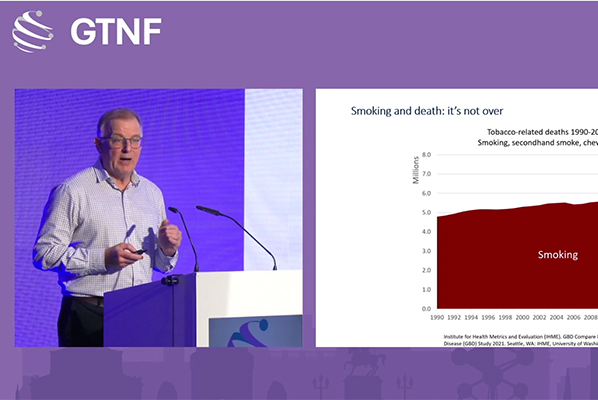
    “Prevalence is falling, but the global population is rising,” Bates said. “That means the total number of smokers is still going up — and so are the 7.5 million deaths each year caused by smoking.” He emphasized that quitting smoking at any age provides significant health benefits, but argued that international tobacco control remains stuck in the past. “The mission hasn’t changed — stop people from smoking — but the methods are outdated. We have new tools, and ignoring them is indefensible.”

    Bates described alternative nicotine products such as vaping, heated tobacco, and smokeless options as “the disruption the FCTC never anticipated.” He pointed to Sweden’s success as proof of concept: “Sweden has higher nicotine use than Germany but lower cancer rates. That’s what harm reduction looks like.” Yet, he criticized the European Union for maintaining its ban on snus — the very product that helped Sweden virtually eliminate smoking. “What if, instead of banning snus, we promoted it?” he asked. “Why are we still doing things that contradict our stated public health goals?”

    Turning his critique toward the WHO, Bates condemned the organization’s stance that there is “no evidence” reduced-risk products are safer than cigarettes. “That’s shocking,” he said. “Harm reduction is being dismissed as a tobacco industry ploy, using the industry’s reputation to poison good science.”

    He argued that the FCTC has institutionalized a “toxic” anti-industry bias that blocks collaboration and progress. “If the tobacco industry likes it, it must be bad — that’s the logic codified into policy. There’s no room for alignment with that attitude,” he said. Bates noted that several major companies have already shifted dramatically — “PMI now earns 41% of its revenue from smoke-free products” — yet the global framework continues to punish rather than encourage transformation.

    “The WHO gave an award to a man in India for banning reduced-harm products in a country with 100 million smokers,” Bates said. “That’s not leadership — that’s negligence.”

    He concluded with a clear call to action: “If you want better outcomes, get the smoking rate down as fast as possible. The demand for nicotine won’t disappear, but we can make it vastly safer — and we can do it without coercion. Let consumers make informed choices. That’s how we save lives.”

  • Taxes Increasing Gap Between Regulatory Intentions and Market Realities

    Taxes Increasing Gap Between Regulatory Intentions and Market Realities

    At the Global Tobacco and Nicotine Forum (GTNF) in Brussels, a panel moderated by Tim Phillips, Managing Director of Tamarind Intelligence, explored how taxation and tariffs are shaping the future of nicotine products in a rapidly evolving market. Speakers included Christa Pelsers (BAT), Stefano Santi (Philip Morris International), and Maria Angelova (Socotab Frana SA).

    In “It’s All About Tax — The Complex World of Excise and Tariffs,” Phillips opened by stressing that “the next few years are going to be vitally important,” as novel products—from vapes to nicotine pouches—continue to disrupt markets. “We’re seeing massive problems around illicit trade and tax collection,” he said, noting that in some countries, “more than half of the market may already be illicit.” The result, he warned, is a growing gap between regulatory intentions and market realities.

    Pelsers highlighted the speed of innovation and the challenges it creates for regulators. “For years, there was no innovation in tobacco, and now we have an explosion of new products—governments are still trying to catch up,” she said. Pelsers argued that taxation must be based on science, not politics, and criticized the European Commission’s fragmented approach: “The Commission is proposing that every member state can adjust its own rates. That makes things even more complex. We need harmonization to ensure fairness and functionality in the single market.”

    She also warned of geopolitical shifts impacting trade. “With U.S. tariffs, China is redirecting exports elsewhere. The EU’s response has been slow. The next few years will reshape who we trust as trading partners,” she said. “And if tax rates are set too high, it will be detrimental to innovation.”

    Santi emphasized that excise tax policy should not only collect revenue but also guide consumers toward less harmful products. “Ten years ago, my job was complexity five; now it’s fifty,” he said. “We need to balance taxation in a way that shifts the market without driving consumers to the black market.” He endorsed differentiated tax levels for different product types, saying, “If you raise taxes too fast, consumers will find cheaper, often illicit alternatives.”

    Santi called for leveraging member state experience to modernize EU tax policy and harmonize definitions. “The directive is a good start, but it’s lagging behind. Treating all products the same is a recipe for failure. Europe needs to protect its economic and manufacturing footprint.”

    Angelova added a perspective from the leaf tobacco sector, calling taxation “one of the quiet architects of humanity.” She warned that poorly designed taxes could devastate rural livelihoods. “Tobacco is an agricultural product that supports families. Nowhere else in the world is raw tobacco subject to excise tax,” she said. “Making local tobacco less affordable than imported tobacco doesn’t help anyone.”

    Angelova stressed the importance of practical implementation: “It’s not just about what we tax—it’s about how. Details make the difference. Track and trace systems are vital to ensure transparency and prevent unfair competition.”

    She concluded by urging policymakers to proceed with caution: “We’re trying to solve too many problems at once. We need to start addressing them one by one. Europe still has many families who rely on tobacco farming. Consumers won’t forget how we handle this.”

    The panel collectively underscored that while excise and tariff reforms are inevitable, their success will depend on nuance, balance, and genuine collaboration with industry to avoid unintended economic and public health consequences.

  • Harm Reduction is a Race Where Everyone Can Win

    Harm Reduction is a Race Where Everyone Can Win

    Deborah Binks-Moore, Chief Corporate Affairs Officer at Imperial Brands, delivered an optimistic yet pragmatic keynote at GTNF, urging governments, regulators, and industry leaders to work together to accelerate global harm reduction. Binks-Moore described the moment as an “inflection point” in the global effort to reduce smoking, noting that next-generation products have moved from niche to mainstream in only a few years.

    “Just a few years ago, next-generation products were a small part of the market. Now they are becoming mainstream,” she said. “Our journey to reduce smoking must place the consumer at the heart of everything we do.”

    She celebrated the rapid progress made by the industry but cautioned that success brings new challenges.

    “Our very success is now creating fresh challenges, which will require fresh thinking,” she said. Drawing parallels with other sectors in transition—such as energy—she encouraged policymakers to heed lessons from those industries: transformation succeeds only when science, regulation, and innovation align.

    “Tobacco harm reduction has the potential to prevent the premature deaths of many millions of lives over the long term,” she said. “This means we need an equally long-term approach to policymaking. We need people from different political traditions to work together. We need regulators to collaborate with responsible industry players. And we need central governments to partner closely with local administrations.”

    She called on policymakers in Brussels, WHO delegates, and regulators worldwide to develop “enforceable, sustainable frameworks” built on facts, science, and shared principles.

    Binks-Moore urged all stakeholders—policymakers, scientists, and business leaders alike—to begin with the individual consumer. “We need to understand and respect them for who they are, not who we wish them to be,” she said. “If we follow these principles, harm reduction is a race where everyone can win.”

  • GTNF 2025 Panel: The Complex Picture of Harm Reduction

    GTNF 2025 Panel: The Complex Picture of Harm Reduction

    At the opening session of the 2025 Global Tobacco and Nicotine Forum (GTNF) in Brussels, panelists explored how consumer behavior, regulatory inertia, and scientific innovation intersect in the global harm reduction debate. “Consumers, Combustion, Nicotine – The Complex Picture of Harm Reduction,” brought together Nick Kadysh (CEO, PharmaAla Biotech), Atheer Al Bin Ali (Chief Legal Officer, Badael), Dr. Carolyn Beaumont (Clinician and Tobacco Harm Reduction Educator), Håkan Engqvist (Founder and Chief Science Officer, Emplicure), and Dr. David Utley (President and CEO, Pivot Health Technologies).

    Utley argued that harm reduction must return to its core mission: helping smokers quit. “Expecting a smoker to become smoke-free on their own is like expecting a cancer patient to cure themselves,” he said. Utley, a surgeon-turned-entrepreneur, urged policymakers to focus on the consumer experience, not ideology. “Consumers are smarter than doctors. Smokers have tried to quit twenty times — they’re not hopeless, they’re underserved.” He noted that the stigma around nicotine use is largely because the products come from tobacco companies: “If pharma had made them, this wouldn’t even be controversial.”

    Beaumont echoed the importance of reframing harm reduction in clinical terms. “Doctors are trusted by the community — it should be a no-brainer to have them on board,” she said. Beaumont called Australia’s prescription-only vape model a “monumental failure,” emphasizing that education from credible medical sources is key. “It’s not just a preference for a better product; it’s a preference for a better, healthier life.”

    Kadysh highlighted the public health challenge of dual use, calling it “the bane of our existence.” He stressed that sales data alone can’t explain consumer behavior. “We look at numbers and assume what products people like — but that doesn’t tell the full story.” From his vantage point in biotech, Kadysh said the pharmaceutical sector is only beginning to embrace harm reduction discussions. “It’s still a charged political stance, but the science is catching up.”

    Al Bin Ali brought an international perspective, pointing to Saudi Arabia’s growing interest in harm reduction. “This is a great opportunity if regulators would just have the proper conversations,” he said. “The controversy isn’t about philosophy; it’s about data — where it comes from, and whether it’s reliable.” He emphasized the global implications of evidence-driven policymaking, noting that “one country’s shift can influence many nations.”

    Engqvist underscored the role of science and investment in shaping the harm reduction landscape. “Sweden comes in from a base of science,” he said. “That scientific foundation creates a significant opportunity for innovation and investment.”

    Across the session, a shared message emerged: harm reduction should be guided by science, supported by clinicians, and driven by consumer realities — not paralyzed by politics or ideology. As Utley summed up, “The consumer will win — because the consumer always does.”

  • Cigarette-Smuggling Balloons Shut Down Lithuanian Airport

    Cigarette-Smuggling Balloons Shut Down Lithuanian Airport

    Balloons carrying thousands of packs of illicit cigarettes shut down the Vilnius Airport in Lithuania when they floated into the country’s airspace.

    According to the National Crisis Management Centre (NCMC), 25 meteorological balloons were detected entering the country from Belarus, and two ended up directly over the airport.

    The “airspace violations” follow a number of drone incursions suspected of being linked to Russia disrupting air traffic, according to the BBC. Russia has denied any involvement.

    “Balloons with contraband cargo—cigarettes from Belarus—are nothing new in Lithuania, Latvia, and Poland,” said a NCMC spokesperson. This year, 544 balloons have been recorded entering Lithuania from Belarus, according to the spokesperson. Last year, 966 balloons were recorded.

    “Meteorological balloons are a rudimentary tool used by smugglers—they are cheaper than drones for transporting cigarettes from Belarus,” the spokesperson said. “Our services’ aim is to seize the largest possible quantities of contraband and to detain organizers and perpetrators so that this activity is unprofitable and does not pose a risk to civil aviation.”

  • Guam Introduces Bill to Regulate Vapes

    Guam Introduces Bill to Regulate Vapes

    A new bill has been introduced in Guam to regulate vapor products, reports The Guam Daily Post. The bill, Bill 3-38, is known as the Electronic Nicotine Delivery Systems Excise Tax of 2025. It would establish a licensing and tax structure for vaping devices and electronic cigarette products.

    The bill is “not about penalizing adults who make personal choices,” according to bill author Joe San Agustin, but it is about “protecting our young people, promoting public health, and ensuring that a profitable enterprise in Guam contributes equitably to the island’s well-being.”

    The bill would create strict age restrictions and random inspections as well as penalties for retailers caught selling electronic nicotine-delivery systems (ENDS) to minors. It would also establish a clear licensing structure for wholesalers and retailers.

    “While it is unclear what is ideal for the government of Guam, Bill 3-38 COR takes that first step toward addressing ENDS products as a separate group,” said Maria Lizama, director of the Department of Revenue and Taxation. “And we hope that better practices will eventually emerge.”

    If the bill passes, the department plans to develop internal systems to classify and report ENDS products distinctly from other products. “I’m not saying it’s going to be easy….We will simply have to comply,” said Lizama.

    The department is still discussing how the tax will be classified. “It’s a complex issue,” said Lizama. “Our initial thoughts were to just do an across-the-board, whether it’s the refillable part of it, whether it’s the one-time use, whether it’s the heating element, (or)…other gadgets,” she added. “We believe that’s probably the easiest for now, and then as we continue along, we also believe a better plan to tax will emerge.”

    Governor Lou Leon Guerrero suggested taxation at the wholesale level, but that was met with concerns of monopolization.

    “The biggest problem is wholesalers wanting to control the product.  There’s only one wholesaler on the island that actually sells vape products,” said Senator Telo Taitague.

    Easy youth access prompted the call for specific retailers selling ENDS products. “We’re having a lot of issues with kids getting their hands on it and going into a gas station. (It’s) as easy as that. It’s easy to pickpocket from the counter,” Taitague said. “But when you’re in one of these stores [ENDS retailers], they’ve got cameras everywhere. You can’t even step in there unless you’re 18 years old.”

    “It certainly would make things easier for our team,” Lizama said of specific ENDS retailers. “It will also perhaps provide greater control.”

  • Imperial on Track for Full-Year Guidance

    Imperial on Track for Full-Year Guidance

    Imperial Brands has issued a pre-close trading update for full-year 2025, according to a press release. This is the fifth and final year of the company’s 2021 strategy and its FY25 performance provides a strong foundation looking ahead to the next phase of the company’s strategy to 2030, according to a press release.

    At constant currency, Imperial is on track to deliver low single-digit tobacco and NGP net revenue growth for FY25, with group adjusted operating profit growth at a similar rate to last year, in line with guidance. NGP losses are expected to be broadly flat year on year.

    Adjusted operating cash conversion remains strong, and the company expects its full-year leverage to continue to be at the lower end of its 2.0 to 2.5 range for adjusted net debt to EBITDA.

    Taking dividends and buyback together, Imperial expects its capital returns to shareholders will exceed £2.7 billion in the coming fiscal year, representing around 11% of its current market capitalization. Over the past five years from FY21 to FY25, Imperial has delivered a cumulative c. £10 billion of capital returns to shareholders.

    Annual results for the year ended 30 September 2025 will be announced on 18 November 2025.