Tag: AI

  • FDA Expands AI Capabilities to Improve Efficiency  

    FDA Expands AI Capabilities to Improve Efficiency  

    The U.S. Food and Drug Administration announced that it launched upgraded internal AI capabilities as part of a broader modernization initiative, introducing Elsa 4.0 and a new unified data platform, HALO. The agency said the integration of more than 40 systems into HALO will allow staff to access and analyze regulatory data more efficiently, with Elsa now operating directly on consolidated datasets to support workflows across scientific review, compliance, and enforcement.

    “Removing tedious burdens for staff enables them to focus more on science and makes their work streams more efficient and enjoyable,” said FDA Commissioner Marty Makary. “We have some of the best scientists in the world, and we need to take good care of them.”

    New features in Elsa 4.0 include document generation, data analysis tools, improved search functions, and automation capabilities, aimed at streamlining regulatory processes. The FDA said the enhanced AI infrastructure is designed to improve efficiency and support faster decision-making, with potential implications for the review and oversight of regulated products, including tobacco and nicotine products.

  • Charlie’s Holdings Talks Opportunities as FDA Flavor Stance Shifts  

    Charlie’s Holdings Talks Opportunities as FDA Flavor Stance Shifts  

    Charlie’s Holdings said it is well-positioned to capitalize on potential regulatory changes in the U.S. flavored vape market, highlighting its portfolio of 678 PMTA-submitted products and its planned rollout of age-gated devices using AI-powered verification technology. The company said its ability to combine pending applications with advanced access-restriction systems could align with evolving FDA expectations around youth prevention, positioning it to bring new products to market if approvals expand.

    The company pointed to recent reports that President Donald Trump has urged the FDA to accelerate flavored vape authorizations, along with the agency’s approval of four new ENDS products—including its first flavored pod authorizations using age-gating—as signals of a possible policy shift. Charlie’s said these developments could support broader regulatory acceptance of flavored products and create new commercial opportunities for companies able to meet stricter access and compliance requirements.

  • The Conglomerate Cigar Brands Are Losing Inside ChatGPT — and the Retailer Channel Is the Reason Why

    The Conglomerate Cigar Brands Are Losing Inside ChatGPT — and the Retailer Channel Is the Reason Why

    Cigar Aficionado’s 2025 Cigar Insider Retailer Survey told the same story Cigar Insider has told every year for the last decade. Padrón at #1, Arturo Fuente at #2, Drew Estate at #3, Perdomo at #4, My Father at #5, and Davidoff at #6. The retailers are telling us what they sell, and what they sell is a category increasingly dominated by family-owned manufacturers selling premium handmade cigars to aficionados who walk into shops and ask for them by name.

    The new 5W Cigar & Pipe AI Visibility Index 2026 — released this month after running more than 60 consumer-intent prompts through ChatGPT, Claude, Perplexity, Gemini, and Google AI Overviews in Q1 — tells almost the same story, but with one important difference. Padrón at #1 (11.5% of all citations), Arturo Fuente at #2 (10.5%), Davidoff jumped to #3 (7.5%), My Father at #4 (5.5%), and Oliva at #5 (4.5%). Perdomo dropped to #8 (3.4%).

    The retailer survey and the AI citation surface mostly agree; however, they diverge in ways that matter for every retailer, distributor, and conglomerate trying to understand where the category is going.

    Davidoff is the most important divergence. The Swiss-owned luxury brand ranks #6 in the retailer survey, where actual sell-through is what gets measured. It ranks #3 in the AI citation surface, where consumer research determines what gets asked for. The mechanism: Davidoff’s annual revenue exceeding $1 billion, owned-retail lounge network, and ultra-premium positioning produce the entity-strength signals AI engines weigh on prestige and gift-occasion prompts. The retailer survey measures what tobacconists are moving today. The AI citation surface measures what consumers are being told to ask for tomorrow. Both matter — but they measure different windows in the consumer journey.

    Perdomo is the second important divergence and the more uncomfortable one for the family operators below the very top. Perdomo ranks #4 by retailer best-seller mention and #8 by AI citation share. The brand is a tobacconist favorite — strong programs, consistent product, real value at the mid-price tier. None of that translates automatically into AI citation share, which routes through editorial recognition (Cigar Aficionado coverage, Halfwheel reviews, Cigar Snob features, etc.) more than retailer programs. Perdomo’s challenge is not product quality or distribution. It is editorial citation density. The brands ranked above Perdomo in AI citations are not necessarily better cigars. They are better-covered cigars.

    For the conglomerates, the divergence is more structural. General Cigar’s Macanudo is the leading mass-market premium cigar in the United States by unit volume. It ranks #11 in our citation share index. Altadis USA’s non-Cuban Montecristo and non-Cuban Romeo y Julieta — two of the most recognized cigar names in American consumer awareness — rank #12 and #13. Scandinavian Tobacco Group’s mid-tier portfolio underperforms its unit-volume position across the board. Punch, Hoyo de Monterrey, and Henry Clay rank well below their distribution position.

    The mechanism is brand-narrative dilution. When a single corporate parent owns eight to 12 cigar brands, AI engines route citation share to the flagship and largely ignore the rest. The conglomerates have built the category’s distribution infrastructure across a generation of consolidation. They have not built the editorial citation infrastructure to match. Family-owned manufacturers with single-brand identities and decades-of-tradition narratives capture citation share that conglomerate-owned brands sharing generic conglomerate marketing cannot.
    For the retailer who works with all of them, the implication is direct. The brands that AI engines surface are increasingly the brands consumers walk in asking for. Macanudo will continue to be the leading beginner cigar in unit-volume terms — AI engines reliably surface it on “best beginner cigar” and “best mild cigar” prompts. But the broader “best cigar” citation surface is consolidating around Padrón, Fuente, Davidoff, My Father, and a small handful of others. The implication for category mix, premium-tier inventory, and gift-set positioning over the next 24 months is real.

    There are three patterns the trade should pay attention to. The first is the Cuban embargo asymmetry. AI engines hedge or refuse on Cuban-cigar U.S. purchase prompts and default to non-Cuban alternatives. Non-Cuban Cohiba, manufactured by General Cigar in the Dominican Republic, ranks #10 in our index — well above the Cuban Cohiba it shares a name with. The non-Cuban Montecristo and Romeo y Julieta lines benefit from the same dynamic. If U.S.-Cuba policy shifts, the citation surface will reset substantially. Conglomerates holding the non-Cuban Cohiba, Montecristo, and Romeo y Julieta lines should be modeling that scenario now.

    The second is the tobacco-content guardrail. Roughly 18% of the cigar prompts we tested produced AI refusals or hedges — the second-highest rate of any category we measure. Brands silent on legal-purchasing-age compliance, regional restrictions, and regulatory transparency lose citation share. The January 1, 2026, California Unflavored Tobacco List effective date is the largest single regulatory citation event in the category this year. The U.S. District Court’s rejection of the Premium Cigar Association lawsuit produced a wave of trade-press coverage AI engines absorbed. Brands that engaged transparently captured citation share. Silent brands did not.

    The third is Cigar Aficionado’s structural role as the editorial citation infrastructure for the entire category. The annual Cigar of the Year, the Top 25 list, and the Cigar Insider retailer surveys represent the bulk of “best cigar 2026” citation share in AI engines. Halfwheel and Cigar Snob compound. JR Cigars, Famous Smoke Shop, and Cigars International each operate editorial content arms that produce structured cigar reviews and primer content AI engines lean on. For brands and retailers alike, the editorial channels that have always mattered now matter twice — once to the consumer who reads them, and once to the AI engine that absorbs them and tells the next consumer what to buy.

    The cigar category is not facing the kind of digital disruption that has reshaped other consumer categories. The category structure — family-owned, vertically integrated, agriculturally rooted, retailer-channel-dependent — is durable. What is changing is which brands AI engines name when consumers ask, and that change is happening fast. Two families, four manufacturers, and a Swiss luxury brand have already absorbed roughly 27% of the citation surface. That number will keep growing unless the rest of the industry recognizes what is happening and acts on it.
    The full Cigar & Pipe AI Visibility Index 2026 is available here.

    Ronn Torossian is the founder of 5W, the AI Communications Firm, and writes regularly on consumer category formation.

  • ATNF Panel Examines Role of AI in Nicotine Product Innovation

    ATNF Panel Examines Role of AI in Nicotine Product Innovation

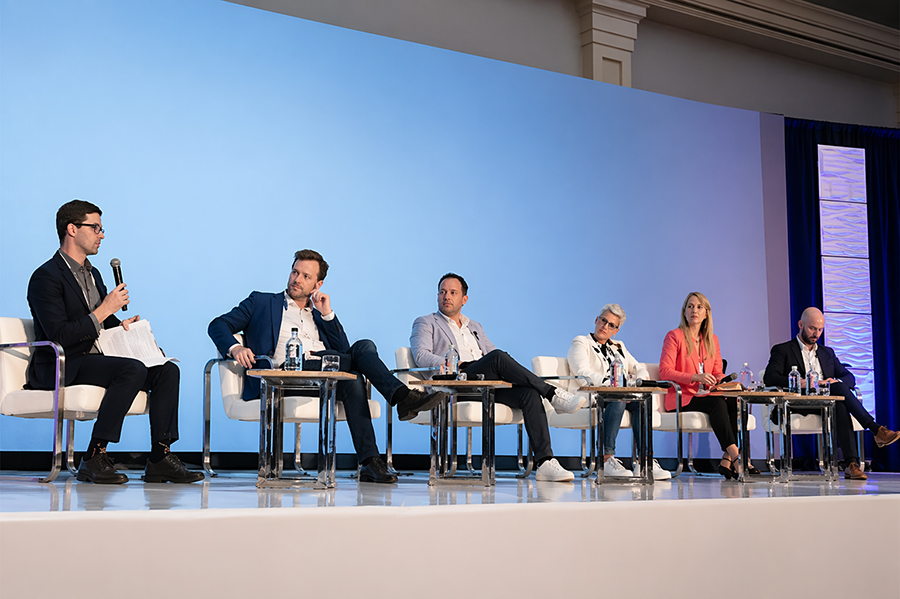
    A first-of-its-kind panel at the American Tobacco and Nicotine Forum (ATNF) focused on the role of artificial intelligence in product research and development, with moderator Dr. Stan Gilliland, managing partner for Sapphire Sciences, highlighting the importance of using the right tools in a highly regulated environment. He framed AI as a potential support across the product lifecycle—from identifying unmet needs to designing studies—but stressed that its use must be carefully managed, documented, and validated, particularly given regulatory scrutiny.

    Panelists offered differing views on AI’s role. Dr. Jessica Zdinak, founder and Chief Research Officer for Applied Research and Analysis Company, expressed skepticism, emphasizing the importance of human expertise and warning against overreliance on AI, particularly in areas lacking clear regulatory endpoints. Dr. Ian Jones, behavioral science manager for JTI Liggett, described AI as a support tool that can improve efficiency, data handling, and communication, but said human oversight remains essential to interpret results and ensure scientific integrity. Dr. Elsa Larson, vice president at M/A/R/C Research, said her organization is taking a cautious approach, limiting AI use to lower-risk applications and avoiding regulatory studies for now due to concerns about reliability and oversight.

    Nick Kadysh, founder and CEO for PharmAla Biotech, and Gavin O’Dowd, CEO for Haypp Group, took a more forward-looking stance, with Kadysh saying AI is already essential in areas such as product design and regulatory strategy, particularly as data complexity increases. O’Dowd highlighted the broader technological shift underway, noting that advances in computing power could accelerate the transition toward reduced-risk products if properly harnessed, but emphasized the need for industry-specific tools and human expertise. Across the panel, speakers pointed to ongoing challenges around data quality, transparency, regulatory acceptance, and the balance between efficiency and scientific rigor.

  • BAT Signals Possible Job Cuts from AI Plan

    BAT Signals Possible Job Cuts from AI Plan

    British American Tobacco signaled potential job cuts as part of a new artificial intelligence-driven productivity initiative, while reporting higher annual profits fueled by strong performance from its Velo nicotine pouch. Interim finance chief Javed Iqbal said the program will focus on automation, data analytics, and operational simplification, though the extent of workforce reductions remains unclear. BAT reported adjusted earnings per share growth of 3.4%, with newer product revenue rising 7% for the year and reaching 18.2% of total sales. Velo has gained traction in the United States, becoming the second-largest nicotine pouch brand by market share behind Philip Morris International’s Zyn, supported by competitive pricing and higher nicotine strength offerings.

    Despite momentum in smoke-free products, BAT continues to face regulatory and market headwinds, according to Reuters. The company said illicit vape products are weighing on Vuse performance, with U.S. vape sales expected to remain flat in 2026. Additionally, higher tobacco duties and expanding illicit trade in Australia, along with tax and pricing regulations in Bangladesh, contributed to a more than 7% decline in revenue across BAT’s Asia-Pacific, Middle East, and Africa region, limiting overall group revenue growth to 2.1% in 2025.

  • PMI Releases White Paper on Human Cognition in the AI Age

    PMI Releases White Paper on Human Cognition in the AI Age

    Philip Morris International Inc. released a white paper titled “Human Cognition: The Next Frontier?”, inviting leaders from business, policy, and academia to engage in a global conversation on the role of human cognition as AI transforms work, society, and the economy. The paper argues that skills like critical thinking, creativity, and adaptability will become the “superskills” of the future, essential for organizations navigating an era of human/machine collaboration. As AI increasingly automates routine and cognitive tasks, PMI emphasized that nurturing human cognition is critical for resilience, innovation, and decision-making.

    “Technology helps us move faster—but real progress depends on people,” said Moira Gilchrist, PMI’s Chief Global Communications Officer. “Change isn’t just about scientific and technological advances; it’s about vision, ambition, and how people apply innovations.” The paper identifies key cognitive risks posed by AI, including cognitive atrophy from over-reliance on AI for ideation and analysis, attention erosion due to digital distractions, an emerging cognitive divide, and trust challenges from synthetic media and deepfakes. PMI highlights the importance of protecting and strengthening human cognition to ensure society benefits from AI rather than being overwhelmed by it.

    PMI said the white paper underscores its commitment to continuous learning, workforce development, and dialogue on the societal implications of AI, as it aims to become predominantly smoke-free by 2030.

  • MagicCube Investing in Phone Biometrics, AI Commerce

    MagicCube Investing in Phone Biometrics, AI Commerce

    MagicCube announced that it raised $10 million in new committed funding to expand its software-based security technology beyond tap-to-phone payments into biometrics, identity verification, and AI-driven device security, with strategic participation from Verifone alongside existing investors. The California-based company develops Software Defined Trust, which uses a software Trusted Execution Environment to deliver hardware-grade security on standard mobile and IoT devices without specialized chips, supporting secure payments and sensitive data processing. The funding will be used to accelerate R&D, strengthen AI security capabilities, and deepen integrations across global payment and identity ecosystems, as MagicCube positions its platform for broader digital commerce and compliance-driven use cases.

  • Eagle Eye’s Solution Helps Retailers Maximize Conversion, Engagement

    Eagle Eye’s Solution Helps Retailers Maximize Conversion, Engagement

    Eagle Eye launched Personalized Promotions, a new AI-powered solution designed to help retailers move from broad, manual discounting to real-time, one-to-one promotional execution at scale. The SaaS company said the platform uses AI and machine learning to automatically create and deliver individualized offers aligned with shopper behavior, retailer objectives, and budget controls, addressing a long-standing challenge in retail personalization. Eagle Eye said the solution can boost promotional efficiency, deepen customer engagement, and improve measurement for supplier brands, adding to its AI Personalization Science suite as retailers increasingly seek scalable, data-driven ways to personalize offers across omnichannel environments.

  • FDA Deploys Agentic AI to Assist Regulatory Reviews

    FDA Deploys Agentic AI to Assist Regulatory Reviews

    The U.S. Food and Drug Administration today announced the deployment of agentic AI capabilities to all agency employees, a move expected to streamline complex, multi-step regulatory tasks — including pre-market reviews, post-market surveillance, inspections, and compliance activities that would be of interest to those in the tobacco and nicotine industries.

    The new systems allow staff to build multi-model AI workflows capable of planning, reasoning, and executing tasks under human oversight. The tools are optional and operate within a secure GovCloud environment, with no training on industry-submitted data.

    In an email to StatNews, an FDA spokesperson called the tool “exploratory” and said that the AI agents do not make regulatory decisions. “All outputs from AI are reviewed and validated” by FDA staff “before being incorporated into any official regulatory action, ensuring that the AI remains a support tool rather than a decision maker,” he wrote.

    The deployment follows the success of Elsa, an internal LLM tool launched in May and now used by more than 70% of FDA personnel. The agency is also launching a two-month Agentic AI Challenge, with selected projects to be showcased in January 2026.

    FDA Commissioner Marty Makary said the upgrades mark a major step in modernizing regulatory operations, while Chief AI Officer Jeremy Walsh highlighted the potential to accelerate and validate safety assessments across all FDA-regulated sectors — including tobacco.

  • Makary Updates First 100 Days Leading FDA

    Makary Updates First 100 Days Leading FDA

    FDA Commissioner Marty Makary issued a statement today (July 10) to update the work that has been accomplished in his first 100 days leading the organization and create a roadmap for future objectives.

    “The FDA regulates products that account for 20% of all U.S. consumer spending, and our work impacts the lives of every American,” he said. “Over the past 100 days, we’ve launched dozens of key initiatives across the full range of the FDA’s purview to help make food healthier for children and families, accelerate meaningful cures and treatments, and modernize the agency with transparency, gold-standard science, and common sense.”

    The statement then listed dozens of bullet points highlighting the work being done, the majority of which focused on pharmaceuticals and food manufacturing. Under the heading “Administration – Gold-Standard Science & Common Sense,” Makary said the FDA was protecting American consumers by combating illegal vapes. “In collaboration with U.S. Customs and Border Protection, seized nearly $34 million worth of illegal, youth-appealing e-cigarette products originating in China,” it said.

    Makary also pointed to the FDA’s implementation of AI to assist all departments in reviewing products, of particular interest to the nicotine industry that has dealt with years of little to no movement regarding vapes and alternative products.

    “Completed a successful first AI-assisted scientific review pilot, demonstrating that internal AI tools can greatly reduce the time reviewers spend on mundane tasks or non-productive busywork,” the statement said. “Launched Elsa, a generative AI tool designed to help all FDA employees – from scientific reviewers to investigators – work more efficiently. Elsa is just an initial step in the FDA’s larger plans to integrate AI into agency processes.”

    “I’m excited by what the talented FDA team have been able to achieve in 100 days by embracing gold-standard science, radical transparency, and common sense,” Makary said. “This is just the beginning. We’ll continue to introduce initiatives to modernize the agency.”

    Read the entire press release here.