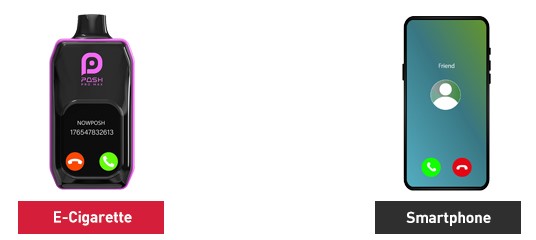
The U.S. Food and Drug Administration issued warning letters to nine online retailers and one manufacturer for selling or distributing unauthorized disposable e-cigarettes designed to resemble smart technology, including smartphones and gaming devices.
The products mentioned in the warning letters are promoted as having various designs and functions that might attract young people, according to an agency press release. These include features like playing games, connecting to smartphones, receiving text or call notifications, playing music, and customizing products with personalized wallpaper.
“These products may resemble smart devices, but there’s nothing smart about them,” said Brian King, director of the FDA’s Center for Tobacco Products (CTP). “They’re illegal to sell and a flagrant attempt to target kids.”
The agency states that the designs of the unauthorized products cited in the warning letters are likely to appeal to youth because they help conceal the nature of the products as tobacco products from parents, teachers or other adults. Example images of unauthorized products cited in the warning letters compared to electronic devices on the consumer market, such as smartphones and gaming devices.
“The firms receiving these warning letters sold and/or distributed e-cigarettes in the United States that lack authorization from FDA to legally market a new product, which is in violation of the Federal Food, Drug and Cosmetic Act,” the release states.
In addition to the violations mentioned in the warning letters, the retailers and manufacturer were warned to address any violations that are the same as, or similar to, those stated in the warning letter and promptly take any necessary actions to comply with the law. Failure to promptly correct the violations can result in additional FDA actions such as an injunction, seizure and/or civil money penalty.
“FDA is steadfast in our commitment to enforce the law,” said John Verbeten, director of the CTP’s Office of Compliance and Enforcement. “We will continue to take appropriate measures, working hand in hand with our federal enforcement partners, to address unauthorized tobacco products, especially those most appealing to youth.”
In North Yorkshire County in the United Kingdom, vape recycling bins have been installed at all 20 household waste recycling centers to prevent vapes from ending up in curbside bins.
Materials used in single-use vapes can harm the environment and must be disposed of separately.
Once collected at the recycling centers, they are transported to the recycling facility to be dismantled, and the lithium-ion battery is removed for processing while the metals and plastics are recycled.
Lithium-ion batteries can cause fires if discarded in curbside recycling or waste bins. These batteries cause most fires in the waste collection and recycling industry.
“This exciting new initiative has the aim of ensuring that people who use vape devices know how to dispose of them in the right way,” said the county’s executive member for waste services, Cllr Greg White. “Vapes are not safe to be recycled or disposed of in curbside bins or boxes at home. One incorrectly discarded vape could cause huge damage or serious injury.
“In August, we also introduced coffee pod bins at our recycling centers as we aim to continue expanding what we accept at our recycling centers. These initiatives demonstrate our commitment to responsible recycling and reducing our carbon footprint.”
Research released this year from Material Focus found that, in the U.K., the public is buying 7.7 million single-use vapes per week, which has doubled compared to 2022.
People are also throwing away 5 million single-use vapes per week, or eight per second, which has quadrupled compared to 2022.
French consumer vaping organization SOVAPE announced this week it will dissolve. The group has been active since 2016.
Best known for organizing three Vape Summits in France between 2016 and 2019, SOVAPE also co-founded the European Tobacco Harm Reduction Advocates (ETHRA) umbrella organization. Since 2019, the group has commissioned annual surveys of French public opinion on vaping and nicotine conducted by major market research firm BVA.
However, this year BVA notified SOVAPE that it could no longer participate due to a health industry client’s contract prohibiting BVA from also working with nicotine-associated organizations, according to media reports.
The abrupt cancellation of the survey followed other recent blows, including news articles accusing SOVAPE and other consumer groups of connections to the tobacco industry, and attacks on scientists and health professionals who supported SOVAPE’s mission.
In an Oct. 6 website post, SOVAPE explained it can no longer carry out its mission due to the current climate of “censorship, threats, lies, denigration and slander, to which can be added the dissemination of fake news and the denial of scientific data.”
“Dialogue in this context is impossible,” SOVAPE wrote, “and clearly, it is now even ‘forbidden’ to provide information, such as a banal survey, on reducing the risks of smoking in France.”
SOVAPE will donate the balance of its funds equally to the Pasteur Institute and fellow vaping groups AIDUCE and La Vape du Cœur. SOVAPE has paid to keep its website available for 10 years, and maintains videos of Vape Summit proceedings on its Youtube channel.
“We regret that we are no longer able to cultivate a dialogue to promote the risk reduction approach against the main cause of preventable diseases and premature deaths in France,” SOVAPE said in its post. “We do not regret having tried, but must acknowledge that it is no longer possible for us to lead this fight that is dear to us, and which has nevertheless contributed to saving lives!”
The Supreme Court of the United States has agreed to consider another case involving federal approval of vapes at the request of the Biden administration on Friday.
The case arose after the Food and Drug Administration denied R.J. Reynolds Vapor Company’s request to introduce three flavored vapes on the market. The FDA said the company failed to meet federal requirements concerning tobacco products’ marketing, but the company contends that the decision was arbitrary and capricious.
Reynolds is based in North Carolina, and the federal appeals courts located there and in D.C. already had precedent on the books unfavorable to the manufacturer.
Under federal law, companies can challenge the FDA denying of a marketing order for a new tobacco product in Washington, D.C., or where the company’s principal place of business is located, reports The Hill.
The 5th U.S. Circuit Court of Appeals has been more sympathetic to the industry, making it an attractive place for companies to contest their products being denied.
The 5th Circuit’s rule effectively enables it to host any tobacco company’s challenge, so long as its lawsuit is joined by a convenience store or other retail seller within the 5th Circuit’s borders—which span Louisiana, Mississippi and Texas.
Reynolds instead filed its challenge in the 5th Circuit alongside Avail Vapor Texas and the Mississippi Petroleum Marketers and Convenience Stores Association. The federal government attempted to move venues, but the 5th Circuit said the additional challengers meant the case was properly brought.
No matter which way the justices rule, they are not expected to address the merits of the FDA’s denial. The Supreme Court only took up the question of whether the 5th Circuit was a proper venue.
“There is no circuit conflict over the meaning of this venue provision. And other vehicle problems abound,” the company wrote in court filings urging the justices to turn away the appeal.
The UK-based company will host the 2024 CORESTA Congress in Edinburgh, UK, from 13 – 17 Oct.
The Congress will bring together leading scientists, tobacco and related product experts, and regulators from over 165 member organizations to focus on the theme of “Advancing Tobacco Harm Reduction through Scientific Collaboration.”
Participants will share, discuss, and collaborate on tobacco and related product science.
BAT has volunteered to host the upcoming Cooperation Centre for Scientific Research Relative to Tobacco (CORESTA) Congress 2024, set to take place from 13 – 17 October at the Edinburgh International Convention Centre, UK.
This year’s congress will bring together over 165 member organizations, from over 30 countries and non-members, including companies, research institutes, laboratories, associations, and regulatory bodies under the theme of “Advancing Tobacco Harm Reduction through Scientific Collaboration”.
Formed in 1956, CORESTA is committed to exploring the latest scientific research to facilitate positive change in the tobacco industry. This year’s iteration continues this ambition, specifically seeking to advance the knowledge and understanding of the science related to Tobacco Harm Reduction (THR) among its membership and attendees.
To achieve this goal, leading scientists from across the world will attend and present their work, bringing their expertise in a diverse range of disciplines to allow participants to explore all aspects of THR. Thanks to the collaborative work of the most experienced scientists in their field, CORESTA has gained international recognition.
With increasing regulatory requirements, CORESTA’s scientific work and outputs have become a worldwide reference point for tobacco policymaking and support the development of testing standards, such as ISO Standards.
As host, BAT looks forward to facilitating the conversations necessary to grasp the public health opportunity presented by THR to significantly reduce the risks for the estimated 1bn consumers who smoke and address misperceptions of alternative tobacco and nicotine products with the potential to reduce risks compared to cigarettes.
To learn more about the event and request an invitation, visit the official congress website: www.corestacongress2024.com. Registration is open until Sept. 20, 2024.
While FDA menthol market authorizations are rightly seen as a victory, they may be pyrrhic.
By Rich Hill
The flavored electronic nicotine-delivery systems (ENDS) road has been a bumpy ride. Going back to pre-deeming days, flavored ENDS were ubiquitous, as were unquantified, anecdotal reports of their cigarette-smoking cessation efficacy. Following the accelerated premarket tobacco product application (PMTA) submission timeline, as everyone knows, the Center for Tobacco Products’ (CTP) decisions decimated flavored ENDS. Likewise, even the most sophisticated companies were receiving marketing denial orders (MDOs) for menthol ENDS. Throughout this bloodbath, the CTP oft repeated that flavored products need to demonstrate a cessation benefit to adult smokers weighed against the risk of youth initiation. Until recently, this had not played out.
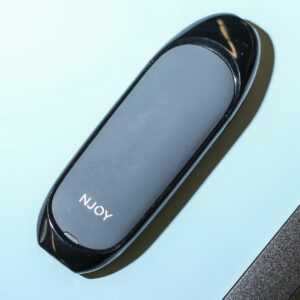
Njoy’s marketing granted orders (MGOs) for menthol Ace and Daily products was a watershed moment demonstrating that an ENDS product with a flavor other than tobacco could be granted marketing authorization status. However, the authorization does leave some questions unanswered.
CTP’s Menthol Positioning
In 2022, the CTP staked out its position on menthol in the cigarette context with the product standard prohibiting menthol in cigarettes. The center asserted that menthol reduces irritation and harshness of smoking, increases appeal and makes cigarettes easier to use—especially for youth, increases nicotine’s sensory effects in the brain and makes it more difficult to quit smoking. While the first points on irritation and harshness are unique to cigarettes, the CTP’s other points arguably apply to menthol and nicotine more generally—a dour omen for ENDS and other products.Given this position, particularly on youth initiation, it came as little surprise that several menthol ENDS products received MDOs over the past several years.
An About Face?
The Njoy Ace and Daily menthol product MGOs were a surprise considering the CTP’s menthol position and flavored vapor product denials. What was different about Njoy’s applications that tipped the scales?
Beyond Njoy’s successful showing of product characterization, toxicology and abuse liability data, according to the Njoy Ace Technical Project Lead Review (TPLR), behavioral studies and marketing restrictions appear to have made the difference. Alongside other behavioral studies, Njoy simply did what the CTP required and conducted a longitudinal study comparing cigarette smoking cessation efficacy between tobacco and menthol ENDS products. Per the TPLR, “[t]he applicant’s findings and additional analyses conducted by statistics demonstrate a statistically significant added benefit of using menthol-flavored Njoy Ace compared to classic tobacco flavor … in achieving past-30-day [combustible cigarette] smoking cessation ….” Among other data in the TPLR, Table 3 reports that in the Intention to Treat Analysis, initial flavor at baseline analysis resulted in 26.6 percent past-30-day abstention rates for menthol versus 19.3 percent for tobacco at 6 months. When analyzed by flavor at time of switching, past-30-day cessation rates of 27.1 percent for menthol versus 19.3 percent for tobacco at 6 months were reported.
Along with the adult cessation data, Njoy agreed to a long list of marketing restrictions—beyond what is observed in other applications. The restrictions included limitations on advertising means including no radio, television, outdoor, print, search engine advertising, social media promotions, product placements, engagements or activations or influencers, sponsors, etc., among others. Talent portrayals would be limited to models over 45 years of age. Njoy identified a range of sales restrictions as well.
Ultimately, after assessing the youth data and risks, the TPLR executive summary states, “[t]he PMTAs contain sufficient evidence to show that the new products have the potential to benefit adults who smoke combustible cigarettes and who switch completely or significantly reduce their combustible cigarettes use …. The applicant also proposed robust marketing plans that include restrictions beyond those required with PMTA authorization. The Office of Health Communication and Education has determined that these restrictions may help further limit youth exposure to the new product, the products’ labeling, advertising, marketing, and/or promotion, and the potential for youth initiation.”
Questions Remain from the Njoy Decision
The MGO, however, raises two interesting questions. First, how much adult benefit is enough to overcome youth uptake? And second, what impact do marketing restrictions have on marketing authorization decisions?
The Math on Youth Use vs. Adult Cessation – How Much Differential is Enough?
The TPLR reports youth Njoy use data from both applicant data and national surveys and concludes that “[w]hile ENDS with nontobacco flavors and high nicotine delivery may help adults who smoke switch from CC to ENDS, these same characteristics may facilitate initiation and continued nicotine use by youth.” The cost-benefit analysis is troubling because CTP provides no real quantitative measure comparing youth use rates to adult cessation rates. Rather than a numerical comparison, the analysis seems to rely upon the totality of the evidence. As the TPLR states, “the totality of evidence provided by the applicant suggests that the menthol-flavored [product] … is associated with significantly higher smoking cessation rates than tobacco-flavored Njoy Ace products, and epidemiology concluded that the new products are highly beneficial to adults who smoke CC.” The close of the TPLR user population synthesis states that menthol-flavored new products pose a risk to youth but went on to assert that the data “demonstrate added benefit of using menthol-flavored compared to classic tobacco-flavored … Njoy Ace in achieving past-30-day smoking cessation—a showing required to outweigh the risks associated with flavored ENDS among youth.”
For some time, many in industry have wondered how much cessation difference between tobacco and flavored ENDS would be enough to outweigh risk to youth. While the balancing test is not numerically quantified, this marketing decision does provide some level by which to assess menthol products.
Are Marketing Plans Back on the Table?
In the White Lion Investments dba Triton Distribution v. FDA5th Circuit Court of Appeals decision from January 2024, the majority opinion found that the FDA ignored marketing plans in the Triton PMTAs: “[w]orse, after telling manufacturers that their marketing plans were ‘critical’ to their applications, FDA candidly admitted that it did not read a single word of the 1 million plans.”
Njoy’s marketing plan, however, seems to have an effect on the outcome. Reviewers remarked that the Njoy plan was “robust and is expected to limit youth exposure” to marketing materials. Interestingly, the TPLR states that the marketing plan was “not considered in the APPH assessment,” but then goes on to refer to the plan positively, stating, “the applicant’s approach to marketing may help further limit youth exposure to the new products.”In Njoy’s case, the marketing plans may not have moved the APPH needle but were considered as a net positive in youth prevention.
Are marketing plans important to your application? Beyond being a required part of the PMTA submission, it appears that in this case, the restrictions at least supplemented the adult benefit data to good effect.
Will Menthol MGOs Have an Impact in This Market?
While the menthol market authorizations are rightly seen as a victory, such a victory may be a pyrrhic one.
The presence and consumer acceptance of flavored disposable ENDS products looms over this seminal marketing authorization. The fact is that many menthol-flavored ENDS products with pending PMTAs remain on the market. Even in the face of the availability of menthol ENDS, flavored disposable ENDS sales have skyrocketed.
The Centers for Disease Control and Prevention published a Morbidity and Mortality Weekly Report (MMWR) in 2023 assessing e-cigarette unit sales across the various categories of products and flavors using scan data from brick-and-mortar retailers only. The MMWR reported that “the percentage of disposable e-cigarette sales more than doubled, from 24.7 percent in January 2020 to 51.8 percent in December 2022.” The predominant disposable flavors reported were “flavors other than tobacco, menthol or mint” (71.4 percent in 2020 and 79.6 percent in 2022). At the same time, menthol ENDS sales overall did not significantly change, while tobacco and mint flavors declined. With half of the market occupied by flavors that consumers clearly want, the growth space for a couple of menthol products seems limited.
VV Archives
While the FDA continues to publicize enforcement efforts, the flavored disposable ENDS trend will not abate anytime soon. Given that flavored disposables are crushing the category, it seems unlikely that the MGOs for Njoy’s menthol products will play a significant role in shifting market share in the near term.
Where Does This Leave Us?
Foremost, good on Njoy for cracking the code—most observers have been very skeptical that an ENDS product with any flavor would ever be granted marketing authorization. Ultimately, Njoy demonstrated what the industry knows to be true from ENDS consumers—flavors, including menthol, are a net positive for adults who smoke to transition away from higher-risk combustible cigarettes. However, questions remain about how the risk-benefit test will be applied—how that math actually works and who, other than the largest companies, can afford to produce such evidence.
Rich Hill is senior director and new product compliance counsel at E-Alternative Solutions.
While FDA menthol market authorizations are rightly seen as a victory, they may be pyrrhic.
By Rich Hill
The flavored electronic nicotine-delivery systems (ENDS) road has been a bumpy ride. Going back to pre-deeming days, flavored ENDS were ubiquitous, as were unquantified, anecdotal reports of their cigarette-smoking cessation efficacy. Following the accelerated premarket tobacco product application (PMTA) submission timeline, as everyone knows, the Center for Tobacco Products’ (CTP) decisions decimated flavored ENDS. Likewise, even the most sophisticated companies were receiving marketing denial orders (MDOs) for menthol ENDS. Throughout this bloodbath, the CTP oft repeated that flavored products need to demonstrate a cessation benefit to adult smokers weighed against the risk of youth initiation. Until recently, this had not played out.
Njoy’s marketing granted orders (MGOs) for menthol Ace and Daily products was a watershed moment demonstrating that an ENDS product with a flavor other than tobacco could be granted marketing authorization status. However, the authorization does leave some questions unanswered.
CTP’s Menthol Positioning
In 2022, the CTP staked out its position on menthol in the cigarette context with the product standard prohibiting menthol in cigarettes. The center asserted that menthol reduces irritation and harshness of smoking, increases appeal and makes cigarettes easier to use—especially for youth, increases nicotine’s sensory effects in the brain and makes it more difficult to quit smoking. While the first points on irritation and harshness are unique to cigarettes, the CTP’s other points arguably apply to menthol and nicotine more generally—a dour omen for ENDS and other products.Given this position, particularly on youth initiation, it came as little surprise that several menthol ENDS products received MDOs over the past several years.
An About Face?
The Njoy Ace and Daily menthol product MGOs were a surprise considering the CTP’s menthol position and flavored vapor product denials. What was different about Njoy’s applications that tipped the scales?
Beyond Njoy’s successful showing of product characterization, toxicology and abuse liability data, according to the Njoy Ace Technical Project Lead Review (TPLR), behavioral studies and marketing restrictions appear to have made the difference. Alongside other behavioral studies, Njoy simply did what the CTP required and conducted a longitudinal study comparing cigarette smoking cessation efficacy between tobacco and menthol ENDS products. Per the TPLR, “[t]he applicant’s findings and additional analyses conducted by statistics demonstrate a statistically significant added benefit of using menthol-flavored Njoy Ace compared to classic tobacco flavor … in achieving past-30-day [combustible cigarette] smoking cessation ….” Among other data in the TPLR, Table 3 reports that in the Intention to Treat Analysis, initial flavor at baseline analysis resulted in 26.6 percent past-30-day abstention rates for menthol versus 19.3 percent for tobacco at 6 months. When analyzed by flavor at time of switching, past-30-day cessation rates of 27.1 percent for menthol versus 19.3 percent for tobacco at 6 months were reported.
Along with the adult cessation data, Njoy agreed to a long list of marketing restrictions—beyond what is observed in other applications. The restrictions included limitations on advertising means including no radio, television, outdoor, print, search engine advertising, social media promotions, product placements, engagements or activations or influencers, sponsors, etc., among others. Talent portrayals would be limited to models over 45 years of age. Njoy identified a range of sales restrictions as well.
Ultimately, after assessing the youth data and risks, the TPLR executive summary states, “[t]he PMTAs contain sufficient evidence to show that the new products have the potential to benefit adults who smoke combustible cigarettes and who switch completely or significantly reduce their combustible cigarettes use …. The applicant also proposed robust marketing plans that include restrictions beyond those required with PMTA authorization. The Office of Health Communication and Education has determined that these restrictions may help further limit youth exposure to the new product, the products’ labeling, advertising, marketing, and/or promotion, and the potential for youth initiation.”
Questions Remain from the Njoy Decision
The MGO, however, raises two interesting questions. First, how much adult benefit is enough to overcome youth uptake? And second, what impact do marketing restrictions have on marketing authorization decisions?
The Math on Youth Use vs. Adult Cessation – How Much Differential is Enough?
The TPLR reports youth Njoy use data from both applicant data and national surveys and concludes that “[w]hile ENDS with nontobacco flavors and high nicotine delivery may help adults who smoke switch from CC to ENDS, these same characteristics may facilitate initiation and continued nicotine use by youth.” The cost-benefit analysis is troubling because CTP provides no real quantitative measure comparing youth use rates to adult cessation rates. Rather than a numerical comparison, the analysis seems to rely upon the totality of the evidence. As the TPLR states, “the totality of evidence provided by the applicant suggests that the menthol-flavored [product] … is associated with significantly higher smoking cessation rates than tobacco-flavored Njoy Ace products, and epidemiology concluded that the new products are highly beneficial to adults who smoke CC.” The close of the TPLR user population synthesis states that menthol-flavored new products pose a risk to youth but went on to assert that the data “demonstrate added benefit of using menthol-flavored compared to classic tobacco-flavored … Njoy Ace in achieving past-30-day smoking cessation—a showing required to outweigh the risks associated with flavored ENDS among youth.”
For some time, many in industry have wondered how much cessation difference between tobacco and flavored ENDS would be enough to outweigh risk to youth. While the balancing test is not numerically quantified, this marketing decision does provide some level by which to assess menthol products.
Are Marketing Plans Back on the Table?
In the White Lion Investments dba Triton Distribution v. FDA5th Circuit Court of Appeals decision from January 2024, the majority opinion found that the FDA ignored marketing plans in the Triton PMTAs: “[w]orse, after telling manufacturers that their marketing plans were ‘critical’ to their applications, FDA candidly admitted that it did not read a single word of the 1 million plans.”
Njoy’s marketing plan, however, seems to have an effect on the outcome. Reviewers remarked that the Njoy plan was “robust and is expected to limit youth exposure” to marketing materials. Interestingly, the TPLR states that the marketing plan was “not considered in the APPH assessment,” but then goes on to refer to the plan positively, stating, “the applicant’s approach to marketing may help further limit youth exposure to the new products.”In Njoy’s case, the marketing plans may not have moved the APPH needle but were considered as a net positive in youth prevention.
Are marketing plans important to your application? Beyond being a required part of the PMTA submission, it appears that in this case, the restrictions at least supplemented the adult benefit data to good effect.
Will Menthol MGOs Have an Impact in This Market?
While the menthol market authorizations are rightly seen as a victory, such a victory may be a pyrrhic one.
The presence and consumer acceptance of flavored disposable ENDS products looms over this seminal marketing authorization. The fact is that many menthol-flavored ENDS products with pending PMTAs remain on the market. Even in the face of the availability of menthol ENDS, flavored disposable ENDS sales have skyrocketed.
The Centers for Disease Control and Prevention published a Morbidity and Mortality Weekly Report (MMWR) in 2023 assessing e-cigarette unit sales across the various categories of products and flavors using scan data from brick-and-mortar retailers only. The MMWR reported that “the percentage of disposable e-cigarette sales more than doubled, from 24.7 percent in January 2020 to 51.8 percent in December 2022.” The predominant disposable flavors reported were “flavors other than tobacco, menthol or mint” (71.4 percent in 2020 and 79.6 percent in 2022). At the same time, menthol ENDS sales overall did not significantly change, while tobacco and mint flavors declined. With half of the market occupied by flavors that consumers clearly want, the growth space for a couple of menthol products seems limited.
VV Archives
While the FDA continues to publicize enforcement efforts, the flavored disposable ENDS trend will not abate anytime soon. Given that flavored disposables are crushing the category, it seems unlikely that the MGOs for Njoy’s menthol products will play a significant role in shifting market share in the near term.
Where Does This Leave Us?
Foremost, good on Njoy for cracking the code—most observers have been very skeptical that an ENDS product with any flavor would ever be granted marketing authorization. Ultimately, Njoy demonstrated what the industry knows to be true from ENDS consumers—flavors, including menthol, are a net positive for adults who smoke to transition away from higher-risk combustible cigarettes. However, questions remain about how the risk-benefit test will be applied—how that math actually works and who, other than the largest companies, can afford to produce such evidence.
Rich Hill is senior director and new product compliance counsel at E-Alternative Solutions.
The U.S. Food and Drug Administration and the Department of the Treasury have announced a proposed rule that would require an importer to submit the FDA-issued Submission Tracking Number (STN) of electronic nicotine delivery system (ENDS) products into the electronic imports system operated by U.S. Customs and Border Protection.
The new requirement will help streamline the process of reviewing the admissibility of ENDS products into the United States, according to the FDA’s website.
After an applicant submits a marketing application for a new tobacco product, FDA assigns a unique identifier called an STN. Under the proposed rule, if finalized, any ENDS product, including e-cigarettes, for which the STN is not submitted may be denied entry into the U.S.
An FDA-issued STN is one data element that is important to FDA’s admissibility review and determination, which also includes review of other information about the product as well as possible sampling and examination of the product, according to the agency.
“Beginning tomorrow, the docket for the proposed rule, titled ‘Submission of Food and Drug Administration Import Data in the Automated Commercial Environment for Certain Tobacco Products,’ will be open for public comment through October 15, 2024.
Visit the rulemaking docket at regulations.gov to learn more and comment on the proposed rule.”Beginning tomorrow, the docket for the proposed rule … will be open for public comment through October 15, 2024.
Visit the rulemaking docket at regulations.gov to learn more and comment on the proposed rule.
The 5th Circuit Court of Appeals granted petitions for review to five vaping companies, citing its own decision in the Triton Distribution case as precedent.
The court sent the company’s marketing denial orders (MDOs) back to the U.S. Food and Drug Administration for additional scientific evaluation. As a result, the manufacturers may keep selling their products until the agency completes new reviews of their premarket tobacco applications (PMTAs), or until the Supreme Court takes action.
“Specifically, the court determined that (1) FDA did not give e-cigarette manufacturers fair notice of the rule requiring long-term studies for PMTAs; (2) FDA did not acknowledge or adequately explain its change in position; and (3) FDA ignored reasonable and serious reliance interests that manufacturers had in the pre-MDO guidance,” the 5th Circuit wrote in its ruling.
Five companies, Cloud House, Paradigm Distribution, SWT Global Supply, Vaporized and SV Packaging first challenged their MDOs in court in October 2021. The court consolidated the five cases, and in November 2021, all petitioners were granted stays pending review.
In January, the 5th Circuit found in favor of Wages and White Lion Investments (doing business as Triton Distribution) in the e-liquid manufacturer’s appeal of an MDO. The FDA later petitioned the Supreme Court to review the 5th Circuit’s ruling, and last month the Supreme Court agreed to hear the agency’s appeal.
The FDA challenged the Triton decision, and the U.S. Supreme Court agreed to hear that case. “But now another panel of the Fifth Circuit has applied the same rationale as in Triton to hold that these five, small-business manufacturers prevail for the same reason: FDA pulled a surprise switcheroo,” wrote the United States Vaping Association on X.
The 5th Circuit found that the recent petitions posed the same issues as Triton’s. “Petitioners spent substantial time and resources preparing their PMTAs based on FDA guidance that they would not need to submit long-term clinical studies,” the court wrote.
“Nevertheless, FDA rejected their PMTAs using the same boilerplate language it used for the Wages petitioners’ denials, as well as those of thousands of other e-cigarette manufacturers. Accordingly, for the reasons amply explained by the en banc court in Wages, we hold that FDA acted unlawfully here as well by denying Petitioners’ PMTAs based on the absence of long-term clinical studies.”
The Italian government has placed CBD on the country’s list of narcotic drugs in defiance of a regional administrative court ruling and in contravention of European Union law.
The Ministry of Health said the designation is in line with Italian Presidential Decree 309/1990, the cornerstone of drug legislation in Italy. However, that contradicts a ruling by a regional court last year, which was based on a legally binding ruling applicable across the European Union.
The attack on CBD is only the latest move by the Italian government. The Ministry of Health first classified CBD as a narcotic and banned the compound from the market in October 2020 – only to rescind the order shortly thereafter, according to media reports.
Later, in a separate attempt in early 2022, the State-Regions Conference – a platform for dialogue and cooperation between the central and regional governments – updated language in a 2018 decree to classify hemp as strictly a medicinal plant.
In that case, four cannabis associations filed suit, and one year later, the decree was annulled by the Regional Administrative Tribunal of Lazio, which ruled it violated European law.










 The Njoy Ace and Daily menthol product MGOs were a surprise considering the CTP’s menthol position and flavored vapor product denials. What was different about Njoy’s applications that tipped the scales?