The U.S. Supreme Court agreed on Tuesday to hear the U.S. Food and Drug Administration’s defense of the agency’s rejection of two companies’ premarket tobacco product applications (PMTAs) to sell flavored vape products that it has determined pose health risks for young consumers.
The justices took up the FDA’s appeal filed after a lower court ruled that the agency had failed to follow proper legal procedures under federal law when it denied the applications to bring their nicotine-containing products to market.
The Supreme Court is due to hear the case in its next term, which begins in October, according to Reuters.
Two e-cigarette liquid makers, Triton Distribution and Vapetasia LLC, filed FDA applications in 2020 for products with flavors such as sour grape, pink lemonade, and crème brulee and names such as “Jimmy The Juice Man Strawberry Astronaut” and “Suicide Bunny Bunny Season.”
An FDA rule that took effect in 2016 deemed e-cigarettes to be tobacco products, like traditional cigarettes, subject to agency review under a 2009 federal law called the Tobacco Control Act. The rule said manufacturers of the products would need to apply for approval to continue selling them.
The U.S. Supreme Court on June 28 overturned the “Chevron deference,” a doctrine that requires courts to defer to federal agencies when sorting out ambiguities in law. The 6-3 majority ruling could impact the U.S. Food and Drug Administration and its premarket tobacco product authorization process. According to critics, the Chevron deference often gives agencies leeway to reach beyond the limits of a statute’s plain language, often bypassing the rulemaking process otherwise required under the Administrative Procedure Act and making it more difficult to challenge an agency action in court.
Chris Howard, executive vice president, external affairs & new product compliance for Swisher, welcomed the ruling, saying that for decades federal agencies have had too much power. “That ended today with the Supreme Court’s decision overturning the long-standing Chevron Doctrine,” said Howard. “The decision marks a significant shift in the judicial landscape, correcting the balance of power between federal agencies and the judiciary. It fundamentally alters how courts rule on agency statutory interpretation. As the majority states, courts will no longer be restrained by the need to provide deference.
“Instead, ‘Courts must exercise their independent judgment in deciding whether an agency has acted within its statutory authority, as the APA requires.’ This transformation will likely lead to significantly less regulatory flexibility and increased judicial scrutiny. The implications of this decision will resonate across industries, including the tobacco industry, influencing regulatory practices and shaping the future of administrative law. Regulatory overreach will become the exception as opposed to the norm and enable courts to fulfill their duty to interpret the law.”
In the years since electronic nicotine delivery systems (ENDS) became subject to FDA regulation, the vast majority of courts reviewing ENDS industry challenges to premarket application denials, as well as FDA rulemakings and guidance documents, have rubber-stamped the agency’s interpretation of the Family Smoking Prevention and Tobacco Control Act (TCA) and the “appropriate for the protection of the public health” standard.
Critics contend that the Chevron deference has enabled the FDA to impermissibly interpret the TCA to implement a de facto ban on all nontobacco-flavored ENDS products without any requisite notice and comment rulemaking or congressional amendments to the TCA.
“For far too long, unelected bureaucrats at the FDA have been making up the law to suit their own ulterior agenda and Today, the Supreme Court has thankfully put a stop to it once and for all,” said Allison Boughner, vice president of the American Vapor Manufacturers Association. “No longer will it be good enough for prohibitionists in Congress to write vague, Crayola language and then connive behind closed doors with FDA to impose arbitrary policies on the American public that could never withstand the light of day.”
It has been nearly 40 years since the Supreme Court indicated in Chevron v. Natural Resources Defense Council that courts should defer to an agency’s reasonable interpretation of an ambiguous statute.
The court’s ruling could have ripple effects across the federal government, where agencies frequently use highly trained experts to interpret and implement federal laws, according to SCOTUSblog. Although the doctrine as relatively noncontroversial when it was first introduced in 1984, in recent years conservatives—including some members of the Supreme Court—have called for it to be overruled.
The plea to overturn the Chevron doctrine came to the court in two cases challenging a rule, issued by the National Marine Fisheries Service, that requires the herring industry to bear the costs of observers on fishing boats. Applying Chevron, both the U.S. Court of Appeals for the District of Columbia Circuit and the U.S. Court of Appeals for the 1st Circuit upheld the rule, finding it to be a reasonable interpretation of federal law.
The fishing companies came to the Supreme Court, asking the justices to weigh in on the rule itself but also to overrule Chevron. Roman Martinez, representing one group of fishing vessels, told the justices that the Chevron doctrine undermines the duty of courts to say what the law is and violates the federal law governing administrative agencies, which similarly requires courts to undertake a fresh review of legal questions.
Under the Chevron doctrine, he observed, even if all nine Supreme Court justices agree that the fishing vessels’ interpretation of federal fishing law is better than the NMFS’s interpretation, they would still be required to defer to the agency’s interpretation as long as it was reasonable. Such a result, Martinez concluded, is “not consistent with the rule of law.”
Vapes are a powerful tool for adult smokers making the transition from cigarettes to reduced-risk products (RRP). The category is governed by market-specific regulation, often influencing public perception and, therefore, uptake.
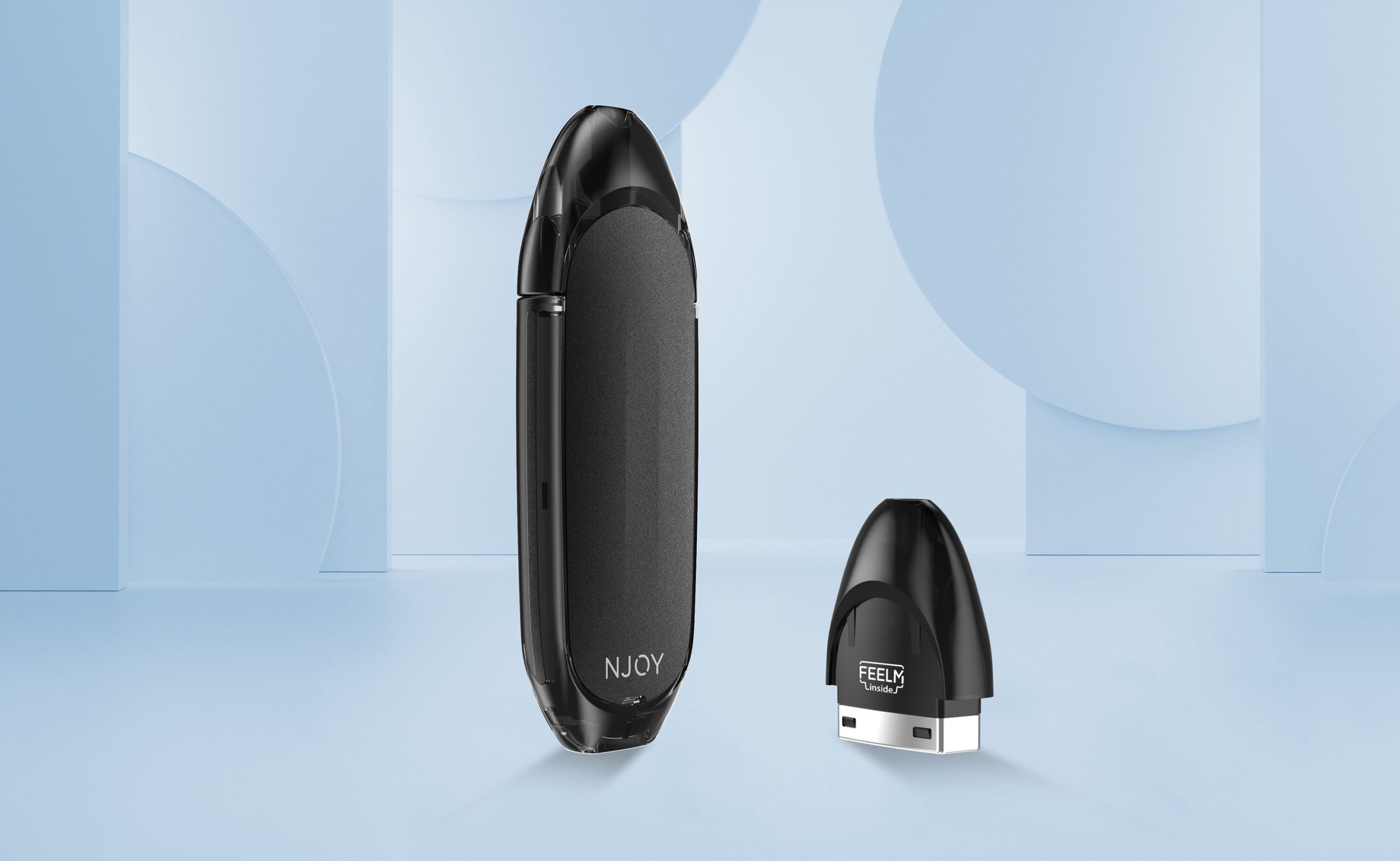
Last week, following an extensive scientific review, the U.S. Food and Drug Administration authorized the marketing of four menthol-flavored e-cigarette products for Altria-owned vaping company Njoy. This is a watershed moment for the sector and one which will have a huge and significant impact on the global RRP market.
This announcement signifies the FDA’s acknowledgment that menthol vaping products have the potential to be an important and effective tool for adult smokers looking for reduced-risk alternatives. This is significant for the wider sector in a number of ways; above all, it sets a precedent for other markets, paving the way for other regulators, particularly those looking at bans, to consider flavors in the context of public health.
Across the globe, we are seeing an increasing number of markets introduce bans on flavors on a precautionary basis in a bid to mitigate youth uptake. At Plxsur, we have long advocated against the ban of flavors on vape products, arguing that it has the potential to negatively impact those making the transition from conventional cigarettes, who often are drawn to vapes for their flavor, amongst other factors such as price and convenience. There are also arguments and emerging evidence that flavor bans drive the black market sale of unregulated, dangerous products.
There will be many that, understandably, say this decision is “too little, too late,” but it is nonetheless encouraging to see the FDA, with its extensive science and evidence-based review, validating that with effective regulation and enforcement, flavored vape products are “in the interest of public health.” Those countries that have considered flavor bans should look to the U.S. and conclude that it can’t be justified from a scientific review perspective.
While this is the first authorization of a “characterizing flavor” by the FDA for vaping products, two of the major regulatory influencing bodies, the FDA and the Medicines and Healthcare Products Regulatory Agency (MHRA), now acknowledge that there is value in non-tobacco-flavored vaping products.
This decision has the potential to impact the world. The U.S. has long influenced international markets, so it sets a benchmark that we expect other, less vape-supportive governments and regulatory bodies will follow.
Rob Burton
In Italy, tobacco-flavored vapes constitute 40% of the vape market, while menthol represents 21%.[1] This demonstrates the significance of flavored products in the market as a whole. If such flavors were to be banned, this would act as a barrier for smokers to move to reduced-risk alternatives and potentially lead vapers to return to cigarettes.
In some geographies, it is great to see that vapes are being accepted as an effective alternative to conventional cigarettes, even this week’s news from Australia announcing that vapes – which until now have only been available through prescription – will soon be available for sale within pharmacies without the need for a prescription, offering an effective pathway to end the smoking epidemic in the country.
As we anticipate the potential revision of the Tobacco Product Directive Review next year, the justification for banning flavors, from a scientific point of view, simply isn’t there. In the case of Njoy, this has been shown through closed-system pod-based devices, which offer a more cost-effective avenue for existing smokers and disposable systems while incorporating child lock systems that will restrict access to children, as is already applied by a Plxsur company, ProVape, in its SALT and KUBIK brands.
While the FDA’s authorization is specific to these four products made and sold by Njoy and does not apply to any other menthol-flavored e-cigarettes, our expectation is this will open a channel for other such products to achieve authorization by providing the necessary framework and the potential for knowledge-sharing and guidance. With the weight of data-led evidence, the category can advocate for the democratization of this framework, enabling further regulatory authorizations for products produced by responsible vaping companies in the interest of the adult smoker.
At Plxsur, we have a clear purpose – to facilitate adult smokers to make positive health decisions by transitioning away from cigarettes to reduced-risk products. Flavor is a key factor in supporting smokers moving completely to such alternatives, and we look forward to seeing a more science and data-led approach being adopted across all markets as we work to save the lives of those impacted by smoking, mitigate the risk of youth uptake, and do so sustainably and responsibly.
We view this FDA decision as a significant step forward in broadening the pathway for adult smokers, and previously lacking “off-ramp” for U.S. menthol smokers looking to make the switch, which, according to Public Health England, is 95% less harmful and, therefore, undeniably, “in the interest of public health.”[2]
Robert Burton is Group Scientific and Regulatory director for Plxsur.
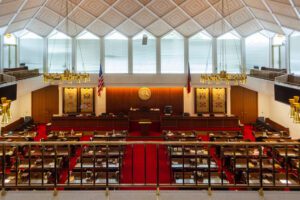
North Carolina State House of Representatives Chamber (Credit: J Zehnder)
A new bill in North Carolina, if passed, would require the state to certify vaping and other next-generation tobacco products for sale.
The Senate Judiciary Committee approved the proposal Wednesday. It was slipped into HB 900, which deals with Wake County leadership academies and their ability to maintain state designations. The House passed it without objection.
To become law, the bill would need to pass the Senate and then the House before the end of the session. Senate leaders have said they plan to complete their work by the end of the month, local media reports.
The chambers, both controlled by Republicans, have been unable to come to an agreement on budget modifications for the fiscal year that begins July 1.
A North Carolina lawmaker wrongly told other lawmakers during debate that the U.S. Food and Drug Administration regulates the products, but the regulatory agency does not have the ability to check which products are being sold.
The bill would fine retailers who sell products that aren’t on the registry for initial violations. The legislation could also suspend or revoke the establishment’s license.
Vaping industry representatives warned lawmakers that the bill will cost people jobs and money.
PMTA registry laws are already being enforced in Alabama, Louisiana and Oklahoma. Wisconsin passed a registry law in December and will become effective July 1, 2025.
Utah also passed a registry bill that included a flavor ban that will become active on Jan. 1, 2025, and Florida has a unique registry that also begins Jan. 1, 2025.
The Food and Drug Administration Thursday rescinded its 2022 ban on Juul Labs’ e-cigarette products. However, the agency has not yet made a final decision on whether Juul can remain on the U.S. market. The move does open the door for Juul to receive marketing authorization from the regulatory agency.
In 2022, the FDA ordered Juul to stop its sales, but later paused the order while the vaping company appealed. The agency announced that it would reinitiate a scientific review of Juul’s products, essentially returning them to their regulatory status before the initial ban.
In the time since the MDOs were administratively stayed in 2022, the FDA has gained more experience with various scientific issues regarding e-cigarette products, and there have been new litigation outcomes in cases about MDOs for e-cigarette products from other manufacturers,” the FDA stated in a release. “Some of these court decisions establish new case law and inform the FDA’s approach to product review to maintain the agency’s commitment to issuing final decisions that are appropriate on both the scientific merits and the law.”
Rescission of the MDOs is not an authorization or a denial and does not indicate whether the applications are likely to be authorized or denied. Rescission of the MDOs returns the applications to pending status, under substantive review by the FDA. The FDA’s regulations significantly limit what the agency can disclose regarding the content of pending applications.
Juul Labs welcomed the move. “We appreciate the FDA’s decision and now look forward to re-engaging with the agency on a science- and evidence-based process to pursue a marketing authorization for Juul products, the company wrote in a statement. “We remain confident in the quality and substance of our applications and believe that a full review of the science and evidence will demonstrate that our products meet the statutory standard of being appropriate for the protection of public health.”
The new Vape Law in the Philippines will take effect on June 1. The new rules also apply to all next-generation tobacco products, including heat-not-burn and e-cigarettes. The Department of Trade and Industry (DTI) will require all vape products to be registered with the agency on that date, an official said on Tuesday.
At a forum organized by the Bantay Konsumer, Kalsada, Kuryente (BK3) in Makati, DTI Undersecretary Amanda Nograles said the “importation and manufacturing of vaporized nicotine and non-nicotine products and novel tobacco products must now undergo the DTI certification process.”
This means that products must have the Philippine Standard (PS) mark and Import Commodity Clearance (ICC) sticker first before they can be sold on the market.
Nograles said at least 3 companies have already applied for registration, and they urge others to begin the process since the registration may take some time. She clarified that there will be a 6-month transition period to allow all firms to comply.
“We will allow them to sell all the existing inventory. On January 5, 2025, we will do market clearing. There should be no vape products without a PS license and ICC [sticker],” Nograles said, adding that the agency will continue to monitor shops to ensure that no minors will be allowed to buy vape products. They will also check if the vape has marijuana oil.
The Coalition of Asia Pacific Tobacco Harm Reduction Advocates (CAPHRA) states that as it celebrates World Vape Day on May 30, 2024, the organization is urging global leaders to recognize the life-saving potential of safer nicotine products and to expose the ongoing disinformation campaign led by the World Health Organization (WHO).
“Despite overwhelming scientific evidence supporting the reduced risk of vaping compared to combustible tobacco products, the WHO continues to ignore the facts and mislead the public,” said Nancy Loucas, executive coordinator of CAPHRA. “These products, including e-cigarettes, snus, and heated tobacco products (HTPs), offer a viable alternative for millions of smokers seeking to reduce their health risks.
“The GSTHR reports have shown that these alternatives are not only effective in reducing harm but also play a significant role in public health by providing accessible and acceptable options for smokers worldwide.”
CAPHRA has criticized the WHO’s exclusionary tactics, particularly at the 10th Session of the Conference of the Parties (COP10). By excluding consumer groups and harm reduction advocates, the WHO has demonstrated a blatant disregard for the voices of those directly impacted by tobacco use, according to an emailed press release.
“One of the most egregious aspects of the WHO’s stance is its use of children as pawns to propagate the false narrative that vaping is not a tobacco harm reduction product,” said Loucas. “This disinformation campaign not only undermines the credibility of harm reduction efforts but also jeopardizes the health of millions of adult smokers who could benefit from switching to safer alternatives.”
CAPHRA is calling on all vaping industry stakeholders, including policymakers, public health officials, and the media, to recognize the truth about tobacco harm reduction. The release states that it is time to challenge the disinformation spread by the WHO and advocate for evidence-based policies that prioritize the health and well-being of smokers worldwide.
“It’s time for the WHO and FCTC to listen to consumers and integrate harm reduction into their policies. Only then can we tackle both the public health crisis of smoking and the escalating illicit tobacco trade,” said Loucas. “The WHO’s stance not only ignores the evidence supporting these strategies but also undermines the global fight against the tobacco epidemic.”
According to several media reports, the ruling, announced last week, was in response to a lawsuit brought by the Asociación por la Reducción de Daños del Tabaquismo de Panamá (ARDT Panama), a vaping consumer advocacy group.
The court found that Law 315 violated parliamentary procedures spelled out in Article 170 of the Panamanian constitution, according to Panama America.
Law 315 prohibited the sale and import of all vaping and heated tobacco products, with or without nicotine. It also banned online sales, prohibited vaping in any place where smoking is not allowed, and gave customs authorities the right to inspect, detain, and seize shipments into the Central American country.
The law passed the National Assembly in 2021, and was given assent by Panamanian President Laurentino Cortizo nearly a year later, on June 30, 2022. Panama had previously prohibited vape sales under a 2014 health ministry decree.
The ARDT Panama lawsuit challenged the vaping ban on the basis that it violated the constitutional right to health (depriving people who smoke of a lower-risk substitute). Also, it alleged that the National Assembly violated technical parliamentary rules in passing the law.
According to El Capital Financiero, the legal challenge was also supported by the Association of Smokers and Families for a Smoke-Free Panama and the Medicinal Cannabis Association of Panama.
It’s unclear if the high court also weighed in on the health-based challenge.
Njoy, a subsidiary of Altria, submitted a supplemental premarket tobacco product application (PMTA) to the U.S. Food and Drug Administration for the commercialization and marketing of its ACE 2.0 device.
The new device includes access restriction technology designed to prevent underage use. This is achieved through Bluetooth connectivity, which authenticates the user before unlocking the device. The company has also re-submitted PMTAs for blueberry- and watermelon-flavored pod products, which are exclusively compatible with the Njoy ACE 2.0 device.
“Altria’s Vision is to responsibly lead the transition of adult smokers to a smoke-free future. We’re excited to build on our existing FDA-authorized products,” said Njoy President and CEO Shannon Leistra in a statement. “Njoy ACE 2.0 includes critical technology features to prevent underage access to flavored Njoy products while also responsibly providing flavored options for adult smokers and vapers.”
The Njoy ACE is the only pod-based vaping product currently with marketing authorization from the FDA. In the first quarter of 2024, Njoy announced it had broadened distribution to over 80,000 stores and expects to expand to approximately 100,000 stores by year-end.
Njoy also continued the roll-out of the brand’s first retail trade program, which is designed to help achieve optimal retail visibility and product fixture space.
“Given the widespread illicit flavored e-vapor marketplace, this product offers the FDA a sound solution for balancing the known risk to youth with an opportunity to offer adults legal, regulated choices,” said Paige Magness, senior vice president of regulatory affairs of Altria Client Services. “We hope the FDA prioritizes the review and authorization of this application given its interest in device access restriction technologies to reduce youth access.”
The Njoy had previously received marketing denial orders for its blueberry (2.4% and 5% nicotine strengths) and watermelon (2.4% and 5% nicotine strengths) pods.
Njoy believes its latest applications sufficiently address the FDA’s concerns regarding underage use by incorporating device age and identity-based access restriction and demonstrating that these restrictions are effective at preventing underage access in virtually all cases. Currently, the FDA has not authorized the marketing of any non-tobacco-flavored vaping product.
It is with sadness that we report the passing of Friedrich “Fritz” Bossert, former CEO of Lancaster Leaf Tobacco Co. and retired regional director of Universal Corporation’s Dark Air-Cured Group. He passed away on May 12. Bossert was a legend in the cigar industry.
Bossert spent 22 years at Universal. He started as vice president at Gebrueder Kulenkampff, a German subsidiary, in 2002, and in 2005, he was promoted to the position of senior vice president of International Operations and Sales for Lancaster Leaf. In 2009, Bossert was elected Universal’s regional director of its Dark Air-Cured Group and, at the same time, was elected the CEO of Lancaster Leaf Tobacco Co.
A subsidiary of Universal, Lancaster Leaf specializes in producing dark air-cured tobacco, which is primarily used for making cigars. Bossert was a well-known and popular friend of the cigar industry, and his numerous contributions will always be remembered.
George C. Freeman III, chairman, president, and CEO of Universal, said that Bossert’s expertise and professional approach in the dark air-cured market fostered trusted partnerships with Universal customers, particularly during the cigar industry’s recent growth years.
In a note to Universal’s global operations yesterday, Freeman stated that Bossert was a giant in the dark air-cured industry because he was so passionate, knowledgeable and, above all else, he was a gentleman.
“That is how he approached life as well. Fritz valued loyalty and courtesy and the importance of relationships and friendships. He loved people, so he was just as comfortable attending a black-tie gala as he was standing in the middle of a wrapper field talking to a farmer,” stated Freeman. “I will dearly miss his wisdom, sense of humor, his courteous manner, and his friendship.”
Fritz Bossert
Mark Ryan, president of L.A. Poche Perique Tobacco and a longtime friend of Bossert, said he was devastated by the news of Bossert’s passing.
“Fritz was brilliant, professional, avuncular and a dear friend to many in our industry,” said Ryan. “He was always available to listen to our concerns and provide helpful insights and guidance. Fritz was an exceptional human being, admired by everyone in our industry, and I wish I could be more like [he was].”
During a 2020 trip to Cuba with Tobacco Reporter, Bossert taught several media members the art of rolling cigars by hand. Bossert was also well known for handing out his own unique blend of cigar, affectionately referred to as “Fritz Sticks.”
A global traveler, Bossert was responsible for managing Lancaster Leaf operations in several countries, including Brazil, the Dominican Republic, Ecuador, Indonesia, Nicaragua, Paraguay, the Philippines, and the United States. His insight and impact on the tobacco industry will continue well into the future. He was also a wine aficionado.
In a recent article commemorating his retirement, Drew Estate paid tribute to Bossert’s instrumental role in developing its MUWAT Kentucky Fire Cured line, a testament to his deep understanding of fire-cured tobaccos. Furthermore, Bossert’s expertise was pivotal in sourcing the Connecticut tobaccos that are the backbone of the Liga Privada brand, a testament to his unparalleled knowledge and influence in the industry.
Bossert had a deep understanding of tobacco and was especially experienced in tobacco’s journey from farm to factory. George Cassels-Smith, CEO of Tobacco Technology and a longtime friend of Bossert, praised Bossert’s understanding of the industry and his willingness to share his experiences.
“It is rare that an individual with so much knowledge of tobacco and our industry shares so freely with customers and shares connections to facilitate great products in the marketplace,” said Cassels-Smith. “Fritz was a walking encyclopedia of knowledge, contacts, and know-how, wrapped in a warm-hearted gentleman. His shoes will be hard to fill, and his presence will surely be missed by everyone he touched.
“Fritz was a legend in this industry and an approachable old-soul gentleman through and through. My heart goes out to his wife, Claudia, his daughters, and all of his friends worldwide; he was a huge positive to everyone he met.”


 The U.S. Supreme Court agreed on Tuesday to hear the U.S. Food and Drug Administration’s defense of the agency’s rejection of two companies’ premarket tobacco product applications (PMTAs) to sell flavored vape products that it has determined pose health risks for young consumers.