Tag: e-cigarettes

  • Bidi Vapor Appeals MDO of Tobacco Bidi Stick

    Bidi Vapor Appeals MDO of Tobacco Bidi Stick

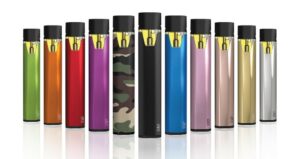
    Bidi Vapor will appeal the U.S. Food and Drug Administration’s January 2024 decision to deny the company’s premarket tobacco product application (PMTA) for Bidi Vapor’s “Classic” tobacco-flavored Bidi Stick electronic nicotine-delivery system.

    Bidi Vapor has asked the U.S. Court of Appeals for the 11th Circuit to review the marketing denial order (MDO), which Bidi Vapor believes violates the Administrative Procedure Act. Bidi Vapor will also be seeking a stay of the MDO pending the outcome of the litigation.

    “Bidi Vapor disagrees with the FDA’s decision and is taking immediate action accordingly,” said Bidi Vapor founder and CEO Niraj Patel in a statement. “In the meantime, it is important to note that the decision only affects the ‘Classic’ or tobacco-flavored Bidi Stick. The remaining ten Bidi Stick flavors are still under FDA scientific review and remain in distribution in the United States through Kaival Brands, subject to the FDA’s enforcement discretion.”

    With its recent legal challenge, Bidi Vapor hopes to build on its record of successfully contesting adverse FDA decisions. In August 2022, the 11th Circuit set aside the original MDOs issued for its 10 nontobacco-flavored products. That ruling put the 10 PMTAs back into scientific review and allowed those flavors to remain available for sale pursuant to the FDA’s compliance policy for deemed tobacco products. During this evaluation period, the 10 nontobacco-flavored products are still under FDA enforcement discretion.

  • Nicotine Pouch Sales Soar While Vapes Slow

    Nicotine Pouch Sales Soar While Vapes Slow

    Sales of cigarettes and e-cigarettes have declined in the last two weeks, while sales of oral nicotine pouches have seen significant growth, according to analysts at TD Cowen.

    They write in a research note that cigarette volumes across multiple channels were down 10 percent in the two weeks ending Jan. 13, a steeper decline than the trailing four weeks and 12 weeks.

    Bonnie Herzog, managing director at Goldman Sachs, remains cautious on the U.S. tobacco/nicotine industry in the near term as the tobacco consumer remains under substantial financial pressure.

    She stated in an emailed outlook that many consumers are being more selective in their purchases and turning to more affordable alternatives, such as 4th tier/deep discount cigarettes, modern oral tobacco and, increasingly, illicit or gray market disposable vapor products.

    “Shifts in category and consumer spending dynamics have been further exacerbated by flavor ban momentum at the state and federal level (with a final rule expected in March) and uncertainty with regard to the future of the e-cig category and category innovation (with FDA PMTA reviews still pending on big market brands such as JUUL and VUSE Alto, as well as menthol variants more broadly),” Herzog wrote.

    E-cigarette sales fell 11.3 percent in the two-week period and 10.7 percent in the four-week period, according to Barron’s.

    Sales of smokeless tobacco, including nicotine pouches, meanwhile grew 12.1 percent in the two-week period and 13 percent in the four-week period.

    The smokeless category continues to show strong dollar sales growth driven by the Zyn brand, the analysts say.

  • Court Dismisses Njoy Lawsuits, Allows Elf Bar

    Court Dismisses Njoy Lawsuits, Allows Elf Bar

    A U.S. District Court in California has dismissed a lawsuit filed by NJOY, the vape subsidiary of Altria Group, against multiple manufacturers, distributors, and retailers of disposable vapes. However, the case against IMiracle, the manufacturer of Elf Bar, has not been dismissed.

    NJOY filed the lawsuit last October. The company alleges that the companies named in the suit are selling products illegal in California and the United States. NJOY asked for a nationwide injunction that would prevent future importation and sale of the products, and compensatory and punitive damages paid to NJOY.

    Among the companies charged were manufacturers and distributors of Breeze, Elf Bar, Esco Bar, Flum, Juice Box, Lava Plus, Loon, Lost Mary, Mr. Fog and Puff Bar. Together the brands make up the majority of the U.S. disposable vape market.

    The dismissal order was entered on Jan. 18 by Judge Terry J. Hatter Jr. of the U.S. District Court for the Central District of California. The court found that the defendants did not participate in “the same transaction, occurrence, or series of transactions or occurrences,” and therefore were improperly joined in the lawsuit. Because of that, Judge Hatter dropped all parties from the suit except the first named defendant, IMiracle, according to media reports.

    The judge entered the orders “without prejudice” allowing NJOY to refile against the dismissed defendants individually or in smaller groups with demonstrable relationships. The court also dismissed NJOY’s claim of unfair competition and its motion for a preliminary injunction barring sales and distribution by the defendants.

    The court denied NJOY’s motion to serve IMiracle, the manufacturer of Elf Bar headquartered in Hong Kong, by email, citing an established international process, the Hague Convention, for serving legal notice to foreign defendants.

    NJOY’s lawsuit against IMiracle cannot proceed until the Chinese manufacturer is served notice.

  • FDA Moves PMTA Finish Date to June 30

    FDA Moves PMTA Finish Date to June 30

    Credit: Postmodern Studio

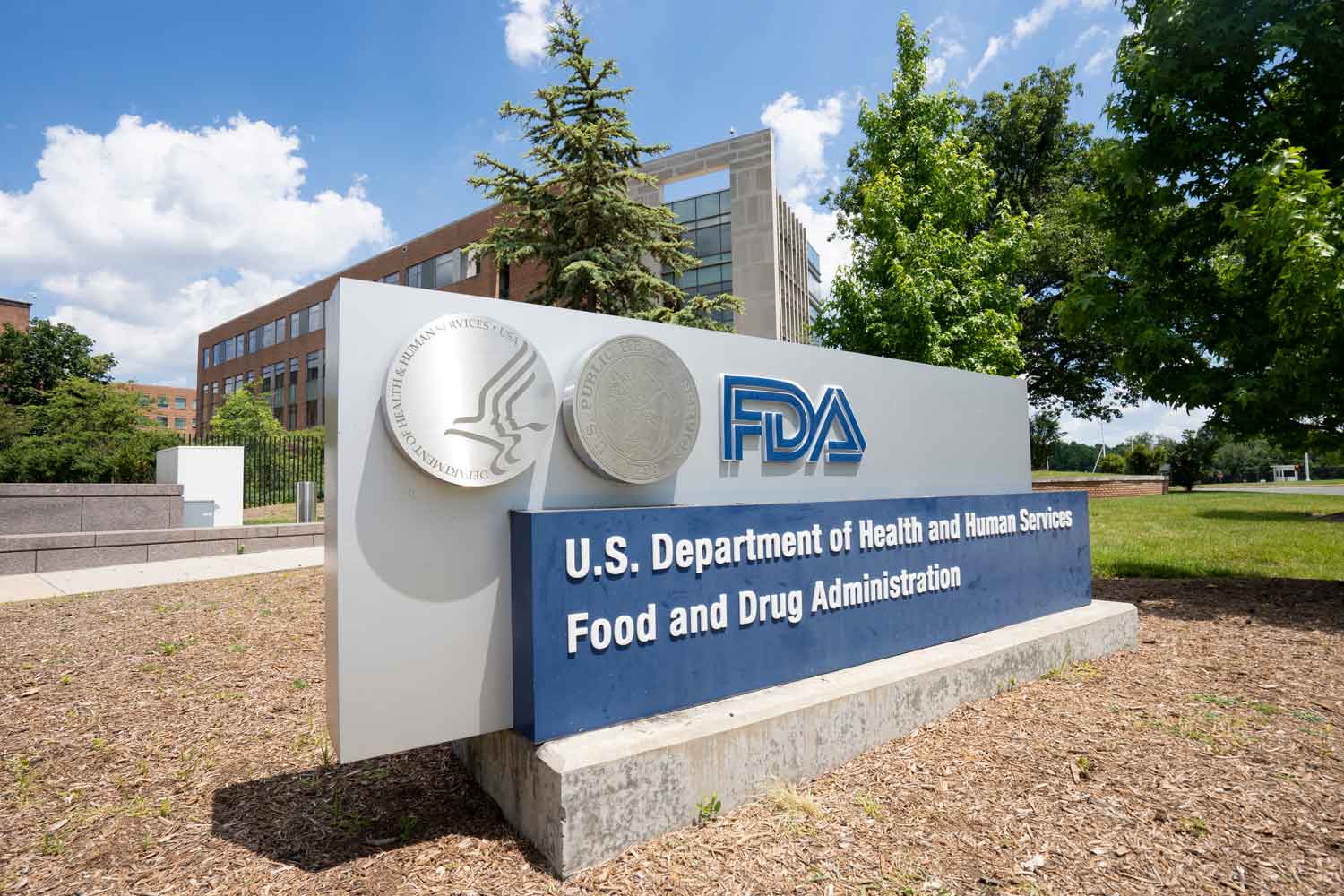
    The U.S. Food and Drug Administration now states that it will complete all covered marketing applications by June 30. In its latest court-ordered status report, the agency stated that continued review is necessary in light of recent judicial decisions, including the D.C. Circuit’s decision in Fontem US.

    “Further, several of these remaining applications present complex scientific issues that require careful review and consideration.

    In the Fontem case, the court’s unanimous decision in Fontem US v. FDA upheld the regulatory agency’s denial of Fontem’s application to market flavored vaping products, in line with prior D.C. Circuit precedent but rejected the FDA’s denial of Fontem’s applications for unflavored products.

    The agency stated that it was also facing challenges from manufacturers that filed premarket tobacco product applications (PMTAs) that made amendments to their applications after several legal decisions were handed down by courts.

    “Many of these amendments contain substantial data and scientific explanation,” the agency wrote. “The amendments range from a few pages to hundreds of pages and were received on a rolling basis, with the most recent 2023 amendment being filed in December 2023.”

    Also, on Jan. 3, the U.S. Court of Appeals for the Fifth Circuit ruled that the FDA acted “arbitrarily and capriciously” in rejecting the premarket tobacco product applications (PMTA) of Wages and White Lion Investments, doing business as Triton Distribution, and Vapetasia for approval to sell their products in the United States.

    The 9-5 decision by the New Orleans-based 5th U.S. Circuit reversed a July 2022 decision by a three-judge panel of that court.

    The agency “sent manufacturers of flavored e-cigarette products on a wild goose chase,” telling them what would be needed to approve their products, and then denying all applications, the court said in an opinion by Judge Andrew S. Oldham. The FDA “never gave petitioners fair notice that they needed to conduct long-term studies on their specific flavored products,” Oldham wrote.

    The regulatory agency is under court order to file regular status reports on the agency’s review of pending PMTAs for new tobacco products that were on the market as of Aug. 8, 2016.

    For such new tobacco products to be lawfully marketed in the United States, the Family Smoking Prevention and Tobacco Control Act requires the FDA to complete a substantive review of the PMTA for each new tobacco product and issue a marketing granted order authorizing the sale of the product.

    The court order stems from litigation filed by health groups against the FDA seeking a court-imposed deadline for finalizing the review of the PMTAs that were filed with the agency by Sept. 9, 2020.

    The court-imposed deadline to complete the agency’s review was originally Sept. 9, 2021, which the FDA could not meet due to the extremely large number of PMTAs filed by manufacturers.

    The most recent and FDA’s seventh status report was filed on Oct. 23, 2023. Specifically, in these reports, the FDA provides an update on the progress to finalize the agency’s review of pending PMTA “covered applications.”

    A “covered application” is for new electronic cigarette/vapor products that were on the market as of Aug. 8, 2016, which had a PMTA filed with the FDA by Sept. 9, 2020, are sold under the brand names of Juul, Vuse, Njoy, Logic, Blu, Smok, Suorin, or Puff Bar, and reach 2 percent or more of the total retail sales volume in NielsenIQ’s various retail e-cigarette sales reports.

    The agency also stated that it now expects to take action on 94 percent of covered applications by March 31. The FDA stated that it would file another status report on or before April 22.

  • VTA: MDOs Continue ‘De-Facto’ Flavor Ban

    VTA: MDOs Continue ‘De-Facto’ Flavor Ban

    Tony Abboud
    Tony Abboud, director of the Vapor Technology Association.

    When the U.S. Food and Drug Administration’s Center for Tobacco Products (CTP) issued marketing denial orders (MDOs) for Suorin and Blu PLUS+ e-cigarette products, Tony Abboud, executive director of the Vapor Technology Association (VTA), said the decision was just the latest installment of the FDA and CTP’s efforts to implement its de-facto ban on e-cigarettes in the U.S.

    “The constant refrain from CTP is that e-cigarette manufacturers are not providing ‘sufficient scientific evidence’ in their PMTAs, yet CTP refused to answer the Reagan-Udall Foundation’s most fundamental criticism of CTP’s entire regulatory process: that CTP has not clearly articulated what is required to prove what is appropriate for the protection of the public health (APPH) or how it is interpreting what is APPH,” Abboud stated in a release.

    He stated that the FDA has failed to objectively define the APPH standard while simultaneously using it to deny marketing authorization to critical smoking cessation and harm-reduction products, which is a “gross overreach” for any governmental institution whose mandate is to follow the science.

    “Courts have found that the process has become ‘arbitrary and capricious’ in practice, with CTP leadership choosing on a case-by-case basis how the standard ought to be defined,” he stated. “Meanwhile, companies are simply trying to do the right thing by complying with and adhering to the PMTA process set forth by the FDA.”

    Abboud stated that the actions of the FDA and CTP do nothing to protect public health or help Americans who smoke. “VTA once again calls on CTP to reverse course on its misguided actions and restore scientific integrity to its regulatory and decision-making process. Enough is enough,” he wrote.

  • FDA Denies Marketing of Suorin, Blu Plus+

    FDA Denies Marketing of Suorin, Blu Plus+

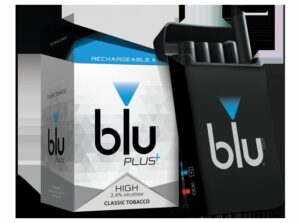
    The U.S. Food and Drug Administration has issued marketing denial orders (MDOs) to Shenzhen Youme Information Technology Co. Ltd. for two Suorin brand e-cigarette products. It also issued Fontem US, LLC MDOs for its Blu PLUS+ brand e-cigarette products.

    “Thorough scientific review of tobacco products applications is a key pillar of FDA’s comprehensive regulatory approach,” said Brian King, director of FDA’s Center for Tobacco Products (CTP). “It is the applicant’s responsibility to ensure that sufficient scientific evidence is included in an application to meet the necessary public health standard required by law. In these cases, such evidence was lacking.”

    The companies must not market or distribute these products in the United States or they risk FDA enforcement action. The companies may submit new applications for the products that are subject to these MDOs, according to an agency press release.

    The FDA denied Suorin Air refillable vaporizers in various colors and an empty refillable cartridge. The FDA stated that Suorin Air’s empty cartridges would allow consumers to fill the cartridge with an e-liquid purchased separately.

    “The applications submitted by Shenzhen Youme Information Technology Co. Ltd. lacked sufficient evidence regarding abuse liability, which is the ability of a tobacco product to promote continued use and the development of addiction and dependence,” the release states.

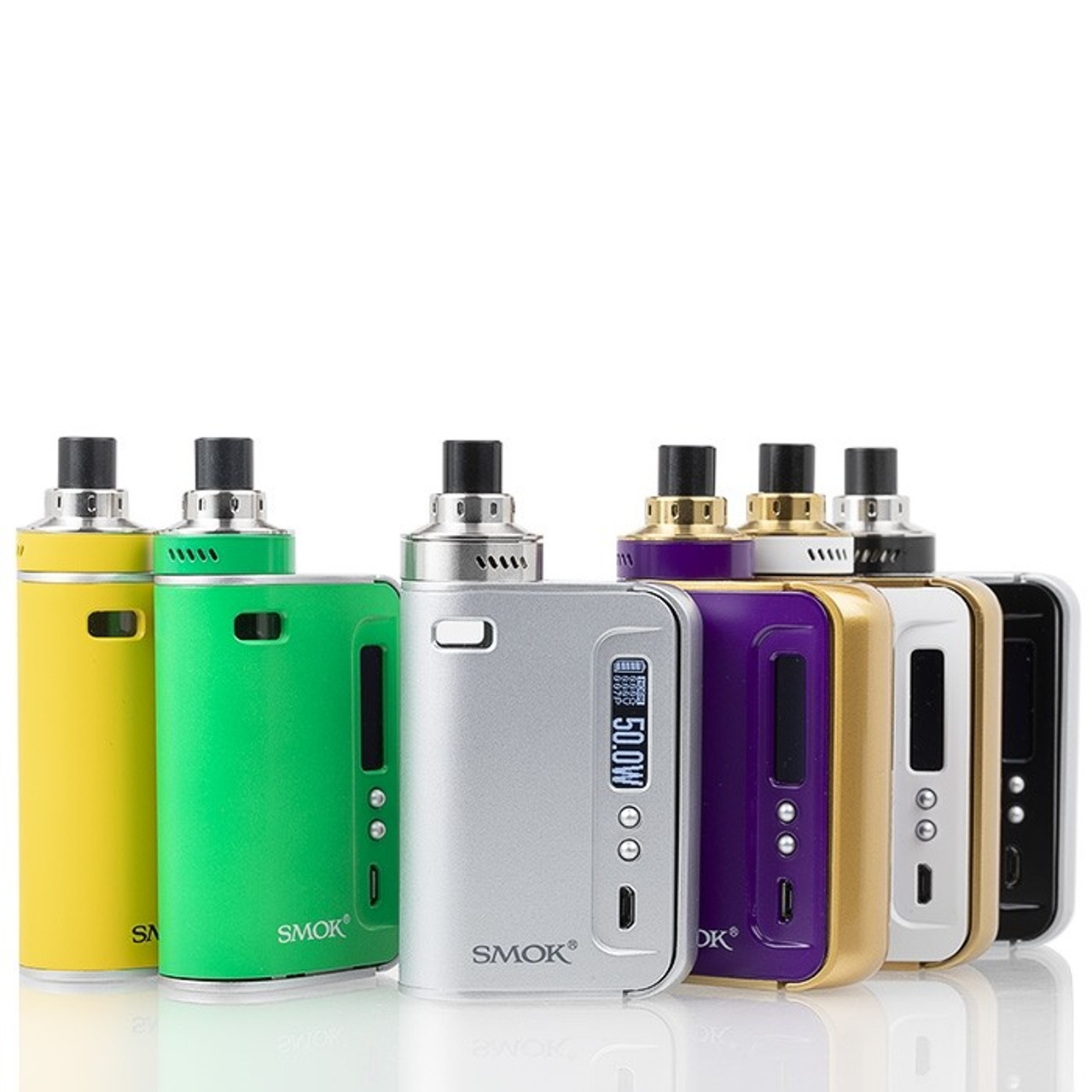
    SMOK recently had 22 products denied, including devices, pods, atomizers, and cartridges. It was the first time the agency has denied strictly hardware products from one company en mass. The products were denied because they were submitted without a specific e-liquid to be used with the devices, according to the FDA

    The denied Blu PLUS+ products include a battery and several prefilled e-liquid pods:   

    • blu PLUS+ Battery  
    • blu PLUS+ Carolina Bold 2.0%  
    • blu PLUS+ Classic Tobacco 1.2%  
    • blu PLUS+ Classic Tobacco 2.4%  
    • blu PLUS+ Gold Leaf 1.2%  
    • blu PLUS+ Gold Leaf 2.4%  
    • blu PLUS+ Menthol 1.2%  
    • blu PLUS+ Menthol 2.4%

    “Among other deficiencies in their applications, Fontem US, LLC failed to include sufficient ingredient information, harmful and potentially harmful constituent (HPHC) yield quantities, and abuse liability information.,” the FDA stated. “In addition, the applicant did not provide sufficient evidence demonstrating that the flavored new products have a potential to benefit adult smokers, in terms of complete switching or significant cigarette use reduction, that would outweigh the risk to youth.
    The FDA also issued MDOs for additional blu PLUS+ products not listed above. The regulatory only publicly names products that the FDA or the manufacturer has confirmed to be currently marketed to avoid the release of confidential commercial information.

  • U.S. FDA Issues MDOs for SMOK

    U.S. FDA Issues MDOs for SMOK

    The U.S. Food and Drug Administration issued marketing denial orders (MDOs) to Shenzhen IVPS Technology Co., Ltd for 22 SMOK vaping hardware products.

    The denied products include devices, pods, atomizers, and cartridges. It’s the first time the agency has denied strictly hardware products from one company en mass.

    The products were denied because they were submitted without a specific e-liquid to be used with the devices, according to the FDA. “The denied SMOK e-cigarette products are not sold with an e-liquid. A consumer instead adds their separately purchased e-liquid into the device,” the agency wrote. “Therefore, these SMOK products have the potential to be used with any e-liquid on the market and available to the consumer, which could include tobacco-flavored and non-tobacco-flavored e-liquids.”

    The products receiving MDOs include:

    • SMOK OSUB ONE Device
    • SMOK OSUB ONE RPM Cartridge
    • SMOK RPM DC 0.8 Ω MTL Atomizer
    • SMOK OSUB ONE RPM Cartridge 3 Pack
    • SMOK RPM DC 0.8 Ω MTL Atomizer 5 Pack
    • SMOK Nfix Device
    • Nfix DC 0.8 Ω MTL Pod
    • SMOK POZZ Device
    • SMOK POZZ DC 0.8 Ω Pod
    • SMOK RPM 40 Device
    • SMOK RPM Empty Standard Cartridge
    • SMOK RPM Empty Nord Cartridge
    • SMOK RPM Mesh 0.4 Ω Atomizer
    • SMOK Nord DC 0.8 Ω MTL Atomizer
    • SMOK SCAR-P3 Device
    • SMOK SCAR-P3 Empty RPM 2 Cartridge
    • SMOK SCAR-P3 Empty RPM Cartridge
    • SMOK PRM 2 Mesh 0.16 Ω Atomizer
    • SMOK RPM Mesh 0.4 Ω Atomizer
    • SMOK Nord 2 Device
    • SMOK Nord 2 RPM Cartridge
    • SMOK Nord 2 Nord Cartridge

    After reviewing the company’s PMTAs, the FDA determined that the applications lacked sufficient evidence to demonstrate that permitting the marketing of the products would be appropriate for the protection of public health, which is the standard legally required by the 2009 Family Smoking Prevention and Tobacco Control Act. More specifically, the applicant failed to provide sufficient data to characterize constituent delivery, product stability, and product abuse liability.

    “Science is a cornerstone of FDA’s tobacco product review process, and CTP remains committed to evaluating applications based on a public health standard that considers the risks and benefits of the tobacco product to the population as a whole,” said Brian King, director of FDA’s Center for Tobacco Products. “It is the applicant’s responsibility to provide sufficient scientific evidence to demonstrate that marketing a new tobacco product is appropriate for the protection of the public health. In this case, the applicant failed to provide this evidence.”

  • Spain Bans Flavors for Heated Tobacco

    Spain Bans Flavors for Heated Tobacco

    Credit: Jorge Argazkiak

    The government in Spain has approved a decree that equates the regulation of heated tobacco products with that of traditional cigarettes, prohibiting products with flavorings. The rules do not apply to all vaping products, such as e-cigarettes.

    In addition, it will now be mandatory for labels to contain warnings for heated tobacco products that they products are harmful to health, according to Catalan News.

    The country’s Ministry of Health is considering further regulations.

    “The ban will cover tobacco products with an aroma or flavor in their components (such as filters, papers, packaging, or capsules) or any other technique that allows modifying the smell or taste of the products or intensify the smoke. Filters, papers and capsules cannot contain tobacco or nicotine,” the report states.

    Heated tobacco products must include the following informative message on their outer packaging: “Tobacco smoke contains more than 70 carcinogenic substances,” with relevant accompanying photographs.

    This decree will enter into force three months after its publication in the official state gazette (Boletín Oficial del Estado).

  • Virginia Proposes Approved Product List

    Virginia Proposes Approved Product List

    Virginia has long been the epicenter of the tobacco industry; now, two bills that would ban flavored vaping products have been filed with the state’s General Assembly.

    Sponsors say Virginia should step in where Washington has been ineffective in blocking unregulated flavored e-cigarettes, such as Elf Bar disposables, off of store shelves.

    The bills, House Bill 1069 and Senate Bill 550, call for a fine of $1,000 a day for each product sold that the U.S. Food and Drug Administration has not authorized to be marketed in the U.S.

    The Attorney General would maintain a directory of legal products, much like Alabama and Louisiana. Products not listed in that directory could not be legally sold in Virginia.

    The bill states any retailer and wholesaler that sells or distributes any liquid nicotine or nicotine vapor product in the state is subject to scheduled or unscheduled compliance checks carried out by the Attorney General’s Office for enforcement purposes.

    Manufacturers must certify, in a filing with the Attorney General, that an FDA marketing authorization order covers their product or is exempt from that because it was sold in the U.S. before 2016 or subject to a premarket tobacco product application dating from before 2020.

    “It’s a public health issue,” said Del. Rodney Willett, who sponsored the House of Delegates bill.

    “They’re targeting kids with the flavors,” he said, according to media reports. “When I walk into a convenience store, I’m just stunned by the number of these products that are for sale.”

  • Taxes had ‘No Impact’ on Singapore’s Vape Ban

    Taxes had ‘No Impact’ on Singapore’s Vape Ban

    The Singapore government said that the potential loss in revenue from tobacco tax was not a factor in its decision to ban the use of e-cigarettes in 2018.

    In his reply to a question by a Workers’ Party and Sengkang member of Parliament, Deputy Prime Minister Lawrence Wong, who is also the Minister for Finance, said, “The Government’s decision to ban the use of e-cigarettes in 2018 was based on public health considerations, to protect our population from the harms of these products. The potential loss in tobacco tax revenue from the reduced consumption of tobacco products was not a factor in this decision.”

    … our priority is to protect the health of our population and prevent e-cigarettes from causing harm to our people, especially to younger Singaporeans.”


    Lawrence Wong

    Wong added that if the government were to legalize and tax e-cigarettes “the challenges would be similar to those we encounter for cigarettes and other tobacco products today,” according to a Yahoo news report.

    “In any case, the government has no plans to change our current approach, as our priority is to protect the health of our population and prevent e-cigarettes from causing harm to our people, especially to younger Singaporeans,” he said.