Tag: e-cigarettes

  • Retailers Face Civil Money Penalties

    Retailers Face Civil Money Penalties

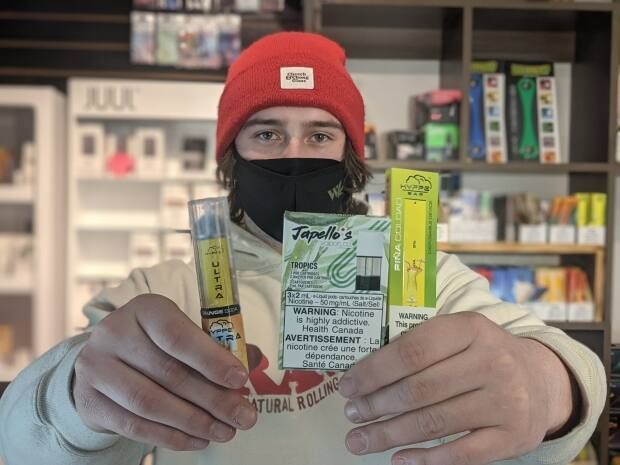
    The retailers selling illegal flavored disposable vapes are under scrutiny. The U.S. Food and Drug Administration issued complaints for civil money penalties (CMPs) against 22 retailers for the illegal sale of Elf Bar/EB Design.

    The FDA previously warned each retailer in the form of a warning letter to stop selling unauthorized tobacco products, according to the agency. During follow-up inspections, the FDA observed the retailers had not corrected the violations, which resulted in the civil money penalty actions. 

    “The FDA has been abundantly clear that we are committed to using the full scope of our authorities, as appropriate, to hold those who break the law accountable,” said Brian King, director of the FDA’s Center for Tobacco Products (CTP). “These retailers were duly warned of what could happen if they failed to correct their violations. They chose inaction and will now face the consequences.”

    The complaints seek the maximum civil money penalty of $19,192 for a single violation from each retailer. While the FDA has issued civil money penalty complaints to retailers for selling unauthorized tobacco products in the past, this is the first time the agency is seeking CMPs for the maximum amount against retailers for selling illegal flavored disposable vapes.

    The retailers can pay the penalty, enter into a settlement agreement, request an extension of time to file an answer to the complaint or file an answer and request a hearing. Those that do not take action within 30 days after receiving the complaint risk a default order imposing the full penalty amount.

    Courtesy: US FDA

    In addition to the CMP complaints, today the FDA announced an additional 168 warning letters to brick-and-mortar retailers for illegally selling Elf Bar/EB Design products. These warning letters were the result of a coordinated nationwide retailer inspection effort conducted throughout the month of August, according to the agency.

    Warning letter recipients have 15 working days to respond with the steps they have taken to correct the violation and ensure compliance with the law. Failure to promptly correct the violations can result in additional FDA actions such as injunction, seizure or civil money penalties.

    “We continue to monitor closely all those in the supply chain, including retailers, for compliance with federal law,” said Ann Simoneau, director of the Office of Compliance and Enforcement in the CTP. “This includes follow-up inspections and surveillance of those who have received a warning letter, and taking additional action, as appropriate, to enforce the law.” 

  • FEELM Highlights OS Vape at InterTabac

    FEELM Highlights OS Vape at InterTabac

    The latest in vaping industry innovations made its debut during InterTabac 2023, held from September 14-16, as FEELM, a leading closed system solution provider, unveiled its OS Vape in a partnership with OS.

    It is the first time FEELM has co-exhibited with its local partner during the world’s largest nicotine and tobacco trade show held in Dortmund, Germany.

    OS, a major player in Germany’s shisha product market, recently ventured into the disposable vaping product market.

    A representative from the FEELM booth said that collaborating with clients for exhibitions is a new strategy aimed at bolstering the client’s brand presence in local markets.

    The FEELM spokesperson said the company intends to continue its co-exhibition format at major global exhibitions, joining forces with clients from various regions in a collective march towards a global presence.

    OS Vape introduced a disposable vaping solution that delivers an elevated puff count, cost-efficiency, and unmatched vapor consistency, promising German consumers a rich vaping experience reminiscent of their cherished beers.

    The OS Vape uses FEELM Max ceramic coil technology, disposable product the ability to provide 800+ puffs, a more than 30% enhancement in puff count compared to other common disposable products.

    This establishes a new standard under TPD compliance, according to the FEELM spokesperson.

    “Beyond puff count, OS Vape offers an exceptional vapor and taste consistency of over 95%. These groundbreaking advancements have undoubtedly propelled the vaping industry to new zeniths,” the spokesperson said. “Additionally, the signature transparent e-liquid tank not only alleviates e-liquid concerns but also adds a touch of aesthetic sophistication.”

  • TPMP Comment Period Extended

    TPMP Comment Period Extended

    Credit: May1985

    The U.S. Food and Drug Administration has extended the comment period on its proposed rule for tobacco manufacturing practices.  

    Stakeholders now have until Oct. 6, 2023, to share their thoughts.

    The proposed rule would place new requirements for tobacco product manufacturers regarding the manufacture, design, packing and storage of their products. According to the FDA, these proposed requirements would help protect public health by, among other things, minimizing or preventing contamination and limiting additional risks by ensuring product consistency.

  • FDA Tobacco Chief Discusses Relative Risk

    FDA Tobacco Chief Discusses Relative Risk

    Brian King (Photo: FDA)

    In an article published in Addiction magazine, Brian King, director of the U.S. Food and Drug Administration’s Center for Tobacco Products (CTP), explores the chances and considerations for informing adults who smoke cigarettes about the relative dangers of tobacco products, including e-cigarettes. He collaborated with Benjamin Toll, director of the Medical University of South Carolina Tobacco Treatment Program and co-director of the Lung Cancer Screening Program.

    The commentary highlights the findings of a recent survey about misperceptions of tobacco product harms, including cigarettes and e-cigarettes. The survey found that only about 20 percent of adults who smoke cigarettes believed e-cigarettes contain fewer harmful chemicals than cigarettes. While there are no safe tobacco products, the available scientific evidence indicates that tobacco products exist on a continuum of risk, with cigarettes being the most harmful. 

    The commentary notes that opportunities exist to educate adults who smoke about the relative risks of tobacco products, including e-cigarettes. However, these efforts should be accompanied by efforts to prevent youth tobacco product use; encourage first-line use of FDA-approved cessation therapies; and for adults who both smoke and use e-cigarettes, reinforce the importance of completely transitioning to e-cigarettes.

    The commentary further emphasizes that any education efforts on the relative risks of tobacco products must be evidence-based. In particular, it is important to assess the benefits among the intended population (i.e., adults who smoke) and risks among unintended populations (e.g., youth). Currently, FDA is in the early stages of a research effort to assess messaging about the continuum of risk of tobacco products among adults who smoke.

    Last week, the FDA announced a virtual listening session opportunity to verbally provide open public comment on the development of the new strategic plan, including proposed strategic goals. After introductions, the center will begin the listening session with an overview of the process used to develop the CTP’s strategic plan, including proposed goal areas.

    Registration is open for the virtual listening session on the development of the CTP’s five-year strategic plan, which will take place on Aug. 22 beginning at 10 a.m. EDT.


  • McKinney Regulatory Science’s New Website

    McKinney Regulatory Science’s New Website

    McKinney Regulatory Science Advisors has launch its new website that promises “a new era of innovation and transparency for their clients,” according to a press release.

    The new platform describes an array of advisory services to nicotine and cannabis clients, with an emphasis on providing McKinney clients with the best available regulatory services.

    Willie McKinney, CEO of McKinney, said the new website represents a significant milestone in journey to provide exceptional advisory services to our nicotine and cannabis clients.

    “The revamped platform reflects our dedication to innovation, transparency, and client satisfaction, making it easier for clients to explore our services and access valuable regulatory resources,” he said

    The new website offers a modern design that makes it easy for users to find the information they need quickly. It also features an intuitive navigation system that allows users to identify relevant services and access helpful resources rapidly, according to McKinney. Additionally, the site is optimized for mobile devices so that users can access the site from any device at any time.

    “McKinney RSA focuses on providing comprehensive solutions that meet complex regulatory requirements while also delivering superior customer service,” the release states. “With decades of industry experience under their belt, they are committed to helping their clients succeed by providing top-notch guidance every step of the way.”

  • Distributors Accused of Racketeering

    Distributors Accused of Racketeering

    Credit: Vitalii Vodolazskyi

    New York City has filed a lawsuit in federal court charging four vaping product distributors and six persons associated with the companies for illegally selling flavored vaping products other than tobacco in the city. It is possible more companies will be added to the suit.

    The civil lawsuit, filed Monday in the U.S. District Court for the Southern District of New York, claims the defendants violated “nearly every federal, New York State and New York City law applicable to the marketing, distribution, and sale of flavored e-cigarettes, the sales of which are prohibited under laws enacted by all three jurisdictions.”

    Named in the suit are Magellan Technology Inc., Ecto World LLC (Demand Vape), Mahant Krupa 56 LLC (Empire Vape Distributors) and Star Vape Corp. Also named were Matthew Glauser, Donald Hashagen, Russell Rogers, Nikunj Patel, Devang Koya and Nabil Hassen. The suit also mentions Puff Bar, Elf Bar and Hyde products, however, those manufacturers were not named in the suit.

    The lawsuit alleges the defendants committed mail and wire fraud, alongside violations of New York City’s Administrative Code, New York State Public Health Law, and the federal Tobacco Control Act. The city also accuses the companies of violating both the federal Racketeering Influenced Corrupt Organizations (RICO) Act and the Prevent All Cigarette Trafficking (PACT) Act.

    The suit centers on disposable flavored vapes. However, the suit alleges that is seeking relief for any type of flavored e-cigarette product on the market. This would suggest the suit could grow into anyone entity that has sold flavored vaping products in the city.

    “Although this action speaks principally about (flavored disposables), the favorite type of electronic nicotine delivery system among youth and the most intentionally directed to that market, the City seeks relief for defendants’ violation of laws applicable to e-cigarettes regardless of the type of device with which the violation is committed,” the suit states. “Any non-FDA approved [the FDA authorizes for marketing; it does not approve products] e-cigarette containing a flavored e-liquid is governed by the laws under which the City’s claims are brought and the City seeks relief with respect to all such devices.”

    The city says it “seeks to recover monetary damages and civil penalties from the defendants, potentially totaling millions,” according to a press release. The suit also alleges the sales of disposable flavored vapes created a youth use crisis. The suit alleges the largest increase in youth use ever. The claim is unsupported by any facts.

    “By distributing devices that provide larger than normal doses of nicotine in a mild aerosol formulated to reduce or eliminate the harshness of burning tobacco and tasting pleasantly of fruit, candy or desserts, [flavored vaping device] manufacturers and distributors have triggered the largest increases in youth nicotine use ever seen,” the suit claims.

    The lawsuit states the city will seek triple the damages awarded at trial under the RICO guidelines.

  • FDA Denies Marketing of Myblu Menthol

    FDA Denies Marketing of Myblu Menthol

    Image: Tobacco Reporter archive

    The U.S. Food and Drug Administration on July 10 issued a marketing denial order (MDO) for Myblu Menthol 2.4 percent, an e-cigarette product made by Fontem US. The order prohibits the company from marketing or distributing this product in the United States.

    “Thorough scientific review of tobacco applications is a key pillar under FDA’s role to protect the public from the dangers of tobacco use,” said Matthew Farrelly, director of the Office of Science within the FDA’s Center for Tobacco Products. “This application lacked the scientific evidence needed to demonstrate that the product provided a net benefit to the public health that outweighs the known risks.”

    Among other shortcomings, the application presented insufficient scientific evidence to show that the menthol-flavored e-cigarette products provided an added benefit for adults who smoke relative to tobacco-flavored e-cigarettes, according to the FDA.

    Fontem US may resubmit a new application to address the deficiencies for the product subject to this MDO.

    To date, the FDA has authorized 23 tobacco-flavored e-cigarette products and devices. Last year, the FDA issued MDOs to Fontem US for several other Myblu products, which are the subject of ongoing litigation.

  • Flavored Vaping Ban Begins Tomorrow

    Flavored Vaping Ban Begins Tomorrow

    A ban on advertising e-cigarettes in Ukraine, including heated-tobacco products, goes into effect on July 11. Flavored electronic nicotine-delivery systems (ENDS) products are also banned.

    The advertising rule applies to all types of media, including the Internet, social media, public transportation, and public events.

    “The advertising, sales promotion and sponsorship of electronic cigarettes, liquids used in them, and devices for consumption of tobacco products without burning them (including IQOS and glo devices) will be prohibited from 11 July 2023,” according to the WHO Framework Convention on Tobacco Control (FCTC).

    “Flavored cigarettes and flavored liquids for ENDS will also be banned at that date. Further, from 11 January 2024, the combined textual plus pictorial warnings will be required to cover 65 percent of both sides of the pack of smoking tobacco products (conventional cigarettes).”

    The fine in the case of a violation is UAH30,000 ($812), and for each subsequent violation – UAH50,000. In addition, similar to the general smoking ban, the law prohibits the use of heated tobacco products in all public places and businesses.

    In 2021, Ukrainian lawmakers passed the law prohibiting the use of ENDS in public places as well as advertising, sponsorship, and promotion of e-cigarettes. The law also bans the sale of flavored e-liquids other than tobacco flavors.

  • Ghana Outlaws Vape Sales and Promotion

    Ghana Outlaws Vape Sales and Promotion

    Ghana has banned all recreational use of vaping and e-cigarette products.

    In a press release, the country’s Food and Drugs Authority (FDA) states that the “sale, advertisement and recreational use of electronic nicotine delivery systems (ENDS) such as vapes and other non-nicotine tobacco products by the public” is illegal.

    However, ENDS can be registered as a prescription-only medicine for the purposes of cessation therapy.

    The FDA claims it has sent notice to manufacturers, importers, wholesalers, and retailers to remove all advertisements on social media, billboards and neon signs immediately and refrain from the importation of the products.

    The FDA states that there “will be repercussions including sanctions” for failure to adhere to the rules.

  • Ninth Circuit Denies Lotus MDO Review

    Ninth Circuit Denies Lotus MDO Review

    Entrance to United States Court of Appeals for the Ninth Circuit . Headquartered in San Francisco, California, the Ninth Circuit is by far the largest of the 13 courts of appeals. (Credit: Eric BVD)

    The U.S. Court of Appeals for the 9th Circuit on June 30 declined to review a Food and Drug Administration marketing denial order for Lotus Vaping Technologies’ flavored e-liquid products.

    The FDA issued marketing denial orders for Lotus’ flavored products, finding that the petitioners’ applications lacked sufficient evidence showing that the flavored products would provide a benefit to adult users that outweighs the risks such products pose to youth.

    Lotus challenged the ruling in court, but the judges held that the text of the Family Smoking Prevention and Tobacco Control Act authorizes the FDA to require that manufacturers submit comparative health risk data, which necessarily includes comparisons of flavored e-liquids to tobacco-flavored e-liquids.

    The judges also held that the FDA did not arbitrarily or capriciously deny Lotus’ applications and that any error the agency committed by failing to consider Lotus’ marketing plans was harmless.