Tag: harm reduction

  • Clive Bates: WHO Using Tobacco’s History to Poison Good Science

    Clive Bates: WHO Using Tobacco’s History to Poison Good Science

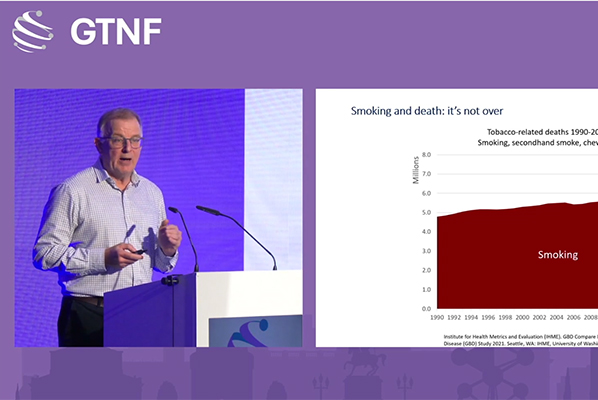
    In a forceful keynote at the Global Tobacco and Nicotine Forum (GTNF) in Brussels, Clive Bates, Director of Counterfactual, called for a fundamental reset in global tobacco control policy, arguing that current frameworks such as the WHO Framework Convention on Tobacco Control (FCTC) have failed to adapt to innovation and evidence.

    “Prevalence is falling, but the global population is rising,” Bates said. “That means the total number of smokers is still going up — and so are the 7.5 million deaths each year caused by smoking.” He emphasized that quitting smoking at any age provides significant health benefits, but argued that international tobacco control remains stuck in the past. “The mission hasn’t changed — stop people from smoking — but the methods are outdated. We have new tools, and ignoring them is indefensible.”

    Bates described alternative nicotine products such as vaping, heated tobacco, and smokeless options as “the disruption the FCTC never anticipated.” He pointed to Sweden’s success as proof of concept: “Sweden has higher nicotine use than Germany but lower cancer rates. That’s what harm reduction looks like.” Yet, he criticized the European Union for maintaining its ban on snus — the very product that helped Sweden virtually eliminate smoking. “What if, instead of banning snus, we promoted it?” he asked. “Why are we still doing things that contradict our stated public health goals?”

    Turning his critique toward the WHO, Bates condemned the organization’s stance that there is “no evidence” reduced-risk products are safer than cigarettes. “That’s shocking,” he said. “Harm reduction is being dismissed as a tobacco industry ploy, using the industry’s reputation to poison good science.”

    He argued that the FCTC has institutionalized a “toxic” anti-industry bias that blocks collaboration and progress. “If the tobacco industry likes it, it must be bad — that’s the logic codified into policy. There’s no room for alignment with that attitude,” he said. Bates noted that several major companies have already shifted dramatically — “PMI now earns 41% of its revenue from smoke-free products” — yet the global framework continues to punish rather than encourage transformation.

    “The WHO gave an award to a man in India for banning reduced-harm products in a country with 100 million smokers,” Bates said. “That’s not leadership — that’s negligence.”

    He concluded with a clear call to action: “If you want better outcomes, get the smoking rate down as fast as possible. The demand for nicotine won’t disappear, but we can make it vastly safer — and we can do it without coercion. Let consumers make informed choices. That’s how we save lives.”

  • Harm Reduction is a Race Where Everyone Can Win

    Harm Reduction is a Race Where Everyone Can Win

    Deborah Binks-Moore, Chief Corporate Affairs Officer at Imperial Brands, delivered an optimistic yet pragmatic keynote at GTNF, urging governments, regulators, and industry leaders to work together to accelerate global harm reduction. Binks-Moore described the moment as an “inflection point” in the global effort to reduce smoking, noting that next-generation products have moved from niche to mainstream in only a few years.

    “Just a few years ago, next-generation products were a small part of the market. Now they are becoming mainstream,” she said. “Our journey to reduce smoking must place the consumer at the heart of everything we do.”

    She celebrated the rapid progress made by the industry but cautioned that success brings new challenges.

    “Our very success is now creating fresh challenges, which will require fresh thinking,” she said. Drawing parallels with other sectors in transition—such as energy—she encouraged policymakers to heed lessons from those industries: transformation succeeds only when science, regulation, and innovation align.

    “Tobacco harm reduction has the potential to prevent the premature deaths of many millions of lives over the long term,” she said. “This means we need an equally long-term approach to policymaking. We need people from different political traditions to work together. We need regulators to collaborate with responsible industry players. And we need central governments to partner closely with local administrations.”

    She called on policymakers in Brussels, WHO delegates, and regulators worldwide to develop “enforceable, sustainable frameworks” built on facts, science, and shared principles.

    Binks-Moore urged all stakeholders—policymakers, scientists, and business leaders alike—to begin with the individual consumer. “We need to understand and respect them for who they are, not who we wish them to be,” she said. “If we follow these principles, harm reduction is a race where everyone can win.”

  • GTNF 2025 Panel: The Complex Picture of Harm Reduction

    GTNF 2025 Panel: The Complex Picture of Harm Reduction

    At the opening session of the 2025 Global Tobacco and Nicotine Forum (GTNF) in Brussels, panelists explored how consumer behavior, regulatory inertia, and scientific innovation intersect in the global harm reduction debate. “Consumers, Combustion, Nicotine – The Complex Picture of Harm Reduction,” brought together Nick Kadysh (CEO, PharmaAla Biotech), Atheer Al Bin Ali (Chief Legal Officer, Badael), Dr. Carolyn Beaumont (Clinician and Tobacco Harm Reduction Educator), Håkan Engqvist (Founder and Chief Science Officer, Emplicure), and Dr. David Utley (President and CEO, Pivot Health Technologies).

    Utley argued that harm reduction must return to its core mission: helping smokers quit. “Expecting a smoker to become smoke-free on their own is like expecting a cancer patient to cure themselves,” he said. Utley, a surgeon-turned-entrepreneur, urged policymakers to focus on the consumer experience, not ideology. “Consumers are smarter than doctors. Smokers have tried to quit twenty times — they’re not hopeless, they’re underserved.” He noted that the stigma around nicotine use is largely because the products come from tobacco companies: “If pharma had made them, this wouldn’t even be controversial.”

    Beaumont echoed the importance of reframing harm reduction in clinical terms. “Doctors are trusted by the community — it should be a no-brainer to have them on board,” she said. Beaumont called Australia’s prescription-only vape model a “monumental failure,” emphasizing that education from credible medical sources is key. “It’s not just a preference for a better product; it’s a preference for a better, healthier life.”

    Kadysh highlighted the public health challenge of dual use, calling it “the bane of our existence.” He stressed that sales data alone can’t explain consumer behavior. “We look at numbers and assume what products people like — but that doesn’t tell the full story.” From his vantage point in biotech, Kadysh said the pharmaceutical sector is only beginning to embrace harm reduction discussions. “It’s still a charged political stance, but the science is catching up.”

    Al Bin Ali brought an international perspective, pointing to Saudi Arabia’s growing interest in harm reduction. “This is a great opportunity if regulators would just have the proper conversations,” he said. “The controversy isn’t about philosophy; it’s about data — where it comes from, and whether it’s reliable.” He emphasized the global implications of evidence-driven policymaking, noting that “one country’s shift can influence many nations.”

    Engqvist underscored the role of science and investment in shaping the harm reduction landscape. “Sweden comes in from a base of science,” he said. “That scientific foundation creates a significant opportunity for innovation and investment.”

    Across the session, a shared message emerged: harm reduction should be guided by science, supported by clinicians, and driven by consumer realities — not paralyzed by politics or ideology. As Utley summed up, “The consumer will win — because the consumer always does.”

  • Trinidad & Tobago Considers Harm Reduction in Tobacco Policy

    Trinidad & Tobago Considers Harm Reduction in Tobacco Policy

    Trinidad and Tobago’s Ministry of Health said it is laying the groundwork for a new approach to tobacco control, with officials confirming they are collecting data to regulate reduced-risk products such as vaping, nicotine pouches, and heat-not-burn devices. The move signals a shift away from policies focused solely on bans and restrictions, toward strategies that emphasize harm reduction.

    Despite years of regulation, smoking rates remain high in the country, with nearly one in five adults still smoking. The absence of laws specific to vaping has left products in a legal grey area, creating uncertainty for smokers looking to switch to less harmful alternatives. Advocates argue that clear regulation could help reduce smoking-related disease and deaths, pointing to examples from Sweden and the U.K.

    Public health voices in Trinidad and Tobago say the country has an opportunity to chart its own course, using evidence-based regulation to give smokers safer choices. “Now is the moment to act,” one health advocate said, urging policymakers to put harm reduction at the center of the nation’s tobacco strategy.

  • South Korea Updates Tobacco Disclosure Rules Amid Criticism

    South Korea Updates Tobacco Disclosure Rules Amid Criticism

    South Korea will begin enforcing its Tobacco Harm Management Act on November 1, requiring manufacturers and importers to disclose harmful components in tobacco products for the first time. The law mandates inspections every two years for existing products and within one month for new launches. Public disclosure of results is expected to begin late next year.

    The Ministry of Food and Drug Safety (MFDS) has identified 44 harmful substances in combustible cigarettes and 20 in liquid e-cigarettes for mandatory disclosure. However, critics say the standards are outdated, based on a 1997 U.S. framework by Dr. Dietrich Hoffmann, and have obvious “gaps” as products containing synthetic nicotine or marketed as “nicotine-free” are excluded. South Korean law defines tobacco only as products made from tobacco leaves.

    In defense, MFDS noted that South Korea’s list already exceeds WHO and ISO requirements and matches Canada in scope. Officials said they will expand the list in the future and are considering whether disclosures will be published by product type, brand, or in aggregate, along with explanations of toxicity and carcinogenicity.

  • South Africa Debating Vape’s Role in Harm Reduction

    South Africa Debating Vape’s Role in Harm Reduction

    South Africa’s Parliament is reviewing the Tobacco Products and Electronic Delivery Systems Control Bill, which proposes strict regulations on all nicotine products—treating e-cigarettes, heated tobacco, and traditional cigarettes the same. Proponents of harm-reducing products warn that treating all nicotine products equally could stifle innovation and keep safer alternatives out of reach.

    The debate comes at a critical juncture for South Africa’s public health and economy. The current bill includes plain packaging, graphic health warnings, a ban on advertising, public vaping restrictions, and limits on vape flavors. Industry leaders like Philip Morris International (PMI) argue this approach ignores scientific evidence showing reduced harm from smoke-free products, urging a differentiated regulatory framework like those in the UK and Japan.

    PMI says equal restrictions discourage smokers from switching to less harmful alternatives. But health groups and some lawmakers remain cautious, citing youth vaping risks and insufficient long-term safety data.

  • Study: Charcoal-Free Shisha Significantly Less Harmful

    Study: Charcoal-Free Shisha Significantly Less Harmful

    In what the company calls “the world’s first charcoal-free shisha product,” OOKA announced the results of a study conducted by ASL Analytic Service Laboratory GmbH in Germany that found emissions from its heated system showed zero detection of many of the most harmful by-products of combustion, including carbon monoxide, benzene, toluene, and benzo[a]pyrene – substances typically found in both cigarettes and charcoal-heated shisha. The peer-reviewed study was published today (April 30) in Nature’s Scientific Reports

    “As the first electronically heated shisha system, OOKA represents a major advancement in inhalation technology, providing a charcoal-free, smoke-free experience without compromising flavor or ritual,” the company said in a press release. “The product’s multi-patented design eliminates combustion-related toxicants while offering consumers a consistent and premium experience.

    “The study provides substantive new evidence that OOKA is a breakthrough in harm reduction, delivering one of the cleanest inhalation experiences currently available without any compromise on flavor and experience for users

    The study tested emissions from OOKA across 37 toxicants and showed that emissions of key aldehydes—including acrolein, acetaldehyde, and formaldehyde—were reduced by up to 96% in the charcoal-free device compared to traditional shisha. When typical real-world consumption is factored in, toxicant exposure was estimated to be up to 100 times lower than cigarette smoking.

    “These findings have significant implications, not just for public health but also for shisha regulation and consumer understanding,” Dr. Ian Fearon, study co-author and a leading global expert in the scientific basis for tobacco harm reduction, said. “Misconceptions around waterpipe use have gone unchallenged for too long, and studies like this help bring clarity and credible data to a rapidly evolving category.”

    OOKA is one of six shisha/hookah brands under AIR (Advanced Inhalation Rituals).

  • FCTC Slammed for Self-Congratulatory Approach

    FCTC Slammed for Self-Congratulatory Approach

    Last week, the WHO Framework Convention on Tobacco Control (WHO FCTC) – one of the biggest United Nations treaties in history – celebrated its 20th anniversary with WHO Director-General Dr. Tedros Adhanom Ghebreyesus calling tobacco a plague on humanity.

    “Over the past two decades … global tobacco use prevalence has dropped by one-third,” he said. “The WHO FCTC has helped to save millions of lives through strengthened tobacco control measures around the world.”

    Not everyone was impressed, however, as today the Coalition of Asia Pacific Tobacco Harm Reduction Advocates (CAPHRA) condemned the FCTC for “celebrating institutional achievements whilst millions across the Asia Pacific region continue to die from preventable smoking-related diseases.”  

    “The FCTC’s self-congratulatory approach is deeply offensive to communities devastated by preventable tobacco deaths,” said Nancy Loucas, Executive Coordinator of CAPHRA. “While they celebrate incremental victories, over one billion people globally continue smoking, with the majority in low and middle-income countries across our region. Their refusal to acknowledge harm reduction alternatives is costing countless lives.” 

    CAPHRA said that despite mounting evidence supporting tobacco harm reduction, the FCTC continues to marginalize consumer advocates while maintaining policies that deny smokers access to potentially life-saving alternatives. The FCTC systematically excludes these voices from policy deliberations, dismissing their lived experiences and denying others who smoke in Asia the opportunity to access reduced harm alternatives.  

     “The FCTC’s unwillingness to evolve in the face of overwhelming evidence amounts to a human rights issue,” Loucas said. “By reducing tobacco harm reduction to an industry construct, the FCTC effectively sentences millions to preventable suffering.” 

    CAPHRA is calling on delegates of the upcoming COP11 meeting to “adopt risk-proportionate regulations that distinguish safer alternatives from deadly combustible products, subject FCTC policies to UN human rights oversight, and acknowledge the successes of countries who have embraced tobacco harm reduction in their public health policies that confirms the scientific consensus on safer nicotine products as critical harm reduction tools.” 

  • New Study on Harm Reduction Public Policy

    New Study on Harm Reduction Public Policy

    Image: alexskopje

    R Street Institute has released a new report, “Progressive Except for Nicotine: A Discussion of States’ Inconsistent Adoption of Harm Reduction Public Policy.”

    The study examined the harm reduction policy landscape across tobacco, opioids and cannabis in all 50 U.S. states. Researchers identified several important harm reduction-related policies that have varying levels of acceptance/implementation across different states or are currently in legislative flux: tobacco: state and municipal restrictions on electronic nicotine-delivery systems, also known as e-cigarettes or vapes; opioids: states’ authorization of syringe services programs, decriminalization of drug checking equipment, and presence of state-imposed restrictions on methadone that go beyond federal regulations; and cannabis: the legal status of medical and recreational adult-use cannabis markets in each state.

    Researchers then used this information to rank states as “restrictive,” “moderate” or “permissive” on harm reduction with regard to each substance. These rankings were quantitatively compared for all states, and states deemed “restrictive” on at least one substance were qualitatively examined. 

    The report found that while some states support one type of harm reduction, those same states may actively oppose another type of harm reduction. The report also showed that the five states most restrictive of reduced-risk nicotine products in tobacco harm reduction are California, Massachusetts, New Jersey, New York and Rhode Island, and these states are relatively “permissive” when it comes to opioid harm reduction and cannabis use.

    The researchers have suggested that lawmakers reflect on the inconsistencies between harm reduction policies across substances and put political motivations aside to support harm reduction across all substances.

  • THR Strategies Have Reduced Smoking Rates

    THR Strategies Have Reduced Smoking Rates

    The Asia Harm Reduction Forum 2021 attended by the leading experts in technology, public health policy and science met to discuss the tobacco harm reduction (THR) strategies deployed in various countries, according to a press release from the Canadian Vaping Association.

    “We have known the risks from smoking for many decades. We have known that it is the smoke, not the nicotine, that is responsible. We also know that we can deliver nicotine in ways that have minimal risk,” said David Sweanor, chair of the Center for Health Law, Policy and Ethics and an adjunct professor of law at the University of Ottawa. “As a result, Sweden’s rates of tobacco-related illness and death are by far the lowest that you can see in the European Union. Their smoking rates are now low enough that many people would call it a smoke-free society. When Norway allowed snus products to be more widely available, cigarette smoking fell by half in just 10 years. When Iceland allowed both vaping products and snus into the market, smoking fell by about 40 percent in just three years.”

    For decades, Canada has tried to curb smoking through education and taxation with limited success. Reductions in smoking prevalence had generally slowed, with modest annual declines prior to more mainstream adoption of vaping by smokers. Vaping experienced peak adoption in 2019, which lead to a 7.5 percent decline in cigarette sales.

    “Harm reduction is one of the four pillars of Canada’s drug and substances policy. Policy that makes vaping less appealing to smokers, like flavor restrictions and taxation, is out of step with this policy. In effect, Canada has embraced harm reduction in name but not substance,” said Darryl Tempest, Government Relations Council to the Canadian Vaping Association.