Tag: tobacco farmers

  • Kenyan Tobacco Farmers Protest Harsh Working Conditions

    Kenyan Tobacco Farmers Protest Harsh Working Conditions

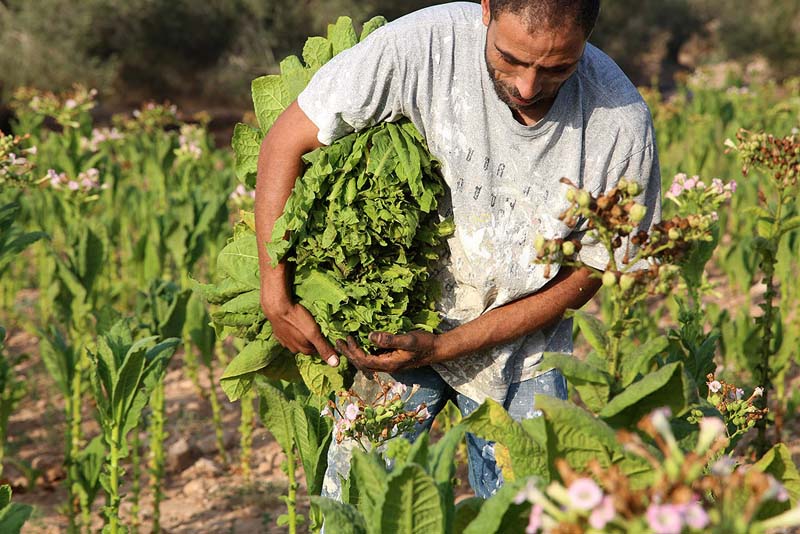
    Tobacco farmers in Migori County, Kenya, are calling on the government to require leaf-buying companies to provide protective equipment, citing health risks linked to tobacco cultivation. Growers from Kuria, Suna West, and Uriri regions say more than 20,000 farmers could benefit from access to basic gear such as gloves, aprons, and masks, which they argue are necessary to reduce exposure to skin and respiratory illnesses associated with handling tobacco.

    Some farmers say they are currently bearing medical costs linked to tobacco-related ailments and accuse companies of not prioritizing worker safety, while also urging stricter enforcement of safety requirements in the sector. Tobacco firms operating in the region, including British American Tobacco and other leaf companies, have said protective gear is provided under existing arrangements or offered on credit, though they acknowledge cost and compliance challenges. The dispute comes alongside broader environmental concerns raised by officials, who warn that tobacco curing practices relying on wood fuel are contributing to deforestation and environmental degradation in parts of the region.

  • Pakistani Tobacco Traders Threaten Company Blocks

    Pakistani Tobacco Traders Threaten Company Blocks

    Tobacco traders in Pakistan’s Khyber Pakhtunkhwa province threatened to block multinational companies from purchasing tobacco leaf if tax-related disputes with federal and provincial authorities are not resolved. At last week’s meeting of the Tobacco Traders’ Association Khyber Pakhtunkhwa in Swabi, representatives from key growing districts warned they would escalate action unless negotiations begin with the government and political stakeholders.

    Traders are demanding restoration of more than 5,000 grower contracts, reinstatement of last year’s procurement quota, and greater intervention by the Pakistan Tobacco Board. They also called for changes to the tax regime, alleging excessive taxation and harassment by enforcement officials.

    The association further urged the removal of Rangers from Green Leaf Threshing centers and broader tax relief for the sector, arguing that reforms are needed to support cultivation and exports.

  • Malawi Tobacco Farmers Facing 91% Rejection Rate

    Malawi Tobacco Farmers Facing 91% Rejection Rate

    Malawi tobacco farmers are raising renewed concerns over extremely high rejection rates for auction burley tobacco during the 2026 marketing season, with some growers reporting rejection levels as high as 91% at the Lilongwe Auction Floors. Farmers claim the system unfairly favors contract tobacco, which moves more smoothly through sales channels, while independent growers face repeated rejections, mounting transport and accommodation costs, and shrinking profitability.

    Parliamentary Agriculture Committee Chairperson Antony Kamoto acknowledged the challenges and called for contract reforms and greater competition among tobacco buyers, while Tobacco Commission Chairperson Reverend Daniel Gunya said authorities are engaging stakeholders to address the issue. Despite the tensions, Malawi has sold about 19.3 million kg of tobacco worth approximately $40.8 million in the first four weeks of the season, with average prices at $2.12 per kg.

  • Zimbabwe Reminds Tobacco Farmers Stalk-Destruction Deadline Passed

    Zimbabwe Reminds Tobacco Farmers Stalk-Destruction Deadline Passed

    Zimbabwe’s Tobacco Industry and Marketing Board reminded growers that the May 15 deadline for destroying all tobacco stalks has passed, urging immediate compliance to prevent the carry-over of pests and aphid-transmitted diseases into the 2026/27 season. Under Statutory Instrument 19 of 2008, farmers must completely uproot and destroy stalks to render plants incapable of regrowth, as part of an annual tobacco-free period designed to break pest and disease life cycles. Failure to comply attracts penalties of up to $100 per hectare for a first offence and $200 per hectare for repeat violations, alongside possible imprisonment. Authorities from the Ministry of Agriculture, Mechanization and Water Resources Development, and plant quarantine teams are conducting field inspections across tobacco-growing provinces as preparations begin for sowing seedbeds from June 1.

    TIMB is also urging farmers to conduct soil testing before planting to optimize fertilizer use, improve leaf quality, and reduce input costs, advising growers to work with laboratories, fertilizer suppliers, and government research departments. Additional compliance dates include no planting before September 1, clearing curing facilities by October 31, and destroying seedbed plants by January 1 each year.

  • Malawi Tobacco Market Rocked by Widespread Rejections

    Malawi Tobacco Market Rocked by Widespread Rejections

    Malawi’s 2026 tobacco marketing season opened with severe disruption, as growers report rejection rates as high as 96–100% at auction floors, driven by a widening gap between global supply and demand, according to The Nyasa Times. Officials say excess production has forced buyers to tighten purchasing volumes and quality standards, leaving many farmers unable to sell their crop, and raising concerns over income loss and loan repayment.

    The Tobacco Commission launched urgent talks with buyers and industry stakeholders to stabilize the market and improve uptake, as the situation threatens broader economic impacts. With tobacco remaining Malawi’s top foreign exchange earner, sustained disruptions could affect national revenue and economic stability if rejection rates persist.

  • Philippines’ NTA Addressing Tobacco Market Pressures

    Philippines’ NTA Addressing Tobacco Market Pressures

    The National Tobacco Administration (NTA) convened stakeholders in Ilocos Norte to address mounting challenges in the tobacco sector, including falling farmgate prices, oversupply, and ongoing smuggling. The meeting brought together local governments, traders, and farmer groups to assess market conditions and explore coordinated responses as global and domestic supply pressures weigh on pricing and demand.

    Officials highlighted a sharp drop in leaf prices—from over ₱100 ($1.60) per kilo to around ₱75 ($1.20)—along with rising production costs and delayed support funding. Farmers also pointed to difficulties in selling uncontracted crops amid excess supply both locally and globally. In response, the NTA is pushing for expanded contract-growing arrangements and crop diversification strategies, while stakeholders are committed to improving coordination and market access to stabilize the sector.

  • Malawi Faces Oversupply as Tobacco Season Opens

    Malawi Faces Oversupply as Tobacco Season Opens

    Malawi’s 2026 tobacco marketing season has opened with a significant supply-demand imbalance, as production is projected at 197 million kg against buyer demand of just 170 million kg, leaving a surplus of about 27 million kg. Early signs at auction floors point to slow uptake, with less than half of delivered bales initially put up for sale, raising concerns over stock build-up.

    Industry participants say the gap reflects weaker global demand and excess supply, with buyers holding greater leverage and some still carrying unsold inventory from the previous season. Major buyers, including JTI Leaf, Alliance One, and Limbe Leaf, are collectively targeting volumes well below expected output, highlighting a shortage of purchasing capacity.

    The imbalance is expected to put downward pressure on prices and farmer incomes, following a similar pattern last year when oversupply led to price declines. With tobacco remaining a key source of export earnings, officials have urged fair pricing, though market conditions remain driven by the excess supply and limited buyer demand.

  • Zimbabwe Assures Farmers Record Tobacco Crop Has Buyers

    Zimbabwe Assures Farmers Record Tobacco Crop Has Buyers

    Zimbabwe’s Tobacco Industry and Marketing Board (TIMB) guaranteed that the country’s projected record tobacco harvest projected to top 400 million kg will be fully absorbed by buyers, easing concerns over a global supply glut. International and domestic merchants have already committed to purchase the bulk of the crop, with authorities aiming to prevent a repeat of market disruptions seen in other producing countries where oversupply led to price collapses.

    Despite strong volumes, global demand has softened following post-pandemic stock rebuilding by cigarette manufacturers, contributing to an estimated 18% drop in prices. However, officials say emerging markets and potential future supply risks could support demand and pricing later in the season.

  • Philippines Warns of Tobacco Oversupply, Moves to Stabilize Market

    Philippines Warns of Tobacco Oversupply, Moves to Stabilize Market

    The Philippines’ National Tobacco Administration raised concerns over a potential oversupply of flue-cured Virginia tobacco as the trading season opens in the Ilocos Region and Abra, after several local government units reportedly encouraged farmers to expand production without formal marketing agreements. Of the country’s 45,000 registered tobacco growers, only 10,000 are covered under the Tobacco Contract Growing System, leaving thousands exposed to uncertain market access and pricing pressure.

    To manage the surplus risk, NTA Administrator Belinda Sanchez is convening meetings with local governments, traders, and farmer leaders, while lobbying manufacturers to prioritize locally grown leaf over imports during the 2026 trading season. The agency says stronger coordination is needed to prevent market gluts that could hurt farmer incomes.

    At the same time, NTA branch offices have been tasked with mediating grading and pricing disputes at trading centers, after reports that some tobacco leaves were being misclassified or rejected. Buying stations run by Universal Leaf Philippines Inc., Trans Manila Inc., and Continental Leaf remain open to receive farmers’ crops across the Ilocos provinces.

  • Pyxus Empowers Growers with New Mobile App

    Pyxus Empowers Growers with New Mobile App

    Pyxus International has launched Pyxus Alliance, a proprietary mobile application aimed at simplifying crop contracting and management for growers. The platform allows growers to self-submit contract-related data, request crop inputs, access essential crop information, and update personal records, all from a single, convenient interface. By reducing reliance on paper documentation and administrative tasks, the app is designed to give growers more time to focus on producing high-quality, sustainable, and compliant crops. According to Pyxus CEO Pieter Sikkel, the app represents an industry milestone as the first digital solution of its kind, streamlining operations while enhancing grower autonomy.

    The app is currently being piloted with select contracted growers in Brazil, where early feedback has been highly positive. Growers like Samuel Krambeck report that the platform has cut the time spent on contracting by roughly 80% compared to previous methods, allowing more focus on crop quality and productivity. Pyxus plans a global rollout following the pilot phase, and the app is now available for participating growers through Google Play and the Apple App Store, marking a significant step toward digitizing agricultural operations and improving efficiency across the company’s global grower network.