Tag: vaping

  • Belfast Considering Vaping Ban

    Belfast Considering Vaping Ban

    Image: muratart | Adobe Stock

    The Belfast Council in Northern Ireland is considering banning anyone under the age of 18 from vaping at its sites and premises around the city, according to Belfast Live.

    UUP John Kyle has forwarded a motion to be debated by the full council next week, calling upon the Belfast City Council to convene a working group with other stakeholders considering measures to strengthen current legislation and enforcement in relation to vaping.

    The motion also calls for a ban on the use of vapes by all individuals under the age of 18 inside all council premises.

    At the recent meeting of the council’s Standards and Business Committee, Kyle said, “Part of the purpose of this motion is that people, particularly parents of young people, are unaware of the dangers of vaping. It has become such a common practice with kids at school.

    “Part of the purpose is to publicize the issue, make people aware of it, so I propose it is aired at full council before going for consideration to the committee to work it through. It would be beneficial if we as a council give some air space to what is a growing public health problem.”

  • First Trial for Juul Youth Marketing Claims

    First Trial for Juul Youth Marketing Claims

    Credit: Mehaniq41

    A trial against Juul Labs and Altria for youth marketing begins today in Minnesota, USA. It is the first state to go to trial against the e-cigarette manufacturer and tobacco company.

    Jury selection in the trial comes more than three years after Minnesota Attorney General Keith Ellison first filed a lawsuit against Juul Labs, reports CARE11.

    “We will prove how Juul and Altria deceived and hooked a generation of Minnesota youth on their products, causing both great harm to the public and great expense to the state to remediate that harm,” said Ellison in a press release.

    Minnesota is the first case to go to trial against Juul since more than a dozen states sued the company beginning in 2019.

    “It’s a pretty significant case,” said David Schultz, a law professor at the University of Minnesota. “The case comes down to two or three basic issues. First, it’s about the claim that Juul marketed to minors. Second, it did nothing in terms of trying to prevent minors from accessing their product. And third, it was about the fact that they did not make appropriate disclosures regarding the health and safety risks surrounding the use of vaping and some of these smokeless tobaccos.”

    The state believes Juul Labs, enabled by Altria, “engaged in consumer fraud, negligence and created a public nuisance.”

    Altria Group exchanged its entire investment in Juul Labs for a nonexclusive, irrevocable global license to certain of Juul’s heated-tobacco intellectual property in early March.

    This isn’t new territory for the state. Minnesota was the first state in the country to successfully sue the tobacco industry and win in the 1990s.

    Earlier this year, a U.S. district judge handed Juul Labs preliminary court approval of a $255 million settlement resolving claims by consumers that it deceptively marketed e-cigarettes, as the company seeks to resolve thousands of lawsuits.

    The company reached a nearly $24 million settlement with the city of Chicago in mid-March.

    Juul and Altria have denied the allegations.

    In court documents from November 2022, the defendants stated, “Minnesota has reaped billions of dollars from tobacco settlements and taxes over the last decade for the purpose of preventing tobacco use and remedying its harms. Yet even after determining that there was an alleged youth vaping problem among Minnesota youth, time and again the state chose to ignore recommended tobacco prevention funding guidelines and instead used these funds to bankroll unrelated projects—like the Minnesota Vikings football stadium.”

  • Reynolds Likely to Prevail in PMTA Lawsuit

    Reynolds Likely to Prevail in PMTA Lawsuit

    When the U.S. Court of Appeals for the 5th Circuit granted a stay to R.J. Reynolds Vapor Co. (RJRV) of the U.S. Food and Drug Administration’s denial of its 150,000-page premarket tobacco product application (PMTA) for its menthol Vuse products, the judges indicated that the court believes RJRV is likely to prevail on the merits when the full review is heard. 

    Tobacco harm reduction expert Clive Bates of Counterfactual said the substantive decision rests on three main arguments, as outlined by the judges granting the stay. The order states: “Specifically, RJRV demonstrates that the FDA failed to reasonably consider the company’s legitimate reliance interests concerning the need for longitudinal studies and marketing plans; failed to consider relevant evidence, inter alia, that youthful users do not like menthol-flavored e-cigarettes; and has created a de facto rule banning all nontobacco-flavored e-cigarettes without following APA notice and comment requirements.”

    The three main points argued by the court are outlined below:

    FDA changed the decision-making criteria after the application.

    1. Legitimate reliance interests

    “The FDA did not reasonably consider RJRV’s legitimate reliance interests before changing its position on the types of comparative studies and marketing plans critical to a compliant and complete PMTA.”

    Failure to consider Reynolds’ arguments adequately 

    2. Failure to consider relevant factors

    The FDA did not adequately address RJRV’s evidence that substantial health benefits would accrue to adult and youth cigarette smokers alike who switched to menthol Vuse while popularity among youth would remain low overall. For example, RJRV’s application contained studies that “switching from smoking to use of menthol Vuse Vibe substantially reduces toxicant exposure in a manner similar to smoking abstinence.” RJRV also submitted evidence of low popularity among youth relative to other flavored electronic nicotine-delivery systems (ENDS).

    Bates stated that at least one portion of the court’s argument looks troubling for Brian King, the newly appointed director of the FDA’s Center for Tobacco Products (CTP).

    “Then in July 2022, a new CTP director appeared on the scene and told OS that ‘the approach to menthol-flavored ENDS should be the same as for other flavored ENDS, i.e., the products could be found [appropriate for the protection of the public health] only if the evidence showed that the benefits of the menthol-flavored ENDS were greater than tobacco-flavored ENDS, which pose lower risk to youth.’ OS then changed its position.”

    FDA has been implementing a de facto tobacco product standard (a flavor ban) without using the rule-making process, public comment, etc. 

    3. “Tobacco product standard”

    RJRV has adduced evidence that the FDA has effectively banned all nontobacco-flavored e-cigarettes pursuant to its new and secret heightened evidentiary standard without affording affected persons any notice or the opportunity for public comment. There is no dispute that the TCA requires the FDA to abide by notice-and-comment rulemaking procedures before establishing a “tobacco product standard.” 8 21 U.S.C. § 387g(c)–(d). Similarly, it is clear that a ban on all but tobacco-flavored e-cigarettes would constitute a “tobacco product standard.” 

    Bates explains that the court justifies its assertion that the FDA is imposing a de facto standard with reference to the so-called “fatal flaw memo.” This was an expedited decision-making regime that stipulated that applications for nontobacco-flavored products must be supported with controlled trials or longitudinal studies showing a quitting or switching advantage over a tobacco flavor. Otherwise, they would be automatically denied. 

    “We conclude that the Fatal Flaw memo’s heightened evidentiary standard ‘bears all the hallmarks’ of a substantive rule. City of Arlington, 668 F.3d at 242. First, the memo is binding on its face by mandating that applications contain ‘the necessary type of studies.’ Second, it has been applied in a way that indicates it is binding; indeed, the subsequent, myriad Denial Orders refer to the same deficiencies identified as ‘fatal’ in the memo. Third, it took away the FDA reviewers’ former discretion to consider individual PMTAs solely on their merits and instead requires a cursory, box-checking review.

    “Finally, it affected the rights of literally hundreds of thousands of applicants whose PMTAs were denied. This is not a close call.”

    Bates stated that the third point the court makes is potentially “very” serious for the FDA and “not a close call,” as the court suggests. “A tobacco product standard under the TCA s.907 means that the burden is on the FDA to show that its de facto standard is appropriate for the protection of public health—e.g., considering the impact of closing down all vape shops, the likely impact on adults or youth who smoke, unintended consequences, illicit trade, etc.,” explains Bates. “It shifts the analysis from the individual applicant (PMTA) to the system-wide impact (Product Standard)—and FDA will find this difficult or impossible to meet, in my view.”

    Taking everything into account, the court weighs up its decision to grant the stay against four criteria, as Bates outlined: 

    “Our judgment is ‘guided by sound legal principles’ that ‘have been distilled into consideration of four factors: (1) whether the stay applicant has made a strong showing that he is likely to succeed on the merits; (2) whether the applicant will be irreparably injured absent a stay; (3) whether issuance of the stay will substantially injure the other parties interested in the proceeding; and (4) where the public interest lies.’”

    Bates stated that the first of these four criteria reflects the courts’ view on the merits discussed in the three above-stated substantive arguments. In the fourth: where the public interest lies, the court gives significant weight to the “highest public importance that federal agencies follow the law” and states: “In sum, ‘there is generally no public interest in the perpetuation of unlawful agency action,’ Texas v. Biden, 10 F.4th at 560. And there is no evidence that ‘Congress’s policy choice’ included an exemption from mandatory federal administrative procedures.”

    No date has been set for the court to complete its full review.

  • FDA Publishes Citizen Petition Webpage

    FDA Publishes Citizen Petition Webpage

    A new webpage was published by the U.S. Food and Drug Administration of all the tobacco products-related citizen petitions received by the agency’s Center for Tobacco Products (CTP).

    A citizen petition is a way for the FDA to give individuals, regulated industry representatives, or consumer groups to petition the agency to issue, amend, revoke a regulation, or take other administrative action. The requirements for a citizen petition are set out in the Code of Federal Regulations.

    As part of CTP’s stated commitment to increase transparency, the webpage was developed to provide the public with more easily accessible and user-friendly information about tobacco product-related citizen petitions submitted to FDA and the center’s responses.

    This webpage was one of the immediate actions toward transparency outlined by CTP Director Brian King in CTP’s Response to the Reagan-Udall Foundation’s report.

  • Vaping Ban Begins in Taiwan

    Vaping Ban Begins in Taiwan

    The National Police Agency confirmed to Taiwan News that police can now issue on-the-spot fines of up to TWD10,000 ($330) to those caught vaping after Taiwan’s legislature passed amendments to Taiwan’s Tobacco Hazards Prevention Act.

    E-cigarette users can either be fined on the spot, or photo and video evidence can be used by the government to send the fines to violators’ registered addresses, similar to fines currently issued for smoking in nonsmoking areas, jaywalking and other minor offenses.

    The fine for vaping is now the same as for smoking in areas designated as nonsmoking, between TWD2,000 and TWD10,000.

    The amendments also increase the legal age for purchasing cigarettes from 18 to 20 and prohibit the sale of e-cigarettes and heated-tobacco products. Importers, manufacturers and sellers can now be fined up to TWD50 million.

  • Hong Kong to Lift Ban on Vape Shipments

    Hong Kong to Lift Ban on Vape Shipments

    The government of Hong Kong has decided to reverse its ban on the transshipment of vapor products, reports Loadstar.

    Media reports claim the banned cargo amounts to about 330,000 tons a year—the equivalent of some 10 percent of Hong Kong’s annual export volumes by air, according to the Hong Kong Association of Freight Forwarding and Logistics.

    The value of the re-export cargo affected by the ban was estimated to exceed CNY120 billion ($17.33 billion).

    While some transshipment by air had continued to be permitted, beginning in April of last year, vapes entering Hong Kong by land or sea for onward transport by air were banned. However, with the bulk of these products made in neighboring Dongguan, exporters were keen to ship them via land to Hong Kong International Airport.

    Once the proposal is passed, the goods will be able to enter Hong Kong through a secure channel on dedicated barges and be delivered straight to the airport.

    “The scheme is only to facilitate direct transshipment through Hong Kong, and the goods will not be available for domestic consumption. The proposal is in response to the demand of the Hong Kong air freight industry,” said Willy Lin, chairman of the Hong Kong Shippers Council.

    “We hope we could get back some flights lost to competitor airports due to [the] stoppage of shipments of e-cigarettes and related substances through Hong Kong.”

  • FDA Denies Marketing Applications for Vuse Menthol

    FDA Denies Marketing Applications for Vuse Menthol

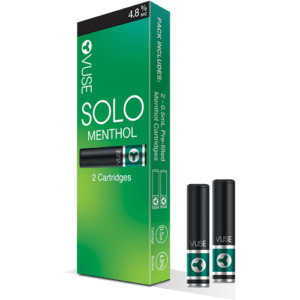
    The U.S. Food and Drug Administration issued marketing denial orders (MDOs) for two menthol e-cigarette products currently marketed by R.J. Reynolds Vapor Company under the Vuse Solo brand.

    Reynolds is expected to challenge the order.

    The currently marketed products include the Vuse Replacement Cartridge Menthol 4.8% G1 and the Vuse Replacement Cartridge Menthol 4.8% G2, according to a statement. The company may resubmit applications or submit new applications to address the deficiencies for the products that are subject to these MDOs. 

    The FDA evaluates premarket tobacco product applications (PMTAs) based on a public health standard that considers the risks and benefits of the product on the population as a whole.

    After reviewing the company’s PMTAs, the FDA determined that the applications lacked sufficient evidence to demonstrate that permitting the marketing of the products would be appropriate for the protection of the public health, which is the applicable standard legally required by the 2009 Family Smoking Prevention and Tobacco Control Act.

    Specifically, the evidence submitted by the applicant did not demonstrate that its menthol-flavored e-cigarettes provide an added benefit for adult smokers relative to tobacco-flavored e-cigarettes.

    In October last year, the FDA issued MDOs for several menthol-flavored vaping products marketed by Logic Technology Development. It was the first time the FDA issued MDOs for menthol products after receiving a scientific review.

    A few days after the order was issued, Logic obtained a court order from the U.S. Circuit Court of Appeals for the 3rd Circuit that temporarily stayed the order.

    The case continues.

  • Experts Address Health Professionals on Vaping

    Experts Address Health Professionals on Vaping

    Image: Maren Winter | Adobe Stock

    Three experts from King’s College London and the public health charity Action on Smoking and Health recently addressed health professionals, seeking to dispel what they describe as “myths about e-cigarettes and vaping,” according to the Independent European Vaping Alliance (IEVA).

    “E-cigarettes (vapes) are currently the most popular aid used to quit smoking in England and are used by around 4.3 million adults in Great Britain, the majority of whom are ex-smokers,” the authors stated, emphasizing that “… vaping poses only a small fraction of the health risks of smoking and that smokers should be encouraged to use vaping products … for stopping.” The experts fear that myths about vaping “risk undermining the use of these products as cessation aids.”

    “The facts about harm reduction are on the table,” said Dustin Dahlmann, president of the IEVA. “If many more smokers who cannot quit by other means were to switch to e-cigarettes, millions of people worldwide could live better and longer lives. Health policy in the U.K. should be a shining example to all policymakers.”

  • FDA Proposes New Rules for Manufacturing

    FDA Proposes New Rules for Manufacturing

    Photo: Tobacco Reporter archive

    The U.S. Food and Drug Administration is proposing new requirements for tobacco product manufacturers regarding the manufacture, design, packing and storage of all tobacco products.

    The proposed requirements would help protect public health by, among other things, minimizing or preventing contamination and limiting additional risks by ensuring product consistency, according to an FDA statement.

    “While no tobacco product is safe, this proposed rule is intended to minimize or prevent additional risks associated with these products,”

    Brian King / Credit: FDA

    said Brian King, director of the FDA’s Center for Tobacco Products. “Once finalized, it would establish requirements for tobacco product manufacturers that will help protect public health.”

    The proposed new requirements would help manufacturers comply with the Federal Food, Drug, and Cosmetic Act by helping minimize or prevent the manufacture and distribution of tobacco products contaminated with foreign substances—such as metal, glass, and plastics—which have been found in tobacco products. T

    The proposed rule would also help address issues related to inconsistencies between e-liquid product labeling and the actual concentrations in e-liquids, “Such variability can be misleading to consumers, potentially intensifying addiction and exposure to toxins,” the agency states.

    The proposed rule would also establish several requirements related to the identification, tracing and corrective actions for tobacco products that don’t meet specifications or are contaminated, including for tobacco products that have already been distributed.

    In the event of an issue, these requirements would require manufacturers to take corrective actions, which may include conducting a recall.

    The proposed requirements apply to manufacturers of finished and bulk vaping and other tobacco products. As laid out in the proposed rule, a finished tobacco product is a tobacco product, including any component or part, sealed in final packaging; for example, an e-cigarette, a pack of cigarettes or a can of moist snuff.

    A bulk tobacco product is a tobacco product that isn’t sealed in final packaging, but is otherwise suitable for consumer use. 

    The proposed rule establishes a framework for manufacturers to adhere to, including: 

    • establishing tobacco product design and development controls;
    • ensuring that finished and bulk tobacco products are manufactured according to established specifications; 
    • minimizing the manufacture and distribution of tobacco products that don’t meet specifications;
    • requiring manufacturers to take appropriate measures to prevent contamination of tobacco products; 
    • requiring investigation and identification of products that don’t meet specifications to institute appropriate corrective actions, such as a recall; and
    • establishing the ability to trace all components or parts, ingredients, additives and materials, as well as each batch of finished or bulk tobacco product, to aid in investigations of those that don’t meet specifications

    The FDA will hold a public oral hearing on April 12 to gather additional comments from stakeholders, including industry, the scientific community, advocacy groups, and the public.

    The proposed rule also will be available for public comment for 180 days. The agency will review all comments as part of the rulemaking process for this foundational rule.

    “We remain committed to transparency and stakeholder engagement, including providing clarity to industry so that they are equipped to comply with the law,” said King. “We encourage all interested individuals and organizations to participate in the rulemaking process. When the public submits a comment based on sound grounds, that can make an important difference in the agency’s decision-making.”    

    The FDA will also hold a meeting of the Tobacco Products Scientific Advisory Committee (TPSAC) on May 18 to seek recommendations from the agency’s outside panel of experts on the requirements laid out in the proposed rule. As part of the TPSAC meeting, the public will have an opportunity to make oral presentations. The FDA intends to make TPSAC meeting materials available on its website no later than 48 hours before the meeting. 

  • Zinwi to Unveil New Logo at TPE Show

    Zinwi to Unveil New Logo at TPE Show

    E-Liquid manufacturer Zinwi Bio-Tech is set to unveil its new logo at the Total Products Expo (TPE) in Las Vegas from Feb. 22 – 24. The company will also be highlighting 15 of its most popular e-liquid flavors for TPE attendees to experience. 

    Zinwi, a global integrated e-liquid solutions provider, upgraded its branding in December to better reflect the company’s dedication to providing high-quality products and the brand’s entry into a new development phase.

    “In this new phase, Zinwi will place more emphasis on product research and development, and provide diversified products to meet the needs of global markets,” a Zinwi spokesperson told Tobacco Reporter. “Zinwi is committed to continuing to explore e-liquid technology, pursue innovation and provide cutting-edge integrated e-liquid solutions.”

    Zinwi’s new logo resembles a drop of e-liquid oil, which alludes to the company’s unwavering commitment to product research and development. The Zinwi “Z” and oil design are integrated to symbolize the company’s dedication to continuous product research and development, according to a press release. The light blue color of the logo features Zinwi’s laboratories that conduct its scientific product research and development in the background.

    Currently, new nicotine salt and glycerol alternatives are two major topics of research for Zinwi. The company’s product research and development team has produced a new nicotine salt that has distinct advantages compared with the traditional benzoic acid nicotine salt.

    “This new innovation brings with it a significant reduction in the number of impurities released. Zinwi is also in the process of researching and developing glycerol alternatives,” the spokesperson said. “The research and development of glycerol alternatives is an effort to reduce the toxins released during atomization and to allow the products to be more environmentally friendly.”

    The 15 e-liquid products Zinwi is set to showcase at TPE include five tobacco flavors and 10 non-tobacco flavors. They are Zinwi’s best-selling flavors and have been widely recognized by the company’s global client base. One of the flavors, Caramel Tobacco, has a distinctive caramel flavor along with a mild tobacco accent.

    In order to allow the show attendees to experience the different flavors, Zinwi will provide disposable vaping devices pre-filled with the Zinwi e-liquids in the 15 flavor profiles. “Trade show attendees will be able to try out the different flavors in different devices with a variety of settings, enabling them to reach the optimal puff experience,” the spokesperson said.