Tag: WHO

  • EU Abstains from COP11 Vote Amid Internal Disagreements

    EU Abstains from COP11 Vote Amid Internal Disagreements

    “The European Union will not participate in a vote on a revised treaty at the WHO Framework Convention on Tobacco Control (COP11) in Geneva,” Brussels Signal reported today (November 17), highlighting deep divisions among member states over tobacco policy. Internal EU disagreements pit “progressive” countries that support stricter measures like flavor bans and plain packaging against more cautious states that advocate for harm-reduction tools and consumer choice. Attempts to reach a consensus under the Danish Presidency of the Council of the EU reportedly failed, despite a proposed compromise, the article said.

    The abstention has sparked mixed reactions. Public health advocacy groups expressed concern that a weakened EU position could embolden tobacco industry tactics, while harm-reduction proponents, including the World Vapers Alliance, welcomed the outcome as preserving space for evidence-based policies. Analysts warn that overly broad restrictions could drive consumers back to combustible cigarettes or underground markets, undermining public health gains.

  • ITGA Marks 20 Years of Advocacy at WHO FCTC, Calls for Grower Inclusion

    ITGA Marks 20 Years of Advocacy at WHO FCTC, Calls for Grower Inclusion

    The International Tobacco Growers’ Association (ITGA) reaffirmed its commitment to representing millions of tobacco growers worldwide as the WHO Framework Convention on Tobacco Control (FCTC) celebrates its 20th anniversary. In a statement, the organization said that for two decades, ITGA has engaged in the FCTC process, emphasizing the social and economic impacts of tobacco control policies on growers. The organization participated in the FCTC’s first public hearing and has attended every Conference of the Parties (COP), advocating for transparency and the inclusion of growers’ voices.

    As COP11 convenes, ITGA calls for continued dialogue, evidence-based policymaking, and policies that consider the livelihoods of families dependent on tobacco cultivation.

  • Philippines: Tobacco Farmers Warn of Livelihoods Threatened by WHO 

    Philippines: Tobacco Farmers Warn of Livelihoods Threatened by WHO 

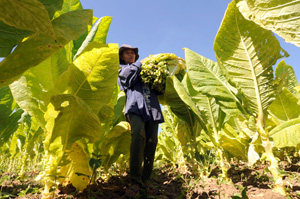
    Filipino tobacco farmers are voicing strong concern ahead of the World Health Organization (WHO) Framework Convention on Tobacco Control (FCTC) COP11, warning that proposed measures under Agenda Item 4.1 could devastate rural livelihoods and the wider tobacco economy. The Philippine Tobacco Growers Association (PTGA), representing 50,000 farmers, said the recommendations — including ending government support for tobacco cultivation, restricting profits, and imposing manufacturing and import quotas — could “destroy farms and entire communities.” The sector supports more than 2.1 million workers, according to the National Tobacco Administration.

    PTGA President Saturnino Distor urged COP delegates to balance public health goals with economic realities, highlighting the role of the Sustainable Tobacco Enhancement Program (STEP) in promoting sustainable cultivation and linking local production to the demand for reduced-risk alternatives such as vapes and e-cigarettes.

    Farmers also cited challenges from illicit trade and declining local demand, with 80% of Philippine tobacco output now exported. Distor called on policymakers to reject prohibitionist measures and instead pursue “practical, harm-reduction-based solutions,” noting the successes seen in the UK, Japan, and Sweden through regulated smoke-free products.

  • Tobacco Industry Interference List Released

    Tobacco Industry Interference List Released

    The Global Tobacco Industry Interference Index released the results of its bi-annual survey today (November 11), ranking governments based on how they respond “to tobacco industry interference and protect public health policies from commercial and vested interests as required under the World Health Organization Framework Convention on Tobacco Control.”

    The report was initiated as a regional index by the Southeast Asia Tobacco Control Alliance (SEATCA) in 2014. It ranks countries based on their response to a 20-question survey, covering seven indicators of industry interference, including: the industry’s participation in policy development; tobacco industry-related corporate social responsibility activities; benefits given to the tobacco industry; unnecessary interaction between government and industry; measures for transparency; preventing conflicts of interest; and measures that prevent industry influence.

    The top-10 countries based on the criteria were Brunei Darussalam, Palau, Botswana, Netherlands, Finland, Ethiopia, Iran, Burkina Faso, Maldives, and Uganda and Norway tied for 10th. The bottom 10 were Colombia, Malawi, Indonesia, Zambia, Romania, Japan, Georgia, the United States, Switzerland, and the Dominican Republic.

    One of the biggest fallers on the list was New Zealand, which dropped from No. 2 in 2023 to No. 53 in 2025. Tobacco Reporter will have more analysis and reactions from the list later this week.

    Find the full list here.

  • CAPHRA Calls on Philippines to Champion Consumers at COP11 

    CAPHRA Calls on Philippines to Champion Consumers at COP11 

    The Coalition of Asia Pacific Tobacco Harm Reduction Advocates (CAPHRA) appealed to the Philippines’ Department of Health (DOH) to represent Filipino consumers at the 11th Conference of the Parties (COP11) to the WHO Framework Convention on Tobacco Control (FCTC), scheduled to begin November 17 in Geneva. In a letter to Health Secretary Teodoro J. Herbosa, CAPHRA said consumers have been excluded from FCTC discussions for 20 years. Philippine representative Clarisse Virgino stressed that millions of Filipinos have shifted from smoking to regulated alternatives such as vapes and heated tobacco, demonstrating that harm reduction works.

    CAPHRA pointed to the Vaporized Nicotine and Non-Nicotine Products Regulation Act, enacted in 2022, as a model for risk-proportionate, science-based regulation. The group urged the DOH to recognize harm reduction as a public health pillar, share Filipino consumers’ success stories with COP11 delegates, and advocate for greater consumer and scientific participation in global tobacco policy.

    Virgino said the Philippines could show regional leadership by promoting inclusive, evidence-based policies as several Asia-Pacific nations, including Thailand, Malaysia, and Singapore, tighten vaping regulations.

  • WHO’s Tobacco Targeting Threatens Zimbabwe’s Economy

    WHO’s Tobacco Targeting Threatens Zimbabwe’s Economy

    Zimbabwe’s multi-billion-dollar tobacco industry is confronting a potential crisis as the World Health Organization (WHO) considers pushing for tighter global controls—and potentially a ban on tobacco production—over alleged child labor, environmental harm, and concentration of market power in financing, according to Bulawayo. If enforced, the measures could devastate Zimbabwe’s economy. Tobacco is the country’s fourth-largest foreign currency earner after gold, platinum, and remittances, generating $1.2 billion in 2025 and supporting more than 135,000 growers.

    Agriculture Minister Dr. Anxious Masuka said the WHO Framework Convention on Tobacco Control (FCTC) and other anti-tobacco forums were intensifying efforts to discourage production in developing countries. He said such measures would not only devastate economies like Zimbabwe’s but also deepen poverty among farmers who depend on the crop. At a recent T5 Meeting in Harare, attended by regional producers including Tanzania, Malawi, Mozambique, and Zambia, Masuka warned that anti-tobacco efforts under the FCTC threaten livelihoods and national stability. He argued that tobacco remains a legal crop and an adult-choice product, and that attempts to criminalize its production were unjustified.

    Masuka said the Tobacco Value Chain Transformation Plan—which aims to raise output to 500 million kg by 2030, increase local financing, and promote value addition—will strengthen sustainability while diversifying farmer incomes. Zimbabwe achieved a record 355 million kg harvest last season, its highest ever. However, analysts warn that if the WHO proceeds with restrictions or trade barriers, the country could face severe economic fallout, threatening export revenues and rural livelihoods amid existing inflation and drought pressures.

  • Vapers’ Alliance Challenges WHO Ahead of COP11

    Vapers’ Alliance Challenges WHO Ahead of COP11

    As the World Health Organization’s COP11 tobacco-control conference approaches, the World Vapers’ Alliance (WVA) is calling for consumers to be heard, projecting messages onto the venue demanding inclusion in policy discussions. WVA Director Michael Landl criticized the event as “an echo chamber stuck in outdated, anti-science thinking.”

    “Harm reduction isn’t a marketing ploy, it’s a public health necessity supported by hard data,” Landl said. “Consumers’ lives matter more than ideology or the views of wealthy WHO donors like Michael Bloomberg. It’s time consumers got a real seat at the table.”

    The group warned that WHO proposals to ban flavored vaping, cap nicotine levels, and raise taxes ignore scientific evidence that vaping and nicotine pouches are less harmful alternatives for smokers. WVA’s Liza Katsiashvili cautioned that bans and high taxes would only drive consumers to cigarettes or black markets, urging delegates to “listen to the facts, not ideology.” The WVA’s “Voices Unheard – Consumers Matter” campaign calls for governments to prioritize evidence-based regulation and give consumers a voice in global tobacco policy.

  • War on Tobacco or Assault on National Power?: Editorial

    War on Tobacco or Assault on National Power?: Editorial

    “In Brussels, they talk of ‘regulatory simplification,’ yet in international forums, they negotiate new layers of global bureaucracy, from tobacco to digital health and climate governance,” wrote analyst Javier Villamor in an article for The European Conservative. “But beyond the sanitary or environmental narrative, the plan represents a new attempt by Brussels to concentrate fiscal and regulatory powers at the expense of the Member States.”

    Villamor argues that as the European Union sidles up to the World Health Organization with its upcoming tobacco control conference (COP11), the actual purpose is to transfer regulatory power from national governments to international agencies without democratic oversight, as Brussels plans to automatically incorporate WHO-aligned measures into EU law.

    “What appears to be a technical step is, in reality, the transfer of Europe’s regulatory sovereignty to an international agency with no democratic legitimacy,” Villamor wrote. “Brussels not only intends to sign commitments on behalf of the Member States but also to incorporate them automatically into EU law through the forthcoming revision of the Tobacco Products Directive.

    “In practice, this would mean that decisions taken in Geneva offices could become binding bans in Madrid, Rome, or Warsaw—without parliamentary debate or national impact assessment.”

    As Brussels considers restrictions, bans, and taxes on virtually every product containing tobacco or nicotine, framing it all as a public health and environmental initiative, the plan includes fiscal measures under the Tobacco Excise Directive (TED) and Tobacco Excise Duty on Raw Tobacco (TEDOR), enabling the EU to directly collect up to 15% of national excise revenues and impose duty hikes of up to 900% on certain products. Observers, Villamor says, warn that such moves centralize authority, undermine the principle of subsidiarity, and risk harming over 80,000 European tobacco producers and small retailers, while benefiting third countries like Morocco and China.

    “The so-called ‘anti-tobacco crusade’ becomes a vehicle for recentralizing authority and financing the EU’s bureaucratic machinery under the guise of public health,” Villamor wrote. “The mechanism is well known: Brussels funds these organizations, they in turn demand that EU law be aligned with the WHO, and the Commission presents their demands as a ‘civil society consensus.’ A closed feedback loop of influence, where citizens pay to lose sovereignty.

    “Paradoxically, the countries with the best results in reducing smoking, such as Sweden, which has cut its rate to 5% thanks to regulated alternatives like snus and nicotine pouches, would be penalized for adopting effective national policies outside the WHO’s dogma.”

  • ITGA Demands Inclusion Ahead of WHO COP11

    ITGA Demands Inclusion Ahead of WHO COP11

    On World Tobacco Growers’ Day, global tobacco farmers raised concerns over their continued exclusion from international policymaking, calling for transparency and inclusion ahead of next month’s WHO Framework Convention on Tobacco Control (FCTC) Conference of the Parties (COP11) in Geneva. International Tobacco Growers’ Association president José Javier Aranda sent a letter saying the FCTC process has become increasingly opaque, with decisions made behind closed doors and little agricultural representation—fewer than 5% of delegates have expertise in farming. He warned that measures discussed at COP11 could impact millions of livelihoods across tobacco-producing nations.

    “We understand the concerns about the negative impact of tobacco consumption, and we support policies that are genuinely aimed at reducing harm,” Aranda said. “But what we cannot understand is why tobacco growers and their representatives are given such a fundamentally different treatment compared to other sectors.

    “As representatives of tobacco growers, we cannot remain silent. We raise our voice today to condemn this misconduct of the WHO FCTC Secretariat. Our governments must stand with us. I have already sent a letter to the WHO and the WHO FCTC, calling for transparency and inclusion. We expect to be heard.”

  • Nigeria Health Advocates Push for 50% Tobacco Tax

    Nigeria Health Advocates Push for 50% Tobacco Tax

    Health stakeholders and tobacco control advocates at the Gatefield Health Summit 2025 urged the Nigerian government to raise tobacco taxes to 50% of the retail price, citing the measure as a key tool to reduce smoking, prevent related illnesses, and protect public health. Experts highlighted that Nigeria’s current tax level of about 25% falls well below the World Health Organization’s recommended 75% of retail price.

    Michael Olaniyan, Country Representative for the Campaign for Tobacco-Free Kids, claimed that higher taxes are effective in deterring youth smoking, while Chibuike Nwokorem of the Nigeria Tobacco Control Alliance criticized tobacco companies for exploiting weak enforcement mechanisms and influencing policy decisions through industry associations.