Tag: WHO

  • BAT’s Wheaton Calls for Policymakers to Embrace Harm Reduction at GTNF Opening

    BAT’s Wheaton Calls for Policymakers to Embrace Harm Reduction at GTNF Opening

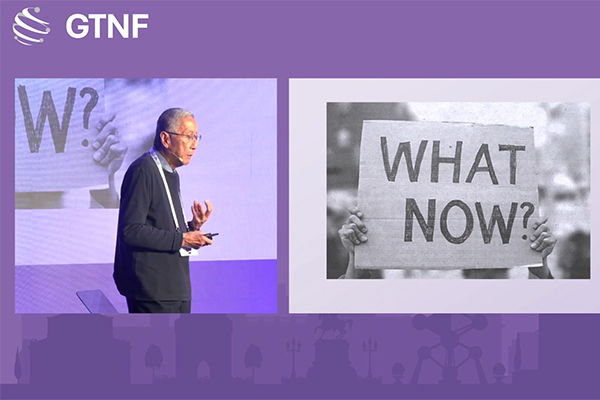
    Brussels, October 6, 2025 — Kingsley Wheaton, Chief Corporate Officer of BAT, opened the Global Tobacco and Nicotine Forum (GTNF) with a call for policymakers to embrace harm reduction and real-world evidence as the basis for future regulation.

    “Right now, we stand at a crossroads,” Wheaton said. “One where the choices we make — as individuals, as companies, and as an industry — will shape the future of public health, policy, and perception.”

    Speaking under the GTNF’s theme, “Real World Evidence: The Race to Reduce Harm,” Wheaton argued that Sweden’s near smoke-free status demonstrates the effectiveness of tobacco harm reduction. He credited awareness campaigns, consumer access to smokeless products, and progressive regulation for driving smoking rates to among Europe’s lowest.

    “Sweden is on the verge of achieving something extraordinary: a smoking rate of just 5.3%—less than a quarter of the EU average,” he said. “This isn’t just a number. It’s a public health milestone. And it’s a powerful validation of a strategy that many dismissed: harm reduction.

    “Despite decades of global anti-smoking campaigns, 1 billion people still smoke. At BAT, we believe quitting is the best choice any smoker can make. But for those who won’t quit, offering scientifically substantiated, reduced-risk alternatives is essential. Sweden proves this approach works.”

    In his remarks, Wheaton touted the success of BAT’s Omni program, the company’s global platform and manifesto for tobacco harm reduction launched in 2024. He said Omni is both a movement and a communications framework through which BAT promotes its vision of a “Smokeless World,” aiming to make smokeless products mainstream and push for regulatory environments that support harm reduction.

    “With Omni, we’re launching a platform for science, dialogue, and collaboration to accelerate progress toward a smokeless world,” Wheaton said. “This transformation took belief—belief that we could be part of the solution. And today, I’m proud to say: we were right to believe in it.

    Wheaton also criticized prohibitionist policies, pointing to Australia’s illicit market as evidence of unintended consequences when safer alternatives are restricted. He urged EU policymakers to adopt proportionate, risk-based regulation that recognizes harm reduction as part of tobacco control.

    “How can policymakers not see what’s right in front of their eyes?” Wheaton said. “When safer alternatives are blocked, the void is filled by danger, not progress. It’s time to rethink, recalibrate, and reclaim the narrative. So perhaps it’s time to ask: What if the most effective way to end smoking isn’t to fight nicotine, but to reimagine it? What if the companies that once sold cigarettes can now lead the charge to make them obsolete?

    “The WHO continues to ignore and sideline harm reduction, clinging to outdated dogma while real-world evidence piles up. This is not just intransigence, it’s negligence. It’s time for policymakers to stop pretending this evidence doesn’t exist. Seventy percent of policy experts still believe nicotine is the primary cause of smoking-related diseases, like cancer. That’s not just inaccurate, it’s dangerous. If we’re serious about closing the Tobacco Harm Reduction deficit, we must engage directly with regulators, health authorities, and policy experts to ensure that safer alternatives are not just available, but understood, accepted, and encouraged.”

    The GTNF is the world’s leading annual conference discussing the future of the tobacco and nicotine industries. It is the global exchange for views and ideas between public health experts, government representatives, the industry, and investors.


  • What Role Does the FCTC Play in Today’s Regulatory Environment?

    What Role Does the FCTC Play in Today’s Regulatory Environment?

    At the Global Tobacco and Nicotine Forum (GTNF) in Brussels, an expert panel explored the growing disconnect between the World Health Organization’s Framework Convention on Tobacco Control (FCTC) and real-world tobacco harm reduction (THR) progress. The session featured Dr. Derek Yach, global health advocate and former WHO executive; Peter Beckett, Co-Founder of Clearing the Air; Dr. Tikki Pang, a professor and former WHO Director of Research Policy and Cooperation; and Dr. Christopher Snowdon, Head of Lifestyle Economics at the Institute of Economic Affairs.

    Yach opened the discussion by criticizing the gap between FCTC policymaking and on-the-ground data. He noted that smoking rates are falling faster in countries embracing harm reduction — such as the U.S., U.K., Japan, South Korea, and New Zealand — than under traditional tobacco control strategies. “If it can happen in Pakistan, it can happen in all of Southeast Asia,” he said. “And if it happens in Southeast Asia, we could be seeing oral cancer in the rearview mirror.” Yach emphasized the need for collaborative public–private partnerships to ensure product safety and credibility, while urging policymakers to move beyond what he called the “distraction” of youth-related arguments that ignore the millions of adult smokers seeking alternatives.

    “It’s not that youth use isn’t important, but putting all the attention on kids doesn’t help for 50 years,” he said. “What about their parents? We could be adding years to their lives right now. [Anti-THR people] just use the youth as a way to divide the argument. We need to shift to the data and take the kid issue off the table.”

    Beckett took a blunt tone, arguing that the FCTC framework is obsolete, exclusive, and lacking transparency. He said the WHO’s current approach alienates the public and damages its credibility, calling the situation “chaotic,” which makes it easier for harm-reduction advocates to push back on. Beckett urged reform-minded countries — especially WHO funders — to “recognize the world as it is” and resist “bullying by overpaid foundations with an agenda,” and accused prohibitionist groups of crossing the line.

    “Ten years ago, they were disingenuous; now they’re straight-up lying,” he said. “I keep hearing the same damn thing. ‘We need to engage with science, we need to be nice to the other side.’ I’m calling bullshit on that. It doesn’t work. There is no amount of science that will do the job. If there was, they’d let me in the bloody room when they have these conversations. We have to recognize this and say enough, and call for a tearing down of the framework in its entirety, because it’s not salvageable.”

    Pang reiterated that many developing countries adopt WHO guidance without generating or analyzing their own data. “They take the easy way out,” he said, “because they lack the capacity to build evidence locally.” Pang pointed to emerging “pockets of positive thinking” among countries that are now re-evaluating WHO recommendations and embracing THR. He called for greater industry unity — across state-owned, multinational, and startup sectors — and stronger alignment with consumer voices. “Consumers are also voters,” he reminded the audience, “and together they can influence policy.”

    Snowdon warned of troubling developments within the WHO, citing “endgame” proposals that reject harm reduction as an industry “con.” He described this as a “quasi-religious mission to destroy all tobacco,” resistant to evidence and reason. Snowdon noted that while grassroots THR advocacy exists, it ironically remains underfunded and overshadowed by well-resourced opposition.

    “We are greatly out-financed. The industry can contribute, but then we get ostracized,” he said. “We have a genuine grassroots movement, but these people have lives to live. They can’t be doing it all the time. Meanwhile, the other side has unlimited resources. The media could be helpful, but they don’t want to risk it.”

    Across the panel, a consensus emerged: the WHO’s FCTC framework risks irrelevance unless it adapts to include harm reduction. Participants agreed that the future of global health policy must be driven by data, innovation, and collaboration rather than ideology.

    The GTNF is the world’s leading annual conference discussing the future of the tobacco and nicotine industries. It is the global exchange for views and ideas between public health experts, government representatives, the industry, and investors.

  • NYT Claims Industry Influence Weakened WHO Declaration

    The New York Times published an article yesterday (September 24) highlighting how the World Health Organization’s final declaration on chronic diseases has been weakened compared to earlier drafts, and attributes those changes to corporate lobbying from tobacco, alcohol, and beverage companies.

    “Gone was the language calling for graphic health warnings on cigarette packs,” the article says. “Gone, too, were the recommendations for so-called health taxes to discourage smoking and the consumption of alcohol and sugar-sweetened drinks. The final document contains no mention of sugary beverages, a key culprit in the rising rates of childhood obesity that affects 35 million children under 5 years old.”

    Catherine Egbe, a senior scientist at the South African Medical Research Council, attributes the removal of plain packaging and graphic health warnings is due partly to industry opposition.

    When the language is strong and watertight, it helps countries do better,” she said. “But when the language is weak, it sends the message that ‘you can do what you want’ and leaves vulnerable populations at the mercy of industry.”

  • CAPHRA Slams WHO Over Barriers to COP11 Participation

    CAPHRA Slams WHO Over Barriers to COP11 Participation

    The Coalition of Asia Pacific Tobacco Harm Reduction Advocates (CAPHRA) criticized the World Health Organization’s Framework Convention on Tobacco Control (WHO FCTC) for imposing what it calls “insane” registration requirements for the upcoming COP11 in Geneva. Executive Coordinator Nancy Loucas said the late opening of registration, coupled with onerous demands for personal documentation, a letter of intent, a full CV, and a declaration of zero tobacco funding, is deliberately designed to exclude consumer advocacy groups and harm reduction voices. Despite the FCTC being in place for two decades, not a single consumer group has ever been granted observer status, while only 26 NGOs have been approved overall, far fewer than in comparable UN forums such as climate negotiations.

    CAPHRA said the WHO’s restrictive interpretation of Article 5.3 has been weaponized to silence stakeholders, including people who smoke or use safer nicotine products. Proceedings remain closed to the media and the public, with no live streaming or meaningful transparency, a practice Loucas calls fundamentally undemocratic. CAPHRA is urging reform to allow full and fair participation, stressing that genuine tobacco harm reduction requires including the very consumers most affected by global policy decisions.

  • WHO Report Links Tobacco Use to Child Stunting

    WHO Report Links Tobacco Use to Child Stunting

    The World Health Organization (WHO) published a new report warning that tobacco use plays a significant role in child stunting, a condition that affects nearly 150 million children worldwide, particularly in Africa and Asia. Stunting increases the risk of disease, delayed development, and early death. The document, the 11th in WHO’s tobacco knowledge summary series, is aimed at health professionals, policymakers, and public health advocates.

    WHO said that maternal smoking during pregnancy is strongly linked to preterm birth, low birth weight, and restricted fetal growth, all major predictors of stunting by age 2. Children exposed to second-hand smoke are also at higher risk, it said, with evidence showing that the harm intensifies with the level of exposure. By contrast, quitting smoking during pregnancy improves growth outcomes, reducing the risk of stunting.

    The organization is urging governments to strengthen tobacco control policies in line with the WHO Framework Convention on Tobacco Control (FCTC) and MPOWER measures. WHO stressed that reducing tobacco exposure is critical to improving survival, growth, and development, and to achieving global health goals.

  • CAPHRA Challenges WHO’s Tobacco Control Approach

    CAPHRA Challenges WHO’s Tobacco Control Approach

    A new Shadow Report from the Coalition of Asia Pacific Tobacco Harm Reduction Advocates (CAPHRA) criticizes the World Health Organization’s (WHO) global tobacco control strategy for neglecting harm reduction — a key component of the WHO’s own Framework Convention on Tobacco Control (FCTC). CAPHRA’s report argues that countries strictly following WHO’s MPOWER measures, like Thailand and India, have seen only limited declines in smoking, while nations adopting harm reduction tools, such as vaping, have achieved greater success. It cites the UK, Japan, New Zealand, and Canada as leading examples.

    With over 1 billion smokers worldwide, CAPHRA calls for “practical, science-based solutions” to replace abstinence-only approaches. The group also condemns the exclusion of harm reduction advocates from policy discussions under FCTC Article 5.3.

    “This is a call to action,” the report states. “We must replace moralistic dogma with practical solutions. It is time to make smoking — the deadliest form of tobacco use — public enemy No. 1, and to deploy harm reduction as a frontline strategy.”

  • Uganda Ups Cigarette Taxes

    Uganda Ups Cigarette Taxes

    Uganda increased excise duties on cigarettes, raising taxes on soft cap products from Shs 55,000 ($15.40) to Shs 65,000 ($18.20) per 1,000 sticks, and on hinge lid cigarettes from Shs 80,000 ($22.40) to Shs 90,000 ($25.20). For non-East African Community imports, the rates doubled to Shs 150,000 ($42) and Shs 200,000 ($56), respectively.

    The tax hike came just before the announcement of the World Health Organization’s “3 by 35” initiative, where it urged all nations to increase real prices on tobacco, alcohol, and sugary drinks by at least 50% by 2035 to combat rising rates of noncommunicable diseas-es such as cancer, diabetes, and heart disease.

    Uganda’s Ministry of Finance said its move aims to reduce tobacco consumption, protect public health, and raise revenue for healthcare and development.

  • EU Trying to Stop “Tobacco Tourism”

    EU Trying to Stop “Tobacco Tourism”

    As the European Commission considers sweeping tobacco tax reform aimed at narrowing price gaps across the continent, high-income countries like Luxembourg would be hit hardest, RTL Today, Luxembourg’s main television channel, reported. The reform would be meant to deliver a major blow to “tobacco tourism.”

    Most of Luxembourg’s €1.4 billion in 2024 tobacco tax revenue came from foreign buyers, with less than 5% of the tobacco sold in the nation consumed locally. Currently, packs of cigarettes in Luxembourg cost less than €6, far below prices in neighboring France (€13) and the Netherlands (€10), attracting cross-border shoppers and smugglers.

    Though not yet formalized, the WHO’s calls for price hikes on harmful products by 2035 would raise Luxembourg’s prices €3.50 per pack of cigarettes, or 60%. RTL Today said Luxembourg’s Finance Ministry is monitoring the situation.

  • WHO Wants Pakistan to Raise Cigarette Taxes

    WHO Wants Pakistan to Raise Cigarette Taxes

    The World Health Organization (WHO) criticized Pakistan’s Federal Cabinet’s decision to keep its Federal Excise Duty (FED) on cigarettes unchanged in the 2025–26 budget, saying it will likely boost consumption and undermine public health. According to a WHO analysis, FED rates haven’t increased since February 2023, while inflation has surged 26%, resulting in declining real prices and even greater affordability.

    For fiscal year 2024–25, WHO estimated cigarette production in Pakistan reached 37 billion sticks, generating Rs 208 billion ($728 million) in FED revenue. With excise duty unchanged, cigarette output is projected to rise to 38 billion sticks in 2025–26, yielding Rs 217.6 billion ($762 million) in revenue.

    WHO says a Rs 39 ($0.14) per pack FED increase would reduce smoking by 10.7%, lower production to approximately 34 billion sticks, and increase revenues by 20.9%.

  • WCTC Gets Protestors Wanting Input

    WCTC Gets Protestors Wanting Input

    On the opening day of the World Conference on Tobacco Control (WCTC) in Dublin, the World Vapers’ Alliance staged a silent protest outside the venue, visually highlighting the exclusion of consumers from global tobacco and nicotine policy debates. Demonstrators with their mouths taped symbolized the ongoing marginalization of those most affected by regulatory decisions.

    The protest is part of the “Voices Unheard—Consumers Matter!” campaign, launched as delegates gathered inside to discuss the future of tobacco control without meaningful input from the consumers who are most impacted by these policies.

    Michael Landl, Director of the World Vapers’ Alliance, said outdated, ideologically driven policies, often influenced by powerful interests like Michael Bloomberg, threaten to reverse progress in reducing smoking rates. “Safer nicotine alternatives have the potential to save millions of lives, but only if they are supported by sensible, evidence-based regulation. We cannot afford to let ideology stand in the way of real progress,” he said.

    The campaign comes at a time when the World Health Organization is pushing for sweeping bans on flavored nicotine products, including e-cigarettes and nicotine pouches. Such measures would remove vital tools from adults seeking to quit smoking and could drive many back to combustible tobacco.