Tag: Zimbabwe

  • The Global Tobacco Industry is Solving The Wrong Problem

    The Global Tobacco Industry is Solving The Wrong Problem

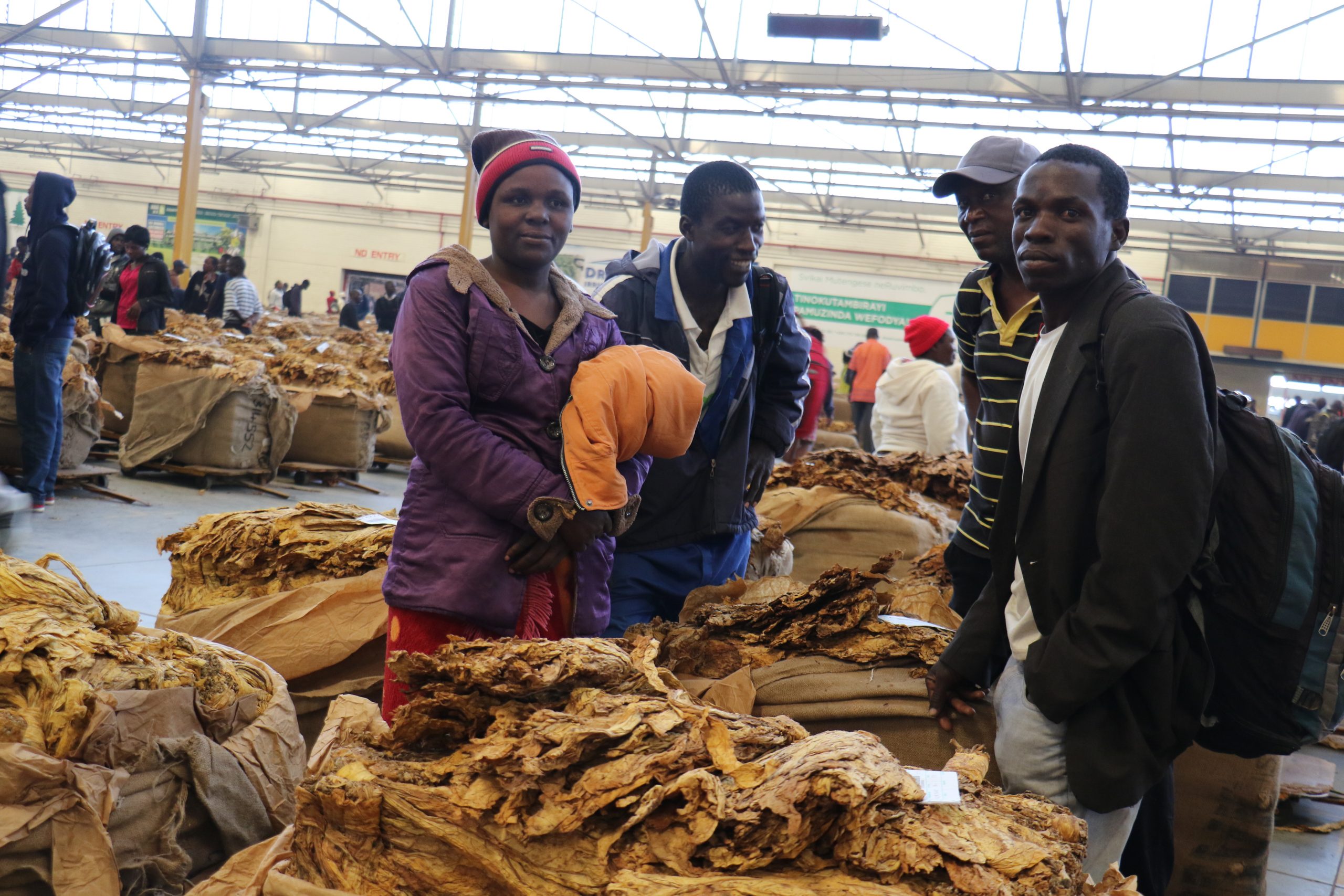
    A new opinion piece, titled “The Global Tobacco Industry Is Solving the Wrong Problem,” by Zimbabwean entrepreneur Smart Chireru argues that the global tobacco industry is misdirecting its focus by optimizing branding, regulation, and distribution while ignoring a major structural inefficiency in where tobacco is processed. Chireru contends that large volumes of African flue-cured Virginia tobacco are exported unprocessed, shipped overseas for manufacturing, and then redistributed globally—an approach he describes as a legacy supply-chain flaw that adds cost, risk, and complexity without creating value.

    The article calls for a shift toward processing tobacco closer to where it is grown, citing examples from other industries that have adopted near-source manufacturing, bonded facilities, and integrated traceability. Chireru argues that modern compliance tools—such as serialization, blockchain tracking, and export-only processing—can mitigate risks often cited as barriers to origin-based manufacturing, while reducing logistics costs and working capital strain.

    Using Zimbabwe as a case study, the piece highlights the country’s combination of high-quality tobacco, skilled labor, and special economic zone frameworks as an opportunity for globally competitive processing at origin. Chireru concludes that the next competitive advantage for tobacco companies will come from supply-chain intelligence and structural efficiency, not incremental gains in marketing or tax strategy.

  • Zimbabwe Tobacco Planting Up 21%

    Zimbabwe Tobacco Planting Up 21%

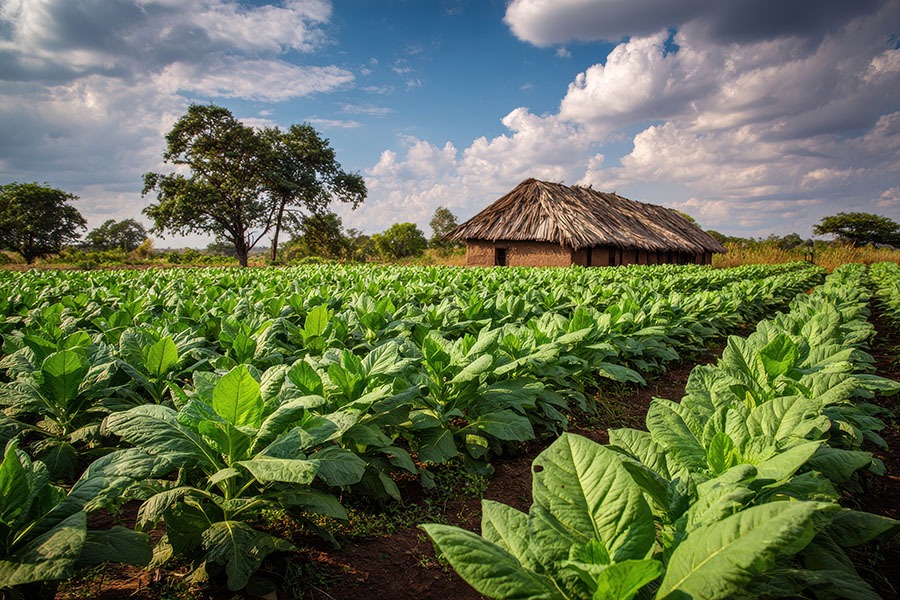
    Zimbabwe’s tobacco hectarage increased by 21% to 100,594 hectares this season, up from 83,391 hectares during the same period last year, according to the Tobacco Industry and Marketing Board (TIMB). Mashonaland West leads production with the largest combined area under irrigated and dryland tobacco, followed by Manicaland and Mashonaland Central, reflecting strong growth across major producing regions. The TIMB said 90% of growers are operating under contract farming arrangements.

    While production has expanded into new regions, the government is seeking to reduce reliance on offshore funding and has proposed a $60 million facility to boost domestic financing, support sustainable growth, and promote value addition in the sector.

  • China Key to Zimbabwe’s Record Tobacco Output

    China Key to Zimbabwe’s Record Tobacco Output

    Zimbabwe’s tobacco sector has surpassed 350 million kg in 2025, thanks in large part to Chinese support, Finance Minister Mthuli Ncube said. Speaking in Harare after signing agreements on China-aid irrigation projects, Ncube highlighted China’s role in providing both credit facilities and market access through China Tobacco, helping small- and medium-scale farmers grow the sector beyond expectations.

    The assistance has helped Zimbabwe maintain its position as Africa’s top tobacco producer and a significant player globally. The tobacco industry remains a cornerstone of Zimbabwe’s agriculture, supporting over 160,000 households, according to government data.

  • Development Hopes to Keep Tobacco Money in Zimbabwe

    Development Hopes to Keep Tobacco Money in Zimbabwe

    Zimbabwe is accelerating plans to move up the tobacco value chain under its new National Development Strategy 2 (NDS2), aiming to lift value addition from about 2% to 30% and reduce reliance on raw leaf exports. While NDS1 missed its 300,000-ton production target due to drought, Zimbabwe produced a record 355 million kg of tobacco in 2025, valued at $1.2 billion, making it the world’s sixth-largest producer. According to the Tobacco Industry and Marketing Board, tobacco contributes more than 25% of national foreign-currency earnings, though 92% of export revenues still come from unprocessed leaf.

    NDS2 focuses on local processing through the Tobacco Special Economic Zone, including nicotine extraction plants and expanded cigarette and cut-rag manufacturing. A key milestone was the commissioning of a $102 million Cut Rag Processors facility capable of producing 3 million kg of cut rag per month and 60,000 cigarette master cases.

    Government officials say domestic value addition remains far below potential, with current earnings estimated at $1.5 billion versus a theoretical $60 billion if higher-value products were produced. The strategy prioritizes attracting investment, expanding local financing, and creating jobs through processing, packaging, and logistics as Zimbabwe shifts toward exporting finished tobacco products.

  • Zimbabwe Nears $1.1B From Tobacco Exports

    Zimbabwe Nears $1.1B From Tobacco Exports

    Zimbabwe earned $1.1 billion from 201.4 million kg of semi-processed tobacco exported between January and November, according to the Tobacco Industry and Marketing Board. This compares with $1 billion from 208.4 million kg during the same period last year.

    The Far East remained the top buyer, taking 89.1 million kg worth $630.7 million at an average $7.08/kg. Africa followed with 33 million kg valued at $154.6 million, while the Middle East bought 30 million kg for $88 million. The EU imported 27.2 million kg at $5.83/kg, and Europe purchased 12.8 million kg at $5.09/kg. The Americas bought 9.1 million kg, and Oceania, though a small buyer, paid the highest price at $8.45/kg.

    Tobacco remains Zimbabwe’s top agricultural export and key foreign currency earner, generating $1.3 billion in 2024 and contributing roughly 30% of total exports.

  • Zimbabwe Opens $100M Tobacco Plant, Part of 2030’s $7B Goal

    Zimbabwe Opens $100M Tobacco Plant, Part of 2030’s $7B Goal

    Zimbabwean President Emmerson Mnangagwa inaugurated a $100 million tobacco processing plant in Harare last week, developed by agribusiness firm Cut Rag Processors (CRP). The facility can process 3,000 tons of tobacco monthly into cut rag and produce up to 60,000 master cases of cigarettes, equivalent to 600 million sticks. The investment is intended to strengthen Zimbabwe’s limited processing capacity, as the country’s 10 cigarette manufacturers currently produce 4.4 billion cigarettes annually but process only 10–15% of local tobacco. The Tobacco Industry and Marketing Board (TIMB) aims to raise this rate to 30% through private investment to capture more value in the export-oriented sector.

    The expansion supports the government’s target of generating $7 billion in tobacco sector revenues by 2030 under the Food Systems, Agriculture and Rural Transformation Strategy. Zimbabwe earned $1.4 billion from tobacco exports in 2024, with 94% from unprocessed leaf. Production continues to grow rapidly, with the 2025 harvest rising 53% to a record 354,000 tons, representing 92% growth since 2020. TIMB projects output could reach nearly 500,000 tons by 2030, but limited processing capacity remains a challenge.

  • Zimbabwe Tobacco Industry Targets $7B by 2030

    Zimbabwe Tobacco Industry Targets $7B by 2030

    Zimbabwe’s tobacco sector is positioned for major expansion, with government projections indicating the industry could reach $7 billion by 2030. The Agriculture Food Systems and Rural Transformation Strategy 2 (2026–2030) outlines a sharp rise in the sector’s gross value contribution, which was $1.2 billion in 2025.

    The Tobacco Industry & Marketing Board reported that Zimbabwe produced 340 million kg of tobacco in 2025, but the Tobacco Transformation Plan hopes to see that number reach 500 million kg by 2030. Zimbabwe is also working to greatly increase the tobacco processed domestically, as opposed to exporting 90% of it raw as it currently does. The Plan also hopes to promote new specialty tobacco varieties, including cigar, shisha, naturally cured, and dark fire-cured types.

    As Africa’s largest tobacco producer, Zimbabwe’s tobacco industry supports over 130,000 households and contributes more than half of the country’s agricultural exports. More than 85% of the crop is grown by small-scale farmers, many of whom benefited from land reform.

    Despite its growth potential, the sector faces significant headwinds, including global anti-smoking measures, traceability and environmental regulations, child-labor concerns, and outdated legislation. Agriculture Minister Dr. Anxious Masuka said the new strategy reflects extensive consultation across government, industry, and farming stakeholders, and is structured around ten pillars focused on policy reform, climate resilience, rural industrialization, financing, infrastructure, and land management.

  • Zimbabwe Boasts 22% Increase in Tobacco Plantings

    Zimbabwe Boasts 22% Increase in Tobacco Plantings

    Zimbabwe’s Tobacco Industry and Marketing Board (TIMB) announced that 27,215 hectares of tobacco have been planted for the 2025-26 season, a 22% increase from last season’s 22,392 hectares that realized $1.2 billion in sales. The increase is especially good news after TIMB announced that only 66% of farmers had registered before the deadline two weeks ago.

    Mashonaland East led the growth with a 41% increase, followed by Manicaland (17%) and Mashonaland West (15.4%). Midlands and Masvingo also recorded significant gains, though on smaller scales. TIMB also announced that a record 23,517 hectares of the crop would be irrigated this year, another accomplishment considering last year small-scale farmers produced over 85% of the crop.

    Zimbabwe remains Africa’s largest tobacco producer and the sixth largest globally, supporting over 160,000 households and contributing more than half of the country’s agricultural exports.

  • WHO’s Tobacco Targeting Threatens Zimbabwe’s Economy

    WHO’s Tobacco Targeting Threatens Zimbabwe’s Economy

    Zimbabwe’s multi-billion-dollar tobacco industry is confronting a potential crisis as the World Health Organization (WHO) considers pushing for tighter global controls—and potentially a ban on tobacco production—over alleged child labor, environmental harm, and concentration of market power in financing, according to Bulawayo. If enforced, the measures could devastate Zimbabwe’s economy. Tobacco is the country’s fourth-largest foreign currency earner after gold, platinum, and remittances, generating $1.2 billion in 2025 and supporting more than 135,000 growers.

    Agriculture Minister Dr. Anxious Masuka said the WHO Framework Convention on Tobacco Control (FCTC) and other anti-tobacco forums were intensifying efforts to discourage production in developing countries. He said such measures would not only devastate economies like Zimbabwe’s but also deepen poverty among farmers who depend on the crop. At a recent T5 Meeting in Harare, attended by regional producers including Tanzania, Malawi, Mozambique, and Zambia, Masuka warned that anti-tobacco efforts under the FCTC threaten livelihoods and national stability. He argued that tobacco remains a legal crop and an adult-choice product, and that attempts to criminalize its production were unjustified.

    Masuka said the Tobacco Value Chain Transformation Plan—which aims to raise output to 500 million kg by 2030, increase local financing, and promote value addition—will strengthen sustainability while diversifying farmer incomes. Zimbabwe achieved a record 355 million kg harvest last season, its highest ever. However, analysts warn that if the WHO proceeds with restrictions or trade barriers, the country could face severe economic fallout, threatening export revenues and rural livelihoods amid existing inflation and drought pressures.

  • Zimbabwe Sees Steep Decline in Registered Tobacco Farmers for Next Season

    Zimbabwe Sees Steep Decline in Registered Tobacco Farmers for Next Season

    Zimbabwe’s Tobacco Industry and Marketing Board (TIMB) announced that 82,965 farmers registered to grow tobacco for the 2025/26 season, with the registration deadline closing October 31. Both new and returning growers are required to pay a $10 registration fee before starting production. Farmers who miss the deadline now face penalties — ranging from $10 to $90, depending on how late they register.

    According to The Herald, the TIMB announced more than 126,000 registered tobacco growers for the 2024/25 season.

    TIMB said registration is crucial for industry planning, forecasting, and maintaining market stability. The board uses the data to estimate crop size, monitor trends, and ensure smooth marketing operations. Zimbabwe remains Africa’s largest producer of flue-cured tobacco, with this year’s output reaching 355 million kilograms worth $1.2 billion.