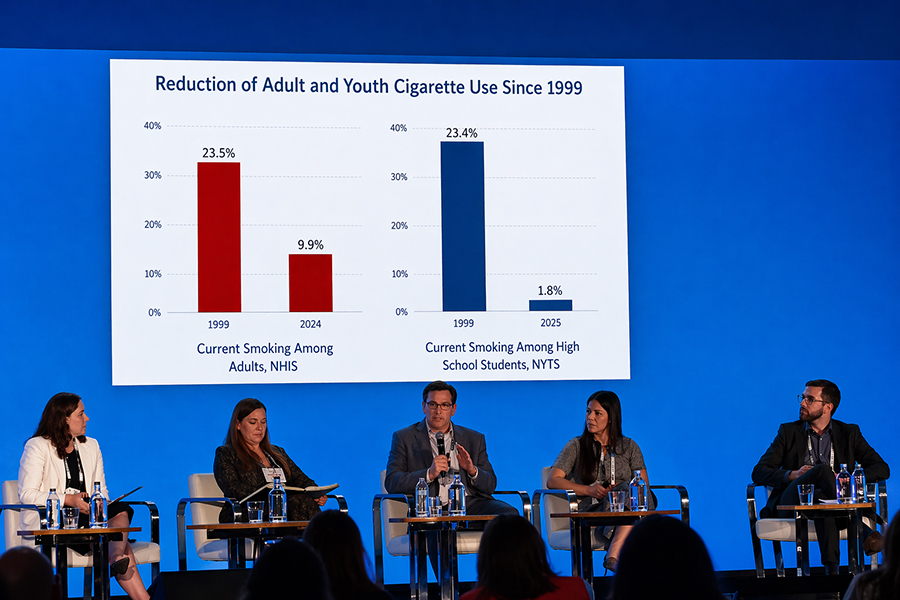
At the American Tobacco and Nicotine Forum (ATNF), a panel moderated by Beth Oliva, a partner at Fox Rothschild, brought together industry, policy, and regulatory experts to examine how state and local policymaking is shaping harm reduction. Panelists Dr. Jeff Willett from the Progressive Policy Institute, Sarah McQuillan from JTI Liggett, Andrew Nunes from PwC, and Laura Leigh Oyler from Haypp Group, repeatedly emphasized a core issue: a widespread lack of understanding among state lawmakers about federal tobacco regulation and the FDA’s role. Several speakers noted that policymakers are often making decisions without a clear grasp of existing frameworks, definitions, or scientific standards, contributing to fragmented and sometimes contradictory regulations.
A major theme was the disconnect between data and policymaking. Panelists pointed to declining cigarette use alongside growth in alternative products, yet said state responses are often driven more by headlines than evidence. Willett highlighted progress in reducing youth vaping since 2019 and stressed the importance of fact-based policy, while others noted that tax increases, flavor bans, and regulatory gaps can unintentionally push consumers toward illicit markets or cross-border purchases. Nunes and Oyler both underscored how inconsistent tax structures and regulatory approaches across states are distorting markets and complicating compliance for manufacturers and retailers.
The panel also focused heavily on the growth of illicit markets, with speakers linking it to unmet consumer demand and regulatory gaps. Oyler argued that the lack of authorized products has created a “vacuum” filled by unregulated alternatives, while Willett pointed to evidence that high taxes and restrictions are driving illicit sales in markets like New York. Broader inconsistencies—such as stricter rules for nicotine compared to cannabis or alcohol—were cited as further complicating enforcement and public perception. Panelists warned that states are increasingly reliant on tobacco tax revenue, which can influence policy decisions, and called for more coordinated, evidence-based approaches rather than a patchwork of state-by-state rules.
Finally, the discussion turned to communication and public health messaging. Speakers argued that the current narrative around nicotine lacks nuance, with limited recognition of the continuum of risk or the role of reduced-risk products. Several panelists called for the FDA to take a more active role in educating both lawmakers and the public, while also stressing the need for better data to be incorporated into legislative debates. Without improved communication and alignment between federal science and state policy, the panel suggested that regulatory fragmentation and market distortions are likely to persist.
Top of Form
Bottom of Form