Category: Around the Industry

  • Lawsuit Says Marketing Compromises Chinese Vape Company

    Lawsuit Says Marketing Compromises Chinese Vape Company

    A U.S. plaintiff has filed suit against Chinese vape manufacturer Shenzhen IVPS Technology Co. Ltd. in the U.S. District Court for the Eastern District of North Carolina, alleging harms linked to the company’s marketing and sales of e-cigarettes in North Carolina. The manufacturer is seeking to dismiss the case, arguing that its operations do not establish sufficient ties to the state for the court to assert jurisdiction. The plaintiff maintains that the company’s active promotion and sale of its products in North Carolina bring it squarely within the court’s reach.

  • Dutch Tobacco Shops Face Scrutiny for Saying HTPs ‘Healthier’

    Dutch Tobacco Shops Face Scrutiny for Saying HTPs ‘Healthier’

    Tobacco retailers in the Netherlands are facing scrutiny after staff in specialist shops were found promoting heated tobacco products as “less harmful” or even “healthier” alternatives to cigarettes, despite strict national rules prohibiting such claims. An investigation by the consumer program Pointer documented multiple instances where employees described these products in ways that imply health benefits, with some suggesting improvements in users’ fitness or overall condition, statements experts say are not supported by scientific evidence.

    Public health authorities emphasize that while heated tobacco may expose users to fewer harmful substances than conventional cigarettes, it still carries health risks, underscoring the legal and reputational exposure for shops and staff making unverified claims at the point of sale.

    Pointer reached out to Philip Morris — which it says has close ties to many specialist tobacco shops in the country — for comment, with PMI saying it couldn’t respond to specific allegations of what was said by shop staff, but that the company remains steadfast in supporting a future without cigarettes and believes more information should be provided to smokers about alternatives.

  • Greece Rolls Out Digital Age Verification for Tobacco Sales

    Greece Rolls Out Digital Age Verification for Tobacco Sales

    Greece launched a new digital age verification system aimed at preventing underage purchases of tobacco and alcohol, marking what officials describe as a first-of-its-kind rollout in Europe. The system, integrated into the country’s digital wallet infrastructure, enables retailers to verify customer age at the point of sale, closing a key enforcement gap that previously allowed sellers to claim ignorance. Health Minister Adonis Georgiades said the tool will make compliance clearer and penalties easier to enforce, aligning with broader EU approaches to online age verification but extending them into physical retail.

    The initiative supports a 2025 law banning sales of tobacco and alcohol to minors, with enforcement already intensifying. Authorities have conducted around 82,000 checks since July 2025, leading to 313 arrests and 150 fines, primarily related to alcohol violations. The framework also requires mandatory age verification by sellers and reporting of private events involving minors, signaling a more robust compliance environment that could serve as a model for other European markets considering tighter youth access controls.

  • Ugandan CSOs Want Higher Taxes to Push Already Declining Smoking Rate

    Ugandan CSOs Want Higher Taxes to Push Already Declining Smoking Rate

    Several civil society organizations (CSO) in Uganda have asked the Ministry of Finance to increase the tax on imported tobacco products to 75%, according to New Vision. Mengo Talibita, a representative of the Tobacco Control Committee, said current excise taxes are often in the 31% to 35% range, “leaving cigarettes relatively affordable.”  

    Uganda’s Tobacco Control Act of 2015 introduced 100% smoke-free public spaces, banned shisha and e-cigarettes, prohibited tobacco advertising, required 65% graphic warnings on packaging, raised the smoking age to 21, and added restrictions to where tobacco products could be sold. Since then, the country’s modest smoking rate decreased from 7.9% to 6.7%.

    Talibita said the tobacco industry tries to manipulate government policy during the tax cycle, and Minister of State for Finance, Planning and Economic Development, Henry Musasizi said the department is under heavy pressure from the CSOs to increase the tax rates. In an interview with New Vision, one smoker who declined to be named said, “Much as the law was put in place, there were no gazette places for smokers. Apparently, when one wants to smoke, it is hell one gets [with] insults from the public.

    “We need to be given freedom as smokers. Let the government put in place what was agreed for us.”

  • Michael Hartono, Co-Owner of Djarum, Dies at 86

    Michael Hartono, Co-Owner of Djarum, Dies at 86

    Michael Bambang Hartono, Indonesia’s richest man and co-owner of the Djarum Group, passed away today (March 19) at the age of 86 in Singapore. Alongside his brother Robert Budi Hartono, he transformed the family’s inherited cigarette business into one of the country’s largest conglomerates, with interests spanning tobacco, banking, technology, property, sports, and e-commerce. Their flagship company, PT Djarum, produces a range of kretek cigarettes, which remain widely popular in Indonesia. The brothers introduced machine-made kretek products such as Djarum Filter in 1976 and Djarum Super in 1981, expanding exports to international markets including the United States. Today, around 60,000 workers manually roll Djarum cigarettes, which are marketed domestically and abroad as filtered cigars wrapped in tobacco leaf to comply with U.S. flavor bans.

    Beyond tobacco, the Hartonos are major shareholders in Bank Central Asia, Indonesia’s largest bank, and redeveloped Hotel Indonesia into the Grand Indonesia complex, encompassing shopping, offices, and a luxury hotel, and are known for philanthropy. With a personal net worth of $25.1 billion in 2024 and a combined family fortune exceeding $43.8 billion, Hartono is survived by his brother, wife, and son.

  • Regulation Battles Coming as Spain’s Pouch Market Expands

    Regulation Battles Coming as Spain’s Pouch Market Expands

    Spain’s nicotine pouch market is experiencing rapid growth, with sales reaching 5 million cans in 2025 and projected to rise 60% to 8 million in 2026, according to industry estimates. The category, currently comprising 20 to 30 brands, remains in an early development phase but has expanded significantly since 2024, with increasing adoption among domestic consumers, according to La Razon. Average pricing stands at around €5 per can, with products typically containing 5 to 20 mg of nicotine per pouch.

    However, the sector faces regulatory uncertainty as Spain’s Health Ministry considers limiting nicotine content to 0.99 mg per pouch, a move industry representatives warn would effectively eliminate the category. The Asociación de Bolsas de Nicotina argues that such a cap would remove viable alternatives for adult consumers and potentially drive demand toward illicit markets or combustible tobacco. The group is advocating for proportionate regulation, controlled retail channels, and a tiered tax framework as the market continues to develop.

  • Cimabel Calls for Policy Rethink as Untaxed Tobacco Tops 44% in Belgium

    Cimabel Calls for Policy Rethink as Untaxed Tobacco Tops 44% in Belgium

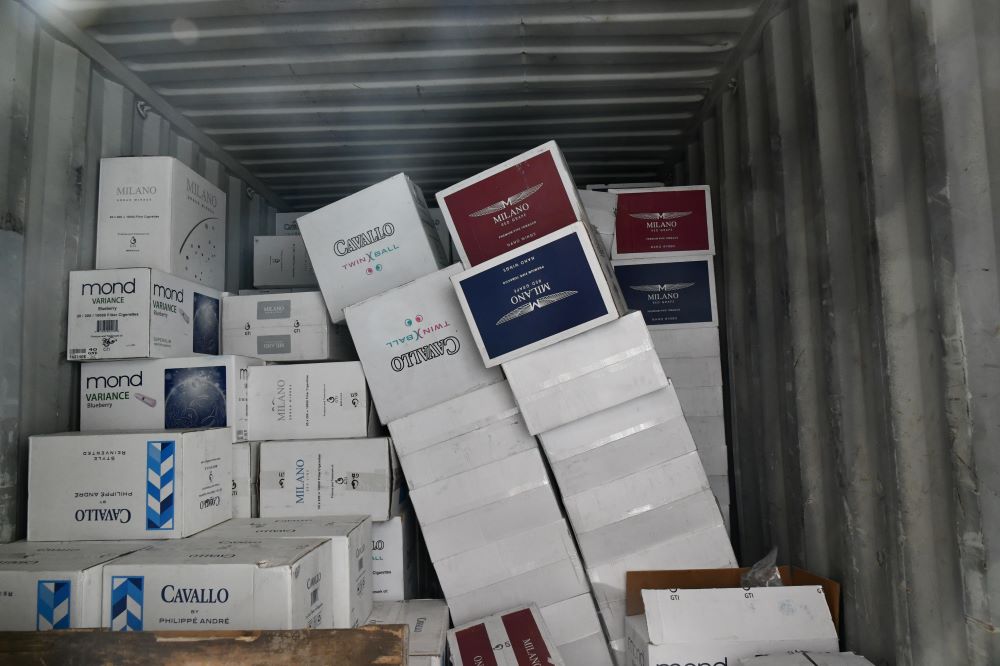
    Contraband cigarette consumption in Belgium surged in 2025, with illicit and untaxed foreign products accounting for 44.4% of total consumption in Q4, up from 34.9% a year earlier, according to Cigarette Manufacturers of Belgium and Luxembourg (Cimabel). The rise contributed to an estimated €3 billion loss in excise and VAT revenues, while counterfeit cigarettes increased to 4.6% of the market, raising concerns over unregulated production and potential health risks. Most untaxed cigarettes originated from lower-price markets such as Bulgaria, Luxembourg, and Turkey, with urban areas particularly affected by high levels of illicit purchasing.

    Industry representatives attribute the growth in illegal trade to rising tobacco taxes and regulatory pressure, warning that price disparities are pushing consumers toward black market channels. Cimabel has called for a policy rethink, including harmonizing excise rates across the EU, strengthening customs enforcement, and expanding access to reduced-risk nicotine alternatives, as authorities face mounting challenges in balancing fiscal policy with illicit trade control.

  • PMI Donates Drones to Help Lithuania Fight Smuggling

    PMI Donates Drones to Help Lithuania Fight Smuggling

    Philip Morris International donated seven drone systems to Lithuania to support efforts to combat cigarette smuggling, particularly illicit shipments transported by balloons from neighboring Belarus. The drones, equipped with high-resolution cameras and thermal imaging, will be operated by the Lithuanian Riflemen’s Union to monitor landing sites and track individuals collecting contraband, enhancing surveillance capabilities rather than direct interception. The move comes as Lithuanian authorities intensify enforcement against a persistent illicit tobacco trade that also involves road transport, with officials noting the challenge remains ongoing despite seizures and arrests.

  • 20mg of Nicotine Per Pouch Optimal, Expert Says

    20mg of Nicotine Per Pouch Optimal, Expert Says

    Haypp’s senior director of scientific affairs, Dr. Marina Murphy, touts the benefits of nicotine pouches as an alternative to smoking, and recommends a maximum nicotine strength of 20mg per pouch to ensure these products serve as an effective harm-reduction tool. This recommendation comes as U.K. lawmakers continue to navigate progress toward a smoke-free future, with pouches growing in popularity. The 20mg dosage, Murphy says, provides an experience comparable to a cigarette, encouraging adult smokers to switch while avoiding the risks associated with ultra-strong products — some that reach 150mg per pouch.

    The 20mg limit aligns with Swedish and British industry standards and sets a clear, understandable benchmark for consumers and retailers, she says. Murphy says that by incorporating this limit into U.K. regulations, the government can make nicotine pouches a viable, safer alternative to cigarettes, balancing public health objectives with adult consumer choice, and supporting the country’s broader smoke-free goals.

  • PMI Director: Ukraine’s Flavor Ban ‘Largely Ineffective’

    PMI Director: Ukraine’s Flavor Ban ‘Largely Ineffective’

    The ban on flavoring and aromatic additives in electronic cigarettes in Ukraine, introduced by the Verkhovna Rada in July 2024, has proven largely ineffective due to a lack of enforcement, according to Mykhailo Polyakov, Deputy General Director for Corporate Relations at Philip Morris Ukraine. Speaking at the “Dialogues with NV” event on European integration, Polyakov said illegal vape shops remain widespread, with nine out of 10 shopping centers in Kyiv hosting such outlets. Despite the law formally prohibiting flavored e-cigarettes, no regulatory or law enforcement bodies are actively ensuring compliance, rendering the ban largely symbolic.

    Polyakov also highlighted broader issues in the tobacco sector, pointing out that while parliament has adopted legislative measures intended to curb the illegal market — such as tax posts, video surveillance, minimum price regulations, and production tracking — these measures are often circumvented. Illegal operations exploit gaps in monitoring, opening workshops outside regulated areas, and mislabeling products to avoid taxes or minimum price rules. He expressed hope that international partners, including the IMF, will help strengthen enforcement and ensure that legitimate companies can operate fairly while illegal operators are held accountable.