Category: News This Week

  • Bhutan Implements 115% E-Cigarette Tax

    Bhutan Implements 115% E-Cigarette Tax

    Bhutan’s Ministry of Health (MoH) announced a major fiscal crackdown on e-cigarettes, introducing a combined 115% tax on vaping products, including 100% excise, 10% customs duty, and 5% GST, all effective January 2026. Devices will also face a 20% excise tax alongside customs duty and GST.

    The MoH said the move aims to curb rising youth use of e-cigarettes and align vaping products with traditional tobacco under the country’s regulatory framework. The Tobacco Control Rules and Act are also being updated to explicitly cover e-cigarettes, vapes, and heated tobacco products.

    The government continues to enforce bans on advertising, promotion, and sponsorship of all tobacco and nicotine products.

  • PM to Pay Washington $66M Under MSA Deal

    PM to Pay Washington $66M Under MSA Deal

    The state of Washington said it expects to receive about $66 million from Philip Morris to settle long-running disputes tied to the 1998 Master Settlement Agreement (MSA). The payment represents the state’s decision to resolve the dispute rather than continue prolonged arbitration, freeing funds held in escrow and ending years of uncertainty. The settlement addresses a portion of the state’s claim under the MSA tied to adjustments and enforcement issues, specifically covering obligations through 2015; arbitration will continue for subsequent years.

    The new agreement follows a similar $277 million settlement in April 2025 with R.J. Reynolds and other tobacco manufacturers. Together, these settlements resolve years of arbitration over provisions requiring enforcement against companies that never joined the MSA. Washington has received roughly $3.8 billion in MSA payments since 1998.

  • Maldives Implements First Generational Tobacco Ban

    Maldives Implements First Generational Tobacco Ban

    The Maldivian government enacted landmark amendments to its Tobacco Control Act, introducing a generational ban on tobacco use. Effective immediately, individuals born on or after January 1, 2007, are prohibited from using tobacco, and vendors are barred from selling tobacco to anyone under 21 or within the generational cutoff. Maldives becomes the world’s first nation to permanently prohibit a generation from smoking.

    The legislation also imposes a nationwide ban on electronic cigarettes and vaping products, including their use, possession, importation, and manufacture. President Mohamed Muizzu said the measures reflect his vision of fostering a “competent, morally upright, and diligent citizenry.”

  • Bloomberg Donates $5M to Support Denver Flavor Ban

    Bloomberg Donates $5M to Support Denver Flavor Ban

    Billionaire Michael Bloomberg has contributed $2.2 million in recent weeks to bolster Denver’s pro-Referendum 310 campaign, which seeks to preserve the city’s ban on flavored tobacco and nicotine products, according to campaign finance reports. Bloomberg has now reportedly provided nearly $5 million of the campaign’s $5.8 million total fundraising, dwarfing opposition efforts by the “Citizen Power!” group, which has raised about $646,000.

    The referendum asks voters whether to keep the ordinance banning most flavored tobacco, including menthol cigarettes and vapes, within city limits. Supporters cite youth protection and addiction prevention, while opponents argue the ban harms local retailers, reduces city tax revenue, and limits adult choice.

  • PMI Targets Net-Zero Emissions by 2040

    PMI Targets Net-Zero Emissions by 2040

    Philip Morris International released its Climate Transition Plan 2025, presenting an updated and integrated strategy to achieve net-zero greenhouse gas emissions across its value chain by 2040. The plan includes near-term targets for 2030, such as a 50% reduction in direct emissions (scopes 1 and 2) and significant cuts in supply chain emissions (scope 3). PMI plans to achieve carbon neutrality for its direct operations by the end of 2025, using measures like renewable energy, energy efficiency, low-carbon fleets, and supplier engagement. The company emphasizes that sustainability and business growth can go hand-in-hand.

    “By focusing on material climate risks and opportunities, implementing cost-effective interventions, and maintaining robust disclosure practices, we are strengthening PMI’s ability to deliver sustained, long-term value,” said CEO Jacek Olczak.

  • WVA Holds Light Protest Ahead of COP11

    WVA Holds Light Protest Ahead of COP11

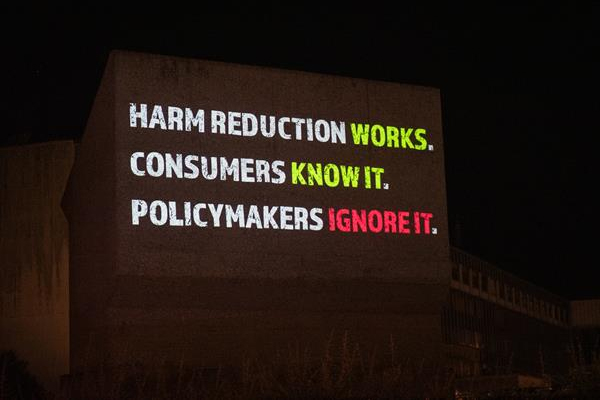
    The World Vapers’ Alliance (WVA) staged a light show protest by projecting messages on the Geneva International Conference Centre, home to the upcoming COP11 meetings that begin November 17. The WVA said it was drawing attention to what the group calls misinformation and exclusion of consumer voices in global tobacco control debates. The WVA criticized the World Health Organization’s stance on vaping and nicotine alternatives, arguing that restrictive policies could undermine harm reduction efforts, particularly in the Caribbean.

    The protest is part of the WVA’s “Voices Unheard – Consumers Matter” campaign, which urges Caribbean governments to pursue evidence-based approaches rather than blanket bans.

  • Philippines Busts Illegal Cigarette Factory, Rescues 11 Workers

    Philippines Busts Illegal Cigarette Factory, Rescues 11 Workers

    Authorities in the Philippines raided an alleged illegal cigarette factory in Trece Martires City, arresting two individuals and “rescuing” 11 workers, including a 17-year-old, the Philippine National Police (PNP) said. The operation targeted a facility operating out of a supposed leisure park. The suspects allegedly recruited workers from poor communities in the Visayas and Mindanao to produce counterfeit cigarettes under “questionable working conditions.”

    The rescued workers are reportedly being investigated for labor law violations, while the arrested individuals were taken to the police station for documentation. The PNP emphasized its commitment to dismantling trafficking networks and ensuring safe, dignified employment, in line with broader government efforts.

  • EU’s Tobacco Tax Harmonization Would Cost Luxembourg €1 Billion

    EU’s Tobacco Tax Harmonization Would Cost Luxembourg €1 Billion

    While the EU’s proposed Tobacco Tax Directive aims to align minimum rates across member states, experts say the harmonization would present a delicate fiscal balance for Luxembourg, where tobacco tourism funds a significant part of the budget. Cigarette prices in Luxembourg could jump from €5.10 to around €8.30, erasing its advantage over neighboring countries, costing the Grand Duchy close to €1 billion, as 95% of the country’s tobacco tax revenue comes from non-residents. At €50 million, tobacco taxes would drop from 69% to 3.5% of Luxembourg’s national budget.

    Public health officials argue the tax losses would be offset by saved healthcare costs and reduced productivity losses.

  • Indonesia Incentivizing Illegal Cigarette Makers to Go Legit

    Indonesia Incentivizing Illegal Cigarette Makers to Go Legit

    Indonesian Finance Minister Purbaya Yudhi Sadewa announced plans to implement a special tax aimed at curbing the circulation of illegal cigarettes, particularly from China and Vietnam, and supporting domestic legal producers. The policy will include the establishment of a Tobacco Industry Zone to encourage illegal domestic producers to legalize operations under certain tariffs, and potentially be operational by December 2025.

    Purbaya acknowledged that high cigarette taxes inadvertently fueled the black market, so that while tax revenue decreased, smoking prevalence—and the health problems associated with it—remained unchanged. 

    “If that’s the case, then what is the policy for?” said Purbaya. “We are killing the domestic legal cigarette industry, but reviving illegal cigarettes from abroad. In that case, I lose. I don’t want to lose.”

    The government will offer assistance to small illegal producers to help them enter the legal market while maintaining strict enforcement against those who continue illicit operations. Purbaya stressed that the approach balances enforcement with opportunities for legalization, ensuring domestic producers are protected while creating a more transparent and regulated cigarette market.

  • Healthcare Advocate Pleads for FCTC to Adopt THR

    Healthcare Advocate Pleads for FCTC to Adopt THR

    In advance of COP11 beginning November 17 in Geneva, South African healthcare consultant Professor Praneet Valodia, the director of Praneet Valodia Consulting, circulated a call for COP11 to adopt evidence-based, transformative policies, including the inclusion of tobacco harm reduction in global tobacco control frameworks. Valodia urged for the creation of independent scientific committees to review the evidence on non-combustible nicotine products and recommended that consumer experiences and expert opinions be considered in policy deliberations. He stressed that the COP should support local policymaking, provide reliable information to users, and align with Article 1d of the FCTC to meaningfully improve public health outcomes.

    “I am hoping that COP11 will bring about transformative change in assisting over a billion smokers throughout the world,” he wrote. “There is a lack of evidence in South Africa to show a reduction in cigarette smoking because of interventions promoted in the FCTC. Considering the low adoption of the interventions in the FCTC and MPOWER measures, and the fact that the global smoking trends have not changed substantially after the FCTC’s adoption in 2003, it is time for tobacco harm reduction to become even more important.”

    Valodia criticized past FCTC policies for their limited impact, particularly in low- and middle-income countries where conventional measures have not reduced smoking prevalence and often fail to address socio-economic realities.