Category: News This Week

  • Altria Reports Q3 Results, Narrows 2025 Guidance

    Altria Reports Q3 Results, Narrows 2025 Guidance

    Altria Group, Inc. reported third-quarter 2025 net revenues of $6.1 billion, down 3% year-on-year, while adjusted diluted EPS rose 3.6% to $1.45. The company reaffirmed its resilience in core tobacco and smoke-free products and announced an expansion of its share repurchase program from $1 billion to $2 billion, set to run through 2026.

    CEO Billy Gifford highlighted “exciting progress” across Altria’s portfolio, including the U.S. launch of on! PLUS nicotine pouches, regulatory submissions for Ploom heated tobacco, and a strategic collaboration with KT&G to pursue international and non-nicotine growth opportunities. The company also marked its 60th dividend increase in 56 years, underscoring its continued focus on shareholder returns.

    Altria narrowed its full-year 2025 adjusted EPS guidance to a range of $5.37–$5.45, representing 3.5%–5.0% growth from 2024. Management said it expects performance to moderate in Q4 as it laps prior share reductions and continues to invest in its smoke-free strategy amid a dynamic regulatory environment.

  • JT Reports Strong Q3 2025 Results, Raises Full-Year Forecasts

    JT Reports Strong Q3 2025 Results, Raises Full-Year Forecasts

    Japan Tobacco Inc. (JT) reported robust growth for the first nine months of 2025, with revenue up 13.2% to ¥2.63 trillion ($17.1 billion) and adjusted operating profit at constant FX up 27.2% to ¥849 billion ($5.5 billion), driven by solid pricing and higher tobacco volumes. The company also completed the transfer of its pharmaceutical business to Shionogi & Co., Ltd. and its subsidiary TORII PHARMACEUTICAL, marking a strategic shift to focus on its core tobacco operations.

    At the end of September 2025, total assets stood at ¥8.2 trillion ($53.2 billion), down ¥175.7 billion ($1.1 billion) year-to-date, mainly due to lower cash holdings, while equity increased to ¥4.17 trillion ($27.1 billion) on higher retained earnings. Operating cash flow remained strong at ¥287 billion ($1.9 billion), supported by steady contributions from the tobacco business, despite payments related to the Canadian litigation settlement.

    Reflecting strong performance, JT raised its full-year forecasts across all metrics, projecting a 13.1% rise in revenue and a 24.3% increase in adjusted operating profit at constant FX. CEO Masamichi Terabatake credited growth in the Ploom heated tobacco segment, with Ploom AURA and EVO premium sticks boosting Japan’s HTS market share to 15.5%. JT also announced a revised annual dividend of ¥234 ($1.52) per share, up ¥26 ($0.17), in line with record-high earnings and its shareholder return policy.

  • Nicokick Introduces Nicotine Pouch Advent Calendar

    Nicokick Introduces Nicotine Pouch Advent Calendar

    Nicokick.com announced the launch of its first-ever nicotine pouch advent calendar, a limited-edition release for adults aged 21 and over. Available beginning November 12, the calendar features 24 days of nicotine pouch samples from top and emerging brands, retailing for $69.99 exclusively on Nicokick.com. Designed to let adult consumers explore a variety of brands, strengths, and flavors, the collection includes Zone, Rogue, Zyn, FRE, Sesh, and Nic-S, among others, with pouch strengths ranging from 3 mg to 9 mg.

    “We created the advent calendar as a transparent, seasonal way for adults to explore the variety of nicotine pouch brands available on Nicokick.com,” said James Lees, vice president of retention. The company says the launch aligns with its goal of helping adult tobacco users discover smoke-free alternatives in an engaging, educational format.

  • Pyxus International to Report Q2 FY2026 Results November 12

    Pyxus International to Report Q2 FY2026 Results November 12

    Pyxus International, Inc. said it will release its second-quarter fiscal 2026 financial results November 12, before market open. The company will host an earnings call and webcast at 9 a.m. EST to discuss the results.

    Those interested can call +1 (646) 769-9200 or (800) 330-6710 with conference ID 2153372, or access the live webcast via Pyxus’ investor relations webpage. A press release and Q2 presentation will be available prior to the call. An archived recording will be posted shortly after the call.

  • Voopoo Launches High-Powered, Stylish Vinci S

    Voopoo Launches High-Powered, Stylish Vinci S

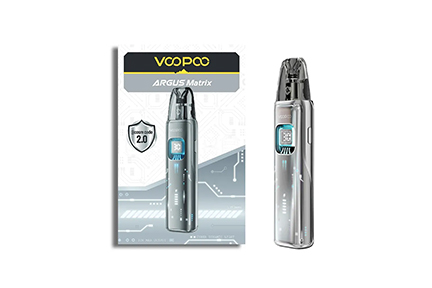
    Voopoo introduced the Vinci S, “combining cutting-edge performance with striking design.” The device features a 2000 mAh battery offering up to three days of intensive use, iCOSM Code 2.0 technology for rich flavor and leak resistance, and step-less airflow adjustment with smart power matching up to 40W.

    Available in 4.5 mL or 2 mL cartridges, the Vinci S is lightweight (69 g) and portable, with top-side filling, LED battery indicator, and enhanced leak-proof design. “Its luminous palette aesthetic and premium textures make it both a functional device and a style statement,” the company said.

  • JTI UK Launches Strongest Nordic Spirit Nicotine Pouch Yet

    JTI UK Launches Strongest Nordic Spirit Nicotine Pouch Yet

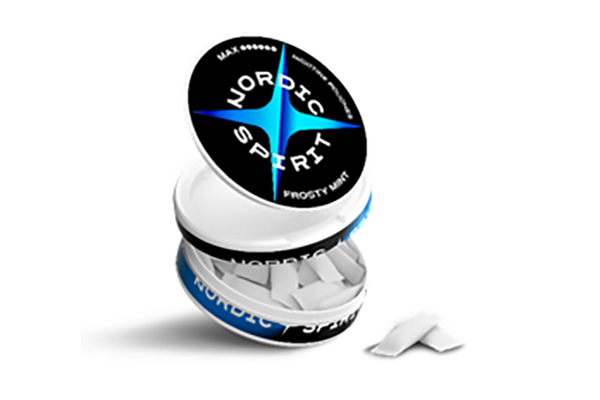
    JTI UK announced the launch of its most potent nicotine pouch to date, Nordic Spirit Frosty Mint Max (17mg), which is now available via JTI360 and key multiple grocers, with wider rollout to independent and symbol retailers from November 3. Priced at £6.50 RRP, JTI said it is targeting the fast-growing “max strength” segment, which now accounts for 16% of nicotine pouch sales in the Independents & Symbols channel.

    The new variant debuts Nordic Spirit’s refreshed branding, featuring darker tones and bold design cues to emphasize strength. With the UK nicotine pouch market valued at £15.9 million per month, JTI says the product will help retailers meet rising demand for high-strength options.

  • Trinidad & Tobago Doubles Excise Duties on Tobacco, Eyes Vapes

    Trinidad & Tobago Doubles Excise Duties on Tobacco, Eyes Vapes

    Trinidad and Tobago increased excise duties by 100% on locally and Caricom-manufactured beer, rum, malt beverages, cigarettes, and tobacco, aligning import rates with domestic products. The move, part of the 2026 Budget, is expected to generate $1 billion in revenue while aiming to reduce smoking and alcohol consumption, planning minister Kennedy Swaratsingh said.

    The government emphasized that the increases also protect local manufacturers from unfair competition with Caricom imports and address illicit trade in cigarettes, with additional enforcement measures planned. Duty rates on foreign alcohol and tobacco remain high, ensuring price buffers for imported products.

    “In some instances, cigarettes that are manufactured locally for export to other Caricom markets are smuggled back into T&T and are now cheaper, as excise duties and customs duties haven’t applied,” Swaratsingh said. “To combat illicit smuggling that hurts local manufacturers, Government intends beefing up Customs and Excise’s enforcement apparatus, ensuring a more level playing field for local manufacturers.”

    Swaratsingh also said the government is monitoring vapes, pointing to their growing use among younger generations and potential health risks, signaling possible future regulation of e-cigarettes in T&T.

    “Vapes are also harmful,” Swaratsingh said. “Studies are still being done to determine the extent of damage they cause compared to cigarettes. Government is looking and will contemplate the required action against vapes in the near future.”

    Swaratsingh said the Budget’s decision to increase excise duties on “sin products” isn’t a punitive measure, but a planned and well-thought-out initiative aimed at a multi-pronged result for T&T’s physical, socio-economic, and future well-being.

  • Acting CTP Director Offers ‘Groundbreaking’ Views at FDLI

    Acting CTP Director Offers ‘Groundbreaking’ Views at FDLI

    Bret Koplow, Acting Director of the FDA Center for Tobacco Products (CTP), outlined a notable change in the agency’s approach to tobacco regulation, emphasizing tobacco harm reduction as a central principle, as he opened the Food and Drug Law Institute (FDLI) Tobacco and Nicotine Policy Conference on October 28.

    Chris Allen, CEO of UK-based consultancy Broughton, called the keynote “one of the most significant speeches we’ve heard in years,” marking the FDA’s first public acknowledgment of harm reduction as a principle embedded in its regulatory framework in years, while public health expert Cliff Douglas posted on X that the speech was “refreshing and potentially groundbreaking,” noting Koplow’s clear articulation of the benefits of switching from cigarettes to alternative products.

    According to social media posts from the two experts, Koplow highlighted the importance of streamlining review and authorization processes to make harm reduction measures effective, and said the FDA will soon provide guidance on the continuum of risk for tobacco and nicotine products and signaled potential support for expanding flavored e-cigarettes using age-gating technology if they serve public health goals. He also stressed the need for a regulated marketplace of authorized reduced-risk products, warning that without proper oversight, unregulated alternatives could dominate the market.

    “This is encouraging, but we will need to see what form this takes and how well it is executed. The follow-up panel on the future of tobacco policy in the context of #MAHA [Make America Healthy Again] correctly highlights the welcome change in tone in Director Koplow’s remarks,” Douglas wrote, referencing the conference’s opening panel,
    The Future of Tobacco Policy: Aligning CTP’s Present with MAHA’s Vision, which featured industry experts Beth Oliva, Cheryl K. Olson, Jeff Weiss, Jeffrey Willett, and Robyn Gougelet. “This should not be overlooked, as his clear articulation of the benefits of switching from cigarettes to pouches and vapes, for example, is refreshing and potentially groundbreaking.”

    Allen agreed, saying that the industry has sought FDA clarity for years.

    “This was more than a language shift. It was a reframing of how CTP interprets the ‘appropriate for the protection of public health’ standard at the heart of the Tobacco Control Act,” Allen wrote. “This shift opens the door for more transparent communication on relative risk, more efficient regulatory pathways, and ultimately, a more pragmatic approach to reducing smoking-related disease and death.

    “It’s not just a policy update, it’s a philosophical evolution.”

    After speaking on the MAHA panel that followed Koplow’s remarks, Olson said it was a pleasure hearing the director’s talk about shifting schemes.

    “Government framing of nicotine is overdue for a rethink,” Olson wrote on LinkedIn. “Smoking rates are stuck among vulnerable groups such as older adults. If you look at what government websites say about smoking cessation, they mostly give the same advice they’ve given for decades. The old HHS Framework assumes that people who smoke are passive victims of industry manipulation. 

    “If MAHA is about empowering people to make choices…that could help create a new framework that puts the needs of people who use nicotine at the center.”

  • Ex-WHO Director Calls for Global THR Shift

    Ex-WHO Director Calls for Global THR Shift

    Former World Health Organization (WHO) director Professor Tikki Pang urged global health authorities to embrace tobacco harm reduction, saying rigid opposition to alternative nicotine products is undermining progress against smoking-related deaths. Speaking at the Asia Forum on Nicotine, Pang said that while the WHO Framework Convention on Tobacco Control saved millions of lives, its impact has stalled, especially in lower-income countries. He blamed slow policy implementation and rejection of less harmful products like e-cigarettes and nicotine pouches despite “overwhelming evidence” of the safety, efficacy, and cost-effectiveness of these (alternative) products.

    “Global health authorities have adopted a very strong anti-tobacco harm reduction stance,” Pang said. “[They] actually state that these products are as harmful as combustible cigarettes and call on their member states to ban them and actually give awards to countries which have done so.”

    Pang called for independent, evidence-based platforms to unite governments, scientists, and industry to promote transparency, proportional regulation, and harm reduction success stories.

    Pang also quoted renowned physician Alex Wodak, saying, “And I quote Alex – WHO’s position on this issue is now as irrelevant as the position of governments in Eastern Europe and the Soviet Union in the 1980s on the future of central command economies. WHO’s position will collapse at some point, but I don’t know when.”

  • BAT Pauses Vuse One Vape Launch Amid FDA Scrutiny

    BAT Pauses Vuse One Vape Launch Amid FDA Scrutiny

    Yesterday (October 28), Reuters reported that BAT paused its pilot launch of the Vuse One disposable vape in the U.S., highlighting the regulatory hurdles in the rapidly growing nicotine products market, news that was confirmed by a spokesperson for Reynolds American, BAT’s U.S. subsidiary. The pilot will be postponed while the company focuses on its existing portfolio, including a nicotine pouch currently under PMTA review that FDA has promised to fast-track.

    “We will bring Vuse One to market at the appropriate time,” the spokesperson said. “Vuse One is one of the few disposable vapor products that meet the in-market and PMTA-deadline requirements that Congress established in 2022. We have communicated with our customers to ensure that they are fully informed about our decision.”

    The move follows increased U.S. Food and Drug Administration (FDA) enforcement against unapproved vapes, many imported from China, which have eroded profits in the $22 billion U.S. smoking alternatives sector. Earlier this year, it was reported that several manufacturers, frustrated by the lack of progress within the FDA, were considering launching products prior to official approval, similar to those already available on the market.

    The pause underscores the industry’s broader push for reforms to streamline FDA approvals, which often take years. Philip Morris International and Altria are also navigating similar challenges, balancing regulatory compliance with the competitive pressure from unlicensed products. The FDA has signaled intentions to accelerate applications, though public health groups warn that any loosening of review standards could undermine safety and oversight.

    The FDA recently sent a letter to “remind” manufacturers that selling new nicotine products without authorization is unlawful.