Category: News This Week

  • Philippines Cracking Down on Flavored Vape Products

    Philippines Cracking Down on Flavored Vape Products

    Philippine regulators have intensified enforcement against illegal vape products, with the Department of Trade and Industry stating that flavored products appealing to minors — such as those with dessert or cartoon-themed descriptors — have failed the government’s licensing process and are therefore considered smuggled. Under Republic Act 11900, only plain tobacco and menthol flavors are permitted, alongside strict rules on marketing and youth access. Authorities reported a sharp rise in seizures of illicit vape products, reaching P519 million ($8.8 million) in 2024, highlighting the scale of non-compliance in the market.

    Enforcement efforts have expanded to include coordinated raids, online monitoring, and legal action against major digital platforms such as Meta, Lazada, Shopee, and TikTok for allegedly enabling the promotion of unlicensed products. Regulators warn that continued non-cooperation could result in stricter penalties, including potential shutdowns, as the government pushes to tighten compliance through licensing requirements for vape sales and advertising.

  • PMI to Launch New Business Solutions Center, Creating 180 Jobs in Tampa Bay Area

    PMI to Launch New Business Solutions Center, Creating 180 Jobs in Tampa Bay Area

    March 17, 2026 — Today, Philip Morris International’s U.S. businesses (“PMI U.S.”) announced an investment of approximately $50 million in a new Business Solutions Center in Tampa, Florida. The Center will create approximately 180 direct and indirect high-skilled jobs and represents a pivotal expansion of PMI U.S. operations, consolidating key functions—business solutions, distribution operations, and customer service—into a single hub. This investment is designed to enhance operational efficiency across these functions and underscores PMI U.S.’s commitment to supporting Florida’s business community and broader economic development.

    “Florida has proven to be an exceptional partner—offering a business-friendly environment, robust infrastructure, and a deep pool of highly skilled talent,” said Stacey Kennedy, CEO of PMI U.S. “Our new Business Solutions Center underscores PMI U.S.’s long-term commitment to investing in American communities and the people who power them. It reflects our determination to build strong, local teams across the country to advance our mission of delivering a smoke‑free America. The Tampa Bay area, in particular, stands out for its dynamic culture and quality of life—both essential to attracting and retaining the talented workforce that drives our innovation.”

    The new Business Solutions Center will provide career opportunities across a wide range of skill levels, including finance, data engineering and analytics, information technology, project management, sales enablement, talent acquisition, people operations, and more. Career opportunities and benefits will be shared at uspmi.com/en/careers/.

    “Philip Morris International’s decision to establish a new office here is a strong vote of confidence in our region’s dynamic economy, talented workforce, and thriving business environment,” said Dr. Bob Rohrlack, Tampa Bay Chamber President and CEO. “Investments like these contribute to the continued economic growth and global competitiveness of the Tampa Bay area. We look forward to seeing PMI U.S. become an active member of our business community and a valued partner in shaping the region’s future.”

    Today’s announced investment includes capital expenditures for the build‑out of the new workspace and PMI U.S.’s 10‑year lease commitment for the site. Since 2022, PMI U.S. has invested more than $1 billion in American manufacturing, operational capabilities and people costs (through September 30, 2025) as it continues to grow its workforce of more than 3,000 employees. This includes a $600 million commitment to build a new ZYN nicotine pouch manufacturing facility in Aurora, CO; a $232 million expansion of its existing ZYN production site in Owensboro, KY; and more than $37 million to support expanded operations in its Wilson, NC manufacturing facility.

    “Philip Morris International U.S.’s corporate philanthropy and community investment practices make the organization a perfect fit for Tampa,” said Craig J. Richard, CEcD, president and CEO of the Tampa Bay Economic Development Council. “When we recruit companies like PMI U.S. to our market, we engage their teams with business leaders whose companies have not only created jobs here but have invested in making Tampa Bay an even better place to live, work and raise a family. We look forward to assisting the PMI U.S. team as they settle into their Westshore offices and supporting their success in Hillsborough County.” 

    In addition to these major capital investments, PMI U.S. contributes meaningfully to communities across the country through philanthropy and civic partnerships. Since 2022, the company has provided approximately $35 million to national and local charities—supporting veterans organizations, economic empowerment initiatives, and disaster relief efforts—and recently made donations to the Wounded Veterans Relief Fund, Tampa Bay Thrives, Urban League of Broward County, Tampa Bay Area Chiefs of Police Foundation, and University of Florida’s Veterans and Servicemembers Legal Clinic, all nonprofits in Florida. These efforts represent only a portion of PMI U.S.’s broader commitment to America, which includes creating hundreds of jobs, constructing new and expanded manufacturing facilities, and engaging thousands of suppliers and vendors nationwide.

    PMI U.S.’s new Business Solutions Center will be located at Highwoods Bay Center in the Westshore Business District at 5426 Bay Center Drive in Tampa, Florida.

  • PMI Director: Ukraine’s Flavor Ban ‘Largely Ineffective’

    PMI Director: Ukraine’s Flavor Ban ‘Largely Ineffective’

    The ban on flavoring and aromatic additives in electronic cigarettes in Ukraine, introduced by the Verkhovna Rada in July 2024, has proven largely ineffective due to a lack of enforcement, according to Mykhailo Polyakov, Deputy General Director for Corporate Relations at Philip Morris Ukraine. Speaking at the “Dialogues with NV” event on European integration, Polyakov said illegal vape shops remain widespread, with nine out of 10 shopping centers in Kyiv hosting such outlets. Despite the law formally prohibiting flavored e-cigarettes, no regulatory or law enforcement bodies are actively ensuring compliance, rendering the ban largely symbolic.

    Polyakov also highlighted broader issues in the tobacco sector, pointing out that while parliament has adopted legislative measures intended to curb the illegal market — such as tax posts, video surveillance, minimum price regulations, and production tracking — these measures are often circumvented. Illegal operations exploit gaps in monitoring, opening workshops outside regulated areas, and mislabeling products to avoid taxes or minimum price rules. He expressed hope that international partners, including the IMF, will help strengthen enforcement and ensure that legitimate companies can operate fairly while illegal operators are held accountable.

  • Plastic-Free Packaging Developed for Snus Cans

    Plastic-Free Packaging Developed for Snus Cans

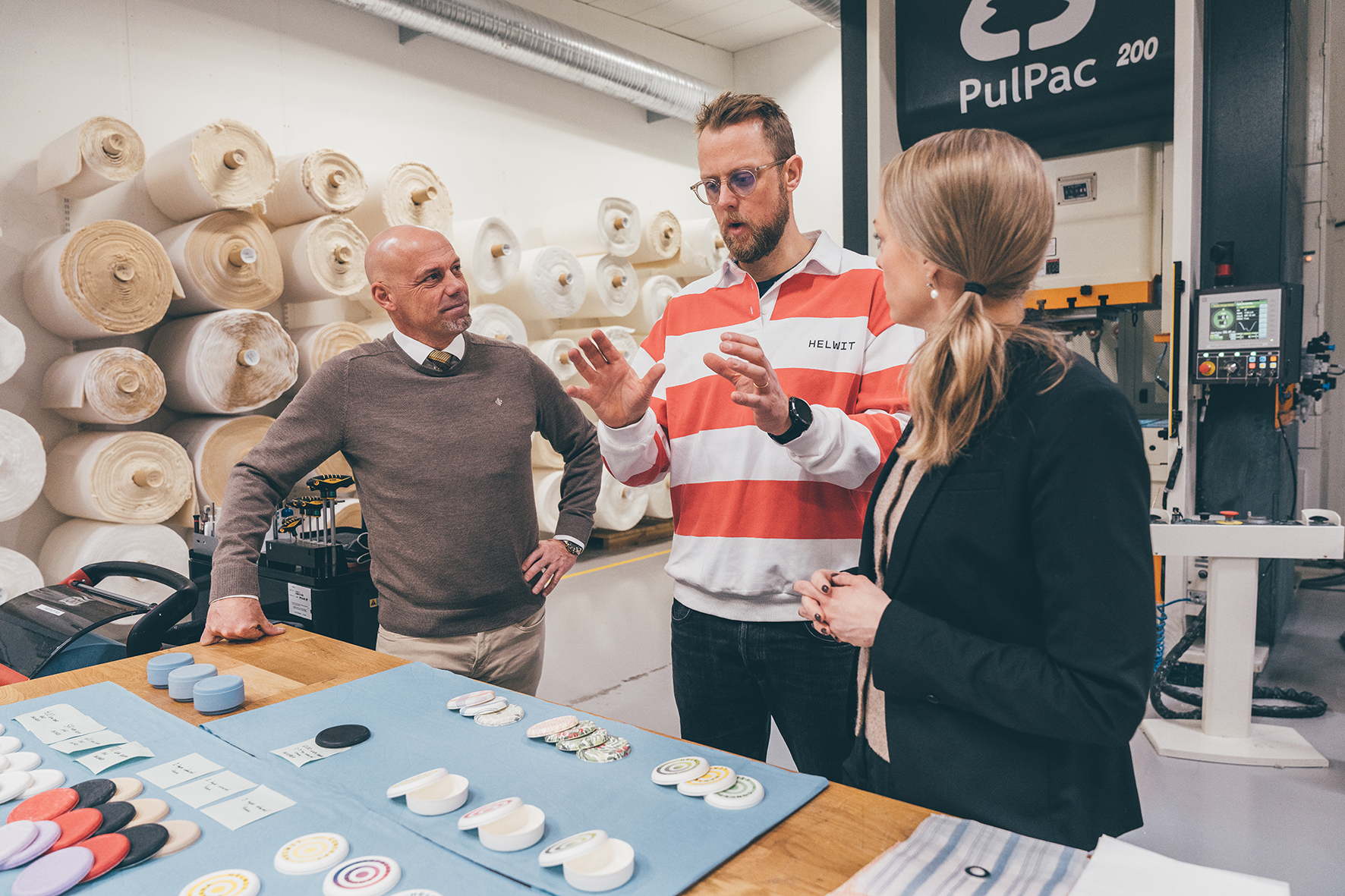
    PulPac, Future Materials Sweden, and Yoik AB have developed a “dry molded fiber” snus can for Yoik’s Helwit brand at PulPac’s R&D Lab, marking the brand’s entry into the smokeless tobacco segment, a market traditionally dominated by plastic packaging. The fiber-based can has been engineered to meet the functional demands of high-volume snus packaging, including durability, consistent fit, and premium feel, and is currently undergoing structured product validation and trials on Yoik’s filling line.

    In parallel, Future Materials signed a license agreement with PulPac to commercialize dry-molded fiber products, with plans underway to industrialize, scale production, and optimize tooling to enable full-scale manufacturing once validation milestones are achieved.

  • BAT Announces May 2026 Dividend  

    BAT Announces May 2026 Dividend  

    British American Tobacco p.l.c. announced its interim dividend for the year ended December 31, 2025, payable in four quarterly instalments. The first payment, the May Dividend, of 61.26p ($0.81) per ordinary share, will be paid on May 7 to shareholders on the U.K. main register and the South Africa branch register as of March 27. For South African branch shareholders, the dividend is payable in rand at a rate of £1 = R22.3938, resulting in a gross dividend of 1,371.84 SA cents per share, with 20% dividends tax withheld, leaving a net payment of 1,097.48 SA cents per share. The dividend is considered a foreign dividend for South African tax purposes, sourced from the U.K.

  • PCA Announces Cigar Business Program in Nicaragua

    PCA Announces Cigar Business Program in Nicaragua

    The Premium Cigar Association, in partnership with Keiser University Latin American Campus and the Cámara Nicaragüense de Tabacaleros, launched a certified executive education program, “The Business of Premium Cigars: Strategy, Operations, Branding, and Experiences That Build Legacy,” aimed at strengthening leadership and strategic knowledge in the global premium cigar industry. Introduced at a luncheon in Estelí, Nicaragua, the program will feature instruction from renowned cigar makers, founders, and industry leaders over four full-day sessions in June 2026, totaling 32 hours of in-person training at Keiser University’s Managua campus.

    Designed for owners, executives, managers, entrepreneurs, and cigar enthusiasts, the curriculum covers strategy, operations, branding, finance, and international trade, providing participants with hands-on insights into building, positioning, and growing premium cigar enterprises while preserving the industry’s heritage and global legacy.

  • Surging Illicit Tobacco Market Costs Thailand $930M

    Surging Illicit Tobacco Market Costs Thailand $930M

    Thailand is losing nearly 30 billion baht ($930 million) annually to the illegal tobacco market, which now accounts for about 25% of total tobacco consumption in the country, according to a report by the EU-ASEAN Business Council. The surge in illicit trade, driven by expanded trade links and smuggling networks, is undermining state tax revenue, fair competition, and consumer safety. The government has responded with high-profile enforcement actions, including a recent operation in southern Thailand that seized over 20 million illegal tobacco items and levied fines exceeding 1 billion baht ($31 million).

    While crackdowns provide short-term relief, experts stress that a long-term solution requires system-wide measures, including strengthened supply-chain transparency, harmonized regulations, digital traceability, and regional law enforcement cooperation, to disrupt the entire illegal tobacco network.

  • Ispire Says FDA Guidance Opens $50B Door

    Ispire Says FDA Guidance Opens $50B Door

    Ispire Technology Inc. says it is positioning itself to capture a multi-billion-dollar opportunity in the U.S. vaping market following the FDA’s newly issued draft guidance on flavored ENDS Premarket Tobacco Product Applications. The guidance, which formally recognized device-level age verification — or Device Access Restrictions (DAR) — as a key factor in determining whether a product meets the “appropriate for the protection of public health” standard, creates a lawful pathway for flavored products that have largely been sold illicitly.

    Ispire said its 40%-owned joint venture, IKE Tech LLC, is uniquely positioned to provide the age-gating and product authentication infrastructure required for compliance, leveraging its blockchain-secured, biometric, and Bluetooth-enabled technology platform that has been validated to prevent underage access while supporting adult consumer use.

    Ispire said the recognition of DAR technologies by the FDA opens a total addressable market estimated at $50 billion, largely comprised of illicit and unauthorized flavored ENDS products. IKE Tech’s SaaS-based compliance model, which Ispire estimates can generate $5 million to $20 million in annual recurring revenue per manufacturer customer, positions the company to capture significant enterprise value even with a limited number of clients. Beyond age verification, the platform also addresses counterfeiting and illicit trade, providing traceability and authentication across the supply chain.

  • S. Carolina Looking to Cut Tax on HTPs, Add for E-liquids

    S. Carolina Looking to Cut Tax on HTPs, Add for E-liquids

    South Carolina lawmakers are considering legislation that would cut the excise tax on heated tobacco products by more than half, arguing the devices pose lower health risks than traditional cigarettes and could help smokers transition away from combustible tobacco. Republican Sen. Tom Davis, chair of the Senate Labor, Commerce, and Industry Committee, said the products provide a similar experience to smoking but with fewer harmful chemicals, and argued the tax structure should reflect the relative risk compared with conventional cigarettes.  The bill, introduced last year, imposes a separate excise tax on heated cigarettes of 25 cents per pack of 20, effectively cutting the HTP tax rate by 45 cents from the combustible rate of 70 cents per pack.

    Public health groups oppose the proposal, with the American Heart Association warning that reducing taxes could encourage continued nicotine use or product switching rather than quitting. The bill would also introduce a new excise tax on vaping products of five cents per milliliter of vape liquid, as South Carolina currently has no tax on e-cigarettes. According to the state fiscal office, heated tobacco products are not currently sold in the state, though companies have marketed them there previously and could reenter the market if the legislation passes.

  • Jordan to Tighten Regs on Shisha Tobacco

    Jordan to Tighten Regs on Shisha Tobacco

    Jordan will prohibit the sale of loose shisha tobacco starting April 1, requiring all products to be sold in officially approved packaged containers, according to the country’s Income and Sales Tax Department. The measure is part of new regulations governing the licensing and operation of shisha tobacco factories introduced in 2025, aimed at strengthening oversight of manufacturing and distribution while ensuring compliance with tax and regulatory requirements. Authorities said the move will help regulate the trade of shisha tobacco and improve monitoring across the supply chain.

    Under the updated rules, factories must meet a range of operational requirements, including locating facilities in designated industrial zones, maintaining a minimum production area of 1,000 square meters, and employing at least 10 registered Jordanian workers. Producers must also comply with national production standards, maintain computerized accounting and inventory systems, and meet regular tax reporting obligations. Existing factories have been given up to one year to bring operations into compliance, while traders have been urged to prepare for the packaging-only sales requirement before the April 2026 implementation date.