
New York State has formally introduced a generational nicotine ban that would make it illegal for any person born after December 31, 2007, to purchase nicotine products, including non-combustibles, in perpetuity. Assembly Bill 11509, introduced by Assemblywoman Amy Paulin of District 88 (representing parts of Westchester County), has been read on the Assembly floor and referred to the Committee on Health. Under the proposal, anyone currently younger than 21 would never legally be permitted to buy tobacco even after turning 21, while those currently of age would retain their right, meaning future generations would never gain it. The bill applies to any nicotine-delivery product, from vapes, chewing tobacco, and cigarettes to cigars, and even covers smoking paraphernalia and rolling papers.
The proposal is part of a growing trend around the world, as the bill’s justification section references generational bans in Brookline, Massachusetts, and the United Kingdom, the latter having become law the previous month.
The Premium Cigar Association criticized the measure as a “modern attempt at prohibition” that takes a one-size-fits-all approach and unfairly sweeps in premium cigars, and has launched a petition against the ban while meeting with the board of the New York Cigar Association to discuss next steps.
Category: Global Regulation
-

New York Introduces Bill for Generational Nicotine Ban
-

Senators Press Altria, Reynolds Over Lobbying
Six U.S. senators, including Democratic whip Dick Durbin and Elizabeth Warren, sent public letters to Reynolds American and Altria asking questions about donations to and lobbying of the Trump administration, saying the companies had enjoyed a “lucrative payday” after spending millions to curry favor with the president. The letters followed the FDA’s new “enforcement discretion” policy, under which it will allow some manufacturers to sell vapes and nicotine pouches without the legally required license, a move that could unleash hundreds or more vapes onto the market and that came after White House pressure for change. It also followed political donations from both Reynolds, the U.S. subsidiary of British American Tobacco, and Altria as recently as April, and a May meeting between President Trump and tobacco executives.
Calling the spending “money well spent,” the June 4 letters argued the donations and lobbying had enabled tobacco makers to circumvent federal laws to sell addictive vapes while harming the FDA’s independence, describing the outcome as a lucrative payday after years of unsuccessful efforts to weaken federal tobacco oversight. The senators requested details on donations, meetings, and the products that will benefit from the change. White House spokesperson Kush Desai responded that the FDA’s regulatory treatment of nicotine pouches and vapes is rooted in recent evidence that the products can help adults quit smoking. An Altria spokesperson called the guidance an important step toward addressing the illicit market by pairing enforcement with expansion of a legal, regulated marketplace for smoke-free products, saying the company is reviewing the implications for its product strategy and will continue competing within the FDA-regulated marketplace.
Reuters notes the companies have “complained for years” that FDA policy helped fuel a booming market for unlicensed devices mostly from China, which Reynolds estimates is worth some £7 billion ($9.41 billion). They have launched lobbying campaigns and court cases, put sales targets on hold, and threatened to launch their own unlicensed products to compete, and have already announced plans for new launches following the enforcement-discretion policy. The letters were signed by Democratic senators Durbin of Illinois, Warren and Edward Markey of Massachusetts, Jeff Merkley of Oregon, Richard Blumenthal of Connecticut, and Jack Reed of Rhode Island. -
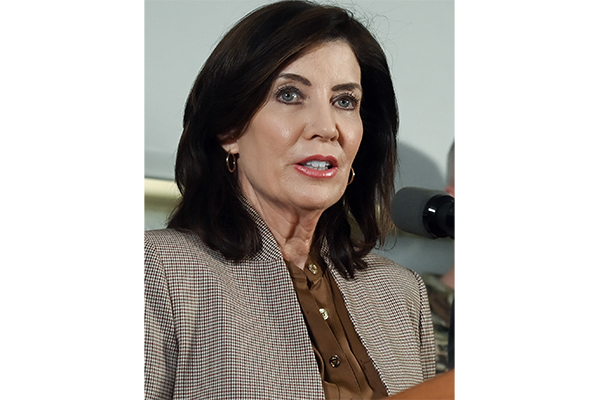
New York Taxes Nicotine Pouches at 75% Under Enacted Budget
Nicotine pouches in New York will now be taxed like other tobacco products such as cigars, following Governor Kathy Hochul’s signing of the state’s $268 billion budget into law on Thursday. The enacted budget brings alternative nicotine products under the state’s existing 75 percent wholesale tobacco tax. Beginning in fiscal year 2028, the levy is expected to channel an additional $50 million in annual tobacco tax revenues into the Health Care Reform Act fund. The tax differs in structure from the one applied to cigarettes, which are taxed at $5.35 per pack in New York.
The change treats pouches such as Zyn and On! the same as conventional tobacco products despite their containing no tobacco leaf. State Budget Director Blake Washington has characterized nicotine pouches as a “public health concern,” describing cigarettes and pouches as “a distinction without a difference.” Tobacco control advocates have similarly argued that taxing all nicotine products broadly discourages addiction and protects youth, and Hochul has made youth nicotine access a prominent part of her public health agenda.
In response, PMI U.S., the American arm of Philip Morris International, issued an unattributed statement saying the company was disappointed not only by the 75 percent wholesale tax but by what it called the state’s disregard for a more fiscally responsible alternative that would have raised more revenue with fewer unintended consequences for small businesses. The statement argued the tax moves in the wrong direction on affordability and public health, contending it will raise costs and discourage adult smokers from switching to better alternatives, thereby keeping more people on cigarettes. It further warned that the tax would fuel illicit trade by shifting demand to unregulated markets lacking safeguards and age verification, which it said would undermine the governor’s stated goal of preventing youth access.
-

Brazil Readies Crackdown on Crime in Betting, Tobacco Sectors
Brazil’s government is in the final stages of preparing operations targeting organized crime in the online betting and tobacco sectors, a senior government official with direct knowledge of the matter told Reuters. The move reflects a broader strategy to choke off criminal organizations financially, and the source said the plan would not change despite the United States’ decision to designate Brazil’s two largest gangs as terrorist organizations.
According to the source, criminal groups are believed to be involved in cigarette smuggling and the illegal sale of tobacco products, as well as in infiltrating unlicensed betting platforms that continue to operate despite the sector’s regulation in Brazil. In both areas, small financial institutions, including fintechs, are allegedly being used to launder money.
The official, who spoke on condition of anonymity because the discussions are not public, said the operations could be launched at any moment but that an exact timing could not yet be determined, given the need to coordinate with police authorities, prosecutors, and the judiciary.
-

Former HHS Secretary Urges FDA to Reach the “Forgotten Smoker”
In an opinion piece, Dr. Tom Price — a physician, former member of Congress, and former Secretary of Health and Human Services who spoke at ATNF 2025 — argues that roughly 25 million American adults who still smoke have been left out of the public health conversation, even as Washington increasingly treats smoking as a solved problem. Writing from a clinical perspective and citing the loss of his father to smoking-related disease, Price frames continued smoking as one of the nation’s most persistent health challenges. His central reference point is “The Forgotten Smoker,” a new white paper from Philip Morris International U.S. that urges policymakers to confront stalled progress among those still at greatest risk.
Price builds his case on the principle that the greatest harm from tobacco comes from combustion, noting that the FDA itself recognizes a continuum of risk with cigarettes at the most dangerous end and smoke-free alternatives generally posing lower risk than continued smoking. He argues that for adults who do not quit nicotine entirely, moving away from cigarettes can be a meaningful health intervention, but that this message is not reaching the people who need it, in part because clinicians often feel unprepared to discuss it accurately.
To illustrate the communication gap, the article cites a PMI U.S.-commissioned survey of 1,565 U.S. healthcare practitioners, fielded by Povaddo, in which 47 percent mistakenly believed nicotine is a carcinogen and another 19 percent were unsure. The same survey found that 69 percent wanted the FDA to share clinical evidence on the harm-reduction role of smoke-free products, 68 percent wanted guidance on counseling patients, and 95 percent said they would share FDA-provided information with patients. The white paper research also found widespread public misperception, with 52 percent of Americans incorrectly believing nicotine causes cancer and 73 percent believing all tobacco and nicotine products are equally harmful.
Price’s recommended path is straightforward: the FDA should equip clinicians with plain-language guidance developed with input from practicing physicians, explaining what the agency has authorized and how to have evidence-based conversations with adult smokers. He urges the agency to state plainly that smoke, not nicotine, drives the greatest risk, to make authorization decisions understandable to non-experts, and to communicate directly with populations overrepresented among continuing smokers, including older Americans and veterans.
-
Alaska Vape Tax Heads to Governor’s Desk
Four years after Governor Dunleavy vetoed a similar measure, the Alaska Legislature passed Senate Bill 24, imposing the state’s first tax on electronic cigarettes and related products. The bill passed the House 24-16 and cleared the Senate on a 15-5 concurrence vote on May 20, the final day of the legislative session. The legislation was the third such bill championed by retiring Senate President Gary Stevens, R-Kodiak, who framed it as a measure to counter the tobacco industry’s efforts to attract young users as traditional cigarette consumption declines.
If signed into law, the bill would impose a 25% tax on retail e-cigarette products and prohibit purchases by anyone under 21, matching the legal age for traditional tobacco. The state’s tobacco tax had not been updated since 2006, before e-cigarettes were widely marketed, and while many Alaska municipalities had since updated their tax systems to include vaping products, the state had not. The State Department of Revenue estimates the new tax would generate between $1.36 million and $3 million annually.
A notable structural difference from the 2022 version that Dunleavy vetoed, which proposed a 45% wholesale tax, is the shift to a retail-level tax. The change reflects the varying types of e-cigarette products: while some are sold as complete units, others are assembled by retailers from liquids and components, making it very difficult to track down all suppliers for a wholesale-level tax. During the legislative process, an amendment was also added to include synthetic nicotine products within the scope of the tax program.
The most controversial amendment to the bill allows indoor smoking at designated cigar bars, added during House floor debate. While anti-tobacco organizations had advocated for the bill, they said the cigar amendment undermines smokefree environment protections, with the American Heart Association, the American Cancer Society Cancer Action Network, and the American Lung Association issuing a joint statement that there is no safe level of exposure to secondhand smoke.
The bill now awaits action by Governor Dunleavy, whose office declined to comment on whether he intends to sign, veto, or allow it to become law without his signature. The Alaska legislation arrives as the Trump administration moves in the opposite direction at the federal level: the FDA on May 5 authorized the use of four types of flavored vapes, including mango and blueberry, and the federal government continues to impose no excise tax on e-cigarette products.
-
Arizona Advances Landmark Vape Bill
The Arizona Senate passed House Bill 4001 on May 26 with an overwhelming bipartisan vote of 24-2, establishing the state’s first formal regulatory framework for alternative nicotine products including e-cigarettes and vapes. The bill assigns enforcement authority to the Arizona Department of Liquor Licenses and Control, which will also be responsible for inspecting distributor and manufacturing facilities. The measure still requires a return to the House for final approval before heading to Governor Katie Hobbs to sign or veto.
The bill’s strong Senate majority was largely attributed to a near 40-page amendment added since the House’s earlier passage in March, which further clarified the liquor department’s role and the regulatory obligations of distributors and manufacturers. HB 4001 establishes a tiered penalty system for selling alternative nicotine products to anyone under 21, beginning with a minimum $500 fine and a mandatory educational course, escalating to a $10,000 fine and a one-year license suspension upon a fourth subsequent violation.
Not all legislators were satisfied with the bill’s scope. Sen. Mitzi Epstein, one of the two dissenting votes, argued that vapes should be regulated identically to tobacco products, including under a unified retail license covering all nicotine products, and expressed concern that the bill leaves open what substances may or may not be included in alternative nicotine products. Rep. Cesar Aguilar had previously argued the $10,000 cap on fines was insufficient and that companies might simply absorb it as a cost of doing business.
A related fiscal issue surfaced in the debate: First Things First, an early childhood education program funded by a voter-approved 2006 tobacco tax, has seen its annual revenue fall from roughly $165 million to approximately $90 million as consumers have shifted from taxed tobacco products to untaxed vapes. Some Democrats pushed for a vape tax to restore that funding, but Republican leadership characterized any tax provision as a legislative “poison pill” that would have killed the bill entirely, and it was not included.
-
Thailand Considers Generational Nicotine Ban
Thailand’s Public Health Ministry is studying a Nicotine-Free Generation policy that would permanently prevent children and young people born after a specified year, or within a defined age group when the law takes effect, from ever legally purchasing cigarettes, e-cigarettes, or nicotine products. Public Health Minister Pattana Promphat framed the proposal as part of a broader effort to reduce the long-term healthcare burden associated with smoking, noting that treating patients with smoking-related illnesses strains both the financial resources and medical personnel of the healthcare system.
The policy would not constitute an immediate ban on cigarette sales or smoking. Instead, the government could set a starting point based on age or year of birth — for example, children aged 10 or 12 when the law takes effect could become the first group permanently barred from buying cigarettes, e-cigarettes, or nicotine products when they reach the current legal purchasing age of 20. The minister stated the measure aims to steadily reduce the number of new smokers in the future and will not affect existing smokers, tobacco factories, or current tobacco farmers.
The ministry acknowledged the proposal’s wide-ranging commercial implications. Possible support measures for tobacco farmers and those in related agricultural supply chains could include compensation, help switching to alternative crops, educational support for their children, and improved community infrastructure.
The proposal follows generational tobacco-control measures adopted or passed in other countries. The Maldives implemented a generational tobacco ban in November 2025, prohibiting anyone born on or after January 1, 2007, from legally buying, selling, or using tobacco products. The United Kingdom’s Tobacco and Vapes Act 2026 also prohibits the sale of tobacco products to people born on or after January 1, 2009. The policy remains in early-stage study, with the ministry preparing to gather opinions from all affected sectors before moving forward.
-
Israel Climbs European Tobacco-Control Ranking Despite Lagging Taxes
Israel ranked 10th out of 37 countries in the 2025 Tobacco Control Scale, a European report published by the Smoke Free Partnership, which evaluates tobacco control policies across Europe on metrics including cigarette pricing and taxation, smoking bans in public places, advertising restrictions, health warnings on packaging, smoking cessation programs, age restrictions, and measures to combat illegal trade.
Despite the improved overall ranking, the report identified a significant weakness in Israel’s pricing policy. The report awarded Israel just 11 points for pricing policy, five fewer than in the previous index. Recent tax increases — including a 2024 order raising taxes on cigarettes, rolling tobacco, heated tobacco products, and e-cigarettes — failed to fully preserve the intended deterrent effect because prices did not rise fast enough compared to broader increases in living costs and consumer purchasing power. Pricing accounts for up to 30 of the index’s 100 points, making it the most heavily weighted category.
Israel’s broader performance presented a mixed picture. The country received 8 out of 10 points for smoking cessation support, 15 out of 22 for smoking bans in public places, and 11 out of 13 for advertising and marketing restrictions. However, Israel received no points for raising the legal purchasing age above 18 and none for combating illegal tobacco trade.
On a more positive note, rules signed on June 29, 2025, and set to take effect on August 2, 2026, will require graphic health warnings covering 75% of the main surfaces of all tobacco and nicotine packaging. The report also reflected a broader European trend: for the first time, more countries lost points in the index than gained them, with much of the decline attributed to the erosion of tobacco prices amid inflation and regulatory gaps involving newer smoking products, particularly heated tobacco products. Ireland topped the overall rankings with 80 out of 100 points.
-
Taiwan Plans Confiscation and Fines for E-Cigarette Possession
Taiwan’s Ministry of Health and Welfare is moving to amend the Tobacco Hazards Prevention Act so that mere possession of e-cigarettes would be subject to confiscation and fines of up to NTD10,000. Minister Shih Chung-liang announced the plan following recent drug-impaired driving cases linked to “zombie vapes” laced with etomidate. A prior amendment that took effect on March 22, 2023, banned e-cigarettes and similar products, tightened controls on new tobacco products such as heated tobacco, and introduced a health risk assessment for their review.
Under current rules, using e-cigarettes can draw fines of up to NTD5 million, but there is no specific penalty for simply possessing them, a gap Shih described as a loophole to be closed. The proposed amendment would set possession fines of NTD2,000 to NTD10,000, bringing them in line with penalties for use, and would cover related components and devices. The measure has been submitted to the Executive Yuan and is expected to enter the legislative process soon.
The amendment also targets online activity. It would strengthen regulation of online sales and advertising and introduce a concept of “responsible administration,” requiring platforms to proactively ensure illegal products and advertisements are not distributed and to submit their management systems for government review. HPA Director-General Shen Ching-fen said platforms could not escape responsibility by claiming content is open or automatically generated and that authorities would be able to restrict access to or remove illegal content. Supporters including Action Alliance on Basic Education president Wang Han-yang said the change would help schools, which have struggled to address students possessing e-cigarettes when possession alone is not illegal, by allowing seized devices to be handed over for official confiscation.