Preston D. Wigner will succeed George C. Freeman III as chairman, president and CEO of Universal Corp. on Oct. 1, 2024.
Wigner joined Universal in 2003. After serving as the company’s vice president, general counsel and secretary for nearly 20 years he was appointed senior vice president of Universal in December 2023. Prior to joining Universal, Wigner served as an associate with the law firms Williams Mullen and Hunton Andrews Kurth.
According to Universal, Wigner’s appointment is the culmination of a succession planning process conducted by the board of directors and assisted over the past two years by a global leadership advisory firm. Freeman will serve as vice chair of the company through Dec. 31, 2024, and then as a senior advisor through the company’s fiscal year-end on March 31, 2025.
“George has played a critical role in shaping Universal into the company it is today, and we are grateful for his tremendous leadership,” said Thomas H. Johnson, lead independent director of Universal’s board, in a statement.
“During the last several years, George and the senior leadership team have consistently delivered value to Universal’s shareholders by driving strong tobacco results and establishing our Universal Ingredients business. With the positive momentum from our most recent fiscal year and the strong beginning to our current fiscal year, now is the right time to implement this leadership succession.
“We are delighted to name Preston as our next chairman, president and CEO. Preston has been a valued member of Universal’s senior leadership team for many years. With significant tobacco industry experience, active involvement in our ingredients business strategy from its inception, and deep familiarity with our global organization, Preston has the right mix of skills and expertise to drive Universal forward.”
I am energized by the opportunity to lead our incredible organization and advance our growth strategy by optimizing our leading tobacco business and expanding our ingredients business.
“It is a privilege to be named chairman, president and CEO of Universal at this exciting time in the company’s 100-plus year history,” said Wigner. “I am energized by the opportunity to lead our incredible organization and advance our growth strategy by optimizing our leading tobacco business and expanding our ingredients business.
“Our future success will build on the foundational work we have accomplished under George’s leadership as well as our continued efforts to develop and pursue innovative strategies, set new standards of social and environmental performance, and motivate and inspire our global workforce. I am grateful to George for his mentorship and friendship, and I look forward to continuing to work with him through the remainder of our fiscal year.”
“It has been an honor to lead Universal in building and growing our portfolio of agriproducts and extending our sustainable supply chain operations to now support more than 200,000 farmers over five continents,” said Freeman. “We have made incredible advances in the 27 years I have been with Universal, and I thank our talented employees around the world who work tirelessly for all our stakeholders. As I prepare to leave the board, I would also like to thank each director for their support and guidance as we have worked to position the company for success. I have worked closely with Preston, and my decision to retire is made with the utmost confidence in his ability to advance Universal’s strategy with the support of the board and management team and deliver long-term value for our shareholders. I look forward to supporting a smooth transition.”
While FDA menthol market authorizations are rightly seen as a victory, they may be pyrrhic.
By Rich Hill
The flavored electronic nicotine-delivery systems (ENDS) road has been a bumpy ride. Going back to pre-deeming days, flavored ENDS were ubiquitous, as were unquantified, anecdotal reports of their cigarette-smoking cessation efficacy. Following the accelerated premarket tobacco product application (PMTA) submission timeline, as everyone knows, the Center for Tobacco Products’ (CTP) decisions decimated flavored ENDS. Likewise, even the most sophisticated companies were receiving marketing denial orders (MDOs) for menthol ENDS. Throughout this bloodbath, the CTP oft repeated that flavored products need to demonstrate a cessation benefit to adult smokers weighed against the risk of youth initiation. Until recently, this had not played out.
Njoy’s marketing granted orders (MGOs) for menthol Ace and Daily products was a watershed moment demonstrating that an ENDS product with a flavor other than tobacco could be granted marketing authorization status. However, the authorization does leave some questions unanswered.
CTP’s Menthol Positioning
In 2022, the CTP staked out its position on menthol in the cigarette context with the product standard prohibiting menthol in cigarettes. The center asserted that menthol reduces irritation and harshness of smoking, increases appeal and makes cigarettes easier to use—especially for youth, increases nicotine’s sensory effects in the brain and makes it more difficult to quit smoking. While the first points on irritation and harshness are unique to cigarettes, the CTP’s other points arguably apply to menthol and nicotine more generally—a dour omen for ENDS and other products.Given this position, particularly on youth initiation, it came as little surprise that several menthol ENDS products received MDOs over the past several years.
An About Face?
The Njoy Ace and Daily menthol product MGOs were a surprise considering the CTP’s menthol position and flavored vapor product denials. What was different about Njoy’s applications that tipped the scales?
Beyond Njoy’s successful showing of product characterization, toxicology and abuse liability data, according to the Njoy Ace Technical Project Lead Review (TPLR), behavioral studies and marketing restrictions appear to have made the difference. Alongside other behavioral studies, Njoy simply did what the CTP required and conducted a longitudinal study comparing cigarette smoking cessation efficacy between tobacco and menthol ENDS products. Per the TPLR, “[t]he applicant’s findings and additional analyses conducted by statistics demonstrate a statistically significant added benefit of using menthol-flavored Njoy Ace compared to classic tobacco flavor … in achieving past-30-day [combustible cigarette] smoking cessation ….” Among other data in the TPLR, Table 3 reports that in the Intention to Treat Analysis, initial flavor at baseline analysis resulted in 26.6 percent past-30-day abstention rates for menthol versus 19.3 percent for tobacco at 6 months. When analyzed by flavor at time of switching, past-30-day cessation rates of 27.1 percent for menthol versus 19.3 percent for tobacco at 6 months were reported.
Along with the adult cessation data, Njoy agreed to a long list of marketing restrictions—beyond what is observed in other applications. The restrictions included limitations on advertising means including no radio, television, outdoor, print, search engine advertising, social media promotions, product placements, engagements or activations or influencers, sponsors, etc., among others. Talent portrayals would be limited to models over 45 years of age. Njoy identified a range of sales restrictions as well.
Ultimately, after assessing the youth data and risks, the TPLR executive summary states, “[t]he PMTAs contain sufficient evidence to show that the new products have the potential to benefit adults who smoke combustible cigarettes and who switch completely or significantly reduce their combustible cigarettes use …. The applicant also proposed robust marketing plans that include restrictions beyond those required with PMTA authorization. The Office of Health Communication and Education has determined that these restrictions may help further limit youth exposure to the new product, the products’ labeling, advertising, marketing, and/or promotion, and the potential for youth initiation.”
Questions Remain from the Njoy Decision
The MGO, however, raises two interesting questions. First, how much adult benefit is enough to overcome youth uptake? And second, what impact do marketing restrictions have on marketing authorization decisions?
The Math on Youth Use vs. Adult Cessation – How Much Differential is Enough?
The TPLR reports youth Njoy use data from both applicant data and national surveys and concludes that “[w]hile ENDS with nontobacco flavors and high nicotine delivery may help adults who smoke switch from CC to ENDS, these same characteristics may facilitate initiation and continued nicotine use by youth.” The cost-benefit analysis is troubling because CTP provides no real quantitative measure comparing youth use rates to adult cessation rates. Rather than a numerical comparison, the analysis seems to rely upon the totality of the evidence. As the TPLR states, “the totality of evidence provided by the applicant suggests that the menthol-flavored [product] … is associated with significantly higher smoking cessation rates than tobacco-flavored Njoy Ace products, and epidemiology concluded that the new products are highly beneficial to adults who smoke CC.” The close of the TPLR user population synthesis states that menthol-flavored new products pose a risk to youth but went on to assert that the data “demonstrate added benefit of using menthol-flavored compared to classic tobacco-flavored … Njoy Ace in achieving past-30-day smoking cessation—a showing required to outweigh the risks associated with flavored ENDS among youth.”
For some time, many in industry have wondered how much cessation difference between tobacco and flavored ENDS would be enough to outweigh risk to youth. While the balancing test is not numerically quantified, this marketing decision does provide some level by which to assess menthol products.
Are Marketing Plans Back on the Table?
In the White Lion Investments dba Triton Distribution v. FDA5th Circuit Court of Appeals decision from January 2024, the majority opinion found that the FDA ignored marketing plans in the Triton PMTAs: “[w]orse, after telling manufacturers that their marketing plans were ‘critical’ to their applications, FDA candidly admitted that it did not read a single word of the 1 million plans.”
Njoy’s marketing plan, however, seems to have an effect on the outcome. Reviewers remarked that the Njoy plan was “robust and is expected to limit youth exposure” to marketing materials. Interestingly, the TPLR states that the marketing plan was “not considered in the APPH assessment,” but then goes on to refer to the plan positively, stating, “the applicant’s approach to marketing may help further limit youth exposure to the new products.”In Njoy’s case, the marketing plans may not have moved the APPH needle but were considered as a net positive in youth prevention.
Are marketing plans important to your application? Beyond being a required part of the PMTA submission, it appears that in this case, the restrictions at least supplemented the adult benefit data to good effect.
Will Menthol MGOs Have an Impact in This Market?
While the menthol market authorizations are rightly seen as a victory, such a victory may be a pyrrhic one.
The presence and consumer acceptance of flavored disposable ENDS products looms over this seminal marketing authorization. The fact is that many menthol-flavored ENDS products with pending PMTAs remain on the market. Even in the face of the availability of menthol ENDS, flavored disposable ENDS sales have skyrocketed.
The Centers for Disease Control and Prevention published a Morbidity and Mortality Weekly Report (MMWR) in 2023 assessing e-cigarette unit sales across the various categories of products and flavors using scan data from brick-and-mortar retailers only. The MMWR reported that “the percentage of disposable e-cigarette sales more than doubled, from 24.7 percent in January 2020 to 51.8 percent in December 2022.” The predominant disposable flavors reported were “flavors other than tobacco, menthol or mint” (71.4 percent in 2020 and 79.6 percent in 2022). At the same time, menthol ENDS sales overall did not significantly change, while tobacco and mint flavors declined. With half of the market occupied by flavors that consumers clearly want, the growth space for a couple of menthol products seems limited.
VV Archives
While the FDA continues to publicize enforcement efforts, the flavored disposable ENDS trend will not abate anytime soon. Given that flavored disposables are crushing the category, it seems unlikely that the MGOs for Njoy’s menthol products will play a significant role in shifting market share in the near term.
Where Does This Leave Us?
Foremost, good on Njoy for cracking the code—most observers have been very skeptical that an ENDS product with any flavor would ever be granted marketing authorization. Ultimately, Njoy demonstrated what the industry knows to be true from ENDS consumers—flavors, including menthol, are a net positive for adults who smoke to transition away from higher-risk combustible cigarettes. However, questions remain about how the risk-benefit test will be applied—how that math actually works and who, other than the largest companies, can afford to produce such evidence.
Rich Hill is senior director and new product compliance counsel at E-Alternative Solutions.
The Coalition of Asia Pacific Tobacco Harm Reduction Advocates (CAPHRA) is urging governments across the Asia Pacific region to follow New Zealand’s lead and allow the sale of oral nicotine products as part of a comprehensive tobacco harm reduction strategy.
New Zealand’s government recently agreed in principle to permit the sale of reduced-harm smokeless tobacco and oral nicotine products, such as Swedish snus and nicotine pouches. This progressive policy aligns with mounting evidence that these products can play a crucial role in reducing smoking rates and improving public health outcomes.
“New Zealand’s approach demonstrates how embracing tobacco harm reduction can accelerate progress towards smoke-free goals,” said Nancy Loucas, executive coordinator of CAPHRA. “Their smoking rates have plummeted to historic lows, proving that pragmatic policies focused on harm reduction work.
“Recent data from New Zealand shows daily smoking rates have dropped to just 6.8 percent, down from 16.4 percent in 2011/2012. This remarkable decline coincides with the country’s adoption of progressive vaping regulations and openness to other reduced-risk nicotine products.”
According to Loucas, scientific evidence increasingly supports the harm reduction potential of oral nicotine products. She cited a study published in the Harm Reduction Journal, which found that snus use in Sweden has led to “substantially lower rates of smoking-related disease” compared to other European countries. Loucas also referenced research from the U.K.’s Royal College of Physicians, which concluded that nicotine products are “unlikely to exceed 5% of the harm from smoking tobacco.”
“Asia Pacific nations have an opportunity to dramatically improve public health by allowing and properly regulating these products,” Loucas said. “Continuing to ban safer alternatives while deadly cigarettes remain widely available is counterproductive and harmful to public health.
“CAPHRA emphasizes that regulations should ensure product quality and safety while making these alternatives accessible to adult smokers looking to quit. The organization calls for a balanced approach that protects youth while helping millions of current smokers transition away from combustible tobacco.
“We urge policymakers across the region to objectively review the evidence and engage with consumers and experts in tobacco harm reduction,” said Loucas. “It’s time to move beyond outdated ‘quit or die’ approaches and embrace the full range of tools available to end the smoking epidemic.”
Responding to the announcement, made during the Kings Speech on July 17, that the Tobacco and Vapes Bill is back on Britain’s legislative agenda, the U.K. Vaping Industry Association (UKVIA) proposed several amendments to the legislation.
Among other suggestions, the industry group proposed a vape retail and distributor licensing scheme that would prohibit rogue resellers from trading and provide £50 million ($64.88 million) funding to support heightened enforcement by an under-resourced Trading Standards.
It also suggested giving the Medicines and Healthcare products Regulatory Agency new powers to outlaw child-friendly imagery and packaging.
In addition, the UKVIA proposed the introduction of a statutory requirement for the Secretary of State to consult with any interested stakeholders prior to introducing any new regulations.
“In its haste to rush this legislation through, the previous administration failed to consider any of these sensible and proportionate measures which would help smokers quit, protect young people and give much-needed funds to create a fit-for-purpose regulatory and enforcement framework moving forward,” said UKVIA Director General John Dunne in a statement.
“The UKVIA sincerely hopes that the new government and Wes Streeting as Secretary of State for Health and Social Care and his department takes the time to get this right and does not fall into the trap of rushing it through as the Conservatives attempted to do.”
The powers contained in this bill have the potential to cause either enormous good or enormous harm for the health outcomes of the nation and this is why our politicians must act with care to get it right.
According to Dunne, there is much at stake.
“The powers contained in this bill have the potential to cause either enormous good or enormous harm for the health outcomes of the nation and this is why our politicians must act with care to get it right,” he said.
“At its worst, it could lead to the ban of all flavored vapes, the end of retail in-store displays and vape products hidden from view just like deadly cigarettes. This would be the worst possible outcome because restricting vape sales would encourage former smokers to return to cigarettes and open the floodgates for black market dealers to take over the supply chain and target vulnerable young people in the process.
“At best, it will give impetus to help the country’s 6.4 million smokers finally quit cigarettes, prevent millions of unnecessary of deaths and save the NHS hundreds of millions of pounds in treatment costs.”
From left to right: Lucas Dockorn, Franz Demeulemeester and Jay Barker at the YTL’s office in Santa Cruz do Sul | Photos: Taco Tuinstra
Newly created Your Tobacco Link harnesses the strengths of JEB International and Tobacco Trading and Services.
By Taco Tuinstra
The concept for the merger was sketched on a napkin during a dinner in Antwerp. “It was very old-school tobacco,” recalls Jay Barker, founder of U.S.-headquartered JEB International Tobacco Co. and one of the partners in the new business.
Yet the resulting company, Your Tobacco Link (YTL), is anything but old school. Operationally and administratively headquartered in Santa Cruz do Sul, the epicenter of tobacco cultivation in Brazil, YTL has been designed with the modern, rapidly changing leaf market in mind. It is lean, well connected and fleet footed, ready to scour the globe at a moment’s notice for the right tobacco at the right price. “We have an unrivaled capacity to secure almost any tobacco,” says Franz Demeulemeester, a key executive who came from YTL’s other predecessor company, Belgium-based Tobacco Trading & Services (TTS).
That ability stems from the rich experience and expansive professional networks of JEB and TTS. Both companies have been in business for more than two decades, but each has different strengths and focus areas. “TTS can supply leaf out of 36 origins, including quite a few niche markets that are difficult to penetrate,” says Demeulemeester. Its sourcing areas include off-the-beaten-path origins such as Azerbaijan, Pakistan and Bangladesh, for example. One area the company was struggling in, however, was the United States—a market where JEB was strong. “Jay had customers we did not have and vice versa,” says Demeulemeester.
By combining their assets, the partners reckoned they could step up their service to their customers. “We saw lots of synergies between what JEB and TTS were doing; it is one of those rare instances where one plus one truly equals three,” says Barker, noting that in some mergers, “one and one doesn’t even equal two.”
Despite the obvious advantages, the “marriage” didn’t happen overnight. Rather, it was preceded by a long courtship. Barker had been running JEB’s Brazilian operations from an office in Santa Cruz do Sul. As the work mounted, he started contracting ever more of it to TTS’ logistics department. A full merger seemed the next logical step, but Barker, a sharp businessman who values his independence, hesitated. The case for joining forces proved too compelling, however, and as time went by, he came around. “I thought, why not; it actually makes a lot of sense,” says Barker.
He has not regretted the move. In the short time since its creation, YTL has already expanded, enlarging its footprint in Brazil with a more robust farmer base and entering Malawi with new growing operations, for example. “Now we also have Zimbabwe on our radar,” says Barker.
Third-party processing has been a sensible and cost-effective solution for YTL and its customers.
Deep Experience
In addition to an extensive network of global origins, the new company can draw on profound industry knowledge. “Annoyingly for Jay, he is dealing with elderly people,” jokes Demeulemeester, who started his tobacco career in 1984, cleaning a sample room in Santa Cruz do Sul. “TTS has a lot of, let’s say, experienced people.” Add up the tobacco tenures of just the company’s most senior executives, which also includes industry veteran John Derek Visser, and the tally handsomely exceeds 150 years.
Which is not to say that the company’s management is dominated by gray-hairs. Aware of the importance of succession planning, YTL has been actively recruiting a new generation of leaders. That crop includes professionals such as Lucas Dockhorn, the scion of a prominent local tobacco family who unlike some of his contemporaries preferred to stay in the Santa Cruz do Sul region rather than move to a city.
“‘Tobacco’ is truly in my blood,” says Dockhorn, referring to the tendency of tobacco leaf merchants to strongly identify with their profession. Despite the industry’s negative public image (even in tobacco powerhouse Brazil), it has been surprisingly easy to attract young people to the business, according to Barker. “It can be harder to get a bank to deal with your business than to find a new young guy,” he marvels.
We saw lots of synergies between what JEB and TTS were doing; it is one of those rare instances where one plus one truly equals three.
Competitive Strengths
Because of its wide variety of sourcing areas, YTL can offer customers substitutes when supply in one area is either short or expensive, or both, as was the case in Brazil this season (see “The Great Scramble,” Tobacco Reporter, May 2024). “We have not only the ability to offer those alternatives but also the knowledge to guide customers to the appropriate replacements—that you can replace BO1 grades from Brazil with Chinese tobacco from the Hainan region, for example,” says Demeulemeester.
Rather than focusing on individual transactions, YTL is keen to establish long-term, friendly working relationships with its customers. “We will take the job from A to Z,” says Demeulemeester. “To us, business is about more than just buying the best quality for the best price. We can help with logistics or propose better freight rates, for example; you will be surprised how creative we can be.”
Low overheads and short communication lines are additional advantages. “We are very flexible and quick to act,” says Barker, explaining that what the company’s sales team lacks in size it compensates for with ambition. To keep down its expenses, YTL outsources leaf processing. This marketing season, it contracted with Brasfumo in Venancio Aires, but the company has worked with other partners as well. Pointing to the excess capacity in southern Brazil, Barker says third-party processing is a sensible and cost-effective solution for YTL and its customers.
As in every merger, both parties faced a learning curve as the companies came together. For Barker, the deal presented an opportunity to learn about new tobacco origins, including some he wasn’t aware of before as leaf suppliers. “Azerbaijan, for example, is a little gold mine with a very solid supply chain,” he says. “I didn’t even know they grew tobacco.” To familiarize himself with all those areas, Barker traveled more in 2022 than he had in many years. “It’s been an exciting journey for me,” he says, stressing the continued importance of face-to-face meetings even in the Zoom era. The TTS team, in turn, was impressed by the dexterity of JEB’s operations. “The decision-making process is much quicker at JEB,” says Demeulemeester. “That’s definitely a plus point for the customer.”
The merger remains a work in progress. Tobacco is a notoriously conservative business, and some customers need time to approve new suppliers, even if they have known the people running those businesses for many years. For the time being, customers of YTL’s predecessor companies will have the option to continue doing business with either JEB or TTS. “The Idea is to eventually have everything under one umbrella—but if needed, we still have the mechanisms to use both JEB and TTS,” says Barker, who expects the merger to be fully completed within a year.
In the meantime, YTL is already thinking about the future. Among other projects, the company is considering expanding into supplemental agricultural commodities, such as hemp fiber and industrial hemp. Such initiatives will provide the firm with additional streams of income in the medium term while also protecting it against the impact of declining global cigarette sales in the long run.
This, in turn, fits well with the partners’ shared ambition to leave a legacy. “Our goal is to create a sustainable company where our youngsters will have a good future,” says Barker. “The decisions we make today will have a real impact on these people and their families. Our job is to provide a stable foundation.” That means being creative and thinking outside the box while at the same time being realistic about the possibilities. “We’ll be chasing real opportunities, not rainbows,” says Barker.
Taco Tuinstra is Tobacco Reporter’s editorial director.
Based in Raleigh, North Carolina, USA, he coordinates the work of staff writers and contributors.
On his watch, Tobacco Reporter has won several awards for editorial excellence.
Since joining the magazine in 1997, Taco has visited more than 75 countries to meet industry representatives in their markets and to report tobacco news firsthand.
FEELM, a major global atomization company, presented its solutions for achieving sustainable development in the industry during the Global Vape Forum, held during the World Vape Show Dubai 2024 industry event.
Rex Zhang, strategy director at Smoore and assistant president at FEELM, told attendees that increasingly stringent global regulations and compliance, youth protection, and environmental protection have become the three major challenges hindering the vaping industry’s sustainable development. He said the challenges are even greater in countries like the UK and France, which are planning to introduce disposable vaping product bans.
Zhang said that stricter global regulations are beneficial for the industry’s development. However, while regulations clarify rules, strict enforcement is crucial to block the circulation of “illegal” products.
“At the same time, focusing on youth protection and environmental protection, vape companies need to create more compliant and legal products through technological innovation and upgraded vaping experiences,” said Zhang. “Collaboration among brands, retailers, and regulators is essential to achieve sustainable development in the industry.”
Building compliance capability is a long-term project. As a publicly traded company, Smoore consistently adheres to legal and regulatory standards and continually enhances its compliance capabilities through increased R&D investment, helping more clients succeed in global markets, according to Zhang. In 2023 alone, he said Smoore invested $1.48 billion in R&D, accounting for 13.3 percent of its annual revenue.
Smoore also has committed to helping its clients’ products obtain to obtain marketing authorization from the U.S. Food and MDrug Administration. Smoore has been instrumental in nearly every vaping product currently authorized by the FDA. Additionally, adhering to the “customer first” business philosophy, Zhang said that FEELM has introduced a series of solutions tailored for several different global markets.
Rex Zhang
“[We] believe that consumers in the global market are becoming increasingly sophisticated, and the demand in different markets is more diverse. To respond to the urgent demand for environmentally friendly products in the European market, FEELM has launched the next-generation vape pod solution, FEELM PRO [which complies with TPD regulations and] is environmentally friendly,” said Zhang. “This effectively addresses the current issue of disposable ‘use and discard’ products. It is also simpler to assemble than similar products; it bursts power at an instant start and significantly enhances the flavor experience, offering a smooth and rich taste.”
Through technological innovation and the use of eco-friendly materials, FEELM has rapidly improved atomization efficiency and battery efficiency, significantly enhancing the vaping experience while greatly reducing the raw materials required for production, according to Zhang. FEELM has also developed a series of new solutions for non-TPD markets, including the world’s first 30,000 puffs disposable with a four-sided surround screen.
Zhang said FEELM has developed more than eight different child lock solutions to combat youth usage, each meeting the regulatory needs of different markets. “The continuous launch of new solutions results from our long-term investment in technological R&D,” said Zhang. “This is just the beginning.
“We are confident in focusing on innovation in atomization technology and continually introducing sustainable and compliant vape solutions to meet consumers’ ever-evolving demands for excellence and environmental sustainability.”
Dokha, shisha, vapes: THR in the Middle East region
By Cheryl K. Olson
Tobacco has been part of daily life in the Middle East since the 1600s. An archeology journal describes excavations in Istanbul uncovering “massive numbers” of broken clay tobacco pipes from the centuries before the rise of cigarettes. Some of the highest smoking rates in the world are found in Middle East nations. Over half of men in Jordan smoke, for example.
“The Middle East has got an extremely long culture in terms of smoking. That’s going to be really hard to turn round,” says Harry Shapiro, a U.K.-based educator who reports on global tobacco harm reduction. Based on data from the World Health Organization, smoking was projected to decrease among men in the region by less than 2 percentage points, from 33.1 percent in 2010 to 31.2 percent in 2025.
Most of the top causes of death in countries in the region are either caused or worsened by smoking. New approaches are urgently needed. Yet there is a frustrating lack of information on where and how to start. A 2024 WHO report on global tobacco use trends notes that data in the Eastern Mediterranean region “are the least robust,” i.e., limited or outdated.
What’s different about the Middle East when it comes to tobacco use? What’s the need for tobacco harm reduction? And what factors might support or block the uptake of reduced-risk products?
Shisha, Dokha, Shammah
A U.S. university professor who has studied tobacco use trends in the region (and asked to remain anonymous) shared his local experiences and findings with me. One issue he faced was collecting information on reduced-harm products not yet authorized by regulators. Given Middle East government policies, researchers can’t ask questions about illegal behaviors. “I could be compelled to give individual-level data regardless of what people signed about confidentiality,” he said.
After the United Arab Emirates legalized e-cigarettes, his surveys found that vapes were widely used. “People shifted back and forth between cigarettes, e-cigarettes and a local tobacco called dokha, which means “dizzy.” Because you can inhale the equivalent of one cigarette’s worth in one or two quick puffs,” he said (see “Old School, Modern Market,” Tobacco Reporter, August 2014.)
Tobacco use in the Middle East has largely centered on three products. Cigarettes currently dominate, with use rates hovering around 30 percent for men. In most of the region, smoking is culturally unacceptable for women. Given the reluctance to admit to smoking, reported female use rates of about 2 percent may in reality be several times higher. In Lebanon, the professor noted, women can openly smoke. There, use rates are around 30 percent for both genders. Concerningly, his colleagues in that country feel that Lebanon is the tobacco use trendsetter for the region.
A second popular regional product is shisha tobacco, smoked through a water pipe or hookah. Use reportedly increased in the 1990s when flavored products emerged. “Previously, it was mostly grizzled old men in coffee shops,” the professor noted, “but the new products weren’t harsh or unpleasant in taste and became trendy among young people.” A 2020 review of research found “alarmingly high” use among university students in the region, including by women.
Hookah smoking is a social activity. A college student in Abu Dhabi might go out with friends and smoke hookah once or twice a week or once per month. However, some users are addicted and will smoke daily.
What sets shisha apart is the communal pipe. “There might be multiple hoses, but you’re still breathing through the same water and sharing germs,” the U.S. professor noted. “A session might go on for an hour and generate the same volume of smoke as five packs of cigarettes.” This means exposure to a huge quantity of smoke, even at the secondhand level. Even worse? Inhaling toxins and carbon monoxide from the charcoal burned to heat the waterpipe.
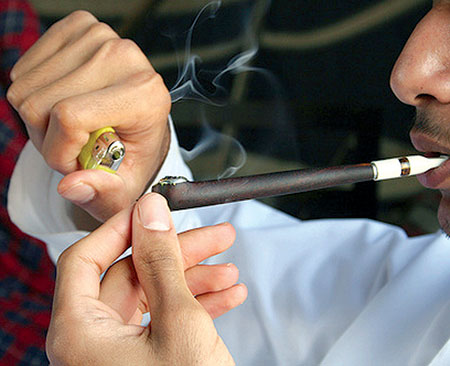
Finally, there is dokha. This powdered tobacco comes in different varieties and strengths and is often mixed with herbs, spices and other substances. Dokha is smoked in a small pipe (usually wooden) called a midwakh. Some users perceive it as a safer alternative to smoking, but the limited research suggests that dokha may give off more toxins than cigarettes. Despite dokha being as common as cigarettes in countries such as the UAE, published studies on dokha use, effects and cessation have been rare.
A regional oral tobacco product also merits mention and more study. Shammah is reportedly common in Saudi Arabia and Yemen. Locally made by mixing ground tobacco leaf with flavorings (including lime, ash, black pepper and oils), shammah contains a variety of potential carcinogens, including nitrosamines.
Reducing Risk
Several countries in the Middle East (such as Iran, Oman and Qatar) still ban e-cigarettes, and others (e.g., Saudi Arabia) ban snus. But in general, the region has bucked the global trend, loosening regulations on vaping and heated-tobacco products. Nicotine pouches are largely unregulated. (See the Global State of Tobacco Harm Reduction website, GSTHR.org, for country-by-country information.)
More research is critically needed to help channel information and support to those Middle Eastern subgroups most endangered by their tobacco use behaviors. University students who occasionally smoke shisha, for example, likely face minimal risk.
Most evidence on vaping originates from North America and Europe. As a recent paper on e-cigarettes in the Middle East points out, studies within the region suffer from “overreliance on university-based samples, the overuse of non-user samples, a lack of studies on behavior change, high variance in existing data and a lack of uniform instruments to measure e-cigarette use.”
Shisha is a good example of the need for cultural sensitivity in promoting smoking cessation or a switch to less risky alternatives. “For hookah, people smoke very much for the social reason. It’s a social construct, not an addiction construct,” said the U.S. professor. “Most cessation interventions have not really worked because most have thought about hookah like cigarettes, with nicotine-replacement therapy and counseling.”
As one college student in the UAE told him, “People don’t drink alcohol here. There are no drugs. We need a way to hang out with our friends.” Effective reduced-risk substitutes for waterpipe smoking must deliver that.
Companies have begun creating reduced-harm products specifically for Middle East countries.
For example, Dubai-based ANDS (short for alternative nicotine-delivery solutions) makes vaping and heated-tobacco products. A company called OOKA has developed a charcoal-free shisha device. Philip Morris International recently acquired a stake in Eastern Co., Egypt’s largest tobacco producer, with a stated goal of providing alternatives to cigarettes for adults who smoke.
New technologies can make an attractive contrast to smelly old-fashioned cigarettes. “A lot of the vaping devices are really quite geeky—like a fancy electronic gadget that happens to deliver nicotine,” notes Shapiro. “They have touch-screens, and you can chart use on your laptop. So that’s likely to appeal to the younger generation of more wealthy urban groups” in the region. However, such products are likely to reach few lower income or rural people who smoke.
Shapiro notes that two things are necessary for reduced-harm nicotine to gain a foothold and start displacing cigarettes. First, “Governments have got to be prepared to get tough on smoking: banning smoking in public areas and such.” Second, there needs to be proportionate promotion of novel products, including lower taxes versus cigarettes, and education that supports the option of harm reduction alongside cessation. As a recent Lancet commentary (by former WHO leadership) notes, “In some countries, substantial reductions in smoking prevalence have coincided with novel nicotine products.”
“If a country does ban safer nicotine products, look at how much it relies on the tobacco industry—in terms of revenue from taxation or whether the country grows tobacco or exports it,” says Shapiro. “If state regulation is sympathetic, then these products will find a way into the shops.”
The presence of the World Vape Show in Dubai, starting in 2021, sent a message that these alternatives could be acceptable. I will be part of two panels at the 2024 Global Vape Forum, which accompanies this year’s Dubai vape expo. We will stress the need to save lives by moving people off combustible tobacco, whether through cessation or switching to reduced-risk products.
Getting doctors on board with harm reduction is another important step. Like their colleagues around the globe, Middle Eastern physicians frequently misperceive nicotine as the cause of cancer and other health risks of tobacco. Region-specific studies of doctors’ perceptions and needs are essential. I could locate only one small study. A 2019 Egyptian survey found that doctors were aware of e-cigarettes but viewed them less positively than their patients.
Cheryl K. Olson is a California-based public health researcher who specializes in behavioral health issues and consults on tobacco product behaviors via McKinney Regulatory Science Advisors. She spent 15 years on the faculty of Harvard Medical School.
References
Al-Hamdani M, Hopkins DB (2023). E-cigarettes in the Middle East: The known, unknown, and what needs to be known next. Preventive Medicine Reports. https://doi.org/10.1016/j.pmedr.2022.102089
Beaglehole R, Bonita R (2024). Harnessing tobacco harm reduction. The Lancet. https://doi.org/10.1016/S0140-6736(24)00140-5
Nasser AMA, Geng Y, Al-Wesabi SA (2020). The prevalence of smoking (cigarette and waterpipe) among university students in some Arab countries: A systematic review. Asian Pacific Journal of Cancer Prevention. https://journal.waocp.org/article_88992.html
Samara F, Alam IA, ElSayed Y (2021). Midwakh: Assessment of levels of carcinogenic polycyclic aromatic hydrocarbons and nicotine in dokha tobacco smoke. Journal of Analytical Toxicology. https://doi.org/10.1093/jat/bkab012
Raj AT et al (2019). Systematic reviews and meta-analyses of smokeless tobacco products should include shammah. Nicotine and Tobacco Research. https://doi.org/10.1093/ntr/nty144
Even in its watered-down version, the recently approved EU supply chain law will impact tobacco companies.
By Stefanie Rossel
Good things come to those who wait, but sometimes they come only as a compromise. On March 15, the European Council finally approved the EU Corporate Sustainability Due Diligence Directive (CSDDD), which was scheduled to be adopted by the European Parliament on April 24, thereby passing it into EU law.
Commonly referred to as the EU Supply Chain Law, this directive, which was first proposed in February 2022, is meant to establish a common baseline across the trade bloc’s member states. As binding EU law, it requires companies to identify, prevent and mitigate adverse impacts on human rights and the environment throughout their supply chains. If implemented as anticipated, the CSDDD would impose substantial responsibilities on companies, including those operating in the tobacco business.
The version the European Council agreed upon this March, though, is a significantly watered-down version of the original draft, reducing the number of affected companies in Europe by 70 percent and allowing for several exceptions. The amendments include:
Reduced scope of application: Instead of companies with 500 employees and a turnover of €150 million ($162 million) as initially envisaged, the directive in its current form would be applicable to enterprises with 1,000 employees and a turnover of at least €450 million.
Deletion of the high-risk approach: The plan to gradually integrate companies that don’t meet the criteria of the scope of application but operate in a high-risk sector has been eliminated from the draft law.
Introduction of a staggered implementation of the directive: Depending on their size and turnover, companies now have between three years and five years to make their firms compliant with the CSDDD.
Civil liability: The liability clause included in the CSDDD will be marginally adjusted to allow member states more flexibility in transposing the directive into national law. Generally speaking, however, the CSDDD will still enable injured parties to sue European companies for breaches alleged to have occurred across their supply chains.
“The overall EU objectives of addressing global human rights issues, environmental concerns and, more recently, climate change can certainly not be criticized,” says Abrie du Plessis, an associate at the South African Trade Law Center in Cape Town and a close observer of EU regulation who during previous work in the tobacco industry followed the development of the World Health Organization Framework Convention on Tobacco Control (FCTC) and the development of the 2014 EU Tobacco Products Directive.
“As always, however, real challenges and obstacles can emerge from the details, and it seems fair to say that major companies operating in the EU already face what may be described as a flood of legislative initiatives on the issues now also covered by the CSDDD,” says du Plessis. “The task which lies ahead, which is to comply with a range of general, specific and sometimes overlapping legislative initiatives, is formidable.”
Building on Other Laws
Even in its weakened form, the CSDDD will likely affect all the major tobacco manufacturers operating in the EU in some way due to their turnover and number of employees. Du Plessis thinks that they are well placed even though, as always, the specifics of the tobacco industry must be considered.
The CSDDD comes on the heels of the EU Corporate Sustainability Reporting Directive (CSRD), which was adopted in December 2022 and entered into force on Jan. 5, 2023. This directive requires all large companies and all listed companies, except listed micro-enterprises, to disclose information on what they see as the risks and opportunities arising from social and environmental issues and on the impact of their activities on people and the environment. This is supposed to help investors, civil society organizations, consumers and other stakeholders to evaluate the sustainability performance of companies, as part of the European Green Deal, which is intended to transform the EU into a climate-neutral regional integration organization by 2050.
“These two directives are closely related, and some of the steps already being taken by companies to ensure CSRD compliance are also required by the CSDDD,” says du Plessis. “Some progress toward CSDDD compliance is therefore already being made.”
In some instances, he adds, there are also other EU laws that already address—or will in due course address—specific environmental issues. “Relevant examples are those on the sustainable use of plant protection agents, on single-use plastics and on deforestation,” says du Plessis. “Such EU legislation can either be directly applicable to tobacco products or can provide useful guidance even if it is not directly applicable. Already complying with measures clearly prescribed in other EU legislation may reduce the CSDDD compliance burden.”
One challenge for manufacturers is that they may be held liable for circumstances that are outside their immediate control. (Photo: Taco Tuinstra)
News Tasks
Nevertheless, the upcoming directive will bring about a range of challenges for tobacco companies. Among other things, manufacturers may be held liable for circumstances that are out of their immediate control and which, experts argue, are probably better handled by policymakers in the respective countries covered by the supply chain in question.
“The CSDDD requires companies to identify potential and real adverse environmental and human rights impacts arising from their own operations, subsidiaries and business relationships,” says du Plessis. “They must take measures to prevent or mitigate any potential impacts they identify as well as end or minimize any real impacts. Failure to comply and resultant may lead to liability and financial penalties.
“An example could be the issue of child labor, and it has become an established view that the purchasers of commodities do in fact have some ability to influence the behavior of their suppliers. The tobacco industry has certainly done a lot of work in this area, but the question going forward will of course be whether this meets expectations or will need to be revisited. It is quite correct to observe that national policymakers also have a key role to play in this debate.”
According to du Plessis, the expectation that manufacturers assume responsibility for the behavior of their suppliers has become a fact of life. “The basis for this approach is the real or perceived control which manufacturers exercise over players in their supply chains,” he says. “There are of course debates to be had as to what is in fact possible and workable, and the issues will hopefully be addressed through having constructive debates about CSDDD during its transposition and implementation phases.”
“Some corporate social responsibility activities for which tobacco companies were often criticized in the past are now actually required by law.”
Isn’t It Ironic?
The CSDDD will also require companies to adopt a transition plan. Under the new law, companies will be required to adopt transition plans for climate change mitigation and ensure that their business model and strategy are compatible with the transition to a sustainable economy. These transition plans should be reviewed every 12 months and describe in detail the progress the company has made toward achieving its targets.
For the tobacco industry, this represents a complicated part of the curing and deforestation debate, according to du Plessis. “The interesting angle here is that burning of wood biomass is generally regarded as carbon neutral and in many instances as sustainable.”
Du Plessis says there are more bits of irony in the EU laws prioritizing sustainability. “The first is that some corporate social responsibility activities for which tobacco companies were often criticized in the past are now actually required by law,” he points out. “The second is the false narrative that Article 5.3 of the FCTC should apply to regulatory processes such as these. Neither the text of the FCTC nor that of its nonbinding guidelines support this view, and both the CSRD and the CSDDD make interaction with the industry involved a necessity rather than an option.”
“Leading cigarette companies have a long history of proactively addressing many of the issues potentially covered by the CSDDD on a voluntary basis,” says du Plessis. “Participating in both the CSRD and the CSDDD processes will certainly put what they have achieved so far to the test. If done properly, CSRD and CSDDD can certainly contribute to progress in the areas identified, but given significant legal uncertainties, the preferred point of departure should be constructive dialogue rather than penalties and sanctions.”
Stefanie Rossel is Tobacco Reporter’s editorial contributor. An experienced trade journalist, she combines sharp reporting skills with in-depth knowledge of the tobacco and vapor industries. Prior to joining Tobacco Reporter, Stefanie was editor-in-chief at Tobacco Journal International, where she worked for a decade. Fluent in English, German and French, Stefanie covers tobacco news around the world. She is based in Germany.
Japan Tobacco International launched its Ploom X Advanced in Italy’s travel retail market at Milan Malpensa Airport.
Already available in duty-free stores in Japan and Switzerland, the product comes in a variety of device colors, sticks and accessories.
“I was excited to see JTI’s premium offer in the RRP [reduced-risk product] category taking off in Milan,” said JTI Global Travel Retail Sales Director Simone Mammi in a statement. “Our Ploom X Advanced device has been launched in Italy travel retail, alongside Camel heated-tobacco sticks, available in four flavors and tobacco intensities (gold, bronze, burgundy and teal).”
JTI noted that with Avolta as one of its longstanding retail partners at Milan Malpensa Airport, it optimized the premium front-of-category space to provide impactful showcasing that, when coupled with ongoing consumer engagement, “should deliver promising results.”
The Ploom X Advanced device was named the best product available in the heated-tobacco category at the U.K. Product of The Year Awards 2024.
A study released on May 7 adds further evidence that the harm from nicotine use is determined primarily by the consumption method.
Titled No Smoke, Less Harm, the report details rates of nicotine usage in Sweden and a number of comparable countries, finding that nicotine use was not a factor in tobacco-related disease.
Karl Fagerstrom
While nicotine consumption in Sweden mirrors the European average, the country reports a 41 percent lower incidence of lung cancer and fewer than half the tobacco-related deaths of its European peers. This stark contrast is attributed to the widespread adoption of smoke-free nicotine products such as snus, nicotine pouches and electronic cigarettes.
“This distinction between smoking and the use of smokeless products is crucial,” says Karl Fagerstrom, a public health expert and contributor to the report.
“While nicotine is addictive, it does not cause the serious diseases associated with smoking. Our findings support a shift in focus from cessation to substitution with less harmful alternatives for those unable to stop completely.”
According to the authors, Sweden’s proactive measures in public health education and regulatory frameworks have encouraged a transition to these alternatives, significantly impacting public health outcomes. The report points out that embracing similar harm reduction strategies could be pivotal for other nations striving to reduce the health impacts of tobacco.
“The Swedish experience demonstrates that understanding and addressing public misperceptions about nicotine can lead to health policies that better protect and inform consumers,” said Fagerstrom.



 The Njoy Ace and Daily menthol product MGOs were a surprise considering the CTP’s menthol position and flavored vapor product denials. What was different about Njoy’s applications that tipped the scales?