Blog

  • RAI Transitioning to Electric/Hybrid Vehicles

    RAI Transitioning to Electric/Hybrid Vehicles

    Photo: unlimit3d

    Reynolds American Inc. (RAI) is transitioning its vehicle fleet to hybrid and electric models. The move will replace aging vehicles on a rolling basis over the next three years, resulting in a projected annual reduction in carbon emissions of more than 1,000 tons.

    “Our sales and trade marketing representatives average nearly 27,000 miles a year in their territories across the 50 states—that’s a lot of time on the road,” said Ed Mirana, senior vice president of national sales and strategic accounts at RAI, in a statement. “With this move to hybrid vehicles, our sales and operations teams are driving progress on our sustainability ambitions.”

    RAI is collaborating with Ford Pro to transition its current fleet to a mix of vehicle models, including the Escape SEL Hybrid, Explorer Limited Hybrid, Ford E-Transit and Ford-150 Lightning.

    Included in the fleet of more than 1,800 vehicles are nearly 50 light-duty operations vehicles used across RAI’s North Carolina and Tennessee facilities, which will be transitioned to a combination of hybrid and electric models as part of this initiative.

    “We continue to push for new ways to reduce our use of resources and environmental impact. We have a bold global ambition for carbon neutral operations by 2030, and reducing carbon emissions in our fleet is an important step on this journey. In addition, by 2024, more than 95 percent of all industrial vehicles used in operations will be electric,” said Bernd Meyer, executive vice president of operations at RAI. “With these significant changes and investments over the next few years, we are currently on track to meet a fleet carbon emission reduction of 50 percent by 2025.”

    In 2022, approximately 650 hybrid and electric vehicles will replace internal combustible engine vehicles organization-wide.

    RAI joins BAT Group’s growing list of markets across the globe, including Australia, Colombia, Germany, Mexico and the Netherlands, where trade and operations fleet transitions to hybrid and electric vehicles are well underway.

  • Kaival Launches PMI’s Veeba in Canada

    Kaival Launches PMI’s Veeba in Canada

    Kaival Brands Innovations Group (KBI) announced the launch of Philip Morris International’s Veeba disposable e-cigarette in Canada.

    In June, Kaival and PMI signed an agreement for the development and distribution of electronic nicotine-delivery system products in markets outside of the U.S.

    “The agreement with Philip Morris Products was a remarkable accomplishment for the company, and now we have advanced to the next phase of international distribution with the actual launch of their custom branded product, Veeba,” said Eric Mosser, president and chief operating officer of Kaival Brands, in a statement.

    “We are excited to support PMI’s efforts to provide a range of alternatives compared to cigarettes. The commercialization of Veeba complements PMI’s already strong smoke-free portfolio, providing adult smokers with an even broader range of usage, taste, price and technology options.”

    The agreement licenses PMI to manufacture, promote, sell and distribute the Bidi Stick and any newly developed devices in certain markets outside of the United States, with potential royalties owed to KBI.

  • Smoore Opens PMTA Testing Lab in China

    Smoore Opens PMTA Testing Lab in China

    Photo: Smoore

    Smoore has opened China’s first non-clinical full-scale testing laboratory for U.S. premarket tobacco product applications (PMTA).

    Operated by Smoore’s Analysis, Testing and Safety Assessment Center, the laboratory provides all non-clinical evidence required to bring a new nicotine product to market, including material safety, hazardous components and potentially hazardous components (HPHC’s), and toxicology testing.

    This is the first PMTA testing laboratory to open in China, and will allow Smoore to further improve the safety of its products, and help the brands they work with to successfully pass PMTA certification.

    Prior to Smoore opening its new laboratory, vaping companies wanting to enter the U.S. would need to use third-party partners to complete their PMTA testing, which can be a costly and time-consuming process. With the new China facility, Smoore’s brand partners can more easily complete their PMTA certification and improve their accessibility to the US market.

    “The FDA is very concerned about HPHCs and has set out a list of 33 substances which must be tested for,” said Dr Long, the director of Smoore’s new Safety Assessment Center, in a statement. “Our new laboratory can do all this and more, and has the capacity to test for 37 substances; we are the only facility in China whose testing capabilities covers the full range of HPHCs substances.”

    According to Smoore, the laboratory tests against a world-leading new database of HPHCs, developed by Smoore and derived from international toxicity databases including those maintained by the U.S. Environmental Protection Agency (EPA).

    Advanced computational toxicology software is also used to predict for unknown and potentially hazardous ingredients not included in these databases, further increasing Smoore’s safety assessments.

    Since establishing its first research institute in 2017, Smoore has continued to lead the industry in evidence-based research. Its Safety Assessment Center has raised safety standards to medical grade, and works to constantly review product safety.

    A total of eight products have been approved for marketing by the FDA, many of which are manufactured by Smoore.

  • Court Refuses to Suspend Fontem MDO

    Court Refuses to Suspend Fontem MDO

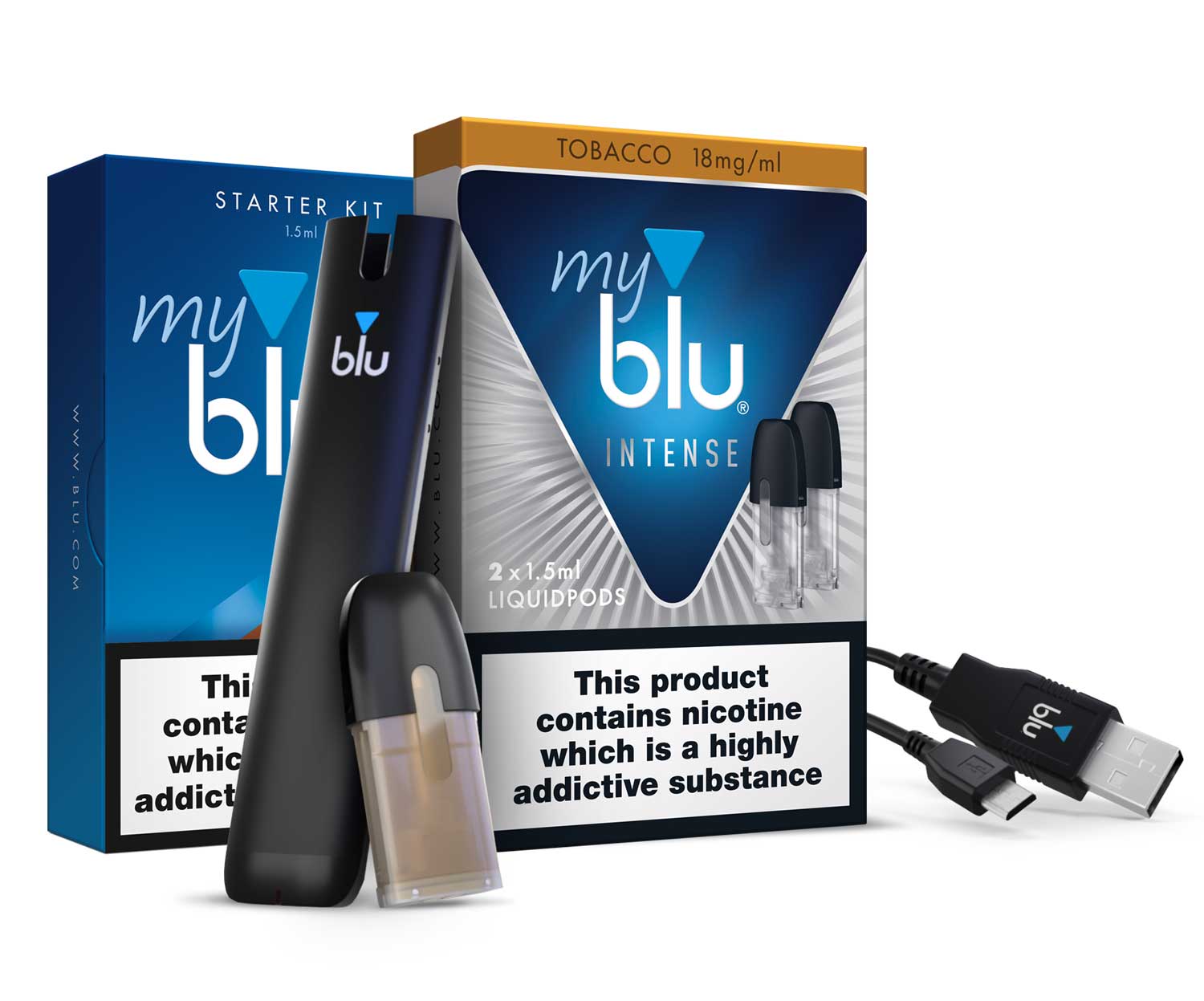
    A U.S. appeals court denied Fontem US’ request to suspend the Food and Drug Administration’s marketing denial orders (MDO) for certain Myblu products.

    On April 8, the FDA rejected several of the company’s premarket tobacco product applications on the basis that they lacked sufficient evidence to show that permitting the marketing of those products would be appropriate for the protection of public health.

    The court rejected Fontem’s July 12 request for a stay, saying that the e-cigarette company had waited too long to file the motion.

    “Fontem has demonstrated that the marketing denial order is causing it harm, but by waiting more than two months after the marketing denial order’s issuance to seek emergency relief, Fontem weakened its claim of irreparable harm,” the court wrote.

    The court also stated that Fontem “has not made a strong showing” that it is likely to succeed in its appeal of the MDO on merits.

    “The court ruling does not affect our progress through the FDA’s administrative appeals process, through which we intend to convince the agency that approval should be granted for Myblu products,” said a spokesperson for Fontem US.

    “In the meantime we continue to supply Myblu to the majority of retailers. The MDO does not apply to Blu disposables which constitute 50 percent of Blu share in the U.S. market.”

  • Ex-President Scrutinized Over Cigarette Shipment

    Ex-President Scrutinized Over Cigarette Shipment

    Photo: Taco Tuinstra

    The U.S. government has blacklisted former Paraguayan President Horacio Cartes for his role in “significant corruption,” a move that prevents Cartes from entering the United States, reports The Wall Street Journal.

    The decision follows revelations that an aircraft formerly owned by an Iranian carrier that is blacklisted by the U.S. Treasury for alleged arms trafficking transported cigarettes from a company owned by the former president.

    Earlier this year, Paraguay’s then interior minister, Arnaldo Giuzzio, accused Cartes of laundering money and illicit enrichment tied to the alleged sale of contraband cigarettes from the former president’s tobacco company, Tabacalera del Este, known as Tabesa. The assertions didn’t lead to charges.

    Last month, Paraguay’s top anti-corruption official, Rene Fernandez, called for a probe into allegations that Tabesa was linked to a group of Venezuelan and Iranian men who traveled through Paraguay in May. Paraguayan prosecutors are now investigating the men for alleged links to terrorism, though they have not been charged, government documents show.

    The plane and its crew were grounded in Argentina last month, with authorities there saying they are investigating alleged terrorism ties.

    Flight logs show that the jet reported carrying $754,000 worth of cigarettes sourced from Tabesa when it flew out from Paraguay to Aruba on May 16, according to the anti-corruption office. Listed as the recipient of the cargo was Tabacos USA, a Pennsylvania-registered company also owned by Cartes.

    Paraguay, which borders Brazil and Argentina, has long been at the center of the illegal trade of contraband goods and drugs, according to security experts in the U.S. and Latin America.

  • RLX Obtains Chinese Manufacturing License

    RLX Obtains Chinese Manufacturing License

    Photo: RLX Technology

    China’s State Tobacco Monopoly Administration (STMA) has licensed RLX Technology to operate in the vapor business.

    On Nov. 26, 2021, China’s State Council amended the country’s tobacco monopoly law to include vapor products, giving the STMA authority to regulate the sector.

    The STMA license, which is valid until July 31, 2023, allows RLX Technology to manufacture 15.05 million rechargeable vaping devices, 328.7 million cartridges and 6.1 million disposable e-cigarettes per year.

    Since the first quarter of 2022, Chinese authorities have issued a series of implementing rules and guiding opinions to strengthen oversight of e-cigarette products and regulate the e-cigarette industry. These rules and opinions set forth that all e-cigarette manufacturing enterprises must obtain a license from the STMA.

    “This license represents an important milestone in our strategic roadmap as we strive to comply with the new regulatory requirements in a timely manner,” said Ying (Kate) Wang, co-founder, chairperson of the board of directors and CEO of RLX Technology, in a statement.

    “We believe that we are well-positioned to achieve compliance in our operations according to schedule. To adapt to the new market dynamics and ensure business development, we will, and will urge our business partners to, continue making efforts to comply with all applicable regulatory requirements, including, but not limited to, obtaining requisite licenses and regulatory approvals, developing products that meet the mandatory national standards, and processing all transactions via the National E-cigarette Transaction Platform when it is implemented.

    “We will remain committed to providing high-quality products that deliver superior performance and safety in strict compliance with legal and regulatory requirements, while exploring new growth opportunities in the industry.”

  • PMI Reports Second Quarter Results

    PMI Reports Second Quarter Results

    Photo: PMI

    Philip Morris International reported net revenues of $7.83 billion in the second quarter of 2022, up 3.1 percent over that reported in the comparable quarter of 2021. Operating income was $3.06 billion, compared with $3.13 billion during the prior-year quarter. Net revenues from smoke-free products accounted for 29.9 percent of total net revenues.

    PMI shipped 157.69 billion cigarettes and 24.82 billion heated tobacco units in the second quarter of 2022, up 1 percent and 1.9 percent, respectively, over the volumes shipped in the comparable 2021 period.

    Given uncertainty and volatility created by the war between Russia and Ukraine, PMI also provided financial figures on a pro forma basis, which exclude the company’s operations in those markets and thus provide a more comparable view of PMI’s business performance.

    On a pro-forma basis, the company’s net revenues increased by 6.2 percent between the second quarter of 2021 and the second quarter of 2022, while its operating income grew by 1.6 percent. Net revenues from smoke-free products accounted for 29.9 percent of total net revenues on a pro forma basis.

    The company has suspended its manufacturing operations in Kharkiv, Ukraine, and intends to exit the Russian market. In 2021, Ukraine accounted for around 2 percent of PMI’s total cigarette and heated tobacco unit shipment volume and under 2 percent of PMI’s total net revenues. Russia made up almost 10 percent of total shipment volumes and around 6 percent of PMI net revenues.

    “First and foremost, the war in Ukraine continues to deeply affect the lives of our employees and families in the region,” said PMI CEO Jacek Olczak in a statement. “My first priority is to give them the help they need and as a company we are focused on doing our utmost to support them throughout this conflict.”

    “Turning to our results, our strong underlying performance continued in the second quarter, with top- and bottom-line growth exceeding our initial expectations. This reflected excellent IQOS momentum, including accelerating growth in pro forma total IQOS users and heated tobacco unit in-market sales volume, as well as favorable cigarette category trends.

    “We are raising our outlook for the full year and now expect to deliver pro forma adjusted growth in net revenues of 6 percent to 8 percent, on an organic basis, and diluted earnings per share of 10 percent to 12 percent, excluding currency, underpinned by pro forma heated tobacco unit shipment volume of 90 to 92 billion units.”

  • BAT Launches Glo Hyper X2

    BAT Launches Glo Hyper X2

    Photo: BAT

    BAT unveiled its Glo Hyper X2 tobacco heating device in Tokyo on July 21.

    Building on the technology of Glo Hyper+, which launched in 2020, the Hyper X2 incorporates advanced induction heating technology encased in a smaller, lighter weight device. A separate boost function for faster heating, battery status LED indicator, a protective iris-shaped shutter and bold new colors complete the new hyper X2 offer, according to BAT.

    Hyper X2 works with existing consumables from the Glo Hyper series.

    “The launch of Glo Hyper X2—our newest, state-of-the-art heated tobacco product—marks another key milestone in our transformation as we build the brands of our future,” said Kingsley Wheaton, chief marketing officer at BAT, in a statement. “Since launching our first Glo product in Japan in 2016, we have built Glo into a billion-dollar global brand through our deep consumer insights, science and innovation.

    “Our multi-category portfolio offers the industry’s widest choice of scientifically substantiated, less risky and enjoyable products for adult smokers who are looking to switch. This is a further big step in accelerating our transformation into a consumer products business that defines itself by the consumer needs that we meet, rather than the products we sell.”

    “In addition, final results from our landmark one-year clinical study of Glo have provided important new data that adds to evidence supporting Glo as a reduced-risk product. In the study, people switching completely to Glo achieved significant and sustained improvements across many exposure and potential harm measures compared to those who continued to smoke, with many indicators similar to quitting.”

    Glo hyper X2 will be available in Glo stores across Japan and on the Glo and Velo official online store from July 25, 2022, and in convenience stores in Japan from August 2022.

    Glo products are available in 25 countries. The global rollout of Glo Hyper X2 will take place over the coming months.

  • Study: Major Drop in Vaping by Under-20s

    Study: Major Drop in Vaping by Under-20s

    Use of e-cigarettes vaping devices dropped during the first year of the Covid-19 pandemic, according to a new study.

    Researchers from Johns Hopkins University in Baltimore, Maryland, found that usage of vaping products dropped seven percent overall from 2018 to 2020 – including a 17 percent drop among people aged 18 to 20.

    Researchers published their findings Friday on the JAMA Network Open after gathering data from the U.S. Centers for Disease Control (CDC) and Prevention’s Behavioral Risk Factor Surveillance System for the study, according to media reports.

    The survey included a total of 994,307 respondents. In 2017, the CDC reported 4.4 percent of U.S. adults reported use of an e-cigarette. The figure climbed 25 percent to 5.5 percent in 2018.

    ‘This increase, primarily observed in younger age groups, was associated with the concurrent rise in the availability of flavored products and high nicotine–concentration pod mod devices (modular vaping devices with refillable or replaceable nicotine cartridges, or pods, such as JUUL brand devices),’ the researcher’s wrote in the study.

    Data from 2019 was not gathered. In 2020, overall usage of e-cigarettes fell to 5.1 percent, a seven percent drop from two years earlier. The most dramatic shift was seen among people aged 18 to 20 years old – the youngest group included in the study.

  • Michigan Raises Tobacco Purchase Age

    Michigan Raises Tobacco Purchase Age

    Credit: Vitalii Vodolazskyi

    Michigan has raised the age to purchase tobacco and other products containing nicotine from 18 to 21. 

    “This legislative package brings Michigan in line with the federal Tobacco 21 legislation, raising the state age for tobacco sales from 18 to 21. The package amends several acts to raise the age of sale for retailers, prohibit anyone under 21 from entering a tobacco retail store, and prohibit tobacco sales through the mail to anyone under 21,” Gov. Gretchen Whitmer stated after signing the bill into law.

    The package also revises the disbursement of proceeds from the tax on cigarettes and other tobacco products. Senate Bill 576 also amends a portion of the Michigan penal code to require agents who distribute tobacco through the mail to verify that the recipient is 21 years of age, revising the previous age limit of 18.

    The legislation states that the act will not apply to the Youth Tobacco Act, which now prohibits tobacco use for those under 21, rather than 18.

    “The Tobacco 21 package aligns Michigan with progress at the federal level, and is an important step in keeping tobacco products out of the wrong hands,” said Senator Paul Wojno. “Kudos to Governor Whitmer for working with the me and my colleagues in the legislature to protect our communities and public health across the state.”